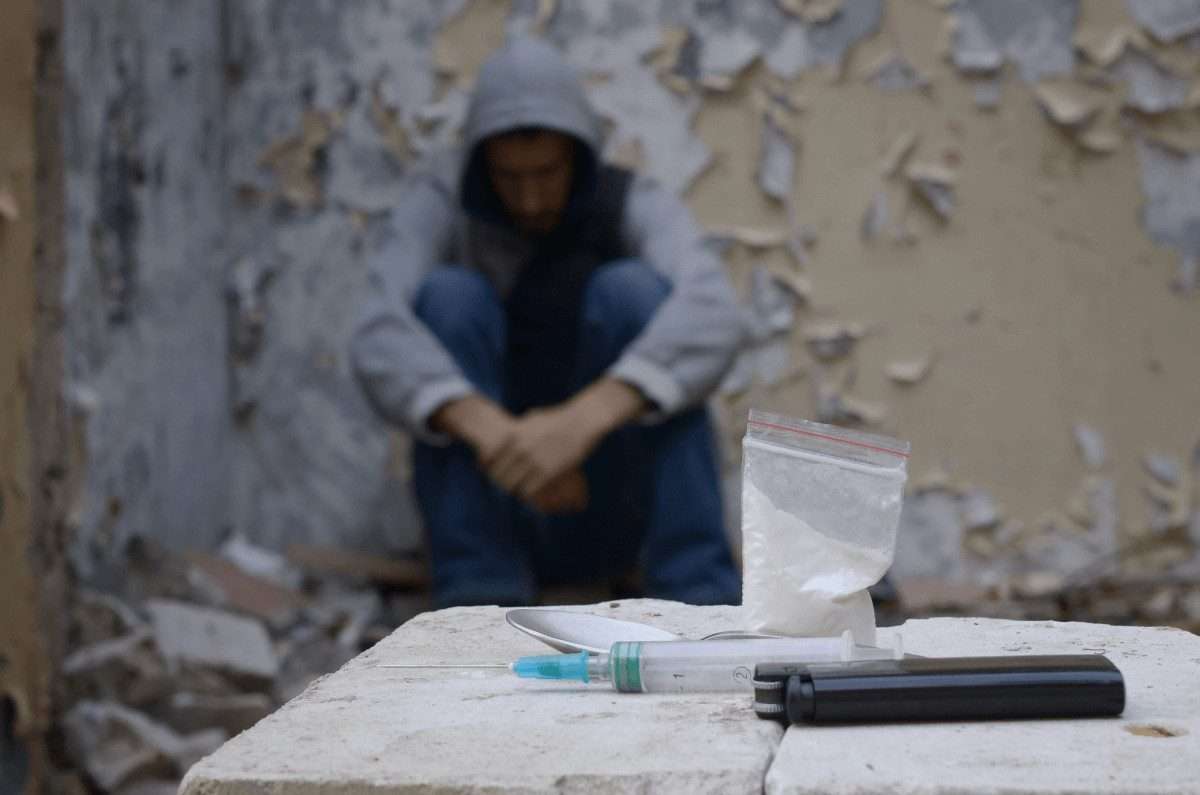
Charged with a drug crime in Diamond Bar? You’re facing criminal convictions ranging from misdemeanor simple possession to felony drug trafficking with STRIKE allegations, state prison sentences, massive fines, mandatory drug registration, and a permanent criminal record that brands you for life. Whether accused of possession of a controlled substance, possession for sale, transportation, manufacturing, or drug trafficking, a drug conviction in California devastates your employment, your professional licenses, your immigration status, and every opportunity ahead of you.
Diamond Bar residents and those arrested in the surrounding communities of Walnut, Pomona, La Verne, San Dimas, and throughout Los Angeles County deserve aggressive, intelligent, and experienced criminal defense. At Tu Defensor Criminalista, our Spanish-speaking criminal defense attorneys fight every drug charge with a strategy built on your specific facts, your constitutional rights, and a deep understanding of California drug law.
Free Confidential Consultation: (888) 315-3326 | Available 24/7 | Hablamos Español
Accused of drug possession or drug sales in Diamond Bar? You’re not just fighting a criminal charge — you’re fighting for your freedom, your future, and your family. California’s Health and Safety Code contains dozens of drug offense statutes that carry wildly different penalties depending on the substance, the quantity, your criminal history, and whether the prosecution can prove intent to sell. One wrong move — no attorney, the wrong attorney, or a public defender overwhelmed with hundreds of cases — and you could be looking at years in state prison.
Our criminal defense team understands the difference between a charge you can fight outright and one that can be negotiated into a diversion program, reduced charge, or even a dismissal. We know Los Angeles County’s court system[1], we know the prosecutors, and we know exactly what arguments work and which don’t. When your entire future is on the line, you need a law firm that treats your case like it’s the most important one in the office — because to us, it is.
California drug laws are governed primarily by the California Health and Safety Code, and the penalties vary enormously. Here’s what the charges you may be facing actually mean under California law:
Charged with simple possession of a controlled substance in Diamond Bar? This is the most common drug charge and, under Proposition 47 passed by California voters, most simple possession offenses for personal use are now classified as misdemeanors. However, this does NOT mean the consequences are minor. A misdemeanor drug conviction can still result in up to one year in county jail, fines, probation, a criminal record visible to employers, and immigration consequences that can result in deportation for non-citizens.
Accused of possession of a controlled substance for sale? This is a felony charge. Prosecutors don’t need to catch you selling drugs to charge you — they use circumstantial evidence like large quantities, multiple baggies, scales, text messages, and large amounts of cash to argue intent to sell. A conviction under HS § 11351 carries 2, 3, or 4 years in state prison. For cocaine base (crack cocaine), HS § 11351.5 carries 3, 4, or 5 years. These charges are serious, and they require a serious defense.
Charged with transporting or selling a controlled substance in Diamond Bar or along the 57 or 60 freeways? HS § 11352 is a straight felony carrying 3, 4, or 9 years in state prison, with additional enhancements if the alleged transportation crossed county lines. Given Diamond Bar’s location at the intersection of the 57 and 60 freeways — a major drug transit corridor in Los Angeles County — these charges arise frequently and are aggressively prosecuted.
Meth-related arrests are among the most common drug charges in Diamond Bar and throughout the San Gabriel Valley. Simple possession under HS § 11377 is a misdemeanor under Prop 47 for most defendants, but possession for sale (HS § 11378) is a felony carrying 16 months, 2 years, or 3 years in county jail or state prison. Transportation or sales of methamphetamine (HS § 11379) carries 2, 4, or 9 years in state prison — and enhancements for transportation across two or more county lines add 3 additional years.
Heroin and prescription opioid charges carry the same statutory penalties as other controlled substances under HS §§ 11350–11352. Given the ongoing opioid crisis, however, prosecutors and law enforcement treat these charges with particular seriousness. According to the California Department of Public Health[2], opioid overdose deaths have increased dramatically across California in recent years, creating political pressure on prosecutors to pursue these cases aggressively.
While California legalized recreational marijuana under Proposition 64 in 2016, marijuana is NOT fully legal without limitation. Possession over 28.5 grams, cultivation beyond personal limits, unlicensed sales, and giving marijuana to a minor remain serious criminal offenses. Per the California Bureau of Cannabis Control[3], licensed commercial cannabis activity is strictly regulated, and violations can result in criminal prosecution.
Charged with manufacturing a controlled substance — including operating or assisting in a meth lab — in Diamond Bar or surrounding areas? HS § 11379.6 carries 3, 5, or 7 years in state prison. If the manufacturing allegedly occurred near a school, playground, or residential area, enhancements can add additional years. These charges often arise from multi-agency task force investigations and are prosecuted at the highest levels.
Diamond Bar sits at the crossroads of Los Angeles and San Bernardino Counties, positioned along the 57 and 60 freeways. This location makes it a transit point frequently targeted by law enforcement for drug interdiction operations. Understanding the local context of drug enforcement in this area is critical to building an effective defense.
According to the Los Angeles County Sheriff’s Department[4], which provides contract policing services for Diamond Bar, narcotics enforcement is a high priority in the eastern San Gabriel Valley. The Walnut/Diamond Bar Sheriff’s Station serves the Diamond Bar community, and deputies regularly conduct both reactive drug enforcement and proactive narcotics operations.
The California Department of Justice’s Open Justice data[5] shows that drug-related arrests remain among the leading categories of criminal arrests throughout Los Angeles County. Los Angeles County alone accounts for a disproportionate share of California’s total drug arrests[5], reflecting both the county’s size and the intensity of narcotics enforcement.
The Drug Enforcement Administration (DEA) Los Angeles Field Division[6] oversees enforcement across Southern California, including Diamond Bar and the surrounding area. Federal drug charges can arise from the same conduct as state charges, and in serious cases, defendants can face prosecution in both state and federal court.
According to the Substance Abuse and Mental Health Services Administration (SAMHSA)[7], drug use disorders affect millions of Americans, and many people facing drug charges are struggling with addiction rather than operating as commercial drug traffickers. California law recognizes this reality through various diversion programs, and an experienced defense attorney knows how to present your situation in the most favorable light.
Every drug case has potential defenses. The question is whether you have an attorney who knows how to identify them, develop them, and present them effectively. At Tu Defensor Criminalista, our approach to drug defense in Diamond Bar includes:
The Fourth Amendment to the United States Constitution and Article I, Section 13 of the California Constitution protect you from unreasonable searches and seizures. If police searched your vehicle, your home, or your person without a valid warrant, without proper consent, or without a recognized exception to the warrant requirement, any evidence they obtained may be suppressed under the exclusionary rule. Without the drugs themselves, the prosecution frequently has no case.
Common Fourth Amendment violations we challenge include:
Traffic stops without reasonable suspicion, vehicle searches without probable cause or valid consent, home searches with defective warrants or improper execution, and searches that exceeded the scope of a warrant. The Fourth Amendment’s protections are well-established under United States v. Cortez[8] and a long line of California and federal court decisions.
The prosecution must prove that what law enforcement says was a drug actually was a drug — and that it was properly handled from seizure through laboratory testing. Errors in chain of custody, improper storage, contaminated samples, or mistakes in laboratory analysis can all create reasonable doubt. We regularly review laboratory reports and challenge the methodology and accuracy of drug testing.
To convict you of a drug offense, the prosecution must prove that you knew the controlled substance was present AND that you exercised dominion and control over it. In cases where drugs were found in a shared vehicle, a shared residence, or near multiple people, the “whose drugs were these?” question can be genuinely contested. If you didn’t know the drugs were there, or if someone else controlled them, you may not be guilty of possession.
In cases where law enforcement induced or persuaded someone to commit a drug offense they would not otherwise have committed, entrapment may be a valid defense. California’s entrapment defense focuses on whether the conduct of law enforcement would have induced a normally law-abiding person to commit the crime.
Not every drug case needs to go to trial. For many clients — particularly first-time offenders or those whose drug use is tied to addiction — California offers meaningful alternatives to conviction and incarceration:
Drug Court programs in Los Angeles County offer intensive supervision and treatment as an alternative to traditional prosecution for eligible defendants. Los Angeles County’s drug court programs[11] have helped thousands of defendants address underlying addiction while avoiding incarceration.
Facing a drug charge in Diamond Bar is about far more than the criminal penalties listed in the statute. The collateral consequences of a drug conviction ripple through every area of your life:
Diamond Bar is home to a large and vibrant Latino community, and many residents are more comfortable communicating in Spanish. Our firm is founded on the principle that every client deserves to fully understand the charges against them, the options available to them, and the strategy being pursued on their behalf — in the language they understand best. Tu Defensor Criminalista means “Your Criminal Defense Attorney,” and that is exactly what we are.
Drug cases arising in Diamond Bar are typically prosecuted in the Pomona Courthouse of the Los Angeles County Superior Court, located at 400 Civic Center Plaza, Pomona, CA 91766. We know this courthouse, we know how the prosecutors in the Pomona branch office approach drug cases, and we know the judges who preside over these proceedings. Local knowledge is not a minor advantage — it is often the difference between a good outcome and a devastating one.
Many attorneys approach misdemeanor drug cases as routine matters to be quickly resolved with a plea. We don’t. Even a misdemeanor drug conviction can permanently alter the trajectory of your life, especially if you are not a U.S. citizen, if you hold a professional license, or if you are young and this is your first contact with the criminal justice system. We fight for you at every level.
Our goal is always the best possible outcome for YOU — whether that means a dismissal after a successful suppression motion, an acquittal at trial, a reduction to a lesser charge, enrollment in a diversion program, or a plea to a non-drug offense that avoids the most serious collateral consequences. We never push you toward any particular outcome. We lay out your options, explain the risks and benefits of each, and support whatever decision you make.
Cocaine possession (HS § 11350) is a misdemeanor under Prop 47 for personal use amounts. Possession for sale (HS § 11351) and transportation (HS § 11352) remain felonies. Crack cocaine (cocaine base) carries harsher penalties under HS § 11351.5 — a reflection of historical disparities in drug sentencing that continue to affect enforcement today.
Heroin remains a Schedule I controlled substance under both California and federal law. Simple possession (HS § 11350) is a misdemeanor under Prop 47. Sales and transportation (HS § 11351, HS § 11352) are serious felonies. Given the opioid epidemic, heroin cases are prosecuted with particular intensity, and defendants face enormous pressure to accept plea offers without fully exploring their defenses.
Meth is by far the most commonly charged drug in Diamond Bar and the surrounding San Gabriel Valley. The proximity to the 57 and 60 freeway corridors makes this area a target for law enforcement interdiction. The DEA reports that methamphetamine remains one of the most widely available and commonly abused drugs in Southern California[17]. Simple possession under HS § 11377 is a misdemeanor under Prop 47; sales and transportation charges carry felony sentences.
Fentanyl charges are among the most aggressively prosecuted drug cases in California today. According to the California Department of Public Health[2], fentanyl is now the leading cause of overdose death in California. Possession for sale of fentanyl (HS § 11351) and transportation (HS § 11352) are treated as high-priority cases by law enforcement and prosecutors. A fentanyl death can escalate a drug sales charge to involuntary manslaughter or even murder under California law.
Prescription opioids (Vicodin, OxyContin, Xanax, Adderall) are controlled substances under both California and federal law. Possessing prescription medications without a valid prescription, selling prescription drugs, or doctor shopping are all criminal offenses. These cases often involve middle-class and professional defendants who are startled to find themselves facing felony drug charges.
MDMA (ecstasy) is a Schedule I controlled substance. Possession is a misdemeanor under Prop 47; sales and transportation are felonies. MDMA cases frequently arise in connection with entertainment venues, concerts, and festivals — and often involve young defendants who deserve a defense that takes their future seriously.
Understanding how the prosecution approaches drug cases in Los Angeles County is essential to understanding how to defend them. The Pomona Branch of the Los Angeles County District Attorney’s Office handles drug cases originating in Diamond Bar, and prosecutors there follow well-established patterns when building drug cases. Our criminal defense attorneys know these patterns — and we know how to disrupt them.
Many serious drug cases in Diamond Bar arise from multi-week or multi-month surveillance operations. Law enforcement may have been watching your residence, your vehicle, or your associates long before the arrest was made. In these cases, the evidence the prosecution has — or thinks it has — can be extensive. But extensive surveillance also means extensive opportunities for constitutional violations, misidentification, and errors in the interpretation of innocent behavior as criminal.
A significant percentage of Diamond Bar drug arrests arise from traffic stops on the 57 and 60 freeways or on local roads like Diamond Bar Boulevard, Grand Avenue, and Golden Springs Drive. Police are trained to use minor traffic violations as pretexts to investigate suspected drug activity. We scrutinize every traffic stop arrest for Fourth Amendment violations — including whether the initial stop was truly lawful, whether a dog sniff or search was legally justified, and whether your consent to a search was truly voluntary.
Many drug investigations in Los Angeles County rely heavily on information from confidential informants — people who provide information to law enforcement in exchange for favorable treatment in their own cases. Informant testimony is inherently unreliable, and courts have recognized this. We aggressively investigate and challenge the use of informant information, including through Pitchess motions[18] that allow us to discover prior misconduct by the officers involved in your case, and through motions to disclose the identity of informants whose testimony is essential to the prosecution’s case.
Modern drug prosecutions frequently rely on text messages, call logs, and data from smartphones as evidence of drug sales. This digital evidence raises its own constitutional questions — including whether law enforcement obtained a proper warrant before accessing your phone’s contents. Under Riley v. California (2014)[19], the U.S. Supreme Court ruled unanimously that police generally must obtain a warrant before searching a cell phone seized incident to arrest. If law enforcement searched your phone without a warrant, that evidence may be suppressible.
In possession for sale and trafficking cases, the weight of the alleged drug plays a critical role — both in determining the specific charge and the applicable penalty range. We scrutinize the laboratory analysis of drug quantities carefully. Errors in weighing, contaminated samples, or evidence of mixing with non-controlled substances can all affect the weight calculation and the charges that are properly supportable.
Certain drug offenses in California can qualify as “serious” or “violent” felonies under the Three Strikes law (PC §§ 667, 1170.12). While most drug possession and sales charges are NOT strikes, certain drug offenses — including some involving minors or occurring near schools — can be charged in ways that implicate strike sentencing. A strike conviction doubles the sentence for any future felony and requires service of 80% of the sentence before parole eligibility.
More commonly, defendants with prior strike convictions face doubled sentences for new drug felonies, even if the new offense is not itself a strike. Understanding how your prior record interacts with current charges requires careful analysis by an experienced attorney. The California Legislative Information page for the Three Strikes Law[20] outlines the statutory framework, but applying it to real cases requires deep practical knowledge.
Drug offenses involving minors — whether selling to a person under 18, using a minor to sell drugs, or allowing a minor to be present where drugs are sold or manufactured — carry dramatically enhanced penalties under California law and reflect a strong enforcement priority for law enforcement in the Diamond Bar area.
Most drug arrests in Diamond Bar are prosecuted in California state court. However, some cases are referred for federal prosecution — and when that happens, the stakes change dramatically.
Federal drug charges are governed by the Controlled Substances Act (21 U.S.C. §§ 801 et seq.), and federal sentences are typically far more severe than state sentences for equivalent conduct. Federal mandatory minimum sentences apply to many drug trafficking offenses — for example, trafficking 500 grams or more of cocaine triggers a 5-year mandatory minimum, and 5 kilograms or more triggers a 10-year mandatory minimum under 21 U.S.C. § 841[21].
Federal cases also involve the U.S. Sentencing Guidelines, which calculate a recommended sentence based on the drug quantity, the defendant’s criminal history, and various aggravating or mitigating factors. Unlike state court, federal prosecutors have substantial resources, including DEA agents, FBI agents, and Homeland Security Investigations — and federal investigations are typically much more thorough than state investigations.
Cases most likely to be prosecuted federally include: large-scale trafficking operations, cases involving transportation across state lines, cases connected to international drug smuggling, and cases where the U.S. Attorney’s Office believes state penalties would be insufficient.
At Tu Defensor Criminalista, we handle both state and federal drug cases throughout Southern California. If your case has been referred to federal court, or if you believe it may be, contact us immediately.
Many Diamond Bar residents hold professional licenses that can be jeopardized by a drug arrest — even before conviction. California’s professional licensing boards take criminal charges seriously, and in some cases, an arrest alone can trigger an investigation or an interim suspension of your license.
Diamond Bar is a suburban city of approximately 55,000 residents in eastern Los Angeles County, incorporated in 1989. It is served by the Pomona Unified School District and the Walnut Valley Unified School District, is home to California State Polytechnic University, Pomona (just across the city line), and sits at one of the busiest freeway interchanges in Los Angeles County.
According to the U.S. Census Bureau[26], Diamond Bar has a diverse population that includes a substantial Asian American community, a significant Latino community, and residents from virtually every background. This diversity means that drug cases in Diamond Bar often involve defendants for whom immigration consequences, language barriers, and cultural differences in law enforcement interactions are significant factors.
The Los Angeles County Sheriff’s Department’s Walnut/Diamond Bar Station[27] serves Diamond Bar. The station’s jurisdiction includes a stretch of the 57 and 60 freeways where narcotics interdiction operations are common. Understanding the enforcement practices and priorities of this specific station gives our attorneys a meaningful advantage in representing Diamond Bar clients.
Drug cases originating in Diamond Bar are prosecuted at the Pomona Courthouse of the Los Angeles County Superior Court, located at 400 Civic Center Plaza, Pomona, CA 91766. Bail hearings, arraignments, preliminary hearings, and trials in Diamond Bar drug cases all take place in Pomona. Our attorneys regularly appear at this courthouse and know its procedures, its prosecutors, and its culture.
If you or a loved one has been arrested for a drug crime in Diamond Bar, understanding the process is the first step to getting through it:
Simple possession means you had drugs for personal use. Possession for sale means the prosecution believes you intended to distribute or sell the drugs. The difference is not just about the amount — prosecutors look at baggies, scales, text messages, cash, and other circumstantial evidence to prove intent. Simple possession is typically a misdemeanor under Prop 47; possession for sale is a felony carrying potential state prison time.
Yes. Charges can be dismissed through successful suppression motions (challenging the legality of the search), completion of diversion programs like PC § 1000 or Prop 36, or acquittal at trial. The right approach depends on the facts of your specific case.
Yes, in many cases. Drug convictions — including misdemeanors — can result in deportation, denial of citizenship, and bars to re-entry for non-citizens. This is one of the most critical reasons to hire an experienced defense attorney before accepting any plea offer.
Proposition 47, passed by California voters in 2014, reclassified most simple drug possession offenses from felonies to misdemeanors. It applies to most personal use quantities of controlled substances. However, it does NOT apply to possession for sale, transportation, or manufacturing charges, which remain felonies.
Proposition 36 (PC § 1210.1) allows first and second-time nonviolent drug offenders to receive drug treatment instead of incarceration. Eligibility depends on your criminal history and the nature of the charges. Successful completion results in dismissal of charges.
California law (HS § 11353.6) provides for enhanced penalties for drug sales within 1,000 feet of a school. This can add additional years to an already serious felony sentence. These enhancements must be specifically alleged and proven by the prosecution.
Under PC § 1203.4, if you successfully complete probation, you may petition the court to dismiss (expunge) your conviction. An expungement does not completely erase the record, but it can improve employment and housing prospects. Some drug offenses, particularly those resulting in state prison sentences, have additional requirements.
Exercise your right to remain silent. Do not answer questions from police without an attorney present. Contact an experienced criminal defense attorney as soon as possible — ideally before your arraignment. Early attorney involvement can make a critical difference in your case.
Everything you tell your criminal defense attorney is protected by the attorney-client privilege. Your attorney cannot disclose what you tell them without your consent. This means you can and should be completely honest with your lawyer about what happened — only with full information can your attorney build the best possible defense.
Every case is worth evaluating fully before making any decision. Even cases that appear overwhelming at first glance may have suppression issues, factual defenses, or alternative sentencing options that dramatically change the outcome. You should never plead guilty without first consulting with an experienced criminal defense attorney.
Remember:
Attorney Armando Josué Cespedes is rated 5.0 on Avvo, with 34 five-star reviews from clients praising his dedication, professionalism, and results. Many note how his trial skills and attention to detail led to reduced charges or outright dismissals.



 English English
 Español de México English English Español de México
Thank you! We need your help. Would you share your experience on one of these sites?
If you have concerns you wish to address privately
