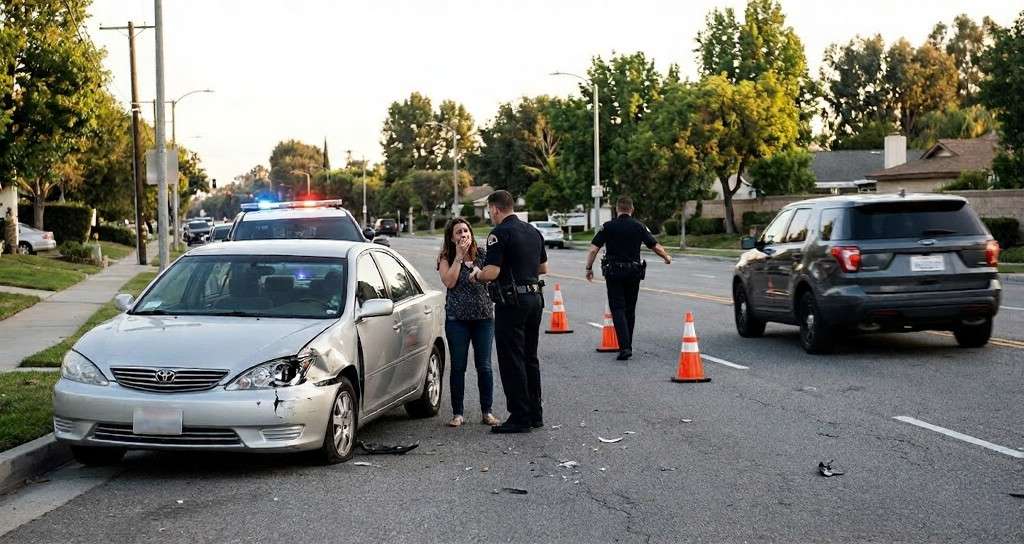
Charged with hit and run DUI in Diamond Bar? You’re facing one of the most aggressively prosecuted combinations of criminal charges in Los Angeles County — a DUI allegation layered on top of a felony or misdemeanor hit and run charge that carries its own mandatory penalties, restitution orders, license consequences, and potential state prison exposure. Whether the collision occurred on Diamond Bar Boulevard, Grand Avenue, the 57 Freeway, the 60 Freeway, or a residential street anywhere in Diamond Bar, a hit and run DUI arrest triggers simultaneous criminal prosecution and DMV administrative action that can destroy your driving privileges, your employment, and your freedom. Prosecutors treat hit and run DUI as evidence of consciousness of guilt — they argue that leaving the scene proves you knew you were impaired and panicked. Our job is to dismantle that narrative and every piece of evidence behind it. At Tu Defensor Criminalista, our bilingual criminal defense team represents hit and run DUI clients throughout Los Angeles County’s Pomona Valley and Eastern San Gabriel Valley — from the moment of arrest through DMV hearings, preliminary hearings, and jury trial. Call us immediately. Every hour you wait is an hour the prosecution spends building its case against you.
Free Confidential Consultation: (888) 315-3326 | Available 24/7 | Hablamos Español
Charged with hit and run after a DUI collision in Diamond Bar? You’re facing prosecution under California Vehicle Code § 20001 if the collision involved injury or death — a felony hit and run charge carrying state prison sentences of 2, 3, or 4 years, plus separate DUI enhancement allegations that stack additional time onto every conviction. If the collision involved only property damage, you face Vehicle Code § 20002 — a misdemeanor hit and run charge that still carries jail time, fines, license consequences, and a criminal record — combined with DUI charges under Vehicle Code § 23152 that trigger their own independent set of penalties. Whether your case involves a fender bender in a Diamond Bar parking lot or a serious injury collision on the 57 Freeway, leaving the scene of any accident in California is a separate criminal offense from the DUI itself — and prosecutors pursue both charges simultaneously, using each to reinforce the other. Our Diamond Bar hit and run DUI attorneys fight both charges from the ground up.
¿Arrestado por DUI con huida de la escena del accidente en Diamond Bar, Walnut, Pomona, o Chino Hills? Usted enfrenta cargos de fuga de accidente bajo el Código de Vehículos § 20001 o § 20002, además de cargos de DUI bajo el Código de Vehículos § 23152 — una combinación que los fiscales del Condado de Los Ángeles persiguen de manera implacable. Las consecuencias incluyen tiempo en prisión estatal, suspensión de licencia, multas masivas, y un récord criminal permanente que afecta cada área de su vida. En Tu Defensor Criminalista, nuestro equipo bilingüe de defensa criminal habla español con fluidez y está listo para defenderle desde el primer momento — tanto en la audiencia del DMV como en la Corte de Pomona. No enfrente estos cargos solo. Llámenos hoy mismo para una consulta gratuita y confidencial.
Accused of DUI hit and run causing injury in Diamond Bar? You’re potentially facing a felony hit and run conviction under Vehicle Code § 20001[1] combined with a felony DUI with injury charge under Vehicle Code § 23153[2] — two separate felony convictions that can be sentenced consecutively, meaning the punishment for each stacks on top of the other. Add great bodily injury enhancements under Penal Code § 12022.7[3] and victim restitution orders that can total hundreds of thousands of dollars, and a single incident in Diamond Bar can result in years of state prison time, the permanent loss of your driving privileges, and financial devastation. These are not cases to navigate without experienced criminal defense representation — and not cases where you should wait to hire an attorney.
Understanding the legal structure of hit and run charges is foundational to building an effective defense. There are two separate hit and run statutes in California, and the distinction between them determines whether your case is a misdemeanor or a felony.
Under Vehicle Code § 20002[4], a driver involved in an accident that results only in property damage — including damage to another vehicle, a fence, a wall, a parked car, or any other property — is legally required to immediately stop at the scene, provide their name, address, and vehicle registration information to the other party or property owner, and if the owner cannot be located, leave a written note in a conspicuous place on the damaged property.
To convict under § 20002, the prosecution must prove: (1) you were involved in a vehicle accident; (2) the accident resulted in property damage; (3) you knew or reasonably should have known the accident occurred; and (4) you willfully failed to stop and perform the legal duties required by law.
Penalties for misdemeanor hit and run under § 20002 include up to 6 months in county jail, fines up to $1,000, and DMV points on your driving record. When combined with a DUI charge under § 23152, misdemeanor hit and run becomes a significantly more serious matter — both charges appear on your criminal record, and prosecutors use the hit and run to argue consciousness of guilt on the DUI.
Under Vehicle Code § 20001[1], a driver involved in an accident that results in injury or death to any person — other than themselves — is required to immediately stop, provide identifying information, and render reasonable assistance to injured persons, including calling for emergency medical help. Failure to comply is a felony.
To convict under § 20001, the prosecution must prove: (1) you were involved in a vehicle accident; (2) the accident resulted in injury or death to another person; (3) you knew or reasonably should have known of the injury or death; and (4) you willfully failed to perform the duties required by law.
Felony hit and run under § 20001 carries state prison sentences of 2, 3, or 4 years. If the accident caused death or permanent serious bodily injury, penalties increase to 2, 3, or 4 years — and can go up to 10 years in state prison with a DUI causing death allegation. Restitution to victims is mandatory.
Alongside hit and run charges, the prosecution files DUI charges under Vehicle Code § 23152[5] (misdemeanor DUI) or Vehicle Code § 23153[2] (felony DUI with injury). Each charge carries its own independent criminal penalties, DMV administrative consequences, and probation or parole conditions. Combined, they represent some of the most serious non-homicide charges a driver in Diamond Bar can face.
Hit and run DUI investigations in Diamond Bar are typically conducted by the Los Angeles County Sheriff’s Department Walnut/Diamond Bar Station (21695 Valley Boulevard, Walnut, CA 91789) or the California Highway Patrol if the incident occurred on a state freeway such as the 57 or 60. Understanding how these investigations unfold reveals where defenses arise.
Responding officers document the collision scene — vehicle debris, paint transfer, skid marks, damage patterns, and the position of damaged property. This physical evidence is used to identify the fleeing vehicle and establish the severity of the collision. Our Diamond Bar hit and run DUI attorneys work with independent accident reconstruction experts to challenge the prosecution’s collision analysis, establish causation disputes, and identify evidence the prosecution’s investigation missed or mischaracterized.
Diamond Bar’s commercial corridors — Diamond Bar Boulevard, Grand Avenue, Golden Springs Drive, Brea Canyon Road, and the areas surrounding the 57/60 interchange — are covered by surveillance cameras on businesses, traffic signal systems, and residential properties. The prosecution routinely subpoenas surveillance footage to identify fleeing vehicles. We evaluate this footage critically: surveillance cameras have limited resolution, coverage angles vary, and lighting conditions at night can make vehicle identification unreliable. We retain video analysis experts where needed to challenge the prosecution’s identification evidence.
Eyewitness accounts of the fleeing vehicle — license plate numbers, vehicle descriptions, driver descriptions — are notoriously unreliable, particularly in post-accident chaos. The reliability of eyewitness identification is one of the most studied and recognized problems in criminal justice. According to the California Commission on the Fair Administration of Justice[6], eyewitness misidentification is a leading cause of wrongful convictions in California. Our attorneys challenge witness identification procedures and the reliability of identification testimony in every hit and run DUI case.
Identifying a vehicle is not the same as identifying the driver. Even if the prosecution can prove your vehicle was involved in a collision in Diamond Bar, they must also prove beyond a reasonable doubt that you — not someone else who had access to your vehicle — were the driver. This distinction is critical. In many hit and run DUI cases, multiple people have access to a vehicle, the vehicle may have been loaned, stolen, or driven by someone else, or the prosecution’s identification of the driver is based entirely on circumstantial inference.
Hit and run DUI cases often involve a significant time gap between the collision and the driver’s arrest. A driver who left the scene may not be located and tested for hours after the incident. This time gap creates powerful defenses. Any alcohol consumed after the collision but before the chemical test — sometimes called a “post-driving drink” — can account for a high BAC result even if the driver was under the legal limit at the time of driving. The rising BAC defense applies with particular force in hit and run DUI cases where the time between driving and testing is substantial.
Furthermore, California Code of Regulations Title 17[7] requires breath and blood tests to be administered in compliance with strict protocols. A breath test administered hours after a collision — without proper observation period, with an uncalibrated device, or outside of protocol — produces unreliable results that our attorneys challenge directly.
Prosecutors in Los Angeles County hit and run DUI cases routinely argue that leaving the scene of the accident is evidence of consciousness of guilt — that the driver fled because they knew they were drunk and panicked. This argument is emotionally compelling to juries and is one of the most dangerous aspects of a combined hit and run DUI prosecution.
Our Diamond Bar hit and run DUI defense attorneys counter the consciousness of guilt argument by establishing alternative explanations for departure from the scene: fear of a traffic stop due to immigration status, panic following a traumatic collision, lack of awareness that the collision was significant enough to require stopping, medical shock, and many others. We also attack the foundation of the argument itself: leaving the scene proves only that a person left the scene — it does not prove they were impaired at the time of driving. Prosecutors conflate departure with intoxication, and it is our job to separate those two distinct questions for the jury.
Charged with DUI causing injury after a collision in Diamond Bar? You’re facing felony charges under Vehicle Code § 23153[2] — a wobbler offense that prosecutors can charge as either a misdemeanor or a felony depending on the severity of injuries, your prior record, and the specific facts of your case. When combined with a felony hit and run charge under Vehicle Code § 20001, the cumulative sentencing exposure is severe.
A hit and run DUI conviction in Diamond Bar triggers overlapping DMV consequences through two separate administrative processes.
Our Diamond Bar hit and run DUI defense attorneys handle both the DMV APS hearing and all related DMV proceedings simultaneously with the criminal case — ensuring your driving privileges are protected at every stage.
Hit and run DUI cases arising in Diamond Bar are prosecuted at the Pomona Courthouse, 400 Civic Center Plaza, Pomona, CA 91766, which serves the Pomona Judicial District. Felony cases proceed through preliminary hearing before proceeding to Superior Court. Misdemeanor cases proceed to arraignment, pre-trial, and trial in the same courthouse.
Diamond Bar’s position at the junction of the 57 and 60 Freeways — two of the most heavily traveled freeways in the eastern Los Angeles metropolitan area — makes it a significant location for traffic collisions including DUI-related incidents and hit and run events. According to the California Highway Patrol’s Statewide Integrated Traffic Records System (SWITRS)[12], Los Angeles County records among the highest numbers of hit and run collisions of any county in California each year.
The California Office of Traffic Safety (OTS)[13] reports that hit and run collisions are a serious and growing problem throughout California, with thousands of hit and run incidents recorded annually statewide. The OTS funds local enforcement programs specifically targeting hit and run DUI incidents, and the LASD Walnut/Diamond Bar Station participates in grant-funded enforcement operations throughout the Pomona Valley area.
According to the National Highway Traffic Safety Administration (NHTSA)[14], alcohol-impaired driving contributes to approximately 28% of all traffic fatalities in the United States annually. When DUI is combined with hit and run — leaving injured victims without immediate assistance — the criminal justice system responds with maximum enforcement resources and prosecutorial aggression. Understanding this enforcement environment helps Diamond Bar hit and run DUI defendants appreciate why aggressive, experienced legal defense is not optional.
The Los Angeles County Department of Public Health[15] tracks injury data throughout the county, and collision-related injuries in the Diamond Bar area and eastern San Gabriel Valley region are consistently among the documented public health concerns that drive enforcement funding and prosecutorial priority.
Charged with hit and run DUI in Diamond Bar? Here is where your defense lives.
California law provides a specific diversion and reduced plea option in felony hit and run cases under Vehicle Code § 20001(c)[1]. Under this provision, a defendant charged with felony hit and run involving injury may receive a reduced sentence — or in some circumstances a misdemeanor disposition — if they make restitution arrangements prior to sentencing and demonstrate acceptance of responsibility. This provision does not eliminate the criminal charge, but it provides a mechanism for avoiding the harshest sentencing outcomes in appropriate cases.
Our attorneys evaluate § 20001(c) options in every Diamond Bar felony hit and run DUI case — determining whether early restitution arrangements and negotiated pleas provide a pathway to avoid state prison that serves our client’s best interests.
A hit and run DUI conviction — particularly a felony hit and run DUI — carries catastrophic consequences for professionals licensed by California state agencies. The combination of a DUI conviction and a hit and run conviction creates a record that licensing boards treat with particular seriousness.
Professions regulated by the California Department of Consumer Affairs[16] and other California licensing agencies that treat DUI and hit and run convictions as grounds for discipline include nursing, teaching, contracting, real estate, accounting, pharmacy, and many others. Healthcare professionals regulated by the Medical Board of California[17] face mandatory reporting requirements and disciplinary proceedings following felony convictions.
For Diamond Bar professionals facing hit and run DUI charges, the licensing board consequences of conviction often exceed the criminal penalties in practical life impact. Our attorneys consider licensing board implications in every case strategy decision and advise clients on the full scope of consequences before any plea is entered.
For non-citizen residents of Diamond Bar, a hit and run DUI conviction — and particularly a felony hit and run DUI conviction — can have severe immigration consequences. A felony conviction is generally a deportable offense, and a felony DUI with injury or felony hit and run may be classified as a crime involving moral turpitude or an aggravated felony under federal immigration law, triggering mandatory deportation proceedings, bars to adjustment of status, and permanent bars to naturalization.
Our bilingual defense team at Tu Defensor Criminalista works closely with non-citizen clients facing hit and run DUI charges to ensure that any negotiated resolution — including the specific charges and the form of conviction — accounts for immigration consequences. We never advise a non-citizen client to accept any plea without first evaluating its federal immigration impact.
Misdemeanor hit and run under Vehicle Code § 20002 involves a collision resulting in property damage only. Felony hit and run under Vehicle Code § 20001 involves a collision resulting in injury or death to another person. The distinction determines the maximum sentence — up to 6 months jail for misdemeanor versus up to 4 years state prison for felony hit and run (and more when combined with injury enhancements or DUI).
Both hit and run statutes require that you knew or reasonably should have known that the accident occurred. If you genuinely had no awareness of the collision — particularly in minor contact situations — lack of knowledge is a valid defense. The prosecution must prove your knowledge beyond a reasonable doubt.
Do not speak to police without an attorney present. Invoke your right to remain silent under the Fifth Amendment and your right to counsel. Even if you believe the contact was minor or that you did nothing wrong, any statement you make can be used against you. Contact Tu Defensor Criminalista immediately.
For non-citizens, a felony hit and run or felony DUI with injury conviction can have severe immigration consequences including deportation. Even misdemeanor convictions can affect visa renewals and green card applications. Our bilingual team evaluates immigration consequences before any plea is entered.
Almost certainly without aggressive legal defense. A DUI arrest triggers an automatic DMV administrative suspension unless you request a hearing within 10 days. A hit and run conviction adds additional DMV points and potential negligent operator action. A felony DUI with injury conviction triggers mandatory license revocation. Our attorneys fight on all of these fronts simultaneously.
Prosecutors treat hit and run DUI as significantly more serious than a standard DUI because they argue that leaving the scene shows consciousness of guilt — that you knew you were impaired. The combination also means additional charges, enhanced penalties, and a more aggressive prosecutorial posture. Bail is typically higher, and plea offers are typically less favorable without vigorous defense.
Yes — and it frequently is. Prosecutors subpoena footage from businesses, traffic cameras, and residential security systems near the collision site. Our attorneys obtain and critically analyze all footage, challenge its authenticity and chain of custody, and retain video analysis experts where needed to counter the prosecution’s use of surveillance evidence.
If a DUI hit and run results in death and you had a prior DUI conviction and signed a Watson admonishment acknowledging the danger of drunk driving, prosecutors can charge second-degree murder under Penal Code § 187 — carrying 15 years to life in state prison. This is the most serious DUI-related charge in California law and requires immediate, experienced legal defense.
Cases arising in Diamond Bar are prosecuted at the Pomona Courthouse, 400 Civic Center Plaza, Pomona, CA 91766. Felony cases proceed through the Los Angeles County Superior Court. LASD’s Walnut/Diamond Bar Station conducts the initial investigation.
Immediately — ideally within hours of your arrest or of law enforcement contact. You have only 10 days to request a DMV APS hearing, surveillance footage can be overwritten within days, witnesses’ memories fade, and every day without legal representation is a day the prosecution advances its case without opposition. Call Tu Defensor Criminalista now.
Remember:
Attorney Armando Josué Cespedes is rated 5.0 on Avvo, with 34 five-star reviews from clients praising his dedication, professionalism, and results. Many note how his trial skills and attention to detail led to reduced charges or outright dismissals.



 English English
 Español de México English English Español de México
Thank you! We need your help. Would you share your experience on one of these sites?
If you have concerns you wish to address privately
