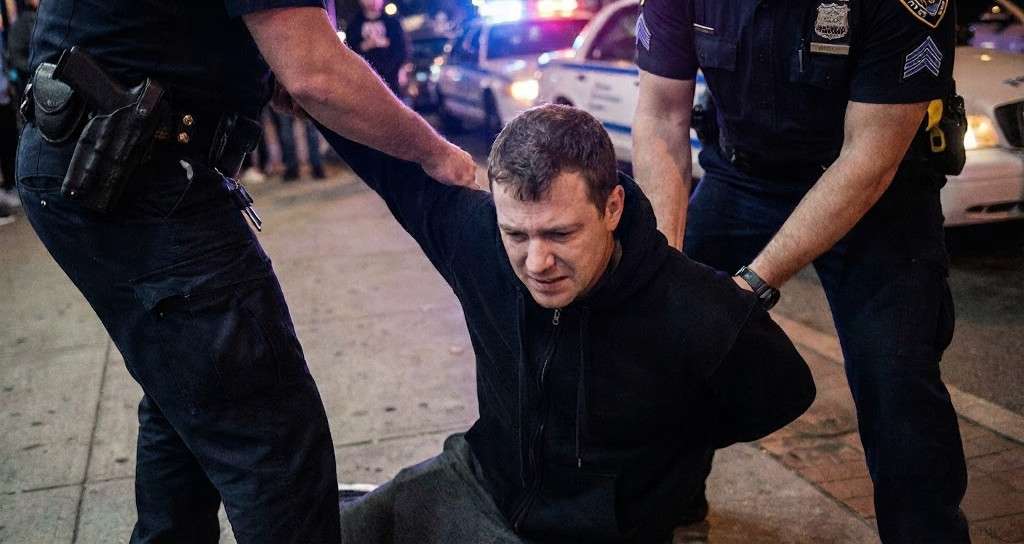
Charged with resisting arrest in Diamond Bar? You are facing criminal charges that can result in jail time, fines, a permanent criminal record, and — if force was involved — felony prosecution with serious prison exposure. Whether accused of resisting, delaying, or obstructing an officer under Penal Code § 148(a)(1), using force or violence to resist an executive officer under Penal Code § 69, or battery on a police officer under Penal Code § 243(b), these charges are aggressively prosecuted in Los Angeles County and carry consequences that extend far beyond the courtroom. A conviction for resisting arrest can affect your employment, your professional licenses, your immigration status, and your standing in any future encounter with law enforcement or the courts. These charges often arise in the heat of emotionally charged moments — DUI stops, domestic dispute calls, use of force incidents — and law enforcement’s version of events is not always accurate, complete, or unbiased. You deserve an attorney who will challenge that version aggressively, investigate the facts independently, and fight to protect your rights at every stage of the proceedings.
Diamond Bar sits at the crossroads of the 57 and 60 freeways in eastern Los Angeles County, a community served by the Los Angeles County Sheriff’s Department’s Industry Station and patrolled by the California Highway Patrol on its major freeway corridors. These agencies conduct a high volume of traffic stops, DUI checkpoints, and law enforcement contacts in Diamond Bar daily. According to the California Department of Justice Open Justice portal[1], arrests for resisting, obstructing, and delaying peace officers occur regularly throughout Los Angeles County, often in conjunction with DUI arrests, domestic violence calls, and other law enforcement contacts. When those arrests lead to criminal charges, the cases are prosecuted by the Los Angeles County District Attorney’s Office at the Pomona Superior Court — and fighting them requires experienced, local criminal defense representation.
At Tu Defensor Criminalista, we defend clients charged with all categories of resisting arrest and related offenses throughout Diamond Bar, the San Gabriel Valley, the Pomona Valley, and all of Los Angeles County. We investigate independently, challenge law enforcement’s account of events, and pursue every legal avenue to protect your freedom and your record.
Free Confidential Consultation: (888) 315-3326 | Available 24/7 | Hablamos Español
Facing resisting arrest charges in Diamond Bar and uncertain which law applies to your situation? California prosecutes resisting, delaying, and obstructing peace officers under multiple statutes, each carrying different penalties and requiring different proof. Understanding which charge you are facing — and what the prosecution must prove — is the first step in building your defense.
Penal Code § 148(a)(1) is California’s general resisting arrest statute. It makes it a crime to willfully resist, delay, or obstruct any public officer, peace officer, or emergency medical technician in the discharge or attempt to discharge any duty of their office or employment. This is a misdemeanor offense — the most commonly charged resisting arrest offense in Los Angeles County — punishable by up to one year in county jail and a fine of up to $1,000.
The prosecution must prove all of the following elements beyond a reasonable doubt:
The word “willfully” is critical. It means the act must be intentional — but it does not require that the defendant intended to break the law or cause harm. Even passive resistance — going limp, pulling your arm away, verbally refusing to comply with a command — can be charged under PC § 148(a)(1). However, the law does not criminalize protected speech. Merely arguing with, questioning, or verbally criticizing a police officer — without physically interfering — does not constitute a violation of PC § 148(a)(1).
One of the most powerful defenses to any PC § 148(a)(1) charge is the requirement that the officer must have been performing a lawful duty. If the officer was acting unlawfully — conducting an illegal detention, using excessive force, making an unlawful arrest without probable cause — then a person’s resistance to that unlawful conduct is not a crime under PC § 148(a)(1). California law has long recognized that a person has the right to resist an unlawful arrest. This defense, grounded in well-established California case law, is frequently decisive in resisting arrest cases where law enforcement overstepped its authority.
Penal Code § 69 is a much more serious charge than PC § 148(a)(1). It applies when a person uses force or violence, or threatens to use force or violence, to resist or deter an executive officer from performing their duty. PC § 69 is a wobbler offense — meaning it can be charged as either a misdemeanor or a felony depending on the circumstances and the defendant’s criminal history.
As a misdemeanor: Up to 1 year in county jail. As a felony: 16 months, 2 years, or 3 years in state prison.
The key distinction between PC § 148(a)(1) and PC § 69 is the use of force or violence. Passively pulling away from an officer may support a PC § 148(a)(1) charge but typically does not rise to the level of PC § 69. Actively striking, pushing, kicking, or threatening an officer with violence supports PC § 69 prosecution. However, law enforcement accounts of “force” are not always accurate — exaggeration and fabrication do occur, and video evidence, independent witnesses, and physical evidence often tell a different story than the police report.
Battery on a peace officer under Penal Code § 243(b) is a separate but frequently related charge. California Penal Code § 242 defines battery as any willful and unlawful use of force or violence upon the person of another. When the victim is a peace officer — a police officer, deputy sheriff, CHP officer, firefighter, EMT, or other protected category — the charge elevates to PC § 243(b), a misdemeanor punishable by up to 1 year in county jail and a fine of up to $2,000.
If the battery results in injury to the officer, the charge can be elevated to PC § 243(c)(2), which is a wobbler carrying up to 3 years in state prison if charged as a felony. Battery charges in resisting arrest cases frequently arise from brief physical contact that occurs during the arrest itself — contact that may be entirely defensive, reflexive, or even incidental — and that law enforcement characterizes as intentional battery.
A related charge sometimes filed alongside resisting arrest charges is Penal Code § 148.9 — providing false identification to a peace officer. This is a misdemeanor carrying up to 6 months in county jail. It is commonly charged when a person stopped by law enforcement in Diamond Bar provides a false name or false identification documents during a detention or arrest.
In the most serious circumstances, where resistance to an officer results in death or serious bodily injury to the officer, Penal Code § 148.10 applies. This is a felony charge carrying 2, 3, or 4 years in state prison if the officer suffers serious bodily injury, and 3, 4, or 5 years in state prison if the officer is killed. These charges represent the most severe end of the resisting arrest spectrum and require the most aggressive and experienced criminal defense representation available.
Accused of resisting arrest in Diamond Bar? The immediate criminal penalties are only part of the picture. A conviction under any of these statutes triggers cascading collateral consequences that can permanently damage your employment prospects, your professional licenses, your immigration status, and your reputation in the community.
For PC § 148(a)(1) misdemeanor resisting arrest:
For PC § 69 resisting an executive officer:
For PC § 243(b) battery on a peace officer:
For PC § 243(c)(2) battery on officer causing injury:
Probation for resisting arrest convictions in Los Angeles County typically includes: prohibition on possessing firearms or weapons, regular check-ins for formal probation, prohibition on any further law enforcement contact, community service hours, payment of fines and restitution, and compliance with all laws. Any violation of probation terms can result in immediate custody and imposition of additional jail time.
A resisting arrest conviction — particularly a felony conviction under PC § 69 or PC § 243(c)(2) — triggers mandatory reporting to California professional licensing boards. According to the California Department of Consumer Affairs[2], professional licensees in healthcare, law, education, contracting, real estate, and dozens of other regulated industries face potential license suspension or revocation upon conviction of a crime substantially related to the duties of their profession. Law enforcement officers, security guards, and professionals requiring security clearances face particularly severe consequences from resisting arrest convictions.
Even a misdemeanor resisting arrest conviction under PC § 148(a)(1) appears on criminal background checks and can significantly damage employment prospects. California employers are permitted to consider criminal convictions when making hiring decisions, and a resisting arrest conviction — particularly one involving force or battery — raises serious concerns for employers in sensitive industries. According to the California Civil Rights Department[3], California has enacted various “fair chance” employment protections, but criminal convictions can still be lawfully considered under many circumstances.
For non-citizen residents of Diamond Bar — a community with significant immigrant populations according to the U.S. Census Bureau American Community Survey[4] — a resisting arrest conviction can have severe immigration consequences. Felony convictions under PC § 69 or PC § 243(c)(2) may be classified as crimes of violence or crimes involving moral turpitude under federal immigration law, potentially triggering deportation proceedings, inadmissibility, and bars to naturalization. Even misdemeanor convictions can affect immigration status in certain circumstances. Immediate consultation with an attorney experienced in both criminal defense and immigration consequences is essential for non-citizen defendants.
A felony conviction for resisting arrest under PC § 69 or battery on an officer under PC § 243(c)(2) results in a lifetime ban on possessing firearms or ammunition under both California and federal law. Even misdemeanor convictions involving domestic violence or certain other categories can result in firearm prohibitions. For clients who legally own firearms, the consequences of a felony conviction extend to loss of all Second Amendment rights.
Facing resisting arrest charges in Diamond Bar? Every case presents specific facts and legal issues that create defense opportunities. Our attorneys at Tu Defensor Criminalista investigate every case independently, challenge every piece of evidence, and pursue every defense strategy available under California law.
The most powerful defense to a PC § 148(a)(1) resisting arrest charge is proof that the underlying arrest or detention was unlawful. California law has long recognized that a person cannot be convicted of resisting a peace officer who was not lawfully performing their duty. If the officer lacked probable cause to arrest you, lacked reasonable suspicion to detain you, or was using excessive force in violation of your constitutional rights, your resistance to that unlawful conduct is not a crime. This defense requires a thorough investigation of the lawfulness of the officer’s conduct — including review of the police report, dashcam footage, bodycam footage, dispatch records, and independent witness accounts.
Penal Code § 148(a)(1) requires that the defendant willfully resisted, delayed, or obstructed the officer. Conduct that was reflexive, accidental, or caused by involuntary physical reaction — such as flinching from pain during an overly aggressive takedown, stumbling during a physical arrest, or pulling away from a painful joint lock — is not “willful” within the meaning of the statute. Building a factual record through bodycam footage and medical evidence of injuries can establish that your conduct was not willful.
Penal Code § 148(a)(1) requires that you knew or reasonably should have known the person was a peace officer performing their duties. In plainclothes or undercover officer situations, in chaotic public circumstances, or where an officer failed to properly identify themselves, this knowledge element can be legitimately challenged.
California courts have consistently held that the First Amendment protects the right to verbally criticize, question, or argue with police officers. Merely using harsh words, questioning the legality of a stop, or expressing anger verbally — without physically interfering with the officer’s duties — does not constitute resisting, delaying, or obstructing under PC § 148(a)(1). If the prosecution’s case rests primarily on verbal conduct, a strong First Amendment defense may apply.
California Penal Code § 835a governs the use of force by law enforcement officers. If an officer used unreasonable or excessive force in making an arrest, the person being arrested has the right to use reasonable force in self-defense. The California Department of Justice Use of Force Data Collection[5] tracks use-of-force incidents by law enforcement statewide. If the physical contact underlying a PC § 69 or PC § 243(b) charge was a defensive response to excessive force by the officer, a self-defense argument based on PC § 835a may apply.
Law enforcement agencies in Los Angeles County, including the Los Angeles County Sheriff’s Department, are required to wear and activate body-worn cameras during law enforcement contacts under California law. According to the California Department of Justice’s requirements under AB 953 and related statutes[6], law enforcement agencies must maintain video records of use-of-force incidents and other significant contacts. Our attorneys immediately send preservation letters demanding retention of all video evidence in every resisting arrest case, because footage frequently contradicts the police report’s narrative.
Law enforcement officers are human beings capable of error, bias, and — in some cases — deliberate misrepresentation. Officers who use excessive force have a powerful incentive to charge the person they used force against with resisting arrest, because a resisting arrest conviction can shield the officer from civil liability and internal discipline. Our attorneys investigate the arresting officer’s history of prior complaints, use-of-force incidents, and credibility issues that can be used to challenge their account of events.
If the initial stop or detention that led to the resisting arrest charge was unlawful under the Fourth Amendment, a Penal Code § 1538.5 motion to suppress can exclude all evidence obtained as a result — including statements made after the unlawful stop. While a resisting arrest charge can theoretically exist independently of an underlying unlawful stop, demonstrating the unlawfulness of the initial contact supports both the suppression motion and the lawful duty defense.
California Penal Code § 1001.36 provides for pre-trial mental health diversion in cases where a qualifying mental health condition was a significant factor in the commission of the charged offense. For defendants with diagnosed mental health conditions — including PTSD, bipolar disorder, anxiety disorders, and others — mental health diversion can result in dismissal of the charges upon successful completion of a treatment program, without a criminal conviction. The Los Angeles County Department of Mental Health[7] provides resources and treatment programs that can support a PC § 1001.36 diversion application.
If you are charged with felony PC § 69 or felony PC § 243(c)(2), our attorneys can file a motion under Penal Code § 17(b) to reduce the charge to a misdemeanor — either at sentencing or after a felony conviction on probation. Reduction to a misdemeanor eliminates state prison exposure, reduces collateral consequences, and preserves important rights including firearm possession in many circumstances.
Understanding the specific law enforcement environment in Diamond Bar provides important context for how resisting arrest charges arise and how they are most effectively defended.
Diamond Bar’s position at the convergence of the 57 and 60 freeways makes it a major DUI enforcement corridor. According to the California Office of Traffic Safety[8], Los Angeles County receives significant OTS grant funding for DUI enforcement operations including sobriety checkpoints and saturation patrols. Resisting arrest charges frequently arise from DUI stops when intoxicated individuals become confused, frightened, or combative during the arrest process. In these cases, the combination of alcohol or drug impairment and the physical stress of an arrest creates circumstances where what an officer characterizes as “resistance” may actually be involuntary, confused, or defensive conduct.
The Los Angeles County Sheriff’s Department Use of Force Policy governs how deputies at the Industry Station — which serves Diamond Bar — are permitted to use force during arrests. According to the Los Angeles County Sheriff’s Department Transparency and Accountability Reports[9], the department tracks and reports use-of-force incidents annually. When force is used during an arrest in Diamond Bar — whether a takedown, a Taser deployment, pepper spray, or physical restraint — and the suspect makes any physical movement in response, law enforcement frequently adds a resisting arrest charge to justify the force used. Our attorneys scrutinize every use-of-force incident to determine whether the officer’s conduct was lawful and whether the client’s response was a protected defensive reaction.
Resisting arrest cases from Diamond Bar are prosecuted at the Pomona Courthouse at 400 Civic Center Plaza, Pomona, CA 91766. The Pomona courthouse’s criminal division handles a high volume of cases involving resisting arrest, battery on an officer, and related charges. Understanding the charging practices of the Los Angeles County District Attorney’s Office’s Pomona branch, the judicial officers assigned to misdemeanor and felony criminal departments, and the local culture of plea negotiation at this courthouse is essential to effective defense strategy. Our attorneys practice regularly in the Pomona courthouse and bring that local knowledge to every case.
Diamond Bar law enforcement contacts involve multiple agencies: the Los Angeles County Sheriff’s Department’s Industry Station for the unincorporated community itself, the California Highway Patrol for freeway incidents, and Pomona Police for contacts near the city boundary. Different agencies have different training standards, body camera policies, and documentation practices. Inconsistencies across agency reports, and differences in how each agency documents use of force and resistance, can be valuable to a defense attorney examining the full evidentiary record.
Diamond Bar has a diverse population that includes significant Asian-American, Latino, and immigrant communities. According to the U.S. Census Bureau[4], Diamond Bar is one of the most ethnically diverse communities in Los Angeles County. Communities of color and immigrant communities have well-documented concerns about law enforcement contacts and the circumstances under which resisting arrest charges are filed. According to the California Racial and Identity Profiling Advisory Board (RIPA)[10], data collected under California’s Racial and Identity Profiling Act (AB 953) shows racial disparities in how law enforcement stops and arrests are made across California. Our attorneys take these realities seriously and investigate every case for evidence of pretextual stops, discriminatory enforcement, and officer bias.
Resisting arrest charges rarely arise in isolation. In Diamond Bar, they most commonly appear alongside other criminal charges that create additional complexity and stakes. Understanding the full picture of your case — including the interaction between the resisting arrest charge and any companion charges — is essential to effective defense strategy.
Arrested for resisting arrest in Diamond Bar and unsure what to expect? Here is the step-by-step process through the criminal court system in Los Angeles County.
At Tu Defensor Criminalista, we defend clients charged with all categories of resisting arrest and related offenses throughout Diamond Bar, the San Gabriel Valley, the Pomona Valley, and all of Los Angeles County. Our criminal defense team investigates every case independently, challenges law enforcement accounts aggressively, and fights to protect your freedom, your record, and your rights.
We defend against:
We serve Diamond Bar and surrounding communities including Walnut, Rowland Heights, Pomona, Chino Hills, West Covina, La Verne, San Dimas, Covina, Azusa, Baldwin Park, Industry, and all of Los Angeles County.
Contact Tu Defensor Criminalista today for an immediate, confidential consultation.
Visit us online:tudefensorcriminalista.com
Do not wait. Do not speak to law enforcement without an attorney. Your defense begins now.
PC § 148(a)(1) is a misdemeanor carrying up to 1 year in county jail and a fine of up to $1,000. In practice, first-time offenders often receive probation, community service, and fines rather than jail time — but a conviction still results in a permanent criminal record.
No. California law and the First Amendment protect your right to verbally criticize, question, or argue with a police officer. Merely speaking harshly or questioning the legality of a stop does not constitute resisting, delaying, or obstructing under PC § 148(a)(1). Physical interference with the officer’s duties is required for a valid charge.
PC § 148(a)(1) applies to resisting, delaying, or obstructing an officer without force — it is a misdemeanor. PC § 69 applies when force or violence is used to resist an executive officer — it is a wobbler that can be charged as a misdemeanor or felony carrying up to 3 years in state prison.
California law recognizes that a person cannot be convicted of resisting a peace officer who was not lawfully performing their duty. If the officer was making an unlawful arrest without probable cause or using excessive force, resistance to that unlawful conduct is not a crime under PC § 148(a)(1). However, this defense requires careful factual and legal analysis and is best evaluated by an experienced criminal defense attorney.
Possibly. California professional licensing boards require licensees to report criminal convictions, and boards have authority to discipline licensees for convictions substantially related to their professional duties. Healthcare workers, teachers, law enforcement personnel, security guards, and others may face license suspension or revocation. Consulting an attorney before entering any plea is essential.
Yes. Felony charges under PC § 69 and PC § 243(c)(2) are wobbler offenses that can be reduced to misdemeanors under Penal Code § 17(b) — either through negotiation before trial, at sentencing, or after completion of felony probation. Reduction to a misdemeanor eliminates state prison exposure and significantly reduces long-term consequences.
For non-citizens, a resisting arrest conviction — particularly a felony conviction under PC § 69 or PC § 243(c)(2) — may be classified as a crime of violence or crime involving moral turpitude under federal immigration law, potentially triggering deportation, inadmissibility, and bars to naturalization. Consult a criminal defense attorney with immigration experience immediately.
PC § 1001.36 provides pre-trial diversion for defendants with qualifying mental health conditions when the condition was a significant factor in the charged offense. Successful completion of a court-approved treatment program results in dismissal of the charges without a criminal conviction. Resisting arrest charges — particularly those arising from mental health crises — can qualify for PC § 1001.36 diversion.
Not automatically — but the lawfulness of the officer’s conduct is directly tied to the validity of the underlying arrest or detention. If the prosecution drops or cannot prove the underlying offense, it significantly strengthens the argument that the officer was not performing a lawful duty and supports a motion to dismiss the resisting arrest charge as well.
Remain silent. Do not speak to law enforcement about the incident without an attorney present. Do not post about the incident on social media. Contact Tu Defensor Criminalista immediately for a confidential consultation. Early retention of an attorney allows for immediate evidence preservation — including bodycam and dashcam footage that may be overwritten — and gives your defense team the best opportunity to build a strong case.
Remember:
Attorney Armando Josué Cespedes is rated 5.0 on Avvo, with 34 five-star reviews from clients praising his dedication, professionalism, and results. Many note how his trial skills and attention to detail led to reduced charges or outright dismissals.



 English English
 Español de México English English Español de México
Thank you! We need your help. Would you share your experience on one of these sites?
If you have concerns you wish to address privately
