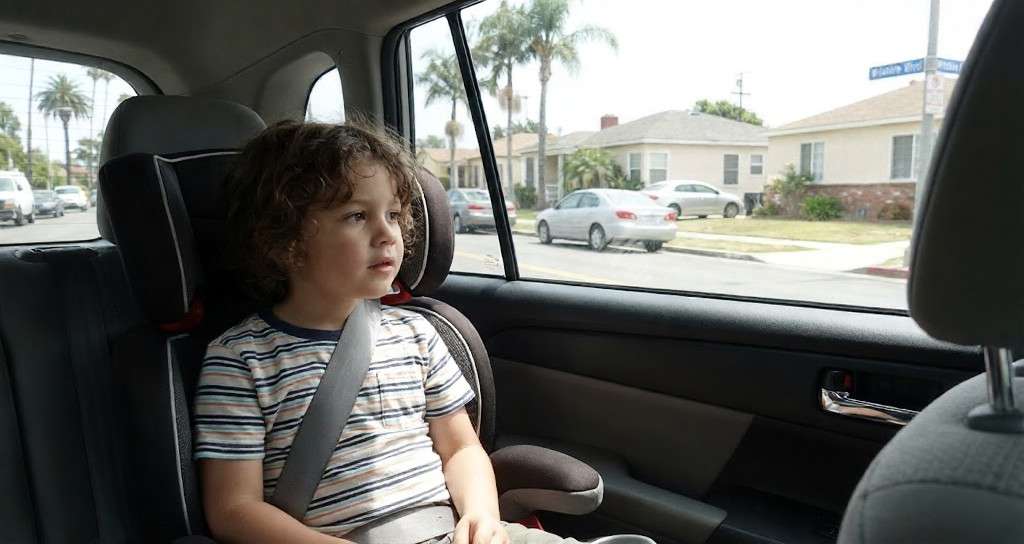
Charged with DUI with child endangerment in Los Angeles County? You’re facing one of the most serious DUI-related charges in California — a criminal prosecution that combines drunk driving penalties with child abuse allegations, threatening your freedom, your family, and your future. A conviction can mean mandatory jail time, loss of your driver’s license, a permanent criminal record, and even the involvement of child protective services. Whether you were stopped at a DUI checkpoint in Downtown Los Angeles, pulled over on the 405, or arrested in Long Beach, Compton, Pasadena, or anywhere across Los Angeles County, the stakes could not be higher — and you need an experienced, aggressive criminal defense attorney fighting for you right now.
At Tu Defensor Criminalista, we are Spanish-speaking criminal defense lawyers serving the entire Los Angeles County area. We understand what DUI with child endangerment charges mean under California law, and we know exactly how to fight them. Our firm handles cases throughout Los Angeles, Long Beach, Pasadena, Compton, Glendale, Santa Monica, Torrance, Inglewood, Pomona, El Monte, and every city in between. Call us today for a confidential consultation — your freedom and your family deserve the best defense possible.
Free Confidential Consultation: (888) 315-3326 | Available 24/7 | Hablamos Español
Accused of driving under the influence with a minor in your vehicle in Los Angeles County? You are facing enhanced DUI penalties under California Vehicle Code § 23572, which mandates additional mandatory jail time on top of your standard DUI sentence — solely because a child under 14 years old was in your car at the time of the arrest. This is not a simple DUI charge. This is a compound offense that prosecutors and judges in Los Angeles County treat with extreme seriousness.
California Vehicle Code § 23572 imposes mandatory additional jail time as a sentence enhancement when a person is convicted of DUI under Vehicle Code § 23152 and a passenger under the age of 14 was present in the vehicle. The enhancement stacks on top of your base DUI sentence:
— First DUI offense with child passenger: 48 hours additional mandatory jail — Second DUI offense with child passenger: 10 days additional mandatory jail — Third DUI offense with child passenger: 30 days additional mandatory jail — Fourth or subsequent DUI with child passenger: 90 days additional mandatory jail
These enhancements are mandatory — meaning the judge has no discretion to waive them if you are convicted. Combined with the base DUI penalties, probation terms, fines exceeding $1,800, mandatory DUI school, license suspension, and potential ignition interlock device (IID) requirements, the full weight of a DUI with child endangerment conviction is devastating.
But that is not all. Prosecutors in Los Angeles County often file a separate and additional charge under Penal Code § 273a, California’s child endangerment statute. This charge — which can be filed as either a misdemeanor or a felony — exposes you to up to six years in California state prison if charged as a felony, plus potential permanent impact on child custody proceedings and involvement by the Los Angeles County Department of Children and Family Services (DCFS). California Penal Code § 273a[1] is a serious felony-level charge that requires a serious defense strategy from day one.
Facing DUI with child endangerment charges in Los Angeles County? You are up against one of the most aggressive prosecutorial environments in California. The Los Angeles County District Attorney’s Office prosecutes hundreds of thousands of cases annually[2], and DUI with child passengers is treated as a high-priority offense. Los Angeles County has over 10 million residents[3] spread across 88 cities and thousands of miles of freeways, surface streets, and residential roads — making it one of the most heavily policed driving jurisdictions in the United States.
According to the California Office of Traffic Safety (OTS)[4], Los Angeles County consistently ranks among the highest in the state for DUI arrests and DUI-related crash fatalities. The OTS reported that in recent grant years, Los Angeles County received millions of dollars in DUI enforcement funding[5] to support sobriety checkpoints, saturation patrols, and DUI task forces — meaning law enforcement in Los Angeles is specifically funded and trained to make DUI arrests. That enforcement pressure creates situations where innocent people — or people whose rights were violated during the traffic stop or arrest — face life-altering charges.
At Tu Defensor Criminalista, we fight DUI with child endangerment charges throughout every courthouse and jurisdiction in Los Angeles County, including:
— Los Angeles Superior Court – Criminal Division (Compton Courthouse, Airport Courthouse, Clara Shortridge Foltz Criminal Justice Center, Chatsworth Courthouse, Pasadena Courthouse, Pomona Courthouse, Torrance Courthouse, Van Nuys Courthouse, and more) — Long Beach Superior Court — Pasadena Superior Court — Santa Monica Superior Court — Inglewood Superior Court — Lancaster and Palmdale Courthouses
No matter where your case is filed across Los Angeles County, our team knows the local prosecutors, judges, and procedures that can make the difference between a conviction and a dismissal.
Understanding how law enforcement in Los Angeles County builds DUI with child endangerment cases is critical to building your defense. Here is what typically happens from the moment of the traffic stop through your arraignment:
Charged with DUI with a minor passenger in Los Angeles County? A conviction is never guaranteed — not even when the prosecution has a breathalyzer reading, an officer’s testimony, and a child in the vehicle. At Tu Defensor Criminalista, we analyze every element of the evidence and every step of the police procedure to find the defenses that can reduce your charges, suppress evidence, or win your case outright.
Facing DUI with child endangerment in Los Angeles County means facing a stacked punishment structure that can affect every area of your life for years. Here is what California law and Los Angeles County courts impose upon conviction:
Los Angeles County’s sheer size and vehicle-dependent culture make DUI enforcement a top law enforcement priority. Understanding the local statistics helps explain why Los Angeles County prosecutors treat DUI with child endangerment cases with maximum aggression.
According to the California Office of Traffic Safety Annual Report[10], Los Angeles County consistently ranks among the top California counties for total DUI arrests and DUI-related injury crashes. The California Highway Patrol Statewide Integrated Traffic Records System (SWITRS)[11] tracks crash data showing that alcohol-involved crashes remain a significant cause of traffic fatalities in Los Angeles County each year.
The National Highway Traffic Safety Administration (NHTSA)[6] reports that nationally, children are disproportionately represented as passengers in alcohol-impaired driving crashes — a statistic that drives aggressive legislative and prosecutorial policy toward DUI defendants with child passengers. This national policy framework filters down to aggressive charging decisions at the local level in Los Angeles County, where prosecutors and judges are under public pressure to make examples of DUI defendants when children are involved.
The Los Angeles County Department of Public Health[12] has identified traffic safety and DUI enforcement as a public health priority, reinforcing the multi-agency approach to DUI prosecution that includes law enforcement, the DA’s office, DMV, DCFS, and public health departments all working together in cases involving children. This is why having a defense attorney who understands all of these intersecting systems is not just helpful — it is essential.
Arrested for DUI with child endangerment in Los Angeles County? Understanding what happens next — from arraignment through trial or resolution — can help you feel less overwhelmed and make better decisions for your defense. Here is how the Los Angeles County criminal court process typically unfolds in DUI with child endangerment cases:
Charged with felony DUI child endangerment in Los Angeles County? You may be facing a potential “strike” under California’s Three Strikes sentencing law (Penal Code §§ 667 and 1170.12). A “serious” or “violent” felony conviction counts as a strike, and a second strike doubles your sentence for any subsequent felony. A third strike can result in a mandatory sentence of 25 years to life in state prison.
Whether a felony child endangerment conviction under Penal Code § 273a qualifies as a “strike” depends on the specific circumstances charged and proven — including whether the offense is alleged to have involved great bodily injury or use of a deadly weapon. The California Legislative Information page for Penal Code § 1192.7[13] defines “serious felony” for Three Strikes purposes. The stakes of a felony child endangerment charge in Los Angeles County cannot be overstated — these are the cases were having a skilled, experienced attorney is truly the difference between going home and going to prison.
Los Angeles County hosts more DUI sobriety checkpoints and saturation patrols than almost any jurisdiction in California. Funded through California Office of Traffic Safety grants[5], the LAPD, LASD, and dozens of municipal police agencies conduct regular DUI enforcement operations throughout the county.
DUI checkpoints in Los Angeles must meet specific constitutional requirements established by the California Supreme Court in Ingersoll v. Palmer (1987)[14] and the U.S. Supreme Court in Michigan Department of State Police v. Sitz (1990)[15]. These requirements include advance public notice, neutral formula for stopping vehicles, supervisory approval of the checkpoint plan, and reasonable location selection. Failure to comply with these constitutional requirements can render all arrests made at a checkpoint subject to dismissal.
If you were arrested at a DUI checkpoint anywhere in Los Angeles County — whether in Hollywood, Inglewood, Compton, the San Fernando Valley, the South Bay, or the San Gabriel Valley — contact Tu Defensor Criminalista immediately. We know how to evaluate checkpoint compliance and how to challenge arrests that did not meet constitutional standards.
One of the most frightening aspects of a DUI with child endangerment arrest in Los Angeles County is the involvement of the Los Angeles County Department of Children and Family Services (DCFS). When law enforcement arrests a parent or guardian for DUI with a child in the vehicle, DCFS is frequently notified and may open a formal child welfare investigation.
According to the Los Angeles County DCFS[16], the agency investigates reports of child abuse and neglect and has broad authority to conduct home visits, interview children and family members, and in serious cases, seek emergency removal of children from the home through the Los Angeles County Juvenile Dependency Court.
A DCFS investigation running parallel to your criminal case creates serious risks: — Statements you make to DCFS workers can be used against you in your criminal case — A criminal conviction for DUI with child endangerment will be used as evidence in DCFS proceedings — Family court judges and dependency court judges can restrict or terminate your custody rights based on a criminal conviction
At Tu Defensor Criminalista, we advise our clients on how to protect their rights during DCFS investigations while defending their criminal case. You should never speak to DCFS investigators without first consulting with your attorney. Call us immediately if DCFS has contacted you.
Los Angeles County is home to one of the largest immigrant communities in the United States. If you are not a United States citizen — whether you are a lawful permanent resident (green card holder), a visa holder, DACA recipient, or undocumented — a DUI with child endangerment conviction can have catastrophic immigration consequences.
Under federal immigration law, a conviction for child abuse, child endangerment, or child neglect is classified as an aggravated felony and a crime of moral turpitude, both of which can trigger mandatory deportation, permanent bars to re-entry, and denial of naturalization. Even a misdemeanor child endangerment conviction under Penal Code § 273a can have severe immigration consequences depending on your specific immigration status and history.
At Tu Defensor Criminalista, we are acutely aware of the immigration stakes for our clients throughout Los Angeles County. We work to achieve dispositions that minimize or eliminate immigration consequences wherever possible. If you or a family member is facing DUI with child endangerment charges and has immigration concerns, contact us immediately.
Facing DUI with child endangerment charges in Los Angeles County is overwhelming — especially when language barriers make navigating the California criminal justice system even more difficult. At Tu Defensor Criminalista, we are a Spanish-speaking criminal defense firm dedicated to serving the Latino community throughout Los Angeles County and all of Southern California.
Here is why clients across Los Angeles County trust us with their most serious criminal charges:
📞Call or Contact Us Now — Tu Defensor Criminalista
Tu Defensor Criminalista provides aggressive criminal defense representation throughout Los Angeles County, including but not limited to:
Los Angeles | Long Beach | Pasadena | Compton | Inglewood | Glendale | Santa Monica | Torrance | Burbank | El Monte | Pomona | Downey | West Covina | Norwalk | Hawthorne | Whittier | Alhambra | Lakewood | Bellflower | Carson | Baldwin Park | Lynwood | Redondo Beach | Paramount | Montebello | Monrovia | Temple City | Rosemead | Gardena | Culver City | Palmdale | Lancaster | East Los Angeles | Huntington Park | Maywood | Bell | Cudahy | South Gate | Lawndale | Gardena | Cerritos | Artesia | Pico Rivera | La Puente | Covina | Azusa | Duarte | Glendora | San Dimas | La Verne | Claremont | Upland | Rancho Palos Verdes | San Pedro | Hollywood | East Hollywood | Silver Lake | Echo Park | Koreatown | Westlake | South Los Angeles | Watts | Willowbrook | and all communities throughout Los Angeles County.
Convicted of DUI with child endangerment in Los Angeles County — or trying to understand what a conviction would mean for your daily life? The post-conviction requirements imposed by Los Angeles County courts and the California DMV extend far beyond the initial jail sentence and fines, creating a years-long obligation system that affects your driving, your employment, your finances, and your personal freedom.
California law mandates DUI education programs as a condition of probation and as a requirement for reinstatement of your driver’s license. The length of the program depends on your BAC at the time of arrest and whether this is a first or subsequent offense:
— AB 541 (3-month program): For first-offense DUI with BAC below 0.20% — SB 38 (18-month program): For second-offense DUI within 10 years, or first-offense DUI with BAC of 0.20% or higher — 30-month program: For third and subsequent offenses or as ordered by the court
DUI programs in Los Angeles County are licensed by the California Department of Health Care Services (DHCS)[17] and must be completed as a condition of probation and DMV license reinstatement. Failure to complete your DUI program is a probation violation that can result in your probation being revoked and a sentence being imposed or reinstated.
DUI probation in Los Angeles County typically includes: no driving with any measurable BAC (the “zero tolerance” probation condition); no refusal of chemical tests if lawfully detained; compliance with all court orders including DUI school; payment of all fines and fees; and in child endangerment cases, possible compliance with DCFS case plans or family court orders. Violating any of these probation conditions — including a new arrest, a failed test, or a missed DUI school session — can result in a probation violation hearing and imposition of the suspended jail sentence.
Ignition Interlock Device (IID) Under California’s current IID laws, first-time DUI offenders in Los Angeles County are required to install an ignition interlock device on any vehicle they drive as a condition of obtaining a restricted license during the suspension period. An IID is a breathalyzer installed in your vehicle that prevents the engine from starting if alcohol is detected. IIDs are costly to install and maintain — typically $70–$150 per month — and failures or tampering with the device can result in additional criminal charges and license consequences. California DMV IID information[9] explains current IID requirements for DUI offenders.
Accused of DUI with child endangerment in Los Angeles County? The actions you take — or fail to take — in the hours and days immediately after your arrest can have a dramatic impact on the outcome of your case. Here is why immediate action matters and what you should do right now:
Driving in California? You have already legally consented to chemical testing if lawfully arrested for DUI under California’s Implied Consent Law (Vehicle Code § 23612). Here is what that means and how it affects your Los Angeles County DUI with child endangerment case:
Under Vehicle Code § 23612[18], any person who drives a motor vehicle is deemed to have consented to chemical testing of their blood or breath if lawfully arrested for DUI. If you refuse to submit to a chemical test after a lawful DUI arrest in Los Angeles County, you face:
— A mandatory one-year driver’s license suspension for a first refusal (not stayed pending a DMV hearing) — A two-year suspension for a second refusal within 10 years — A three-year suspension for a third refusal within 10 years — The refusal can be used against you at trial as evidence of consciousness of guilt — In Los Angeles County, prosecutors routinely use DUI refusals to argue that the defendant knew they were impaired and deliberately avoided chemical testing
Importantly, the implied consent law applies only to chemical testing after a lawful arrest — not to the preliminary alcohol screening (PAS) breathalyzer administered at the roadside before arrest. The PAS test is voluntary for most drivers (though mandatory for those on DUI probation). Understanding this distinction, and how it applies to the specific facts of your arrest, is part of the comprehensive analysis we conduct on every DUI case at Tu Defensor Criminalista.
A regular DUI under Vehicle Code § 23152 charges you with driving with a BAC of 0.08% or higher, or while impaired. DUI with child endangerment adds a mandatory jail enhancement under Vehicle Code § 23572 because a child under 14 was in your vehicle, and prosecutors may also file a separate child endangerment charge under Penal Code § 273a. The combined charges expose you to significantly more jail or prison time than a standard DUI.
Yes. While a first-offense DUI is typically a misdemeanor, the accompanying child endangerment charge under Penal Code § 273a can be filed as either a misdemeanor or a felony depending on the circumstances — including the degree of risk to the child, your BAC level, your prior criminal history, and how aggressively the assigned prosecutor chooses to charge the case. A felony conviction carries state prison exposure and can constitute a “strike” under California’s Three Strikes Law.
Not automatically. A DUI arrest with a child passenger triggers a DCFS notification, but whether an investigation is opened and whether any action is taken depends on many factors, including your prior history with DCFS, the circumstances of the arrest, the age and condition of the child, and your cooperation with the process. An attorney can advise you on how to handle DCFS contact in a way that protects your rights in both the criminal and family court proceedings.
You have exactly 10 days from the date of your arrest to contact the California DMV and request an Administrative Per Se (APS) hearing to contest the suspension of your driver’s license. Missing this deadline results in an automatic suspension. Our office handles DMV hearings alongside your criminal case.
A “wet reckless” is a plea to reckless driving involving alcohol under Vehicle Code § 23103/23103.5. It carries fewer penalties than a full DUI conviction and does not trigger the mandatory child passenger enhancement under § 23572. Whether a wet reckless is available in your case depends on the strength of the evidence, your BAC level, your prior record, and the specific prosecutor assigned to your case. Our attorneys negotiate aggressively for the best available outcome.
DUI checkpoints are subject to strict constitutional requirements. If the checkpoint where you were arrested did not meet the legal standards established by California and federal courts — including requirements for public notice, neutral vehicle selection, supervisory approval, and reasonable operation — your arrest may be challengeable and the evidence against you may be suppressible. We evaluate every checkpoint arrest for constitutional compliance.
Yes, potentially severely. If you are not a U.S. citizen, a conviction for child endangerment under Penal Code § 273a can be classified as an aggravated felony or crime of moral turpitude under federal immigration law, which can trigger deportation, bars to re-entry, and denial of naturalization. Even misdemeanor dispositions can carry immigration consequences. Contact Tu Defensor Criminalista immediately if you have immigration concerns.
Attorney fees vary depending on the complexity of your case, whether charges are misdemeanor or felony, whether a DMV hearing is needed, and other factors. At Tu Defensor Criminalista, we offer consultations and work to provide accessible, high-quality representation to our community. Contact us to discuss your specific case and fee options.
Do not make any statements to law enforcement beyond providing your name and basic identifying information. Do not speak to DCFS workers without first consulting an attorney. Contact Tu Defensor Criminalista as soon as possible — ideally within 24 hours of your arrest. Request a DMV hearing within 10 days. The sooner we can begin building your defense, the better your chances of a favorable outcome.
Yes. The DUI charge and the child endangerment charge under Penal Code § 273a are separate offenses that must each be independently proven by the prosecution. It is possible to negotiate a disposition where the child endangerment charge is dismissed or reduced while the DUI charge is handled separately — particularly in cases where the evidence of actual risk to the child is weak. Our attorneys evaluate this strategy in every applicable case.
Remember:
Attorney Armando Josué Cespedes is rated 5.0 on Avvo, with 34 five-star reviews from clients praising his dedication, professionalism, and results. Many note how his trial skills and attention to detail led to reduced charges or outright dismissals.



 English English
 Español de México English English Español de México
Thank you! We need your help. Would you share your experience on one of these sites?
If you have concerns you wish to address privately
