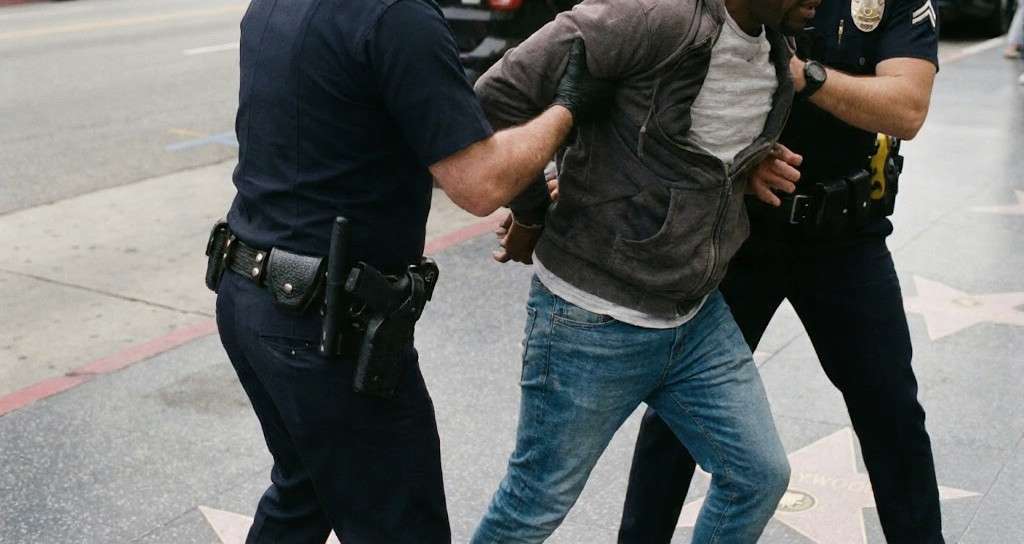
Charged with resisting arrest in Los Angeles County? You are facing criminal consequences that can follow you for years — a permanent criminal record, potential jail time, fines, probation, and a conviction that prosecutors, employers, landlords, and immigration officials will use against you at every turn. Whether you were arrested by an LAPD[1] officer in Downtown Los Angeles, a Los Angeles County Sheriff’s[2] deputy in Compton, a Pasadena police officer, or a California Highway Patrol[3] officer on the 405 or I-10, a resisting arrest charge in Los Angeles County demands an immediate, aggressive defense strategy.
At Tu Defensor Criminalista, we are Spanish-speaking criminal defense attorneys serving clients throughout Los Angeles County and all of Southern California. We know how Los Angeles County prosecutors charge resisting arrest cases, how they build their evidence, and — most importantly — how to tear that evidence apart. Our firm defends clients in every courthouse across Los Angeles County: the Clara Shortridge Foltz Criminal Justice Center in Downtown LA, the Compton, Pasadena, Torrance, Van Nuys, Pomona, Chatsworth, and Long Beach courthouses, and every other court in the county. Call us today for a confidential consultation.
Free Confidential Consultation: (888) 315-3326 | Available 24/7 | Hablamos Español
Accused of resisting, delaying, or obstructing a law enforcement officer in Los Angeles County? You are facing a misdemeanor charge under California Penal Code § 148(a)(1)[4] that carries up to one year in county jail, fines up to $1,000, and a criminal record that can damage your employment, your professional licenses, your housing prospects, and in some cases, your immigration status. Whether the incident occurred during a traffic stop, a street encounter, a protest, a domestic disturbance call, or any other police contact in Los Angeles County, a PC § 148 conviction brands you as someone who defied law enforcement — and that label has consequences that extend far beyond the courtroom.
But here is the truth that law enforcement and prosecutors will never tell you: a significant number of resisting arrest charges in Los Angeles County stem from unlawful police conduct — illegal stops, excessive force, unconstitutional searches, and arrests lacking probable cause. When an officer violates your constitutional rights, your resistance or non-compliance may be entirely lawful. California courts have long recognized that a person has the right to resist an unlawful arrest. At Tu Defensor Criminalista, we begin every resisting arrest case by examining whether the underlying police action was lawful — because if it was not, your charges may not stand.
Charged with resisting, delaying, or obstructing law enforcement in Los Angeles County? You are not just fighting a misdemeanor — you are fighting a system that routinely uses PC § 148 as a catch-all charge when police believe they have been disrespected, challenged, or made to work harder than they expected. In Los Angeles County, where the Los Angeles Police Department[1] and the Los Angeles County Sheriff’s Department[2] together patrol one of the most densely populated jurisdictions in the United States, allegations of resisting arrest arise in a remarkable variety of circumstances — from legitimate misunderstandings to cases where the charge is used to paper over a use-of-force incident.
According to the Los Angeles County Office of Inspector General[5], which provides independent oversight of the Los Angeles County Sheriff’s Department, use-of-force incidents and citizen complaints are documented across the county every year. The Los Angeles Police Department’s annual use-of-force report[6] tracks thousands of use-of-force incidents annually — and resisting arrest charges frequently accompany those incidents, whether or not the underlying police conduct was lawful.
At Tu Defensor Criminalista, we defend clients against the full spectrum of resisting and obstruction charges under California law, including:
When you are charged with any of these offenses in Los Angeles County, you need a defense attorney who understands the specific legal elements, the local charging practices, and the strategies that work in Los Angeles County courtrooms. That is exactly what Tu Defensor Criminalista delivers.
California Penal Code § 148(a)(1)[4] makes it a misdemeanor to “willfully resist, delay, or obstruct” any public officer, peace officer, or emergency medical technician in the discharge or attempted discharge of any duty of their office or employment. To convict you of this charge in Los Angeles County, the prosecution must prove each of the following elements beyond a reasonable doubt:
Understanding these elements is essential because each one is a potential point of attack for your defense. At Tu Defensor Criminalista, we analyze every element of the prosecution’s case to identify the weakest links — and then we attack them.
Charged with violating Penal Code § 69[7] in Los Angeles County? This is a far more serious charge than simple PC § 148. Penal Code § 69 is a “wobbler” — meaning it can be charged as either a misdemeanor or a felony depending on the circumstances and your prior criminal history. As a felony, PC § 69 carries 16 months, 2 years, or 3 years in California state prison, formal felony probation, a permanent felony record, and potential Three Strikes implications.
California Penal Code § 69[7] prohibits two distinct acts: (1) using or threatening to use force or violence to resist an executive officer performing their duties, and (2) using or threatening force to deter or prevent an executive officer from performing any duty imposed by law. Unlike PC § 148, which covers passive resistance and delay, PC § 69 is specifically aimed at active, forceful resistance.
In Los Angeles County, prosecutors at the Los Angeles County District Attorney’s Office[12] commonly charge PC § 69 as a felony when a police officer claims any physical force was used — even in cases where the defendant was responding to excessive force or unlawful police conduct. The distinction between lawful self-defense against police misconduct and criminal resistance under PC § 69 is one of the most legally complex areas of criminal defense in California, and it requires an attorney with deep expertise in both criminal procedure and constitutional law.
Accused of resisting arrest in Los Angeles County? A conviction is not inevitable — not even when an officer has filed a police report, not even when the incident was witnessed by other officers, and not even when the prosecution has video footage. At Tu Defensor Criminalista, we build aggressive, evidence-based defenses tailored to the specific facts of each case. Here are the most powerful defense strategies we deploy in Los Angeles County resisting arrest cases:
California courts have consistently held that a person cannot be convicted of resisting a peace officer who is acting unlawfully. This principle stems from the fundamental constitutional protections of the Fourth Amendment[13] to the U.S. Constitution, which prohibits unreasonable searches and seizures. If the officer who arrested you lacked reasonable suspicion to detain you, lacked probable cause to arrest you, or was using excessive force at the time of the alleged resistance, your resistance may have been entirely lawful. This is the most powerful defense available in Los Angeles County resisting arrest cases — and it is one we pursue aggressively in every applicable situation.
[4]PC § 148[4] requires that your resistance be willful — intentional and purposeful. If your movement that the officer interpreted as resistance was involuntary — a flinch, a reflexive movement in response to pain, a stumble — it does not satisfy the willfulness element of the charge. We examine the facts of every case to determine whether the prosecution can actually prove your conduct was willful.
You Did Not Know the Person Was a Peace Officer If you were approached by an officer in plainclothes, or if the officer failed to clearly identify themselves, you may have had no reason to know you were interacting with law enforcement. The element requiring you to know the person was a peace officer is a real and litigatable defense in cases involving undercover officers, plainclothes detectives, or officers who failed to announce themselves.
California law recognizes a person’s right to use reasonable force to defend themselves against excessive force by a law enforcement officer. Under California Penal Code § 835a[14], law enforcement officers are authorized to use reasonable force to make an arrest — but force beyond what is reasonable is unlawful. If an officer used excessive force against you, your response may constitute lawful self-defense rather than criminal resistance. This defense requires careful examination of the totality of the circumstances and often benefits from independent investigation, witness interviews, and analysis of body camera footage.
Los Angeles County law enforcement agencies — including the LAPD[1] and LASD[2] — are required to use body-worn cameras under California law and their own departmental policies. California Senate Bill 978 (2019)[15] and related legislation govern the use of law enforcement technology in California. Body camera footage frequently contradicts the officer’s account of a resisting arrest incident — showing the defendant was complying, that the officer used unjustified force, or that the sequence of events was entirely different from what the police report describes. We subpoena body camera footage, surveillance video, and dashcam recordings in every resisting arrest case we handle.
False or Exaggerated Allegations Resisting arrest charges are sometimes filed by officers to justify the use of force, to retaliate against a person who questioned or challenged the officer’s authority, or to cover misconduct. The Los Angeles County Civilian Oversight Commission[16], the L[17]o[17]s Angeles Police Commission[17], and the Office of Inspector General[5] all exist because police misconduct in Los Angeles County is a documented, systemic problem. We take officer credibility seriously and are not afraid to challenge false or inflated accounts of resisting arrest incidents.
Facing resisting arrest charges in Los Angeles County? Understanding the full scope of the consequences — not just the headline jail sentence — is essential to understanding why fighting these charges aggressively is so important.
Penal Code § 148(a)(1)[4]— Misdemeanor Resisting Arrest:
Penal Code § 69[7]— Resisting with Force (Wobbler):
Collateral Consequences That Last a Lifetime: Even a misdemeanor resisting arrest conviction in Los Angeles County creates long-term problems that extend far beyond the sentence:
Los Angeles County is policed by a complex network of law enforcement agencies — more than 40 independent police departments, the Los Angeles County Sheriff’s Department[2] (one of the largest sheriff’s departments in the United States), the California Highway Patrol[3], and various specialized agencies. Understanding the agency that arrested you, their specific policies, and their use-of-force history can be critically important to your defense.
The Los Angeles County Sheriff’s Department[2] serves unincorporated areas of the county and contracts with dozens of cities for police services. According to the Los Angeles County Office of Inspector General’s annual reports[19], the LASD has been the subject of ongoing scrutiny regarding use-of-force practices, deputy misconduct, and the handling of citizen complaints — all of which can be directly relevant in resisting arrest cases.
The Los Angeles Police Department[1] — which serves the City of Los Angeles — processes thousands of arrest incidents annually, and its Use of Force Report[6] documents the scope of police-citizen contact and force incidents in the nation’s second-largest city. When LAPD or LASD officers charge a person with resisting arrest, the circumstances surrounding the encounter — including any use of force — are often documented in ways that an experienced defense attorney can use to your advantage.
The Los Angeles County Civilian Oversight Commissionaz[16] was established to provide civilian oversight of the Sheriff’s Department and has issued numerous reports and recommendations regarding deputy misconduct, use of force, and the integrity of the arrest process. When your resisting arrest case involves LASD deputies, our attorneys examine all available oversight data and prior complaints regarding the involved deputies.
Los Angeles County has been the site of numerous large-scale public protests and demonstrations in recent years — from downtown Los Angeles to Hollywood, from the San Fernando Valley to Long Beach and South Los Angeles. During these events, law enforcement agencies have made mass arrests of protesters, many of which have resulted in resisting arrest charges.
The California Attorney General’s Office[20] has issued guidance on the rights of protesters under California law, recognizing that peaceful protest is a constitutionally protected activity under both the First Amendment[21] to the U.S. Constitution and Article I, Section 2 of the California Constitution[22]. A resisting arrest charge arising from a protest encounter often involves contested questions about whether a lawful dispersal order was given, whether the order was constitutionally valid, whether you received adequate notice, and whether law enforcement’s conduct during the protest comported with California law.
If your resisting arrest charge arises from a protest, demonstration, or civil disturbance event anywhere in Los Angeles County, Tu Defensor Criminalista has the constitutional law expertise to challenge these charges aggressively.
One of the most significant developments in Los Angeles County criminal defense over the past decade has been the proliferation of body-worn cameras by law enforcement agencies. California Senate Bill 978 (2019)[15] requires California law enforcement agencies to make body camera footage publicly available under specified circumstances, and California agencies are also subject to the California Public Records Act[23] for disclosure of government records.
Body camera footage in resisting arrest cases can be a double-edged sword — but in our experience, it frequently helps the defense. Officers writing police reports reconstruct events from memory and perspective, often in ways that emphasize the defendant’s resistance while minimizing the officer’s conduct. Body camera footage shows what actually happened, in real time, without editorializing. Footage showing:
…can be the difference between conviction and dismissal. At Tu Defensor Criminalista, we request all body camera footage immediately upon being retained. California law imposes time limits on how long agencies must retain footage, making it essential to act quickly.
Los Angeles County is home to one of the largest and most diverse immigrant communities in the world. If you are not a U.S. citizen — whether you are a lawful permanent resident, a DACA recipient, a visa holder, or undocumented — a resisting arrest conviction in Los Angeles County can have consequences that go far beyond the criminal penalties.
Under federal immigration law, certain criminal convictions trigger mandatory immigration consequences including deportation, bars to re-entry, and denial of naturalization. The analysis of whether a specific resisting arrest or obstruction conviction qualifies as a deportable offense under the Immigration and Nationality Act[24] is highly fact-specific and depends on the exact charge, the plea entered, the sentence imposed, and your prior immigration history.
A felony conviction under Penal[7] Code § 69[7] poses particularly serious immigration risks, as felonies involving force or violence can be classified as aggravated felonies or crimes of moral turpitude under federal immigration law. Even a misdemeanor PC § 148[4] conviction may have immigration implications in some circumstances.
At Tu Defensor Criminalista, we advise every non-citizen client about the immigration consequences of any plea or conviction before any decision is made. We fight to achieve dispositions that eliminate or minimize immigration consequences wherever possible — because for many of our clients, immigration status is the most important issue in their entire case.
Arrested for resisting arrest in Los Angeles County? Understanding the court process from your first appearance to final resolution helps you navigate the system with knowledge and confidence. Here is how resisting arrest cases typically proceed through Los Angeles County Superior Court[25]:
Facing resisting arrest charges in Los Angeles County? You deserve a defense attorney who knows this county, these courts, and these charges — and who will fight for you with the same urgency you feel right now. At Tu Defensor Criminalista, here is what sets us apart:
Tu Defensor Criminalista defends clients against resisting arrest charges throughout all of Los Angeles County, including:
Los Angeles | Long Beach | Compton | Inglewood | Pasadena | Glendale | Burbank | Santa Monica | Torrance | El Monte | Pomona | Downey | West Covina | Norwalk | Hawthorne | Whittier | Alhambra | Lakewood | Bellflower | Carson | Baldwin Park | Lynwood | Redondo Beach | Paramount | Montebello | Gardena | Culver City | Palmdale | Lancaster | East Los Angeles | Huntington Park | Maywood | Bell | South Gate | Lawndale | Cerritos | Pico Rivera | La Puente | Covina | Azusa | Glendora | Claremont | Rancho Palos Verdes | Hollywood | Silver Lake | Echo Park | Koreatown | South Los Angeles | Watts | Willowbrook | San Pedro | the San Fernando Valley | the San Gabriel Valley | the South Bay | and every other city and community throughout Los Angeles County.
In today’s Los Angeles County, bystanders and participants in police encounters increasingly record incidents on their smartphones — and this recording activity itself sometimes generates additional charges or confrontations with police. Under California law and established First Amendment precedent, members of the public have the right to record law enforcement officers performing their duties in public places, as long as they do not physically interfere with the officer’s activities.
The California Attorney General’s guidance[20] affirms that recording police activity is a protected First Amendment[21] right. Officers who demand you stop recording, seize your phone, or charge you with obstruction for recording may themselves be violating your constitutional rights. Conversely, if an officer claims that your recording activity constituted obstruction under PC § 148[4] — for example, by allegedly interfering with an arrest — that charge can and should be challenged on First Amendment grounds.
If you were recording a police encounter in Los Angeles County and were charged with resisting or obstructing as a result, contact Tu Defensor Criminalista immediately. These cases sit at the intersection of criminal defense and civil rights law, and we are prepared to fight both dimensions of your case.
Resisting arrest charges are not limited to adults in Los Angeles County. Juveniles — those under 18 years of age — are also arrested and charged with PC § 148 violations throughout the county, often arising from school incidents, street encounters, or protests. Juvenile resisting arrest cases in Los Angeles County are handled in the Los Angeles County Juvenile Court system under the California Welfare and Institutions Code § 602[27], which governs juvenile delinquency proceedings.
Unlike adult criminal proceedings, juvenile cases in Los Angeles County are handled with a focus on rehabilitation — but a sustained petition (the juvenile equivalent of a conviction) for PC § 148[4] or PC § 69[7] can result in probation, community service, detention, and a juvenile record that can affect educational opportunities, military service eligibility, and in some cases, future adult criminal proceedings.
At Tu Defensor Criminalista, we represent juveniles charged with resisting arrest and related offenses throughout Los Angeles County Juvenile Court, providing the same aggressive, client-focused defense to young clients that we deliver to adults. If your child has been arrested for resisting arrest in Los Angeles County, contact us immediately.
A resisting arrest charge in Los Angeles County does not have to be purely defensive. When law enforcement violates your constitutional rights — through an unlawful stop, an illegal search, or excessive force — you may have civil rights claims against the officers and the agency under both California law and federal law (42 U.S.C. § 1983[28]).
California’s own civil rights statute, the Tom Bane Civil Rights Act (Civil Code § 52.1)[29], provides additional protections and remedies for individuals whose constitutional rights are interfered with through threats, intimidation, or coercion — including excessive force by law enforcement. While Tu Defensor Criminalista is a criminal defense firm focused on winning your criminal case, we ensure our clients understand their full legal landscape, including when a referral to a civil rights attorney may be appropriate alongside their criminal defense.
The Los Angeles County Office of Inspector General[5] and the Los Angeles County Civilian Oversight Commission[16] also accept complaints regarding deputy and officer misconduct. Filing a complaint — done strategically and with legal advice — can sometimes produce evidence relevant to your criminal defense and create an official record of the misconduct that led to your charges.
Resisting arrest in California is primarily charged under Penal Code § 148(a)(1)[4], which makes it a misdemeanor to willfully resist, delay, or obstruct a peace officer performing their lawful duties. A more serious charge — Penal Code § 69[7] — applies when force or threats are used to resist an officer and can be charged as a felony carrying state prison time.
Yes. Penal Code § 148[4] covers resisting, delaying, or obstructing an officer in the performance of “any duty” — not just during an arrest. You can be charged for interfering with an investigation, a traffic stop, an emergency medical situation, or any other lawful police activity. Even asking too many questions at the wrong moment has resulted in PC § 148 charges in Los Angeles County.
California courts have recognized that a person may lawfully resist an unlawful arrest. However, the law in this area is complex — the lawfulness of the arrest is evaluated at the time of the resistance, and the level of force used in resistance must be reasonable. This defense requires careful legal analysis and an attorney who knows how to present it effectively in Los Angeles County courts.
Battery on a peace officer under Penal Code § 243(b)[10] or § 243(c) is a separate and more serious charge that can be added to or combined with a resisting arrest charge. A § 243(b) charge is a misdemeanor carrying up to one year in county jail. A § 243(c) charge — battery causing injury to an officer — is a wobbler with felony exposure. Our attorneys defend both charges simultaneously and work to achieve the best combined outcome.
Yes. A conviction for Penal Code § 148[4] or § 69[7] in Los Angeles County will appear on standard criminal background checks used by employers, landlords, licensing boards, and government agencies. Depending on the outcome of your case, there may be options to reduce, expunge, or dismiss the charge — but avoiding a conviction in the first place is always the best outcome.
In many cases, a misdemeanor PC § 148 conviction can be expunged under California Penal Code § 1203.4[30] after successful completion of probation, provided you did not serve time in state prison. Expungement dismisses the conviction and allows you to truthfully state on most job applications that you have not been convicted of the offense. However, expungement does not erase the record entirely — it remains visible to law enforcement and some licensing boards. A felony PC § 69[7] conviction may also be eligible for reduction to a misdemeanor under Penal Code § 17(b)[31] and subsequent expungement in some circumstances.
Immediately. Body camera footage is typically retained for 60–90 days before being overwritten under most LAPD[1] and LASD[2] policies. Surveillance footage from businesses near the arrest location disappears even faster. Witnesses become unavailable. Contact Tu Defensor Criminalista as soon as possible after your arrest — every day you wait makes the defense harder to build.
Excessive force by a law enforcement officer can be both a defense to your resisting arrest charge and an independent civil rights violation. California law under Penal Code § 835a[14] allows a person to use reasonable force to defend themselves against unreasonable police force. If you were subjected to excessive force during your arrest in Los Angeles County, we evaluate both your criminal defense and any potential civil rights claims under 42 U.S.C. § 1983[28] arising from the same incident.
It can. Depending on the exact charge, the plea entered, the sentence imposed, and your immigration history, a resisting arrest or obstruction conviction may have immigration consequences for non-citizens. A felony conviction under Penal Code § 69[7] poses particularly serious risks. Contact Tu Defensor Criminalista immediately to discuss the immigration implications of your specific case before entering any plea.
Attorney fees vary depending on whether the charge is a misdemeanor or felony, the complexity of the case, whether trial is necessary, and other factors. At Tu Defensor Criminalista, we work to provide accessible, high-quality criminal defense representation to our community throughout Los Angeles County. Contact us today for a confidential consultation to discuss your case and your options.
Remember:
California Government
Federal
Attorney Armando Josué Cespedes is rated 5.0 on Avvo, with 34 five-star reviews from clients praising his dedication, professionalism, and results. Many note how his trial skills and attention to detail led to reduced charges or outright dismissals.



 English English
 Español de México English English Español de México
Thank you! We need your help. Would you share your experience on one of these sites?
If you have concerns you wish to address privately
