San Bernardino County Assault & Battery Defense Attorney
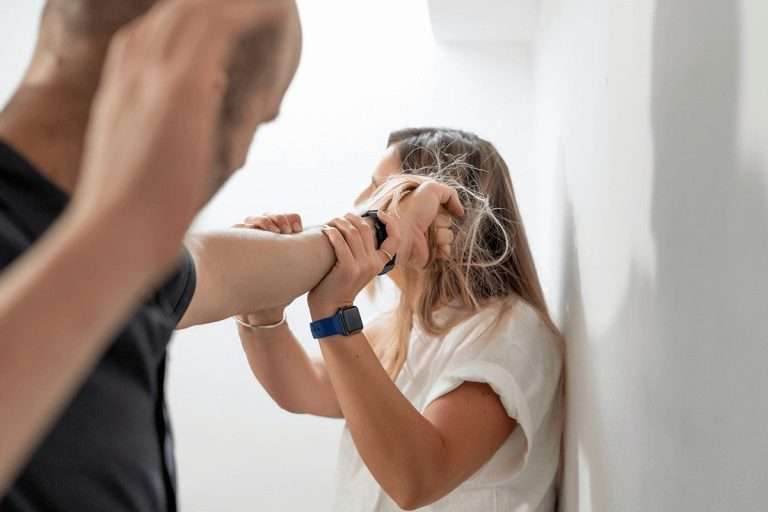
An assault or battery charge in San Bernardino County can upend your life in an instant. Whether you were involved in a bar fight, an altercation with a neighbor, a road rage incident, a confrontation at work, or an argument that became physical, the consequences of a conviction can follow you for years — or for the rest of your life. Even a misdemeanor assault or battery conviction can result in jail time, fines, a permanent criminal record, and the loss of employment opportunities. A felony conviction for aggravated assault, assault with a deadly weapon, or battery causing serious bodily injury can mean years in state prison and a “strike” under California’s Three Strikes Law that will dramatically increase the penalties for any future felony.
If you are facing assault and battery charges anywhere in San Bernardino County — from the city of San Bernardino to Rancho Cucamonga, Fontana, Ontario, Victorville, Rialto, Redlands, Upland, Chino Hills, Hesperia, or any community throughout the county — you need an experienced criminal defense attorney who will thoroughly investigate the facts, challenge the prosecution’s evidence, and fight aggressively to protect your rights and your future.
At Tu Defensor Criminalista, Attorney Armando Josué Céspedes provides aggressive, bilingual criminal defense representation for clients charged with all levels of assault and battery throughout San Bernardino County. We understand that assault and battery charges frequently arise from misunderstandings, exaggerated allegations, mutual altercations where the wrong person was arrested, or situations where our client was acting in lawful self-defense. We fight to uncover the truth, dismantle the prosecution’s case, and pursue the best possible outcome — whether that is a dismissal, a reduction in charges, an acquittal at trial, or a negotiated resolution that protects your record and your freedom.
San Bernardino County: Local Overview and Enforcement Environment
San Bernardino County is the largest county by land area in the contiguous United States, spanning over 20,000 square miles from the dense urban communities of the Inland Empire to the vast expanses of the Mojave Desert. According to the U.S. Census Bureau[1], the county has a population of approximately 2.2 million residents, making it the fifth most populous county in California and the fourteenth most populous in the nation. The county seat is the city of San Bernardino.
The county’s major population centers include San Bernardino, Fontana, Rancho Cucamonga, Ontario, Rialto, Chino, Chino Hills, Upland, Redlands, Colton, Highland, and Yucaipa in the San Bernardino Valley, along with Victorville, Hesperia, Apple Valley, Adelanto, and Barstow in the High Desert. According to San Bernardino County Community Indicators[2], nearly two million residents are concentrated in the approximately 480 square miles of the San Bernardino Valley, making this one of the most densely populated and heavily policed regions in Southern California.
The county’s size, population density, and diverse communities generate a significant volume of violent crime — and assault and battery offenses represent a substantial portion of that total. Aggravated assault is consistently the most commonly reported violent crime both in San Bernardino County and across California, far outnumbering homicides, robberies, and rapes. This means law enforcement officers, prosecutors, and judges in San Bernardino County handle assault and battery cases on a daily basis, and the prosecution of these offenses is both routine and aggressive.
Assault and Battery Statistics: San Bernardino County and California
The following statistics illustrate the enforcement environment you face when charged with assault or battery in San Bernardino County:
According to the San Bernardino County Community Indicators[3] report on crime rates, violent crime in San Bernardino County increased 33% between 2023 and 2024. When examined over a multi-year period from 2020 to 2024, the aggravated assault rate showed no significant long-term change on average, while the homicide rate fell an annual average of 6% and the robbery rate fell an annual average of 2%. Aggravated assault remains the most frequently reported violent crime in the county, accounting for the largest share of violent offenses year after year.
In the city of San Bernardino specifically, there were 584 aggravated assaults reported in a recent annual period, representing an 8% increase over the prior year. The city ranks among the highest in California for violent crime rates, with approximately one in every 106 residents becoming a victim of violent crime annually.
At the statewide level, the Public Policy Institute of California (PPIC)[4] reports that California’s overall violent crime rate decreased 5.3% in 2024 compared to 2023, falling from 508 to 481 violent crimes per 100,000 residents. Aggravated assault statewide decreased 4.8% in 2024, but remains 22% above pre-pandemic 2019 levels. Aggravated assaults involving firearms surged 65.7% between 2019 and 2021, and despite a 19.5% decline since 2021, gun-involved assaults remain 33.6% above 2019 levels. The share of aggravated assaults involving a firearm decreased from 20.4% in 2023 to 18.4% in 2024.
These numbers underscore a critical reality: assault and battery charges are among the most commonly prosecuted violent offenses in San Bernardino County, and the District Attorney’s Office treats them with maximum seriousness. This is precisely why experienced legal defense is essential from the moment of arrest.
California Assault and Battery Laws: Understanding the Charges You Face
California law treats assault and battery as separate but closely related offenses. Understanding the specific charges you face — and the precise elements the prosecution must prove — is essential to building an effective defense.
California Penal Code Section 240 — Simple Assault
Under Penal Code 240, an “assault” is defined as an unlawful attempt, coupled with a present ability, to commit a violent injury on the person of another. Assault is the attempt to use force — not the actual contact itself. You can be charged with assault even if you never touched anyone.
To convict you of simple assault, the prosecution must prove four elements beyond a reasonable doubt: (1) you committed an act that by its nature would directly and probably result in the application of force to another person; (2) you acted willfully; (3) when you acted, you were aware of facts that would lead a reasonable person to realize your act would directly and probably result in force being applied to someone; and (4) when you acted, you had the present ability to apply force to that person.
Penalties: Simple assault under PC 240 is a misdemeanor punishable by up to six months in county jail, a fine of up to $1,000, or both.
California Penal Code Section 242 — Simple Battery
Under Penal Code 242, a “battery” is defined as any willful and unlawful use of force or violence upon the person of another. Battery is the actual physical contact — but the contact does not need to cause pain or injury. Even the slightest offensive or harmful touching can constitute a battery if done willfully and unlawfully.
To convict you of battery, the prosecution must prove: (1) you willfully and unlawfully touched another person in a harmful or offensive manner; and (2) you did not act in self-defense or in defense of another.
Penalties: Simple battery under PC 242 is a misdemeanor punishable by up to six months in county jail, a fine of up to $2,000, or both.
When a battery results in “serious bodily injury” to the victim, the offense becomes significantly more serious. Under Penal Code 243(d), battery causing serious bodily injury is a “wobbler” offense, meaning it can be charged as either a felony or a misdemeanor depending on the severity of the injury, the circumstances of the incident, and the defendant’s criminal history.
“Serious bodily injury” means a serious impairment of a physical condition, including but not limited to loss of consciousness, concussion, bone fracture, protracted loss or impairment of any bodily member or organ, a wound requiring extensive suturing, or serious disfigurement.
Felony Penalties: Up to four years in state prison, a fine of up to $10,000, or both, plus formal probation.
Misdemeanor Penalties: Up to one year in county jail, a fine of up to $1,000, or both, plus summary probation.
California Penal Code Section 245(a)(1) — Assault with a Deadly Weapon (ADW)
Assault with a deadly weapon is one of the most serious assault charges in California. Under Penal Code 245(a)(1), it is a crime to assault another person with a deadly weapon or instrument other than a firearm, or by any means of force likely to produce great bodily injury. A “deadly weapon” is any object, instrument, or weapon that is either inherently deadly or is used in a manner capable of causing death or great bodily injury. This includes obvious weapons like knives and bats, but also ordinary objects used as weapons — such as bottles, tools, vehicles, steel-toed boots, or even a dog directed to attack.
ADW is a wobbler offense that can be charged as either a felony or a misdemeanor.
Felony Penalties: Two, three, or four years in state prison, a fine of up to $10,000, or both. A felony ADW conviction is a “strike” under California’s Three Strikes Law and a “serious felony” that can dramatically increase penalties for any future felony conviction.
Misdemeanor Penalties: Up to one year in county jail, a fine of up to $1,000, or both.
California Penal Code Section 245(a)(2) — Assault with a Firearm
Assault with a firearm is charged separately from ADW with other weapons. Under PC 245(a)(2), assault with an ordinary firearm is a wobbler carrying two, three, or four years in state prison as a felony, with a minimum six-month jail sentence even as a misdemeanor. Assault with a semiautomatic firearm under PC 245(b) is always a felony carrying three, six, or nine years in prison. Assault with a machine gun or assault weapon under PC 245(a)(3) carries four, eight, or twelve years.
California Penal Code Section 245(a)(4) — Assault by Means Likely to Produce Great Bodily Injury
Under PC 245(a)(4), it is a crime to assault another person by any means of force likely to produce great bodily injury, even without a weapon. This charge is commonly filed when the force used was so severe — such as repeated punching, kicking, or stomping — that great bodily injury was a probable result, regardless of whether a weapon was involved.
Felony Penalties: Two, three, or four years in state prison, a fine of up to $10,000, or both.
Misdemeanor Penalties: Up to one year in county jail, a fine of up to $10,000, or both.
This is a wobbler and a felony conviction qualifies as a “strike” under the Three Strikes Law.
Enhanced Penalties: When Assault and Battery Charges Become More Serious
California law significantly increases penalties for assault and battery when certain aggravating factors are present:
Assault or Battery on a Peace Officer (PC 241(c) / PC 243(b)-(c)): Assault on a peace officer, firefighter, EMT, or other protected professional carries up to one year in jail and a $2,000 fine. Battery on a peace officer without injury carries up to one year in jail. If the battery causes injury, the charge becomes a wobbler carrying up to three years in state prison.
Great Bodily Injury Enhancement (PC 12022.7): If an assault or battery results in “great bodily injury” — defined as a significant or substantial physical injury — a sentencing enhancement of three, four, or five additional and consecutive years in prison may be imposed on top of the base sentence for the underlying offense.
Assault on a Public Official (PC 217.1(a)): Assaulting a public official in retaliation for or to prevent performance of their duties is a felony carrying up to three years in state prison.
Assault with Caustic Chemicals (PC 244): Throwing or placing caustic chemicals, flammable substances, or vitriol with the intent to injure or disfigure is a felony carrying two, three, or four years in state prison.
Gang Enhancements (PC 186.22): If an assault or battery is committed for the benefit of, at the direction of, or in association with a criminal street gang, significant sentencing enhancements apply — potentially adding years or even decades to the base sentence.
How Assault and Battery Cases Are Prosecuted in San Bernardino County
The Arrest
Law enforcement officers in San Bernardino County respond to assault and battery calls from a wide variety of situations — bar fights, road rage incidents, workplace altercations, neighborhood disputes, sporting events, school campuses, and public gatherings. Officers arriving on the scene will typically separate the parties, take statements from the involved parties and witnesses, photograph any injuries, and make an arrest if they have probable cause to believe an assault or battery occurred.
In many cases, officers must make rapid decisions about who to arrest based on limited and conflicting information. The person who appears to have the more serious injuries is often treated as the victim, while the other party is arrested — even if the arrested person was actually acting in self-defense. Witness accounts are frequently inconsistent, and officers may not have the time or inclination to conduct a thorough investigation at the scene.
The District Attorney’s Review
After arrest, the police report is forwarded to the San Bernardino County District Attorney’s Office[5] for review. The DA’s Office, with over 500 staff members including 248 attorneys and 62 investigators, reviews the evidence and decides whether to file formal charges — and whether to charge the offense as a misdemeanor or felony (for wobbler offenses). According to the San Bernardino County District Attorney’s Office[6], the decision to file charges is based on whether the prosecutor believes the case can be proved beyond a reasonable doubt.
The filing decision is critical. An experienced defense attorney who intervenes early — before formal charges are filed — may be able to present evidence, witness statements, or other information to the DA that results in reduced charges or a decision not to file charges at all.
Arraignment and Pre-Trial
If charges are filed, the defendant is arraigned in the appropriate San Bernardino County Superior Court district. At arraignment, the charges are formally read, bail is set or reviewed, and the defendant enters a plea. The case then proceeds through pre-trial proceedings, which may include discovery (exchange of evidence), motions to suppress evidence, negotiations with the prosecutor, and preliminary hearings (for felony cases).
San Bernardino County Superior Court: Where Your Case Will Be Heard
The Superior Court of California, County of San Bernardino, operates multiple courthouse locations throughout the county. According to the San Bernardino County Superior Court[7], assault and battery criminal cases are heard at the district courthouse nearest to where the alleged offense occurred:
San Bernardino Justice Center — 247 West Third Street, San Bernardino, CA 92415. Criminal Division: (909) 384-1888. The county’s primary criminal courthouse, serving San Bernardino, Redlands, Highland, Colton, Loma Linda, Grand Terrace, and surrounding communities.
Rancho Cucamonga District — 8303 Haven Avenue, Rancho Cucamonga, CA 91730. Phone: (909) 350-9764. Serves western San Bernardino County including Ontario, Upland, Montclair, Chino, and Chino Hills.
Fontana District — 17780 Arrow Boulevard, Fontana, CA 92335. Phone: (909) 350-9322. Handles cases from Fontana, Rialto, Bloomington, and surrounding areas.
Victorville District — 14455 Civic Drive, Victorville, CA 92392. Phone: (760) 245-6215. Serves the High Desert including Victorville, Hesperia, Apple Valley, Adelanto, and Barstow.
Joshua Tree District — 6527 White Feather Road, Joshua Tree, CA 92252. Phone: (760) 974-3048. Serves the Morongo Basin communities including Twentynine Palms, Yucca Valley, and Joshua Tree.
Additional Locations: Barstow District (235 E. Mountain View Street), Big Bear District (477 Summit Blvd), and Needles District (1111 Bailey Ave).
At Tu Defensor Criminalista, we defend clients at all San Bernardino County Superior Court locations and are thoroughly familiar with the local prosecutors, judges, and procedures at each courthouse.
San Bernardino County Law Enforcement Agencies
Assault and battery arrests in San Bernardino County are made by numerous law enforcement agencies. According to the San Bernardino County District Attorney’s Office[8], key agencies include:
San Bernardino County Sheriff’s Department — Headquartered at 655 East 3rd Street, San Bernardino, CA 92415. The Sheriff’s Department is the primary law enforcement agency for unincorporated county areas and 14 contract cities, serving over one million residents across the county’s vast territory.
San Bernardino Police Department — 710 North D Street, San Bernardino, CA 92401. With over 250 sworn officers, SBPD[9] responds to approximately 1,000 calls for service every 24 hours in a city that experiences some of the highest violent crime rates in the state.
Municipal Police Departments — Independent police departments in Fontana, Ontario, Redlands, Rialto, Colton, Upland, Montclair, Chino, and Barstow enforce state assault and battery laws within their respective jurisdictions.
California Highway Patrol (CHP) — Inland Division — CHP officers frequently encounter assault situations during traffic stops, road rage incidents, and freeway confrontations.
University and College Police — Campus police departments at Cal State San Bernardino, University of Redlands, and other institutions handle assault and battery incidents on campus.
Common Scenarios Leading to Assault and Battery Charges in San Bernardino County
Assault and battery charges arise from an enormous range of situations. The following are among the most common scenarios we encounter:
Bar and Nightclub Fights: Alcohol-fueled confrontations at bars, nightclubs, restaurants, and entertainment venues are one of the most frequent sources of assault and battery charges. Bouncers, bystanders, or the other party may call police, and officers often arrest the person who appears to have initiated the altercation — even when the full picture is far more complicated.
Road Rage Incidents: The heavily congested freeways and surface streets of the Inland Empire frequently produce road rage confrontations. What begins as aggressive driving can escalate into verbal threats, physical confrontations, or even assault with a vehicle. These cases often involve conflicting accounts and unclear circumstances.
Workplace Altercations: Arguments between coworkers, confrontations with supervisors, or disputes with customers can result in assault or battery charges. The consequences extend beyond the criminal case, often leading to termination and difficulty finding future employment.
Neighborhood and Property Disputes: Disputes over noise, parking, property boundaries, pets, or other neighborhood issues can escalate into physical confrontations that lead to criminal charges.
Sports and Recreational Events: Youth sporting events, adult recreational leagues, and professional sporting venues all generate assault and battery arrests when disagreements between participants, coaches, or spectators turn physical.
School-Related Incidents: Fights on or near school campuses can result in criminal assault charges in addition to school discipline, particularly for older students and adults.
Mutual Combat: Many assault and battery cases involve situations where both parties were actively fighting. Officers arriving on the scene must decide who to arrest, and the “loser” of the fight — the person with fewer or less visible injuries — is often the one who ends up in handcuffs, regardless of who actually started the altercation.
Self-Defense Misidentified as Assault: One of the most frustrating situations our clients face is being arrested for assault or battery when they were defending themselves or another person. Officers who arrive after the fact may not understand what happened and may arrest the wrong person.
Defense Strategies for Assault and Battery Charges
At Tu Defensor Criminalista, we develop a tailored defense strategy based on the unique facts of every case. The following are among the most effective defense approaches for assault and battery charges:
Self-Defense: California law recognizes the fundamental right to use reasonable force to defend yourself against imminent harm. If you reasonably believed that you or another person was in danger of being unlawfully touched or suffering bodily injury, and you used only the amount of force reasonably necessary to protect against that danger, self-defense is a complete defense to assault and battery charges. We thoroughly investigate the circumstances, document your injuries, gather witness statements, and present evidence that you were the person defending — not the aggressor.
Defense of Others: Just as you have the right to defend yourself, California law allows you to use reasonable force to defend another person who you reasonably believe is in imminent danger of unlawful physical harm. This defense is commonly applicable in situations where a parent defends a child, a friend defends a companion, or a bystander intervenes to protect a stranger.
Lack of Willful Intent: Both assault and battery require that the defendant acted “willfully” — meaning intentionally. If the contact was purely accidental — for example, you bumped into someone in a crowded area, or your arm made contact with someone while gesturing during a heated argument — the willfulness element is not satisfied and you should not be convicted. We build evidence to demonstrate that any contact was unintentional.
False Accusations: False assault and battery allegations are more common than many people realize. Accusations may be motivated by revenge, a desire to gain advantage in a civil dispute, personal grudges, or a desire to cover up the accuser’s own aggressive behavior. We investigate the accuser’s motives, identify inconsistencies in their statements, obtain text messages and social media evidence, and build a compelling case that the allegations are fabricated or exaggerated.
Insufficient Evidence: The prosecution bears the burden of proving every element of the offense beyond a reasonable doubt. If there are no independent witnesses, no surveillance video, no photographs of injuries, and the case comes down to one person’s word against another, the prosecution may not be able to meet this high standard. We meticulously analyze the evidence and identify gaps that create reasonable doubt.
Challenging Witness Credibility: Witnesses to assaults and batteries frequently provide inconsistent, contradictory, or unreliable accounts — especially when the incident occurred in a chaotic environment, involved alcohol, or happened quickly. We carefully examine all witness statements for inconsistencies and prepare thorough cross-examinations to expose unreliable testimony.
Challenging the Police Investigation: We scrutinize the police investigation for errors, omissions, and bias. Did officers interview all witnesses? Did they collect surveillance footage? Did they photograph all parties’ injuries — including yours? Did they consider the possibility that you were acting in self-defense? If officers conducted a one-sided investigation, we expose these failures to the court.
Negotiating Reduced Charges or Diversion: When appropriate, we negotiate with the San Bernardino County DA’s Office to reduce charges. For example, reducing a felony ADW charge to a misdemeanor simple assault or battery can eliminate the possibility of prison time and avoid a “strike” on your record. For first-time offenders and cases involving minor conduct, we explore diversion programs, deferred entry of judgment, anger management programs, community service, and other alternatives that can result in charges being dismissed upon successful completion.
Trial Defense: When negotiation cannot achieve a just result, we take your case to trial. Attorney Armando Josué Céspedes is an experienced trial lawyer who will present a compelling defense, thoroughly cross-examine prosecution witnesses, challenge the credibility of the alleged victim, and fight for an acquittal before a jury.
Consequences of an Assault or Battery Conviction in San Bernardino County
The consequences of an assault or battery conviction extend far beyond the immediate criminal penalties. Understanding the full scope of consequences underscores why aggressive defense is essential:
Criminal Penalties: Simple assault carries up to six months in jail and a $1,000 fine. Simple battery carries up to six months and a $2,000 fine. Aggravated battery (PC 243(d)) carries up to four years in prison. ADW (PC 245(a)(1)) carries up to four years in prison as a felony. With enhancements for great bodily injury, firearm use, or gang allegations, sentences can reach ten years or more.
Three Strikes Law: Felony convictions for assault with a deadly weapon (PC 245(a)(1)), assault with a firearm (PC 245(a)(2)), and assault by means likely to produce great bodily injury (PC 245(a)(4)) are “serious” or “violent” felonies that count as “strikes” under California’s Three Strikes Law. A second strike doubles the sentence for any future felony. A third strike can result in a sentence of 25 years to life in prison.
Loss of Firearms Rights: A felony assault conviction results in a lifetime prohibition on owning, possessing, or purchasing firearms under both California and federal law. A misdemeanor ADW conviction carries a 10-year firearms ban under California law.
Criminal Record and Employment: Any assault or battery conviction — even a misdemeanor — creates a permanent criminal record that appears on background checks. This can disqualify you from employment in law enforcement, security, education, healthcare, government positions, and many private-sector jobs. Employers routinely reject applicants with violent crime convictions.
Immigration Consequences: For non-citizens, an assault or battery conviction can have severe immigration consequences. Aggravated assault and ADW convictions are often classified as “crimes of violence” or “aggravated felonies” under federal immigration law, making the defendant deportable and ineligible for most forms of relief. Even misdemeanor assault convictions can trigger immigration consequences depending on the specific circumstances. If you are not a U.S. citizen, the immigration implications must be a central consideration in every defense decision.
Professional Licensing: A conviction may result in the denial, suspension, or revocation of professional licenses in fields including law, medicine, nursing, real estate, teaching, accounting, and many others. California licensing boards routinely review criminal convictions as part of the licensing process.
Civil Liability: In addition to criminal penalties, the alleged victim may file a civil lawsuit seeking monetary damages for medical expenses, lost wages, pain and suffering, and emotional distress. A criminal conviction can be used as evidence in the civil case.
Probation Conditions: A conviction typically results in probation conditions that may include anger management classes, community service, restitution to the victim, stay-away orders, and regular check-ins with a probation officer. Violating probation conditions can result in revocation and imposition of the maximum sentence.
Assault and Battery in the Context of Other Offenses
Assault and battery charges in San Bernardino County frequently overlap with or are filed alongside related offenses:
Domestic Violence (PC 273.5 / PC 243(e)(1)): When the alleged victim is a spouse, cohabitant, dating partner, or parent of the defendant’s child, assault and battery charges are typically filed as domestic violence offenses, which carry additional penalties including mandatory batterer’s intervention programs, criminal protective orders, and enhanced sentencing for repeat offenders.
Criminal Threats (PC 422): Verbal threats of death or great bodily injury made with the specific intent to cause sustained fear are often charged alongside assault. PC 422 is a wobbler carrying up to four years in prison and is a strike offense.
Disturbing the Peace (PC 415): This lesser offense — fighting in public, making unreasonable noise, or using offensive words likely to provoke an immediate violent reaction — is frequently used as a plea bargain alternative to assault or battery charges. A PC 415 conviction is either a misdemeanor (up to 90 days in jail) or an infraction.
Resisting Arrest (PC 148(a)(1)): If an assault or battery arrest involves any alleged resistance to law enforcement, prosecutors commonly add resisting arrest charges. This misdemeanor carries up to one year in county jail.
Attempted Murder (PC 664/187): In the most extreme cases — particularly those involving weapons, severe injuries, or acts demonstrating intent to kill — prosecutors may charge attempted murder, which carries up to life in prison with the possibility of parole.
Why Choose Tu Defensor Criminalista for Your Assault and Battery Defense
Experienced Trial Attorney: Attorney Armando Josué Céspedes has extensive experience defending clients against the full spectrum of assault and battery charges throughout San Bernardino County — from simple misdemeanor assault to felony ADW and aggravated battery cases. His proven track record includes dismissed charges, reduced charges, acquittals at trial, and negotiated resolutions that protect clients’ futures.
5.0 Avvo Rating with 34 Five-Star Reviews: Our clients consistently praise Attorney Céspedes for his dedication, professionalism, trial skills, and attention to detail. Three consecutive Client’s Choice Awards (2023, 2024, 2025) reflect the extraordinary level of client satisfaction our firm delivers.
Bilingual Representation (English and Spanish): We provide fully bilingual legal representation, ensuring that Spanish-speaking clients understand every aspect of their case without any language barrier. Hablamos Español.
Aggressive and Strategic Advocacy: Assault and battery cases require both courtroom aggression and strategic precision. We combine fierce advocacy with careful analysis of the evidence, the law, and the prosecution’s weaknesses to achieve the best possible result for every client.
Knowledge of San Bernardino County Courts: We regularly appear in all San Bernardino County Superior Court locations and are familiar with the local prosecutors, judges, and court procedures at each courthouse.
Flexible Payment Plans: We offer custom payment plans with low upfront costs and flexible installments to ensure that financial concerns never prevent you from getting the defense you deserve.
Available 24/7: Arrests and emergencies do not follow business hours. We are available 24 hours a day, 7 days a week to take your call.
Attorney Appearances Under PC 977(a): For the majority of misdemeanor cases, your attorney can appear on your behalf at most court hearings under California Penal Code Section 977(a), saving you time, stress, and the need to miss work.
Frequently Asked Questions
What is the difference between assault and battery in California?
Assault (PC 240) is the unlawful attempt to commit a violent injury — no physical contact is required. Battery (PC 242) is the actual willful and unlawful use of force or violence upon another person. You can be charged with assault even if you never touched anyone. You can be charged with battery even if the victim suffered no injury. The two offenses are separate but frequently charged together.z
Can I be charged with assault if I did not hurt anyone?
Yes. Assault does not require that anyone be injured or even touched. If you attempted to strike someone and missed, threw an object at someone, or made a threatening gesture with the present ability to carry out the threat, you can be charged with assault. Similarly, battery does not require injury — even the slightest offensive touching can support a battery charge.
I was defending myself. Can I still be charged?
Yes, you can be arrested and charged even if you were acting in self-defense. Law enforcement officers often cannot determine who the aggressor was at the time of arrest. However, self-defense is a complete legal defense to assault and battery charges. If you can demonstrate that you reasonably believed you were in danger and used only reasonable force to protect yourself, you should be acquitted. This is exactly why having an experienced defense attorney is critical.
What makes an assault charge a felony versus a misdemeanor?
Simple assault (PC 240) and simple battery (PC 242) are misdemeanors. However, when aggravating factors are present — such as the use of a deadly weapon (PC 245(a)(1)), force likely to cause great bodily injury (PC 245(a)(4)), serious injury to the victim (PC 243(d)), or the victim being a peace officer — the charge becomes a wobbler or a straight felony with significantly greater penalties.
Will I go to prison for a first-time assault charge?
For a first-time simple assault or battery misdemeanor, prison is not on the table — the maximum is county jail. For a first-time felony assault, prison is possible but not guaranteed. An experienced attorney may negotiate probation, reduced charges, or alternative sentencing that avoids incarceration. Every case is different, and the outcome depends on the specific facts, the severity of any injuries, and your criminal history.
Can an assault conviction be expunged?
If you are convicted and successfully complete probation, you may be eligible to petition for expungement under California Penal Code Section 1203.4. Expungement releases you from many of the penalties and disabilities of the conviction and can help with employment. However, expungement does not restore firearms rights for felony convictions and may not fully address immigration consequences.
How long does a prosecutor have to file assault charges?
For misdemeanor assault and battery, the statute of limitations is one year from the date of the offense. For felony assault (such as ADW), the statute of limitations is three years. However, exceptions can extend these deadlines in certain circumstances.
Contact Tu Defensor Criminalista Today — Free Consultation
Time is critical after an assault or battery arrest. Evidence must be preserved, witnesses must be identified and interviewed, and your defense must begin immediately. Surveillance footage may be erased, witnesses may become unavailable, and early intervention with the District Attorney’s Office may prevent charges from being filed. The sooner you contact us, the stronger your defense will be.
We Defend Clients in All San Bernardino County Superior Court Locations
San Bernardino Justice Center — 247 West Third Street, San Bernardino, CA 92415
Rancho Cucamonga District — 8303 Haven Avenue, Rancho Cucamonga, CA 91730
Fontana District — 17780 Arrow Boulevard, Fontana, CA 92335
Victorville District — 14455 Civic Drive, Victorville, CA 92392
Joshua Tree District — 6527 White Feather Road, Joshua Tree, CA 92252
Barstow District — 235 East Mountain View Street, Barstow, CA 92311
Big Bear District — 477 Summit Blvd, Big Bear Lake, CA 92315
Needles District — 1111 Bailey Ave, Needles, CA 92363
Citations and References
U.S. Census Bureau — San Bernardino County QuickFacts: https://www.census.gov/quickfacts/fact/table/sanbernardinocountycalifornia/PST045224[1]
San Bernardino County Community Indicators — County Profile: https://indicators.sbcounty.gov/county-profile/[2]
San Bernardino County Community Indicators — Crime Rate: https://indicators.sbcounty.gov/safety/crime-rate/[3]
California Department of Justice — OpenJustice, Crime Statistics: https://openjustice.doj.ca.gov/exploration/crime-statistics[10]
Public Policy Institute of California (PPIC) — Crime Trends in California: https://www.ppic.org/publication/crime-trends-in-california/[4]
San Bernardino County District Attorney’s Office: https://da.sbcounty.gov/[5]
San Bernardino County District Attorney’s Office — Law Enforcement Agencies: https://da.sbcounty.gov/law-enforcement-agencies/[8]
San Bernardino County District Attorney’s Office — Courts & Case Information: https://da.sbcounty.gov/courts-cases/[6]
Superior Court of California, County of San Bernardino — Locations: https://sanbernardino.courts.ca.gov/locations[7]
San Bernardino Police Department: https://www.sanbernardino.gov/412/Police-Department[9]
Board of State and Community Corrections — San Bernardino County Data: https://www.bscc.ca.gov/assets/media/San-Bernardino.pdf[11]
California Legislative Information — Penal Code: https://leginfo.legislature.ca.gov/faces/codes_displaySection.xhtml?sectionNum=242.&lawCode=PEN[12]
USAFacts — San Bernardino County Population:https://usafacts.org/data/topics/people-society/population-and-demographics/our-changing-population/state/california/county/san-bernardino-county[13]
Attorney Armando Josué Cespedes is rated 5.0 on Avvo, with 34 five-star reviews from clients praising his dedication, professionalism, and results. Many note how his trial skills and attention to detail led to reduced charges or outright dismissals.
I was arrested for a DUI just recently, since Spanish is my first language, it was important to find a great attorney who was bilingual. Getting your first DUI can...
Armando cespedes went above and beyond for my case. I was very close to getting my license revoked as I am under the age of 21 and received my second...
I was referred to Mr. Cespedes by a family friend who was very pleased with his legal services. Unfortunately, I got a DUI a few months ago and I was...
Armando gets results with your best interest in mind. I was wrongfully being accused of making primal threats. Even though I was innocent, I was aware that the accusations are...
Extremely professional I recently had a brief phone consultation with Mr. Cespedes regarding a longtime friend of mine. Although he was unable to assist him with his legal needs, I...



 English
 Español de México
