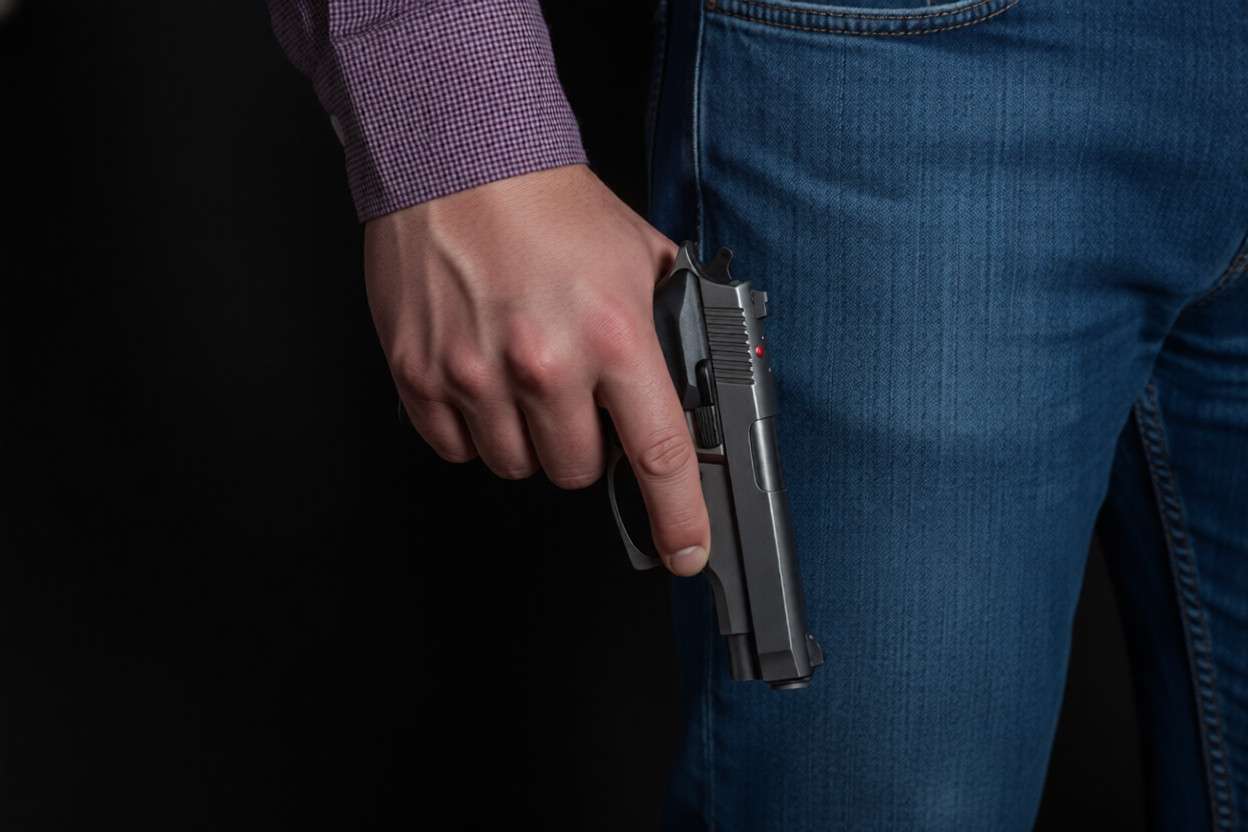
If you’ve been arrested or charged with brandishing a firearm in Torrance, California, you’re facing serious criminal charges that can result in jail time, substantial fines, loss of your Second Amendment rights, and a permanent criminal record that affects employment, professional licensing, immigration status, and your future. At Tu Defensor Criminalista, we provide aggressive, strategic legal representation to defend against brandishing charges and related weapons offenses throughout Torrance and Los Angeles County.
Brandishing charges arise when individuals are accused of drawing or exhibiting firearms or deadly weapons in a rude, angry, or threatening manner in the presence of others. These incidents occur during road rage confrontations, disputes with neighbors, arguments that escalate, perceived threats during encounters, self-defense situations where firearms are displayed but not fired, and misunderstandings about threatening behavior. Many people charged with brandishing were lawfully defending themselves or their property, were falsely accused, had no intent to threaten anyone, or face overzealous prosecution. We’ve successfully defended hundreds of clients facing brandishing charges throughout Los Angeles County, achieving dismissals, acquittals, reduced charges, and favorable outcomes that protect our clients’ freedom and their constitutional rights.
Brandishing is defined under California Penal Code Section 417, which makes it illegal to draw or exhibit any deadly weapon in a rude, angry, or threatening manner, or to unlawfully use a deadly weapon in a fight or quarrel.
According to California Penal Code Section 417[1], brandishing occurs when you:
The statute applies to firearms as well as other deadly weapons including knives, clubs, blunt objects, and any instrument capable of causing death or great bodily injury.
“Drawing or exhibiting” means displaying a weapon in a way that makes it visible to another person, showing you’re ready or willing to use it. This includes:
You don’t need to point the weapon directly at someone or make explicit threats—simply displaying it in a threatening context can constitute brandishing.
The manner of weapon display is critical to brandishing charges. According to the California Courts[2], “rude, angry, or threatening manner” means displaying weapons in ways that would alarm or intimidate reasonable persons under the circumstances.
Context matters significantly. Displaying a firearm while:
These contexts typically constitute brandishing. However, calmly showing a firearm to a friend for discussion, displaying weapons for legitimate purposes like sale or instruction, or exhibiting firearms in non-threatening contexts doesn’t constitute brandishing.
California law recognizes that displaying weapons in legitimate self-defense doesn’t constitute brandishing. If you reasonably believed you faced imminent danger of suffering bodily injury or unlawful touching, and displaying your weapon was necessary to defend yourself, you have a complete defense to brandishing charges.
This critical distinction means lawful gun owners who display firearms to deter potential attackers without escalating to deadly force should not be convicted of brandishing when they can establish legitimate self-defense.
Torrance, located in the South Bay region of Los Angeles County with a population exceeding 147,000 residents according to the U.S. Census Bureau[3], experiences brandishing incidents in various contexts throughout the city.
When the Torrance Police Department[5] responds to brandishing reports, officers:
Many brandishing arrests occur immediately at scenes when officers respond to 911 calls. Other arrests occur after follow-up investigations when deputies locate suspects through license plate information, witness identifications, or surveillance footage.
According to the California Department of Justice[6], thousands of weapons-related arrests occur annually throughout California, with Los Angeles County accounting for a substantial portion.
Brandishing penalties vary significantly based on circumstances including weapon type, location, and alleged victim identity.
Brandishing a deadly weapon other than a firearm (knives, clubs, etc.) is typically a misdemeanor carrying:
Brandishing a firearm in most circumstances is a misdemeanor carrying:
According to the California Department of Justice Bureau of Firearms[7], firearm prohibitions resulting from brandishing convictions prevent legal gun ownership for substantial periods.
Brandishing a firearm in public places, in the presence of peace officers, or under certain aggravating circumstances carries enhanced misdemeanor penalties:
Brandishing any firearm on the grounds of a day care center when children are present is a felony carrying:
Drawing or exhibiting firearms in the presence of motor vehicle occupants carries enhanced penalties under California Vehicle Code Section 417.3. This commonly arises from road rage incidents on Torrance’s streets and highways.
This offense can be charged as a misdemeanor or felony:
Misdemeanor
Felony
Brandishing weapons or firearms against peace officers, firefighters, or emergency medical technicians performing their duties is a felony carrying:
The Torrance Police Department[5] takes brandishing against officers extremely seriously, typically recommending felony prosecution and maximum penalties.
Beyond direct criminal penalties, brandishing convictions create lasting collateral consequences:
Loss of Gun Rights – Brandishing convictions result in loss of Second Amendment rights:
Individuals convicted of brandishing must surrender all firearms and ammunition to law enforcement or licensed dealers within specified timeframes. Failure to surrender creates additional criminal liability.
Concealed Carry Permit Revocation – Brandishing convictions automatically revoke concealed carry permits. According to California Penal Code Section 26150-26225[1], issuing authorities revoke permits upon conviction of crimes involving firearms or weapons. Even after prohibition periods expire, obtaining new permits becomes extremely difficult with brandishing convictions on records.
Employment Consequences – Brandishing convictions appear on background checks and disqualify individuals from employment in:
Professional Licensing Impact – State licensing boards for professions including real estate, nursing, teaching, contracting, and others may deny, suspend, or revoke licenses based on brandishing convictions, viewing them as crimes involving moral turpitude or demonstrating unfitness for licensed professions.
Immigration Consequences – For non-citizens, brandishing convictions can trigger serious immigration consequences. While not automatically deportable offenses, weapons convictions can:
The U.S. Citizenship and Immigration Services[8] considers all weapons convictions when evaluating immigration applications and benefits.
Housing Consequences – Landlords conduct background checks and may deny rental applications based on weapons convictions. Public housing authorities may deny or terminate housing assistance based on criminal records involving weapons.
Brandishing charges can be defended using various legal strategies depending on case-specific facts. At Tu Defensor Criminalista, we investigate every aspect of allegations to identify the strongest defenses.
Self-defense is the most powerful defense to brandishing charges. California law recognizes that displaying weapons to defend yourself from imminent danger is lawful. To establish self-defense:
The key distinction is that displaying firearms to deter attackers without escalating to shooting constitutes reasonable force in many situations. If someone approaches you aggressively, makes threats, or creates reasonable fear for your safety, showing your firearm to deter them without firing can be legitimate self-defense.
We present evidence including:
Similar to self-defense, California law allows reasonable force including weapon displays to defend others from imminent danger. If you displayed weapons to protect family members, friends, or strangers from attacks or threats, defense of others provides complete defense when you reasonably believed they faced imminent danger.
Defense of Property
California law allows reasonable force to defend property from imminent harm, though limitations exist. If you displayed weapons to deter trespassers, burglars, or vandals threatening your property, defense of property may justify actions, though you cannot use deadly force solely to protect property.
Brandishing requires displaying weapons in a rude, angry, or threatening manner. If you displayed weapons calmly, without threats, or in non-threatening contexts, critical elements aren’t satisfied.
Defenses include showing:
Context and witness testimony become critical in establishing that your manner wasn’t rude, angry, or threatening.
Sometimes alleged victims claim you displayed weapons when you didn’t. False perceptions, lies, or misunderstandings lead to brandishing allegations when weapons were never actually shown.
We defend by:
In some cases, alleged victims claim you displayed weapons you never possessed. This occurs through:
We obtain evidence proving you didn’t possess weapons alleged to have been brandished, including:
California’s Castle Doctrine provides enhanced self-defense rights in your home or on your property. If brandishing occurred while defending against intruders, trespassers, or threats to your dwelling, you have strong legal protections.
California law presumes you reasonably feared imminent danger when facing intruders in your home, shifting burdens to prosecution to disprove self-defense beyond reasonable doubt.
If law enforcement seized weapons through unconstitutional searches violating Fourth Amendment rights, evidence must be suppressed. Common violations include:
Suppressing weapons evidence often results in case dismissal since weapons themselves are critical prosecution evidence.
If you made incriminating statements during custodial interrogation without Miranda warnings, those statements are inadmissible. Many brandishing cases rely heavily on suspects’ admissions about displaying weapons, feeling angry, or making threats. Excluding these statements can eliminate critical prosecution evidence.
Brandishing requires purposeful display of weapons. If weapons became visible accidentally—falling from holsters, revealed during innocent movements, or displayed unintentionally—you lack the intent required for conviction.
False brandishing accusations occur frequently, motivated by:
We investigate accusers’ backgrounds, motives, and credibility, presenting compelling evidence exposing false allegations through:
Understanding what happens after brandishing arrests helps you navigate the criminal justice system.
Following brandishing arrests in Torrance, you’ll typically be transported to Torrance Police Department or Los Angeles County Sheriff’s facilities for booking including:
Bail for brandishing charges typically ranges from:
Many defendants are released on their own recognizance for misdemeanor brandishing, particularly first-time offenders without violent criminal histories.
Your first court appearance occurs at the Torrance Courthouse within 48 hours of arrest for in-custody defendants, or several weeks later if released. At arraignment:
We strongly recommend having an attorney at arraignment to enter not guilty pleas, negotiate bail reductions or release conditions, and begin building defenses immediately.
Brandishing cases are typically resolved during pretrial proceedings through dismissals, charge reductions, or plea agreements.
If cases proceed to trial, we provide aggressive representation including:
If convictions occur through plea agreements or trial verdicts, sentencing determines punishment. We present mitigation evidence including:
Our advocacy seeks probation without jail time, minimal custody, or alternatives protecting gun rights to the greatest extent possible.
Understanding how brandishing differs from related offenses helps clarify charges you’re facing.
Prosecutors sometimes overcharge brandishing situations as assault with deadly weapons. We challenge these overcharges by demonstrating that no action beyond display occurred and no imminent application of force was threatened.
Criminal threats (Penal Code Section 422) require threatening to commit crimes that will result in death or great bodily injury, causing victims to be in sustained fear for their safety or their families’ safety. Displaying weapons while making specific threats can constitute both brandishing and criminal threats.
Criminal threats are wobbler offenses that can be charged as felonies carrying greater penalties than simple brandishing.
Simple assault (Penal Code Section 240) is an unlawful attempt to commit violent injury on another person, coupled with present ability. Pointing weapons at people or making threatening gestures with weapons can constitute both brandishing and assault.
Assault is typically a misdemeanor carrying up to 6 months in jail, less serious than firearm brandishing charges but still creating criminal records.
For lawful gun owners in Torrance, brandishing charges threaten Second Amendment rights you’ve exercised responsibly. We understand that displaying firearms for self-defense is fundamentally different from criminal brandishing.
Many of our clients are responsible gun owners who:
We fight aggressively to protect responsible gun owners from losing their rights due to legitimate defensive actions, false accusations, or misunderstandings about threatening behavior.
Not always. Context matters significantly. If you displayed firearms calmly for lawful purposes, in self-defense, or without a rude, angry, or threatening manner, you may not be guilty of brandishing. However, displaying weapons during heated arguments typically qualifies as brandishing unless legitimate self-defense applies.
Yes. Concealed carry permits do not authorize brandishing weapons in a threatening manner. However, permit holders may have stronger self-defense arguments that the display was necessary for protection rather than a threat. Permits can also demonstrate responsible gun ownership, which may help in negotiations and mitigation.
You do not need to point a weapon directly at someone to be convicted of brandishing. Simply displaying a weapon in a threatening context may be sufficient. However, not pointing the weapon at anyone can be a significant mitigating factor that may reduce penalties or support a self-defense argument.
Yes. Dismissals can occur through motions based on insufficient evidence, negotiations demonstrating self-defense, exposing false accusations, or showing lack of a threatening manner. Early intervention and aggressive advocacy significantly improve the chances of dismissal.
Yes. A misdemeanor firearm brandishing conviction can result in a 10-year firearm prohibition under California law, while a felony conviction can result in a lifetime prohibition. You would be required to surrender all firearms and ammunition and would be prohibited from purchasing new firearms during the prohibition period.
If the other person was the aggressor and you displayed a weapon to defend yourself from imminent danger, you may have a strong self-defense argument. A thorough investigation can help establish who initiated the confrontation, whether you attempted to avoid the conflict, and whether your response was reasonable under the circumstances.
Yes. Road rage cases often involve conflicting accounts, lack of independent witnesses, potential self-defense claims when another driver acted aggressively, and opportunities to challenge the credibility of accusers. These cases can be defensible, especially when video evidence or witnesses support your version of events.
Invoke your right to remain silent immediately and request an attorney. Do not explain your actions, describe the circumstances, or attempt to convince officers of your innocence without legal counsel present. Statements that seem harmless can later be used against you. Seek legal representation as soon as possible.
The timeline varies from several months to over a year depending on the complexity of the case, whether it proceeds to trial, and the progress of negotiations. Simple misdemeanor cases may resolve within three to six months, while more complex felony cases or those going to trial typically take longer.
Yes. A brandishing arrest can lead to immediate suspension of a concealed carry permit, and a conviction may result in permanent revocation. Even if charges are dismissed or you are acquitted, reinstatement is not guaranteed and may require a new application process.
If you’ve been arrested or charged with brandishing a firearm in Torrance, California, time is critical. These charges threaten your freedom, your Second Amendment rights, your employment, and your future. Early intervention by experienced legal counsel can mean the difference between conviction and dismissal, between losing your gun rights permanently and protecting your constitutional freedoms.
At Tu Defensor Criminalista, we provide aggressive, strategic legal representation for brandishing charges throughout Torrance and Los Angeles County. We understand California’s complex weapons laws, self-defense principles, and the serious consequences of brandishing convictions. We fight tirelessly to protect your rights, your freedom, and your future.
Don’t let brandishing charges destroy your future and your Second Amendment rights. Contact us today for a confidential consultation to discuss your case, explore your options, and begin building your defense. We’re available 24 hours a day, 7 days a week to provide the immediate assistance you need.
Throughout this content, we have referenced statistics, facts, and information from authoritative sources to provide accurate, reliable information about brandishing laws, enforcement, and criminal justice in Torrance and California.
Below is a complete list of sources cited in this content:
Attorney Armando Josué Cespedes is rated 5.0 on Avvo, with 34 five-star reviews from clients praising his dedication, professionalism, and results. Many note how his trial skills and attention to detail led to reduced charges or outright dismissals.



 English English
 Español de México English English Español de México
Thank you! We need your help. Would you share your experience on one of these sites?
If you have concerns you wish to address privately
