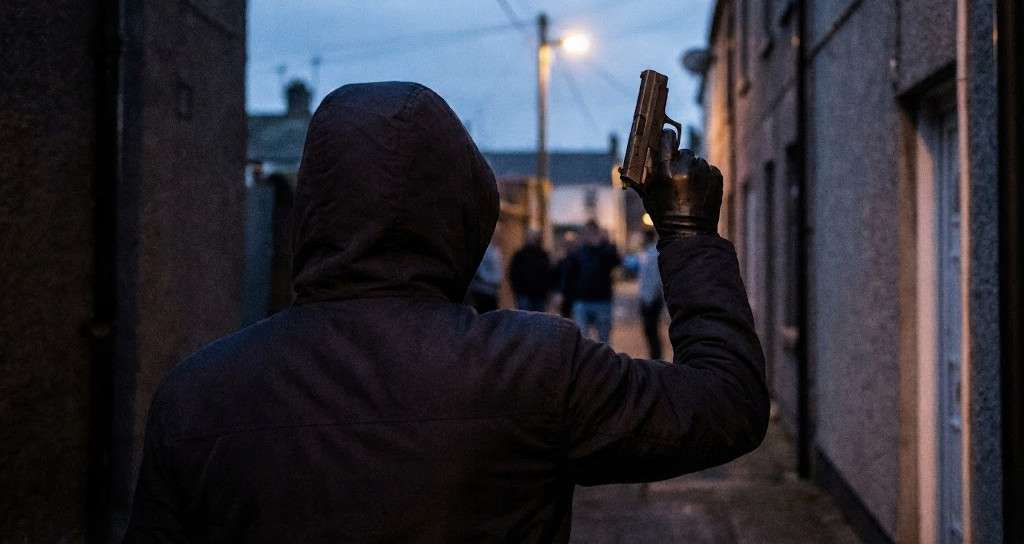
Facing brandishing a firearm charges in West Covina? You’re confronting serious criminal accusations under California Penal Code Section 417 that carry mandatory jail sentences, firearm prohibition orders, devastating strikes on your criminal record, and potential prison time if aggravating circumstances exist. Whether accused of brandishing a handgun during a road rage incident, displaying a firearm during an argument, or drawing a weapon in self-defense, these convictions destroy your Second Amendment rights, employment opportunities, professional licenses, and reputation—branding you as a violent criminal for life. Los Angeles County prosecutors aggressively pursue brandishing charges, often overcharging defendants and seeking maximum penalties even for first-time offenders or situations involving legitimate self-defense.
At Tu Defensor Criminalista, we provide relentless criminal defense representation for clients throughout West Covina and the entire San Gabriel Valley facing brandishing a firearm charges, weapons violations, and related criminal accusations. Our experienced criminal defense team understands California’s complex firearm laws, the nuances of PC 417 prosecutions, and the devastating consequences these charges bring to your freedom, rights, and future. We fight aggressively to protect your constitutional rights, challenge weak evidence, expose prosecutorial overreach, and pursue case dismissals, charge reductions, or acquittals at trial.
Free Confidential Consultation: (888) 315-3326 | Available 24/7 | Hablamos Español
California Penal Code Section 417 makes it illegal to draw or exhibit any deadly weapon, including firearms, in a rude, angry, or threatening manner in the presence of another person. This offense, commonly called “brandishing a weapon,” applies to various scenarios where someone displays a firearm or other deadly weapon in a way that could be perceived as threatening or intimidating.
To secure a conviction for brandishing a firearm under PC 417, the Los Angeles County District Attorney must prove each element beyond a reasonable doubt:
1. You drew or exhibited a deadly weapon or firearm – This includes removing a gun from a holster, displaying a weapon in your hand, or making a weapon visible in a threatening manner. The weapon doesn’t need to be pointed directly at someone; merely displaying it can constitute brandishing.
2. In the presence of another person – At least one other individual must have been present when you displayed the weapon. The person doesn’t need to have actually seen the weapon if circumstances suggest you were displaying it in a threatening manner.
3. You did so in a rude, angry, or threatening manner – This is the critical element distinguishing lawful firearm possession from criminal brandishing. Prosecutors must prove your manner of displaying the weapon was intended to intimidate, threaten, or provoke fear rather than for legitimate self-defense or other lawful purposes.
4. You were not acting in self-defense or defense of others – If you reasonably believed you or someone else faced imminent danger requiring defensive display of a weapon, this negates the criminal intent required for conviction.
The prosecution doesn’t need to prove you intended to actually use the weapon or that you made verbal threats. The manner of displaying the firearm itself constitutes the criminal conduct under California law.
California law establishes different penalty levels for brandishing offenses depending on the weapon type, location, and circumstances:
Standard Brandishing (PC 417(a)(1)) – Drawing or exhibiting a deadly weapon (other than a firearm) in a rude, angry, or threatening manner is a misdemeanor punishable by:
Brandishing a Firearm (PC 417(a)(2)) – Drawing or exhibiting a firearm in a rude, angry, or threatening manner carries enhanced penalties:
Brandishing a Firearm in Public (PC 417(c)) – If the brandishing occurred in a public place or on a public street, penalties increase significantly:
Brandishing at a Peace Officer or Firefighter (PC 417(c)) – Drawing or exhibiting a firearm in the presence of a peace officer or firefighter, knowing or reasonably should know the person is a peace officer or firefighter engaged in official duties, constitutes a more serious offense:
Brandishing in Front of a Day Care or School (PC 417.4) – Brandishing a firearm within 1,000 feet of a day care center during operating hours is punishable by:
Brandishing During Commission of a Felony – If you brandish a firearm while committing or attempting to commit a felony, this can add years to your sentence and count as a serious felony strike under California’s Three Strikes Law.
For non-citizens in West Covina and throughout Los Angeles County, brandishing convictions can trigger devastating immigration consequences. Under federal immigration law, crimes involving firearms or weapons may be classified as aggravated felonies or crimes involving moral turpitude, potentially resulting in:
According to the U.S. Department of Homeland Security, firearm-related convictions are among the most common grounds for removal of lawful permanent residents. Even misdemeanor brandishing convictions can have severe immigration consequences depending on the specific facts and the defendant’s immigration status.
A brandishing conviction carries lifelong consequences extending far beyond jail time and fines:
West Covina, located in eastern Los Angeles County, has experienced its share of firearm-related incidents and prosecutions. The city’s proximity to major freeways, diverse population, and mix of residential and commercial areas creates situations where brandishing charges frequently arise.
According to the California Department of Justice’s Criminal Justice Statistics Center, Los Angeles County reported 4,847 arrests for weapons violations in 2022, with a significant portion involving firearm-related offenses. West Covina, served by the West Covina Police Department, actively investigates and arrests individuals for brandishing and weapons violations throughout the city.
The West Covina Police Department employs approximately 130 sworn officers serving a population of over 106,000 residents across the city’s 16.1 square miles. Officers patrol areas including the Eastland Center shopping district, residential neighborhoods, and commercial corridors along Garvey Avenue, Azusa Avenue, and the I-10 freeway corridor where many brandishing incidents occur.
Common locations for brandishing arrests in West Covina include:
Brandishing charges in West Covina typically arise from several common scenarios:
Brandishing cases from West Covina are prosecuted by the Los Angeles County District Attorney’s Office and heard in the Pomona branch of the Los Angeles County Superior Court, located at 400 Civic Center Plaza, Pomona, California 91766. This courthouse serves West Covina and surrounding San Gabriel Valley communities.
Los Angeles County prosecutors take aggressive stances on firearm offenses, often refusing to reduce charges or offer favorable plea agreements even for first-time offenders. District attorneys frequently add enhancement charges, seek maximum sentences, and oppose alternatives to incarceration for brandishing defendants.
The Pomona courthouse handles thousands of criminal cases annually, with judges who have varying approaches to brandishing cases. Some judges recognize legitimate self-defense claims and proportionate responses to threats, while others impose harsh sentences even for minor brandishing allegations. Experienced criminal defense representation that understands local court procedures, prosecutor tendencies, and judicial temperaments is essential for achieving favorable outcomes.
Defeating brandishing charges requires comprehensive legal strategies attacking the prosecution’s case and establishing affirmative defenses. Our criminal defense team employs multiple defense approaches depending on the specific facts of your case:
California law recognizes the right to display a weapon when reasonably necessary for self-defense or defense of others. To establish this defense, we must demonstrate:
We gather evidence supporting self-defense claims including:
The prosecution must prove you displayed the weapon in a “rude, angry, or threatening manner.” We attack this critical element by demonstrating:
Many brandishing cases rely entirely on witness testimony without physical evidence or video documentation. We attack witness credibility through:
Brandishing charges are frequently based on completely fabricated allegations in contexts including:
We investigate thoroughly to uncover false accusation motives and build evidence demonstrating the fabricated nature of allegations.
Many brandishing cases involve questionable police searches and seizures. We file motions to suppress evidence obtained through:
Successful suppression motions can result in dismissal of charges when critical evidence is excluded from trial.
The prosecution bears the burden of proving every element beyond a reasonable doubt. We challenge insufficient evidence by:
You reasonably but mistakenly believed circumstances required displaying a weapon for self-defense. Even if your perception was ultimately incorrect, reasonable mistakes of fact negate the criminal intent required for conviction.
Facing brandishing charges in West Covina requires experienced criminal defense attorneys who understand California firearm laws, Los Angeles County prosecution tactics, and local court procedures. Our firm provides:
Brandishing charges often accompany other weapons and firearm-related offenses. We defend clients throughout West Covina and Los Angeles County against:
We provide comprehensive defense against all weapons and firearm charges, protecting your rights and freedom.
Understanding what to expect during brandishing prosecution helps you make informed decisions and protect your rights:
Most brandishing arrests occur immediately after alleged incidents. West Covina Police officers typically:
Critical: Exercise your right to remain silent. Do not explain, justify, or discuss the incident with police without your attorney present. Anything you say will be used against you in court.
For misdemeanor brandishing charges, bail is typically set at $20,000 to $50,000 depending on circumstances. For felony brandishing or cases involving multiple charges, bail can exceed $100,000. Options include:
We work quickly to secure your release, filing bail motions and presenting evidence of your ties to the community, lack of flight risk, and circumstances justifying reduced bail.
Your first court appearance occurs at the Pomona Courthouse, typically within 48 hours of arrest if in custody or several weeks later if released. At arraignment:
We appear with you at arraignment, enter not guilty pleas, argue for bail reduction, and begin building your defense strategy.
The pretrial phase includes:
Discovery – We obtain all prosecution evidence including police reports, witness statements, video footage, photographs, forensic reports, and 911 recordings. We examine everything for weaknesses, inconsistencies, and defense evidence.
Investigation – We conduct independent investigations, interviewing witnesses, visiting crime scenes, obtaining surveillance footage, and gathering evidence supporting your defense.
Motions – We file legal motions including:
Plea Negotiations – We negotiate with prosecutors seeking charge reductions, dismissals, or favorable plea agreements. Many brandishing cases resolve through negotiation without trial.
If your case proceeds to trial:
Jury Selection – We carefully select jurors who will fairly evaluate the evidence and understand self-defense rights and Second Amendment protections.
Opening Statements – We present our theory of the case and preview the evidence establishing your innocence or justifiable actions.
Prosecution Case – We cross-examine prosecution witnesses, challenge their credibility, and expose weaknesses in the state’s evidence.
Defense Case – We present defense witnesses, expert testimony, physical evidence, and your testimony (if appropriate) establishing innocence or affirmative defenses.
Closing Arguments – We argue forcefully for acquittal, highlighting reasonable doubt and defense evidence.
Verdict – The jury determines guilt or innocence on each charge.
If convicted after trial or through plea agreement, sentencing occurs at a separate hearing. We present mitigation evidence including:
We argue aggressively for alternatives to jail including probation, community service, counseling, and deferred entry of judgment programs when available.
If you’re accused of brandishing a firearm or contacted by police investigating allegations:
1. Exercise Your Right to Remain Silent – Do not speak to police, investigators, or alleged victims without your attorney present. You cannot talk your way out of charges, and anything you say will be twisted and used against you.
2. Do Not Consent to Searches – Politely refuse consent to search your vehicle, home, phone, or property. Require officers to obtain search warrants.
3. Document Everything – Write down detailed accounts of what happened, names of witnesses, and any evidence supporting your defense. Take photographs of injuries, property damage, or relevant conditions.
4. Preserve Evidence – Save text messages, emails, voicemails, and social media communications related to the incident. These may provide critical defense evidence.
5. Contact an Attorney Immediately – Time is critical in brandishing cases. Early attorney involvement allows us to:
6. Do Not Contact Alleged Victims – Any contact with complainants can be used as evidence of harassment, intimidation, or guilt. It may also violate protective orders resulting in additional criminal charges.
7. Secure Your Firearms – If you’re arrested or charged with brandishing, law enforcement will likely seize your firearms. Understanding California’s complex firearm prohibition and restoration laws requires experienced legal guidance.
Tu Defensor Criminalista provides brandishing defense services throughout West Covina and surrounding Los Angeles County communities including:
We serve the entire San Gabriel Valley region with convenient meeting locations and comprehensive criminal defense services.
Brandishing occurs when you draw or exhibit a firearm or deadly weapon in a rude, angry, or threatening manner in the presence of another person. The weapon doesn’t need to be pointed at someone or loaded—simply displaying it in a threatening way during a confrontation can result in brandishing charges. However, lawful self-defense displays when facing imminent danger are protected under California law.
Yes. You can be charged with brandishing even on your own property if you display a weapon in a threatening manner toward another person. Property ownership doesn’t give you unlimited rights to threaten others with weapons. However, defending your home against intruders or trespassers may justify displaying firearms under self-defense laws.
Brandishing involves displaying a weapon in a threatening manner without actually attempting to use it. Assault with a deadly weapon (PC 245) requires attempting to apply force with the weapon or acting in a way that would directly and probably result in force being applied. Brandishing is typically a misdemeanor while assault with a deadly weapon is a serious felony carrying state prison sentences.
Yes. California law prohibits anyone convicted of brandishing a firearm from owning, possessing, or purchasing firearms for 10 years following conviction. This applies even to misdemeanor brandishing convictions. Federal law may also impose firearm prohibitions depending on the specific circumstances and whether the conviction qualifies as a domestic violence offense.
Yes, with strong legal representation. Experienced criminal defense attorneys can often negotiate charge reductions to non-weapons offenses like disturbing the peace (PC 415) or simple assault (PC 240) that don’t carry firearm prohibition consequences. Success depends on the specific facts, your criminal history, and the strength of the prosecution’s evidence.
Self-defense is a complete defense to brandishing charges. If you reasonably believed you faced imminent danger of bodily injury and displaying the firearm was reasonably necessary to defend yourself, you cannot be convicted of brandishing. Your attorney must present evidence establishing the threat you faced and why displaying the weapon was justified.
Misdemeanor cases typically proceed to trial within 30-45 days if you’re in custody or 60-90 days if released. Felony brandishing cases take 3-6 months from arraignment to trial. However, many cases resolve through pretrial negotiations or dismissals before reaching trial.
Yes, potentially. Firearm-related convictions can trigger deportation proceedings, inadmissibility determinations, or denial of citizenship applications for non-citizens. It’s critical to consult with a criminal defense attorney who understands immigration consequences before accepting any plea agreement.
Misdemeanor brandishing a firearm convictions carry minimum 3 months county jail, up to 1 year jail, fines up to $1,000, probation with strict conditions, 10-year firearm prohibition, and permanent criminal record. Felony convictions (for brandishing at peace officers or with aggravating factors) can result in state prison sentences of 16 months to 3 years.
No. Exercise your Fifth Amendment right to remain silent. Police are skilled at obtaining incriminating statements from suspects. Anything you say will be used against you in court, even if you believe you’re explaining innocent conduct or self-defense. Request an attorney immediately and refuse to answer questions without legal representation.
Yes, technically. California law allows convictions based solely on credible witness testimony even without physical evidence or video footage. However, skilled defense attorneys attack witness credibility, expose inconsistencies, and create reasonable doubt when prosecution cases rely entirely on uncorroborated witness accounts.
Road rage brandishing cases are aggressively prosecuted in Los Angeles County. Penalties include the standard brandishing sentence (minimum 3 months jail up to 1 year) plus potential enhancements if the incident occurred on a freeway or if children were present. These cases often involve felony charges and strikes if weapons were pointed or if assault allegations exist.
Yes, through various methods including: successful suppression of illegally obtained evidence, demonstration of insufficient evidence to prove charges, negotiated dismissals in exchange for counseling or community service, or successful self-defense claims. Dismissal likelihood depends on case facts, evidence quality, and attorney advocacy.
False accusations are common in brandishing cases, particularly involving domestic disputes, custody battles, or ongoing conflicts. Your attorney will investigate thoroughly, interview witnesses, obtain surveillance footage, examine the accuser’s credibility and motives, and present evidence exposing fabrications.
Legal fees vary based on case complexity, whether charges are misdemeanor or felony, and whether the case proceeds to trial. However, the cost of experienced representation is minimal compared to the consequences of conviction including jail time, permanent criminal record, and loss of gun rights. We offer free consultations and flexible payment arrangements.
Legally yes, but it’s extremely inadvisable. California’s complex firearm laws, courtroom procedures, evidence rules, and prosecution tactics overwhelm self-represented defendants. Even attorneys hire experienced criminal defense lawyers when facing charges. The consequences of conviction are too severe to risk inadequate representation.
Remember:
Attorney Armando Josué Cespedes is rated 5.0 on Avvo, with 34 five-star reviews from clients praising his dedication, professionalism, and results. Many note how his trial skills and attention to detail led to reduced charges or outright dismissals.



 English English
 Español de México English English Español de México
Thank you! We need your help. Would you share your experience on one of these sites?
If you have concerns you wish to address privately
