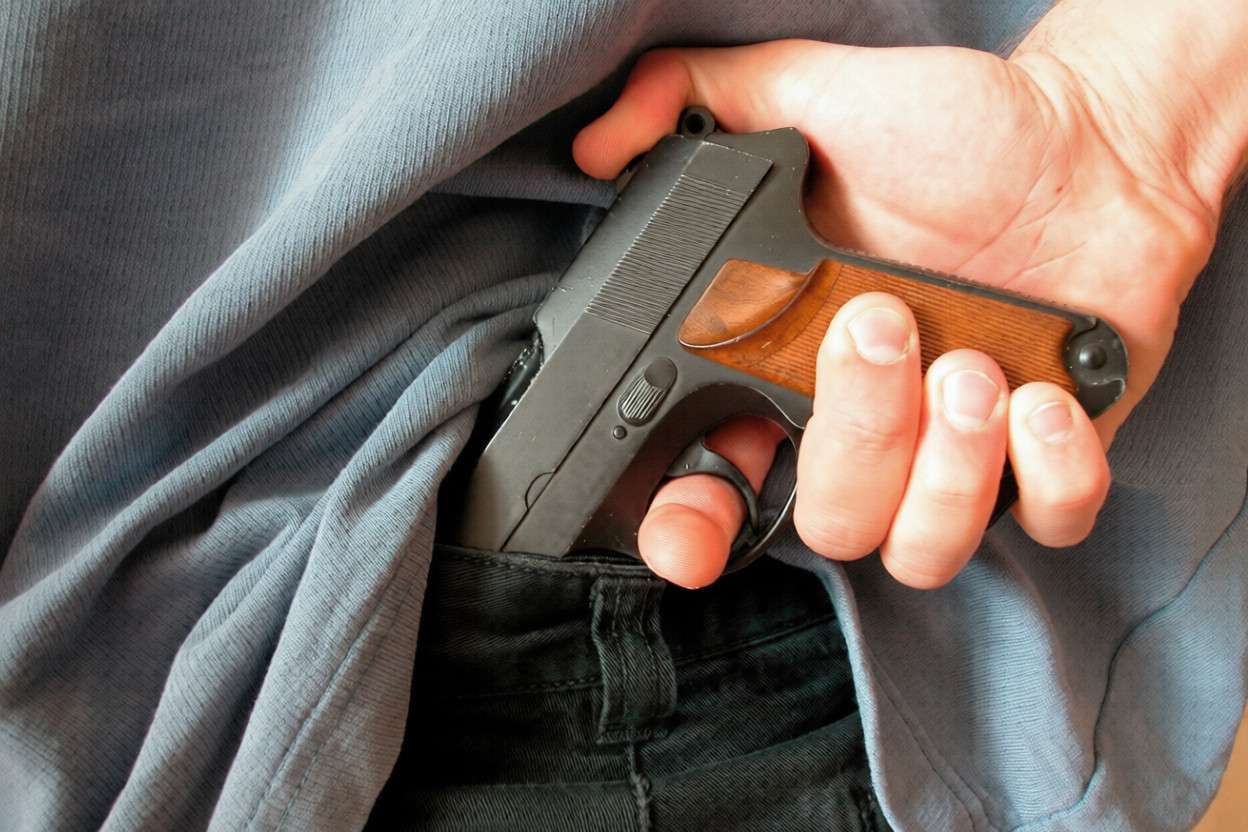
When you’re facing brandishing a firearm charges in Inglewood, California, you’re confronting serious criminal allegations that can result in mandatory jail time, permanent criminal records, loss of gun rights, and devastating consequences for your career, family, and future. Whether the incident involved a heated argument, a perceived threat, self-defense, or a misunderstanding, brandishing charges under California Penal Code Section 417 carry severe penalties and require an aggressive, strategic defense. At Tu Defensor Criminalista, we provide experienced, skilled legal representation to clients throughout Inglewood and Los Angeles County who are facing brandishing a firearm charges and related weapons offenses.
Inglewood is a diverse, vibrant city in southwestern Los Angeles County with a population of approximately 102,774 residents. Home to iconic venues including SoFi Stadium, The Forum, and the rapidly developing Hollywood Park entertainment district, Inglewood has undergone tremendous economic transformation in recent years. With this growth has come increased attention from law enforcement to weapons-related offenses, including brandishing charges.
According to the FBI’s Uniform Crime Reporting (UCR) Program[1], weapons law violations are tracked as a specific offense category, with firearms involved in a significant percentage of violent crimes and threatening incidents nationwide. The California Department of Justice[2] reports that weapons-related arrests, including brandishing offenses, remain a priority for law enforcement agencies throughout the state.
In Los Angeles County, the Los Angeles County Sheriff’s Department[3] dedicates substantial resources to investigating and prosecuting weapons offenses, including brandishing incidents that often arise from road rage, neighbor disputes, domestic conflicts, and other confrontational situations. The Giffords Law Center to Prevent Gun Violence[4] notes that California has some of the strictest gun laws in the nation, with comprehensive regulations designed to prevent gun violence and illegal weapon use.
Brandishing charges are taken extremely seriously by prosecutors because they involve the display of deadly weapons in threatening circumstances, even when no one is actually injured. Understanding the specific elements of brandishing charges, the available defenses, and the potential penalties is critical to protecting your rights and freedom.
California Penal Code Section 417 makes it a crime to draw or exhibit a deadly weapon or firearm in a rude, angry, or threatening manner in the presence of another person, or to use a deadly weapon or firearm in a fight or quarrel (except in self-defense).
To convict you of brandishing a firearm under PC § 417(a)(2), the prosecution must prove beyond a reasonable doubt that:
It is important to note that you do not need to actually point the firearm at someone to be convicted of brandishing. Simply displaying the firearm in a threatening manner is sufficient. Additionally, the firearm does not need to be loaded, and you do not need to verbally threaten anyone.
“Drawing or exhibiting” a firearm can include:
The key factor is whether your actions made the firearm visible to another person in a context that was threatening, rude, or angry.
California courts have interpreted “rude, angry, or threatening manner” broadly. According to California jury instructions[5], a firearm is exhibited in a “rude, angry, or threatening manner” if it is displayed in a way that would cause a reasonable person to fear for their safety or be intimidated.
Context matters enormously. Factors courts consider include:
The penalties for brandishing a firearm depend on several factors including where the offense occurred, who was present, and whether certain aggravating circumstances existed.
Brandishing a Firearm (PC § 417(a)(2)) – Standard Offense:
This is a misdemeanor punishable by:
Brandishing a Firearm in Certain Locations or Circumstances:
The offense becomes more serious (felony) if you brandished a firearm:
Felony brandishing in the presence of a peace officer is punishable by:
Brandishing a Firearm in a Day Care Center:
Brandishing a firearm in a day care center during normal hours of operation is punishable by:
Brandishing a Firearm on Specific Highways:
Drawing or exhibiting a firearm in the presence of a motor vehicle occupant on a highway or public lands can carry enhanced penalties, particularly if related to road rage incidents.
Brandishing charges are often filed alongside or instead of other weapons-related offenses:
Assault with a Firearm (PC § 245(a)(2)): If you actually pointed the firearm at someone or your actions went beyond mere brandishing to constitute an assault, you may be charged with the more serious offense of assault with a firearm, which carries penalties of two, three, or four years in state prison and counts as a strike under the Three Strikes Law.
Carrying a Loaded Firearm in Public (PC § 25850): If you were carrying a loaded firearm in public when the brandishing occurred, you may face additional charges.
Carrying a Concealed Firearm (PC § 25400): If the firearm was concealed before you brandished it, prosecutors may add concealed carry charges.
Criminal Threats (PC § 422): If you made verbal threats while brandishing the firearm, you may face criminal threats charges, which carry up to three years in state prison.
Understanding the context in which brandishing charges are prosecuted provides important insight into how these cases are handled. According to the California Department of Justice’s Criminal Justice Statistics[2], weapons violations constitute a significant category of arrests statewide, with law enforcement agencies prioritizing cases involving the display or use of firearms in public.
The Los Angeles Police Department[6] tracks weapons-related incidents throughout the city and county, with brandishing offenses often arising from:
According to the Bureau of Alcohol, Tobacco, Firearms and Explosives (ATF)[7], California has millions of registered firearm owners, increasing the likelihood of incidents where firearms are displayed in confrontational situations.
Data from Neighborhood Scout[8] indicates that while violent crime in Inglewood has decreased in some categories in recent years, the city’s law enforcement continues to aggressively pursue weapons-related offenses as part of broader public safety initiatives.
The Giffords Law Center[4] notes that California’s comprehensive gun safety laws include specific provisions designed to prevent threatening displays of firearms, reflecting the state’s commitment to reducing gun violence and intimidation.
These statistics demonstrate why brandishing charges are prosecuted vigorously in Inglewood and throughout Los Angeles County—and why you need an experienced criminal defense attorney who understands both the legal complexities and the local court system.
Beyond the immediate criminal penalties of jail time and fines, a brandishing conviction creates serious collateral consequences that can affect virtually every aspect of your life:
A brandishing conviction results in:
According to the Bureau of Alcohol, Tobacco, Firearms and Explosives[9], federal law prohibits firearm possession by individuals convicted of misdemeanor crimes of domestic violence and felonies punishable by more than one year imprisonment, making most brandishing convictions disqualifying under federal law.
A brandishing conviction can severely impact employment because:
For non-citizens, a brandishing conviction can trigger severe immigration consequences. Under federal immigration law, firearms offenses may constitute:
Even lawful permanent residents (green card holders) face deportation for weapons-related convictions. If you are not a U.S. citizen, it is absolutely critical that your defense attorney understands immigration law and structures any resolution to minimize or avoid immigration consequences.
If you hold or are seeking a professional license, a brandishing conviction can result in:
California’s professional licensing boards—including the State Bar, Medical Board, Board of Registered Nursing, and others—view weapons convictions as serious evidence of lack of moral character and fitness to practice.
A brandishing conviction can significantly impact child custody and visitation rights:
A criminal conviction can make housing extremely difficult:
A conviction can affect:
Beyond criminal penalties, you may face civil lawsuits filed by the person you allegedly threatened, seeking damages for emotional distress, fear, and related harm.
At Tu Defensor Criminalista, we have successfully defended numerous clients against brandishing charges using strategic defenses tailored to the specific facts of each case. Effective defenses include:
You have the legal right to display a firearm when you reasonably believe you or another person is in imminent danger of suffering bodily injury or being unlawfully touched. Self-defense is a complete defense to brandishing charges if we can establish that:
California law recognizes your right to stand your ground—you have no duty to retreat before displaying a weapon in lawful self-defense. According to California jury instructions[5], the key question is whether your actions were reasonable under the circumstances as you perceived them.
We gather evidence to support self-defense claims including:
Similar to self-defense, you may lawfully display a firearm to protect another person from imminent danger. If you reasonably believed someone else faced immediate harm and displaying the firearm was necessary to protect them, this is a complete defense.
If your display of the firearm was not done in a rude, angry, or threatening manner, you should not be convicted. Examples include:
We challenge the prosecution’s characterization of the incident by presenting evidence of the context, your demeanor, the relationship between parties, and other factors showing the display was not threatening.
Brandishing requires that you willfully drew or exhibited the firearm. If the display was accidental or unintentional, you should not be convicted. Examples include:
Unfortunately, false accusations of brandishing are common, often arising from:
We thoroughly investigate the accuser’s credibility, motivations, and any history of making false reports. We examine inconsistencies in their statements, contradictions with physical evidence, and bias or reasons to fabricate.
The prosecution must prove every element beyond a reasonable doubt. In many brandishing cases, the evidence is weak, consisting only of the alleged victim’s testimony with no corroborating evidence. We challenge insufficient evidence by:
If police discovered your firearm through an illegal search, we can file a motion to suppress the evidence under the Fourth Amendment and California Penal Code § 1538.5. Common scenarios include:
If the search was illegal, the firearm evidence must be excluded, often resulting in dismissal of charges.
If police interrogated you in custody without first advising you of your Miranda rights (right to remain silent, right to an attorney), any statements you made must be suppressed and cannot be used against you at trial.
In chaotic situations with multiple people present, witnesses may misidentify who displayed the firearm. We challenge identifications through:
While brandishing can be charged even with an unloaded firearm, in some circumstances we can argue that the firearm’s inoperability or unloaded status negates the threatening nature of the display or reduces the severity of the offense for purposes of negotiation.
In limited circumstances, we may argue that your display of the firearm was protected by the Second Amendment right to bear arms, particularly when you were lawfully carrying and the display was not threatening.
At Tu Defensor Criminalista, we provide comprehensive, personalized defense representation that includes:
We begin working immediately to:
Early investigation is critical because evidence can be lost or destroyed, witnesses’ memories fade, and surveillance video is often erased after short periods.
In many cases, we can intervene before formal charges are filed by presenting evidence and arguments to prosecutors demonstrating:
Our pre-filing intervention has prevented charges from being filed in numerous cases, allowing clients to avoid criminal records entirely.
We file strategic pretrial motions including:
Successful motions can result in dismissal of charges or exclusion of damaging evidence.
We leverage our extensive experience and relationships with Los Angeles County prosecutors to negotiate favorable outcomes including:
We know what prosecutors need to see to agree to favorable resolutions and how to present your case in the best possible light.
When negotiation does not produce an acceptable result, we are fully prepared to take your case to trial. Our attorneys are experienced trial lawyers who excel at:
We have achieved numerous not guilty verdicts in weapons cases including brandishing charges.
Even after conviction, we continue fighting for you by:
Brandishing cases in Inglewood are prosecuted in the Inglewood Courthouse, part of the Los Angeles County Superior Court system, located at:
Inglewood Courthouse One Regent Street Inglewood, CA 90301
Understanding the court process helps you make informed decisions and reduces anxiety about what to expect.
Brandishing cases typically begin with:
After arrest, you will be booked, fingerprinted, and held until bail is posted or you are released on your own recognizance. Your firearm will be confiscated and held as evidence.
At your first court appearance (typically within 48 hours if arrested):
During pretrial hearings, your attorney will:
Most cases are resolved during the pretrial stage through negotiation.
If charged with felony brandishing (e.g., in presence of peace officer), you are entitled to a preliminary hearing where:
Preliminary hearings provide valuable opportunities to assess the prosecution’s case and lock in witness testimony for impeachment at trial.
If your case proceeds to trial:
If found not guilty, you are acquitted and the charges are dismissed. If convicted, the case proceeds to sentencing.
At sentencing, the judge considers:
We present compelling evidence for lenient sentencing including character letters, proof of employment, family responsibilities, completion of counseling, and other positive factors.
When facing brandishing charges, you need an attorney with:
Our attorneys have defended thousands of weapons cases including brandishing, assault with firearms, illegal possession, and all categories of firearms offenses. We understand the technical elements of these charges and the most effective defense strategies.
We have achieved outstanding results including:
We practice regularly in the Inglewood Courthouse and throughout Los Angeles County. Our established relationships with judges, prosecutors, and court staff allow us to navigate your case more effectively and develop strategies that resonate with local decision-makers.
We treat every client as an individual with unique circumstances and goals. We take time to listen to your story, understand your priorities, and develop a defense strategy tailored to your needs. You work directly with experienced attorneys, not paralegals or case managers.
We are fluent in both English and Spanish (Hablamos Español), ensuring clear communication throughout your case. This is especially important in brandishing cases where details about what was said and done are critical to your defense.
Brandishing arrests often occur at night, on weekends, or immediately after confrontational incidents. We are available 24 hours a day, 7 days a week to provide immediate assistance. We can meet with you in custody, post bail, and begin your defense immediately.
We are not afraid to take cases to trial when necessary. We thoroughly investigate every case, challenge prosecution evidence at every stage, and fight aggressively to protect your rights, freedom, and gun rights.
We understand that a brandishing conviction doesn’t just mean jail time—it means losing your gun rights, potentially your job, and facing a permanent criminal record. We fight not just to minimize jail time but to achieve outcomes that protect your long-term interests.
Self-defense is the most common and often most effective defense to brandishing charges. California law recognizes your right to display or use force, including deadly force, when you reasonably believe you or another person faces imminent danger.
According to California jury instructions (CALCRIM 3470)[5], you are justified in displaying a weapon in self-defense if:
Importantly, you are not required to retreat or try to escape before displaying a weapon in self-defense. California follows the “stand your ground” principle—you have the right to stand your ground and defend yourself if you are in a place where you have a legal right to be.
The key question is always reasonableness: Would a reasonable person in your situation have believed they faced imminent danger and that displaying the firearm was necessary? We present evidence showing that your actions were reasonable under the circumstances you faced.
Yes. You can be convicted of brandishing even if you never pointed the firearm at anyone. Simply displaying the firearm in a rude, angry, or threatening manner is sufficient. This can include pulling it from a holster, lifting your shirt to show it in your waistband, or waving it in a threatening way.
Yes. The firearm does not need to be loaded for brandishing charges. The law focuses on how you displayed the weapon and whether it was done in a threatening manner, not on whether the weapon was capable of firing.
Self-defense is a complete defense to brandishing charges. If you reasonably believed you or another person faced imminent danger and displaying the firearm was necessary to defend against that danger, you should not be convicted. We gather evidence to demonstrate that your actions were justified self-defense.
Yes. A misdemeanor brandishing conviction results in a 10-year prohibition on firearm possession under California law. A felony conviction results in a lifetime ban under both California and federal law. This is one reason it’s so important to fight these charges aggressively.
Yes, in many cases. We often negotiate reductions to disturbing the peace (PC § 415) or other non-weapons offenses that do not carry the same severe consequences, including preservation of gun rights in some cases.
This is important evidence supporting self-defense. If the other person was the aggressor, threatened you, or initiated physical contact, this strongly supports your claim that you reasonably feared for your safety and justifiably displayed your firearm in self-defense.
For misdemeanor brandishing of a firearm, there is a mandatory minimum of three months in county jail. However, in some cases, we can negotiate for alternative sentencing including house arrest, work furlough, or weekends, or we can fight to have the charges dismissed or reduced to avoid jail entirely.
Many brandishing cases come down to “he said, she said” situations. Without independent witnesses or evidence, the prosecution may have difficulty proving their case beyond a reasonable doubt. We thoroughly examine the credibility of the alleged victim and look for inconsistencies or motives to fabricate.
It depends. If you are acquitted or charges are dismissed, you can typically get your firearm back (assuming you are legally allowed to possess it). If you are convicted, your firearm will be forfeited and you will be prohibited from possessing firearms for 10 years (misdemeanor) or life (felony).
Legal fees vary depending on case complexity, whether it proceeds to trial, and other factors. We offer free consultations where we discuss your case and provide transparent information about our fees. We also offer payment plans to make quality representation accessible. Given the severity of consequences—including mandatory jail time and loss of gun rights—experienced legal representation is essential.
If you have been arrested or charged with brandishing a firearm or any other weapons-related offense in Inglewood, California, time is critical. The sooner we begin working on your case, the better your chances of achieving a favorable outcome. At Tu Defensor Criminalista, we provide aggressive, strategic defense representation to protect your rights, your freedom, your gun rights, and your future.
We offer free, confidential consultations to discuss your case, answer your questions, and explain your legal options. Our attorneys are available 24 hours a day, 7 days a week to provide immediate assistance when you need it most.
Don’t face brandishing charges alone. Contact Tu Defensor Criminalista today and let us fight for you.
Attorney Armando Josué Cespedes is rated 5.0 on Avvo, with 34 five-star reviews from clients praising his dedication, professionalism, and results. Many note how his trial skills and attention to detail led to reduced charges or outright dismissals.



 English English
 Español de México English English Español de México
Thank you! We need your help. Would you share your experience on one of these sites?
If you have concerns you wish to address privately
