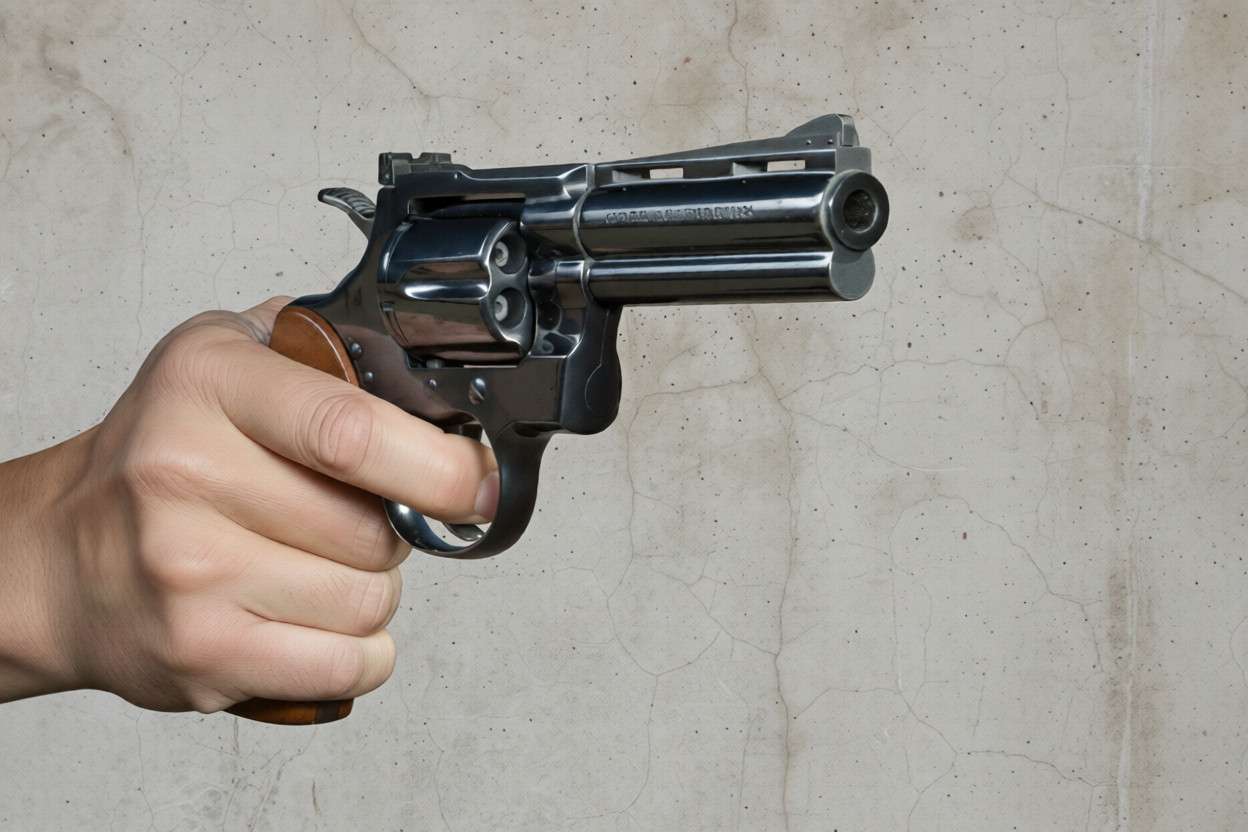
Being charged with brandishing a firearm under California Penal Code Section 417 is a serious matter that can result in jail time, substantial fines, loss of your gun rights, and a permanent criminal record. In Pomona, where gun violence rates consistently exceed state and national averages[1], prosecutors aggressively pursue brandishing charges, making experienced legal representation absolutely essential. At Tu Defensor Criminalista, we provide aggressive, strategic defense for individuals facing brandishing a firearm charges throughout Pomona and Los Angeles County.
Pomona’s elevated crime rates create a challenging environment for anyone facing weapons charges. With a crime rate of 37 per one thousand residents[2] and a violent crime rate significantly higher than 93% of California communities, law enforcement and prosecutors in Pomona take an aggressive stance on all firearms-related offenses, including brandishing. Understanding the law, your rights, and effective defense strategies is crucial to protecting your freedom and future.
Free Confidential Consultation: (888) 315-3326 | Available 24/7 | Hablamos Español
California Penal Code Section 417 makes it a crime to draw or exhibit a deadly weapon or firearm in the presence of another person in a rude, angry, or threatening manner, or to use such a weapon in a fight or quarrel, except in lawful self-defense. The statute applies to both loaded and unloaded firearms, as well as other deadly weapons including knives, bats, and any object capable of causing great bodily injury.
What many Pomona residents don’t realize is that you can be charged with brandishing a firearm even if you never intended to harm anyone, never pointed the weapon at anyone, and even if the firearm was legally owned and registered. The critical element is how you displayed the weapon and whether a reasonable person would perceive your actions as threatening.
To convict you of brandishing a firearm in violation of Penal Code 417, the Los Angeles County prosecutor must prove beyond a reasonable doubt that you drew or exhibited a deadly weapon or firearm in the presence of someone else, you did so in a rude, angry, or threatening manner OR you used the weapon or firearm in a fight or quarrel, and you were not acting in lawful self-defense or defense of another person.
The terms “rude, angry, or threatening manner” are subject to interpretation, which is why having an experienced defense attorney who can challenge the prosecution’s characterization of your actions is so important. What prosecutors describe as threatening, your attorney may be able to present as innocent, accidental, or justifiable under the circumstances.
Under California law, a deadly weapon is defined as any object, instrument, or weapon that is inherently deadly or one that is used in a manner capable of causing death or great bodily injury. This obviously includes firearms such as handguns, rifles, and shotguns, but also extends to knives, baseball bats, hammers, broken bottles, brass knuckles, clubs, and even seemingly innocuous objects like rocks or bricks if used in a threatening manner.
The key is not just the object itself, but how it is used or displayed. A hammer in a toolbox is not a deadly weapon, but that same hammer brandished during an argument becomes a deadly weapon under the law.
California Penal Code 417 encompasses several different types of brandishing offenses, each carrying different potential penalties. Understanding which specific charge you face is essential to developing an effective defense strategy.
Drawing or exhibiting any deadly weapon other than a firearm in a rude, angry, or threatening manner is a misdemeanor offense punishable by a minimum of 30 days and a maximum of six months in county jail. This applies to weapons like knives, clubs, bats, or any other object used as a weapon.
Brandishing any firearm is a misdemeanor offense carrying three to six months in county jail. The charge applies whether the firearm is loaded or unloaded, and whether it is registered or unregistered. The critical factor is that you displayed the firearm in a threatening manner or used it during a quarrel.
If you brandish a firearm capable of being concealed (such as a pistol or revolver) in a public place or on a public street, the offense carries enhanced penalties of three months to one year in county jail and/or fines up to $1,000. This is one of the most commonly charged brandishing offenses in Pomona, often arising from confrontations in parking lots, street arguments, or road rage incidents.
Brandishing a firearm on the grounds of a daycare center during its normal operating hours is treated much more seriously. This offense is a “wobbler,” meaning prosecutors can charge it as either a misdemeanor or a felony. As a misdemeanor, it carries three months to one year in county jail. As a felony, it can result in up to three years in California state prison.
Drawing or exhibiting a firearm in the immediate presence of a peace officer who you know or reasonably should know is performing their duties is also a wobbler offense. As a misdemeanor, it carries a minimum of nine months and a maximum of one year in county jail. As a felony, it can result in 16 months to three years in state prison.
In Pomona, where interactions between law enforcement and residents occur frequently due to the city’s elevated crime rates, these charges are not uncommon and are prosecuted vigorously.
If you brandish a firearm or deadly weapon and intentionally inflict serious bodily injury on someone, you can be charged under the enhanced provisions of Penal Code 417.6. This is also a wobbler offense carrying up to one year in county jail for a misdemeanor conviction or up to three years in state prison for a felony conviction.
The consequences of a brandishing conviction extend far beyond the immediate criminal penalties of jail time and fines. Understanding the full scope of potential consequences is essential when making decisions about how to defend your case.
For a misdemeanor brandishing conviction involving a non-firearm deadly weapon, you face 30 days to six months in county jail. For brandishing any firearm, the penalty is three to six months in county jail. For brandishing a concealed firearm in public, you face three months to one year in county jail and/or fines up to $1,000. For wobbler offenses charged as felonies, you could face 16 months to three years in California state prison.
In addition to jail or prison time, the court may impose probation conditions, community service requirements, anger management classes, substantial fines and court fees, and restitution to any victims.
One of the most serious consequences of a brandishing conviction is the loss of your right to own or possess firearms. Any felony conviction results in a lifetime ban on firearm ownership in California. However, even certain misdemeanor brandishing convictions trigger firearm prohibitions.
According to California law, you will lose your gun rights for 10 years if you suffer two or more misdemeanor convictions for brandishing under PC 417(a)(2) (brandishing any weapon other than a firearm), or just one misdemeanor conviction for brandishing a firearm in the presence of a peace officer under PC 417(c).
For many Pomona residents who value their Second Amendment rights or who own firearms for personal protection, hunting, or sport shooting, this long-term consequence can be even more devastating than the immediate criminal penalties.
For non-citizens, a brandishing conviction can have severe immigration consequences. Certain weapons offenses are considered crimes involving moral turpitude (CIMT) or aggravated felonies under immigration law, which can trigger deportation proceedings, render you inadmissible to the United States, or prevent you from naturalizing as a U.S. citizen.
Even legal permanent residents who have lived in the United States for decades can face deportation based on a brandishing conviction. Our attorneys work closely with immigration counsel to structure defenses and plea agreements that minimize or eliminate these devastating immigration consequences.
A brandishing conviction on your criminal record can severely limit your employment opportunities. Many employers conduct background checks and are reluctant to hire individuals with weapons-related convictions, particularly for positions involving security, financial responsibility, or work with vulnerable populations.
Professional licenses can also be affected. Healthcare professionals, teachers, attorneys, security personnel, and others with professional licenses may face disciplinary action or license revocation based on a brandishing conviction.
Landlords frequently conduct background checks on prospective tenants, and a weapons conviction can result in denial of rental applications. In Pomona’s competitive rental market, having a brandishing conviction on your record can make finding safe, affordable housing significantly more difficult. Public housing authorities may also deny or terminate housing assistance based on criminal convictions.
A felony conviction can affect your ability to receive federal financial aid for education. Many colleges and universities also consider criminal history in admissions decisions, potentially limiting educational opportunities for years to come.
Understanding Pomona’s unique crime challenges helps explain why brandishing charges are prosecuted so aggressively in this jurisdiction. The city faces ongoing challenges with gun violence that shape law enforcement and prosecutorial priorities.
According to official city data, Pomona experienced an average of 55 homicides and non-fatal injury shootings per year[1], with the homicide rate from 2013 to 2022 at 11.1 per 100,000 residents—significantly above both state and national rates. The city averaged 17.4 homicides annually from 2003 to 2022, with an average of 38 non-fatal injury shootings from 2013 to 2022.
These statistics reveal a community dealing with persistent gun violence. Pomona has over 19 active gangs with an estimated 570-690 gang members[1], and approximately 70% of identified suspects in violent incidents are associated with groups or gangs. Additionally, 23.1% of gun violence incidents stem from group-related disputes.
More broadly, Pomona has one of the highest crime rates in America, with a crime rate of 37 per one thousand residents[2]. Your chance of becoming a victim of violent crime in Pomona is 1 in 148. Within California, more than 93% of communities have a lower crime rate than Pomona.
This context is important because it explains why Pomona prosecutors take brandishing charges so seriously. In a city struggling with elevated gun violence, any display of a weapon is treated as a potential precursor to more serious violence. Prosecutors seek maximum penalties as a deterrent, and judges may impose harsh sentences to send a message about community safety.
However, this aggressive enforcement climate also means that legitimate self-defense situations, misunderstandings, and innocent conduct are sometimes charged as brandishing. An experienced defense attorney who understands the local context can effectively advocate for reasonable outcomes in cases where charging decisions reflect prosecutorial overreach rather than genuine criminal conduct.
Brandishing charges arise in a wide variety of situations. Understanding common scenarios can help you recognize when you might be at risk and what to do if you find yourself facing charges.
One of the most common scenarios leading to brandishing charges involves road rage. A driver feels threatened or disrespected by another motorist, displays a firearm in anger or as a warning, and finds themselves facing criminal charges. Even if you never pointed the weapon at anyone, simply displaying it during a traffic confrontation can result in brandishing charges.
Arguments between spouses, partners, or family members that escalate to the point where someone retrieves or displays a weapon frequently result in brandishing charges. These cases are often complicated by mandatory arrest policies for domestic violence and by the fact that domestic violence restraining orders typically prohibit firearm possession entirely.
Pomona has an active nightlife scene, and conflicts that begin in bars, clubs, or parking lots sometimes involve weapons. Even pulling back your jacket to reveal a concealed firearm during an argument can constitute brandishing under California law.
Neighbors arguing over property lines, noise, parking, or other disputes sometimes escalate to the point where one party displays a weapon. These cases often involve conflicting accounts of who was the aggressor and whether the weapon display was threatening or defensive.
Many brandishing cases involve situations where the defendant genuinely felt threatened and displayed a weapon for self-protection. While self-defense is a complete defense to brandishing charges, you must be able to prove that you reasonably believed you or someone else was in immediate danger and that your response was proportional to the threat.
Sometimes brandishing charges arise from accidental or innocent displays of firearms. For example, a legally carried concealed weapon becomes visible when you reach for something, or you’re showing a firearm to a friend and someone else sees it and feels threatened. These cases often hinge on whether your manner of displaying the weapon was “rude, angry, or threatening.”
Every brandishing case is unique, requiring a defense strategy tailored to the specific facts, evidence, and circumstances. At Tu Defensor Criminalista, we employ comprehensive defense strategies designed to achieve the best possible outcome for our Pomona clients.
Self-defense is a complete defense to brandishing charges. Under California law, you are justified in displaying a weapon if you reasonably believed that you or someone else was in imminent danger of being killed or suffering great bodily injury, and you reasonably believed that the immediate use of force was necessary to defend against that danger.
The key is that your actions must be proportional to the threat you faced. You cannot brandish a firearm in response to minor insults or threats. However, if you were confronted by multiple attackers, threatened with weapons, or faced with credible threats of violence, displaying your weapon may have been justified.
In Pomona, where violent crime rates are 55.2% higher than the national average[3], self-defense claims can be particularly compelling when supported by evidence of genuine threats or danger. We work to gather witness statements, surveillance footage, text messages, and other evidence demonstrating that you faced a real threat.
The prosecution must prove that you displayed the weapon in a “rude, angry, or threatening manner.” If you were simply showing the weapon to someone, moving it from one location to another, or displaying it for a lawful purpose, you may have a defense based on lack of intent to threaten.
For example, if you were showing a friend your new firearm at your home and a neighbor saw through a window and called police, the context makes clear you were not acting in a threatening manner. Similarly, if you were cleaning your weapon or storing it in your vehicle and someone saw it, this does not constitute brandishing.
Unfortunately, false accusations of brandishing are not uncommon, particularly in domestic disputes, neighbor conflicts, or situations involving ongoing hostility between parties. Sometimes accusers exaggerate or fabricate claims to gain advantage in custody battles, restraining order proceedings, or simply to retaliate against someone they dislike.
We investigate the accuser’s credibility, motives, and any history of making false claims. We also look for inconsistencies between their statements to police, their testimony, and other evidence. Video footage, witness testimony, and phone records can all be used to demonstrate that the accusation is false or exaggerated.
To be convicted of brandishing, you must have displayed the weapon “in the presence of another person.” If no one else was present when you allegedly brandished the weapon, the charge cannot stand. This defense sometimes applies when someone claims to have seen a weapon from a distance or when the alleged victim’s account of events is contradicted by physical evidence.
If law enforcement discovered evidence of brandishing through an illegal search or seizure, we can file motions to suppress that evidence. The Fourth Amendment protects you against unreasonable searches and seizures, and if police violated your rights, any evidence obtained as a result may be excluded from trial.
Common constitutional violations in brandishing cases include unlawful vehicle searches, warrantless searches of homes or property, searches that exceed the scope of consent, and detentions or arrests without probable cause. Successfully suppressing evidence often results in charges being dismissed or significantly reduced.
Many brandishing cases come down to credibility determinations. Who does the jury believe—the defendant or the alleged victim? We meticulously investigate witnesses’ backgrounds, looking for bias, prior inconsistent statements, criminal history, and other factors that might undermine their credibility.
We also prepare you to testify effectively if you choose to do so, ensuring that your version of events is presented in the most compelling manner possible.
In some cases, the best strategy is to negotiate with prosecutors for reduced charges that carry lesser penalties and fewer collateral consequences. For example, we might negotiate to have brandishing charges reduced to disturbing the peace, simple assault, or other offenses that don’t carry mandatory firearm prohibitions.
Our relationships with Pomona prosecutors and our knowledge of local court practices help us identify opportunities for favorable plea agreements that protect your rights and minimize the impact on your future.
Understanding what to expect during the criminal justice process can help reduce anxiety and allow you to make informed decisions about your case.
Brandishing cases typically begin with a 911 call or police response to a reported incident. Law enforcement will interview witnesses, collect evidence, and may arrest you immediately if they have probable cause to believe you committed the offense.
If you are arrested, you will be taken to the Pomona Police Department for booking, then transferred to a Los Angeles County jail facility. This is when your right to remain silent and request an attorney becomes critical. Do not discuss the incident with police without your lawyer present, as anything you say will be used against you.
Your first court appearance is the arraignment, typically held within 48 hours of arrest for in-custody defendants. At the arraignment, you will be formally notified of the charges, advised of your rights, and asked to enter a plea of guilty, not guilty, or no contest.
The court will also address bail at the arraignment. Bail amounts for brandishing charges vary depending on whether the offense is charged as a misdemeanor or felony and based on your criminal history. We can argue for reduced bail or release on your own recognizance, presenting evidence of your ties to the Pomona community, employment history, and lack of flight risk.
After arraignment, your case will proceed through pretrial proceedings. This includes discovery, where both sides exchange evidence, pretrial motions to suppress evidence or dismiss charges, and plea negotiations with the prosecutor.
This pretrial phase is often where cases are won or lost. Successful motions to suppress evidence obtained through illegal searches can result in dismissal. Effective negotiation can result in reduced charges or favorable plea agreements. We use every tool available during this phase to position your case for the best possible outcome.
If your case goes to trial, you have the right to a jury trial where 12 members of your community must unanimously find you guilty beyond a reasonable doubt. Brandishing trials typically involve witness testimony about what occurred, expert testimony about the weapon involved, and legal arguments about whether your conduct met the elements of the crime.
Our trial attorneys have extensive courtroom experience and the skills necessary to effectively cross-examine witnesses, present compelling defenses, and advocate for you before a jury.
If you are convicted, either by plea or after trial, the court will schedule a sentencing hearing. At sentencing, we present mitigation evidence designed to secure the most lenient sentence possible, including character letters, evidence of employment or community ties, documentation of any mental health or substance abuse treatment, and arguments for probation or alternative sentencing.
Effective advocacy at sentencing can make the difference between jail time and probation, or between longer and shorter sentences.
When facing brandishing charges, your choice of attorney can determine whether you go to jail or maintain your freedom. Here’s why Pomona residents trust Tu Defensor Criminalista with their most serious legal challenges.
California weapons laws are complex and constantly evolving. Successfully defending brandishing cases requires in-depth knowledge of Penal Code 417 and related statutes, case law interpreting these provisions, and procedural rules governing evidence and trial practice.
Our attorneys have dedicated their careers to mastering this area of law and staying current with changes and developments. This specialized expertise makes a critical difference in outcomes.
We regularly appear in Pomona Superior Court and have established working relationships with prosecutors, judges, and court personnel. This local knowledge allows us to navigate your case more effectively than attorneys unfamiliar with the Pomona court system.
We know which prosecutors are open to reasonable negotiations, which judges are sympathetic to certain defenses, and how to position your case for the best possible result in this specific venue. This insider knowledge is invaluable.
We believe that the best defense is a proactive offense. Rather than simply reacting to the prosecution’s case, we conduct our own investigations, develop affirmative defenses, file strategic motions, and put pressure on the prosecution to justify their charges.
This aggressive approach often results in charges being reduced or dismissed before trial, saving our clients the stress and expense of a full trial while achieving excellent outcomes.
When you hire Tu Defensor Criminalista, you are not just another case number. We take the time to understand your unique situation, your concerns, and your goals. We keep you informed at every stage of your case and ensure you understand your options and the potential consequences of each decision.
You will have direct access to your attorney, and we will be responsive to your questions and concerns throughout the legal process.
We proudly serve Pomona’s diverse community with bilingual legal services in English and Spanish. Language should never be a barrier to quality legal representation, and we ensure that Spanish-speaking clients fully understand their rights, the charges against them, and their legal options.
Pomona’s significant Latino population deserves attorneys who can communicate effectively in their preferred language, and we are committed to providing that service.
We understand that a brandishing conviction can have devastating consequences for your employment, housing, immigration status, and gun rights. We are committed to fighting for outcomes that protect not just your immediate freedom but your long-term future.
This means exploring every possible defense, negotiating for the best possible plea agreements, and being prepared to take your case to trial when that is the best option. Your future is too important to leave to chance.
If you have been arrested or charged with brandishing a firearm in Pomona, taking the right steps immediately can significantly impact the outcome of your case.
Do not make any statements to law enforcement about the incident. Police are trained to elicit incriminating statements, and anything you say will be used against you in court. Even if you believe you are providing innocent explanations or that honesty will help you, you should invoke your right to remain silent and request an attorney immediately.
The sooner you have an attorney involved in your case, the better. Early attorney involvement allows us to preserve evidence, interview witnesses while memories are fresh, begin negotiations with prosecutors, and start building your defense immediately.
Do not wait until your arraignment or until you have been formally charged. Contact us as soon as you know you are under investigation or have been arrested.
Conversations with friends, family, cellmates, or anyone other than your attorney are not privileged and can be used against you. Never discuss your case on recorded jail phone lines or in text messages, emails, or social media posts. Prosecutors routinely review these communications and use them as evidence.
If you have any evidence that might support your defense—photographs, documents, video footage, text messages, or witness contact information—preserve it and provide it to your attorney. Do not attempt to hide or destroy evidence, as this could result in additional charges for obstruction of justice.
If you are released on bail or your own recognizance, comply with all court orders and conditions of release. Violations can result in your bail being revoked and could negatively impact your case. This may include staying away from alleged victims, surrendering any firearms, or checking in with pretrial services.
Brandishing charges are often filed alongside or instead of other related offenses. Understanding these related crimes can help you grasp the full scope of your legal situation.
Assault with a deadly weapon requires proof that you intended to harm the victim, while brandishing does not. Prosecutors sometimes charge both offenses arising from the same incident, or they may reduce assault charges to brandishing during plea negotiations. ADW is a much more serious offense carrying longer prison sentences.
Making criminal threats involves threatening to kill or physically harm another person in a way that causes them sustained fear. This charge is often filed when brandishing is accompanied by verbal threats. Criminal threats is a wobbler offense that can be charged as either a misdemeanor or felony.
If you brandished a weapon that you were also carrying concealed without a valid permit, you may face additional charges for the concealed carry violation. These charges are often filed together in cases where law enforcement discovers the weapon during investigation of brandishing allegations.
Simply carrying a loaded firearm in public is itself a crime in California, and these charges are commonly filed alongside brandishing charges when the brandished firearm was loaded at the time of the incident.
If you not only brandished a firearm but also discharged it in a grossly negligent manner, you could face additional charges for willful discharge of a firearm. This is a wobbler offense carrying significantly more serious penalties than simple brandishing.
If you are convicted of brandishing, California law provides options for clearing your record under certain circumstances. Understanding these options is important for minimizing the long-term impact of a conviction.
Under California Penal Code Section 1203.4, you may be eligible to have a brandishing conviction expunged from your record if you successfully complete probation, you are not currently facing charges for another offense, you are not on probation for another offense, and you are not serving a sentence for another offense.
An expungement allows you to withdraw your guilty or no contest plea and enter a not guilty plea, after which the court dismisses the case. This releases you from most penalties and disabilities arising from the conviction, though it does not restore gun rights if they were lost due to the conviction.
For felony convictions, you may eventually seek a Certificate of Rehabilitation and Governor’s Pardon, which can restore some rights including, potentially, firearm rights. This is a lengthy process that typically requires several years to have passed since completion of your sentence.
Understanding the broader Los Angeles County context for gun violence enforcement helps explain why Pomona takes brandishing charges so seriously. In 2024, LAPD seized 7,634 illegal firearms, including 790 ghost guns[4], reflecting coordinated efforts throughout the county to remove weapons from circulation.
Los Angeles saw significant reductions in gun violence in 2024, with shooting victims decreasing by approximately 19% and homicides down 14%[4] compared to 2023. Communities where the Gang Reduction and Youth Development (GRYD) program operates saw a 40% reduction in homicides, demonstrating the effectiveness of targeted intervention strategies.
However, Los Angeles County still recorded significant gun-related homicides in 2024[5], and firearms remain the weapon of choice in the majority of violent crimes. This persistent gun violence drives aggressive enforcement of all weapons-related offenses throughout the county, including in Pomona.
Yes. California law makes no distinction between loaded and unloaded firearms for purposes of brandishing charges. Simply displaying an unloaded firearm in a threatening manner is sufficient for a conviction. The law recognizes that victims cannot know whether a weapon is loaded when they are threatened with it.
Context matters in brandishing cases. If you were peacefully showing a firearm to a friend in a non-threatening manner, you may have a defense based on lack of intent to threaten. However, prosecutors sometimes argue that any display of a weapon that causes someone to feel threatened constitutes brandishing, regardless of your intent. An experienced attorney can help present evidence of the innocent context.
Yes. Self-defense is a complete defense to brandishing charges if you can prove that you reasonably believed you or someone else was in imminent danger and that displaying the weapon was necessary to protect against that danger. The key is that your response must be proportional to the threat you faced.
It depends on the specific charge and whether it is a misdemeanor or felony. Any felony conviction results in a lifetime firearms ban. For misdemeanors, you will lose gun rights for 10 years if you have two or more convictions under PC 417(a)(2) or just one conviction under PC 417(c) (brandishing in the presence of a peace officer). A single misdemeanor brandishing conviction that doesn’t fall into these categories may not trigger a firearms ban, though it will still appear on your criminal record.
Yes. Experienced defense attorneys often negotiate with prosecutors to reduce brandishing charges to lesser offenses such as disturbing the peace (Penal Code 415), simple assault (Penal Code 240), or other charges that carry lesser penalties and don’t trigger firearms prohibitions. The success of these negotiations depends on the specific facts of your case and your criminal history.
Assault with a deadly weapon (Penal Code 245) requires proof that you intended to harm the victim, while brandishing does not require proof of intent to harm—only that you displayed the weapon in a threatening manner. ADW is a more serious offense carrying longer potential sentences.
Possibly. Video evidence can cut both ways—it might clearly show threatening behavior, or it might demonstrate that your actions were not threatening or were justified as self-defense. The quality of the video, what it shows and doesn’t show, and whether it captures the full context of the incident all matter. An experienced attorney can analyze video evidence and determine how it affects your case.
Unlike in some jurisdictions, in California the decision to prosecute is made by the prosecutor, not by the alleged victim. While a victim’s unwillingness to cooperate can make prosecution more difficult, prosecutors can still proceed with charges using other evidence such as police reports, witness statements, and physical evidence. However, victim non-cooperation often provides leverage for negotiating favorable outcomes.
You can petition for expungement under Penal Code 1203.4 after successfully completing probation. If you were not placed on probation, you must wait one year after your misdemeanor conviction or three years after your felony conviction before petitioning for expungement. Note that expungement does not restore gun rights.
Remember:
Attorney Armando Josué Cespedes is rated 5.0 on Avvo, with 34 five-star reviews from clients praising his dedication, professionalism, and results. Many note how his trial skills and attention to detail led to reduced charges or outright dismissals.



 English English
 Español de México English English Español de México
Thank you! We need your help. Would you share your experience on one of these sites?
If you have concerns you wish to address privately
