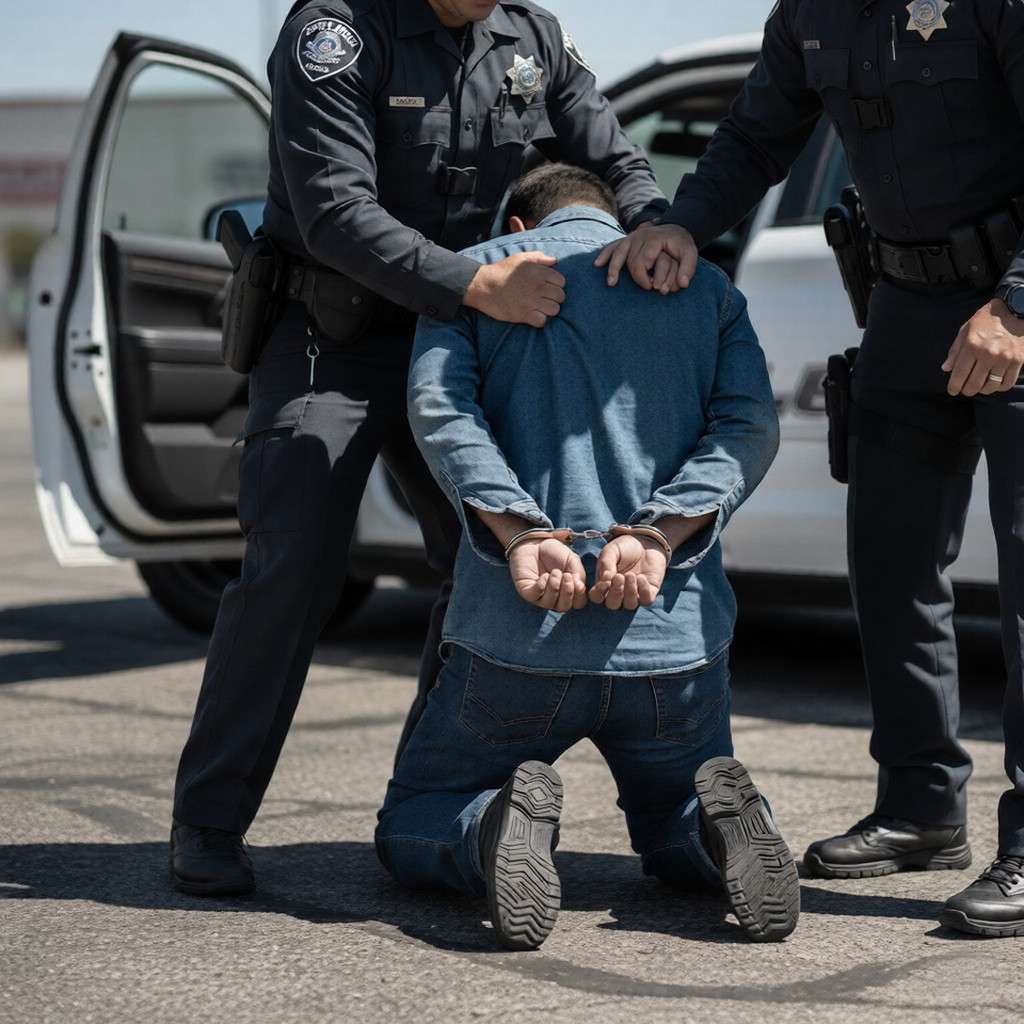
Facing resisting arrest charges in Pomona can be one of the most frustrating and confusing legal situations you’ll ever encounter. Often, these charges arise from misunderstandings, police overreaction, or situations where you were simply trying to protect yourself. What began as a minor encounter with law enforcement can quickly escalate into serious criminal charges that threaten your freedom, your criminal record, and your future. At Tu Defensor Criminalista, we understand that resisting arrest charges are frequently unjust, and we provide aggressive legal defense for Pomona residents accused of resisting, obstructing, or delaying law enforcement officers.
Free Confidential Consultation: (888) 315-3326 | Available 24/7 | Hablamos Español
Resisting arrest in California is not a single, simple charge. California law actually encompasses several related offenses that involve interfering with law enforcement officers performing their duties. Understanding the specific charges you face is critical to building an effective defense.
The most common resisting arrest charge in Pomona and throughout California is violation of Penal Code Section 148(a)(1). This statute makes it a misdemeanor to “willfully resist, delay, or obstruct any public officer, peace officer, or an emergency medical technician” in the discharge or attempt to discharge their duties.
This is an extremely broad statute that gives law enforcement and prosecutors tremendous discretion. According to California Legislative Information[1], this law has been on the books for decades and is one of the most frequently charged offenses in Los Angeles County, where Pomona is located.
The elements that prosecutors must prove beyond a reasonable doubt for a PC 148(a)(1) conviction are:
What makes this charge particularly problematic is the vagueness of terms like “delay” and “obstruct.” These words can be interpreted to criminalize a wide range of behavior, including:
The breadth of this statute means that Pomona residents can be charged with resisting arrest even when they never intended to resist and were simply confused, scared, or exercising their constitutional rights.
Penal Code Section 69 is a more serious charge that can be prosecuted as either a misdemeanor or a felony (known as a “wobbler” offense). PC 69 involves either:
The key difference between PC 148 and PC 69 is the element of force, violence, or threats. If prosecutors allege that you used physical force against an officer or threatened them, they will typically charge you under PC 69 rather than the less serious PC 148.
PC 69 carries significantly harsher penalties than PC 148, including potential felony conviction with up to three years in state prison. However, PC 69 also requires the prosecution to prove force or violence, which provides additional avenues for defense.
If physical contact occurred between you and a police officer during an arrest, you may face battery charges under Penal Code Sections 243(b) or 243(c). These charges range from misdemeanors to serious felonies depending on whether the officer was injured.
PC 243(b) – Battery on a peace officer without injury is a misdemeanor carrying up to one year in county jail.
PC 243(c) – Battery on a peace officer with injury can be charged as either a misdemeanor or felony, with felony convictions carrying up to three years in state prison.
These charges often accompany resisting arrest allegations, and prosecutors frequently “stack” charges to increase leverage in plea negotiations.
Civil rights organizations have long criticized resisting arrest laws as being too vague and subject to abuse. According to data compiled by California criminal justice researchers[2], resisting arrest charges are disproportionately filed against people of color and are often used as “add-on” charges when police lack evidence of the underlying offense that led to the initial encounter.
The fundamental problem is that resisting arrest charges give officers the power to criminalize normal human reactions to police encounters. When someone is frightened, confused, or believes they are being unlawfully detained, their natural reactions – pulling away, questioning the officer, or even just appearing nervous – can be characterized as criminal resistance.
In Pomona’s diverse communities, language barriers, cultural differences in how people interact with authority, and immigration concerns can all contribute to misunderstandings that result in resisting arrest charges. At Tu Defensor Criminalista, we provide bilingual legal services to ensure that language and cultural differences do not prevent you from receiving effective legal representation.
Resisting arrest charges in Pomona typically arise in a few common scenarios:
Traffic stops are one of the most common situations where resisting arrest charges originate. On Pomona’s busy streets and highways like Interstate 10, State Route 60, Garey Avenue, and Holt Avenue, the Pomona Police Department and California Highway Patrol conduct thousands of traffic stops annually.
According to California Highway Patrol statistics[3], traffic stops can escalate quickly when drivers:
What officers characterize as “resisting” may simply be a driver exercising their constitutional rights, experiencing fear or confusion, or having difficulty understanding commands due to language barriers or hearing problems.
Pomona’s downtown area, shopping districts, and residential neighborhoods see frequent pedestrian stops by police. These stops often involve young people, individuals experiencing homelessness, or residents in areas where police conduct “community policing” activities.
Pedestrian stops can lead to resisting arrest charges when individuals:
Domestic violence calls bring Pomona police to residences in emotionally charged situations. According to Los Angeles County public safety data[4], domestic disturbance calls represent a significant portion of police responses.
In these situations, emotions run high, and people may:
Any of these actions, even when motivated by fear or a desire to protect loved ones, can result in resisting arrest charges.
Downtown Pomona’s entertainment district, with its restaurants, bars, and nightlife venues, is a common location for public intoxication arrests. When police encounter intoxicated individuals, resistance charges often follow if the person:
Pomona has seen various protests, demonstrations, and public gatherings over the years. When police attempt to disperse crowds, manage demonstrations, or make arrests at these events, resisting charges frequently result from:
The penalties for resisting arrest depend on the specific charges filed and whether you have prior convictions.
For a standard PC 148(a)(1) conviction, penalties include:
Jail Time: Up to one year in Los Angeles County jail
Fines: Up to $1,000 plus mandatory penalty assessments that can triple the actual cost
Probation: Typically 1-3 years of summary (informal) probation with conditions such as:
Criminal Record: A permanent misdemeanor conviction on your record
If charged as a misdemeanor under PC 69, penalties include:
If charged as a felony under PC 69, penalties include:
Beyond the direct criminal penalties, a resisting arrest conviction carries numerous collateral consequences that can impact your life for years:
Employment: Many employers conduct background checks, and a conviction for resisting arrest can be seen as evidence of being confrontational, uncooperative, or having poor judgment. This is particularly damaging for those seeking employment in:
Professional Licenses: Teachers, nurses, contractors, real estate agents, and other licensed professionals may face disciplinary action from licensing boards.
Immigration Status: For non-citizens, even a misdemeanor conviction can have serious immigration consequences. Resisting arrest may be considered a crime involving moral turpitude, which can affect:
According to U.S. immigration statistics[5], criminal convictions are among the leading causes of immigration complications for California residents.
Resisting arrest charges are highly defensible. At Tu Defensor Criminalista, we employ multiple defense strategies depending on the specific circumstances of your case.
The most fundamental defense to resisting arrest charges is that the officer was not lawfully performing their duties. If the officer’s actions were unlawful, you cannot be convicted of resisting arrest.
Officers are not lawfully performing their duties when they:
We thoroughly investigate whether the officers in your case were acting lawfully. This includes:
The statute requires that you “willfully” resisted, delayed, or obstructed the officer. This means you acted with purpose or intent. You cannot be convicted if:
Prosecutors must prove that your conduct actually delayed or obstructed the officer. This defense challenges whether your actions had any meaningful impact on the officer’s ability to perform their duties.
Actions that generally do not constitute resistance include:
You have the right to use reasonable force to defend yourself or others from unlawful or excessive force by police officers. If you reasonably believed the officer was using excessive force, your actions in protecting yourself or others may be justified.
This defense requires showing:
This is a difficult defense because juries are often reluctant to second-guess police use of force. However, with video evidence showing clearly excessive force, this defense can be successful.
Unfortunately, false accusations in resisting arrest cases are not uncommon. Officers may falsely claim you resisted in order to:
We investigate false accusation claims by:
In chaotic situations involving multiple people – protests, large gatherings, fights – officers may mistakenly arrest the wrong person for resistance. We can establish mistaken identity through:
Pomona, with its population of approximately 151,000 according to the U.S. Census Bureau[6], is a diverse community with a large Hispanic/Latino population (approximately 71%), significant Asian and African American communities, and residents from varied socioeconomic backgrounds.
Research has consistently shown that resisting arrest charges are filed disproportionately against people of color. In Los Angeles County, which includes Pomona, criminal justice data reveals disparities in how resisting arrest charges are applied.
Several factors contribute to these disparities:
Higher Rates of Police Contact
Communities of color experience more frequent police contact through traffic stops, pedestrian stops, and other encounters. More police contact inevitably leads to more opportunities for resistance charges.
Cultural Differences
Different cultural norms regarding interaction with authority figures can be misinterpreted by officers as disrespect or resistance. In some cultures, avoiding direct eye contact with authority is a sign of respect; officers may interpret this as suspicious behavior.
Language Barriers
Pomona’s large Spanish-speaking population faces particular challenges. According to Census data, approximately 51% of Pomona residents speak a language other than English at home. Language barriers can lead to:
Immigration Fears
Many Pomona residents are immigrants or have family members who are undocumented. Fear of immigration consequences can cause people to react in ways that officers interpret as resistance, such as:
With a median household income of approximately $67,000 according to Census data, many Pomona families live paycheck to paycheck. A resisting arrest charge can create severe economic hardship:
For families already struggling economically, these costs can lead to loss of housing, inability to pay for necessities, and long-term financial instability.
The Pomona Police Department has implemented body-worn cameras, which has been a significant development in resisting arrest cases. According to research on police body cameras[7], these devices can:
However, body cameras are not a panacea. Footage can be:
At Tu Defensor Criminalista, we aggressively pursue all body camera, dashcam, and surveillance footage that may help your defense.
Understanding the legal process helps you navigate your case more effectively.
If arrested for resisting arrest in Pomona, you will be taken to the Pomona Police Station for booking. This process includes:
For misdemeanor resisting arrest under PC 148, you will typically be released within a few hours on your own recognizance or after posting bail. For felony charges under PC 69, bail is typically set higher, ranging from $10,000 to $50,000 depending on your criminal history.
Critical Advice: Exercise your right to remain silent. Do not discuss the incident with police. Request an attorney immediately. Anything you say will be used against you.
Your first court appearance will be an arraignment at the Pomona Superior Court, located at 400 Civic Center Plaza, Pomona, CA 91766. At arraignment:
We strongly recommend pleading not guilty at arraignment. This preserves all your rights and allows us time to investigate your case and negotiate with prosecutors.
The pre-trial phase is where most of the critical work occurs:
Discovery: We obtain all evidence from the prosecution, including:
Investigation: We conduct our own investigation:
Motion Practice: We file motions to strengthen your defense:
Plea Negotiations: We negotiate with the Los Angeles County District Attorney’s office to seek:
If we cannot achieve an acceptable resolution through negotiation, your case will proceed to trial. For misdemeanor resisting arrest, you can choose either:
At trial, the prosecution must prove every element of the charge beyond a reasonable doubt. We will:
Many resisting arrest cases are won at trial because video evidence contradicts officers’ testimony, or because we can establish that you were exercising your rights or that the officers were not lawfully performing their duties.
Resisting arrest charges are problematic for several reasons:
Terms like “delay,” “obstruct,” and “resist” are inherently vague. There is no objective standard for what constitutes resistance. This vagueness gives officers tremendous discretion and creates opportunities for abuse.
What one officer interprets as resistance, another might see as compliance. Whether you “resisted” often depends entirely on the subjective perception of the arresting officer.
Resisting arrest charges are sometimes filed as punishment for:
These retaliatory charges are unconstitutional, but proving retaliation can be difficult.
When officers use excessive force or conduct unlawful arrests, they often file resisting arrest charges against the victim to justify their own misconduct. This creates a “he said, she said” situation where the officer’s version is given deference.
Prosecutors often file resisting arrest charges even when the evidence is weak to create leverage in plea negotiations. They know defendants may accept unfavorable deals rather than risk trial on multiple charges.
Pomona’s large immigrant community faces unique challenges when charged with resisting arrest.
Even a misdemeanor conviction can trigger serious immigration consequences:
At Tu Defensor Criminalista, we work closely with immigration attorneys to ensure that any resolution of your criminal case minimizes immigration consequences. This may involve:
Many immigrants, particularly those who are undocumented or have experienced negative interactions with law enforcement in their countries of origin, have deep-seated fear of police. This fear can manifest as behavior that officers interpret as resistance:
These reactions are understandable but can result in criminal charges. At Tu Defensor Criminalista, we help judges and juries understand the cultural and psychological factors that contributed to your behavior.
You have a right to an interpreter in court proceedings, but language access during the arrest itself is often inadequate. Officers may not speak Spanish or other languages common in Pomona, and even when they do, the stress of an arrest situation makes communication difficult.
We document language barriers and use them to challenge the assertion that you willfully resisted. If you didn’t understand what officers were telling you to do, you cannot be guilty of willfully resisting.
At Tu Defensor Criminalista, we provide comprehensive, aggressive defense for resisting arrest charges.
We provide fully bilingual legal services in English and Spanish. Our attorney and staff are fluent in both languages, ensuring that you understand every aspect of your case. We can:
We leave no stone unturned in investigating your case:
We file aggressive motions to suppress evidence and dismiss charges when officers violate your constitutional rights. Our motion practice has resulted in dismissals and favorable outcomes in numerous cases.
We are not afraid to take cases to trial when that is in your best interest. Our attorney has significant trial experience and a track record of success in resisting arrest cases.
You are not just a case number to us. We take time to understand your unique situation, your concerns, and your goals. We develop defense strategies tailored to your specific circumstances.
We understand Pomona’s diverse communities and have connections to resources that can help you, including:
We offer 24/7 availability for emergency consultations because arrests happen at all hours. When you need legal help, we are here.
Yes. Despite the name “resisting arrest,” you can be charged under PC 148 even if you were never arrested for any underlying crime. The statute prohibits resisting, delaying, or obstructing officers in the performance of their duties, which includes investigative detentions, traffic stops, and other encounters that don’t result in arrest.
You cannot be convicted under PC 148 if you did not know the person was a police officer. However, prosecutors can prove knowledge through circumstantial evidence such as:
•The officer was in uniform
•The officer identified themselves
•The officer was driving a marked police vehicle
•The officer displayed a badge You should have reasonably known they were an officer based on the circumstances
No. You have a constitutional right to record police activity in public spaces, and exercising this right cannot form the basis for a resisting arrest charge. However, officers sometimes unlawfully arrest people for recording and charge them with resisting arrest. We can defend these cases by establishing your constitutional right to record.
You have the right to use reasonable force to defend yourself from excessive force by police. However, this is a difficult defense because it requires showing that the force used was excessive and that your response was reasonable and necessary. Video evidence is critical to these defenses.
Yes. Many resisting arrest charges are dismissed through:
Successful motion practice showing the officer was not lawfully performing duties
Insufficient evidence to prove willful resistance
Negotiated dismissals when prosecutors recognize weaknesses in their case
Acquittal at trial
Not necessarily. Many people convicted of misdemeanor resisting arrest receive sentences that do not include jail time, such as:
•Informal probation
•Community service
•Fines
•Anger management classes
However, sentences vary based on the circumstances of your case, your criminal history, and the judge assigned to your case. Felony convictions under PC 69 carry a much higher likelihood of custody time.
If you are convicted, you may be eligible to have the conviction expunged (dismissed under Penal Code 1203.4) after completing probation. Expungement does not erase the conviction but allows you to legally state you have not been convicted for most purposes. However, the conviction must still be disclosed for certain professional licenses and will still appear on FBI background checks.
To minimize the risk of resisting arrest charges:
•Remain calm and polite
•Keep your hands visible
•Comply with lawful commands
•Do not physically resist
•Verbally assert your rights if appropriate: “I do not consent to searches. I wish to remain silent. I want to speak with an attorney.”
•Do not run or make sudden movements
•If you believe your rights are being violated, comply anyway and challenge it later in court
•Ask “Am I free to leave?” to clarify if you are being detained
Misdemeanor cases typically take 2-4 months from arrest to resolution, though complex cases or those going to trial may take longer. Felony cases generally take 4-8 months or more
Remember:
Attorney Armando Josué Cespedes is rated 5.0 on Avvo, with 34 five-star reviews from clients praising his dedication, professionalism, and results. Many note how his trial skills and attention to detail led to reduced charges or outright dismissals.



 English English
 Español de México English English Español de México
Thank you! We need your help. Would you share your experience on one of these sites?
If you have concerns you wish to address privately
