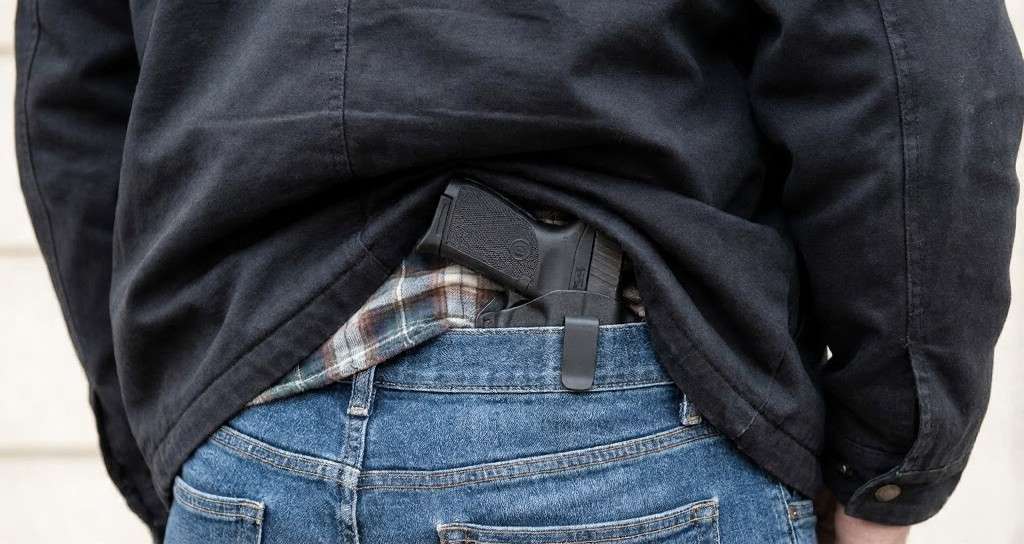
Charged with illegal concealed weapons possession in West Covina? You’re facing criminal convictions ranging from misdemeanor carrying concealed firearms to felony weapons charges with prison sentences, loss of gun rights, professional licensing consequences, and permanent criminal records that devastate employment opportunities, security clearances, and Second Amendment freedoms. Whether accused under California Penal Code § 25400 for carrying concealed firearms, PC § 25850 for carrying loaded firearms in public, PC § 29800 for felon with firearm, PC § 30305 for possession of ammunition by prohibited persons, or related weapons violations, these convictions impose severe consequences including mandatory jail time, firearm prohibition orders, and collateral impacts affecting careers, housing, and constitutional rights.
At Tu Defensor Criminalista, we provide aggressive, strategic defense representation for clients facing concealed weapons charges, illegal firearms possession allegations, and gun-related criminal offenses throughout West Covina and Los Angeles County. Our criminal defense attorneys understand California’s complex and constantly evolving firearms laws, recognize the constitutional issues implicated in weapons prosecutions, and have successfully defended hundreds of clients against gun charges through strategic litigation, constitutional challenges, and comprehensive defense preparation achieving dismissals, charge reductions, and acquittals.
West Covina concealed weapons arrests occur through various enforcement mechanisms including traffic stops by West Covina Police Department, vehicle searches during DUI investigations, probation and parole searches, California Highway Patrol checkpoint operations, Los Angeles County Sheriff’s Department investigations, home searches pursuant to warrants, and arrests following domestic violence calls or disturbance reports. These arrests frequently involve constitutional violations including illegal searches without probable cause, pretextual traffic stops, warrantless vehicle searches exceeding legal authority, and failure to establish knowing possession of discovered firearms.
Understanding California’s concealed weapons laws, available defenses, constitutional protections, and strategic options is essential when facing gun charges in West Covina. Early intervention by experienced firearms defense attorneys can mean the difference between convictions with devastating consequences and case dismissals protecting your freedom, rights, and future.
Free Confidential Consultation: (888) 315-3326 | Available 24/7 | Hablamos Español
California maintains some of the nation’s strictest gun control laws, criminalizing numerous firearms-related conduct that remains legal in many other states. Navigating these complex statutes requires understanding of multiple Penal Code sections, regulatory schemes, and constitutional principles.
California Penal Code § 25400 prohibits carrying concealed firearms on your person or in vehicles under your control without valid California CCW (Carry Concealed Weapon) permit. This statute criminalizes possession of handguns, pistols, revolvers, and other concealable firearms that are hidden from plain view, whether carried on your person in clothing, bags, or containers, or concealed within vehicles in glove compartments, under seats, in consoles, or other locations not immediately visible.
To prove PC § 25400 violations, prosecutors must establish you carried a firearm, the firearm was substantially concealed on your person or in a vehicle under your control, you knew you were carrying the firearm, and you lacked valid CCW authorization. Each element requires specific proof, and failure to establish any element results in acquittal.
Penalties for PC § 25400: First-time violations constitute misdemeanors punishable by up to one year county jail and fines up to $1,000. However, numerous aggravating circumstances elevate charges to felonies carrying 16 months to three years state prison, including prior convictions, stolen firearms, gang participation, other crimes committed while armed, and carrying in prohibited locations like schools or government buildings.
California Penal Code § 25850 criminalizes carrying loaded firearms in public places or in vehicles on public streets, regardless of whether the firearms are concealed or openly displayed. This statute prohibits possession of loaded guns in public even when openly carried, with limited exceptions for licensed hunters, target shooters traveling to/from ranges, and CCW permit holders.
Prosecutors must prove you carried a firearm, the firearm was loaded, the carrying occurred in a public place or public street, and you knew you were carrying a loaded firearm. “Loaded” means ammunition is in firing position or attached in manner allowing immediate firing, including rounds in chambers, cylinders, clips, or magazines attached to firearms.
Penalties for PC § 25850: Base violations constitute misdemeanors with up to one year county jail, but felony charges apply with aggravating factors including prior convictions, gang membership, stolen firearms, and other circumstances similar to PC § 25400 enhancements.
California Penal Code § 29800 prohibits persons convicted of felonies from owning, purchasing, receiving, or possessing firearms or ammunition. This lifetime ban applies to all felony convictions unless firearm rights are restored through gubernatorial pardon or successful reduction of felonies to misdemeanors under PC § 17(b).
Felon-in-possession charges constitute serious felonies carrying 16 months to three years state prison, with enhanced penalties under California’s 10-20-Life law (PC § 12022.53) when firearms are used in commission of other felonies. These charges frequently result from probation searches, parole compliance checks, and investigations following arrests for new offenses.
Beyond felony convictions, California law prohibits firearm possession by numerous other categories including persons convicted of certain violent misdemeanors, individuals subject to domestic violence restraining orders, persons with mental health commitments or findings of danger, individuals convicted of specified drug offenses, persons dishonorably discharged from military, and individuals subject to gun violence restraining orders.
These prohibitions create complex legal landscapes where individuals who aren’t felons may nonetheless face serious criminal charges for firearm possession based on prior misdemeanor convictions, civil restraining orders, or mental health histories.
California Penal Code § 30305 criminalizes ammunition possession by persons prohibited from possessing firearms. This statute extends firearm prohibitions to mere ammunition ownership, allowing prosecution even when no actual firearms are found. Ammunition possession charges constitute felonies or misdemeanors depending on underlying prohibition bases, with penalties ranging from county jail to state prison.
California law extensively regulates “assault weapons” and .50 BMG rifles, requiring registration and imposing strict possession restrictions. Possession of unregistered assault weapons or .50 BMG rifles constitutes felonies punishable by 16 months to three years state prison. California’s assault weapon definitions encompass numerous semi-automatic firearms based on features like pistol grips, folding stocks, flash suppressors, and magazine capacities.
California Penal Code § 32310 prohibits manufacturing, importing, selling, or possessing large capacity magazines capable of holding more than 10 rounds. While constitutional challenges to this statute continue through federal courts, violations currently constitute misdemeanors or infractions with fines and potential jail time.
California law prohibits firearms possession in specific locations including school zones (PC § 626.9), government buildings and courthouses (PC § 171b and PC § 171c), airports beyond security checkpoints, and other sensitive locations. These violations carry enhanced penalties including felony charges and mandatory minimum sentences in some circumstances.
Understanding typical arrest scenarios helps identify defense opportunities and constitutional violations:
Concealed weapons charges frequently result from traffic stops where officers observe firearms during license and registration requests, search vehicles based on claimed consent or probable cause, or discover guns during inventory searches following vehicle impoundment. Many of these searches violate Fourth Amendment protections against unreasonable searches and seizures.
Police cannot search vehicles based solely on traffic violations without additional probable cause, valid consent, or search incident to lawful arrest. Officers who search vehicles based on generalized suspicions, pretextual justifications, or alleged “consent” obtained through coercion conduct illegal searches requiring evidence suppression.
Probationers and parolees face reduced Fourth Amendment protections, allowing searches based on reasonable suspicion rather than probable cause. However, even these searches must comply with constitutional limitations and search condition terms. Warrantless searches exceeding authorized scope or conducted without reasonable suspicion violate constitutional rights despite probation or parole status.
Firearms discovered during domestic violence investigations create dual exposure to domestic violence charges and weapons violations. California law mandates firearm relinquishment for persons subject to domestic violence restraining orders, and violations result in both criminal charges and civil contempt proceedings. These cases require coordinated defense addressing both criminal prosecutions and family law proceedings.
Concealed weapons charges following home search warrants require careful scrutiny of warrant validity, probable cause supporting warrant issuance, and search execution compliance with warrant terms. Invalid warrants, stale information, searches exceeding warrant scope, and failure to knock and announce can invalidate searches and require evidence suppression.
Law enforcement specifically targets individuals with felony convictions through probation compliance checks, parole searches, and investigations following tips or surveillance. These investigations frequently involve questionable probable cause, illegal searches, and violations of defendants’ rights requiring aggressive defense challenges.
Experienced firearms defense attorneys employ comprehensive strategies defending concealed weapons charges:
Most concealed weapons cases depend on evidence obtained through searches that may violate Fourth Amendment protections. Defense strategies include filing motions to suppress evidence from illegal searches, challenging probable cause for traffic stops and vehicle searches, proving searches exceeded scope of valid consent, demonstrating warrant defects or stale information, establishing searches violated knock-and-announce requirements, and showing officers lacked reasonable suspicion for probation searches.
Successful suppression motions eliminate critical evidence, often resulting in complete case dismissal when prosecutors cannot proceed without the suppressed firearms. Aggressive Fourth Amendment litigation constitutes the most powerful defense tool in weapons cases.
Prosecutors must prove you knew firearms were present in your vehicle or on your person. Lack of knowledge defenses apply when firearms belonged to other vehicle occupants, guns were placed in vehicles without your knowledge, you recently borrowed or purchased vehicles containing unknown firearms, or firearms were hidden in locations you weren’t aware of.
Circumstantial evidence of knowledge including your proximity to firearms, fingerprints or DNA, statements about firearm ownership, or ammunition found separately from weapons can be challenged through alternative explanations, testimony from witnesses, and proof that others had access to vehicles or locations where guns were found.
Constructive possession requires proving you had dominion and control over firearms. When firearms are found in shared vehicles, residences with multiple occupants, or locations accessible to others, prosecutors must establish you specifically possessed or controlled the weapons. Defense strategies include demonstrating firearms belonged to other vehicle occupants or household members, proving you lacked access to locations where guns were found, establishing others had superior possession claims, and showing insufficient evidence connecting you to discovered firearms.
California law provides exceptions to concealed carry prohibitions including transporting unloaded firearms in locked containers directly between authorized locations like homes and shooting ranges, carrying firearms on private property you own or lawfully possess, transporting firearms for lawful purposes consistent with statutory exceptions, and possessing firearms pursuant to valid CCW permits.
Defense strategies include proving your conduct fell within statutory exceptions, demonstrating firearms were unloaded and properly stored during transport, establishing you were traveling between authorized locations for lawful purposes, and showing compliance with regulatory requirements for lawful possession.
Assault weapons prosecutions often involve disputes about whether specific firearms meet California’s assault weapon definitions based on features, configurations, and modifications. Defense strategies include presenting expert testimony about firearm characteristics, demonstrating firearms don’t meet statutory definitions, proving firearms were lawfully registered, and establishing firearms fall within safe harbor provisions.
Defendants with prior felony convictions may have gun rights restored through Penal Code § 17(b) reduction of felonies to misdemeanors, certificates of rehabilitation, or gubernatorial pardons. Strategic defense includes investigating eligibility for rights restoration, filing motions to reduce prior convictions, pursuing record relief eliminating prohibition bases, and demonstrating current charges stem from lawful possession following rights restoration.
California firearms statutes face ongoing constitutional challenges under the Second Amendment. While most California gun laws currently remain enforceable, specific applications may violate constitutional protections, particularly regarding law-abiding citizens with no criminal histories facing charges for conduct protected by Second Amendment rights. Defense strategies include raising Second Amendment challenges in appropriate cases and monitoring ongoing litigation that may impact California firearms regulations.
Limited circumstances support necessity or duress defenses when firearm possession was necessary to prevent greater harm or resulted from unlawful threats or coercion. These defenses apply when defendants possessed firearms temporarily to prevent imminent danger, protect themselves or others from serious harm, or complied with unlawful demands under credible threats.
Strategic negotiation with prosecutors can achieve reduced charges avoiding felony convictions, alternative sentencing including probation instead of custody, dismissal of enhancement allegations, and resolutions preserving firearm rights when possible. Experienced attorneys leverage case weaknesses, constitutional defenses, and mitigation to secure favorable negotiated outcomes.
Understanding local firearms enforcement patterns provides important context for concealed weapons cases in West Covina.
According to California Department of Justice firearms statistics, Los Angeles County accounts for substantial firearms-related arrests statewide, with thousands of weapons charges filed annually ranging from misdemeanor concealed carry violations to serious felony offenses. Enforcement priorities vary across jurisdictions, with some areas emphasizing violent gun crimes while others conduct proactive enforcement targeting otherwise law-abiding gun owners for technical regulatory violations.
The California Department of Justice Bureau of Firearms maintains the state’s Armed Prohibited Persons System (APPS), a database identifying individuals legally prohibited from possessing firearms who have registered weapons. APPS enforcement operations conduct targeted seizures from prohibited persons, resulting in numerous arrests throughout Los Angeles County including West Covina and surrounding communities.
West Covina’s location in eastern Los Angeles County’s San Gabriel Valley places it within a region experiencing significant gang activity and firearms-related violence, leading to aggressive enforcement of weapons laws. The West Covina Police Department, Los Angeles County Sheriff’s Department, and multi-agency task forces conduct regular firearms enforcement operations including gang injunction enforcement, probation compliance sweeps, and targeted investigations of individuals suspected of illegal gun possession.
Research from the RAND Corporation indicates California’s firearms laws create complex regulatory landscapes where law-abiding gun owners face serious criminal exposure for technical violations, while enforcement patterns show disparate impacts on communities of color and low-income populations. Studies document concerns about selective enforcement, racial profiling in traffic stops leading to weapons discoveries, and prosecution of individuals with no violent criminal histories for regulatory violations.
The Los Angeles County District Attorney’s Office prosecutes thousands of weapons cases annually, with prosecution priorities varying based on case circumstances, defendants’ criminal histories, and surrounding offense conduct. First-time offenders with no prior records charged with simple concealed carry violations often receive more favorable treatment than repeat offenders or individuals charged with firearms possession during commission of other crimes.
According to U.S. Bureau of Alcohol, Tobacco, Firearms and Explosives (ATF) data, California leads the nation in firearms-related prosecutions, reflecting both the state’s large population and extensive gun regulations creating numerous potential violations. Federal prosecutors in California coordinate with state authorities, resulting in parallel federal and state prosecutions for serious firearms offenses.
Concealed weapons convictions impose severe direct penalties and devastating collateral consequences:
Misdemeanor Convictions: Base PC § 25400 and PC § 25850 violations constitute misdemeanors carrying up to one year county jail, fines up to $1,000, probation with conditions including firearms prohibition, search and seizure conditions, and mandatory jail time in some circumstances.
Felony Convictions: Aggravated concealed weapons violations constitute felonies carrying 16 months to three years state prison, with enhanced penalties for repeat offenders, gang members, stolen firearms, and concurrent commission of other crimes. Felon-in-possession charges under PC § 29800 carry mandatory minimum sentences in some circumstances.
Strike Convictions: Certain firearms violations constitute serious felonies qualifying as “strikes” under California’s Three Strikes Law, doubling sentences for subsequent felony convictions and potentially resulting in 25-years-to-life sentences upon third strike convictions.
Felony convictions result in lifetime prohibition on firearm and ammunition possession under federal and California law. Certain misdemeanor convictions also trigger 10-year firearm prohibitions. Convicted individuals must relinquish all firearms and ammunition, face additional charges for subsequent possession, and lose Second Amendment rights absent successful record relief.
Concealed weapons convictions impact professional licenses including peace officer certifications, security guard licenses, private investigator licenses, professional licenses requiring background clearances, and firearm dealer licenses. Licensing boards may deny, suspend, or revoke licenses based on weapons convictions involving moral turpitude or violence.
Firearms convictions constitute aggravated felonies and crimes involving moral turpitude under federal immigration law, triggering mandatory deportation for non-citizens, inadmissibility determinations preventing reentry, and bars to naturalization. Even misdemeanor weapons violations create serious immigration exposure requiring specialized defense addressing both criminal and immigration consequences.
Criminal background checks revealing weapons convictions devastate employment prospects in law enforcement, security, government positions, healthcare, education, and any field requiring background clearances or security credentials. Federal security clearances are typically denied or revoked following firearms convictions, ending careers in defense contracting, intelligence, and sensitive government positions.
Concealed weapons violations while on probation or parole trigger violation proceedings potentially resulting in probation revocation, parole violations, imposition of suspended sentences, and significant custody time beyond penalties for the weapons charges themselves.
California Penal Code Section 25400 prosecutions require specific elements that experienced defense attorneys challenge to protect your rights and freedom.
PC § 25400 convictions require proof you carried a firearm on your person or in a vehicle under your control, the firearm was substantially concealed, you knew of the firearm’s presence, and you lacked valid authorization to carry concealed. Failure to prove any element beyond reasonable doubt requires acquittal.
“Carried” Element: Prosecutors must prove actual or constructive possession and control. Mere presence near firearms proves insufficient without evidence demonstrating knowing possession and control.
“Substantially Concealed” Element: Firearms must be hidden from ordinary observation. Partially visible firearms or weapons in plain view don’t meet concealment requirements. Defense strategies challenge whether firearms were actually concealed or merely present in vehicles.
Knowledge Element: You must have known firearms were present. Lack of knowledge defenses apply when firearms belonged to others, were placed without your knowledge, or you weren’t aware of their presence. Prosecutors often rely on circumstantial evidence of knowledge that defense attorneys effectively challenge.
Lack of Authorization: Prosecutors must prove you lacked valid CCW permits or didn’t qualify for statutory exceptions. Defense strategies include demonstrating valid permits, proving conduct fell within exceptions, and establishing lawful authority for firearm possession.
The U.S. Supreme Court’s decisions in District of Columbia v. Heller and McDonald v. City of Chicago recognize individual Second Amendment rights to possess firearms for lawful purposes including self-defense. While courts have upheld many concealed carry restrictions, applications to law-abiding citizens with no criminal histories potentially violate constitutional protections.
Defense strategies include raising Second Amendment challenges where appropriate, monitoring ongoing federal litigation challenging California gun laws, and preserving constitutional issues for appellate review. While many California firearms regulations currently survive constitutional scrutiny, specific applications may exceed permissible government restrictions on fundamental rights.
California Penal Code § 25850 prosecutions criminalize carrying loaded firearms in public regardless of concealment, requiring distinct defense strategies addressing this statute’s specific elements and exceptions.
California law defines “loaded” firearms as weapons with ammunition in firing position or attached in manner allowing immediate firing. This includes rounds in chambers, bullets in cylinders, ammunition in attached magazines, or clips inserted in firearms. Unloaded firearms with nearby ammunition don’t meet “loaded” definitions unless ammunition is attached or immediately accessible for loading.
Defense strategies include challenging whether firearms were actually loaded, demonstrating ammunition was stored separately from weapons, proving firearms couldn’t be immediately fired due to mechanical issues or safety devices, and establishing prosecutors cannot prove loaded status beyond reasonable doubt.
PC § 25850 applies only to public places and public streets. Private property, including your residence, business premises you lawfully occupy, and private land with owner permission fall outside this statute’s scope. Defense strategies include proving alleged violations occurred on private property, demonstrating you had lawful authority to be present on property where firearms were possessed, and establishing locations weren’t “public” under statutory definitions.
California law provides numerous exceptions to PC § 25850 including valid CCW permits, lawful hunting activities with appropriate licenses, transport to/from shooting ranges or gun shops for legitimate purposes, possession on private property, and other circumstances where loaded firearms possession serves lawful purposes.
Defense strategies focus on demonstrating your conduct fell within statutory exceptions, proving you were engaged in lawful activities when arrested, establishing compliance with regulatory requirements for exceptional activities, and showing prosecutors cannot disprove exception applicability beyond reasonable doubt.
PC § 25850 prosecutions often include enhancement allegations elevating misdemeanors to felonies based on prior convictions, gang participation, stolen firearms, or concurrent crimes. Defense strategies include challenging enhancement factual bases, proving enhancement allegations lack evidentiary support, negotiating dismissal of enhancements in plea negotiations, and demonstrating enhancements don’t apply to your specific circumstances.
Felon-in-possession charges under California Penal Code § 29800 carry serious consequences and require specialized defense strategies addressing lifetime firearms prohibitions and severe penalties. Convictions frequently result in state prison sentences, extended probation or parole supervision, permanent loss of Second Amendment rights, and devastating collateral consequences impacting employment, housing, and professional licensing. Because these cases often rely on complex legal and factual determinations, experienced legal counsel is essential from the earliest stages of investigation.
PC § 29800 prosecutions require proof of qualifying prior felony convictions. Defense strategies include investigating whether prior convictions actually constitute disqualifying felonies, determining if prior convictions were reduced to misdemeanors under PC § 17(b), proving prior convictions were expunged or dismissed, establishing firearm rights were restored through pardons or certificates of rehabilitation, and demonstrating predicate convictions do not legally support current charges.
Prior felonies reduced to misdemeanors eliminate the statutory basis for firearm prohibition, requiring dismissal of felon-in-possession charges. Comprehensive record review frequently uncovers prior relief overlooked by prosecutors, providing complete defenses that can terminate cases before trial. Skilled defense counsel also scrutinizes the procedural validity of prior convictions, including whether constitutional rights advisements were properly given and whether plea agreements were legally sufficient.
California law permits felony reductions, early probation termination, and formal restoration of firearm rights. If prior convictions were reduced or rights restored before the alleged firearm possession, PC § 29800 charges lack legal foundation. Defense strategies include documenting restoration timelines, demonstrating lawful reliance on restored rights, and establishing prosecutors cannot prove prohibited status at the time of alleged possession. In many cases, precise record analysis reveals gaps in the prosecution’s timeline that undermine their case entirely.
Felon-in-possession cases often involve constructive rather than actual possession, requiring proof the defendant knew firearms were present and exercised dominion and control over them. Defense strategies challenge these elements by demonstrating lack of knowledge, absence of control, shared or joint occupancy of premises, and exclusive possession by others. Situations involving shared residences, vehicles, or workplaces frequently support defenses showing insufficient proof of dominion, access, or intent.
Limited circumstances support necessity defenses when temporary firearm possession was required to prevent imminent harm. These rare defenses apply when individuals momentarily possessed weapons to prevent violence, protect themselves or others from serious threats, disarm dangerous persons, or surrender firearms to law enforcement. While narrowly applied, these defenses can provide powerful legal justifications when properly documented and presented.
Many PC § 29800 cases arise from traffic stops, probation searches, parole compliance checks, or residential warrant executions. Constitutional challenges frequently focus on unlawful detentions, illegal searches, invalid warrants, improper consent, and Fourth Amendment violations. Successful suppression motions can exclude firearm evidence entirely, resulting in case dismissal. Strategic litigation of suppression issues often determines the ultimate outcome.
Even where dismissal is not immediately attainable, experienced defense counsel leverages evidentiary weaknesses, constitutional challenges, and mitigating factors to negotiate charge reductions, alternative sentencing, probation resolutions, or diversionary outcomes when legally available. Comprehensive mitigation presentations often include employment history, family responsibilities, rehabilitation efforts, and community involvement to humanize defendants and minimize sentencing exposure.
If you’re facing concealed weapons charges, illegal firearms possession allegations, or any gun-related criminal offenses in West Covina, Baldwin Park, Covina, or anywhere in Los Angeles County, contact Tu Defensor Criminalista immediately for a confidential consultation. We provide experienced, aggressive representation protecting your rights, freedom, and Second Amendment protections.
Concealed weapons charges carry serious consequences including jail or prison time, loss of firearm rights, professional licensing impacts, and permanent criminal records. Early attorney involvement allows comprehensive investigation, identification of constitutional violations, strategic defense development, and negotiation from positions of strength.
Don’t face weapons charges alone. California’s complex firearms laws and severe penalties require skilled legal representation from attorneys who understand gun laws, constitutional protections, and effective defense strategies. Our experience defending concealed weapons cases throughout Los Angeles County provides the knowledge and advocacy your case demands.
Call us today at (888) 315-3326 or visit our website at / to schedule your confidential consultation. We represent clients throughout Los Angeles County with the skill, experience, and dedication your case deserves. Contact us now—your freedom and rights depend on it.
Prosecutors must prove you knew firearms were present. If you genuinely didn’t know about guns in your vehicle—for example, if other people used your car or someone placed weapons there without your knowledge—lack of knowledge provides strong defense. Document circumstances supporting your lack of awareness.
California doesn’t recognize out-of-state CCW permits. Only valid California CCW permits authorize concealed carry in California. Non-resident permits from other states provide no defense to California concealed weapons charges. However, federal law allows transport of unloaded firearms in locked containers through California when traveling between states where possession is legal.
Police need probable cause, valid consent, or other legal justification to search vehicles during traffic stops. Mere traffic violations don’t authorize vehicle searches. If officers searched your car illegally, your attorney can file suppression motions excluding firearms evidence and potentially achieving case dismissal.
Consequences depend on specific charges and circumstances. Misdemeanor convictions may result in county jail, probation, and fines. Felony convictions carry state prison, lifetime firearm prohibitions, professional licensing impacts, and immigration consequences for non-citizens. All convictions create permanent criminal records affecting employment and rights.
Yes, many concealed weapons cases are dismissed through successful suppression motions, reduced through negotiations, or resolved favorably through diversion programs for first-time offenders. Experienced attorneys identify defenses, constitutional violations, and mitigation supporting dismissals or reduced charges.
Felony convictions result in lifetime firearm prohibitions unless rights are restored through record relief. Misdemeanor convictions may trigger 10-year prohibitions. However, felonies reduced to misdemeanors under PC § 17(b) and successful expungements can restore rights. Consult an attorney about eligibility for record relief.
Firearm registration to you doesn’t automatically prove illegal possession. If others had access to your vehicle and the gun, lack of knowledge and possession defenses may apply. Your attorney will investigate who had vehicle access, whether you knew firearms were present, and who actually possessed weapons.
California law allows transport of unloaded firearms in locked containers in vehicle trunks when traveling directly between authorized locations for lawful purposes. If your conduct fell within this exception, you have valid defenses. Your attorney will examine whether you complied with statutory transport requirements.
Politely but firmly state: “I do not consent to searches.” Don’t physically interfere if officers search anyway, but clearly express non-consent. Never answer questions about firearm ownership or possession without an attorney. Your refusal to consent preserves ability to challenge illegal searches later.
First-time misdemeanor concealed weapons charges often result in probation rather than custody, particularly for defendants with no criminal histories. However, circumstances including stolen firearms, gang involvement, or concurrent crimes increase custody likelihood. Experienced attorneys negotiate favorable resolutions minimizing or avoiding incarceration.
Remember:
Attorney Armando Josué Cespedes is rated 5.0 on Avvo, with 34 five-star reviews from clients praising his dedication, professionalism, and results. Many note how his trial skills and attention to detail led to reduced charges or outright dismissals.



 English English
 Español de México English English Español de México
Thank you! We need your help. Would you share your experience on one of these sites?
If you have concerns you wish to address privately
