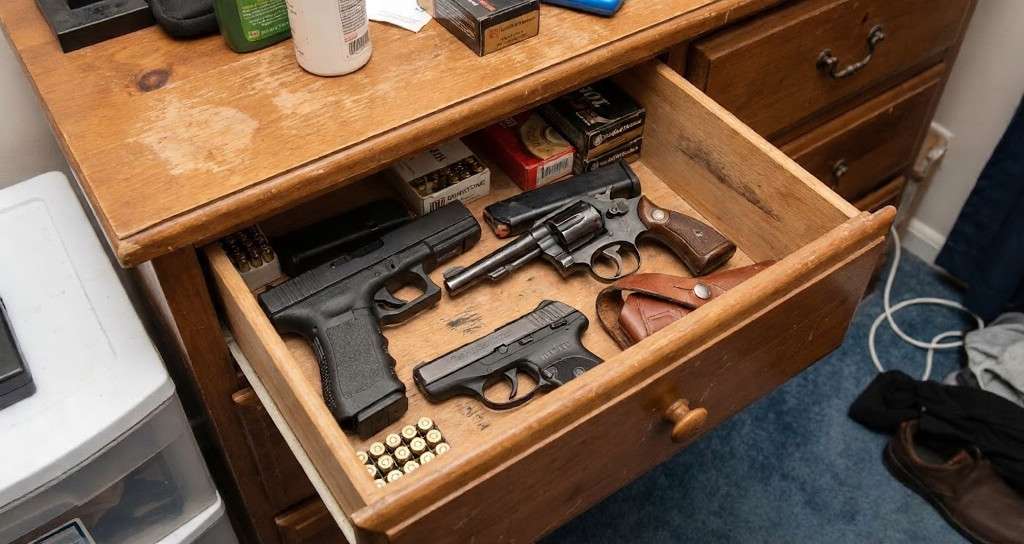
Charged with felon in possession of a firearm in Los Angeles County? You’re facing a mandatory felony conviction, state prison sentences of 16 months to 3 years — or far longer if prior strike convictions or sentence enhancements apply — a lifetime ban on ever legally owning or possessing a firearm, devastating immigration consequences, and a permanent felony record that will follow you for the rest of your life.
Whether the weapon was found in your car during a traffic stop, in a shared home during a domestic call, or on your person during a street encounter, Los Angeles County prosecutors treat felon in possession charges as a top enforcement priority. You need an experienced Los Angeles felon in possession defense attorney fighting aggressively for your rights from the first moment.
Free Confidential Consultation: (888) 315-3326 | Available 24/7 | Hablamos Español
Accused of being a felon in possession of a firearm in Los Angeles County? You’re facing one of the most aggressively prosecuted firearms offenses in California — a charge that carries mandatory felony consequences with no possibility of a misdemeanor reduction, no diversion, and no probation-only disposition for most defendants. The Los Angeles County District Attorney’s Office[1] and the U.S. Attorney’s Office for the Central District of California[2] both prioritize felon in possession cases — meaning your charge could be prosecuted in state court, federal court, or both. The stakes could not be higher.
Tu Defensor Criminalista provides aggressive, experienced felon in possession defense across every city and courthouse in Los Angeles County, with fully bilingual representation in English and Spanish for every client.
Charged under California’s felon in possession statute in Los Angeles County? You’re facing a criminal charge that requires no use of the weapon — no threat, no brandishing, and no violence. Simply having a firearm in your possession, custody, or control is enough to trigger a felony conviction and state prison if you have a qualifying prior conviction on your record.
Under California Penal Code § 29800[3], any person who has been convicted of a felony under California law, any other state’s law, or federal law is prohibited from owning, purchasing, receiving, or having in their custody or control any firearm. The prohibition is lifelong — it does not expire after a set number of years, does not lift automatically when your sentence or probation ends, and is not removed by the passage of time alone. The firearm does not have to be loaded, operable, or even capable of being fired for the charge to apply.
Beyond felony convictions, Penal Code § 29800[3] also applies to persons addicted to narcotics and persons convicted of specified misdemeanor offenses — including domestic battery under Penal Code § 243(e)(1)[4] — who are separately prohibited from possessing firearms under Penal Code § 29805[5].
Accused of illegally possessing a firearm as a prohibited person in Los Angeles County? The category of people prohibited from possessing firearms in California is broader than most people realize — and the consequences of a violation are severe regardless of the specific basis for the prohibition.
The following persons are prohibited from possessing firearms under California law:
Anyone convicted of any felony under California, federal, or another state’s law under Penal Code § 29800[3]. Anyone convicted of specified misdemeanor offenses — including misdemeanor domestic battery, assault, stalking, and others — under Penal Code § 29805[5]. Persons subject to certain domestic violence restraining orders under Penal Code § 29825[6]. Persons who have been adjudicated as a danger to others or found not guilty by reason of insanity. Persons addicted to narcotics. Minors, with limited exceptions. Persons previously convicted of a violent felony listed in Penal Code § 29900[7], who face heightened penalties.
Understanding exactly which prohibition applies to your case — and whether that underlying prohibition itself is legally valid or challengeable — is a critical first step in building your defense.
Charged with felon in possession in Los Angeles County? One of the first things your defense attorney must assess is whether you face state prosecution, federal prosecution, or both simultaneously.
Under California Penal Code § 29800[3], state felon in possession is a straight felony carrying 16 months, 2 years, or 3 years in California state prison. Probation is possible in limited circumstances for defendants without prior strikes or serious criminal histories — but is far from guaranteed, particularly in Los Angeles County where prosecutors push for prison.
Under 18 U.S.C. § 922(g)[8], the federal felon in possession statute carries up to 10 years in federal prison per conviction. For defendants with three prior violent felony or serious drug convictions, the Armed Career Criminal Act (ACCA)[9] under 18 U.S.C. § 924(e)[9] imposes a mandatory minimum of 15 years in federal prison — with no possibility of parole, since federal sentences are served at 85% minimum.
The Bureau of Alcohol, Tobacco, Firearms and Explosives (ATF) Los Angeles Field Division[10] works closely with LAPD, LASD, and other local agencies to refer felon in possession cases for federal prosecution — particularly when the defendant has a significant prior record, when the firearm was trafficked across state lines, or when the case is connected to drug trafficking or gang activity. The U.S. Attorney’s Office for the Central District of California[2] is one of the most active federal prosecutorial offices in the nation, and federal gun prosecutions in Los Angeles are pursued vigorously.
Convicted of felon in possession in Los Angeles County with prior strikes or additional allegations? Your sentencing exposure may be far greater than the base statute suggests. California law stacks multiple enhancements that apply specifically to firearm-related felony convictions.
Under Penal Code § 667[11] — California’s Three Strikes Law — any person with one prior serious or violent felony conviction who is convicted of a new felony receives double the base sentence. A person with two or more prior strikes faces 25 years to life in state prison upon conviction of any new felony. Felon in possession can be the triggering “third strike” in these calculations, turning what might appear to be a 2-year case into a life sentence.
Under Penal Code § 667.5(b)[12], prior prison term enhancements add one year for each prior separate prison term served. While the application of these enhancements has been modified by recent California legislation, they remain a factor in sentencing calculations for defendants with lengthy prior records.
Under Penal Code § 12022(a)[13], being armed with a firearm during the commission of any felony adds a consecutive 1-year enhancement. This applies when the felon in possession charge is coupled with another underlying felony — such as drug possession or trafficking.
In federal court, the Armed Career Criminal Act under 18 U.S.C. § 924(e)[9] is among the most severe sentencing enhancement schemes in the entire federal criminal code — with a mandatory minimum of 15 years for defendants qualifying as armed career criminals. Our attorneys have the experience to challenge ACCA predicate offense classifications and fight every applicable enhancement.
Los Angeles County is the most populous county in the United States, home to over 10 million residents across 88 incorporated cities. According to the California Department of Justice — Criminal Justice Statistics Center[14], firearms offenses account for thousands of arrests in Los Angeles County each year — and felon in possession is among the most commonly charged firearms offenses in the county.
The Los Angeles Police Department’s CompStat reporting[15] reflects the volume of weapons-related arrests across the City of Los Angeles alone. The Los Angeles County Sheriff’s Department[16] adds thousands more arrests annually across unincorporated areas and contract cities. According to the Bureau of Alcohol, Tobacco, Firearms and Explosives[17], California — and Los Angeles County in particular — is one of the highest-volume states for illegal firearms recoveries. The Los Angeles County District Attorney’s Office[1] processes hundreds of thousands of criminal filings annually — and felon in possession cases are among those pursued with consistent seriousness regardless of the defendant’s individual circumstances.
For non-U.S. citizens, the situation is even more acute. According to the U.S. Census Bureau[18], approximately 35% of Los Angeles County residents are foreign-born — making the immigration consequences of a felon in possession conviction a critical issue in a substantial portion of these cases.
The consequences of a felon in possession conviction extend far beyond the courtroom. In Los Angeles County — one of the nation’s most competitive regions for employment, housing, and professional opportunity — a felony firearms conviction can permanently alter every aspect of your future.
At Tu Defensor Criminalista, our felon in possession defense attorneys build every defense from the ground up — analyzing every element of the prosecution’s case, every constitutional question raised by the search and seizure, and every factual and legal challenge available under California and federal law. Here are the most powerful defenses in Los Angeles County felon in possession cases:
The single most powerful defense in the majority of felon in possession cases is a challenge to the legality of the search and seizure that produced the firearm. Under the Fourth Amendment to the U.S. Constitution[21] and California’s independent privacy protections under Article I, Section 13 of the California Constitution[22], law enforcement must have lawful authority to search your person, vehicle, or home. If the firearm was discovered through an unlawful traffic stop, unjustified pat-down search, warrantless vehicle search, illegal home entry, or coerced consent, we file a motion to suppress the evidence under Penal Code § 1538.5[23]. When the firearm is suppressed, the prosecution’s case almost always collapses entirely — because the gun is typically the only evidence.
Common Fourth Amendment violations our attorneys investigate in felon in possession cases include unlawful traffic stops based on pretextual or insufficient reasons, unlawful pat-down searches without reasonable articulable suspicion, warrantless vehicle searches without consent or a recognized exception, unlawful home entries during domestic calls without consent or exigency, and coerced or invalid consent searches where the person did not truly voluntarily agree.
Felon in possession requires proof that you actually knew the firearm was present and that you had dominion and control over it. In many Los Angeles County cases — particularly where a firearm is found in a shared vehicle, shared residence, or common area — the prosecution cannot establish that you specifically knew about the weapon or that you — rather than someone else — exercised control over it.
This “constructive possession” challenge is especially powerful in cases involving shared vehicles with multiple occupants, rental cars, shared apartments, and homes with multiple residents. If the prosecution cannot prove beyond a reasonable doubt that you knew the gun was there and that it was yours to control, there is no crime.
Felon in possession under PC § 29800 requires proof of a qualifying prior conviction. Prior convictions are subject to legal challenge on several grounds. The prior conviction may have been obtained without the assistance of counsel, rendering it constitutionally infirms under Gideon v. Wainwright[24]. The offense underlying the prior conviction may not constitute a qualifying felony under the applicable statute. The prior conviction may have been expunged or reduced to a misdemeanor under Penal Code § 17(b)[25] or Penal Code § 1203.4[26] in a manner that restores certain rights. The records establishing the prior conviction may be inaccurate, incomplete, or misidentified. We scrutinize the prior conviction record thoroughly to identify every available challenge.
In limited circumstances, a person’s firearm rights may have been legally restored following a felony conviction — through a certificate of rehabilitation, a Governor’s pardon, or other legal proceeding. If your firearm rights were properly restored before you possessed the weapon, no crime was committed. We investigate the full legal history of every client’s prior convictions and any subsequent proceedings that may have affected their firearms rights.
California courts recognize a narrow defense of momentary or innocent possession — where a person briefly possessed a firearm for the sole purpose of safely disposing of it or turning it in to law enforcement, with no intent to exercise continued control or use the weapon unlawfully. This defense requires specific factual circumstances and is carefully evaluated on a case-by-case basis.
Following the U.S. Supreme Court’s landmark decisions in District of Columbia v. Heller[27] and New York State Rifle & Pistol Association v. Bruen[27], Second Amendment challenges to certain firearms prohibitions have become increasingly viable. Courts across the country are actively examining the constitutionality of categorical firearms prohibitions — including felon in possession statutes — under the new historical tradition analysis required by Bruen. We stay current with the rapidly evolving state of Second Amendment law to identify every applicable constitutional challenge in our clients’ cases.
In limited circumstances, if you possessed a firearm only because you were under immediate threat of serious bodily injury or death and had no reasonable alternative, a defense of duress or necessity may be available. These defenses are highly fact-specific and require a thorough investigation of the circumstances leading to possession.
When you’re facing felon in possession charges in Los Angeles County — whether in state court, federal court, or both — you need more than a lawyer. You need a dedicated defense advocate with deep knowledge of California firearms law, federal firearms statutes, local court procedures, and the aggressive defense strategies that actually make a difference in these cases.
Serving Every City in Los Angeles County — Local Knowledge That Matters
Los Angeles County spans 4,751 square miles and encompasses 88 incorporated cities plus numerous unincorporated communities. Felon in possession charges in different cities are handled by different law enforcement agencies — the LAPD, the LASD, or any of dozens of independent city police departments — and prosecuted through different courts. Our local knowledge across every jurisdiction gives our clients a real strategic advantage at every stage of their case.
The overwhelming majority of felon in possession arrests in Los Angeles County arise from traffic stops. An officer pulls over a vehicle — sometimes for a minor equipment violation or alleged traffic infraction — and discovers a firearm during the stop. The critical question in every traffic stop case is whether the stop itself was legally justified and whether the search that produced the firearm was constitutionally valid. Was the traffic stop pretextual? Did the officer have genuine reasonable suspicion for a pat-down or probable cause for a vehicle search? Was consent to search truly voluntary? These are the questions that win suppression hearings and get charges dismissed.
Police responding to domestic violence calls in Los Angeles County routinely conduct searches of the home. When a firearm is discovered during a domestic call search, the person — who may have a prior felony — faces both domestic violence and felon in possession charges simultaneously. We examine whether the warrantless home search was constitutionally justified, whether the firearm was accessible to or controlled by the accused, and whether the domestic allegation that triggered the call was truthful and accurate.
Persons on felony probation or parole in California are subject to search conditions that waive certain Fourth Amendment protections. However, even probation and parole searches have constitutional limits — they must be conducted in a reasonable manner and cannot be arbitrary, capricious, or conducted for purposes unrelated to the person’s supervision. We challenge the scope and execution of probation and parole searches that exceeded constitutional and statutory limits.
Los Angeles County law enforcement agencies — including the LAPD, LASD, and the ATF — have made ghost gun enforcement a top priority. When a felon possesses an unserialized ghost gun, they face both the felon in possession charge and potential additional charges under Penal Code § 29180[28] for possessing an unregistered privately made firearm. We provide aggressive defense in ghost gun cases, including challenges to search and seizure and to the classification of the object as a firearm.
Felon in possession charges in Los Angeles County are frequently combined with gang enhancement allegations under Penal Code § 186.22[29], dramatically increasing sentencing exposure. We challenge gang enhancement allegations by scrutinizing the prosecution’s gang expert evidence, attacking the sufficiency of the gang nexus proof, and presenting counterevidence challenging the classification of our client as a gang member or associate.
Many felon in possession arrests involve firearms found in locations shared by multiple people — a vehicle with multiple occupants, an apartment with several residents, or a shared room in a house. In these cases, the prosecution must prove beyond a reasonable doubt that the specific defendant — not someone else present — knew about and controlled the firearm. These shared-access constructive possession cases offer powerful defense opportunities that we identify and exploit aggressively.
With approximately 35% of residents foreign-born according to the U.S. Census Bureau[18], Los Angeles County has one of the world’s largest immigrant populations. For non-U.S. citizens, a felon in possession conviction is among the most severe immigration consequences possible under federal law.
Felony firearms convictions are classified as aggravated felonies under 8 U.S.C. § 1101(a)(43)[31] — triggering mandatory removal from the United States, permanent inadmissibility, and permanent bars to any form of immigration relief. Unlike some criminal convictions where immigration consequences depend on the sentence imposed, felony firearms convictions are treated as categorically removable offenses regardless of the actual sentence received.
At Tu Defensor Criminalista, our attorneys approach every non-citizen client’s felon in possession case through a dual criminal-immigration lens — evaluating every plea offer, every potential conviction, and every sentencing outcome for its specific immigration consequences, and working to protect our clients’ ability to remain in the United States while mounting the strongest possible criminal defense.
Under Penal Code § 29800, any person convicted of a felony under California, federal, or any other state’s law is permanently prohibited from owning, purchasing, receiving, or possessing any firearm. It is a straight felony with no possibility of misdemeanor reduction, carrying 16 months, 2 years, or 3 years in California state prison. The prohibition is lifelong and does not expire.
Yes — and the most common path to dismissal is a successful motion to suppress the firearm as evidence. If law enforcement discovered the firearm through an unlawful traffic stop, illegal vehicle search, warrantless home entry, or coerced consent search, the weapon may be suppressed under Penal Code § 1538.5 and the Fourth Amendment. Without the firearm, the prosecution typically cannot proceed and charges are dismissed.
State felon in possession under PC § 29800 carries up to 3 years in California state prison. Federal felon in possession under 18 U.S.C. § 922(g) carries up to 10 years in federal prison, and up to 15 years mandatory minimum under the Armed Career Criminal Act for defendants with qualifying prior records. Federal sentences are served without parole at 85% minimum. Many Los Angeles County felon in possession cases are referred for federal prosecution, particularly when the defendant has an extensive prior record or the case involves gang or drug activity.
Yes — under California’s constructive possession doctrine, you can be charged even if you never touched the firearm, as long as the prosecution can prove you knew it was present and had control over it. However, constructive possession is also one of the most challengeable elements in these cases — particularly when the weapon was found in a shared vehicle or residence with multiple people having equal access.
Yes — for non-U.S. citizens, a felon in possession conviction is one of the most severe immigration consequences possible. Felony firearms convictions are classified as aggravated felonies under federal immigration law, triggering mandatory deportation, permanent inadmissibility, and permanent bars to naturalization regardless of time in the country or family ties. Immigration analysis must begin from the first moment of the case.
In most cases, no. A felon in possession conviction — layered on top of the prior felony that created the prohibition — results in a permanent, lifelong bar to firearms possession under both California and federal law. Expungement under Penal Code § 1203.4 does not restore firearm rights. A Governor’s pardon or certificate of rehabilitation may restore California state firearm rights in limited circumstances, but federal firearms prohibitions are a separate legal issue and may remain in place.
Do not consent to a search. Clearly and calmly state that you do not consent to any search of your person, vehicle, or belongings. Do not physically resist. If police conduct a search anyway, your attorney can challenge the legality of the search later and seek suppression of any evidence discovered. Contact Tu Defensor Criminalista immediately after any police encounter involving a potential weapons search.
The Armed Career Criminal Act (ACCA) under 18 U.S.C. § 924(e) applies in federal felon in possession cases where the defendant has three or more prior convictions for violent felonies or serious drug offenses. If ACCA applies, the mandatory minimum sentence is 15 years in federal prison with no parole. Whether specific prior convictions qualify as ACCA predicates is a complex legal question that has been the subject of extensive litigation in federal courts. Our attorneys analyze ACCA applicability carefully and challenge predicate offense classifications wherever possible.
Yes — persons on felony probation in California typically have search conditions that allow probation officers or police to search their person, residence, or vehicle without a warrant. If a firearm is discovered during a valid probation search, a felon in possession charge can follow. However, even probation searches have constitutional limits — they must be conducted reasonably and within the scope of the search condition — and we challenge searches that exceeded those limits.
Remember:
Attorney Armando Josué Cespedes is rated 5.0 on Avvo, with 34 five-star reviews from clients praising his dedication, professionalism, and results. Many note how his trial skills and attention to detail led to reduced charges or outright dismissals.



 English English
 Español de México English English Español de México
Thank you! We need your help. Would you share your experience on one of these sites?
If you have concerns you wish to address privately
