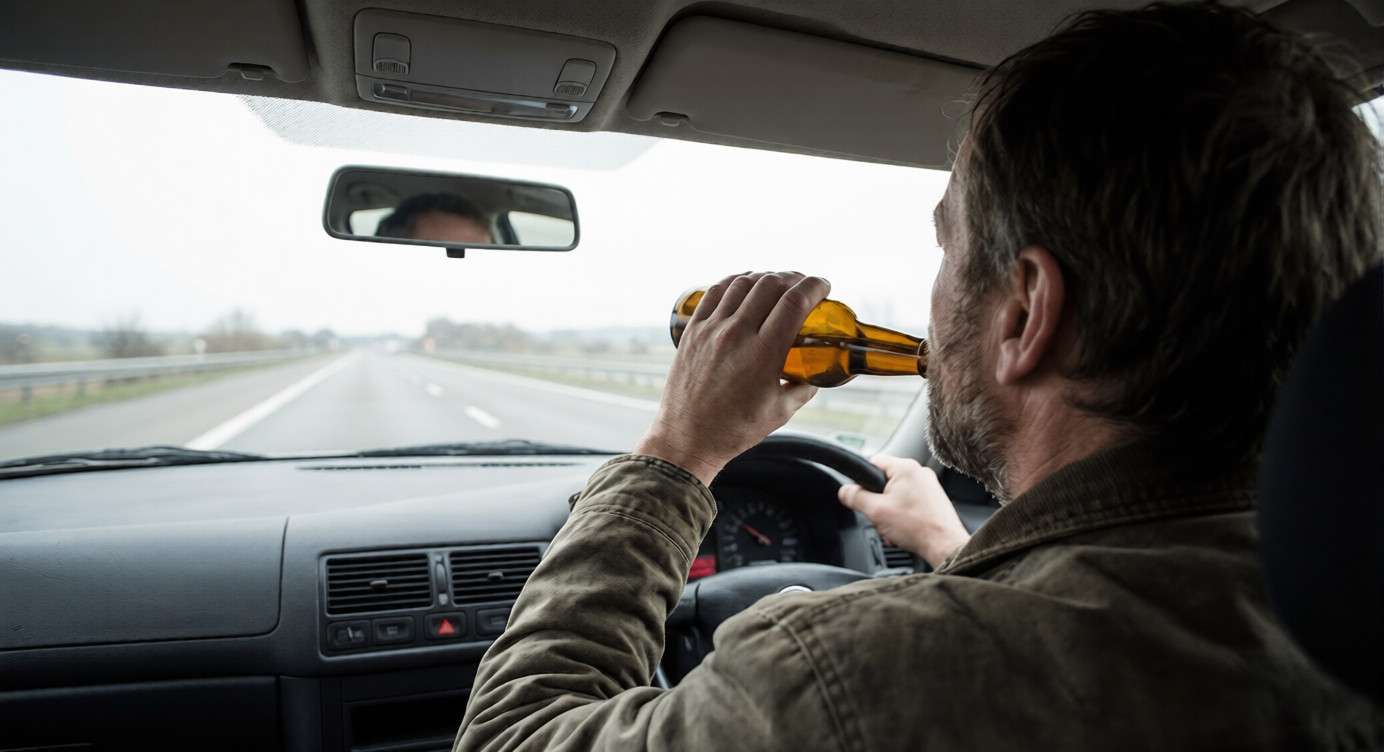
Facing felony DUI charges in West Covina? You’re confronting potential state prison sentences, permanent felony convictions, loss of driving privileges for years, massive fines and fees exceeding $50,000, and a criminal record that destroys employment opportunities, professional licenses, and your future. Whether you’re accused of felony DUI with injuries, fourth DUI offense, DUI causing death, or DUI with prior felony conviction, the stakes couldn’t be higher. Los Angeles County prosecutors aggressively pursue maximum sentences in felony DUI cases, and without experienced legal defense, you face life-altering consequences that extend far beyond prison time.
At Tu Defensor Criminalista, we provide aggressive, results-driven felony DUI defense throughout West Covina, Baldwin Park, Covina, Azusa, Walnut, La Puente, and all Los Angeles County communities. Our criminal defense team understands the severe penalties, complex legal issues, and devastating collateral consequences you face with felony DUI charges. We immediately investigate your case, challenge prosecution evidence, expose law enforcement errors, protect your constitutional rights, and fight relentlessly to avoid felony convictions and prison sentences.
Free Confidential Consultation: (888) 315-3326 | Available 24/7 | Hablamos Español
California law elevates DUI charges from misdemeanor to felony under specific circumstances defined in California Vehicle Code Section 23152[1] and related statutes. While first, second, and third DUI offenses typically qualify as misdemeanors, certain aggravating factors transform DUI into felony charges carrying substantially harsher penalties.
You face felony DUI prosecution in West Covina under these circumstances:
According to the California Office of Traffic Safety[2], Los Angeles County consistently reports among the highest DUI arrest rates statewide, with thousands of felony DUI cases filed annually. West Covina, situated along Interstate 10 corridor with substantial nightlife and restaurant districts, experiences significant DUI enforcement activity. The West Covina Police Department[3] conducts regular DUI checkpoints and saturation patrols, particularly along Garvey Avenue, East Covina Boulevard, and surrounding Interstate 10 access points.
Felony DUI convictions carry severe mandatory minimum sentences, substantial fines and fees, lengthy license suspensions, and permanent criminal records. Unlike misdemeanor DUI, felony DUI qualifies as “strike” offense under certain circumstances, particularly DUI causing serious bodily injury, triggering California’s Three Strikes law with doubled sentences for subsequent felony convictions.
Fourth DUI conviction within ten years mandates:
Felony DUI with injury conviction results in:
The California Department of Motor Vehicles[4] reports that felony DUI convictions result in substantially longer license revocation periods compared to misdemeanor DUI, with no restricted license eligibility during initial revocation year. For commercial drivers, felony DUI conviction triggers lifetime commercial driving privilege disqualification, destroying careers in transportation, delivery, and commercial driving industries.
DUI resulting in death carries California’s harshest DUI-related penalties:
Los Angeles County District Attorney’s Office maintains specialized DUI prosecution units that aggressively pursue maximum sentences in fatal DUI cases. According to California Highway Patrol[5] SWITRS data, Los Angeles County experiences hundreds of alcohol-involved fatal collisions annually, with substantial percentage occurring on Interstate 10, State Route 60, and major arterials through West Covina and surrounding communities.
Felony DUI defense requires immediate action, comprehensive investigation, expert witness retention, and aggressive litigation strategy. Unlike misdemeanor DUI, felony cases demand sophisticated defense addressing not only DUI elements but also causation issues, injury claims, prior conviction allegations, and complex sentencing factors.
Penal Code Section 23153 prosecutions require proving both DUI and causation of injury—dual elements providing multiple defense opportunities. We challenge whether injuries actually resulted from collision, whether defendant’s intoxication caused collision, and whether claimed injuries constitute “bodily injury” under California law.
According to the National Highway Traffic Safety Administration[6], accident investigations frequently identify multiple causation factors beyond driver impairment. Roadway conditions, vehicle defects, and other driver actions contribute to substantial percentage of DUI-involved collisions. Comprehensive defense investigation exposes these alternative factors, creating reasonable doubt regarding DUI causation.
Fourth DUI charges depend entirely on valid prior DUI convictions within ten-year lookback period. Challenging prior convictions provides primary defense strategy, potentially eliminating felony designation and reducing charges to misdemeanor third DUI.
The California Department of Justice[7] maintains criminal history records used to establish prior convictions. However, these records contain frequent errors, including incorrect dates, dismissed cases incorrectly listed as convictions, and identity confusion. Thorough investigation of criminal history records exposes these errors, potentially eliminating invalid priors.
Felony DUI cases proceed through Los Angeles County Superior Court with substantially more complex proceedings than misdemeanor DUI. Understanding court process, timeline, and strategic opportunities proves essential for effective defense.
Felony DUI arrest typically involves immediate booking into West Covina Police Department custody or Los Angeles County Sheriff facility. Unlike misdemeanor DUI citation release, felony DUI suspects remain in custody pending arraignment unless bail posted. Bail amounts in felony DUI cases range from $25,000 to $100,000 or higher depending on injury severity, criminal history, and flight risk assessment.
Arraignment occurs within 48 hours of arrest (excluding weekends and holidays) at Pomona Superior Court, Los Angeles County’s designated courthouse for West Covina felony cases. At arraignment, court advises defendant of charges, constitutional rights, and appoints counsel if defendant qualifies for public defender. Defendant enters not guilty plea, and court sets bail and future hearing dates.
We appear immediately at arraignment to argue bail reduction, review discovery, identify prosecution weaknesses, and begin defense investigation. Early involvement provides crucial advantage in evidence preservation, witness interviews, and defense preparation.
Felony cases require preliminary hearing where prosecution must establish probable cause for charges. Preliminary hearing provides first opportunity to cross-examine arresting officers, accident witnesses, and alleged victims, locking them into testimony and exposing inconsistencies. We use preliminary hearing strategically to:
Successful preliminary hearing defense results in charge dismissal, reduction from felony to misdemeanor, or negotiating leverage for favorable plea bargain.
Following preliminary hearing, we file pretrial motions challenging evidence admissibility, constitutional violations, and legal defects. Common motions include:
Simultaneously, we conduct comprehensive discovery investigation, obtaining police reports, body camera footage, dashboard camera recordings, 911 recordings, crime lab reports, medical records, and accident reconstruction reports. Expert witness retention occurs during pretrial phase, including toxicologists, accident reconstruction specialists, and medical experts.
Throughout pretrial proceedings, we engage in ongoing plea negotiations with Los Angeles County District Attorney’s Office. Negotiation goals include:
According to Los Angeles County Superior Court[8] statistics, substantial percentage of felony DUI cases resolve through negotiated disposition. However, favorable plea bargains result only from demonstrated trial readiness and credible defense evidence. We prepare every case for trial while negotiating, ensuring prosecution understands trial risks and defense strength.
When negotiation fails to achieve acceptable resolution, we proceed to jury trial. Felony DUI trials typically last three to ten days depending on complexity, witness number, and expert testimony. Trial strategy includes:
Successful trial defense results in not guilty verdicts, hung juries requiring case dismissal, or conviction of lesser included offenses avoiding felony designation.
Felony DUI triggers separate DMV administrative license suspension proceedings independent of criminal case. You have only ten days from arrest date to request DMV hearing; failure to request hearing results in automatic license suspension.
DMV Administrative Per Se hearings determine whether:
DMV hearings occur separately from criminal proceedings with different burden of proof and rules of evidence. Hearing officer—DMV employee, not judge—determines suspension based on preponderance of evidence standard, substantially lower than criminal beyond reasonable doubt standard.
We represent clients at DMV hearings, cross-examining arresting officers, challenging chemical test reliability, and presenting defense evidence. Successful DMV hearing defense results in:
Even unsuccessful DMV hearing provides valuable discovery, including officer testimony, arrest report details, and prosecution evidence preview benefiting criminal defense.
According to California DMV[4] statistics, felony DUI convictions result in revocation ranging from four years (fourth DUI) to five years (DUI with injury) or permanent revocation (multiple felony DUI convictions). However, DMV administrative hearings address only immediate post-arrest suspension, not conviction-based revocation. Winning DMV hearing preserves driving privileges during criminal case proceedings.
Beyond criminal penalties, felony DUI conviction creates devastating collateral consequences affecting employment, professional licensing, immigration status, housing, and civil liability.
Felony criminal record devastates employment prospects. Background checks reveal felony DUI conviction indefinitely, disqualifying applicants from:
California “ban the box” laws provide limited protection, but employers ultimately can reject felony applicants, particularly for DUI convictions suggesting substance abuse or poor judgment.
Felony DUI conviction triggers mandatory reporting to professional licensing boards and potential license suspension or revocation. Affected professionals include:
According to the California Department of Consumer Affairs[9], licensing boards impose discipline ranging from public reprimand to permanent license revocation for felony DUI convictions. License defense requires immediate action, separate representation before licensing board, and mitigation evidence demonstrating rehabilitation.
Felony DUI conviction creates severe immigration consequences for non-citizens. While simple DUI generally doesn’t constitute deportable offense or inadmissibility ground, felony DUI—particularly with aggravated circumstances—may trigger:
Non-citizen defendants require immigration-specific criminal defense addressing Padilla v. Kentucky[10] requirements and exploring immigration-safe dispositions.
Felony DUI conviction establishes negligence per se in civil injury lawsuits. Victims sue for medical expenses, lost wages, pain and suffering, and punitive damages. Punitive damages—rarely available in negligence cases—become available following DUI conviction, potentially exposing defendants to millions of dollars liability exceeding insurance coverage.
Even strong prosecution cases may resolve through alternative sentencing avoiding state prison while addressing substance abuse issues underlying DUI behavior. We advocate for treatment-based dispositions benefiting both client and community.
California Penal Code Section 1000.5 permits DUI defendants to participate in residential treatment programs as probation condition. Programs range from 30-day to 12-month duration, providing intensive substance abuse treatment, counseling, and relapse prevention training.
Successful program completion demonstrates rehabilitation to court, supporting arguments for:
Los Angeles County operates specialized DUI courts providing intensive supervision, treatment, and accountability as alternative to incarceration. Participants submit to:
DUI court programs typically last 18-24 months but avoid felony conviction upon successful completion in some cases.
Electronic monitoring and house arrest permit defendants to maintain employment and family responsibilities while serving custody time at home. Participants wear GPS ankle monitors, adhere to strict schedules, and face immediate custody for violations.
House arrest provides alternative to county jail overcrowding while satisfying court’s custody requirements and protecting public safety.
Los Angeles County work furlough programs permit sentenced defendants to maintain employment during weekdays while serving custody nights and weekends. Programs benefit:
According to the California Department of Corrections and Rehabilitation[11], recidivism rates decrease substantially for defendants participating in treatment and alternative sentencing programs compared to traditional incarceration. Treatment addresses root causes of DUI behavior, reducing future offense likelihood while avoiding prison’s criminogenic effects.
Effective felony DUI defense employs multiple strategies tailored to case-specific facts, evidence, and legal issues.
Fourth Amendment prohibits stops absent reasonable suspicion of traffic violation or criminal activity. We challenge stop legality by:
Successful suppression motion results in case dismissal—prosecution cannot proceed without evidence obtained following illegal stop.
Standardized Field Sobriety Tests (SFST)—horizontal gaze nystagmus, walk-and-turn, one-leg stand—require strict protocol adherence for reliability. We challenge FST evidence by:
Non-standardized tests—alphabet recitation, finger-to-nose, Romberg balance—lack scientific validity and shouldn’t support DUI arrest.
Blood and breath testing procedures require strict compliance with California Title 17 regulations. Defense challenges include:
We obtain independent blood sample analysis, challenging prosecution’s results and establishing reasonable doubt regarding intoxication level at driving time.
Vehicle Code Section 23153 requires proof that defendant’s intoxication caused injury. We present evidence including:
Even with proven intoxication, prosecution must prove intoxication caused collision. Alternative causation creates reasonable doubt, potentially resulting in not guilty verdict or misdemeanor DUI conviction without injury enhancement.
DUI checkpoints must comply with constitutional requirements including advance publicity, neutral selection criteria, supervisor approval, visible warning signs, and minimal detention duration. We challenge checkpoint stops by:
Constitutional checkpoint violations result in evidence suppression and case dismissal.
West Covina’s location along Interstate 10 and State Route 60, combined with substantial restaurant and entertainment districts, generates significant DUI enforcement activity. Understanding local enforcement patterns, checkpoint locations, and prosecution practices provides strategic advantages.
According to California Office of Traffic Safety[2] data, Los Angeles County reported over 11,000 DUI arrests in recent annual reporting periods, with substantial percentage involving felony DUI charges. West Covina Police Department participates in countywide DUI task forces, conducting regular saturation patrols and sobriety checkpoints.
Common checkpoint locations include:
West Covina Police Department’s DUI enforcement emphasizes Interstate 10 corridor targeting commuters from Pomona Valley and Inland Empire traveling through West Covina to downtown Los Angeles.
The Los Angeles County Department of Public Health[12] reports concerning alcohol-related traffic collision rates in San Gabriel Valley communities including West Covina, driving enhanced enforcement efforts. However, aggressive enforcement sometimes leads to questionable arrests of marginally impaired or sober drivers, creating strong defense opportunities.
Felony DUI defense success depends heavily on early investigation, evidence preservation, and aggressive initial response. Evidence disappears, witnesses become unavailable, and defense opportunities vanish as time passes.
According to National Institute of Justice[13] research, early defense investigation substantially increases favorable case outcomes. Evidence preservation, prompt witness interviews, and immediate expert retention provide advantages lost through delayed response.
Felony DUI cases demand experienced trial attorneys with specialized DUI defense knowledge, expert witness relationships, and successful track record. Tu Defensor Criminalista provides:
Felony DUI involve state prison exposure (rather than county jail), permanent felony criminal record, longer license revocation periods, substantially higher fines and fees, and potential Three Strikes consequences. Felony designation applies to fourth DUI offenses, DUI causing injury, DUI causing death, or DUI with prior felony DUI conviction. Collateral consequences including employment, professional licensing, and immigration impacts are substantially more severe for felony convictions.
Yes, depending on circumstances. DUI with injury charges under Vehicle Code Section 23153 are “wobbler” offenses prosecutors may charge as felony or misdemeanor. Through effective defense demonstrating weak causation evidence, minimal injuries, strong mitigation factors, or constitutional violations, we negotiate charge reduction to misdemeanor DUI. Fourth DUI charges may reduce to misdemeanor by successfully challenging prior conviction validity. However, charge reduction requires skilled negotiation, credible defense evidence, and demonstrated trial readiness.
Preliminary hearing is probable cause hearing where prosecution must prove sufficient evidence for case to proceed to trial. We cross-examine prosecution witnesses including arresting officers, accident witnesses, and alleged victims, testing their credibility and exposing investigation weaknesses. Preliminary hearing provides critical discovery, locks witnesses into testimony, and creates negotiating leverage. Judge may dismiss charges if prosecution fails to establish probable cause or reduce felony to misdemeanor based on evidence presented.
Felony DUI cases typically take six months to two years depending on complexity, court congestion, and whether case resolves through plea bargain or proceeds to trial. Simple fourth DUI cases may resolve within six to nine months. Complex DUI injury or death cases involving multiple victims, extensive expert testimony, and contested issues may take 18-24 months. Continuances for expert witness retention, independent testing, and motion practice extend timelines but strengthen defense.
Not necessarily. While felony DUI carries state prison exposure, many cases resolve through alternative sentencing including county jail, house arrest, residential treatment, or probation without custody. Sentencing depends on criminal history, injury severity, aggravating/mitigating factors, and defense advocacy. First-time felony offenders with strong mitigation may receive probation rather than prison. However, repeat offenders, cases involving serious injuries or death, or defendants violating probation face substantially higher prison likelihood.
Misdemeanor DUI convictions may be expunged under Penal Code Section 1203.4 after completing probation. However, felony DUI expungement faces additional hurdles. You must complete probation successfully, have no new arrests, and petition the court for relief. Even if granted, expungement doesn’t restore gun rights, prevent use as prior conviction for future DUI charges, or eliminate licensing board reporting requirements. Immigration consequences also remain despite expungement.
Watson Murder is second-degree murder charge in DUI death cases where defendant has prior DUI conviction and received “Watson advisement” warning that DUI can cause death and result in murder prosecution. Named from People v. Watson case, this charge carries 15 years to life prison sentence. Los Angeles County prosecutors aggressively pursue Watson Murder charges when available, making prior DUI conviction defense and Watson advisement challenges critical in DUI death cases.
Felony DUI defense costs vary based on case complexity, expert witness needs, trial requirements, and attorney experience. Expect retainer fees ranging from $10,000 to $50,000 or more for complete felony DUI representation through trial. However, competent defense representation costs substantially less than felony conviction consequences including prison time, lost employment, professional license loss, and civil liability. We provide honest fee quotes after case evaluation and offer payment plans when possible.
Whether to accept plea bargain depends on specific offer terms, trial risks, evidence strength, and individual circumstances. We thoroughly analyze prosecution’s evidence, defense strengths, trial outcome probabilities, and sentencing exposure before advising regarding plea offers. Some offers provide excellent outcomes avoiding felony conviction and prison; others offer minimal benefit over trial verdict. We never pressure clients toward particular resolution but provide honest assessment enabling informed decisions.
Yes, but refusal triggers one-year license suspension (two years for commercial drivers, three years with prior DUI refusal) and can be used against you at trial as consciousness of guilt evidence. Additionally, prosecution may obtain forced blood draw through warrant. In felony DUI cases, officers nearly always obtain warrants for blood draws, making refusal largely futile while creating additional adverse consequences. However, improper advisement regarding consequences or coerced blood draws provide defense opportunities.
Following felony DUI conviction, DMV requires ignition interlock device (IID) installation for minimum one year after license reinstatement, and up to ten years depending on conviction number and circumstances. IID prevents vehicle starting unless driver provides alcohol-free breath sample. Devices cost $2.50-$3.50 daily including installation, monitoring, and calibration. Tampering with or circumventing IID violates probation and triggers additional criminal charges. However, IID permits restricted driving during license suspension/revocation period if installed per court order.
Remember:
Attorney Armando Josué Cespedes is rated 5.0 on Avvo, with 34 five-star reviews from clients praising his dedication, professionalism, and results. Many note how his trial skills and attention to detail led to reduced charges or outright dismissals.



 English English
 Español de México English English Español de México
Thank you! We need your help. Would you share your experience on one of these sites?
If you have concerns you wish to address privately
