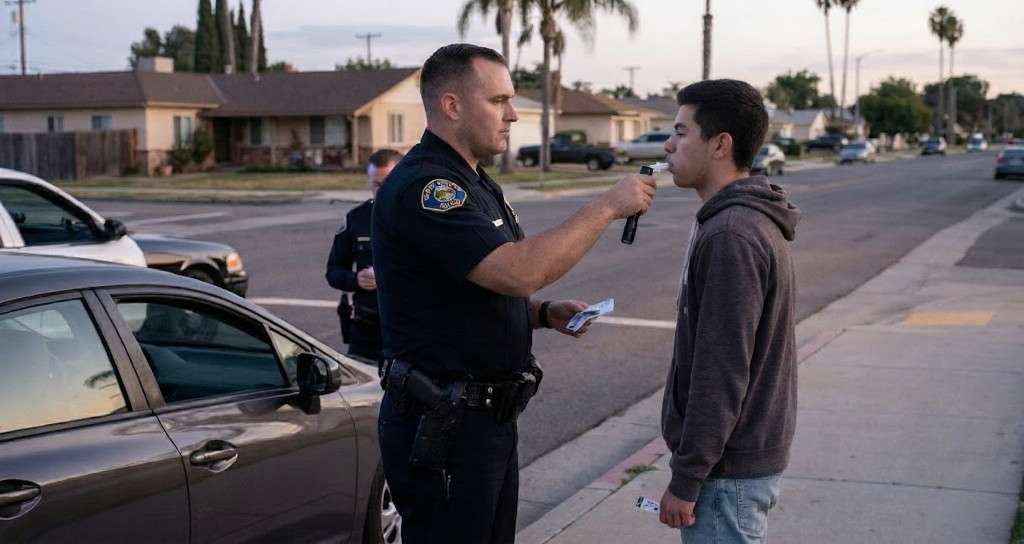
Arrested for your first DUI in West Covina? You could be facing up to six months in Los Angeles County Jail, thousands of dollars in fines, mandatory DUI school, a six-month license suspension, DUI probation, ignition interlock installation, higher insurance rates, and a permanent criminal conviction that follows you for years. Whether stopped at a West Covina Police Department sobriety checkpoint on Garvey Avenue, pulled over leaving Plaza West Covina after dinner, arrested near the Eastland Shopping Center, or detained on Interstate 10 during routine patrol, your first DUI arrest threatens your freedom, career, finances, and future opportunities in ways most people don’t realize until it’s too late.
Facing first-time DUI charges in West Covina means confronting California’s unforgiving DUI laws, aggressive Los Angeles County prosecutors who treat even first offenders with maximum severity, complicated DMV administrative proceedings that can suspend your license before your criminal case even starts, and judges who regularly impose harsh penalties despite your clean record.
The criminal justice system shows zero tolerance for DUI—prosecutors demand jail time, maximum fines, lengthy probation restrictions, and license suspensions that destroy your ability to work, support your family, and maintain the life you’ve built. You need an experienced criminal defense attorney who understands West Covina’s local court procedures at Citrus Municipal Court, has established relationships with prosecutors handling your case, knows the judges’ sentencing tendencies, and possesses proven success defending first-time DUI charges throughout the San Gabriel Valley.
Tu Defensor Criminalista provides aggressive, specialized first-time DUI defense throughout West Covina and surrounding Los Angeles County communities. We understand that for most clients, this is their first encounter with the criminal justice system—a terrifying experience that threatens everything you’ve worked to achieve. Our firm challenges every aspect of your DUI arrest from the initial traffic stop’s constitutionality to breathalyzer accuracy, field sobriety test administration, blood test chain of custody, officer observations, and prosecution evidence. We handle DUI cases in Citrus Municipal Court, fight DMV administrative per se hearings to preserve your driving privileges, and work relentlessly to secure dismissals, reduced charges to non-DUI offenses, or alternative sentencing that protects your freedom, career, and future.
Free Confidential Consultation: (888) 315-3326 | Available 24/7 | Hablamos Español
California Vehicle Code § 23152(a) makes it unlawful to drive under the influence of alcohol, while Vehicle Code § 23152(b) prohibits driving with a blood alcohol concentration (BAC) of 0.08% or higher. West Covina Police Department and California Highway Patrol officers aggressively enforce these statutes throughout West Covina, conducting regular DUI patrols on major corridors including Azusa Avenue, Francisquito Avenue, Vincent Avenue, Interstate 10, and throughout residential neighborhoods during evening and late-night hours.
According to the California Office of Traffic Safety[1], Los Angeles County consistently records among the highest DUI arrest rates statewide, with thousands of first-time offenders arrested annually. West Covina experiences concentrated DUI enforcement near entertainment districts, restaurants and bars along Garvey Avenue and East Holt Avenue, shopping centers like Plaza West Covina and Eastland Center, and residential areas where officers specifically patrol looking for signs of impaired driving during weekends and holidays.
California Vehicle Code § 23536 establishes mandatory minimum penalties that judges must impose for first-time DUI convictions—penalties that cannot be waived regardless of circumstances, your character, employment needs, or family responsibilities:
The National Highway Traffic Safety Administration[3] reports that first-time DUI offenders in California face total costs exceeding $10,000 when including fines, attorney fees, increased insurance premiums, DUI school tuition, ignition interlock costs, license reinstatement fees, and lost wages from court appearances and program attendance.
Even first-time DUI offenders face enhanced penalties when certain aggravating circumstances exist:
Beyond criminal court proceedings, your DUI arrest triggers separate Department of Motor Vehicles administrative proceedings that can suspend your license completely independently from any criminal case outcome.
When West Covina Police Department arrests you for DUI, officers confiscate your physical driver’s license and issue a pink temporary license valid for 30 days. You have only 10 calendar days from your arrest date to request an Administrative Per Se (APS) hearing with DMV—missing this deadline results in automatic license suspension beginning on day 30 with no opportunity to contest the suspension.
The California Department of Motor Vehicles[2] reports that thousands of California drivers lose their licenses every year simply by missing this 10-day deadline—suspensions that are completely preventable with timely hearing requests. This is among the most critical mistakes first-time DUI defendants make, often because they don’t understand the DMV process operates separately from criminal court and has much shorter deadlines.
Requesting an APS hearing immediately provides crucial benefits:
DMV administrative hearings focus on four narrow legal issues:
DMV hearing officers (who are DMV employees, not neutral judges) conduct these hearings, typically by telephone. While hearing officers are tasked with upholding license suspensions and protecting public safety, these hearings provide critical opportunities to:
The California Office of Administrative Hearings[4] statistics show that represented drivers win DMV hearings at significantly higher rates than unrepresented drivers—highlighting the critical importance of experienced legal representation even for these administrative proceedings.
If DMV suspends your license after the APS hearing or you miss the 10-day deadline for requesting a hearing, suspension periods for first-time DUI offenders are:
First DUI with 0.08% BAC or Higher: Four-month suspension, though you can obtain a restricted license after 30-day hard suspension if you install an ignition interlock device, enroll in DUI school, and file SR-22 insurance.
First DUI with Chemical Test Refusal: One-year suspension with no restricted license eligibility for the first five months (previously no restricted license available at all, but recent law changes now allow IID-restricted licenses after five months).
Restricted License Requirements: To qualify for restricted driving privileges, you must:
Restricted licenses allow driving to/from/during work, to/from DUI school, and for IID service appointments—but prohibit personal, recreational, or other driving.
Los Angeles County participates in California’s mandatory ignition interlock pilot program under Vehicle Code § 23700, requiring all DUI offenders (including first-time offenders) to install IID on their vehicles. These devices require breath samples before the vehicle will start and random “rolling retests” while driving.
IID requirements for first-time offenders include:
The California Office of Traffic Safety[1] reports that IID programs reduce DUI recidivism by approximately 67% while devices are installed, though costs create significant hardship for many defendants including installation fees ($75-$150), monthly monitoring charges ($60-$90), and removal fees ($50-$75).
Understanding how West Covina Police Department conducts DUI investigations reveals numerous opportunities to challenge arrest legality and prosecution evidence.
West Covina Police Department regularly conducts DUI checkpoints on major thoroughfares, particularly during holiday periods, weekends, and special enforcement campaigns funded by California Office of Traffic Safety grants. However, DUI checkpoints must comply with strict constitutional requirements established in Ingersoll v. Palmer and subsequent California Supreme Court decisions:
If West Covina Police Department violated any of these constitutional requirements, all evidence obtained at the checkpoint must be suppressed, typically resulting in case dismissal.
West Covina officers frequently stop vehicles for minor traffic violations—broken taillights, expired registration, lane violations, failing to signal—then use these pretextual stops to investigate DUI. However, officers must have reasonable suspicion that you committed a Vehicle Code violation before stopping your vehicle.
Common illegal stop scenarios include:
If officers lacked reasonable suspicion for the initial stop, all subsequently obtained evidence must be suppressed under the Fourth Amendment’s exclusionary rule.
After stopping your vehicle, West Covina officers typically request you perform “field sobriety tests” to supposedly evaluate impairment. However, these tests are voluntary for adults (unless you’re under 21 or already on DUI probation), and you have the legal right to refuse without automatic penalties.
The three “standardized” field sobriety tests are:
Horizontal Gaze Nystagmus (HGN): Officers check for involuntary eye jerking by having you follow a stimulus (pen or flashlight) with your eyes. Problems include: officers often lack proper training; numerous medical conditions, medications, and even contact lenses cause nystagmus unrelated to alcohol; lighting conditions affect observations; and officers frequently conduct the test incorrectly.
Walk-and-Turn: Officers instruct you to walk nine steps heel-to-toe along a line, turn, and return. This “divided attention” test allegedly reveals impairment, but West Covina’s uneven sidewalks, poor street lighting, inappropriate footwear, physical conditions, age, weight, and nervousness all affect performance regardless of sobriety.
One-Leg Stand: Officers have you stand on one foot for 30 seconds while counting aloud. Balance issues, medical conditions, age, footwear, and the stressful arrest environment cause “failures” in completely sober individuals.
Critical problems with field sobriety tests include:
West Covina officers routinely request preliminary alcohol screening breath tests during DUI investigations. These handheld roadside devices provide BAC estimates but are far less reliable than evidential breath machines at police stations.
Critical facts about PAS tests:
Many experienced DUI attorneys advise first-time offenders to politely decline PAS testing, as results primarily provide additional evidence for prosecution without corresponding benefits for your defense.
Prosecutors build first-time DUI cases heavily on BAC test results, treating these as definitive proof of intoxication. However, blood and breath testing involves complex scientific procedures with numerous error possibilities.
California Code of Regulations Title 17 establishes mandatory procedures for DUI blood testing. Common violations that compromise blood test reliability include:
Evidential breath testing machines at West Covina Police Department (typically Dräger Alcotest 9510 or similar devices) supposedly provide accurate BAC measurements, but numerous factors compromise reliability:
Successful first-time DUI defense requires challenging every aspect of the prosecution’s case through investigation, expert analysis, and aggressive legal advocacy.
Your BAC continues rising for 50 minutes to three hours after your last drink as alcohol absorbs from your stomach and intestines into your bloodstream. The “rising BAC” defense argues that while your BAC measured above 0.08% during testing (which may occur one to two hours after driving), your BAC was actually below 0.08% during the actual driving.
This defense proves particularly effective when:
California law requires BAC be 0.08% or higher at the time of driving—not merely at the time of testing hours later. Expert forensic toxicologist testimony can demonstrate through retrograde extrapolation that your BAC was legal while driving even though testing showed illegal levels later.
The Fourth Amendment requires police have reasonable suspicion of criminal activity or Vehicle Code violations before stopping your vehicle. If West Covina officers lacked reasonable suspicion or conducted illegal checkpoint stops, all subsequently obtained evidence must be suppressed.
Defense strategies include:
If courts grant suppression motions under Penal Code § 1538.5, prosecutors typically cannot proceed and must dismiss charges.
Numerous medical conditions create DUI symptoms or affect chemical test results without actual alcohol intoxication:
Prosecutors must prove you actually drove the vehicle while under the influence. In some West Covina DUI arrests, officers find people in parked vehicles with engines running but no witnesses observed actual driving.
Defense arguments include:
Lack of Driving Witnesses: Officers arrived after driving ceased with no independent witnesses.
Post-Driving Alcohol Consumption: You consumed alcohol after driving ended but before police contact.
Private Property Exception: DUI laws generally don’t apply on completely private property not open to public use.
Mechanical Breakdown: Vehicle problems prevented actual driving.
Without proof of actual driving while intoxicated, prosecutors cannot obtain convictions.
Not all first-time DUI arrests result in DUI convictions. Experienced defense attorneys negotiate alternative resolutions that dramatically reduce penalties and long-term consequences.
“Wet reckless” is reckless driving involving alcohol—a reduced charge that prosecutors sometimes offer when evidence problems weaken their DUI case. Benefits include:
However, wet reckless convictions count as DUI priors if you’re arrested for DUI again within 10 years, subjecting you to second-offense penalties.
Even more favorable, “dry reckless” is reckless driving not involving alcohol. Benefits include:
Dry reckless pleas typically require significant evidence problems such as BAC very close to 0.08%, illegal stops, unreliable testing, or medical conditions explaining symptoms.
Sometimes available in cases involving high speed, this reduced charge carries:
The best possible outcome, dismissals result from:
First-time DUI convictions create collateral consequences extending far beyond court-ordered penalties, affecting employment, education, professional licensing, immigration status, and future opportunities.
The U.S. Bureau of Labor Statistics[6] reports that criminal convictions significantly impact employment prospects, with most employers conducting background checks and many automatically disqualifying candidates with DUI convictions.
Specific employment consequences include:
The California Department of Insurance[7] reports that DUI convictions cause auto insurance premiums to increase dramatically or result in complete policy cancellations:
While simple first-time misdemeanor DUI typically doesn’t constitute a deportable offense under federal immigration law, DUI convictions create serious immigration problems:
Non-citizens facing DUI charges should immediately consult experienced immigration attorneys alongside criminal defense counsel to evaluate potential consequences and defense strategies.
Students and prospective students face:
DUI convictions restrict international travel to numerous countries:
Many first-time DUI defendants mistakenly believe they should simply plead guilty, accept punishment, and move on—not realizing that DUI convictions create permanent criminal records with lifelong consequences. The reality is that first-time DUI cases often involve numerous defensible issues that experienced attorneys can exploit to achieve dramatically better outcomes.
Immediate DMV Representation: We request administrative per se hearings within the critical 10-day deadline, stay automatic license suspensions, and fight to preserve your driving privileges through DMV proceedings.
Comprehensive Investigation: We examine every aspect of your arrest including police reports, dashcam and bodycam videos, witness statements, chemical test results, machine calibration records, officer training files, and crime lab procedures to identify defense opportunities.
Expert Witnesses: We retain forensic toxicologists to challenge blood and breath test reliability, medical experts to explain alternative causes for DUI symptoms, and accident reconstruction experts when appropriate.
Aggressive Motion Practice: We file motions to suppress evidence obtained through illegal stops or arrests, exclude unreliable test results, discover officer misconduct records through Pitchess motions, and challenge prosecution evidence.
Strategic Negotiation: We leverage defense evidence and case weaknesses to negotiate reduced charges, alternative sentencing, and dismissals when possible.
Trial Preparation: We prepare every case for trial from the beginning, conducting thorough discovery, identifying favorable witnesses, and developing persuasive trial themes that create reasonable doubt.
Sentencing Advocacy: Even when convictions occur, we advocate for minimum penalties, alternative sentencing programs, work release instead of jail, and probation conditions that allow you to maintain employment and family responsibilities.
Contact an experienced DUI defense attorney immediately—preferably within 24 hours. You have only 10 days to request a DMV hearing to prevent automatic license suspension. Do not discuss your case with anyone except your attorney, and do not post about your arrest on social media.
Not necessarily. While Vehicle Code § 23536 authorizes up to six months jail and requires minimum 48-hour sentence, judges routinely allow alternatives like work release, electronic monitoring, or community service for first offenders with no prior record and no aggravating factors.
It depends. You can legally refuse the preliminary alcohol screening (PAS) roadside breath test without automatic penalties if you’re over 21 and not on DUI probation. However, refusing chemical testing after arrest (blood or breath at the police station) triggers enhanced penalties including one-year license suspension and mandatory jail enhancements.
Insurance premiums typically double or triple after DUI convictions, with increases lasting three to five years minimum. The California Department of Insurance[7] reports total increased insurance costs of $3,000 to $10,000 or more over this period. Some insurers cancel policies entirely, forcing offenders into high-risk markets.
Yes, after serving a 30-day hard suspension, you can obtain a restricted license if you install an ignition interlock device, enroll in DUI school, and file SR-22 insurance. Restricted licenses allow driving for work purposes, DUI school attendance, and IID service appointments.
Total costs typically exceed $10,000 including court fines and penalties ($2,000-$3,500), attorney fees, increased insurance premiums ($3,000-$10,000 over several years), DUI school tuition ($500-$1,800), ignition interlock device costs ($600-$1,200), license reinstatement fees, and lost wages from court appearances and jail time.
Yes, DUI convictions are criminal misdemeanor convictions that appear on background checks for employment, housing, professional licensing, and other purposes. Convictions typically remain on background checks for seven to ten years, though they remain on your criminal record permanently.
After successfully completing probation, you can petition for dismissal under Penal Code § 1203.4. This “expungement” allows you to legally state you haven’t been convicted in most situations, though certain government agencies, professional licensing boards, and law enforcement can still access the conviction record.
First-time DUI probation typically lasts three to five years with restrictive conditions including zero tolerance for any measurable alcohol while driving, mandatory submission to chemical testing, and no driving without valid license and insurance.
A second DUI during probation subjects you to probation violation proceedings for the first offense (potentially imposing the suspended jail sentence) plus second-offense DUI penalties for the new arrest—resulting in mandatory 96-hour actual jail time minimum, longer license suspension, 18-30 month DUI school, and one-year ignition interlock requirement.
Absolutely. First-time DUI convictions create permanent criminal records, impose thousands in fines and costs, result in license suspension, require lengthy DUI programs, and trigger employment, insurance, and professional consequences. Experienced attorneys identify defenses and negotiate outcomes that unrepresented defendants never achieve, often saving far more than attorney fees through reduced penalties and avoided convictions.
BAC results close to 0.08% provide strong negotiation leverage. Testing machines have margins of error, and BAC close to the legal limit creates reasonable doubt. Experienced attorneys use borderline BAC to negotiate reduced charges or dismissals, particularly when combined with other defense factors.
Yes, field sobriety tests are voluntary for adults over 21 who aren’t on DUI probation. You can politely refuse without automatic license suspension penalties. These tests are designed to gather evidence against you and are notoriously unreliable even for sober individuals.
Dismissal chances depend on specific case facts including stop legality, testing reliability, officer credibility, and available evidence. Cases with illegal stops, unreliable testing, medical conditions explaining symptoms, or constitutional violations have highest dismissal potential. Experienced attorneys evaluate dismissal prospects after thorough investigation.
First-time DUI cases typically take three to six months from arrest through resolution, though complex cases or those proceeding to trial may take longer. DMV hearings usually occur within one to four months after requesting them.
Remember:
Attorney Armando Josué Cespedes is rated 5.0 on Avvo, with 34 five-star reviews from clients praising his dedication, professionalism, and results. Many note how his trial skills and attention to detail led to reduced charges or outright dismissals.



 English English
 Español de México English English Español de México
Thank you! We need your help. Would you share your experience on one of these sites?
If you have concerns you wish to address privately
