Free consultationCriminal defense in Southern California, available 24/7(888) 315-3326Español

Temporary Restraining Order Defense Attorney in Kern County

Table of Contents

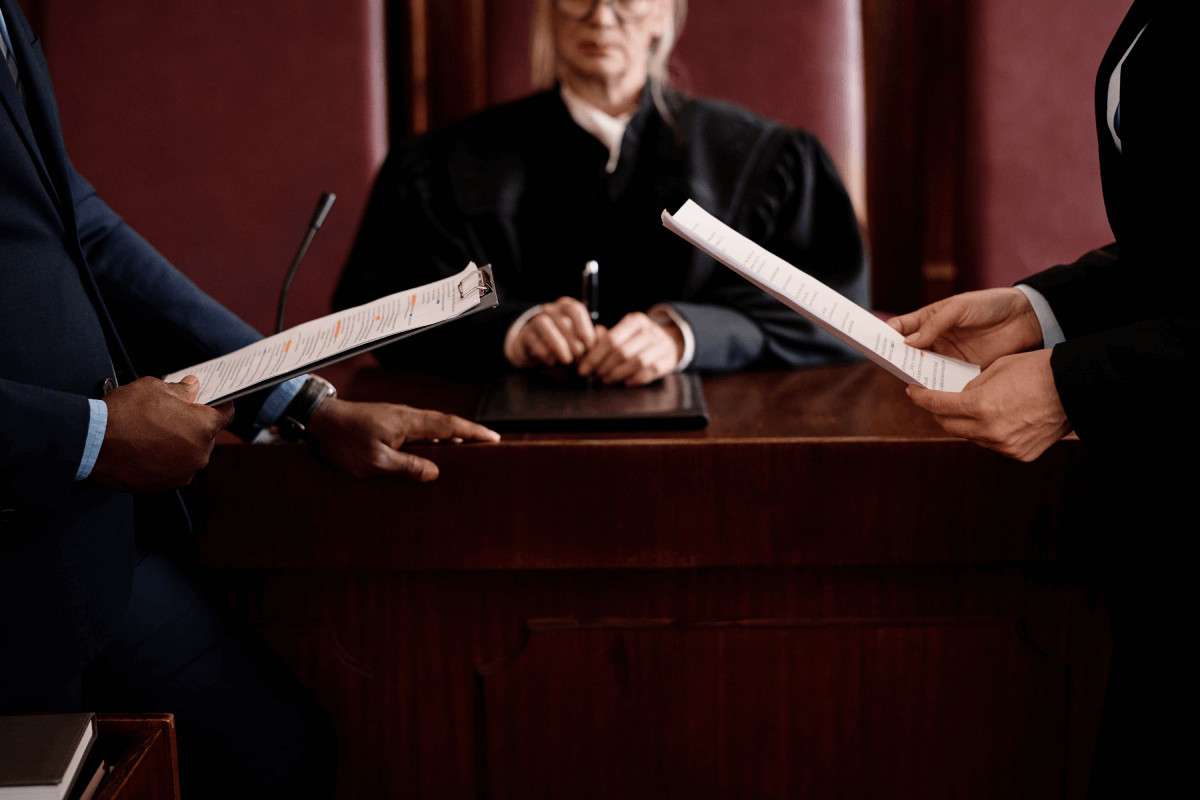
Two people handing papers to a judge at the bench

TRO & DVRO Lawyer Bakersfield

Expert Defense Against Restraining Orders, Protective Orders & Civil Harassment Orders in Bakersfield, Delano, Ridgecrest, Wasco & All Kern County

Served with a temporary restraining order in Kern County? You’re facing court-ordered restrictions that can force you from your home, separate you from your children, damage your reputation, jeopardize your employment, and result in criminal arrest for any violation. Whether facing domestic violence restraining order (DVRO), civil harassment restraining order, workplace violence restraining order, or elder abuse restraining order, these orders carry severe consequences including firearm confiscation, loss of gun rights, and impact on custody battles.

Attorney Armando Josué Cespedes provides aggressive restraining order defense throughout Kern County—Bakersfield, Delano, Ridgecrest, Wasco, Arvin, Shafter, Tehachapi, McFarland, California City, and every Kern County community. Perfect 5.0 Avvo rating with 34 five-star reviews and three consecutive Client’s Choice Awards (2023, 2024, 2025).

Many restraining orders are based on false allegations, exaggerations during custody disputes, or vengeful ex-partners seeking tactical advantage. We fight restraining orders at temporary hearings, full hearings, and appeals—protecting your rights, reputation, and freedom.

Free Confidential Consultation: (888) 315-3326 | Available 24/7 | Hablamos Español

Understanding California Restraining Orders

Types of Restraining Orders in California

1. Domestic Violence Restraining Order (DVRO):

  • Between people in intimate relationship (spouses, dating partners, parents of child together, cohabitants)
  • Based on allegations of abuse (physical, emotional, sexual, threats, harassment)
  • Duration: Up to 5 years (can be renewed)
  • California Family Code § 6200 et seq.

2. Civil Harassment Restraining Order:

  • Between people NOT in domestic relationship (neighbors, roommates, acquaintances, strangers)
  • Based on harassment, threats, stalking, violence
  • Duration: Up to 5 years
  • Code of Civil Procedure § 527.6

3. Workplace Violence Restraining Order:

  • Employer seeks order protecting employee from violence or threats
  • Code of Civil Procedure § 527.8
  • Less common

4. Elder or Dependent Adult Abuse Restraining Order:

  • Protects person 65+ or dependent adult from abuse
  • Welfare & Institutions Code § 15657.03

Focus: This page primarily addresses DVRO and civil harassment restraining orders, the most common in Kern County.

Two-Stage Restraining Order Process

Stage 1: Temporary Restraining Order (TRO)

What Happens:

  • Alleged victim files petition with[1]Kern County Superior Court[1]
  • Petitioner describes alleged abuse/harassment
  • Judge reviews petition without you present (ex parte hearing)
  • If judge finds reasonable proof, issues temporary restraining order
  • TRO effective immediately (typically 15-25 days until full hearing)

You Find Out:

  • Sheriff serves you with TRO papers
  • Contains court date for full hearing
  • Must comply immediately or face arrest

Critical: TRO issued based solely on petitioner’s allegations—you haven’t had opportunity to respond.

Stage 2: Full Hearing (Permanent Restraining Order Hearing)

What Happens:

  • Hearing scheduled 15-25 days after TRO issued
  • Both parties appear before judge
  • Petitioner presents evidence (testimony, witnesses, documents, photos)
  • You present defense (testify, witnesses, evidence)
  • Judge decides whether to:
    • Issue permanent restraining order (up to 5 years)
    • Deny restraining order (TRO expires, no permanent order)
    • Issue mutual restraining order (rare)

Burden of Proof:

  • Petitioner must prove allegations by “preponderance of evidence” (more likely than not—51%)
  • Lower standard than criminal “beyond reasonable doubt”

Domestic Violence Restraining Orders (DVRO)

Who Can Get DVRO?

Qualifying Relationships (California Family Code § 6211):

  • Spouses or former spouses
  • Domestic partners or former domestic partners
  • Dating or formerly dating (even if never lived together)
  • Living together or formerly lived together (more than roommates)
  • Parents of child together (regardless of relationship status)
  • Engaged or formerly engaged

What Constitutes “Abuse” Under DVRO?

According to California Family Code § 6203:

  • Physical abuse: Hitting, pushing, choking, restraining
  • Sexual abuse: Sexual assault, forced sex
  • Emotional abuse: Threats of harm, intimidation, destroying property to intimidate
  • Disturbing peace: Behavior that destroys mental/emotional calm (stalking, harassing calls/texts)

Critical: “Disturbing peace” is vague—can include non-violent conduct like excessive texting or showing up at workplace.

Consequences of DVRO

Personal Restrictions:

  • Must stay away from protected person (100 yards typical, up to 1000 yards possible)
  • No contact (directly or through third parties)
  • Cannot call, text, email, or social media contact
  • Cannot go near protected person’s home, workplace, school, car
  • Move-out order (must leave shared residence within 24 hours)

Child Custody Impact:

  • Temporary custody orders (children go to petitioner)
  • Supervised visitation only
  • Presumption against custody (Family Code § 3044)—if DVRO issued, rebuttable presumption that giving you custody is detrimental to children
  • Difficult to overcome in family court

Firearm Prohibition:

  • Must surrender all firearms within 24 hours to law enforcement or licensed dealer
  • Lifetime federal firearm ban (18 U.S.C. § 922(g)(8))—while order in effect
  • Cannot purchase or possess firearms
  • Violation = federal felony up to 10 years

Criminal Consequences:

  • Violating restraining order = criminal charges (PC § 273.6)
  • Misdemeanor: Up to 1 year jail
  • Felony (with violence or prior violations): 16 months/2/3 years prison
  • Arrest on any alleged violation (police take DVRO violations seriously)

Immigration Consequences:

  • DVRO can affect immigration status
  • May trigger removal proceedings
  • Affects naturalization applications

Employment Consequences:

  • Public record (appears on background checks)
  • Law enforcement, security jobs affected
  • Professional licenses can be impacted
  • Reputation damage

Stigma:

  • Labeled “domestic violence perpetrator”
  • Difficult to remove stigma even if order later dissolved

Kern County DVRO Statistics

According to [2]California Courts[2], thousands of DVRO petitions filed annually statewide. Kern County experiences significant domestic violence restraining order filings, particularly in Bakersfield metro area.

Common DVRO Scenarios in Kern County:

  • Divorce/custody battles (tactical use of DVRO to gain custody advantage)
  • Breakups with vengeful ex-partners
  • Domestic disputes escalating to police involvement
  • False allegations for financial/custody advantage

Civil Harassment Restraining Orders

Who Can Get Civil Harassment Order?

For Relationships NOT Covered by DVRO:

  • Neighbors
  • Roommates (purely platonic)
  • Coworkers
  • Acquaintances
  • Strangers
  • Extended family (cousins, aunts, uncles) not living together

What Constitutes “Harassment”?

According to Code of Civil Procedure § 527.6:

  • Unlawful violence (assault, battery)
  • Credible threat of violence
  • Course of conduct (pattern of behavior) that seriously alarms, annoys, or harasses with no legitimate purpose

Examples:

  • Neighbor repeatedly threatening you over property dispute
  • Ex-roommate stalking or threatening
  • Someone making credible threats of violence
  • Pattern of harassing behavior (repeated unwanted contact)

Consequences of Civil Harassment Order

Similar to DVRO:

  • Stay-away orders (distance varies)
  • No-contact orders
  • Cannot go near protected person’s home, work, vehicle
  • Firearm surrender required
  • Violation = criminal prosecution (PC § 273.6)

Less Severe Than DVRO:

  • No custody presumption (doesn’t apply to custody cases)
  • No automatic federal firearm ban (depends on specifics)
  • Less stigma than “domestic violence” label

Emergency Protective Orders (EPO)

Police-Issued at Scene

What Is EPO?

  • Law enforcement issues at scene of domestic violence or stalking incident
  • Immediate protection (no court hearing required)
  • Duration: 5-7 days (weekends/holidays included)
  • Allows victim time to seek DVRO

Common Kern County Scenarios:

  • Police respond to domestic violence call
  • Officer believes person in danger
  • Officer calls judge for authorization (phone or in-person)
  • EPO issued on spot
  • Served immediately

According to [3]Bakersfield Police Department[3] and [4]Kern County Sheriff[4]: EPOs commonly issued in domestic violence situations to provide immediate protection.

EPO Consequences:

  • Must leave residence immediately
  • Cannot contact protected person
  • Lasts only 5-7 days
  • Petitioner must file DVRO for longer protection

Critical: EPO often leads to DVRO petition being filed.

Restraining Order Process in Kern County

Temporary Restraining Order Issued

You Receive:

  • Notice of hearing
  • Temporary restraining order (orders you must follow)
  • Petitioner’s declaration (allegations against you)
  • Blank response forms

What You Must Do:

1. Read Everything Carefully:

  • Understand what orders prohibit
  • Note hearing date, time, location
  • Review allegations

2. Comply Immediately:

  • Follow all TRO orders
  • Move out if ordered
  • Surrender firearms within 24 hours
  • No contact with petitioner
  • Even one violation = criminal arrest

3. Contact Attorney Immediately:

  • Deadline to respond typically 5 days before hearing
  • Need time to prepare defense
  • Gather evidence, witnesses

4. Prepare Response:

  • File written response (form DV-120 for DVRO or CH-120 for civil harassment)
  • Tell your side of story
  • Deny false allegations
  • Present your evidence

Full Hearing in Kern County Superior Court

Kern County Restraining Order Hearings: Held at:

  • Bakersfield: Main Justice Building, 1215 Truxtun Avenue, Bakersfield, CA 93301
  • Delano: Delano Courthouse, 1122 Jefferson Street, Delano, CA 93215
  • Ridgecrest: Ridgecrest Courthouse, 325 South China Lake Boulevard, Ridgecrest, CA 93555

Hearing Process:

Petitioner’s Case:

  • Petitioner testifies under oath
  • Describes alleged abuse/harassment
  • Presents evidence (photos, texts, emails, medical records)
  • Calls witnesses (if any)

Your Defense:

  • You testify under oath
  • Deny false allegations
  • Present your evidence (texts, emails, photos, witnesses)
  • Cross-examine petitioner
  • Call witnesses

Judge’s Decision:

  • Judge evaluates credibility
  • Determines if petitioner met burden of proof
  • Issues ruling:
    • Grant permanent restraining order (1-5 years)
    • Deny restraining order (TRO expires)
    • Mutual restraining order (both parties restrained—rare and discouraged)

Critical: Hearing is often only 15-30 minutes. Must be prepared, organized, and persuasive.

Powerful Defenses to Restraining Orders

1. False Allegations – Petitioner Is Lying

Most Common Defense: Restraining orders frequently based on false allegations in:

  • Divorce/custody battles (gain custody advantage)
  • Vengeful ex-partners seeking revenge
  • Property/financial disputes
  • Mental health issues of petitioner

What We Prove:

  • Allegations are fabricated
  • Petitioner has motive to lie (custody, money, revenge)
  • Timeline inconsistencies
  • Physical evidence contradicts claims
  • Petitioner’s history of false allegations

Evidence:

  • Text messages showing petitioner initiated contact
  • Emails contradicting petitioner’s timeline
  • Photos showing no injuries
  • Witness testimony you were elsewhere (alibi)
  • Medical records showing no injuries reported
  • Prior restraining orders petitioner filed against others (pattern)

Result: Expose lies = judge denies restraining order

2. Exaggeration – Petitioner Overstating Events

Reality: Arguments happen. Minor disputes get exaggerated into “abuse.”

What We Prove:

  • Incident occurred but was minor
  • Mutual argument, not one-sided abuse
  • No threats, violence, or harassment
  • Petitioner embellishing to support petition

Evidence:

  • Context of communications (petitioner was equally aggressive)
  • Witness testimony about actual events
  • Your calm, non-threatening communications
  • Lack of pattern of abuse

Result: Show exaggeration = insufficient evidence for restraining order

3. Self-Defense

The Law: If you acted in self-defense, your conduct doesn’t constitute abuse.

What We Prove:

  • Petitioner attacked you first
  • You defended yourself with reasonable force
  • Your actions were protective, not aggressive

Evidence:

  • Your injuries (photos, medical records)
  • Police reports documenting petitioner’s aggression
  • Witness testimony petitioner was aggressor
  • 911 recordings showing your defensive position

Result: Lawful self-defense = no abuse = restraining order denied

4. Mutual Combat / Both Parties Equally at Fault

What We Prove:

  • Both parties engaged in argument/fight
  • Petitioner was equally aggressive
  • No innocent victim

Evidence:

  • Communications showing mutual hostility
  • Witnesses describing mutual combat
  • Your injuries showing petitioner also physical

Result: Mutual combat may result in mutual restraining orders (both restrained) or denial if court finds insufficient evidence of ongoing threat.

Note: Mutual restraining orders problematic—we fight to prevent them.

5. No Credible Threat of Future Harm

The Law: Restraining order requires showing future harm likely.

What We Prove:

  • Past incident (even if occurred) was isolated
  • No pattern of abuse
  • No ongoing threat
  • You’ve moved on, no contact with petitioner
  • Separation already occurred (no need for order)

Evidence:

  • Long period of no contact since alleged incident
  • You’re in new relationship, moved on
  • No evidence of stalking or harassment
  • Communication showing you want to be left alone (not harassing them)

Result: No future threat = restraining order unnecessary = denied

6. Protected Speech – First Amendment Defense

The Law: Some speech is constitutionally protected.

What We Prove:

  • Communications were political, religious, or other protected speech
  • Wasn’t true threat (hyperbolic language, venting)
  • Reasonable person wouldn’t perceive as threatening

Examples:

  • Venting frustration (not actual threat)
  • Heated language during argument (not credible threat)
  • Political/religious speech petitioner found offensive

Result: Protected speech = restraining order violates First Amendment = denied

7. Insufficient Evidence / Did Not Meet Burden of Proof

The Law: Petitioner must prove abuse/harassment by preponderance of evidence.

What We Prove:

  • Petitioner’s allegations uncorroborated
  • No witnesses, photos, medical records
  • Inconsistencies in petitioner’s testimony
  • Your evidence contradicts petitioner

Result: Cannot meet burden of proof = restraining order denied

8. No Qualifying Relationship (DVRO)

For Domestic Violence Restraining Orders: Must prove qualifying domestic relationship.

What We Prove:

  • Never dated (casual acquaintances only)
  • Never lived together as romantic partners (just roommates)
  • No child together
  • Not married or engaged

Result: No qualifying relationship = DVRO doesn’t apply (petitioner must seek civil harassment order instead, which may be more difficult)

9. Improper Service or Procedural Defects

Technical Defenses:

  • TRO not properly served
  • Petition defective (missing required information)
  • Court lacks jurisdiction
  • Improper venue (wrong county)

Result: Procedural defects = restraining order dismissed (can be refiled properly)

10. Changed Circumstances / Voluntary Dismissal

Negotiation Strategy: Sometimes petitioner willing to dismiss if conditions met.

What We Negotiate:

  • Voluntary dismissal in exchange for agreement
  • Informal agreement to stay apart
  • Mediation resolution

When Possible:

  • Petitioner realizes allegations weak
  • Petitioner wants peace, not litigation
  • Custody/property settlement resolves underlying issue

Result: Voluntary dismissal = no restraining order on record

Special Considerations for Different Order Types

DVRO in Divorce/Custody Cases

Tactical Use: Restraining orders often filed strategically in divorce to:

  • Gain custody advantage (Family Code § 3044 presumption)
  • Force spouse from home (exclusive residence)
  • Control property
  • Gain financial advantage

Defense Strategy:

  • Expose tactical motivation
  • Show petitioner coached by attorney
  • Present evidence of false allegations
  • Coordinate with family law attorney on custody strategy

Civil Harassment – Neighbor Disputes

Common Scenarios:

  • Property line disputes
  • Noise complaints
  • HOA conflicts
  • Parking disputes

Defense Strategy:

  • Show mutual animosity
  • Prove your conduct lawful (exercising property rights)
  • Present alternative dispute resolution
  • HOA records supporting your position

Workplace Restraining Orders

Employer-Sought:

  • Less common
  • Employer must show employee threatened by specific person
  • Different procedural rules

Defense:

  • Challenge employer’s standing
  • Prove no actual threat to employee
  • Workplace dispute blown out of proportion

Consequences of Violating Restraining Order

PC § 273.6 – Violation of Protective Order

Criminal Charges: Violating restraining order is separate crime.

What Constitutes Violation:

  • Any contact (direct or indirect)
  • Going near protected person or locations
  • Texting, calling, emailing (even if they respond)
  • Social media contact
  • Contact through third parties (“tell her I said…”)
  • Sending gifts, letters, flowers

Penalties:

Misdemeanor (First Violation):

  • County jail: Up to 1 year
  • Fines: Up to $1,000
  • Probation

Felony (If Violence or Prior Violations):

  • State prison: 16 months, 2, or 3 years
  • Fines: Up to $10,000

Kern County Enforcement: According to [3]Bakersfield Police[3] and [4]Kern County Sheriff[4], restraining order violations taken seriously:

  • Mandatory arrest policies
  • Prosecution even if protected person initiated contact
  • Zero tolerance approach

Critical: Even if petitioner contacts you first, responding is violation. You must not respond.

Why Choose Tu Defensor Criminalista for Restraining Order Defense

Kern County Restraining Order Experience

  • Regular hearings in all[1]Kern County Superior Court[1] locations
  • Knowledge of local judges’ approaches to restraining orders
  • Experience with Kern County DVRO commissioners

Expose False Allegations

  • Aggressive cross-examination of petitioners
  • Present evidence proving lies
  • Demonstrate tactical motivations

Custody Coordination

  • Work with family law attorneys
  • Understand Family Code § 3044 custody presumption
  • Protect parental rights

Quick Response

  • Restraining order hearings scheduled quickly (15-25 days)
  • Immediate consultation and preparation
  • Time-sensitive evidence gathering

Trial Advocacy

  • Compelling presentation at hearings
  • Effective witness examination
  • Persuasive argument to judges

Immigration Coordination

  • Coordinate with immigration attorneys for non-citizen clients
  • Understand immigration consequences
  • Negotiate immigration-safe outcomes

Firearm Rights Protection

  • Advise on firearm surrender requirements
  • Protect Second Amendment rights
  • Challenge firearm provisions when possible

Proven Results

  • Perfect 5.0 Avvo rating
  • 34 five-star reviews
  • Three consecutive Client’s Choice Awards
  • Numerous restraining orders defeated

Bilingual Services

  • Complete representation in Spanish

Frequently Asked Questions

What if allegations are completely false?

Common scenario. We present evidence exposing lies—texts, emails, witnesses, alibi. Many restraining orders denied when falsity proven.

Can I contact petitioner to work things out?

NO. Any contact = violation = arrest. Even if they contact you, do not respond.

What if we have children together?

Restraining order can include custody orders (usually supervised visitation). We fight to protect parental rights and modify custody provisions.

How long does restraining order last?

Permanent orders: 1-5 years (can be renewed). We fight to get orders denied entirely.

Can I go to my own home?

If move-out order issued, must leave within 24 hours. We argue against move-out orders at hearings.

What happens to my guns?

Must surrender within 24 hours. Federal lifetime ban while order in effect. Violation = federal felony.

Will this show up on background checks?

Yes. Restraining orders are public record. Shows on employment, housing background checks.

What if petitioner is lying to get custody?

Extremely common. We expose tactical motivations and coordinate with family law attorney.

Can I represent myself?

Not recommended. Restraining order hearings are critical—poor presentation can result in 5-year order.

What if we both want to drop it?

Petitioner can request dismissal. We help negotiate voluntary dismissal when possible.

What if I already violated order?

Separate criminal charges (PC § 273.6). We defend both restraining order AND violation charges.

Contact Tu Defensor Criminalista for Restraining Order Defense

Restraining orders threaten custody, housing, employment, gun rights. False allegations destroy reputations. Don’t face hearings alone—immediate legal representation critical.

Service areasServing All Kern County: Bakersfield | Delano | Ridgecrest | Wasco | Arvin | Shafter | Tehachapi | All Communities
LanguagesEnglish & Spanish (Hablamos Español)
Get a Free Consultation

Federal Law: 18 U.S.C. § 922(g)(8) (Firearm Prohibition)

Protecting Your Rights. Defending Against False Allegations. Preserving Your Freedom Throughout Kern County.

Sources

  1. kern.courts.ca.gov (kern.courts.ca.gov)
  2. courts.ca.gov (courts.ca.gov)
  3. bakersfieldpd.us (bakersfieldpd.us)
  4. kernsheriff.org (kernsheriff.org)
  5. California Courts Self-Help (courts.ca.gov)

Client Trust & Avvo Recognition

Attorney Armando Josué Cespedes is rated 5.0 on Avvo, with 34 five-star reviews from clients praising his dedication, professionalism, and results. Many note how his trial skills and attention to detail led to reduced charges or outright dismissals.

I was arrested for a DUI just recently, since Spanish is my first language, it was important to find a great attorney who was bilingual. Getting your first DUI can...
Christian
Armando cespedes went above and beyond for my case. I was very close to getting my license revoked as I am under the age of 21 and received my second...
Nathan
I was referred to Mr. Cespedes by a family friend who was very pleased with his legal services. Unfortunately, I got a DUI a few months ago and I was...
Connie
He cares and did everything possible to help me resolve my case. I was worried about my hit and run and DUI case. Not only did he go to court...
Pablo M.
Armando gets results with your best interest in mind. I was wrongfully being accused of making primal threats. Even though I was innocent, I was aware that the accusations are...
Raul
Extremely professional I recently had a brief phone consultation with Mr. Cespedes regarding a longtime friend of mine. Although he was unable to assist him with his legal needs, I...
Shereen

Find The Right Attorney For Free

Get help to resolve your case fast, quietly, and in your favor,
Fill out the form below for your consultation

Choose where to leave a review

Thank you! We need your help. Would you share your experience on one of these sites?

If you have concerns you wish to address privately




