Facing weapon charges in West Covina? You’re confronting felony weapons convictions carrying mandatory prison sentences, lifetime firearm prohibitions, deportation for non-citizens, STRIKE allegations under California’s Three Strikes Law, and permanent criminal records branding you as armed and dangerous. Whether accused of illegal weapons possession, carrying dirks or daggers, possessing brass knuckles, switchblade violations, nunchaku charges, prohibited weapons offenses, or weapons enhancements attached to other crimes, these convictions destroy your Second Amendment rights, employment opportunities, professional licenses, and freedom throughout Los Angeles County.
Free Confidential Consultation: (888) 315-3326 | Available 24/7 | Hablamos Español
Expert Defense Against Illegal Weapons Possession, Deadly Weapons Charges, Prohibited Weapons & Weapon Crimes in West Covina, Baldwin Park, Covina, Glendora & All Los Angeles County
West Covina residents face aggressive prosecution for weapons offenses in the East Los Angeles Superior Court system. From switchblade arrests during traffic stops on Interstate 10 to brass knuckles discoveries at security checkpoints, from dirk and dagger charges arising from pocket knife possession to nunchaku violations and prohibited weapons cases involving blackjacks, saps, or metal knuckles, weapon charges carry severe mandatory consequences. California Penal Code Sections 16590-21810[1] enumerate dozens of prohibited weapons with varying elements and penalties, creating a complex statutory framework where lawful possession in one context becomes criminal in another.
The consequences are devastating. A conviction under Penal Code Section 21310 for carrying a concealed dirk or dagger constitutes a felony carrying up to three years state prison. Possession of prohibited weapons under Penal Code Section 16590 results in felony or misdemeanor convictions with up to three years prison if charged as a felony. Weapons enhancements under Penal Code Section 12022(b) add one year to underlying felonies when you’re armed with deadly weapons. Assault with a deadly weapon under Penal Code Section 245(a)(1) constitutes a serious felony STRIKE requiring 85% mandatory custody and doubling future felony sentences.
West Covina’s diverse residential neighborhoods, major commercial corridors including Garvey Avenue and Azusa Avenue, entertainment venues, and proximity to Interstate 10 and State Route 60 create environments where weapons charges arise. Accusations stem from traffic stops where officers discover weapons during vehicle searches, security screenings at Westfield West Covina where prohibited items are detected, probation searches revealing weapons at residences, domestic violence calls where weapons are seized, and confrontations where objects are used as weapons.
Tu Defensor Criminalista provides relentless, strategic defense against all weapons charges in West Covina and throughout Los Angeles County. We challenge illegal searches and seizures, contest weapon classifications, litigate constitutional issues, negotiate charge reductions, and fight aggressively to protect your rights, freedom, and future.
California PC § 21310 Carrying Concealed Dirk or Dagger Defense Lawyer West Covina
Penal Code Section 21310 criminalizes carrying concealed upon your person any dirk or dagger. This statute creates one of California’s most frequently prosecuted weapons offenses, affecting individuals carrying pocket knives, fixed-blade knives, or other bladed instruments who are unaware their conduct violates criminal law.
PC 21310 violations constitute felonies or misdemeanors (“wobblers”) at prosecution discretion. Felony convictions carry 16 months, 2 years, or 3 years state prison. Misdemeanor convictions carry up to one year county jail. Even misdemeanor convictions create criminal records affecting employment and professional licenses.
The statute requires prosecutors to prove:
You carried concealed upon your person a dirk or dagger
You knew the dirk or dagger was present
You knew the instrument’s nature as capable of ready use as a stabbing weapon
“Dirk or Dagger” Definitions: California law defines these terms broadly. Under Penal Code Section 16470, a “dirk” or “dagger” means a knife or instrument with or without a handguard capable of ready use as a stabbing weapon that may inflict great bodily injury or death. The critical element is “capable of ready use”—instruments need not be designed as weapons if they’re readily available for stabbing.
Courts have found ordinary pocket knives, kitchen knives, box cutters, and even screwdrivers constitute dirks or daggers when carried in manners permitting immediate stabbing use. A folding knife locked in open position readily accessible in your pocket can qualify. A kitchen knife in a sheath on your belt can qualify. The weapon’s intended purpose matters less than its current capability for stabbing.
“Concealed” Requirements: “Concealed” means substantially hidden from ordinary observation. Weapons in pockets, waistbands, inside jackets, or in bags you’re carrying are concealed. Partially visible weapons may still be “substantially concealed” if most of the weapon is hidden.
“Upon Your Person” Element: The weapon must be on your body or in something you’re wearing or carrying. Weapons in vehicles near you, in backpacks you’re carrying, or in purses you’re holding qualify as “upon your person.”
West Covina PC 21310 prosecutions commonly arise from:
Traffic Stop Discoveries: Officers conduct traffic stops, obtain consent for searches or conduct searches incident to arrest, and discover knives in pockets, center consoles, or bags. Even small pocket knives can generate charges if they’re readily capable of stabbing use and concealed.
Security Checkpoint Detections: Security screenings at courthouses, government buildings, and some businesses detect concealed knives, resulting in arrests and prosecutions even when individuals forgot they were carrying ordinary pocket knives.
Probation and Parole Searches: Supervised individuals carrying knives for work or utility purposes face arrests when probation or parole officers discover knives during searches.
Domestic Violence and Disturbance Calls: Police responding to domestic disputes or disturbances sometimes discover knives on individuals, adding weapons charges to other allegations.
Defense strategies for PC 21310 charges include:
Not a Dirk or Dagger: We challenge whether the instrument qualifies as a dirk or dagger under legal definitions. Folding knives not locked open, small knives incapable of inflicting great bodily injury, or instruments without stabbing capability don’t meet statutory definitions. We present expert testimony regarding knife characteristics and conduct legal research supporting narrow statutory interpretation.
Not Concealed: If the knife was substantially visible, the “concealed” element fails. We obtain photographs, witness statements, and video evidence showing the weapon was openly carried.
Lack of Knowledge: You must know the weapon was present and know its character as a stabbing instrument. If you didn’t know the knife was in your pocket (borrowed jacket, someone else’s bag, etc.) or didn’t know it was capable of ready use as a stabbing weapon, the knowledge element fails.
Fourth Amendment Violations: Many PC 21310 cases involve questionable searches. If police lacked probable cause for vehicle searches, exceeded search warrant scope, obtained coerced consent, or violated other Fourth Amendment protections, we file suppression motions under Penal Code Section 1538.5 seeking evidence exclusion. Successful suppression typically results in dismissals.
Lawful Purpose Exemptions: While PC 21310 doesn’t contain broad exemptions, certain circumstances negate criminal intent. Carrying knives for legitimate work purposes (construction, fishing, hunting) in reasonable manners can support defense theories, though such evidence affects charging decisions and negotiations rather than providing complete statutory defenses.
Reduction to Misdemeanor: As a wobbler offense, we negotiate felony reductions to misdemeanors, dramatically reducing custody exposure and criminal record consequences. Misdemeanor convictions also allow expungement after successful probation completion.
Given the technical nature of dirk and dagger prosecutions and the severe consequences of felony weapons convictions, experienced defense counsel is essential for achieving optimal outcomes.
Expert Defense Against Switchblade Knives, Brass Knuckles, Nunchaku & Prohibited Weapons in West Covina, Baldwin Park, Covina, Glendora & All Los Angeles County
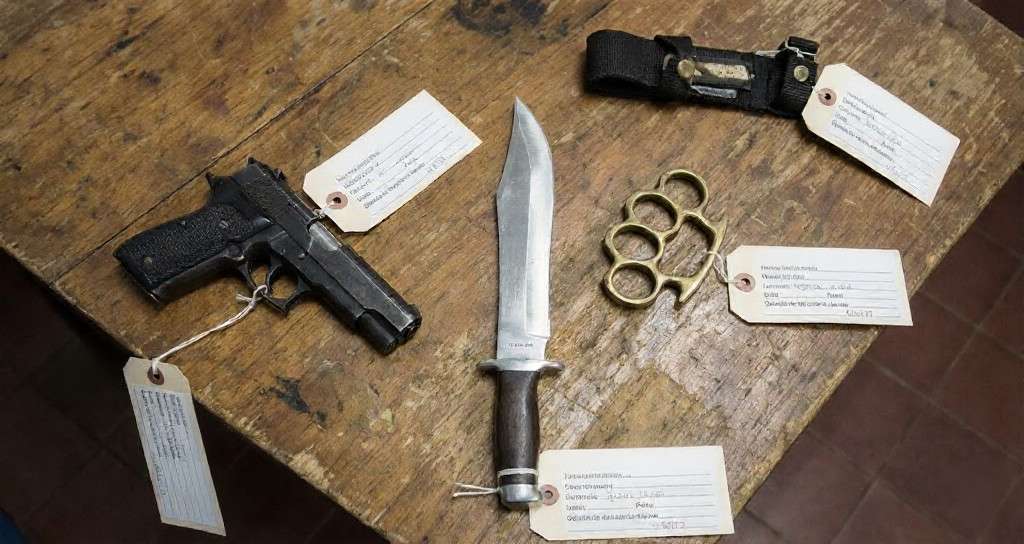
California Penal Code Section 16590 prohibits manufacturing, causing to be manufactured, importing, keeping for sale, offering for sale, giving, lending, or possessing numerous “generally prohibited weapons” including switchblade knives over two inches, brass knuckles, nunchaku, metal knuckles, belt buckle knives, cane swords, lipstick case knives, shobi-zudos, air gauge knives, ballistic knives, and many others.
PC 16590 violations can be charged as misdemeanors (up to one year county jail and $1,000 fine) or felonies (16 months, 2, or 3 years state prison). Prosecutors have discretion in charging decisions, considering criminal history, weapon type, circumstances, and public safety concerns.
The prohibited weapons list is extensive and includes:
Switchblade Knives: Knives with blades two inches or longer that can be released automatically by button, switch, or mechanism in the handle. “Assisted opening” knives with springs aiding blade deployment fall into gray areas requiring case-by-case analysis.
Brass Knuckles: Any device or instrument made wholly or partially of metal worn for purposes of offense or defense in or on the hand and designed to increase the force of a punch or protect the hand. Modern variations include plastic knuckles, carbon fiber knuckles, and tactical gloves with reinforced knuckles.
Metal Knuckles: Similar to brass knuckles but includes any metal device designed to be worn over fingers to increase striking force.
Nunchaku: Two or more sticks, clubs, bars, or rods connected by rope, cord, wire, or chain used as a weapon. Traditional martial arts training equipment falls within this prohibition despite legitimate athletic purposes.
Blackjacks, Saps, and Slungshots: Flexible weighted clubs designed for striking. These weapons have no legitimate civilian purpose and carry enhanced prosecution attention.
Cane Swords: Canes concealing sword blades, walking sticks with concealed weapons, or similar devices designed to hide blades within innocent-appearing objects.
Ballistic Knives: Knives with detachable blades propelled by springs or compressed gas, designed to shoot blades as projectiles.
Shuriken (Throwing Stars): Martial arts throwing weapons popular in movies but illegal to possess in California.
According to Los Angeles County Sheriff’s Department data[2], thousands of weapons-related arrests occur annually in Los Angeles County, with prohibited weapons charges representing a significant portion of weapons prosecutions.
West Covina PC 16590 cases frequently involve:
Traffic Stops and Vehicle Searches: Officers discover prohibited weapons in vehicles during traffic stop searches. Brass knuckles in glove compartments, nunchaku in trunks from martial arts training, or switchblades in center consoles result in arrests.
Probation/Parole Searches: Supervised individuals possessing martial arts equipment, knife collections, or self-defense devices face arrests when officers discover prohibited weapons during compliance checks.
Online Purchase Investigations: California retailers cannot legally sell many prohibited weapons within California, but individuals purchasing items online may unknowingly violate PC 16590. Some prosecutions arise from package interceptions or delivery investigations.
Self-Defense Situations: Individuals carrying prohibited weapons for self-defense purposes face prosecutions despite subjective good intentions. California law doesn’t recognize self-defense justifications for possessing generally prohibited weapons.
Defense strategies for PC 16590 charges include:
Not a Prohibited Weapon: We challenge whether items meet statutory definitions. Assisted-opening knives may not be switchblades if manual pressure is required throughout deployment. Items resembling brass knuckles but not designed for hand-striking may not qualify. Belt buckles with decorative blade shapes that aren’t functional weapons don’t violate the statute.
Lack of Knowledge: You must know you possessed the item and know its character as a prohibited weapon. If you received items as gifts without knowing their nature, inherited collections without examining contents, or purchased items believing they were legal, knowledge defenses apply.
Constitutional Challenges: Some prohibited weapons statutes face Second Amendment challenges post-Bruen. While most prohibited weapons fall outside Second Amendment protection, we raise constitutional challenges when applicable case law supports such arguments.
Lack of Possession: In shared residences or vehicles, prosecutors must prove you possessed prohibited weapons rather than other occupants. We challenge constructive possession theories by demonstrating multiple people had equal access and no evidence establishes your exclusive possession.
Suppression Motions: Fourth Amendment violations provide powerful defense grounds. If weapons were discovered through illegal searches, we file motions to suppress evidence, typically resulting in dismissals when granted.
Reduction to Misdemeanor: For wobbler offenses, we negotiate felony reductions to misdemeanors, minimizing custody exposure and criminal record impact.
Alternatives to Conviction: Some first-time offenders may qualify for diversion programs, deferred entry of judgment, or alternative dispositions avoiding formal convictions.
Understanding California Weapon Enhancement Laws
California imposes severe sentence enhancements when deadly or dangerous weapons are involved in crimes. These enhancements frequently exceed underlying offense sentences, making enhancement litigation critical.
PC § 12022(b) Armed Enhancement: Being armed with a deadly weapon (other than a firearm) during felony commission or attempted commission adds one year consecutive to the underlying sentence. “Armed” means having ready access to a weapon, not necessarily holding or using it. Weapons in nearby locations accessible during crimes can support armed findings.
“Deadly weapon” includes any object, instrument, or weapon inherently deadly or dangerous, or used in a manner capable of producing and likely to produce death or great bodily injury. This definition encompasses traditional weapons (knives, clubs, etc.) and improvised weapons (bottles, tools, vehicles used as weapons).
PC § 12022.7 Great Bodily Injury Enhancement: Personally inflicting great bodily injury during felony commission adds 3 years (5 years for serious felonies, 6 years for violent felonies). When weapons are used to inflict injuries, both weapon and GBI enhancements can apply, though courts sometimes strike one to avoid double-enhancement for the same conduct.
PC § 12022.3 Enhancement for Sex Crimes With Weapons: Using deadly weapons during specified sex offenses adds 3, 4, or 10 years depending on weapon type and use circumstances.
PC § 186.22(b) Gang Enhancement: Gang-related offenses receive substantial enhancements. When weapons are involved in gang-related crimes, combined gang and weapon enhancements create dramatic sentence increases.
Enhancement defense strategies include:
Factual Challenges: We challenge whether you were actually “armed” during offenses. If weapons were present but inaccessible, not readily available, or unknown to you, armed findings shouldn’t apply. We present evidence regarding weapon locations, accessibility, and your knowledge.
Legal Challenges: We file motions arguing enhancements don’t apply to specific fact patterns. For instance, if the weapon is an element of the underlying offense (assault with deadly weapon), PC 12022(b) armed enhancements may constitute improper dual use of facts.
Motions to Strike Enhancements: Under Penal Code Section 1385, courts can dismiss enhancements “in furtherance of justice.” We present mitigation evidence supporting enhancement dismissals including minimal criminal history, circumstances of offenses, and disproportionate punishment arguments.
Negotiating Enhancement Dismissals: Prosecutors sometimes agree to dismiss enhancements in exchange for pleas to underlying charges. Given enhancement severity, such agreements often provide better outcomes than risking trial with full enhancement exposure.
According to California Sentencing Institute research[3], enhancements significantly increase California’s prison population and average sentence lengths. Enhancement litigation therefore provides substantial sentence reduction opportunities.
Common Weapon Crime Scenarios in West Covina
West Covina’s geography, demographics, and law enforcement practices create specific weapons case patterns. Understanding common scenarios illustrates defense approaches.
Pocket Knife Arrests: Law-abiding individuals carrying pocket knives for utility purposes face arrests when officers classify knives as concealed dirks or daggers. Construction workers, fishermen, hikers, and others with legitimate knife uses face prosecutions for carrying tools they use daily. Defense requires demonstrating lawful purposes, challenging dirk/dagger classifications, and negotiating reasonable resolutions.
Martial Arts Equipment Possession: Practitioners of martial arts who own nunchaku, shurikens, or other training equipment for legitimate athletic purposes face PC 16590 charges despite non-criminal intent. Some individuals are unaware California prohibits possession even for training purposes. We negotiate resolutions recognizing legitimate purposes while achieving dispositions avoiding felony convictions.
Self-Defense Device Charges: Individuals carrying brass knuckles, kubatons, tactical pens, or other self-defense devices for personal protection face weapons charges. While self-defense motivations may generate sympathy, California law doesn’t excuse prohibited weapons possession based on self-defense intent. We present mitigation emphasizing non-criminal intent while negotiating favorable outcomes.
Knife Collection Prosecutions: Knife collectors possessing switchblades, ballistic knives, belt buckle knives, or other prohibited items as collectibles face prosecutions. Some collectors purchased items legally in other states or online without knowing California prohibits possession. We emphasize collector intent, lack of criminal history, and lack of dangerous use while negotiating misdemeanor resolutions or dismissals.
Vehicle-Discovered Weapons: Traffic stops resulting in vehicle searches frequently uncover weapons. Officers discover knives in glove compartments, brass knuckles under seats, or other prohibited items during searches. We challenge search legality, contest possession elements when multiple occupants had vehicle access, and negotiate reduced charges.
Weapons Enhancement Cases: Underlying felonies (assault, robbery, burglary, etc.) with weapon enhancement allegations create substantial prison exposure. We litigate both underlying charges and enhancement allegations, seeking dismissals, charge reductions, or enhancement strikes.
Your Constitutional Rights During Weapon Crime Investigations
Constitutional protections provide essential safeguards during weapons investigations. Understanding and asserting these rights prevents self-incrimination and preserves defense options.
Fourth Amendment Search and Seizure Protections: Police need warrants or valid exceptions to search your person, vehicle, or residence. You can refuse consent to searches. State clearly and politely: “I do not consent to this search.” Never physically resist, but verbal refusal preserves Fourth Amendment challenges.
Common search and seizure issues in weapons cases include:
Pretextual Traffic Stops: Officers cannot conduct stops based on hunches without reasonable suspicion of traffic violations or other criminal activity. We challenge stops lacking legitimate justification.
Extended Detentions: Traffic stops must be reasonably brief. Detaining individuals beyond the time necessary to address traffic violations requires additional reasonable suspicion. We challenge prolonged detentions used to obtain consent or develop probable cause.
Unlawful Vehicle Searches: Officers need probable cause, valid consent, or search incident to lawful arrest justification for vehicle searches. We challenge searches based on coerced consent, invalid consent from non-owners, or claims of probable cause unsupported by facts.
Residence Searches: Residence searches require warrants absent exigent circumstances or valid consent. We challenge warrantless home searches and searches exceeding warrant scope.
Probation/Parole Search Abuses: While supervised individuals have reduced Fourth Amendment protections, probation and parole searches must comply with search conditions and cannot be conducted in arbitrary or harassing manners.
Successful suppression motions exclude illegally obtained evidence. Since weapons are typically the primary evidence in weapons cases, suppression usually results in dismissals.
Fifth Amendment Right Against Self-Incrimination: You cannot be compelled to answer police questions. Exercise this right immediately upon police contact: “I am invoking my right to remain silent and my right to an attorney. I will not answer questions without my lawyer present.”
Police may ask about weapon ownership, purposes for possession, knowledge of weapon characteristics, or other incriminating topics. Answering these questions provides evidence against you. Remain silent.
Sixth Amendment Right to Counsel: You have the right to legal representation at all critical stages of prosecution. Request an attorney immediately upon arrest and refuse questioning until counsel is present.
The American Civil Liberties Union[4] provides comprehensive guidance on constitutional rights during police encounters. We advise all clients to exercise these rights fully.
Penalties and Consequences of Weapon Crime Convictions
Weapon conviction consequences extend far beyond criminal sentences, creating lifetime repercussions affecting fundamental rights and opportunities.
Criminal Sentences: Penalties vary by offense:
PC 21310 (dirk/dagger): Misdemeanor up to 1 year or felony 16 months, 2, or 3 years
PC 16590 (prohibited weapons): Misdemeanor up to 1 year or felony 16 months, 2, or 3 years
PC 245(a)(1) (assault with deadly weapon): Serious felony STRIKE, 2-4 years (3-6 if GBI)
PC 417 (brandishing weapon): Misdemeanor up to 1 year or specified felony circumstances
PC 12022(b) (armed enhancement): 1 year consecutive to underlying felony
Firearm Prohibition: While weapons charges don’t always prohibit firearm possession, felony convictions result in lifetime firearm prohibition under Penal Code Section 29800 and federal law. Even misdemeanor weapons convictions can affect firearm rights depending on offense specifics.
Immigration Consequences: Weapons convictions can constitute crimes involving moral turpitude or aggravated felonies under immigration law. Deportation, inadmissibility, and naturalization denial result for non-citizens. U.S. Citizenship and Immigration Services[5] and immigration courts analyze weapons convictions under complex federal frameworks requiring immigration counsel consultation.
Professional License Impact: Weapons convictions affect licenses for security guards, peace officers, healthcare providers, attorneys, and numerous other professions. California Department of Consumer Affairs[6] licensing boards scrutinize criminal convictions and impose discipline ranging from probation to permanent license revocation.
Employment Consequences: Criminal background checks reveal weapons convictions. Employers view weapons offenses as indicators of dangerousness and poor judgment, drastically limiting employment opportunities. Jobs involving security, working with vulnerable populations, or positions of trust become inaccessible.
Housing Consequences: Landlords routinely deny rental applications based on weapons convictions due to safety concerns and liability fears.
Educational Consequences: Colleges, universities, and professional schools may deny admission based on criminal convictions. Financial aid eligibility can be affected.
Three Strikes Consequences: Assault with deadly weapon convictions constitute serious felony STRIKES. STRIKE convictions require 85% time served, double future felony sentences, and create 25-to-life exposure upon third STRIKE convictions.
Parole and Probation Conditions: Weapons convictions typically result in probation or parole conditions prohibiting possession of any weapons, even legal items like pocket knives. Violations result in custody.
These collateral consequences often exceed direct criminal penalties in life impact. Avoiding conviction through dismissal, acquittal, or charge reduction is therefore paramount.
Why Choose Tu Defensor Criminalista for West Covina Weapon Crime Defense
Weapons cases require specialized knowledge of complex statutory definitions, constitutional search and seizure law, and strategic litigation approaches. Selecting experienced weapons defense counsel is critical.
Extensive Weapons Law Expertise: We handle all weapons offenses including dirks and daggers, prohibited weapons, weapons enhancements, assault with deadly weapons, and complex cases involving multiple charges. We understand statutory elements, available defenses, and negotiation strategies.
Los Angeles County Experience: We practice extensively in East Los Angeles Superior Court where West Covina cases are prosecuted. We know the judges, prosecutors, and local practices, creating strategic advantages unavailable to attorneys unfamiliar with the courthouse.
Aggressive Constitutional Litigation: We file suppression motions challenging illegal searches and seizures. Many weapons cases involve questionable stops, searches, or seizures. Successful suppression eliminates evidence, often resulting in dismissals.
Technical Defense Expertise: Weapons statutes contain technical definitions and elements creating defense opportunities. We research whether items meet statutory definitions, challenge weapon classifications, and present expert testimony when beneficial.
Enhancement Litigation Experience: Weapons enhancements dramatically increase sentences. We litigate enhancement allegations aggressively, seeking dismissals or strikes under PC 1385. Our enhancement litigation has saved clients years of prison time.
Trial Experience: We’ve tried numerous weapons cases to verdict. Trial preparation and experience create negotiating leverage and ensure readiness if trial becomes necessary.
Comprehensive Investigation: We investigate beyond police reports, examining weapons, consulting experts regarding classifications, interviewing witnesses, and developing evidence supporting defenses.
Immigration Consequences Coordination: For non-citizen clients, we coordinate with immigration counsel to structure resolutions minimizing immigration consequences.
Personalized Attention: You receive individualized attention, direct attorney access, regular case updates, and involvement in strategic decisions.
Proven Results: Our track record includes dismissed charges, suppressed evidence, not guilty verdicts, reduced charges, stricken enhancements, and avoided immigration consequences.
Weapons charges threaten your freedom, rights, and future. You need defense counsel who will fight relentlessly while providing honest, strategic guidance.
The Criminal Justice Process for Weapon Crimes in West Covina
Understanding how weapons cases proceed through Los Angeles County courts helps you anticipate challenges and make informed decisions.
Arrest and Booking: Weapons arrests occur through traffic stops, probation searches, security screenings, or investigations. You’re transported to West Covina Police Department for booking, then transferred to county facilities pending arraignment. Weapons are seized as evidence.
Bail: Weapons charges typically require bail ranging from $5,000-$50,000 depending on charges, criminal history, and circumstances. Assault with deadly weapon charges may exceed $50,000. We file bail motions arguing for reduction based on community ties, employment, and minimal flight risk.
Arraignment: Your first court appearance typically occurs within 48 hours if in custody. Courts advise you of charges, constitutional rights, and penalties. We enter not guilty pleas preserving all defense options. Courts address custody status and bail.
Pretrial Proceedings: Cases proceed through pretrial litigation including discovery, suppression motions, expert consultations, and plea negotiations. This stage lasts several weeks to several months involving multiple court appearances.
Preliminary Hearing (Felony Cases): Felony weapons cases require preliminary hearings where judges determine probable cause. We cross-examine prosecution witnesses, challenge evidence, and sometimes present defense evidence. Preliminary hearings provide critical discovery and case assessment opportunities.
Suppression Motions: We file Penal Code Section 1538.5 motions challenging illegal searches and seizures. Noticed hearings occur where we present evidence and legal arguments. Successful motions eliminate evidence, often forcing dismissals.
Plea Negotiations: Most cases resolve through negotiation. We leverage case weaknesses, constitutional issues, and mitigating evidence to negotiate dismissals, reduced charges, or favorable dispositions. Reducing felonies to misdemeanors avoids severe collateral consequences.
Trial: If negotiation fails, cases proceed to jury trial. Weapons trials involve constitutional challenges, expert testimony regarding weapon classifications, and credibility assessments. Trials last several days depending on complexity.
Sentencing: Following conviction or plea, sentencing occurs at separate hearings. Probation departments prepare reports. We present mitigation evidence arguing for lenient sentences. Judges impose sentences within statutory parameters.
Appeals: Convictions can be appealed based on legal errors, evidentiary issues, or constitutional violations. Appeals must be filed within 60 days of sentencing.
This process creates multiple intervention opportunities. Early engagement of experienced counsel maximizes favorable outcome prospects.
Frequently Asked Questions – Weapon Crimes
Is it illegal to carry a pocket knife in California?
It depends on the knife characteristics and how you carry it. Folding knives (pocket knives) with blades under 2.5 inches are generally legal to carry openly or concealed. Larger folding knives can be carried openly but may violate PC 21310 if carried concealed and capable of ready use as stabbing weapons. Fixed-blade knives of any size cannot be carried concealed.
What makes a knife a “dirk or dagger” under California law?
A dirk or dagger is any knife or instrument capable of ready use as a stabbing weapon that may inflict great bodily injury or death. The key is “capable of ready use”—if you can immediately use it for stabbing without preparation, it qualifies. Locked folding knives readily accessible can be dirks or daggers even if they’re ordinary pocket knives.
Can I carry brass knuckles for self-defense?
No. Brass knuckles, metal knuckles, and similar devices are generally prohibited weapons under PC 16590. California law doesn’t recognize self-defense justifications for possessing prohibited weapons. Carrying brass knuckles for self-defense remains illegal and results in criminal prosecution.
Are nunchaku illegal in California even for martial arts training?
Yes. PC 16590 prohibits possessing nunchaku regardless of purpose, including legitimate martial arts training. While this seems harsh for practitioners with legitimate athletic purposes, the statute contains no exception for training or sport use.
What’s the difference between a switchblade and an assisted-opening knife?
Switchblades have blades that spring open automatically by button or switch pressure. Assisted-opening knives require manual pressure throughout blade deployment—springs assist but don’t automatically complete opening. True assisted-opening knives aren’t switchblades, but ambiguous designs create enforcement issues requiring case-by-case analysis.
Can I keep weapons in my car?
It depends on the weapon type. Firearms have specific transportation requirements. Many prohibited weapons (brass knuckles, switchblades over 2 inches, nunchaku, etc.) cannot be legally possessed anywhere, including vehicles. Legal knives can be transported in vehicles but carrying them on your person while in or near vehicles can violate concealed carry statutes.
What happens if police find a weapon during a traffic stop?
You may be arrested depending on weapon type, how you were carrying it, and your criminal history. Exercise your Fourth Amendment rights by refusing consent to searches. If officers search anyway, we can later challenge search legality through suppression motions.
Can weapon charges be reduced to misdemeanors?
Many weapons offenses are “wobblers” chargeable as misdemeanors or felonies. Prosecutors have initial charging discretion, and courts can reduce felonies to misdemeanors under PC 17(b) after conviction if probation is granted. We negotiate aggressively for misdemeanor resolutions minimizing criminal record consequences.
Will a weapons conviction affect my right to own guns?
Felony weapons convictions result in lifetime firearm prohibition. Misdemeanor weapons convictions may affect firearm rights depending on specific offense and whether it involves deadly weapons, though effects vary. Assault with deadly weapon convictions absolutely prohibit firearm possession for life.
What should I do if police want to search my car for weapons?
Politely refuse consent: “I do not consent to this search.” Officers may search anyway if they have probable cause or other justification, but refusing consent preserves your ability to challenge the search later. Never physically resist but clearly state your non-consent.
Can I be convicted of weapons charges if the weapon belonged to someone else?
Prosecutors must prove you possessed the weapon—you had knowledge of its presence and ability to control it. In shared vehicles or residences, we challenge whether you actually possessed weapons versus other occupants. Mere proximity isn’t sufficient for conviction.
How do weapons enhancements affect sentences?
PC 12022(b) adds one year for being armed with deadly weapons during felonies. Other enhancements add more time depending on circumstances. Enhancements are typically consecutive, meaning they’re added to underlying sentences rather than served concurrently. We litigate enhancement allegations aggressively seeking dismissals.
Can I get weapons charges expunged?
Under PC 1203.4, you can petition for dismissal (expungement) of many convictions after successful probation completion. Expungement releases you from penalties and disabilities of conviction, though some consequences remain. We advise clients regarding expungement eligibility and handle petitions when appropriate.
What is the penalty for brandishing a weapon in California?
Brandishing a weapon under PC 417 is generally a misdemeanor carrying up to one year county jail. Brandishing firearms in specified circumstances (near schools, at peace officers, etc.) carries enhanced penalties including felony prosecution. Brandishing during arguments can also elevate assault charges.
Can I carry a knife for work purposes?
While legitimate work purposes provide context affecting charging decisions and negotiations, California weapons statutes generally don’t contain broad occupational exemptions. Construction workers, fishermen, and others with legitimate knife uses can still face charges if carrying violates concealed carry or prohibited weapons statutes. However, work purposes provide strong mitigation during negotiations.
Contact Tu Defensor Criminalista for West Covina Weapon Crimes Defense
Attorney Armando Josué Cespedes is rated 5.0 on Avvo, with 34 five-star reviews from clients praising his dedication, professionalism, and results. Many note how his trial skills and attention to detail led to reduced charges or outright dismissals.
I was arrested for a DUI just recently, since Spanish is my first language, it was important to find a great attorney who was bilingual. Getting your first DUI can...
Armando cespedes went above and beyond for my case. I was very close to getting my license revoked as I am under the age of 21 and received my second...
I was referred to Mr. Cespedes by a family friend who was very pleased with his legal services. Unfortunately, I got a DUI a few months ago and I was...
Armando gets results with your best interest in mind. I was wrongfully being accused of making primal threats. Even though I was innocent, I was aware that the accusations are...
Extremely professional I recently had a brief phone consultation with Mr. Cespedes regarding a longtime friend of mine. Although he was unable to assist him with his legal needs, I...



 English
 Español de México
