Free consultationCriminal defense in Southern California, available 24/7(888) 315-3326Español

Brandishing a Firearm Defense Attorney in El Monte

Table of Contents

Protecting Your Rights and Your Freedom

If you or a loved one has been arrested or charged with brandishing a firearm or weapon in El Monte, California, you are facing serious criminal charges that threaten your freedom, your Second Amendment rights, your employment, and your future. Brandishing charges under California Penal Code Section 417 carry mandatory minimum jail sentences, substantial fines, loss of gun rights, and a permanent criminal record that can devastate your career and personal life. Even if you were acting in self-defense or protecting others from harm, you can still face prosecution—making experienced legal representation absolutely essential.

At Tu Defensor Criminalista, we understand that brandishing charges often arise from misunderstandings, lawful self-defense situations, road rage incidents, domestic disputes, or circumstances where you displayed a firearm to protect yourself or your family from genuine danger. Many of our clients are responsible gun owners who found themselves in threatening situations and made split-second decisions to protect their lives. Whether you’re charged with brandishing a firearm in public, brandishing at a peace officer, brandishing causing serious injury, or related weapons offenses, our experienced criminal defense team is here to provide aggressive representation to protect your rights and fight for your freedom.


El Monte, with a population of approximately 104,639 residents according to the U.S. Census Bureau[1], is a working-class community in Los Angeles County where residents increasingly face decisions about personal protection and firearm ownership. According to City-Data crime statistics[2], El Monte experiences approximately 432 violent crimes annually, with a violent crime rate of 423 per 100,000 residents. In an environment where residents may feel the need to protect themselves, brandishing charges have become increasingly common.

According to the Los Angeles County Sheriff’s Department[3], Los Angeles County tracks thousands of weapons-related arrests annually, with brandishing charges representing a significant portion. The California Department of Justice[4] reports that weapons violations remain a priority for law enforcement statewide, with aggressive prosecution of firearm-related offenses.

With so much at stake—your freedom, your gun rights, your reputation—you need an attorney who understands California’s brandishing laws, self-defense principles, the difference between lawful protection and criminal conduct, and how to build powerful defenses. At Tu Defensor Criminalista, we provide bilingual (English and Spanish) criminal defense representation throughout El Monte and all of Los Angeles County.

Contact us today for a free, confidential consultation. We are available 24/7 to answer your questions and begin protecting your rights.

Understanding California’s Brandishing Laws

California Penal Code Section 417 makes it a crime to “brandish” a weapon or firearm in certain circumstances.

Penal Code Section 417(a)(2) – Brandishing a Firearm

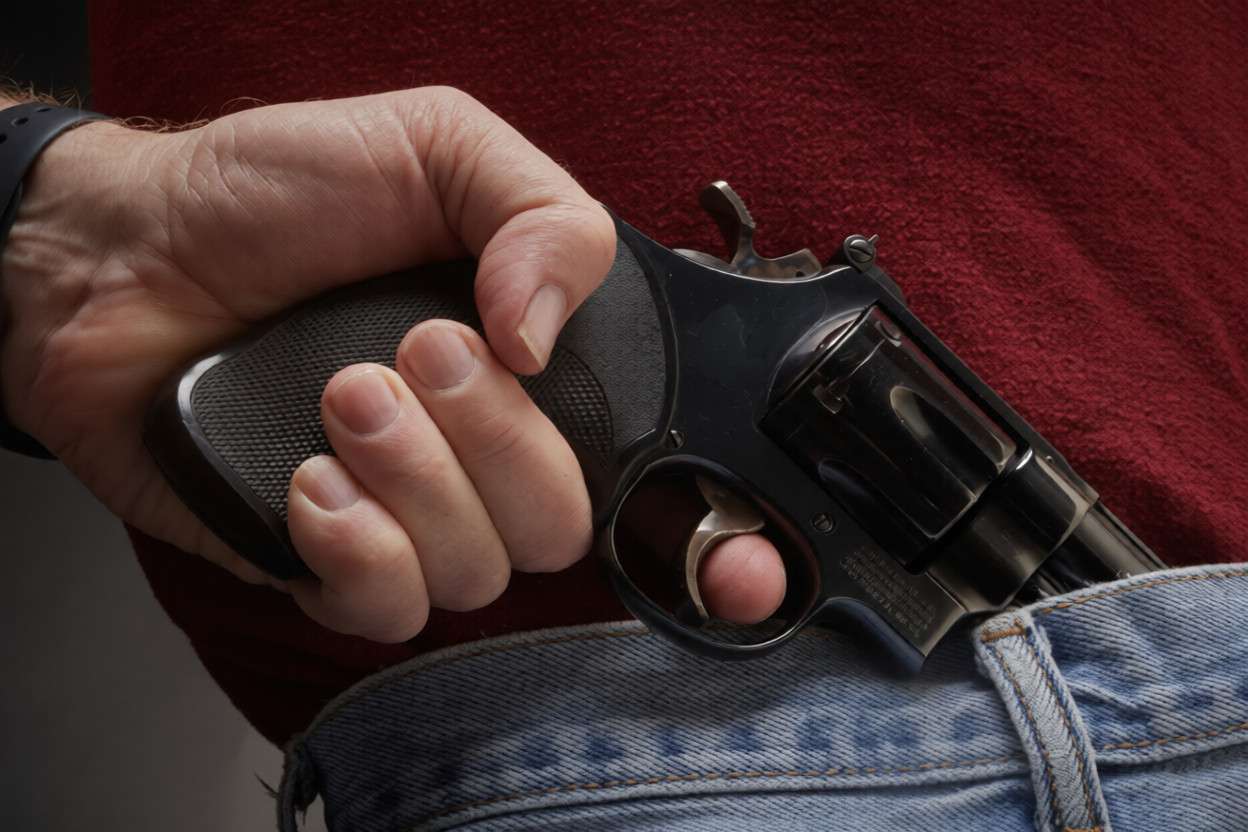
Definition: Brandishing means drawing or exhibiting a firearm in a rude, angry, or threatening manner in the presence of another person, or using a firearm in a fight or quarrel (except in lawful self-defense).

Key Elements Prosecution Must Prove:

  1. You drew or exhibited a firearm
  2. You did so in the presence of another person
  3. You did so in a rude, angry, or threatening manner
  4. OR you used the firearm in a fight or quarrel
  5. You were NOT acting in lawful self-defense or defense of another person

Important: The critical element is how you displayed the firearm—in a rude, angry, or threatening manner. Simply carrying or possessing a firearm is not brandishing.

Examples of Brandishing:

  • Pulling a gun during a road rage incident
  • Displaying a firearm during an argument
  • Pointing a gun at someone during a dispute
  • Waving a firearm in a threatening manner
  • Drawing a weapon to intimidate someone

NOT Brandishing:

  • Drawing firearm in genuine self-defense
  • Lawful open carry (where legal)
  • Inadvertent display of concealed firearm
  • Showing firearm to friend for inspection (not threatening)

Penalties for Brandishing a Firearm

Standard Brandishing (PC 417(a)(2)):

Misdemeanor:

  • Minimum 3 months in county jail (mandatory)
  • Maximum 1 year in county jail
  • Fine up to $1,000
  • Informal probation (with conditions)
  • Loss of firearm
  • Possible loss of gun rights

Important: The 3-month minimum jail sentence is MANDATORY—judges cannot reduce it below this minimum.

Enhanced Penalties for Aggravated Circumstances

Brandishing in Daycare or Youth Program (PC 417(a)(2)):

If you brandish a firearm in or near:

  • Day care center
  • Preschool
  • Public or private youth center
  • School
  • During hours children are present

Wobbler Offense:

Misdemeanor:

  • 3 months to 1 year jail

Felony:

  • 16 months, 2 years, or 3 years in state prison
  • Substantial fines
  • Formal probation or parole
  • Permanent loss of gun rights

Brandishing at a Peace Officer (PC 417(c)):

If you brandish a firearm in the immediate presence of a peace officer (police, sheriff, highway patrol), AND you know or reasonably should know they are a peace officer performing duties:

Felony:

  • 16 months, 2 years, or 3 years in state prison
  • Minimum 9 months in county jail (if misdemeanor reduction granted)
  • Maximum 1 year in county jail
  • Substantial fines
  • Formal probation conditions
  • Enhanced consequences

Brandishing Causing Serious Bodily Injury (PC 417.6):

If your brandishing causes someone to suffer serious bodily injury:

“Serious Bodily Injury” Defined:

  • Loss of consciousness
  • Concussion
  • Bone fractures
  • Wounds requiring extensive suturing
  • Serious disfigurement
  • Protracted loss or impairment of bodily function

Wobbler Offense:

Misdemeanor:

  • Up to 1 year jail

Felony:

  • 16 months, 2 years, or 3 years in state prison
  • Weapon deemed nuisance and destroyed
  • Substantial fines and restitution

Related Offenses

Penal Code Section 417(a)(1) – Brandishing Other Deadly Weapon:

  • Knife, bat, bottle, club, etc.
  • Minimum 30 days jail
  • Maximum 6 months jail
  • Less severe than firearm brandishing

Penal Code Section 417.25 – Brandishing Laser Pointer:

  • Aiming laser scope or pointer in threatening manner
  • Misdemeanor: Up to 6 months jail

Penal Code Section 245 – Assault with Deadly Weapon:

  • More serious charge
  • Requires assault element (attempt to apply force)
  • Felony: 2-4 years prison

Penal Code Section 422 – Criminal Threats:

  • Making threats to kill or seriously injure
  • Often charged alongside brandishing
  • Wobbler: Up to 3 years prison

The Self-Defense Exception

California law explicitly provides that brandishing is NOT a crime if done in lawful self-defense or defense of another person.

Requirements for Lawful Self-Defense

You may lawfully draw or display a firearm if:

1. Reasonable Belief of Imminent Danger:

  • You reasonably believed you or someone else was in imminent danger of:
    • Being killed
    • Suffering great bodily injury
    • Being victim of forcible/atrocious crime (rape, robbery, kidnapping)

2. Immediate Threat:

  • Danger was immediate and present
  • Not a past threat or future threat
  • You faced danger right now

3. Proportional Response:

  • Drawing the firearm was necessary to defend against the threat
  • No more force than necessary
  • Once threat ends, you must stop displaying weapon

4. Not the Aggressor:

  • You didn’t provoke or start the confrontation
  • OR if you did, you clearly tried to stop the conflict

Examples of Lawful Self-Defense:

  • Someone approaches with knife threatening to kill you → you draw firearm
  • Home intruder breaking down door → you display gun
  • Attacker swinging baseball bat at your head → you pull weapon
  • Someone attempting to carjack you at gunpoint → you draw your firearm

Examples NOT Justified:

  • Verbal argument only (no physical threat) → you pull gun to intimidate
  • Someone insults you → you display firearm
  • Road rage where no genuine fear for life → brandishing weapon
  • Domestic argument without physical violence → showing gun

Castle Doctrine

California’s “Castle Doctrine” provides additional protection when you display a firearm to defend:

  • Your home
  • Your occupied vehicle
  • Your place of business

Enhanced Presumption: If someone unlawfully and forcibly enters these places, there’s a presumption you had reasonable fear of imminent danger.

Common Brandishing Scenarios

Understanding how these charges arise:

1. Road Rage Incidents

Scenario:

  • Traffic dispute escalates
  • Other driver cuts you off, makes threatening gestures
  • You fear for safety
  • Display firearm to deter attack
  • Other driver calls police claiming you threatened them
  • Arrested for brandishing

Defense Issues:

  • Self-defense justification
  • Who was aggressor
  • Credibility of other driver
  • Dash cam or witness evidence

2. Home or Property Protection

Scenario:

  • Hear noise outside at night
  • Discover trespasser on property
  • Display firearm and order them to leave
  • Trespasser claims you threatened them
  • Charged with brandishing

Defense Issues:

  • Castle Doctrine protection
  • Reasonable fear of burglary
  • Property owner rights
  • Proportional response

3. Domestic Disputes

Scenario:

  • Argument with spouse/partner
  • Dispute escalates (verbal only)
  • You retrieve firearm from safe
  • Partner calls police
  • Arrested for brandishing and domestic violence

Defense Issues:

  • Was there genuine fear
  • False accusations in custody dispute
  • No threatening display
  • Firearm not drawn or exhibited

4. Business or Workplace Protection

Scenario:

  • Work at convenience store, gas station, or retail
  • Robbery or aggressive customer
  • Display firearm for protection
  • Charged with brandishing

Defense Issues:

  • Defense of self or others
  • Reasonable response to robbery
  • Protection of employees/customers
  • Business owner/employee rights

5. Neighbor or Property Disputes

Scenario:

  • Ongoing dispute with neighbor
  • Heated argument
  • Display firearm (allegedly threatening manner)
  • Neighbor reports brandishing

Defense Issues:

  • Context of dispute
  • Who was aggressor
  • Whether display was threatening
  • Lack of imminent danger

6. False Accusations

Scenario:

  • Witness claims you brandished firearm
  • You never displayed weapon
  • Or firearm was holstered/secured
  • Arrested based on false report

Defense Issues:

  • No physical evidence
  • Credibility of accuser
  • Motive to lie
  • Alibi or alternative explanation

7. Police Encounters

Scenario:

  • Stopped by police
  • Inform officer you’re armed (as required)
  • Officer interprets movement as brandishing
  • Charged with brandishing at peace officer

Defense Issues:

  • No threatening display
  • Lawful notification
  • Compliance with officer
  • No knowledge officer was present (if brandishing before encounter)

Defending Against Brandishing Charges

At Tu Defensor Criminalista, we employ comprehensive strategies:

1. Self-Defense Justification

Complete Legal Defense:

If you displayed firearm in lawful self-defense, you should be acquitted.

Evidence We Present:

  • Your statement of fear and threat
  • Witness testimony supporting threat
  • Physical evidence (weapons brandished by attacker)
  • 911 calls
  • Video footage
  • History of threats by other party
  • Your injuries or defensive wounds
  • Expert testimony on reasonable fear

Burden on Prosecution: Once self-defense raised, prosecution must prove beyond reasonable doubt you were NOT acting in self-defense.

2. Lack of “Rude, Angry, or Threatening Manner”

Mere display is not brandishing—must be threatening.

Defenses:

  • Firearm accidentally visible
  • Not displayed in threatening way
  • Informing someone you’re armed (not threatening)
  • Showing firearm to friend or family
  • Inadvertent exposure of concealed weapon

3. No Witness or Insufficient Evidence

Challenges:

  • Only accuser’s word (no independent witnesses)
  • No video evidence
  • Conflicting accounts
  • Lack of corroboration
  • Accuser’s credibility issues

“He Said/She Said” cases are winnable with aggressive defense.

4. False Accusations

Common in:

  • Domestic disputes (custody, divorce)
  • Road rage (both parties blame each other)
  • Neighbor disputes
  • Business conflicts

Evidence of False Claims:

  • Motive to fabricate (custody, revenge, financial)
  • Inconsistent statements
  • No corroboration
  • Your credibility vs. accuser’s
  • Character evidence

5. Constitutional Violations

Fourth Amendment:

  • Illegal detention or arrest
  • Unlawful search revealing firearm
  • Evidence obtained illegally suppressed

Fifth Amendment:

  • Coerced statements
  • Miranda violations
  • Right to remain silent violated

6. Mistaken Identity

  • Witness identified wrong person
  • Poor lighting or distance
  • Brief glimpse
  • Description doesn’t match
  • Alibi evidence

7. Defense of Property

While not as strong as defense of person, California recognizes limited right to display weapon to protect property from forcible/atrocious crimes:

  • Armed robbery
  • Home invasion
  • Carjacking
  • Violent burglary

8. Lack of Intent

  • Accidental display
  • No intent to threaten
  • Gesture misinterpreted
  • Context misunderstood

9. Negotiating Reduced Charges

When full acquittal unlikely:

  • Reduce felony to misdemeanor
  • Reduce to lesser included offense
  • Dismiss enhancements
  • Probation instead of jail
  • Alternative sentencing
  • Diversion programs (rare but possible)

10. Striking Mandatory Minimum

Argue for judicial discretion to reduce mandatory 3-month minimum:

  • Exceptional circumstances
  • Substantial self-defense evidence
  • Technical violation only
  • First offense
  • Strong mitigating factors

Consequences of Brandishing Convictions

Beyond immediate penalties:

1. Mandatory Minimum Jail

  • Cannot be reduced below 3 months for standard brandishing
  • Judge has no discretion
  • Must serve actual jail time
  • No work release for minimum period

2. Loss of Gun Rights

Misdemeanor Conviction:

  • 10-year firearm prohibition
  • Cannot own, possess, or purchase firearms
  • Must surrender all firearms

Felony Conviction:

  • Lifetime firearm ban (California and federal)
  • Permanent loss of Second Amendment rights
  • Cannot live in home with firearms

3. Criminal Record

  • Permanent record of weapons offense
  • Appears on background checks
  • Employment difficulties (especially security, law enforcement, military)
  • Professional license impacts
  • Housing denials

4. Immigration Consequences

For non-citizens:

  • May be deportable offense
  • Aggravated felony classification (for felony convictions)
  • Inadmissibility
  • Denial of naturalization
  • Bars to immigration relief

5. Enhanced Future Penalties

  • Prior brandishing used to enhance future charges
  • Future weapons offenses more likely charged as felonies
  • Probation violations more serious

6. Probation Restrictions

  • Anger management classes
  • Weapons prohibition
  • Stay-away orders
  • Community service
  • Search and seizure conditions

Why Choose Tu Defensor Criminalista?

1. Extensive Brandishing Defense Experience

  • Deep knowledge of PC 417 and defenses
  • Experience presenting self-defense claims
  • Understanding of firearm laws
  • Track record of successful outcomes

2. Self-Defense Expertise

  • Thorough understanding of justification law
  • Ability to demonstrate reasonable fear
  • Presentation of compelling self-defense evidence
  • Experience with Castle Doctrine cases

3. Aggressive Investigation

  • Interview all witnesses immediately
  • Obtain surveillance footage
  • Document scene
  • Photograph evidence
  • Retain experts when needed

4. Constitutional Rights Protection

  • Challenge illegal searches
  • Suppress illegally obtained evidence
  • Protect Fifth Amendment rights
  • Ensure due process

5. Bilingual Services (English and Spanish)

Hablamos Español. Essential for El Monte where 82% speak languages other than English:

  • Full legal services in Spanish
  • Cultural understanding
  • Effective communication
  • Court interpretation

6. Local Court Knowledge

  • Alhambra and Pomona Courthouse experience
  • Familiarity with LA County prosecutors
  • Knowledge of local judges
  • Relationships facilitate negotiations

7. Second Amendment Advocacy

  • Understanding of gun rights
  • Protection of lawful gun owners
  • Defense of constitutional rights

8. Available 24/7

  • Immediate response: (888) 315-3326
  • Emergency consultations
  • Station and jail representation
  • Weekend availability

9. Free Confidential Consultations

  • No-obligation case review
  • Honest assessment
  • Strategy discussion
  • Clear fee explanation

Frequently Asked Questions

Can I be convicted of brandishing if I was defending myself?

No. Self-defense is a complete legal defense to brandishing charges. If you reasonably believed you were in imminent danger and displayed the firearm to protect yourself, you should be acquitted. However, you must prove the threat was genuine and immediate—not just a verbal argument.

What if I never actually pulled the gun out?

If the firearm remained holstered or secured and was never drawn or exhibited, you cannot be convicted of brandishing. Prosecution must prove you drew or exhibited it. Simply telling someone you’re armed is not brandishing.

Can I display my gun to scare off a trespasser?

It depends. If you reasonably fear the trespasser intends to commit a violent crime (burglary, robbery, assault), displaying your firearm may be justified self-defense. However, simply displaying a gun to scare off a non-threatening trespasser could be brandishing. Context and reasonableness are critical.

What’s the difference between brandishing and assault with a deadly weapon?

Brandishing (PC 417) is displaying a weapon in a threatening manner. Assault with deadly weapon (PC 245) requires an attempt to use force—pointing the gun at someone, not just showing it. ADW is more serious (felony, 2-4 years prison). Sometimes prosecutors charge both.

Will I lose my CCW permit if convicted?

Yes. Any brandishing conviction will result in revocation of your CCW permit and a 10-year (misdemeanor) or lifetime (felony) prohibition on firearm ownership.

Can brandishing charges be reduced?

Yes. Through negotiation, we often get felony brandishing reduced to misdemeanor, or brandishing reduced to lesser offenses like disturbing the peace. Strong self-defense evidence or lack of independent witnesses increases negotiating leverage.

What if the other person was the aggressor?

If the other person started the confrontation or made the first threats, this strongly supports your self-defense claim. We thoroughly investigate who was the aggressor and present evidence showing you were defending against their unlawful conduct.

Can I be convicted if there are no witnesses?

Technically yes, but these cases are much weaker. Without independent witnesses, it becomes “he said/she said,” and prosecution must still prove guilt beyond reasonable doubt. We aggressively challenge the credibility of the sole accuser.

What if I warned someone I was armed before drawing?

Verbal warnings can support self-defense by showing you tried to de-escalate and only displayed the weapon as a last resort. However, context matters—warning during a verbal argument with no physical threat could still be brandishing.

Will I go to jail for first-time brandishing?

For standard brandishing (PC 417(a)(2)), there’s a mandatory 3-month minimum jail sentence. However, in cases with strong self-defense claims or exceptional circumstances, we may negotiate alternative resolutions. For enhanced charges, sentences can be much longer.

What should I do if arrested for brandishing?

1. Remain silent – Don’t explain or justify to police
2. Request attorney immediately
3. Don’t consent to searches
4. Don’t discuss with cellmates
5. Contact Tu Defensor Criminalista: (888) 315-3326
6. Write down what happened (for your attorney only)
7. Identify witnesses who can support your version

Take Action Immediately

Brandishing charges demand immediate legal intervention. Self-defense evidence must be preserved, witnesses interviewed, and your rights protected from the start.

Your Freedom and Gun Rights Are at Stake


Contact Information

Service areasServing El Monte and nearby communities
LanguagesEnglish & Spanish (Hablamos Español)
Get a Free Consultation

Your freedom and driving privileges are worth fighting for. Call now—we’re available 24/7 to defend your rights.


Your Defense Starts Now

Call (888) 315-3326 for your free consultation. Se habla Español.


Citations and Sources

  1. California Department of Justice – Crime Data
    https://oag.ca.gov/crime[4]
  2. California DOJ – OpenJustice Arrest Statistics
    https://openjustice.doj.ca.gov/exploration/crime-statistics/arrests[5]
  3. City-Data – El Monte Crime Statistics
    https://www.city-data.com/crime/crime-El-Monte-California.html[2]
  4. FindLaw – California Penal Code 417
    https://codes.findlaw.com/ca/penal-code/pen-sect-417[6]
  5. Local Crime News – El Monte Arrests
    https://www.localcrimenews.com/welcome/agencyarrests/115/El_Monte_Police[7]
  6. Los Angeles County Sheriff’s Department – Crime and Arrest Information
    https://lasd.org/transparency/crimeandarrest/[3]
  7. U.S. Census Bureau – El Monte QuickFacts
    https://www.census.gov/quickfacts/fact/table/elmontecitycalifornia/PST045224[1]

Sources

  1. U.S. Census Bureau (census.gov)
  2. City-Data crime statistics (city-data.com)
  3. Los Angeles County Sheriff’s Department (lasd.org)
  4. California Department of Justice (oag.ca.gov)
  5. https://openjustice.doj.ca.gov/exploration/crime-statistics/arrests (openjustice.doj.ca.gov)
  6. https://codes.findlaw.com/ca/penal-code/pen-sect-417 (codes.findlaw.com)
  7. https://www.localcrimenews.com/welcome/agencyarrests/115/El_Monte_Police (localcrimenews.com)

Client Trust & Avvo Recognition

Attorney Armando Josué Cespedes is rated 5.0 on Avvo, with 34 five-star reviews from clients praising his dedication, professionalism, and results. Many note how his trial skills and attention to detail led to reduced charges or outright dismissals.

I was arrested for a DUI just recently, since Spanish is my first language, it was important to find a great attorney who was bilingual. Getting your first DUI can...
Christian
Armando cespedes went above and beyond for my case. I was very close to getting my license revoked as I am under the age of 21 and received my second...
Nathan
I was referred to Mr. Cespedes by a family friend who was very pleased with his legal services. Unfortunately, I got a DUI a few months ago and I was...
Connie
He cares and did everything possible to help me resolve my case. I was worried about my hit and run and DUI case. Not only did he go to court...
Pablo M.
Armando gets results with your best interest in mind. I was wrongfully being accused of making primal threats. Even though I was innocent, I was aware that the accusations are...
Raul
Extremely professional I recently had a brief phone consultation with Mr. Cespedes regarding a longtime friend of mine. Although he was unable to assist him with his legal needs, I...
Shereen

Find The Right Attorney For Free

Get help to resolve your case fast, quietly, and in your favor,
Fill out the form below for your consultation

Choose where to leave a review

Thank you! We need your help. Would you share your experience on one of these sites?

If you have concerns you wish to address privately




