If you’ve been arrested or charged with brandishing a firearm in Lancaster, you’re facing serious weapons charges that can result in jail time, loss of your firearm rights, a permanent criminal record, and devastating consequences affecting your employment, concealed carry permits, immigration status, and Second Amendment rights. At Tu Defensor Criminalista, we provide aggressive, experienced legal representation to defend against all brandishing charges and weapons offenses throughout Lancaster and Los Angeles County.
Brandishing a firearm charges arise when law enforcement alleges you drew, exhibited, or displayed a firearm in a threatening or angry manner in the presence of another person. These arrests occur throughout Lancaster during road rage incidents on State Route 14, Avenue I, and Lancaster Boulevard, during disputes at residences throughout the Antelope Valley, in public spaces including shopping centers and parking lots, and during encounters where individuals feel threatened by the presence or display of firearms. Many people charged with brandishing were lawfully defending themselves or their property, never actually threatened anyone, or face charges based on exaggerated or false accounts from witnesses with bias or ulterior motives. The consequences of brandishing convictions extend far beyond criminal penalties—you lose your right to own or possess firearms for ten years or life, face immigration consequences if you’re not a U.S. citizen, and carry a criminal record that impacts employment and housing. We’ve successfully defended hundreds of clients facing brandishing and weapons charges throughout Southern California, achieving dismissals, acquittals at trial, reduced charges, and favorable outcomes that protect our clients’ freedom, gun rights, and futures.
Understanding California’s Brandishing Laws
California strictly regulates the display and exhibition of firearms through several statutes designed to prevent intimidation and violence.
California Penal Code Section 417 – Brandishing a Weapon or Firearm
According to California Penal Code Section 417[1], it is a crime to draw or exhibit any deadly weapon (including firearms) in a rude, angry, or threatening manner in the presence of another person, or to draw or exhibit any firearm in the presence of a peace officer.
Elements Prosecutors Must Prove:
You drew or exhibited a deadly weapon or firearm
You did so in the presence of another person
You did so in a rude, angry, or threatening manner
OR you drew or exhibited a firearm in the presence of a peace officer
You were not acting in self-defense or defense of another person
What Constitutes “Brandishing”:
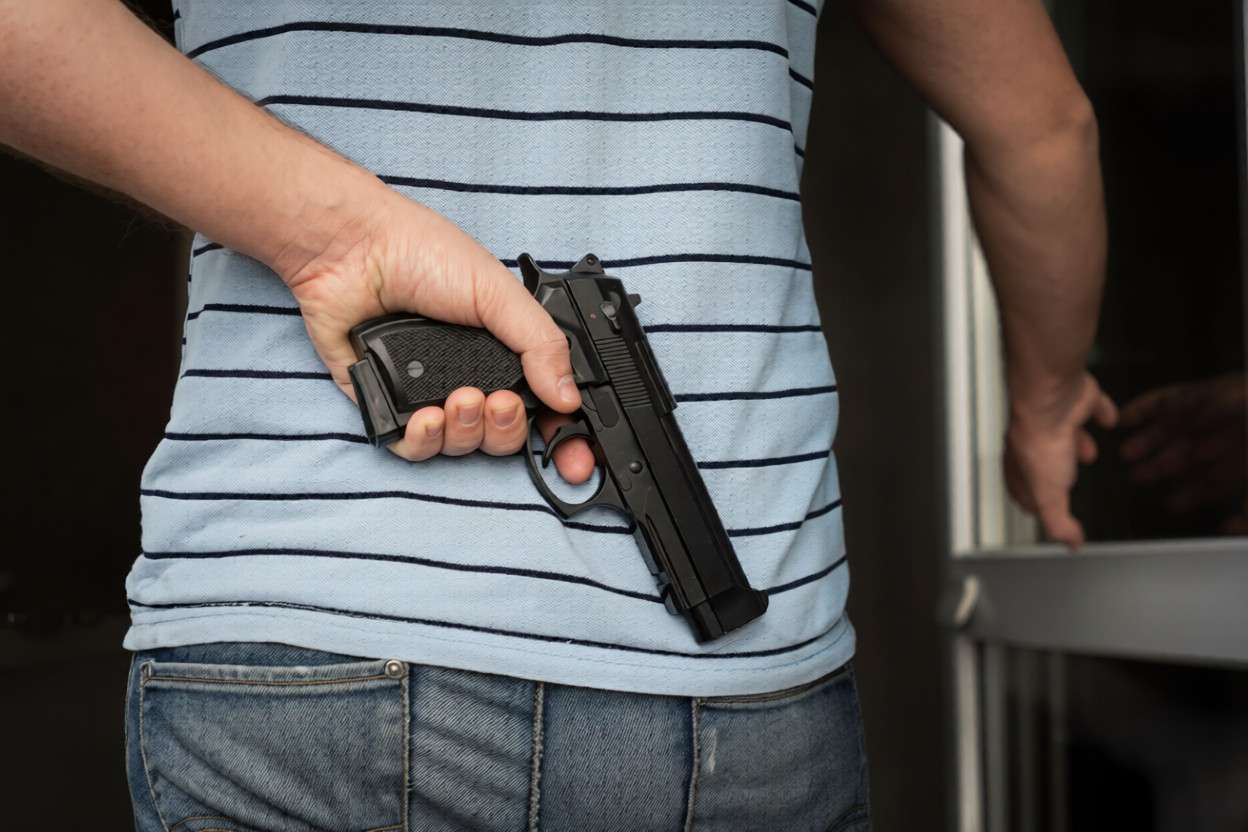
Drawing a firearm from a holster or waistband
Displaying a firearm in a threatening manner
Pointing a firearm at someone
Waving a firearm around in public
Flashing a firearm to intimidate
Pulling back clothing to reveal a firearm as a threat
Placing hand on visible firearm while making threats
Note: Simply lawfully carrying a visible firearm in a non-threatening manner is NOT brandishing under California law, particularly in jurisdictions where open carry is legal or when lawfully transporting firearms.
Penalties for Brandishing Under PC 417
Brandishing in Presence of Another Person (Not a Peace Officer):
Misdemeanor penalties (PC 417(a)(1)):
At least 30 days in county jail (mandatory minimum)
Up to 1 year in county jail (maximum)
Fine up to $1,000
Summary probation
Loss of firearm rights
Possible anger management or weapons education classes
Felony penalties when brandishing occurs:
In a public place (PC 417(c)): 16 months, 2, or 3 years in state prison
In a day care center with children present (PC 417(b)): 3, 4, or 5 years in state prison
Brandishing in Presence of Peace Officer (PC 417(c)): When you brandish any firearm in the presence of a peace officer engaged in their duties, knowing or reasonably should have known they were a peace officer:
16 months, 2, or 3 years in state prison
Always charged as felony
No option for misdemeanor reduction
Brandishing at Daycare Center (PC 417(b)): Brandishing deadly weapon on grounds of daycare or school with children present:
Minimum 3 months county jail
Up to 1 year county jail
Felony: 16 months, 2, or 3 years if firearm used
Enhanced penalties protecting children
Mandatory Minimum Jail Time: California law requires mandatory minimum 30 days county jail for brandishing convictions, though judges have discretion in some circumstances to suspend or reduce this requirement with strong mitigation.
Loss of Firearm Rights Under California Law
According to California Penal Code Section 29800 and related statutes, brandishing convictions result in loss of firearm rights:
10-Year Firearm Prohibition:
Any PC 417 conviction results in 10-year prohibition from owning, possessing, or purchasing firearms
Applies to misdemeanor and felony brandishing
California law enforced by Department of Justice
Lifetime Prohibition in Some Cases:
Felony brandishing convictions can result in lifetime prohibition
Surrender all firearms to law enforcement within specified timeframe
Sell firearms to licensed dealers
Transfer ownership to eligible persons
Face additional charges for illegal possession after conviction
Related Weapons Charges Often Filed with Brandishing
Assault with a Deadly Weapon (PC 245(a)(2)): If brandishing involves pointing firearm at someone with ability to inflict harm:
2, 3, or 4 years state prison
Strike under California’s Three Strikes Law
More serious than simple brandishing
Criminal Threats (PC 422): If brandishing accompanied by threats to kill or cause great bodily injury:
16 months, 2, or 3 years prison
Strike offense if charged as felony
Often charged together with brandishing
Carrying Loaded Firearm in Public (PC 25850): If you carried loaded firearm in public unlawfully:
Misdemeanor or felony wobbler
Up to 1 year jail (misdemeanor) or 16 months to 3 years prison (felony)
Carrying Concealed Firearm Without Permit (PC 25400): If firearm was concealed without CCW permit:
Misdemeanor carrying up to 1 year jail
Additional charges beyond brandishing
According to the California Department of Justice[2], California maintains strict firearm regulations including comprehensive background check systems and prohibited persons databases to enforce firearm possession restrictions.
Brandishing in Lancaster and the Antelope Valley
Lancaster, with a population of approximately 173,000 residents according to the U.S. Census Bureau[3], is the largest Antelope Valley city. Brandishing incidents occur throughout Lancaster in various contexts.
Common Scenarios Leading to Brandishing Arrests
Road Rage Incidents on Lancaster Streets: Many brandishing arrests occur during traffic disputes on:
State Route 14 during rush hour congestion
Avenue I corridor with heavy traffic
Lancaster Boulevard through downtown
Sierra Highway near shopping areas
10th Street West and 20th Street West arterials
Typical scenario: Drivers get into disputes over cutting off, tailgating, or perceived aggressive driving. One driver displays firearm to intimidate the other. Victim reports license plate, and Los Angeles County Sheriff’s deputies make arrest at defendant’s residence or traffic stop.
Disputes at Residences: Brandishing arrests occur at homes throughout Lancaster during:
Neighbor disputes over property boundaries, noise, parking
Landlord-tenant conflicts
Domestic disturbances
Disputes over shared driveways or common areas
Deputies respond to calls, interview witnesses, and make arrests based on allegations that someone displayed firearm threateningly.
Parking Lot Confrontations: Shopping centers including Lancaster Marketplace, retail stores along Avenue I, and parking areas throughout Lancaster see brandishing incidents during:
Parking space disputes
Shopping cart collisions
Verbal arguments escalating
Perceived threats from strangers
Business Disputes: Brandishing charges arise from conflicts at businesses when:
Customers become angry with employees
Disputes over services or payments
Disagreements escalating to displays of weapons
Security personnel confrontations
Self-Defense Situations Mischaracterized: Many brandishing cases involve lawful self-defense:
Displaying firearm to deter aggressive individuals
Showing firearm to prevent home invasion
Drawing weapon when facing multiple attackers
Exhibiting firearm during legitimate fear for safety
Law enforcement sometimes arrests defensive gun users based on complainant’s one-sided account without investigating defendant’s reasonable fear.
Gang-Related Allegations: In some Lancaster neighborhoods, brandishing charges involve allegations of:
Gang intimidation
Territorial displays
Threats to rivals
Gang enhancements adding years to sentences
False Accusations: Defendants are sometimes falsely accused of brandishing based on:
Revenge by ex-partners or enemies
Neighbors with ongoing disputes fabricating allegations
Mistaken identity in chaotic situations
Exaggerated accounts by biased witnesses
Retaliation for unrelated conflicts
How Los Angeles County Sheriff’s Deputies Handle Brandishing Cases
Lancaster Sheriff’s Station Response – The Los Angeles County Sheriff’s Department Lancaster Station, located at 501 West Lancaster Boulevard, investigates brandishing allegations through:
Immediate Response to 911 Calls:
Deputies dispatched to brandishing calls as priority
Suspects detained at scenes or tracked to residences
Witnesses interviewed separately
Firearms seized as evidence
Photographs of scenes and weapons
Arrests made based on probable cause
Evidence Collection:
Witness statements from complainants
Video surveillance from businesses, homes, traffic cameras
911 call recordings
Physical evidence including firearms
Photographs of locations
Traffic camera footage for road rage incidents
Booking and Charges: After arrest, suspects are transported to Lancaster Station for:
Booking and fingerprinting
Bail setting according to bail schedules
Firearm confiscation
Charges forwarded to prosecutors
Bail for brandishing typically ranges $25,000-$50,000 depending on circumstances, criminal history, and whether felony or misdemeanor charges filed.
Prosecution by Los Angeles County District Attorney: The Los Angeles County District Attorney’s Office[4] Antelope Valley Branch reviews cases and files charges based on:
CCW Permit Revocation: If you held California CCW permit:
Automatic revocation upon conviction
Ineligibility for future permits
No restoration after prohibition period
Permanent record affecting applications
Immigration Consequences
For non-citizens, brandishing convictions can trigger immigration problems. According to the U.S. Citizenship and Immigration Services[5], firearms offenses can affect immigration status:
Potential Immigration Consequences:
Deportation proceedings for non-citizens
Inadmissibility for green card applications
Denial of naturalization applications
Bars to visa renewals
Difficulty in adjustment of status
Mandatory detention in some cases
While simple brandishing may not automatically constitute aggravated felony or crime of moral turpitude, immigration judges have discretion and convictions can negatively impact cases.
Professional Licensing: State licensing boards discipline professionals:
Security guard licenses revoked
Private investigator licenses at risk
Real estate licenses affected
Professional licenses requiring background checks impacted
Military service members face discharge
Commercial driver’s licenses potentially affected
Other Collateral Consequences
Loss of Hunting and Sporting Rights:
Cannot possess firearms for hunting
Cannot participate in shooting sports
Cannot accompany hunters in field (constructive possession issues)
Outdoor recreation activities limited
Civil Liability: Victims can sue civilly for:
Assault and battery
Intentional infliction of emotional distress
Damages for trauma and fear
Attorney’s fees
Civil judgments independent of criminal cases
Protective Orders: Courts can issue protective orders prohibiting:
Contact with victims
Presence at certain locations
Owning or possessing weapons
Social Stigma: Weapons convictions carry stigma:
Perception as violent or dangerous
Difficulty in relationships
Community reputation damage
Loss of trust from family and friends
Defenses to Brandishing Charges
Brandishing charges can be defended through various strategies depending on case-specific facts and circumstances.
Self-Defense and Defense of Others
California law allows displaying firearms in lawful self-defense. Under California Penal Code Section 417 and self-defense principles, you can show a firearm when:
Reasonable Fear of Imminent Harm: Self-defense applies when:
You reasonably believed you or others faced imminent danger of being unlawfully touched, suffering bodily injury, or being killed
You reasonably believed immediate display of firearm was necessary to defend against danger
You displayed no more force than reasonably necessary
Your actions were proportional to threat
Evidence Supporting Self-Defense: We establish self-defense through:
Witness testimony supporting your reasonable fear
Evidence of aggressor’s violent history
Physical evidence showing threat level
Your injuries or defensive wounds
Recordings or surveillance showing threat
Expert testimony on reasonable force
Your credible testimony explaining fear
California Castle Doctrine: Enhanced self-defense rights in your home:
No duty to retreat from own residence
Presumption of reasonable fear during home invasions
Greater latitude to display weapons defensively
Protection of curtilage (property immediately surrounding home)
Lack of Threatening Manner
PC 417 requires displaying weapon in “rude, angry, or threatening manner.” We defend by showing:
Lawful Display:
You were lawfully carrying firearm openly (where legal)
Display was not threatening in context
No angry or rude manner
Firearm visible incidentally, not intentionally displayed
Lawful transportation of firearm
Adjusting firearm in holster without threatening intent
Context and Circumstances:
Situation didn’t involve confrontation
You were on your own property
Display was brief or accidental
No verbal threats accompanied display
Witnesses misinterpreted innocent conduct
No Intent to Intimidate
We demonstrate:
Display was accidental (shirt rode up revealing holstered gun)
You were adjusting firearm for safety or comfort
You were showing firearm to friend in lawful context
Display was inadvertent without knowledge others present
No intent to threaten or intimidate anyone
False Accusations
False brandishing accusations occur frequently due to:
Revenge by ex-partners, ex-spouses, or enemies
Disputes with neighbors, family members, or acquaintances
Road rage incidents where complainant makes false report
Mistaken identity or misidentification
Mental illness or instability of accuser
Ulterior motives including lawsuits, custody disputes
We defend by:
Exposing accuser’s motives and credibility issues
Demonstrating inconsistencies in accuser’s statements
Presenting witnesses contradicting accusations
Showing bias, prejudice, or mental health issues
Proving physical impossibility or alibi
Establishing pattern of false allegations by accuser
Insufficient Evidence
Prosecution must prove guilt beyond reasonable doubt. We challenge insufficient evidence by:
Lack of Corroboration:
Only accuser’s word with no witnesses
No physical evidence of brandishing
No video or photographic evidence
Conflicting witness accounts
Lack of 911 call or contemporaneous report
Reasonable Doubt:
Gaps in prosecution’s evidence
Alternative explanations for events
Lack of proof firearm was displayed
Uncertainty about who displayed weapon
Credibility problems with prosecution witnesses
Violation of Constitutional Rights
We challenge cases involving:
Fourth Amendment Violations:
Illegal search of vehicle or person revealing firearm
Unlawful detention or arrest
Search without probable cause or warrant
Firearm seized in violation of rights
Fifth Amendment Violations:
Statements obtained without Miranda warnings
Coerced confessions
Denial of right to remain silent
Successful suppression motions excluding illegally obtained evidence often result in dismissals when prosecution loses critical evidence.
Mistake of Fact
Honest and reasonable mistakes negate criminal intent:
You didn’t realize firearm was visible
You believed you were in private space
You reasonably thought person was threatening you
Mistaken belief about self-defense necessity
No Display of Firearm
We prove no brandishing occurred by:
Accuser never actually saw firearm
Accuser assumed you had firearm without seeing it
You never possessed or displayed firearm
Mistaken identity—someone else displayed weapon
No evidence you actually exhibited firearm
The Criminal Justice Process for Brandishing Cases
Arrest and Booking
After brandishing arrest, you’re transported to Lancaster Sheriff’s Station for:
Booking and fingerprinting
Bail setting ($25,000-$50,000 typically)
Firearm confiscation as evidence
Criminal history check
Holding until bail posted or arraignment
Arraignment
First court appearance at Antelope Valley Courthouse (42011 4th Street West, Lancaster) where:
You’re formally advised of charges
Receive complaint
Enter plea (typically not guilty)
Bail reviewed and conditions set
Future court dates scheduled
Possibility of protective orders
We strongly recommend attorney representation at arraignment to protect rights and begin building defense immediately.
Pretrial Proceedings
Discovery: We obtain prosecution evidence including:
Police reports from all officers
911 call recordings
Witness statements
Photographs of scenes and weapons
Video surveillance from businesses or traffic cameras
Body camera and dashcam footage
Your statements to police
Forensic analysis of firearms
Investigation: We conduct independent investigation:
Interview defense witnesses
Obtain surveillance video from additional sources
Photograph locations and sight lines
Investigate accuser’s background and credibility
Review medical records if self-defense claimed
Consult with firearms experts
Gather character references
Motion Practice: We file motions to:
Suppress illegally obtained evidence
Dismiss charges based on insufficient evidence
Exclude unreliable testimony
Obtain discovery from prosecution
Challenge search warrants
Strike prior convictions
Negotiations: We negotiate with prosecutors seeking:
Complete dismissal based on self-defense or false accusations
Reduction from felony to misdemeanor
Reduction to lesser weapons charges
Alternative sentencing avoiding jail
Diversion programs (rare for weapons cases but possible)
Trial
If cases proceed to trial, we provide aggressive representation:
Jury Selection: Selecting jurors who:
Respect Second Amendment rights
Understand self-defense principles
Can objectively evaluate witnesses
Won’t automatically believe accusers
Opening Statements: Framing defense including self-defense, false accusations, or lack of threatening manner.
Cross-Examination: Aggressively cross-examining:
Complaining witnesses to expose bias, inconsistencies, motives
Police officers regarding investigation quality and procedure
Expert witnesses regarding forensics or evidence
Defense Case: Presenting:
Your testimony explaining events
Witnesses supporting your account
Expert testimony on self-defense, firearms, or use of force
Character witnesses attesting to your peaceful nature
Video or physical evidence supporting defense
Closing Arguments: Emphasizing reasonable doubt, self-defense justification, or false accusations.
Sentencing
If convictions occur, we present mitigation seeking:
Minimum sentences within statutory ranges
Probation instead of jail (for misdemeanors)
Alternative sentencing including classes, community service
No jail time with strong mitigation
Recommendations protecting employment
Structured sentences allowing work release
Mitigation includes:
Character letters from family, employers, community
Evidence of stable employment and family ties
Military service or community contributions
Lack of criminal history
Evidence of rehabilitation
Completion of anger management or weapons safety classes before sentencing
Firearm Return and Restoration of Rights
Getting Firearms Returned
When charges are dismissed or you’re acquitted:
Firearms should be returned
File petition for return of property
Law enforcement sometimes delays returns
We expedite return process
Restoration of Gun Rights After Conviction
After 10-year prohibition expires:
Rights may be restored
File petitions for restoration
Demonstrate rehabilitation
Legal process required
Diversion and Alternative Sentencing
While diversion programs are rare for brandishing, some alternatives exist:
Military Diversion (PC 1001.80): For veterans and active military with PTSD or service-related trauma:
Mental health treatment
Charges dismissed upon completion
Mental Health Diversion (PC 1001.36): For defendants with diagnosed mental disorders:
Treatment instead of prosecution
Charges dismissed after successful completion
Deferred Entry of Judgment: Sometimes available for first-time offenders:
Plead guilty but judgment deferred
Complete probation successfully
Guilty plea withdrawn, case dismissed
Frequently Asked Questions
Will I lose my gun rights forever?
Most brandishing convictions result in minimum 10-year prohibition. Felonies can trigger lifetime bans. After prohibition expires, you may petition for restoration though process is complex.
Can I get charges dismissed?
Yes. We achieve dismissals regularly through proving self-defense, false accusations, insufficient evidence, or illegal searches. Early attorney involvement is critical.
What if I was defending myself?
Self-defense is complete defense to brandishing. If you reasonably feared harm and displayed firearm defensively without excessive force, you should be acquitted. We present evidence establishing your reasonable fear.
What if the accuser is lying?
False accusations are common in brandishing cases. We expose accusers’ motives, biases, and credibility problems through investigation and cross-examination.
Can brandishing be reduced to lesser charge?
Sometimes. We negotiate reductions to disturbing the peace (PC 415) or other non-weapons offenses, protecting your gun rights. Success depends on evidence and mitigation.
Will I go to jail?
Possibly. Misdemeanor brandishing carries mandatory 30-day minimum jail, though judges can suspend in some cases. First-time offenders with strong mitigation sometimes avoid jail. Felony brandishing typically results in custody.
What about my CCW permit?
CCW permits are automatically revoked upon conviction. You become ineligible for future permits. This makes fighting charges absolutely critical for CCW holders.
Can I still hunt or target shoot?
Not during 10-year prohibition. You cannot possess firearms for any purpose including hunting or sport shooting.
What if I displayed firearm accidentally?
Accidental display without threatening manner isn’t brandishing. We present evidence showing display was inadvertent without intent to intimidate.
How does this affect non-citizens?
Weapons offenses can trigger immigration consequences including deportation. We coordinate with immigration attorneys to minimize impact when possible.
Why Choose Tu Defensor Criminalista
Extensive Weapons Defense Experience – We’ve defended hundreds of brandishing and weapons cases, protecting clients’ gun rights and freedom.
Understanding of Self-Defense Law – We thoroughly understand California self-defense principles and effectively present self-defense claims.
Protecting Second Amendment Rights – We’re committed to protecting your constitutional right to bear arms and defend yourself.
Local Lancaster Knowledge – We regularly appear at Antelope Valley Courthouse and understand local judges, prosecutors, and procedures.
Aggressive Trial Advocacy – We’re experienced trial attorneys who’ve won numerous brandishing trials through effective cross-examination and defense presentation.
Thorough Investigation – We conduct exhaustive investigations including witness interviews, video review, and expert consultations.
Bilingual Services – We provide fluent Spanish-language services. Hablamos Español.
Available 24/7 – Brandishing arrests happen any time. We’re available immediately to protect your rights.
Take Action Immediately
Brandishing charges threaten your freedom and gun rights. Time is critical.
Don’t make statements to police without attorney present. Exercise your right to remain silent and request an attorney immediately. Statements about self-defense can be twisted against you.
Don’t consent to searches. Politely refuse searches of your vehicle, home, or person without warrants.
Don’t wait to hire an attorney. Early intervention preserves evidence, protects rights, and maximizes your chances for favorable outcomes including dismissals or acquittals.
Don’t assume conviction is inevitable. Many brandishing cases are successfully defended through self-defense, false accusations, or insufficient evidence.
Contact Tu Defensor Criminalista today for immediate assistance with brandishing charges. We’re available 24/7 to provide free consultations, protect your rights, and fight to preserve your freedom and gun rights.
Your freedom, your gun rights, and your future are worth fighting for. Don’t face brandishing charges alone. Call Tu Defensor Criminalista now at (888) 315-3326—we’re available 24/7 to help you. Every moment counts in protecting your Second Amendment rights and your freedom.
Citations and Sources
California Legislative Information – Penal Code Section 417 and related firearms statutes https://leginfo.legislature.ca.gov/[1]
California Department of Justice – Firearms regulations and prohibited persons information https://oag.ca.gov/[2]
U.S. Census Bureau – Lancaster, California demographics and population data https://www.census.gov/quickfacts/lancastercitycalifornia[3]
Los Angeles County District Attorney’s Office – Prosecution policies and information https://da.lacounty.gov/[4]
U.S. Citizenship and Immigration Services – Immigration consequences of criminal convictions https://www.uscis.gov/[5]
Attorney Armando Josué Cespedes is rated 5.0 on Avvo, with 34 five-star reviews from clients praising his dedication, professionalism, and results. Many note how his trial skills and attention to detail led to reduced charges or outright dismissals.
I was arrested for a DUI just recently, since Spanish is my first language, it was important to find a great attorney who was bilingual. Getting your first DUI can...
Armando cespedes went above and beyond for my case. I was very close to getting my license revoked as I am under the age of 21 and received my second...
I was referred to Mr. Cespedes by a family friend who was very pleased with his legal services. Unfortunately, I got a DUI a few months ago and I was...
Armando gets results with your best interest in mind. I was wrongfully being accused of making primal threats. Even though I was innocent, I was aware that the accusations are...
Extremely professional I recently had a brief phone consultation with Mr. Cespedes regarding a longtime friend of mine. Although he was unable to assist him with his legal needs, I...



 English
 Español de México
