Arrested for brandishing a firearm in Long Beach? You’re facing serious criminal charges under California Penal Code § 417 that can result in county jail or state prison time, permanent criminal record, loss of firearm rights, immigration consequences, and devastating impact on your employment, professional licenses, and future. California prosecutes brandishing weapons charges aggressively—even lawful gun owners acting in self-defense or making innocent gestures can face felony charges, mandatory minimum jail sentences, and lifetime firearm prohibitions.
Attorney Armando Josué Cespedes provides aggressive brandishing a firearm defense throughout Long Beach and Los Angeles County—Long Beach, Downey, Lakewood, Signal Hill, Bellflower, Cerritos, Hawaiian Gardens, Paramount, Norwalk, and every community in the greater Long Beach area. With a perfect 5.0 Avvo rating backed by 34 five-star client reviews and three consecutive Client’s Choice Awards (2023, 2024, 2025), we bring proven expertise to your defense when your freedom and gun rights are on the line.
Many brandishing arrests in Long Beach result from lawful self-defense situations mischaracterized by police, overreactions by alleged victims, mutual combat where both parties displayed weapons, or situations where you never actually brandished a firearm. We aggressively challenge every brandishing charge—presenting self-defense evidence, demonstrating lack of intent, proving no weapon was displayed, and fighting for dismissals, reductions, and acquittals.
Free Confidential Consultation: (888) 315-3326 | Available 24/7 | Hablamos Español
Understanding California’s Brandishing a Firearm Law
Penal Code § 417 – Brandishing a Weapon or Firearm
Legal Definition:
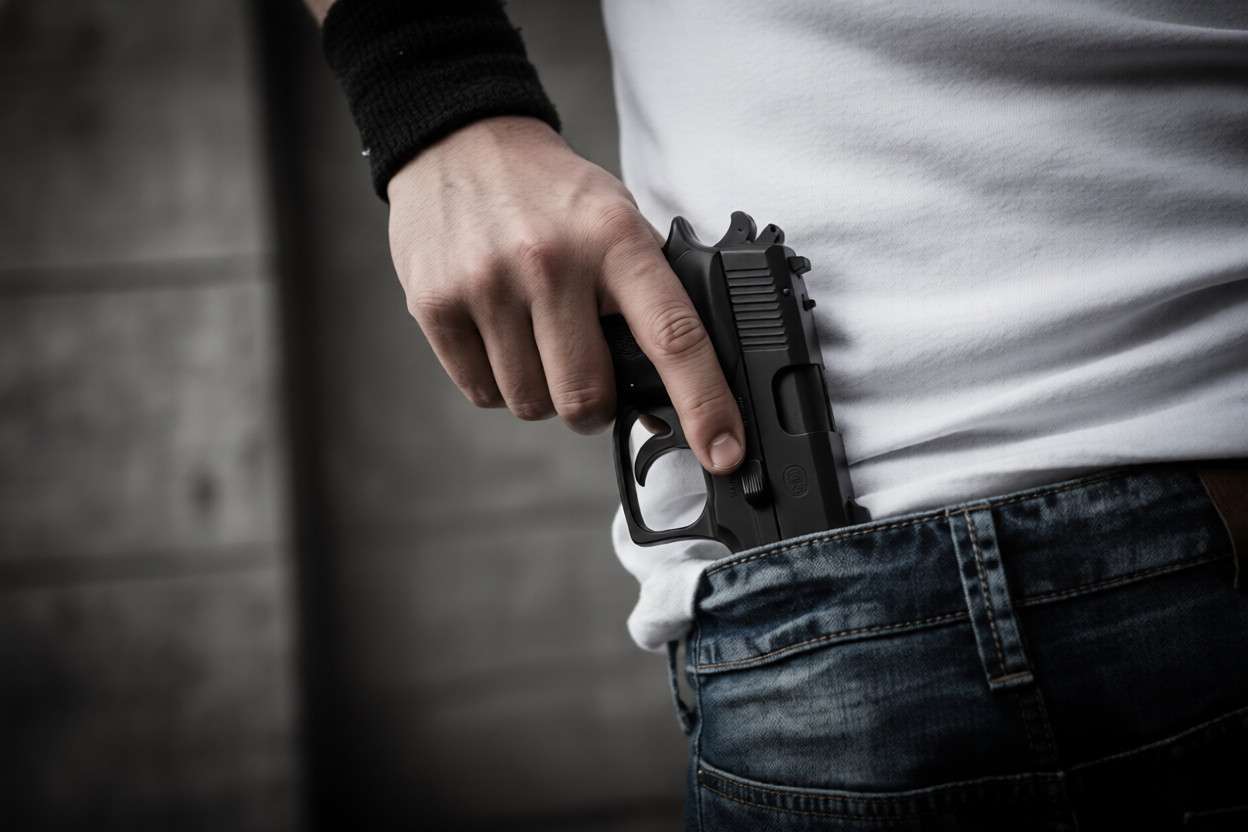
California Penal Code § 417 makes it crime to draw or exhibit deadly weapon or firearm in rude, angry, or threatening manner, or to unlawfully use weapon or firearm in fight or quarrel.
Elements Prosecution Must Prove:
To convict you of brandishing a firearm under PC § 417(a)(2), prosecution must prove beyond reasonable doubt:
You drew or exhibited a firearm
You did so in the presence of another person
You drew or exhibited the firearm in a rude, angry, or threatening manner, OR you used the firearm unlawfully in a fight or quarrel
You were not acting in self-defense or defense of another person
“Firearm” Defined:
Under California law, “firearm” includes:
Handguns (pistols, revolvers)
Rifles
Shotguns
Any device designed to be used as weapon from which projectile is expelled through barrel by force of explosion or combustion
“Drew or Exhibited” Means:
Removing firearm from holster, waistband, vehicle, or concealed location
Displaying firearm that was previously concealed
Showing firearm in manner intended to be seen by others
Lifting shirt to reveal firearm in waistband
Pointing firearm at someone
Waving firearm in threatening manner
Critical: You don’t have to point firearm directly at someone to be guilty of brandishing. Simply displaying it in rude, angry, or threatening manner is sufficient.
“Rude, Angry, or Threatening Manner” Means:
Displaying firearm in way that would cause reasonable person to feel fear or intimidation
Angry display during argument or confrontation
Threatening gesture with firearm
Using firearm to intimidate or coerce
Types of Brandishing Charges and Penalties
PC § 417(a)(2)(A) – Brandishing a Firearm (Not in Self-Defense):
Basic Offense:
Misdemeanor
County jail: 3 months minimum, up to 1 year maximum
Fines: Up to $1,000
Probation possible (with mandatory minimum 3 months jail)
PC § 417(a)(2)(B) – Brandishing Firearm in Public Place:
If brandishing occurred in public place or on public street:
Misdemeanor
County jail: Minimum 3 months, maximum 1 year
Fines: Up to $1,000
Mandatory minimum cannot be reduced or suspended
PC § 417(c) – Brandishing Firearm in Presence of Peace Officer:
If you brandished firearm in presence of peace officer engaged in lawful duties and you knew or reasonably should have known person was peace officer:
Felony or misdemeanor (wobbler)
Felony: 16 months, 2, or 3 years state prison
Misdemeanor: County jail minimum 9 months, maximum 1 year
Fines: Up to $1,000
PC § 417.4 – Brandishing Imitation Firearm:
Brandishing replica or imitation firearm in threatening manner:
Misdemeanor
County jail: Up to 6 months (no mandatory minimum)
Fines: Up to $1,000
PC § 417.3 – Brandishing Laser Scope or Laser Pointer:
Aiming laser scope or laser pointer at peace officer:
Misdemeanor
County jail: Up to 6 months
Fines: Up to $1,000
Enhanced Penalties and Aggravating Circumstances
Multiple Violations:
Second or subsequent conviction for brandishing within 7 years:
County jail: Minimum 3 months (if misdemeanor)
State prison: 16 months, 2, or 3 years (if felony)
Brandishing During Commission of Other Crimes:
If brandishing occurs during robbery, assault, kidnapping, or other felony:
Separate brandishing charge plus underlying felony
Sentences may run consecutively
Firearm use enhancements (PC § 12022.5) may apply adding 3-10 years
Gang-Related Brandishing:
If brandishing committed for benefit of criminal street gang:
Gang enhancement (PC § 186.22) adds 2-4 years prison
Mandatory prison time
Brandishing at School or Daycare:
Brandishing within 1,000 feet of school (PC § 626.9 Gun-Free School Zone):
Additional charges possible
Enhanced penalties
Firearm Prohibition Consequences
10-Year Firearm Ban:
Conviction for PC § 417 brandishing results in 10-year prohibition on owning, purchasing, or possessing firearms under California Penal Code § 29805.
Immediate Consequences:
Must surrender all firearms within time specified by court
Cannot purchase firearms for 10 years
Cannot possess firearms in home even if owned by family member
Violation of prohibition is new felony (PC § 29800)
Lifetime Federal Prohibition (If Domestic Violence Involved):
If brandishing occurred during domestic dispute and charged as domestic violence offense:
Federal lifetime firearm ban under 18 U.S.C. § 922(g)(9)
Applies to misdemeanor domestic violence convictions
Federal felony (up to 10 years prison) to possess firearm
Professional and Employment Consequences
Background Checks:
Brandishing conviction appears on all criminal background checks
“Firearm offense” and “threatening with weapon” extremely damaging
Employers see violent/weapons offense
Job Impact:
Law enforcement careers impossible
Security positions requiring firearm disqualified
Armed security guard licenses revoked
Military service affected
Government employment impacted
Professional licenses reviewed (doctors, nurses, attorneys, teachers)
Any position requiring trust or firearm access denied
Professional Licenses:
According to California Department of Consumer Affairs licensing boards[1], weapons offenses trigger discipline proceedings:
Medical licenses reviewed by Medical Board
Nursing licenses reviewed by Board of Registered Nursing
Teaching credentials reviewed by Commission on Teacher Credentialing
Real estate licenses, attorney licenses subject to discipline
Immigration Consequences
According to U.S. Citizenship and Immigration Services[2], brandishing convictions can trigger immigration consequences:
Crimes of Moral Turpitude:
Brandishing may be classified as crime involving moral turpitude
Can trigger deportability for non-citizens
Affects green card applications and renewals
Firearm Offenses:
Federal immigration law treats firearm offenses seriously
Can create inadmissibility
Affects naturalization applications
Aggravated Felonies:
If brandishing charged as felony with sentence of 1 year or more, may constitute aggravated felony
Mandatory deportation
Permanent bar from re-entry
Critical for Non-Citizens: Must coordinate criminal defense with immigration attorney to structure plea avoiding deportation triggers.
Long Beach Brandishing Statistics and Enforcement
According to the California Department of Justice crime statistics[3], weapons offenses including brandishing remain significant enforcement priority:
Statewide Data:
Thousands of brandishing arrests annually in California
Los Angeles County accounts for substantial portion of brandishing cases
Conviction rates high (approximately 70-80% of prosecuted cases)
Long Beach Police Department Enforcement:
According to Long Beach Police Department reports[4], the city maintains aggressive weapons enforcement:
Long Beach PD responds to hundreds of “person with gun” calls annually
Brandishing investigations prioritized as threats to public safety
Gang Enforcement Section targets brandishing in gang-related incidents
Downtown Long Beach, certain neighborhoods experience higher brandishing reports
Common Long Beach Brandishing Scenarios:
Road rage incidents on I-405, I-710, Pacific Coast Highway where driver displays firearm
Arguments in parking lots (retail areas, Long Beach Town Center, Pike Outlets) escalating to weapon display
Bar fights where patron displays firearm (downtown Long Beach, Belmont Shore)
Domestic disputes where firearm displayed during argument
Neighbor disputes in residential areas escalating to brandishing
Self-defense situations where homeowner displays firearm to ward off intruders
Gang confrontations where weapons displayed
Accidental displays where firearm falls from holster or vehicle
The Brandishing Arrest Process in Long Beach
Stage 1: The Incident and Police Response
What Happens:
Brandishing Reported:
Alleged victim or witness calls 911
Reports person with gun, weapon displayed, threatened with firearm
Long Beach Police Department dispatched (Code 3 priority—lights and sirens)
Multiple officers respond
Police Arrival:
Officers treat as high-risk “man with gun” call
Guns drawn, officers approach tactically
You ordered to ground, hands visible
Handcuffed immediately (officer safety)
Firearm located and seized
Miranda warnings given (if custodial interrogation)
Witness Interviews:
Alleged victim interviewed (describes what happened)
Witnesses interviewed separately
Officers document statements
Scene photographed
Surveillance video obtained if available
Your Critical Rights:
DO NOT SPEAK TO POLICE:
“I want to speak with my attorney”
“I’m invoking my Fifth Amendment right to remain silent”
Then remain completely silent
Do NOT explain what happened
Do NOT admit you displayed firearm
Do NOT describe circumstances even if self-defense
Why Silence is Critical:
Anything you say will be used against you
Police are building case against you
“Helpful” explanations become prosecution evidence
Self-defense claims best presented through attorney
Transported to Long Beach Police Department or Los Angeles County jail
Firearm Seizure:
Firearm seized as evidence
Held pending criminal proceedings
If convicted, may be forfeited
If registered to you, must petition for return after case resolved
Booking:
Fingerprints, photographs, personal property inventory
Criminal history check
Firearm registration checked
Held in custody pending arraignment or bail
Bail:
Typical Bail Amounts Los Angeles County:
PC § 417 brandishing misdemeanor: $5,000-$25,000
PC § 417(c) brandishing on peace officer felony: $50,000-$100,000
Higher if combined with assault, criminal threats, or during commission of other crime
Bail Options:
Cash bail (full amount)
Bail bondsman (10% non-refundable fee)
Own recognizance (OR) release if minor charge, no priors
Bail reduction hearing
Stage 3: Arraignment in Long Beach Court
Long Beach Courthouse:
Los Angeles County Superior Court – Long Beach Courthouse 275 Magnolia Avenue Long Beach, CA 90802 Phone: (562) 491-6230
Arraignment (Within 48 Hours if in Custody):
What Happens:
First court appearance
Judge reads charges
Constitutional rights explained
Bail reviewed
Public defender appointed if cannot afford attorney
Plea entered: Not Guilty
Future court dates set
Protective orders issued if victim requests (stay away orders)
Charges Filed:
Los Angeles County District Attorney files criminal complaint:
PC § 417(a)(2) brandishing a firearm
Possibly PC § 422 criminal threats if threats made
Possibly PC § 245 assault with deadly weapon if pointed at victim
Enhancements if applicable (prior convictions, gang allegations)
Stage 4: Pre-Trial Proceedings
Discovery:
We obtain all prosecution evidence:
Police reports and arrest narrative
Witness statements
911 call recordings
Body camera and dash camera footage
Photographs of scene
Firearm registration records
Surveillance video
Your statements (if any)
Our Investigation:
Interview all witnesses
Obtain surveillance video prosecution doesn’t have
Photograph scene to show distances, angles, visibility
Interview you thoroughly about circumstances
Gather evidence supporting self-defense
Investigate alleged victim’s credibility and history
Document threats against you justifying defensive display
Critical Pre-Trial Motions:
Motion to Suppress Evidence (PC § 1538.5):
Challenge illegal search or seizure:
Officers lacked probable cause for stop
Illegal search of vehicle or person
Coerced statements in violation of Miranda
If granted, firearm and statements suppressed—case may collapse
Pitchess Motion (Evidence Code §§ 1043-1045):
Obtain officer personnel records:
Prior complaints of false reports
Excessive force history
Dishonesty or misconduct
Use to impeach officer credibility
Motion to Dismiss:
Insufficient evidence
Victim/witnesses unreliable
Self-defense clearly established
Plea Negotiations:
We negotiate with Los Angeles County District Attorney:
Present self-defense evidence
Challenge identification and witness credibility
Demonstrate lack of “rude, angry, or threatening manner”
Negotiate for:
Dismissal (if evidence weak or clear self-defense)
Reduction to PC § 417.4 (imitation firearm—no mandatory minimum, no firearm ban)
Reduction to disturbing the peace PC § 415 (no weapon offense, no firearm ban)
Misdemeanor with no jail time
Diversion programs (rare but possible for first offenders)
Stage 5: Trial or Resolution
If Case Goes to Trial:
Jury Trial (Misdemeanor) or Court Trial:
Jury Selection:
Exclude anti-gun jurors
Select jurors who understand self-defense rights
Identify jurors sympathetic to lawful gun ownership
Trial Process:
Prosecution Case:
Alleged victim testimony
Witness testimony describing brandishing
Police officer testimony
911 recordings
Photographs, surveillance video
Firearm evidence
Defense Case:
Your testimony (if strategically advisable)
Self-defense evidence
Witnesses supporting your version
Expert testimony (use of force expert, self-defense expert)
Evidence showing no “rude, angry, or threatening” display
Closing Arguments:
We create reasonable doubt
Emphasize self-defense justification
Challenge witness credibility
Argue display was not threatening or was lawful
Verdict:
Guilty or Not Guilty
If Not Guilty: Acquitted, firearm returned (if lawfully owned)
If Guilty: Sentencing hearing scheduled
If Case Resolves Through Plea:
Plead to negotiated charges
Sentencing hearing
Judge imposes sentence per agreement
Powerful Defenses to Brandishing Charges
1. Self-Defense or Defense of Others
Most Common and Powerful Defense:
California law provides complete defense if you displayed firearm in lawful self-defense or defense of another person.
Legal Standards for Self-Defense:
You’re not guilty of brandishing if:
You reasonably believed you or someone else was in imminent danger of suffering bodily injury or being unlawfully touched
You reasonably believed immediate display of firearm was necessary to defend against danger
You displayed firearm only to extent reasonably necessary
What We Prove:
Reasonable Fear:
Alleged victim was aggressor
Victim made threats (“I’m going to kill you,” “I’m going to beat you”)
Victim advancing toward you aggressively
Victim larger, stronger, or outnumbered you
Victim had reputation for violence
Prior incidents where victim attacked you
Reasonable Display:
You displayed but didn’t point firearm
You only showed firearm to deter attack
You didn’t threaten with firearm
Display immediately caused victim to back down
You didn’t use firearm unlawfully
Evidence Supporting Self-Defense:
Witness testimony victim was aggressor
Your injuries (if victim attacked first)
Prior threats by victim (texts, voicemails, witness testimony)
Surveillance video showing victim’s aggressive approach
911 calls you made reporting threats
Victim’s history of violence (prior convictions for assault, domestic violence)
Disparity in size, strength, numbers
You retreated before displaying weapon
Imperfect Self-Defense:
Even if you unreasonably believed you were in danger (but honestly believed it), imperfect self-defense may reduce charges or result in acquittal on brandishing (though possible conviction on lesser offense).
Result: If jury believes you acted in lawful self-defense, you must be acquitted.
2. No “Rude, Angry, or Threatening Manner”
Legal Requirement: Prosecution must prove you displayed firearm in rude, angry, or threatening manner.
What We Prove:
Display was calm, controlled, defensive
No threats made
No angry words or gestures
Simply revealed firearm to deter attack
Reasonable person would not have felt threatened
Examples:
Defensive Display:
You lifted shirt to show holstered firearm to deter aggressor
You calmly stated “I’m armed, please leave me alone”
You placed hand on holstered firearm as warning
Display was protective, not aggressive
Accidental Display:
Firearm accidentally fell from holster
Shirt rode up revealing firearm unintentionally
You bent over and firearm became visible
No intent to display in threatening manner
Evidence:
Witness testimony describing your calm demeanor
Video showing non-threatening display
Your statements at time showing defensive purpose
Lack of threatening words or gestures
Result: If display was not in rude, angry, or threatening manner, prosecution cannot prove essential element—not guilty.
3. You Did Not Actually Draw or Exhibit Firearm
Challenge Whether Brandishing Actually Occurred:
What We Prove:
You never displayed or drew firearm
Firearm remained concealed throughout incident
Alleged victim imagined or fabricated seeing firearm
You touched holster but didn’t reveal firearm
No one actually saw firearm
Common Scenarios:
False Accusation:
Alleged victim claims you displayed firearm but you didn’t
Victim lying for revenge, to win argument, or as tactic
No witnesses corroborate victim’s claim
No video evidence shows brandishing
Mistaken Belief:
You put hand on waistband or pocket
Victim assumed you had firearm but never saw one
Victim’s fear caused them to believe you displayed weapon
Concealed Throughout:
Firearm remained in holster, waistband, or vehicle
You never removed or revealed it
Police only found firearm during search after false report
Evidence:
No witnesses saw firearm
Surveillance video doesn’t show brandishing
You testified you never displayed firearm
Physical impossibility (firearm locked in trunk, at home)
Result: If no firearm was actually displayed, no brandishing occurred—not guilty.
4. Mistaken Identity
Someone Else Brandished Firearm, Not You:
What We Prove:
Witness misidentified you
Actual brandisher was someone else
You were present but didn’t brandish
Multiple people present, wrong person arrested
Evidence:
Alibi witnesses (you were elsewhere)
Surveillance video showing you didn’t brandish
Witness description doesn’t match you
Someone else admits to brandishing
Cell phone records, GPS data showing you elsewhere
Result: If prosecution cannot prove beyond reasonable doubt you brandished firearm, must acquit.
5. No Intent—Accident or Misunderstanding
Brandishing Requires Willful Act:
What We Prove:
Display was accidental
No intent to exhibit firearm threateningly
Innocent explanation for display
Examples:
Accidental:
Firearm fell from holster while bending over
Concealment garment shifted revealing firearm
Removed firearm from vehicle to secure it, victim misinterpreted
Innocent Display:
Showing firearm to friend in lawful manner
Moving firearm from one location to another
Cleaning or maintaining firearm
Victim misinterpreted innocent action
Evidence:
Your immediate explanation showing accident
Witness testimony corroborating accident
Circumstances showing no threatening intent
Result: No willful threatening display = not guilty.
6. False Accusation
Alleged Victim Lying:
Common Motivations for False Allegations:
Revenge after argument or breakup
Custody dispute tactics
To justify their own aggression
To gain advantage in civil lawsuit
Mental health issues, paranoia
Desire for victim status or sympathy
What We Prove:
Victim has motive to lie
Victim’s story inconsistent or changing
No corroborating evidence
Victim made prior false accusations
Physical evidence contradicts victim
Evidence:
Victim’s inconsistent statements to police vs. court
Text messages showing victim’s hostility or threats against you
Prior restraining orders or false accusations by victim
Witnesses contradicting victim
Lack of video or physical evidence supporting victim
Three consecutive Client’s Choice Awards (2023, 2024, 2025)
Numerous brandishing dismissals and acquittals
Clients’ firearm rights preserved
Bilingual Services
Complete Spanish Representation:
Full legal services in Spanish (Hablamos Español)
Serve Long Beach’s diverse Spanish-speaking community
Frequently Asked Questions
Can I claim self-defense if I brandished a firearm?
Yes. Self-defense is complete defense to brandishing charges. If you reasonably believed you were in imminent danger and displaying firearm was necessary to defend yourself, you’re not guilty. We present evidence of threats against you, alleged victim’s aggression, your fear, and reasonable nature of your defensive display. Many brandishing cases result in acquittals or dismissals when self-defense clearly established.
What if I never actually pointed the gun at anyone?
You can still be convicted of brandishing even if you didn’t point firearm directly at someone. Simply displaying firearm in rude, angry, or threatening manner is sufficient. However, this strengthens your defense—we argue display was not threatening, was defensive, or didn’t occur in manner prosecution must prove.
Will I definitely go to jail for brandishing?
Brandishing carries mandatory minimum 3 months county jail that cannot be suspended or reduced (for firearm in public place). However, with strong defense, we fight for dismissal, reduction to offense with no mandatory minimum (PC § 417.4 or PC § 415), or alternative sentencing. First-time offenders with strong defenses often avoid jail entirely.
Can brandishing charge be reduced to lesser offense?
Yes. Common reductions include: PC § 417.4 brandishing imitation firearm (no mandatory minimum, no firearm ban), PC § 415 disturbing the peace (no weapon offense), PC § 602 trespassing (if applicable), informal diversion with dismissal. We negotiate reductions by presenting self-defense evidence and challenging prosecution’s case.
What if alleged victim was threatening me first?
This is self-defense claim. If alleged victim threatened you, advanced aggressively, or attacked you, your display of firearm to protect yourself was lawful. We present evidence of victim’s threats, aggression, history of violence. Self-defense cases often result in dismissals or acquittals.
Will I lose my gun rights forever?
Brandishing conviction results in 10-year California firearm prohibition. After 10 years, rights restored. However, if charged as domestic violence offense, lifetime federal ban applies. This is why fighting conviction is critical. We work to avoid convictions causing firearm prohibitions, negotiate reductions to non-firearm offenses, or obtain dismissals.
What if police found gun during illegal search?
If police searched you, your vehicle, or property illegally (without warrant, probable cause, or valid consent), firearm evidence must be suppressed. We file Motion to Suppress Evidence under PC § 1538.5. If granted, prosecution cannot use firearm as evidence—case typically dismissed. Fourth Amendment violations common in brandishing cases.
Can I get my gun back if acquitted?
Yes. If acquitted or charges dismissed and you lawfully own firearm, you can petition court for return. Process requires court order and can take weeks or months. If convicted, firearm typically forfeited. If prohibited person, cannot have firearm returned.
What if it was accident and I didn’t mean to display gun?
Brandishing requires willful act. If display was accidental (firearm fell from holster, concealment garment shifted, innocent action misinterpreted), you’re not guilty. We present evidence showing accident, lack of threatening intent, innocent explanation. Accident cases often result in dismissals or acquittals.
What if I’m not a U.S. citizen?
Brandishing conviction can trigger immigration consequences including deportability if classified as crime of moral turpitude or firearm offense. We coordinate with immigration attorney to structure plea avoiding deportation triggers. Never plead guilty without understanding immigration impact. We fight for dismissals or reductions that don’t affect immigration status.
Contact Tu Defensor Criminalista for Long Beach Brandishing Defense
Being arrested for brandishing a firearm is serious—facing mandatory jail time, 10-year firearm prohibition, criminal record affecting employment and rights. Whether you acted in self-defense, were falsely accused, or situation was misunderstood, you need immediate, aggressive legal representation.
Many brandishing cases result from lawful self-defense mischaracterized by police. Don’t let wrongful conviction destroy your freedom and gun rights.
Speak directly with Attorney Armando Josué Cespedes about your Long Beach brandishing arrest. Your consultation is completely free and confidential. We’re available 24 hours a day, 7 days a week.
Long Beach | Downey | Lakewood | Signal Hill | Bellflower | Cerritos | Hawaiian Gardens | Paramount | Norwalk | Carson | All Los Angeles County Communities
Critical Action Items:
Remain completely silent—invoke Fifth Amendment rights
Do NOT explain circumstances to police—even self-defense explanations used against you
Request attorney immediately
Do NOT consent to searches
Contact attorney before making any statements
Why Act Immediately:
Self-defense evidence must be gathered quickly
Witnesses must be interviewed immediately
Surveillance video may be erased
Early investigation strengthens defense
Your freedom and gun rights depend on aggressive defense from day one
Attorney Armando Josué Cespedes is rated 5.0 on Avvo, with 34 five-star reviews from clients praising his dedication, professionalism, and results. Many note how his trial skills and attention to detail led to reduced charges or outright dismissals.
I was arrested for a DUI just recently, since Spanish is my first language, it was important to find a great attorney who was bilingual. Getting your first DUI can...
Armando cespedes went above and beyond for my case. I was very close to getting my license revoked as I am under the age of 21 and received my second...
I was referred to Mr. Cespedes by a family friend who was very pleased with his legal services. Unfortunately, I got a DUI a few months ago and I was...
Armando gets results with your best interest in mind. I was wrongfully being accused of making primal threats. Even though I was innocent, I was aware that the accusations are...
Extremely professional I recently had a brief phone consultation with Mr. Cespedes regarding a longtime friend of mine. Although he was unable to assist him with his legal needs, I...



 English
 Español de México
