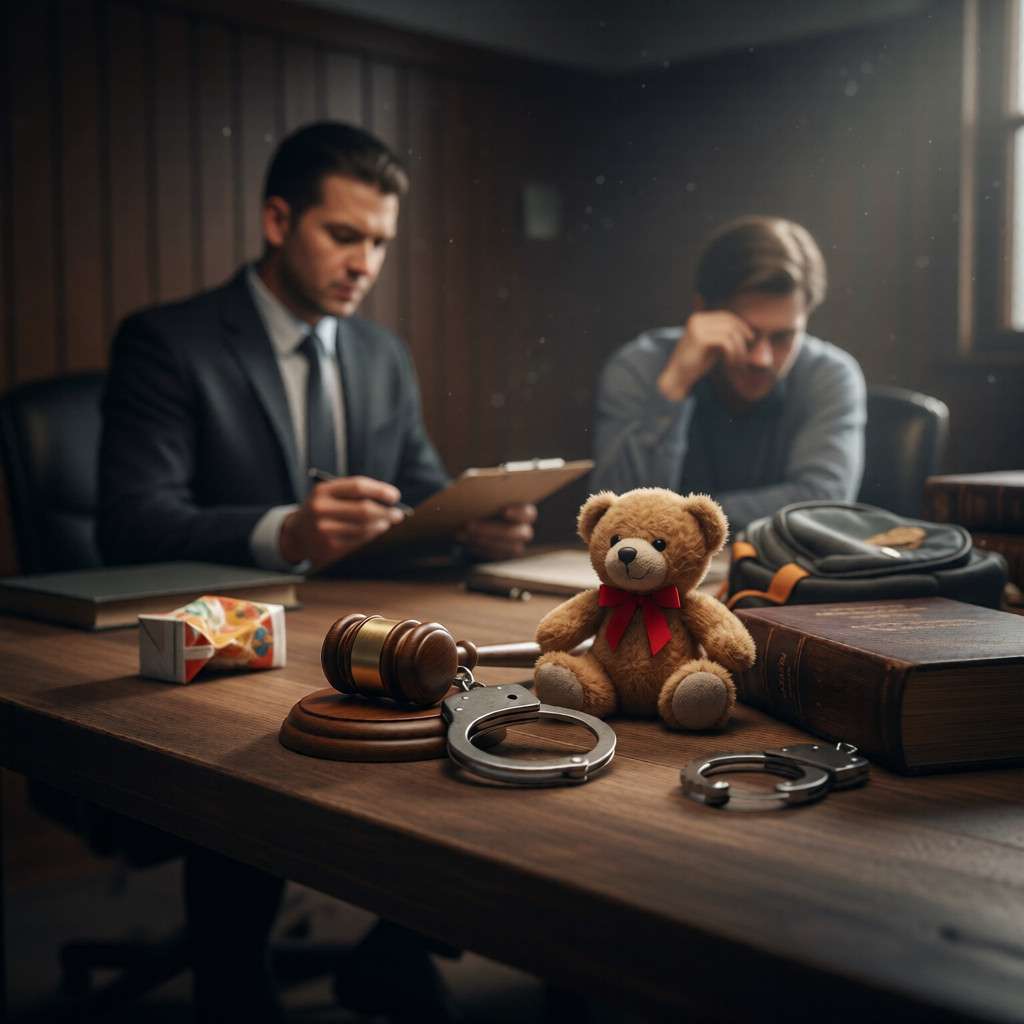
When you’re facing DUI with child endangerment allegations in Long Beach, California, the consequences extend far beyond a standard DUI case. These charges threaten your freedom, your parental rights, your professional reputation, and your future. The stakes are immeasurably high when a child’s welfare is involved in your case, and the legal system shows little mercy to those accused of endangering children while driving under the influence.
At Tu Defensor Criminalista, we understand that good people make mistakes, and that a single lapse in judgment should not define the rest of your life. Our experienced criminal defense attorneys have dedicated their practice to protecting the rights of individuals throughout Long Beach and Los Angeles County who are facing serious DUI charges, including the enhanced penalties that come with having a minor child in the vehicle at the time of arrest.
If you or a loved one has been arrested for DUI with a child in the car, time is of the essence. Contact Tu Defensor Criminalista today for a confidential consultation. Visit us at tudefensorcriminalista.com or call our office immediately to discuss your case.
In California, driving under the influence is already a serious offense, but when a child under the age of 14 is present in the vehicle, the charges—and potential penalties—become significantly more severe. According to the California Office of Traffic Safety[1], DUI remains one of the most dangerous and preventable causes of traffic fatalities in the state. In 2023, approximately one-third of all traffic deaths in California involved alcohol-impaired driving, accounting for over 1,355 fatalities statewide.
DUI with child endangerment is prosecuted under two primary statutes:
California Vehicle Code Section 23572: This section provides mandatory sentencing enhancements when a person is convicted of DUI (Vehicle Code Section 23152) and had a child under 14 years old in the vehicle at the time. The California Vehicle Code[2] requires additional jail time on top of standard DUI penalties:
These enhancements cannot be waived, stayed, or converted to community service, even if you are granted probation.
California Penal Code Section 273a: Separately, prosecutors may also charge you with child endangerment under this statute. According to the California Penal Code[3], this crime involves willfully causing or permitting a child under 18 to suffer unjustifiable physical pain or mental suffering, or allowing the child to be placed in a dangerous situation. This charge can be filed as either a misdemeanor or a felony:
The decision to charge a defendant with misdemeanor or felony child endangerment depends on whether the circumstances were “likely to produce great bodily harm or death.”
Long Beach is California’s seventh-largest city and sits within Los Angeles County, one of the most heavily prosecuted jurisdictions in the United States. The Long Beach Police Department[4] actively enforces DUI laws through regular sobriety checkpoints, saturation patrols, and targeted enforcement efforts funded by the California Office of Traffic Safety.
Recent checkpoint data from Long Beach illustrates the intensity of local DUI enforcement:
These checkpoints serve both enforcement and deterrent functions, and Long Beach prosecutors are aggressive in pursuing DUI charges, particularly when children are involved.
Most DUI cases in Long Beach are heard at the Governor George Deukmejian Courthouse, located at 275 Magnolia Avenue. This courthouse is part of the Los Angeles County Superior Court[5] system and handles thousands of criminal cases each year. Misdemeanor DUI cases are typically heard in Divisions 6, 7, and 8, while felony cases—including those involving injury or repeat offenses—may be assigned to other divisions.
Local prosecutors in Long Beach are known for taking a hard line on DUI with child endangerment cases, often seeking maximum penalties and jail time. This makes experienced, local legal representation absolutely essential.
The penalties for DUI with child endangerment in Long Beach are severe and multifaceted. Beyond the mandatory jail enhancements under Vehicle Code 23572, you may face:
For a First-Time DUI with a Child:
For Repeat Offenses: The penalties escalate dramatically. A second DUI with a child requires 10 additional days in jail, a third requires 30 additional days, and a fourth or subsequent offense requires 90 additional days—all mandatory and consecutive to any other jail time imposed.
If you are also convicted of felony child endangerment under Penal Code 273a(a), you face 2, 4, or 6 years in state prison and up to $10,000 in fines.
According to statewide data from the California DMV[6], the total cost of a first-time DUI conviction in California averages $13,500 when accounting for fines, fees, increased insurance rates, DUI school, and other expenses. When child endangerment charges are added, these costs can easily exceed $20,000.
Perhaps the most devastating consequence of a DUI with child endangerment conviction is the impact on your relationship with your children. A conviction can trigger:
Los Angeles County DCFS handles tens of thousands of child abuse and endangerment referrals each year. According to LA County DCFS fact sheets[7], the department receives approximately 40-44 reports per 1,000 children annually in LA County, with about 6-7 per 1,000 children being substantiated as victims of abuse or neglect.
When a parent is arrested for DUI with a child in the car, DCFS is often notified and may open an investigation. Even if you are not the primary caregiver, the mere fact of an arrest can be used against you in family court proceedings, potentially affecting custody arrangements, visitation schedules, and your reputation as a parent.
Beyond the criminal and family law ramifications, a DUI with child endangerment conviction carries severe collateral consequences:
These consequences underscore why securing experienced legal representation immediately after arrest is critical.
Understanding the criminal justice process can help reduce anxiety and ensure you take the right steps to protect your rights.
Your DUI case begins with the arrest. In Long Beach, the Long Beach Police Department[4] is responsible for DUI enforcement. Officers may stop you at a checkpoint, during a traffic stop for another violation, or after observing erratic driving.
If a child under 14 is in your vehicle, officers will note this fact in their report, and it will become a key factor in how your case is prosecuted. You will be asked to submit to chemical testing (breath, blood, or urine). Refusal to test results in an automatic one-year license suspension and can be used as evidence of guilt.
After arrest, you are booked into custody. Depending on the severity of the offense and your criminal history, you may be released on bail or on your own recognizance (O.R. release).
In California, a DUI arrest triggers two separate proceedings: a criminal case in court and an administrative license suspension by the DMV. These are independent processes with different rules and consequences.
You have only 10 days from the date of your arrest to request a DMV hearing to challenge the automatic suspension of your driver’s license. If you fail to request this hearing, your license will be suspended automatically, even before any court conviction.
The DMV hearing is critical. At this hearing, you (or your attorney) can challenge the legality of the stop, the administration of chemical tests, and the accuracy of the results. Winning a DMV hearing can preserve your driving privileges, which is essential for work, family obligations, and daily life in Long Beach, where public transportation options are limited.
At Tu Defensor Criminalista, we handle both the criminal case and the DMV hearing, ensuring a coordinated defense strategy that protects all aspects of your life. Visit tudefensorcriminalista.com to schedule your consultation today.
Your first court appearance is the arraignment, which typically occurs within 48 hours of arrest (if you are in custody) or within a few weeks (if released). The arraignment takes place at the Governor George Deukmejian Courthouse in Long Beach.
At the arraignment, you are:
It is almost always in your best interest to plead “not guilty” at arraignment. This preserves your right to challenge the evidence, negotiate with prosecutors, and explore all defense options. Pleading guilty or no contest at arraignment forfeits these opportunities and can result in harsher penalties.
After arraignment, your case enters the pretrial phase. This is where your attorney’s skill and experience make the greatest difference.
During this phase, your attorney may:
The goal is to obtain the best possible outcome—whether that means a dismissal, a reduction to a lesser charge (such as “wet reckless” under Vehicle Code 23103.5), or minimized penalties.
Prosecutors in Long Beach are more willing to negotiate when they see that your attorney is prepared to fight the case at trial. Our reputation for aggressive, thorough defense work gives us leverage in negotiations.
If your case cannot be resolved through negotiation, it proceeds to trial. You have the right to a jury trial (or a bench trial before a judge).
At trial, the prosecution must prove every element of the charges beyond a reasonable doubt. Your attorney will:
Winning at trial results in a complete acquittal, meaning no conviction and no penalties. Even if a conviction occurs, strong trial performance can sometimes lead to reduced sentencing.
If you are convicted—whether by plea or at trial—the court will schedule a sentencing hearing. The judge considers factors such as:
Sentencing may include jail time, fines, probation, DUI education, community service, and mandatory programs. For felony child endangerment, sentencing can include years in state prison.
An experienced attorney can advocate for leniency, alternative sentencing, and programs that allow you to avoid jail time (such as work furlough, electronic monitoring, or residential treatment).
No two DUI cases are identical. At Tu Defensor Criminalista, we conduct a thorough investigation of every case to identify weaknesses in the prosecution’s evidence and develop a personalized defense strategy.
1. Unlawful Traffic Stop The Fourth Amendment protects you from unreasonable searches and seizures. If the officer lacked reasonable suspicion or probable cause to stop your vehicle, any evidence obtained after the stop may be suppressed, leading to dismissal of charges.
2. Improper Administration of Field Sobriety Tests Field sobriety tests (such as the walk-and-turn, one-leg stand, and horizontal gaze nystagmus tests) are notoriously unreliable and subject to officer error. Medical conditions, fatigue, footwear, and uneven pavement can all affect performance. Challenging the validity of these tests can weaken the prosecution’s case.
3. Faulty Breathalyzer or Blood Test Results Breathalyzer machines require regular calibration and maintenance. Blood samples must be properly collected, stored, and analyzed. Contamination, fermentation, improper storage, and procedural errors can lead to inaccurate results. Expert testimony can demonstrate these flaws.
4. Rising Blood Alcohol Defense Alcohol takes time to absorb into the bloodstream. If you consumed alcohol shortly before driving, your BAC may have been below the legal limit while driving but rose to an illegal level by the time testing occurred.
5. No Actual Control of the Vehicle If you were not actually driving—for example, if you were sitting in a parked car with the engine off—you may not meet the legal definition of “driving” under Vehicle Code 23152.
Certain medical conditions (such as diabetes, GERD, or acid reflux) can produce false positives on breath tests. Expert medical testimony can support this defense.
7. Lack of Knowledge of Child Endangerment If you were unaware a child was in the vehicle (though rare, this can occur in complex custody situations), this may negate the specific intent required for some charges.
8. Violation of Title 17 Regulations California Code of Regulations Title 17 governs the collection and analysis of blood and breath samples for DUI cases. Violations of these regulations can render test results inadmissible.
9. Miranda Violations If law enforcement failed to properly advise you of your Miranda rights before custodial interrogation, any statements you made may be excluded from evidence.
Long Beach DUI cases are prosecuted by the Los Angeles County District Attorney’s Office, which has specialized DUI units. Local prosecutors are familiar with the judges, courtroom procedures, and typical plea bargains in the Governor George Deukmejian Courthouse.
At Tu Defensor Criminalista, our attorneys have extensive experience defending clients in Long Beach and throughout Los Angeles County. We know the local prosecutors, understand their strategies, and have established relationships that can benefit our clients during negotiations. We also know which judges are more receptive to alternative sentencing and which are likely to impose harsher penalties.
This local knowledge is invaluable and cannot be replicated by attorneys from outside the area.
Understanding the broader context of child endangerment in California and Los Angeles County can help illustrate the seriousness with which these charges are treated.
According to the National Highway Traffic Safety Administration (NHTSA)[8], in 2020, 607 children under age 13 died in motor vehicle crashes in the United States, and an estimated 63,000 were injured. Approximately one-third of those who died were unrestrained at the time of the crash.
Nationally, NHTSA data[9] shows that in 2023, 12,429 people died in alcohol-impaired driving crashes—roughly 34 deaths per day, or one every 42 minutes.
Child car seats reduce the risk of death by about 71% for infants (under 1 year old) and by 54% for toddlers (1-4 years) in passenger cars, according to NHTSA child safety research[8]. Proper restraint use is one of the most effective ways to protect children in vehicles, and the presence of an impaired driver dramatically increases risk.
California has some of the strictest DUI laws in the nation, yet impaired driving remains a persistent problem. According to the California Office of Traffic [1]Safety[1], over 1,300 people died in alcohol-related collisions statewide in 2023, representing a 50% increase over the past decade.
Despite a decline in overall DUI arrests (from over 200,000 in 2010 to nearly half by 2020), alcohol still figures in nearly one-third of all traffic deaths across the state, according to the California DMV[6].
Los Angeles County is California’s most populous county and has the highest number of child abuse and neglect referrals in the state. According to the Los Angeles County Department of Children and Family Services (DCFS)[7], the county receives approximately 40-44 reports of child abuse or neglect per 1,000 children annually.
In 2022, California had 382,145 total referrals for child abuse and neglect statewide. Of these, 50,869 children were determined to be victims, with neglect accounting for over 80% of substantiated cases, according to the California Child Welfare Indicators Project[10].
These statistics underscore the serious concern that law enforcement, prosecutors, and child welfare agencies have regarding the safety of children. When a DUI involves a child, it is viewed not merely as a traffic violation but as a potential act of child abuse or neglect, which is why penalties are so severe.
When your freedom, your family, and your future are on the line, you need an attorney who will fight for you with skill, dedication, and compassion.
At Tu Defensor Criminalista, we are committed to providing the highest level of criminal defense representation to clients throughout Long Beach and Los Angeles County. Our approach includes:
Our clients’ success is our success. We are honored to have helped so many individuals and families navigate the criminal justice system and rebuild their lives.
If you or a loved one has been arrested for DUI with child endangerment in Long Beach, do not wait. Every day matters. Evidence can be lost, witnesses’ memories fade, and critical deadlines (like the 10-day DMV hearing deadline) can pass.
Contact Tu Defensor Criminalista today for a confidential consultation. We are available 24/7 to take your call and begin building your defense.
Visit us online: tudefensorcriminalista.com
1. Exercise your right to remain silent: Politely decline to answer questions without your attorney present
2. Request an attorney: Ask for a lawyer immediately
3. Contact Tu Defensor Criminalista: Call us as soon as possible—time is critical
4. Request a DMV hearing: You have only 10 days from arrest to request this hearing
5. Document everything: Write down everything you remember about the arrest, including time, location, officer names, and what was said
6. Do not discuss your case: Do not talk about your case with anyone except your attorney—not friends, not family, not on social media
Jail time is a real possibility, especially if convicted. Vehicle Code 23572 mandates a minimum of 48 hours in jail for a first offense with a child under 14, and this cannot be waived. However, with skilled representation, we may be able to:
– Get charges reduced or dismissed
– Secure alternative sentencing (such as work furlough or electronic monitoring)
– Minimize jail time through negotiation
Every case is different, and outcomes depend on the specific facts and the quality of your defense.
Not necessarily. While a DUI with child endangerment conviction can trigger a DCFS investigation and affect custody, many factors are considered. With strong legal representation and a proactive approach (such as voluntarily enrolling in parenting classes, counseling, or substance abuse treatment), you can demonstrate to the court and to DCFS that you are a responsible parent committed to your children’s welfare.
We work with family law attorneys and DCFS caseworkers to protect your parental rights.
You can, but there are serious consequences. California has an “implied consent” law, meaning that by driving on California roads, you impliedly consent to chemical testing if arrested for DUI. Refusing a breath or blood test results in:
– Automatic 1-year license suspension by the DMV (longer for repeat offenses)
– Your refusal can be used as evidence of guilt in court
In most cases, it is not advisable to refuse testing, but consult with an attorney as soon as possible.
A “wet reckless” (Vehicle Code 23103.5) is a reduced charge that involves reckless driving with alcohol involvement. It carries lighter penalties than a DUI, including:
– Shorter DUI education program
– Lower fines
– Less impact on insurance rates
– No mandatory license suspension (though points are added to your record)
However, a wet reckless still counts as a prior DUI for purposes of sentencing if you are convicted of DUI again within 10 years. Securing a wet reckless plea is a favorable outcome and requires skilled negotiation.
A DUI conviction in California stays on your criminal record permanently unless expunged. For DMV purposes, it remains on your driving record for 10 years. A felony child endangerment conviction also remains on your record permanently unless expunged. However, after completing probation, you may petition the court for expungement under Penal Code 1203.4. An expungement allows you to legally state that you have not been convicted of that crime in most circumstances (though some exceptions apply, such as for professional licensing and immigration purposes).
While you have the right to represent yourself, it is strongly discouraged in DUI with child endangerment cases. These cases involve complex legal issues, scientific evidence, and severe consequences. Prosecutors are experienced attorneys, and judges expect adherence to court rules and procedures. Representing yourself puts you at a severe disadvantage and dramatically increases the risk of conviction and harsher penalties. The cost of hiring an experienced attorney is far less than the cost of a conviction.
Even a first-time DUI with a child under 14 carries mandatory jail time and serious consequences. However, first-time offenders may have more options for negotiation and alternative sentencing. Prosecutors and judges are sometimes more lenient with first-time offenders who show remorse, take responsibility, and take proactive steps (such as enrolling in counseling or DUI education). An experienced attorney can advocate for these alternatives and work to minimize the impact on your life.
The cost of legal representation varies depending on the complexity of the case, whether it goes to trial, and other factors. However, consider this: the average cost of a DUI conviction in California is $13,500, not including the impact on your employment, custody, and reputation. When child endangerment charges are involved, the costs—financial, personal, and professional—are even higher. Investing in experienced legal representation is investing in your future. At Tu Defensor Criminalista, we offer transparent pricing and payment plans to make quality representation accessible. Contact us at tudefensorcriminalista.com to discuss your case and obtain a quote.
Long Beach is a vibrant, diverse city of over 460,000 residents, known for its beautiful coastline, thriving port, and rich cultural heritage. It is home to families, professionals, students, and retirees who contribute to the community’s vitality.
The City of Long Beach[11] is committed to public safety and works closely with the Long Beach Police Department to enforce DUI laws and protect residents. However, we also believe that everyone deserves a fair chance, a strong defense, and the opportunity to learn from mistakes without having their entire life destroyed.
At Tu Defensor Criminalista, we are proud to serve the Long Beach community. We defend the rights of individuals who are presumed innocent until proven guilty and ensure that the criminal justice system treats everyone fairly.
Whether you live in Downtown Long Beach, Belmont Shore, Bixby Knolls, or any other neighborhood, we are here to help.
A DUI with child endangerment charge in Long Beach is one of the most serious accusations you can face. The consequences—criminal penalties, loss of custody, damage to your reputation, and a permanent mark on your record—are life-altering.
But you do not have to face this alone. With the right legal representation, you can fight these charges, protect your rights, and work toward the best possible outcome.
At Tu Defensor Criminalista, we have the experience, knowledge, and dedication to defend you aggressively and compassionately. We understand that mistakes happen, that good people sometimes make poor decisions, and that everyone deserves a second chance.
Do not let one mistake define the rest of your life. Contact us today for a confidential consultation and take the first step toward rebuilding your future.
Available 24/7 for Emergency Consultations
We’re available 24 hours a day, 7 days a week to provide the immediate assistance you need. Call now for a confidential consultation to discuss your case, explore your options, and begin building your defense. Your future depends on the decisions you make today.
Throughout this page, we have cited reputable government agencies, non-profit organizations, and public data sources to provide accurate, trustworthy information. Below is a complete list of citations referenced in this content:
Attorney Armando Josué Cespedes is rated 5.0 on Avvo, with 34 five-star reviews from clients praising his dedication, professionalism, and results. Many note how his trial skills and attention to detail led to reduced charges or outright dismissals.



 English English
 Español de México English English Español de México
Thank you! We need your help. Would you share your experience on one of these sites?
If you have concerns you wish to address privately
