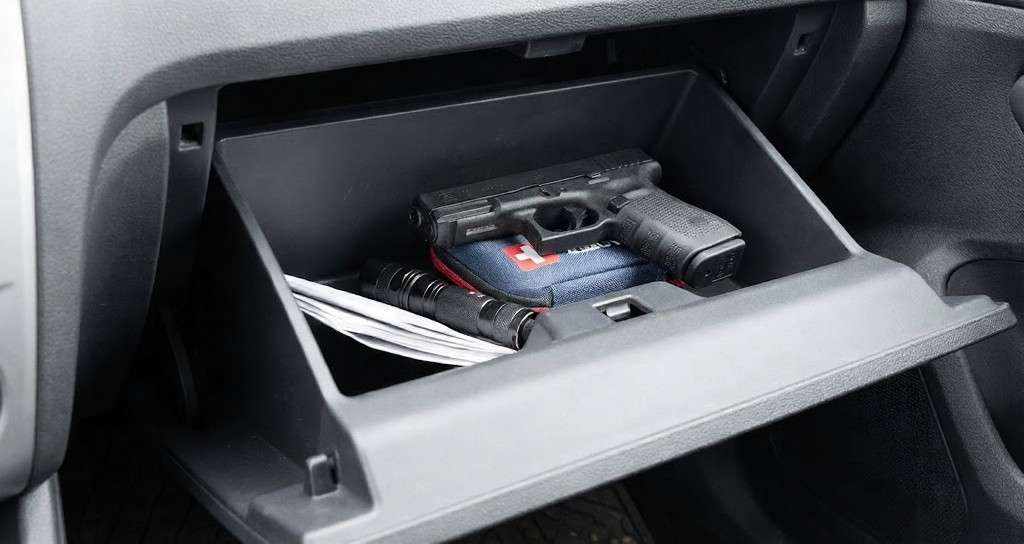
Arrested for carrying a concealed weapon in Glendale? You’re facing serious criminal charges under California Penal Code Section 25400[1] that can result in up to one year in county jail for misdemeanors or up to three years in state prison for felony charges, substantial fines, permanent loss of gun rights, and a criminal record that follows you for life. At Tu Defensor Criminalista, we provide aggressive legal defense for clients facing concealed weapon charges throughout Glendale and Los Angeles County. Whether you’re accused of carrying a concealed firearm in your vehicle or on your person, our experienced criminal defense attorneys understand California’s complex gun laws and fight to protect your Second Amendment rights and your freedom.
Free Confidential Consultation: (888) 315-3326 | Available 24/7 | Hablamos Español
California Penal Code Section 25400[1] makes it a crime to carry a concealed firearm either on your person or in a vehicle under your control without a valid California Concealed Carry Weapon (CCW) permit. According to the California Legislative Information portal[1], this statute applies throughout California and carries both misdemeanor and felony penalties depending on specific circumstances.
California has some of the strictest gun control laws in the nation. According to the California Attorney General’s Office[2], California ranks 44th out of 50 states for firearm mortality—meaning it has one of the lowest rates of gun deaths in the country. Only Hawaii, Massachusetts, New Jersey, Rhode Island, New York, and Connecticut have lower firearm mortality rates. This low rate reflects California’s comprehensive gun safety laws, which include strict regulations on concealed carry.
Despite these restrictive laws, firearm-related arrests remain common in California. The Public Policy Institute of California[3] reports that firearms are involved in 24.3% of violent crimes in California as of 2022. In Los Angeles County, 27% of aggravated assaults involved guns, according to state crime data. This heightened concern about gun violence means law enforcement agencies like the Glendale Police Department[4] aggressively enforce concealed weapons laws.
Under California Penal Code 25400[1], it is illegal to:
The legal definition of “concealed” under PC 25400[1] is broader than most people realize. A firearm is considered concealed when it is:
To convict you of violating PC 25400, the prosecution must prove beyond a reasonable doubt three essential elements based on California Jury Instruction CALCRIM 2520[5]:
Penalties for violating PC 25400[1] vary dramatically depending on whether the charge is filed as a misdemeanor or felony, and whether aggravating factors exist.
When no aggravating factors exist, carrying a concealed weapon is typically charged as a misdemeanor punishable by:
PC 25400 becomes a “wobbler” that can be charged as a felony when aggravating factors exist. Felony convictions carry:
PC 25400 is automatically charged as a felony when:
Beyond criminal penalties, a PC 25400 conviction creates collateral consequences:
The consequences of a concealed weapons conviction extend far beyond the courtroom. Understanding the full scope of impact is critical when deciding how to fight these charges.
Many landlords and property management companies conduct criminal background checks on prospective tenants. A weapons conviction—whether misdemeanor or felony—can result in outright denial of rental applications or termination of existing leases. In Los Angeles County’s competitive housing market, a criminal record can make finding suitable housing extremely difficult. Affordable housing programs and Section 8 vouchers[12] often have strict weapon offense exclusions, further limiting your options.
A PC 25400 conviction can derail careers across many industries:
Government and Security Jobs: Background check requirements for federal employment, military service, law enforcement, and security clearances will flag any weapons conviction. Active-duty military personnel and veterans can face discharge or loss of benefits as a result. The Office of Personnel Management[13] oversees federal security clearance determinations that directly consider weapons convictions.
Healthcare and Education: California’s licensing boards for nurses, doctors, teachers, and childcare providers review criminal histories and can deny, suspend, or revoke licenses following weapons convictions. The California Department of Consumer Affairs[14] and the California Commission on Teacher Credentialing[15] apply strict fitness and moral character standards.
Transportation and Trucking: Commercial driver’s license (CDL)[16] holders and transportation workers with weapons convictions may face license restrictions or disqualification, jeopardizing their livelihoods.
Financial Services: FINRA[17] and state financial licensing authorities review criminal histories for financial advisors, brokers, and insurance agents. A weapons conviction can trigger mandatory disclosure and license denial.
If you have an ongoing family law matter, a weapons conviction can be used against you in custody proceedings. California family courts[18] consider a parent’s criminal history when determining the best interests of the child. A weapons charge—particularly if a firearm was accessible to minors—can result in reduced visitation rights, supervised visitation, or loss of custody.
Colleges and universities often require applicants to disclose criminal histories. A weapons conviction can affect admission decisions, scholarship eligibility, and participation in campus housing programs. Students receiving federal financial aid[19] may also face eligibility issues depending on the nature of the conviction.
The Glendale Police Department[4], located at 131 North Isabel Street, Glendale, CA 91206, serves California’s third-largest city in Los Angeles County with approximately 192,870 residents. With roughly 300 sworn officers and specialized units including gang suppression, traffic enforcement, and investigations, GPD maintains active enforcement of weapons laws.
Understanding Glendale’s crime landscape provides context for weapons enforcement:
According to NeighborhoodScout crime statistics[20], Glendale’s violent crime rate is 2 per 1,000 residents, with a chance of becoming a violent crime victim of 1 in 435. Property crime occurs at 22 per 1,000 population. While these rates are moderate compared to some California cities, Glendale’s proximity to Los Angeles and historical gang activity creates ongoing public safety concerns.
Wikipedia’s Crime in Glendale article[21] notes that while Glendale was once home to more than 30 different gangs with violence peaking in the 1990s, the numbers have dropped significantly—now only five documented gangs exist in the city. Gang activity primarily concentrates in South Glendale, bordering Northeast Los Angeles neighborhoods. This history means weapons-related arrests remain a priority for GPD.
According to MacroT[22]r[22]ends data[22], Glendale’s violent crime rate was 98.67 per 100,000 population in 2018, down 27.12% from 2017. Despite improvements, law enforcement maintains vigilant weapons enforcement.
GPD deploys multiple specialized units that frequently encounter weapons violations:
Gang Suppression Unit: This unit actively monitors gang activity in South Glendale and has authority to conduct contact stops and investigations that frequently uncover concealed weapons. Gang enhancement allegations under PC 186.22[10] are regularly added to weapons charges arising from GSU operations.
Traffic Bureau: Routine traffic enforcement stops are one of the most common ways concealed weapons charges arise in Glendale. Traffic officers are trained to observe indicators of weapons possession and have broad authority to search vehicles when probable cause exists.
Community Impact Team (CIT): Glendale’s CIT focuses on quality-of-life issues and repeat offenders, often initiating contacts that lead to weapons discoveries. Their familiarity with known offenders in the community makes weapons arrests more likely for individuals with prior records.
Criminal Investigations Division: Detectives assigned to CID often follow up on weapons arrests to investigate the source of illegal firearms, which can lead to additional charges including theft, trafficking, or conspiracy.
Common scenarios leading to PC 25400 charges in Glendale include:
At Tu Defensor Criminalista, we’ve successfully defended numerous clients against concealed weapons charges in Glendale and throughout Los Angeles County. Every case requires a unique strategy, but several defenses frequently prove effective:
To convict you of PC 25400[1], prosecutors must prove you knew the firearm was present. This knowledge requirement creates a powerful defense:
Someone Else Placed the Weapon: Another person put the firearm in your vehicle, bag, or on your person without your knowledge—a borrowed vehicle with a weapon left by the previous user, a shared vehicle where another person stored the weapon, a weapon placed in your bag or belongings by someone else, or a rental car containing a firearm from a previous renter.
Evidence Supporting Lack of Knowledge: Testimony from vehicle owner or other users, text messages or communications, rental agreements, witness statements, and location of weapon in vehicle (hard-to-reach areas suggesting you wouldn’t know).
If you possessed a valid California Concealed Carry Weapon permit issued by your county sheriff or police chief at the time of arrest, you cannot be convicted of PC 25400. The permit must have been valid and not expired, authorized concealed carry in the location of arrest, and you must have carried in compliance with permit conditions with a firearm authorized under the permit. You can learn more about California’s CCW permit process through the California DOJ[25].
California Penal Code 25610[26] provides legal exceptions for transporting firearms when specific requirements are met. You can legally transport firearms if you are a U.S. citizen or legal resident, the firearm is unloaded, the firearm is in a locked container (excluding glove compartment), and if in a vehicle, the container is in the trunk or locked container separate from the passenger compartment.
A locked container is a fully enclosed container that can be secured with a padlock, combination lock, or key lock. The glove compartment does NOT qualify as a locked container under California law.
PC 25400[1] only prohibits concealed firearms. If the weapon was openly visible in plain view, you cannot be convicted. Plain view examples include a firearm in an open belt holster, a weapon on the vehicle dashboard or seat in clear view, or a firearm openly carried. While open carry provides a defense to PC 25400, California Penal Code 26350[27] generally prohibits open carry of unloaded firearms in most public places, so this defense may result in different charges rather than complete dismissal.
You have the right to possess firearms (including concealed firearms) in your own home or place of business. If the alleged concealment occurred on private property you own or control, this provides a complete defense to PC 25400. Protected locations include your residence (house, apartment, condo), your place of business where you have ownership or control, and your curtilage (area immediately surrounding your home) as recognized under PC 25605[28].
If police discovered the firearm through an illegal search violating your Fourth Amendment[29] rights, the evidence must be suppressed and charges dismissed or significantly weakened.
Common Fourth Amendment Violations:
We file motions to suppress evidence obtained through illegal searches, which often results in charge dismissal when the firearm evidence is excluded.
In rare circumstances, you may have a valid defense if you carried the concealed weapon due to immediate necessity or under duress. Necessity examples include an immediate threat to your life requiring armed self-defense, an emergency situation where carrying the weapon was necessary for survival, or transporting a weapon to prevent its theft or unauthorized access by a dangerous person. Duress examples include being forced at gunpoint to carry or transport the weapon, or being threatened with serious harm if you didn’t comply.
Even when a firearm is present, whether it was actually “concealed” can be disputed. If portions of the weapon were visible, we argue it wasn’t substantially concealed as required by law. Brief, inadvertent concealment may not satisfy the statutory requirement, and where you didn’t intentionally conceal the weapon—but it became covered inadvertently—there may be a strong argument against conviction.
Police must follow proper procedures when investigating and arresting for weapons violations. Common violations include failure to read Miranda rights[33] before custodial interrogation, failure to properly preserve evidence, chain of custody problems with the firearm, improper firearm testing or examination, and violation of department policies.
When evidence is strong, we negotiate reduced charges to minimize consequences, including reduction to infractions avoiding criminal conviction, diversion programs under PC 1001.95[34] for first-time offenders, misdemeanor reduction when charged as felony, and dismissal of enhancement allegations.
The actions you take in the hours and days immediately following an arrest for PC 25400 can significantly affect the outcome of your case. Here is what you should do:
Concealed weapons cases arising in Glendale are prosecuted by the Los Angeles County District Attorney’s Office[38] and heard in Los Angeles County Superior Courts[39].
Glendale Courthouse 600 East Broadway Glendale, CA 91206 Phone: (818) 265-6498 (Criminal Division) View Court Information[40]
This courthouse handles misdemeanor concealed weapons cases and preliminary hearings for felony cases arising in Glendale.
Pasadena Courthouse 300 East Walnut Street Pasadena, CA 91101 View Court Information[40]
Felony cases may be transferred to Pasadena for trial proceedings.
The Los Angeles County District Attorney’s Office[38] has dedicated units that prosecute weapons violations. Understanding how they approach PC 25400 cases helps inform defense strategy:
Understanding related California gun laws helps contextualize PC 25400 charges:
It is common for a single weapons arrest to result in multiple charges filed simultaneously. For example, a person found carrying a loaded, concealed, unregistered handgun without a CCW permit who has a prior felony conviction could face charges under PC 25400[1] (concealed carry), PC 25850[44] (loaded firearm in public), PC 29800[47] (felon in possession), and potentially gang enhancements under PC 186.22[10]. Each additional charge carries its own penalties, and sentences can be imposed consecutively rather than concurrently. Having an experienced defense attorney is essential to fighting all charges simultaneously and working toward the best overall resolution.
California operates on a “may issue” CCW permit system, meaning county sheriffs and police chiefs have discretion in issuing permits. The California DOJ’s CCW page[25] outlines requirements including being age 18+ for rifles/shotguns and 21+ for handguns, demonstrating good moral character, showing good cause for carrying a concealed weapon, completing a firearms safety training course, residing in the issuing county, and passing a background check.
Applicants must demonstrate specific safety concerns beyond general concern about crime. The standard varies by county, with some counties rarely issuing permits while others are more accommodating. The Los Angeles County Sheriff’s Department[49] has historically been restrictive, though standards have evolved following the U.S. Supreme Court’s Bruen decision.
Understanding statewide gun crime trends provides important context for concealed weapons prosecutions:
According to research published in the Journal of Urban[50][50]Health analyzing California crime gun data from 2010–2021[50], over 380,000 crime guns were recovered by law enforcement in California during this period. Eight percent of recovered crime guns had been previously reported stolen, with approximately 126,000 guns reported stolen and linked to legal handgun transactions. Time-to-crime (TTC) analysis revealed patterns in how quickly legally purchased firearms enter criminal use. Privately manufactured firearms (PMFs or “ghost guns”) showed dramatic increases in crime gun recoveries, prompting enhanced enforcement and legislation.
The California Attorney General’s Office report on ghost guns[2] documents substantial increases in unserialized firearms recovered from crimes. California has responded with comprehensive enforcement, litigation, and legislative efforts to address this crisis, including requiring serialization of privately manufactured firearms, prohibiting possession of unserialized firearms, imposing enhanced penalties for ghost gun crimes, and restricting the sale of firearm parts and kits.
California’s Office of Gun Violence Prevention[51], established in 2023, coordinates statewide efforts to reduce gun violence. According to the California Department of Justice[52], California has implemented nine different types of court protection orders to prevent gun violence, providing multiple pathways for temporarily removing firearms from dangerous individuals.
At Tu Defensor Criminalista, we understand that law-abiding gun owners can face criminal charges due to misunderstandings, technical violations, or overzealous enforcement. Many of our clients are responsible citizens who legally own firearms but made innocent mistakes regarding California’s complex concealment laws.
The Second Amendment[53] guarantees the right to bear arms, but this right is not absolute. Courts have upheld reasonable regulations including concealed carry restrictions. However, prosecutors and police sometimes overreach, charging individuals who were exercising their rights within legal boundaries.
We aggressively defend your constitutional rights by challenging unconstitutional applications of the law, protecting against prosecutorial overreach, working to preserve your gun rights, and advocating against arbitrary or discriminatory enforcement of weapons laws.
The legal landscape surrounding concealed carry has evolved significantly following landmark U.S. Supreme Court decisions. In New York State Rifle & Pistol Association v. Bruen, 597 U.S. 1 (2022)[54], the Supreme Court established a new framework for evaluating the constitutionality of firearm regulations, requiring that restrictions on the right to carry firearms be consistent with the Nation’s historical tradition of firearm regulation. This ruling has created new legal arguments that can be raised in concealed weapons cases and CCW permit denials.
California’s laws have faced ongoing constitutional challenges in federal courts following the Bruen decision, and the legal landscape continues to shift. Our attorneys stay current on these developments and evaluate whether new constitutional arguments may apply to your specific case.
At Tu Defensor Criminalista, we understand that facing concealed weapons charges creates fear, uncertainty, and stress about your future. Your Second Amendment rights, your freedom, and your ability to own firearms are all at stake. We’ve successfully defended countless clients throughout Glendale and Los Angeles County against weapons charges.
Early Intervention: We begin working immediately to preserve evidence, interview witnesses while memories are fresh, file discovery requests, investigate potential defenses, and file motions to suppress evidence under PC 1538.5[42].
Comprehensive Strategy: We develop multi-layered defense strategies including challenging the knowledge element, proving transportation exceptions under PC 25610[26], demonstrating Fourth Amendment violations, negotiating reduced charges, and preparing for trial when necessary.
Personalized Attention: You’re not just a case number. We provide personal attention to every client with prompt communication and regular updates.
Tu Defensor Criminalista has deep roots in the communities we serve across Los Angeles County. We understand that many people arrested for concealed weapons violations are hard-working residents who made a technical mistake or were in the wrong place at the wrong time. Our goal is not just to win your case—it’s to help you move forward with your life. We fight to protect your freedom, your record, and your future.
Do NOT consent to the search. Politely but clearly state: “I do not consent to any searches.” If officers have a warrant or probable cause, they’ll search anyway—but your refusal to consent protects your rights and prevents the search from being justified by consent.
Remain calm and cooperative with lawful commands while asserting your rights. Don’t physically resist, but don’t voluntarily give up your Fourth Amendment protections.
Document everything including officer names, badge numbers, time, location, and what was said.
Contact Tu Defensor Criminalista immediately at (888) 315-3326 after any police encounter involving weapons.
Yes, but you must follow strict requirements under PC 25610:
• Be a U.S. citizen or legal resident
• Keep the firearm unloaded
• Store it in a locked container (NOT the glove compartment)
• Place the locked container in the trunk if possible
Violating any requirement means you’re not protected by the transportation exception and can be charged with PC 25400.
This creates a strong defense based on lack of knowledge. If you genuinely didn’t know the firearm was in your vehicle, you cannot be convicted. Evidence supporting this defense includes:
• Vehicle is shared or borrowed
• Weapon was hidden in location you wouldn’t access
• Other people have access to the vehicle
• No fingerprints on the weapon
• Text messages or communications proving lack of knowledge
Not necessarily. Many first-time offenders with no aggravating factors avoid jail through:
• Probation without custody
• Diversion programs
• Plea bargains to reduced charges
• Effective defense resulting in dismissal
Your likelihood of jail depends on:
• Aggravating factors (gang membership, prior felonies, loaded weapon)
• Quality of your legal defense
• Your criminal history
• Specific circumstances of the arrest
Yes. After completing probation successfully, you can petition for expungement under PC 1203.4. Expungement dismisses the conviction and allows you to state you weren’t convicted on most employment applications.
However, expungement does NOT:
• Restore gun rights (separate process required)
• Erase the conviction from your record
• Prevent use for immigration purposes
• Remove the conviction from professional licensing considerations
A PC 25400 conviction will likely prevent you from obtaining a CCW permit in the future. California requires “good moral character” for permit approval, and weapons violations demonstrate the opposite.
Even after expungement, the conviction may affect CCW applications since licensing authorities can consider expunged convictions.
California does not recognize out-of-state CCW permits. Even if you have a valid permit from another state, it provides no legal protection in California. You must obtain a California CCW permit to carry concealed in California.
This is a common mistake made by travelers and people relocating to California—they assume their home state permit is valid nationwide. It is not.
Generally yes. You have the right to possess firearms (including concealed firearms) in your place of business where you have ownership or control. However, this right is subject to limitations:
• You must legally be able to possess firearms (not a prohibited person)
• The business must be your own or under your control
• Some businesses have additional restrictions (schools, government buildings, etc.)
• Employees may not have the same rights as owners
If you’ve been served with a Concealed Weapons in Glendale, time is running out. Don’t face this crisis alone. Contact Tu Defensor Criminalista immediately for a free, confidential consultation about your case.
Attorney Armando Josué Cespedes is rated 5.0 on Avvo, with 34 five-star reviews from clients praising his dedication, professionalism, and results. Many note how his trial skills and attention to detail led to reduced charges or outright dismissals.



 English English
 Español de México English English Español de México
Thank you! We need your help. Would you share your experience on one of these sites?
If you have concerns you wish to address privately
