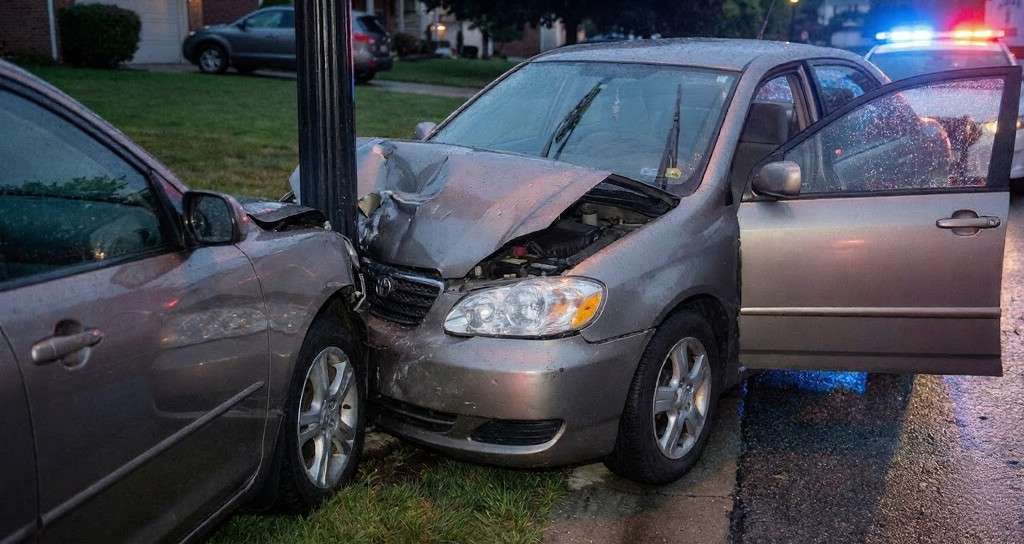
Arrested for felony DUI in Glendale? You are facing state prison, a STRIKE conviction under California’s Three Strikes Law, massive victim restitution, permanent loss of driving privileges, and a violent felony on your record for the rest of your life. Whether you have been charged with DUI causing injury under Vehicle Code § 23153, a fourth DUI offense, or DUI manslaughter, a felony DUI conviction carries devastating consequences that destroy careers, tear apart families, and shatter futures in an instant.
Glendale is the third-largest city in Los Angeles County, and the Glendale Police Department — with approximately 250 sworn officers — conducts aggressive DUI enforcement year-round, including regular DUI and Driver’s License Checkpoints funded by grants from the California Office of Traffic Safety[1]. When a DUI arrest results in injury or death on Glendale’s roads, the Los Angeles County District Attorney’s Office prosecutes those cases with maximum force.
Attorney Armando Josué Cespedes provides aggressive felony DUI defense throughout Glendale, including La Cañada Flintridge, La Crescenta, and Montrose. With a perfect 5.0 Avvo rating, 34 five-star reviews, and three consecutive Client’s Choice Awards (2023–2025), he brings proven trial experience to high-stakes DUI cases. Felony DUI defense requires deep knowledge of accident reconstruction, toxicology, and charge enhancement challenges—and we fight to reduce felonies, avoid strike allegations, secure favorable resolutions, or win at trial when necessary.
Free Confidential Consultation: (888) 315-3326 | Available 24/7 | Hablamos Español
Four Ways You Can Face Felony DUI Charges:
The Law: It is unlawful to drive under the influence of alcohol or drugs and, as a result of that impaired driving, cause bodily injury to another person.
Elements the Prosecution Must Prove:
What Constitutes “Bodily Injury” Under California Law?
Critical Point: The prosecution must prove that YOUR impaired driving CAUSED the injury. If the accident would have occurred regardless of your impairment — for example, because another driver ran a red light — you may not be guilty of DUI causing injury under VC § 23153.
Understanding the scope of the DUI problem in Glendale and Los Angeles County is essential context for anyone facing felony DUI charges in this area. The data is alarming — and it explains why prosecutors in this jurisdiction pursue these cases so aggressively.
According to the California Office of Traffic Safety (OTS) crash rankings for Glendale[2], in 2021 there were 53 alcohol-involved injury or fatal crashes in the city. That same year, Glendale recorded 327 DUI arrests. The OTS data places Glendale in the top tier of cities of comparable size statewide when it comes to alcohol-related traffic incidents, meaning law enforcement and prosecutors treat impaired driving in Glendale with extraordinary seriousness.
The Glendale Police Department publishes quarterly Traffic Collision Data[3] that tracks collisions, injuries, and fatalities citywide. This data is regularly reviewed to determine where DUI enforcement checkpoints are deployed.
The Glendale Police Department conducts regular DUI [4]checkpoints [4]at locations chosen based on a history of DUI crashes and arrests[4]. These operations are funded by grants from the California Office of Traffic Safety through the National Highway Traffic Safety Administration (NHTSA). As Glendale PD has stated publicly, checkpoint locations are selected based on documented crash and arrest history — meaning the city has identified specific corridors and intersections where impaired driving is a recurring danger.
Drivers charged with DUI in Glendale face an average of $13,500 in fines and penalties, in addition to license suspension and potential incarceration — and those figures increase dramatically when charges are elevated to felony status.
Glendale sits within Los Angeles County — one of the most active DUI enforcement jurisdictions in the entire United States. California Office of Traffic Safety Quick Stats[5] confirm that alcohol-impaired driving fatalities statewide reached 1,355 deaths in 2023 — a figure that represents nearly one-third of all traffic fatalities in the state. Los Angeles County accounts for more than 20% of all DUI cases filed in California each year.
The California DMV DUI Management Information System[6] tracks felony and misdemeanor DUI arrests by county. Statewide, approximately 4,944 felony DUI arrests are made annually, alongside over 118,000 misdemeanor DUI arrests. The conviction rate for DUI offenses in California averages above 70% — meaning that once you are charged, the odds are heavily stacked against you without experienced legal representation.
According to the California Office of Traffic Safety’s Alcohol-Impaired Driving program page[7], alcohol-impaired driving remains one of the primary causes of deadly and serious injury crashes on California roads, with the number of alcohol-involved crash fatalities increasing nearly 55% from 2014 through 2023.
DUI-related crashes in the Glendale area concentrate along several key corridors:
DUI causing injury is what California law calls a “wobbler” — meaning the prosecutor has the discretion to charge it as either a misdemeanor or a felony. In practice, when injuries are significant, the Los Angeles County DA’s Office almost always files felony charges.
If Charged as a Misdemeanor (Rare):
If Charged as a Felony (The Typical Outcome):
If any victim suffers what the court classifies as “great bodily injury,” your sentence increases dramatically:
Per-Victim Enhancement: An additional 1–2 years of prison time for each additional victim injured.
High BAC Enhancement: If your BAC was 0.15% or higher, the sentencing court treats this as a significant aggravating factor.
Example Sentence Calculation: DUI causing injury (3 years) + great bodily injury enhancement (3 years) + two additional injured victims (2 years) = 8 years in state prison.
Under California law, your fourth DUI within 10 years is an automatic felony — even if no accident, injury, or death occurred. This charge cannot be reduced to a misdemeanor.
Penalties Include:
If someone dies as a result of your impaired driving, the charges escalate far beyond standard felony DUI. There are three levels of homicide charges that apply:
PC § 191.5(a) – Gross Vehicular Manslaughter While Intoxicated: DUI + gross negligence + death. Felony penalty of 4, 6, or 10 years in state prison. This is a STRIKE offense.
PC § 191.5(b) – Vehicular Manslaughter While Intoxicated (Without Gross Negligence): DUI + ordinary negligence + death. This is a wobbler: 16 months, 2, or 4 years in prison if charged as a felony, or up to 1 year in county jail if charged as a misdemeanor.
PC § 187 – Second-Degree Murder (“Watson Murder”): This is the most serious charge a DUI defendant can face. If you caused someone’s death while driving under the influence AND you have a prior DUI conviction where you signed a “Watson advisement” — a document warning you that drunk driving can kill — the prosecutor may charge you with second-degree murder. The penalty is 15 years to life in state prison. This is a STRIKE offense. According to the California Department of Justice OpenJustice data[8], murder charges in DUI deaths have increased significantly statewide in recent years.
A felony DUI conviction in Glendale carries consequences that can last a lifetime:
When a serious DUI crash occurs in Glendale, multiple agencies respond. The Glendale Police Department handles cases on city streets. The California Highway Patrol (CHP) takes the lead on state highways and freeways — including Interstate 5, State Route 134, and State Route 2, all of which run through or border Glendale.
For serious injury or fatal crashes, the CHP deploys its Major Accident Investigation Team (MAIT). These are specially trained officers who conduct detailed accident reconstruction, including extensive scene measurements, vehicle inspections, speed calculations based on physical evidence, and thorough photographic documentation. The scene is photographed, measured, and analyzed. Witnesses are interviewed. If you are involved, blood is drawn — typically at a hospital — and you are arrested either at the scene or at the facility.
Your statements at the scene or hospital can and will be used against you in court. You have the right to remain silent and the right to an attorney. Invoke both immediately.
Injured victims are transported to local medical facilities. You may also be transported — either for your own injuries or for a mandatory blood draw. Blood is taken by medical personnel at the request of law enforcement and sent to a crime lab for analysis. Results typically take 2–4 weeks. The blood sample can detect not only alcohol but also drugs, including marijuana, methamphetamine, and prescription medications.
Hospital records documenting injuries to you and to victims become critical evidence. Medical staff may testify about your condition and any statements you made while being treated.
After arrest, you are booked into the Glendale City Jail, located at 131 North Isabel Street, Glendale, CA 91206. Felony DUI bail in the Glendale area is typically set between $50,000 and $150,000 or higher, depending on the severity of injuries and your criminal history.
We file motions for bail reduction, presenting evidence of your ties to the community, employment history, and family obligations to argue for lower bail or release on your own recognizance where possible.
While you are in custody or out on bail, the Los Angeles County District Attorney’s Office continues building the case against you. Prosecutors obtain medical records for all victims, subpoena hospital and ambulance records, interview witnesses and passengers, review toxicology results, and complete the accident reconstruction report. Through the discovery process, we obtain all of this evidence — reports, photographs, diagrams, witness statements, blood test documentation — and conduct our own independent investigation.
Address: 600 East Broadway, Glendale, CA 91206[9]
Phone: (818) 265-6400
Criminal Clerk’s Office: (818) 265-6498 — 1st Floor, Room 154
Hours: Monday through Friday, 8:30 AM – 4:30 PM
The Glendale Courthouse[9] handles DUI arraignments, misdemeanor DUI cases, and criminal matters for offenses occurring in Glendale, La Cañada Flintridge, La Crescenta, and Montrose. Criminal matters — including DUI cases — are heard in Departments 1 and 2.
Important: Felony matters filed at the Glendale Courthouse are typically transferred to the Burbank Courthouse for preliminary hearings and felony proceedings. This means your felony DUI case may move between courthouses, and you need an attorney who is familiar with both.
Address: 300 East Thomson Street, Burbank, CA 91505
Felony DUI preliminary hearings and trials for cases originating in the Glendale area are frequently heard at the Burbank Courthouse. Attorney Cespedes has experience appearing in both the Glendale and Burbank courthouses and understands the procedural requirements of each.
Felony DUI cases in Glendale are prosecuted by the Los Angeles County District Attorney’s Office[10]. When a DUI crash results in serious injury or death, the case is handled by specialized prosecution units that work closely with CHP Major Accident Investigation Teams and utilize expert accident reconstructionists. The DA’s Office pursues maximum sentences — including prison time and STRIKE convictions — in cases involving serious harm.
The first 72 hours after a felony DUI arrest in Glendale are critical. Decisions made — and mistakes made — during this window can shape the outcome of your entire case. Here is exactly what happens and what you need to know.
If you are arrested for felony DUI in Glendale — whether on a city street by Glendale PD or on a freeway by the California Highway Patrol — you will be transported to the Glendale City Jail at 131 North Isabel Street, Glendale, CA 91206. You will be booked, fingerprinted, photographed, and processed. Your personal belongings, including your phone, will be taken from you.
At booking, you will be informed of the charges against you. Bail will be set based on the severity of the charges, the injuries involved, and your criminal history. For felony DUI causing injury in Glendale, bail is typically set between $50,000 and $150,000. If the victim suffered great bodily injury or died, bail can exceed $200,000 or more.
What You Should Do Right Now: Do not make any statements to police. Do not answer questions about what you drank, where you were, or what happened — no matter how straightforward the question seems. Everything you say will be recorded and used against you in court. Ask for an attorney immediately and do not speak further until one is present.
Within 48 hours of your arrest — or the next business day if you are arrested on a weekend or holiday — you must be brought before a judge for arraignment. This is your first court appearance. At arraignment, the charges are formally read to you, and you enter a plea. In felony DUI cases, the plea at arraignment is almost always “not guilty” — this preserves all of your legal options going forward.
At the same time, the Los Angeles County District Attorney’s Office[10] makes its filing decision. Based on the police report, the severity of the injuries, your criminal history, and the strength of the evidence, prosecutors decide whether to file felony charges, reduce to misdemeanor charges, or decline to prosecute. In serious injury cases in Glendale, the DA almost always files felony charges.
This is the first — and one of the most important — moments where having an experienced attorney makes a difference. An attorney who contacts the DA’s office before the filing decision can present mitigating information that may influence whether charges are filed as a felony or reduced to a misdemeanor.
If bail has been set, your attorney files a motion for bail reduction. We present evidence of your ties to the Glendale community — your employment, your family, your residence — and argue that you are not a flight risk and that lower bail is appropriate. In some cases, we can argue for release on your own recognizance, though this is rare in felony DUI cases involving serious injury.
Once you are released — whether on bail or on your own recognizance — the real work of your defense begins. Your attorney obtains the police report, the accident reconstruction report, witness statements, and blood test documentation. An independent investigation is launched. This is why contacting an experienced felony DUI attorney in Glendale within the first hours after your arrest is so critical. Every hour counts.
Do not wait. Do not try to handle this on your own. Call (888) 315-3326 immediately after your arrest.
This is often the single most powerful defense available in a felony DUI case. The prosecution must prove that your impaired driving actually caused the injuries. If the accident would have happened regardless of your impairment — because another driver was at fault — then you cannot be convicted of DUI causing injury under VC § 23153.
We hire independent accident reconstruction experts to analyze the crash and determine the true cause. We examine traffic camera footage, witness statements, physical evidence at the scene, and vehicle inspection reports. If the evidence shows another driver caused the collision — by running a red light, crossing the center line, speeding, or driving while distracted — we present that evidence aggressively at trial or in negotiations.
Result: Felony DUI causing injury reduced to misdemeanor DUI, or charges dismissed entirely.
VC § 23153 requires “bodily injury,” but does not specify a minimum level of severity. If the injuries were minor — bruises, scrapes, soreness — and the victims refused ambulance transport or emergency room treatment, we present that evidence to argue that the injuries do not support felony charges.
Result: Prosecutor agrees to reduce the charge to misdemeanor DUI.
The great bodily injury (GBI) enhancement adds 3 or more years to your prison sentence and makes your felony DUI a STRIKE. We challenge this enhancement by presenting medical evidence showing that the injuries, while serious, do not meet the legal threshold of “significant or substantial physical injury.” We examine treatment records, the victim’s recovery timeline, and expert medical testimony.
Why This Matters: The GBI enhancement is what transforms a felony DUI into a STRIKE conviction. Eliminating this enhancement can be the difference between a manageable sentence and decades of devastating legal consequences.
Blood tests are not infallible. We examine every link in the chain from collection to analysis:
Result: Blood test excluded or deemed unreliable, significantly weakening the prosecution’s case.
The prosecution must prove you were impaired at the exact moment you were driving — not an hour or two later when your blood was drawn. If you had recently consumed alcohol and it was still absorbing into your bloodstream at the time of the crash, your BAC may have been below the legal limit when you were behind the wheel. Our forensic toxicologist calculates your actual BAC at the time of driving using pharmacokinetic analysis.
Result: Reasonable doubt as to whether you were legally impaired when driving — not guilty.
Sometimes an accident is caused by factors that have nothing to do with alcohol:
If any of these factors caused the crash, they negate the prosecution’s case. We obtain your medical records, have the vehicle inspected, and present the evidence.
Even in accident cases, your constitutional rights apply. If police detained you longer than was legally justified, questioned you without Miranda warnings, or conducted an illegal search of your vehicle, we file motions to suppress the evidence obtained. Statements made without proper warnings can be thrown out entirely.
Because VC § 23153 is a wobbler, the prosecutor has discretion to reduce a felony charge to a misdemeanor. We present strong mitigation: minor injuries, borderline BAC, no prior DUI history, first-time offense status, strong community ties, disputed causation, and evidence of remorse and accountability.
Benefits of Misdemeanor Reduction: No state prison. No STRIKE conviction. Probation instead of custody. The possibility of future expungement. Significantly improved employment prospects.
When a misdemeanor reduction is not available, we negotiate the best possible felony resolution:
When the evidence supports it, we take your case to trial. Felony DUI trials in Los Angeles County are won or lost on the quality of the defense team’s preparation, expert witnesses, and ability to create reasonable doubt on every single element the prosecution must prove. Here is how we approach it.
Because DUI causing injury is a wobbler offense, there are specific opportunities to reduce a felony conviction to a misdemeanor:
The court considers the severity of injuries, your criminal history, the circumstances of the offense, your conduct since the arrest, completion of DUI programs, employment and family ties, and evidence of remorse and rehabilitation.
If this is your fourth DUI within 10 years, California law makes it an automatic felony under VC § 23550 — regardless of whether an accident, injury, or death occurred. This charge cannot be reduced to a misdemeanor.
Defense Strategies for Fourth DUI Cases:
If your DUI caused someone’s death and you have a prior DUI conviction during which you signed a “Watson advisement,” the Los Angeles County DA may charge you with second-degree murder under Penal Code § 187.
The Watson advisement is a document you sign at the sentencing of a prior DUI, acknowledging that driving under the influence is dangerous to human life and that if you continue to drive drunk and someone dies, you can be charged with murder. Prosecutors use this document to argue that you acted with “implied malice” — that you knew drunk driving could kill, and you did it anyway.
Penalty: 15 years to life in state prison. STRIKE conviction. Must serve 85% of the sentence before parole eligibility.
Defense Strategies:
Watson murder cases require immediate, experienced criminal defense counsel. These are life-sentence cases. Contact us the moment you learn you are facing these charges.
A felony DUI arrest in Glendale triggers two separate legal battles simultaneously. The first is your criminal case in Los Angeles County Superior Court. The second is an administrative proceeding before the California Department of Motor Vehicles (DMV)[11] — and it begins the moment you are arrested.
When you are arrested for DUI in California — whether misdemeanor or felony — the arresting officer takes your driver’s license and issues you a pink temporary license. This temporary license is valid for only 10 days. Within those 10 days, you must contact the DMV and request a hearing to challenge the suspension of your license. If you do not request a hearing within 10 days, your license is automatically suspended — with no further opportunity to contest it.
This is a deadline that is easy to miss, especially when you are dealing with the shock of a felony DUI arrest, potential jail time, and the stress of finding legal representation. We handle DMV hearings as part of our felony DUI defense — we contact the DMV on your behalf, request the hearing, and represent you at the proceeding.
The DMV hearing is an administrative proceeding — not a criminal trial. It is held by phone or in person at a local DMV office. The DMV officer acts as judge, prosecutor, and jury. The issues decided at the hearing are narrow: Were you lawfully stopped? Were you driving with a BAC of 0.08% or higher? Were you properly informed of the consequences of refusing a blood or breath test?
Even if you win your criminal case — even if felony DUI charges are dismissed — the DMV can still suspend your license. The legal standard at the DMV hearing is lower than the “beyond a reasonable doubt” standard in criminal court. This is why the DMV hearing requires its own dedicated defense strategy.
If you are convicted of felony DUI causing injury in Glendale, the DMV revokes your driver’s license for 5 years. For a fourth DUI offense, the revocation period is 4 years. During this time, you cannot drive for any reason — not to work, not to school, not for any personal purpose — unless you qualify for a restricted license.
A restricted license, if granted, allows you to drive only to and from specific locations — such as work or DUI treatment — and only during specified hours. It requires installation of an ignition interlock device (IID), which prevents your vehicle from starting unless you pass a breathalyzer test every time you get behind the wheel.
Reinstatement after a felony DUI conviction requires completion of all of the following:
We work with you throughout this process to ensure that every requirement is met on time and that your path back to driving is as smooth as possible.
We have extensive experience defending felony DUI cases in the Glendale Courthouse, Burbank Courthouse, and throughout Los Angeles County Superior Court. We know the local prosecutors, understand the procedural requirements of each courthouse, and know how the Los Angeles County DA’s Office approaches felony DUI prosecutions.
We are not afraid to take felony DUI cases to trial. Our trial team has extensive jury trial experience, aggressive cross-examination skills, and a track record of favorable verdicts and case outcomes.
We retain top-tier accident reconstruction experts, forensic toxicologists who testify across the country, biomechanical engineers, and medical experts — the same caliber of witnesses the prosecution relies on.
Challenging causation is often the key to winning a felony DUI case. We understand the science of accident reconstruction and know how to present it compellingly to a jury or judge.
We fight great bodily injury enhancements aggressively because the consequences of a STRIKE conviction are devastating and long-lasting. Our experience with Three Strikes litigation gives us the knowledge and strategy to challenge these enhancements effectively.
For non-citizen clients, we coordinate with immigration attorneys to ensure that our criminal defense strategy takes deportation consequences into account. We negotiate immigration-safe resolutions whenever possible.
Perfect 5.0 rating on Avvo. 34 five-star client reviews. Three consecutive Client’s Choice Awards (2023, 2024, 2025). A track record of felony reductions, case dismissals, and acquittals.
We provide complete legal representation in both English and Spanish. Hablamos Español. Glendale has a significant Spanish-speaking population, and we are committed to ensuring that language is never a barrier to quality legal defense.
A felony DUI arrest does not happen on a schedule. We are available immediately after an arrest — nights, weekends, and holidays — for jail visits, family consultations, and emergency legal guidance.
Not necessarily. DUI causing injury under VC § 23153 is a wobbler that can be reduced to a misdemeanor, or the court may sentence you to probation rather than active prison time. We fight for every possible alternative to incarceration.
This is a strong defense. If another driver caused the accident, you cannot be convicted of DUI causing injury. We hire accident reconstruction experts to prove this and present the evidence aggressively.
Yes. VC § 23153 is a wobbler offense. We negotiate reductions when injuries are minor, causation is disputed, or a strong defense exists.
PC § 12022.7 adds 3 or more years to your prison sentence and makes your felony DUI a STRIKE conviction. Fighting this enhancement is one of our top priorities.
Your license will be revoked — 5 years for DUI causing injury, 4 years for a fourth DUI. It is not permanent, but reinstatement requires completion of DUI school, ignition interlock device installation, and SR-22 insurance.
Restitution depends on the severity of injuries. It can range from tens of thousands to well over $500,000 when medical bills, lost wages, and pain and suffering are included. Victims may also file separate civil lawsuits.
Charges can include gross vehicular manslaughter (4–10 years), vehicular manslaughter, or even Watson murder (15 years to life). These are the most serious charges a DUI defendant can face. Contact us immediately.
It depends on the severity of injuries, your criminal history, and the specific circumstances. We present strong mitigation evidence to argue for probation whenever possible.
Second-degree murder — carrying a sentence of 15 years to life — charged when a DUI causes death and you have a prior DUI conviction with a Watson advisement on file.
Yes. A felony DUI can trigger deportation proceedings, and vehicular manslaughter is classified as an aggravated felony. Non-U.S. citizens must consult with an immigration attorney immediately upon arrest.
If you’ve been served with a Felony DUI in Glendale, time is running out. Don’t face this crisis alone. Contact Tu Defensor Criminalista immediately for a free, confidential consultation about your case.
Attorney Armando Josué Cespedes is rated 5.0 on Avvo, with 34 five-star reviews from clients praising his dedication, professionalism, and results. Many note how his trial skills and attention to detail led to reduced charges or outright dismissals.



 English English
 Español de México English English Español de México
Thank you! We need your help. Would you share your experience on one of these sites?
If you have concerns you wish to address privately
