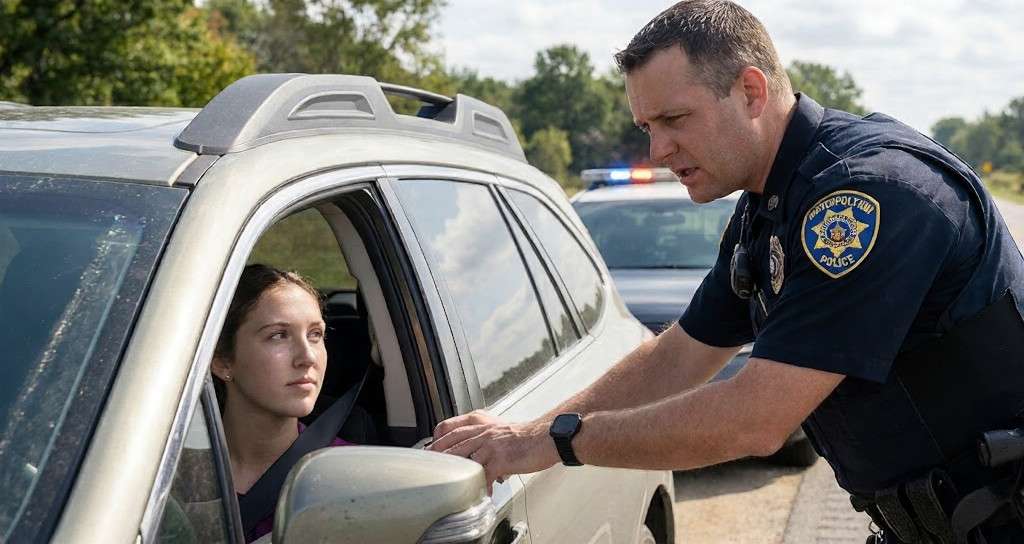
Being arrested for your first DUI in Glendale can be one of the most frightening and overwhelming experiences of your life. The moment you see those flashing lights in your rearview mirror, your heart races. When you’re asked to step out of the vehicle and perform field sobriety tests, panic sets in. By the time you’re sitting in a Glendale Police Department holding cell, reality hits hard: you’re facing criminal charges that could cost you your license, your job, thousands of dollars, and potentially your freedom. At Tu Defensor Criminalista, we understand the fear, confusion, and stress that first-time DUI defendants experience, and we’re here to tell you that there is hope—and effective legal defense strategies that can protect your future.
According to the California Department of Motor Vehicles’ 2021 Annual Report analyzing 2019 data, an overwhelming 72.5% of all DUI arrests in California are first-time offenders—people like you who have never been arrested before and never imagined they’d face criminal charges. Glendale, as part of Los Angeles County, which accounts for nearly 19% of all DUI arrests in the state, sees its share of first-time DUI cases processed through the Glendale Courthouse. The good news is that first-time DUI offenders have more options, better chances of favorable outcomes, and access to programs that can potentially result in reduced charges or even dismissal—but only if you have experienced legal representation fighting for your rights from day one.
The Glendale Police Department actively enforces DUI laws through regular DUI checkpoints, traffic patrols, and collaboration with the California Highway Patrol. According to official statements from the City of Glendale, drivers charged with a first-time DUI face an average of $13,500 in fines and penalties, as well as a suspended license. These checkpoints are strategically placed at locations with a history of DUI crashes and arrests, funded by grants from the California Office of Traffic Safety through the National Highway Traffic Safety Administration. Understanding what you’re facing and acting immediately can make the difference between a conviction that haunts you for years and a resolution that protects your driving privileges, criminal record, and future opportunities.
Free Confidential Consultation: (888) 315-3326 | Available 24/7 | Hablamos Español
Under California Vehicle Code Section 23152, it is illegal to operate a motor vehicle while under the influence of alcohol, drugs, or a combination of both. California law actually defines several different DUI offenses:
Most first-time DUI defendants in Glendale are charged with both VC 23152(a) AND VC 23152(b) simultaneously. However, you can only be convicted and punished for one.
Lower BAC Limits for Specific Drivers:
California law also makes it illegal to drive under the influence of drugs—including illegal drugs like marijuana and methamphetamine, prescription medications like Xanax and Ambien, and even over-the-counter drugs that impair your ability to drive safely.
Unlike many other states, California requires proof of actual driving or “volitional movement” of the vehicle. Simply sitting in a parked car with the keys in the ignition while intoxicated is not sufficient for a DUI conviction in California. The prosecution must prove you were actually driving or moving the vehicle. This distinction creates important defense opportunities in cases where the officer didn’t actually witness you driving.
Source:[1]California Vehicle Code Section 23152[1]
One of the most confusing aspects of a first-time DUI arrest in Glendale is that you face two separate legal proceedings that run simultaneously but independently:
The criminal case is prosecuted by the Los Angeles County District Attorney’s Office and heard at the Glendale Courthouse (600 East Broadway, Glendale, CA 91206) or other Los Angeles County Superior Court locations. In the criminal case, you face potential penalties including:
The criminal court can also suspend your driver’s license as part of your sentence, separate from any DMV suspension.
The DMV proceeding is completely separate from the criminal case and deals only with your driving privileges. When you’re arrested for DUI in Glendale, the arresting officer confiscates your physical driver’s license and issues you a pink “Order of Suspension and Temporary License” form. This pink slip serves as your temporary license for 30 days. After those 30 days, your license is automatically suspended UNLESS you:
Critical deadline: You have only 10 calendar days from the date of your arrest to request a DMV hearing. If you miss this deadline, your license is automatically suspended and you lose your right to challenge the suspension. This is why immediate contact with an attorney is essential.
At the DMV hearing, the hearing officer determines whether:
The DMV hearing is less formal than court and has a lower burden of proof. However, it’s your opportunity to challenge the evidence, cross-examine the arresting officer, and potentially save your driving privileges.
Important distinctions:
Source:[2]California DMV – Driving Under the Influence Information[2]
Source:[3]California DMV First Offender Information[3]
If convicted of a first-time DUI in Glendale, you face the following criminal penalties under California law:
These programs cost approximately $500-$1,000 and must be completed at your own expense.
Separate from the criminal court, the DMV imposes its own penalties for first-time DUI:
License Suspension – Took Chemical Test: If you took a breath or blood test and your BAC was 0.08% or higher, the DMV imposes a 4-month suspension. However, after serving 30 days of hard suspension (no driving whatsoever), you become eligible for a restricted license that allows you to:
To get this restricted license, you must:
License Suspension – Refused Chemical Test: If you refused chemical testing (breath or blood test), the DMV imposes a 1-year suspension with NO restricted license eligibility for the first 12 months. This is a much harsher penalty, which is why officers emphasize that refusing the test will result in longer license suspension.
Alternative – IID Restricted License: California offers an alternative for first-time offenders: instead of serving any hard suspension, you can immediately get an IID restricted license that allows you to drive anywhere, anytime, as long as your vehicle has a functioning IID installed. To qualify:
This option allows you to continue working, taking care of family, and living your life without the severe hardship of not being able to drive at all.
Source:[4]City of Glendale – DUI Penalties Information[4]
Most DUI arrests in Glendale occur in one of three ways:
If an officer suspects you’re under the influence, they’ll ask you to perform field sobriety tests (FSTs). The most common FSTs used by Glendale Police and California Highway Patrol officers include:
At the scene, officers will ask you to blow into a small handheld breathalyzer device (the PAS device). This test is also voluntary for drivers 21 and older who are not on DUI probation. The PAS test is different from the post-arrest chemical test at the station—you can refuse the PAS test without the same penalties as refusing the post-arrest test.
However, if you’re under 21 or on DUI probation, refusing the PAS test results in automatic license suspension.
If the officer determines there is probable cause to believe you’re driving under the influence, they will arrest you and transport you to the Glendale Police Department station (131 North Isabel Street, Glendale, CA 91206) or another facility for booking and chemical testing.
After arrest, California’s “implied consent” law requires you to submit to chemical testing—either a breath test using a desktop breathalyzer machine (more accurate than the roadside PAS device) or a blood test. You get to choose which test you prefer, though the officer can override your choice in some circumstances.
Refusing this post-arrest chemical test is a separate violation that results in:
The chemical test results typically take 1-2 weeks for blood tests, or are immediately available for breath tests.
After testing, you’ll be booked into custody (fingerprinted, photographed, searched) and then either:
You’ll receive paperwork including:
Source:[5]City of Glendale Police Department[5]
Many first-time DUI defendants in Glendale make the critical mistake of thinking they can handle the case themselves or that hiring an attorney isn’t worth the cost. The reality is that a DUI conviction carries consequences far beyond fines and a temporary license suspension:
Employment Consequences: A DUI conviction appears on background checks and can affect:
Insurance Consequences: After a DUI conviction, you must file an SR-22 certificate of insurance for 3 years. Your auto insurance rates typically increase 50-100% or more. Some insurance companies drop DUI defendants entirely, forcing them into high-risk insurance pools with premiums of $5,000-$10,000 per year or more.
Immigration Consequences: While a first-time misdemeanor DUI is generally not a deportable offense, it can negatively impact:
For Glendale’s significant immigrant population, which includes large Armenian-American, Hispanic, and Asian communities, immigration consequences require careful consideration.
Future DUI Consequences: A first-time DUI conviction counts as a prior offense for 10 years. If you’re arrested for DUI again within 10 years, you face mandatory minimum jail time (96 hours for a second offense), longer license suspensions, longer DUI programs, and significantly higher fines.
Rental Housing: Many landlords conduct background checks and may deny rental applications based on criminal convictions, including DUI.
Educational Opportunities: College applications, scholarship applications, and professional school applications often require disclosure of criminal convictions. Some schools deny admission or revoke scholarships based on DUI convictions.
Personal Relationships: The stress, embarrassment, and financial strain of a DUI conviction damages marriages, family relationships, and social standing—particularly in Glendale’s close-knit ethnic communities.
An experienced first-time DUI attorney provides invaluable services:
The Fourth Amendment requires police to have reasonable suspicion of criminal activity or a traffic violation before stopping your vehicle. If the officer lacked reasonable suspicion, any evidence obtained after the illegal stop must be suppressed (excluded from trial), typically resulting in dismissal of charges.
Common illegal stop scenarios:
Your BAC continues to rise for 50 minutes to 3 hours after you stop drinking. This means your BAC at the time of testing (often 1-2 hours after driving) may be higher than your BAC at the time you were actually driving. If your BAC was below 0.08% while driving but rose above 0.08% by the time of testing, you’re not guilty of DUI.
For example: You had 3 drinks, stopped drinking at 10:00 PM, and drove home at 10:30 PM with a BAC of 0.06%. You were stopped at 10:45 PM and taken to the station. You took a breath test at 11:30 PM showing 0.09% BAC. Your BAC was legal while driving but illegal at the time of testing due to rising blood alcohol.
Breathalyzer machines are designed to measure “deep lung air” that reflects alcohol in your blood. However, they can’t distinguish between deep lung air and “mouth alcohol” from:
If mouth alcohol contaminated your breath sample, the result is unreliable and should be excluded.
California regulations require officers to observe DUI suspects continuously for 15 minutes before administering a breath test to ensure they don’t belch, vomit, or put anything in their mouth. This prevents mouth alcohol contamination. If the officer failed to properly observe you for 15 minutes, the breath test result is inadmissible.
Breathalyzer machines require regular calibration, maintenance, and quality control checks. If the machine used to test you was:
Then the test results are unreliable and inadmissible.
Blood testing is subject to numerous error sources:
Expert witnesses can testify that blood test results are unreliable when these problems exist.
Certain medical conditions and dietary factors can cause false high BAC readings:
Remember, California requires proof that you were actually driving. If the officer didn’t witness you driving, the prosecution must prove it through circumstantial evidence. If you were found asleep in a parked car, sitting in a parking lot, or on private property, you may have a valid defense that you weren’t driving.
Field sobriety tests measure balance and coordination. Many conditions unrelated to alcohol impairment affect these abilities:
A “wet reckless” is a reckless driving conviction under Vehicle Code Section 23103.5 where alcohol was involved. It’s a common negotiated resolution for first-time DUI cases with weaknesses or low BAC. Benefits include:
However, a wet reckless counts as a prior DUI offense if you’re arrested for DUI again within 10 years.
A “dry reckless” is reckless driving with no alcohol allegation. This is a better outcome because:
Dry reckless dispositions are rare and typically only available in very weak cases.
In some cases, prosecutors will reduce DUI charges to exhibition of speed, a misdemeanor traffic offense that:
As of 2021, judges have discretion to grant misdemeanor diversion for certain first-time DUI cases under Penal Code Section 1001.95. If granted diversion:
However, diversion is not available if:
Not all courts grant diversion, and Los Angeles County has been inconsistent in offering it. Having an attorney advocate for diversion is essential.
In the best cases, we obtain complete dismissal of all charges due to:
Source:[6]California Penal Code Section 1001.95 – DUI Diversion[6]
The Glendale Police Department states that first-time DUI offenders face an average of $13,500 in total costs. Here’s how those costs break down:
Court Fines and Fees:
DUI Education Program:
DMV Fees:
Ignition Interlock Device:
Insurance Increases:
Miscellaneous Costs:
TOTAL: $13,990-$40,990
And these are just the direct financial costs. Indirect costs include:
Investing in quality legal representation is the smartest financial decision you can make. Our attorneys work to minimize these costs through dismissals, reductions, favorable plea agreements, and successful trial verdicts.
Our attorneys have extensive experience handling first-time DUI cases in Glendale and throughout Los Angeles County. We know the local courts, prosecutors, judges, and procedures. We appear regularly at the Glendale Courthouse (600 East Broadway) and have established relationships that benefit our clients.
We request your DMV hearing within the 10-day deadline and represent you at that hearing. We cross-examine the arresting officer, challenge the test results, and fight to save your license. Our proactive approach to DMV hearings has saved driving privileges for countless first-time DUI clients.
We don’t just read the police report and hope for the best. We:
We challenge DUI cases on every available ground:
Our attorneys have relationships with Los Angeles County prosecutors and knowledge of what they’re willing to accept. We negotiate for dismissals, reductions to wet reckless, favorable plea agreements, alternative sentencing, and diversion programs. Many of our first-time DUI clients avoid DUI convictions entirely through skillful negotiation.
When negotiations don’t produce acceptable results, we take cases to trial. Our attorneys have successfully defended numerous DUI trials, obtaining not guilty verdicts through:
Glendale is home to one of the largest Armenian-American communities in the United States, along with significant Hispanic, Asian, and other immigrant populations. Our bilingual staff provides services in English and Spanish, and we work with interpreters for Armenian, Korean, and other languages to ensure clear communication throughout your case.
DUI arrests happen at all hours. We provide 24/7 availability so you can reach us immediately after your arrest. Early intervention is critical—we need to request your DMV hearing within 10 days, begin investigating your case while evidence is fresh, and start building your defense before the prosecution solidifies their case.
We offer free consultations where we explain our fees clearly and honestly. We understand that a DUI arrest creates financial stress, so we offer reasonable fees and flexible payment plans that make quality legal representation accessible.
We understand Glendale’s unique characteristics:
We understand that first-time DUI defendants are often hardworking, law-abiding people who made one mistake. We don’t judge—we defend. We’re committed to protecting your future and ensuring that one night of poor judgment doesn’t define the rest of your life.
Most first-time DUI defendants in Glendale serve no jail time. However, some cases require 48 hours to several days of custody, particularly with aggravating factors like high BAC, accidents, injuries, or children in the vehicle. Many defendants serve jail time on work release or through alternative custody programs. Having an attorney fight for minimal or no custody is essential.
The DMV automatically suspends your license unless you request a hearing within 10 days and win. The suspension is 4 months if you took a chemical test, or 1 year if you refused. However, you can likely get an IID restricted license that allows you to drive anywhere with an ignition interlock device installed, or a regular restricted license that allows driving to work and DUI program.
The Glendale Police Department reports that first-time DUI offenders face an average of $13,500 in total costs including fines, fees, DUI program, ignition interlock device, and insurance increases. Costs can range from $10,000 to over $20,000 depending on your specific case and outcome.
Yes, many first-time DUI cases are dismissed due to illegal stops, insufficient evidence, improper procedures, constitutional violations, or weak prosecution cases. An experienced attorney can identify defenses and negotiate dismissals or reductions to non-DUI offenses.
A “wet reckless” is a common plea bargain where you plead to reckless driving involving alcohol (VC 23103.5) instead of DUI. It carries lesser penalties but counts as a DUI prior if you’re arrested again within 10 years. It’s a good outcome that avoids many DUI consequences.
You have the right to represent yourself, but it’s extremely unwise. DUI law is complex, involving scientific evidence, technical legal issues, and specialized procedures. Prosecutors have significant advantages—you need an experienced attorney to level the playing field and protect your rights.
This is complicated. Refusing the roadside PAS test (pre-arrest) is generally smart—it’s voluntary and provides evidence against you. Refusing the post-arrest chemical test at the station is generally unwise—it results in mandatory 1-year license suspension with no restricted license, mandatory 48 hours jail if convicted, and enhanced penalties. The refusal can also be used against you as evidence of consciousness of guilt.
Cases with BAC between 0.08% and 0.10% are highly defensible through rising blood alcohol defenses, margin of error arguments, and challenging test reliability. Many defendants with borderline BAC levels avoid DUI convictions through skilled defense.
Maybe. As of 2021, judges can grant diversion for first-time DUI cases without injuries, refusals, high BAC (0.15%+), or excessive speeding. If granted diversion and you complete all requirements, your case is dismissed with no DUI conviction. However, not all courts grant diversion consistently.
A first-time misdemeanor DUI is generally not a deportable offense. However, it can negatively impact naturalization, green card applications, visa renewals, and re-entry after international travel. Non-citizens should consult with both a criminal defense attorney and an immigration attorney.
A DUI conviction remains on your criminal record permanently unless expunged. It counts as a prior DUI offense for 10 years. The DMV keeps it on your driving record for 10 years. After completing probation, you can petition for expungement, which removes it from your criminal record for most purposes (but still counts as a prior for DUI purposes).
If you’ve been served with a First Time DUI in Glendale, time is running out. Don’t face this crisis alone. Contact Tu Defensor Criminalista immediately for a free, confidential consultation about your case.
Attorney Armando Josué Cespedes is rated 5.0 on Avvo, with 34 five-star reviews from clients praising his dedication, professionalism, and results. Many note how his trial skills and attention to detail led to reduced charges or outright dismissals.



 English English
 Español de México English English Español de México
Thank you! We need your help. Would you share your experience on one of these sites?
If you have concerns you wish to address privately
