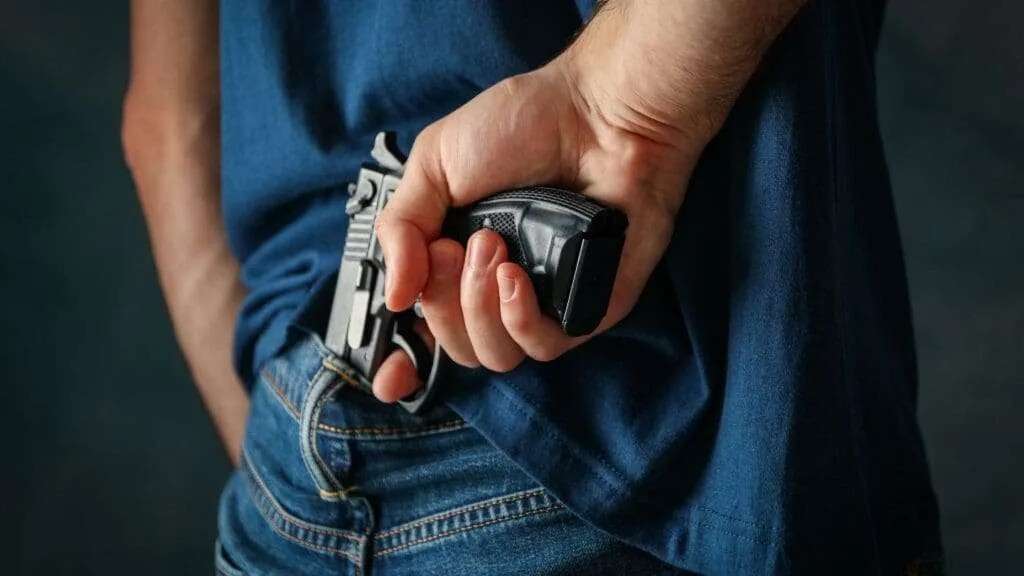
Being arrested and charged with any firearms-related or firearms crimes offense in Lancaster, California is an extremely serious matter that threatens your freedom, your Second Amendment rights, your career, and your future. California has some of the strictest gun laws in the nation, and both state and federal prosecutors aggressively pursue weapons charges with severe penalties including lengthy prison sentences, massive fines, permanent loss of gun rights, and devastating collateral consequences.
Whether you’re facing charges for carrying a concealed weapon, illegal possession of a firearm, assault with a deadly weapon, possession of prohibited weapons, felon in possession, unregistered firearms, straw purchases, or any other firearms offense, you need experienced legal representation that understands California’s complex gun laws, federal firearms statutes, and how to build an aggressive defense strategy.
At Tu Defensor Criminalista, we provide comprehensive criminal defense for individuals facing all types of firearms charges throughout Lancaster and the Antelope Valley. Our experienced attorneys understand California Penal Code firearms statutes (25400, 25850, 29800, 30600, and many others), federal firearms laws (18 U.S.C. §§ 922, 924, 932), Fourth Amendment search and seizure issues, CCW permit procedures, and gun rights restoration. We have successfully defended countless clients facing firearms charges, achieving dismissals, acquittals, reduced charges, and outcomes that protect our clients’ rights and futures.
Lancaster, located in northern Los Angeles County with approximately 167,426 residents, experiences elevated violent crime rates that have led to aggressive firearms enforcement by local, state, and federal authorities.
According to crime data[1], Lancaster faces significant public safety challenges:
California and Los Angeles County see substantial firearms-related enforcement:
California Statewide (2023): According to the California Department of Justice Crime Gun Report[2] and ATF firearms trace data[3]:
Los Angeles County: According to the LA County Almanac[4]:
This elevated enforcement environment means firearms charges are prosecuted aggressively with severe consequences.
California Penal Code Section 25400 prohibits carrying a concealed firearm on your person or in a vehicle without a valid CCW permit.
What Constitutes Violation:
Penalties: Misdemeanor (Standard):
Felony (With Aggravating Factors):
Aggravating Factors Elevating to Felony:
California Penal Code Section 25850 prohibits carrying a loaded firearm in public or in a vehicle on public streets.
Penalties: Misdemeanor:
Felony (Wobbler):
Key Distinction: Specifically addresses loaded firearms, while PC 25400 addresses concealed (loaded or unloaded). Often charged together.
California Penal Code Section 29800 prohibits anyone with a felony conviction from owning, purchasing, receiving, or possessing any firearm.
Who Is Prohibited:
Penalties:
Elements Required:
Possession Types:
California Penal Code Section 30305 prohibits possession of ammunition by persons prohibited from owning firearms.
Penalties:
California Penal Code Section 245 prohibits assault with deadly weapon or firearm, or by means likely to produce great bodily injury.
Penalties Vary by Weapon Type:
With Deadly Weapon (Not Firearm):
With Firearm:
With Semiautomatic Firearm:
With Machine Gun/Assault Weapon/.50 BMG:
Enhanced for Peace Officer/Firefighter Victims:
Three Strikes: Counts as “strike” under California’s Three Strikes Law
California strictly regulates “assault weapons” under complex definitions.
PC 30600 – Manufacturing, Distributing, Transporting, Importing, Selling:
PC 30605 – Possession of Assault Weapon:
What Qualifies as “Assault Weapon”:
California prohibits numerous weapons categories:
PC 33410 – Silencers/Suppressors:
PC 16590 – Generally Prohibited Weapons:
Penalties:
California requires registration of most firearms, especially handguns, assault weapons, and homemade firearms.
Registration Requirements:
Penalties for Unregistered Firearms: Misdemeanor:
Felony (Aggravating Circumstances):
Carrying Loaded, Unregistered Firearm in Public (PC 25850):
“Straw purchase” occurs when someone buys a firearm for another person unable or unwilling to purchase themselves.
Federal Law (18 U.S.C. § 932): Created by Bipartisan Safer Communities Act (2022):
California Law:
Consequences:
Enhanced penalties for possessing firearms within 1,000 feet of school grounds.
PC 246 – Shooting at Inhabited Dwelling/Vehicle:
PC 246.3 – Discharge in Grossly Negligent Manner:
PC 417.6 – Discharge on School Grounds:
Federal and state laws prohibit:
Penalties:
Federal prosecutors may charge:
18 U.S.C. § 922 – Unlawful Acts:
18 U.S.C. § 924 – Penalties and Enhancements:
18 U.S.C. § 932 – Straw Purchases:
Federal Penalties:
The most powerful defense to many firearms charges involves challenging the legality of the search and seizure:
Illegal Traffic Stop:
Illegal Search:
Exclusionary Rule: If firearm evidence obtained through unconstitutional search/seizure, it must be suppressed. Without the firearm as evidence, prosecution often cannot proceed.
Prosecution must prove you knew the firearm was present:
Actual Possession: Physical possession on person
Constructive Possession: Access and control
Defenses:
California allows firearm transportation under specific conditions:
Possession of valid CCW permit is complete defense to carrying concealed/loaded charges:
Various exemptions exist for:
In cases involving discharge of firearm or assault charges:
Law enforcement induced you to commit crime you otherwise wouldn’t:
Firearms charges sometimes result from:
Prosecution must prove every element beyond reasonable doubt:
Technical violations invalidating prosecution:
Second Amendment:
Due Process:
Understanding the legal process for obtaining a CCW permit helps both avoid charges and understand your rights:
Following New York State Rifle & Pistol Association v. Bruen (2022), California’s CCW landscape changed:
According to California DOJ regulations[5]:
Basic Eligibility:
Required Training (Assembly Bill 210):
City Residents: Apply through Lancaster Police Department via MyCCW[6]
Unincorporated Areas: Apply through Los Angeles County Sheriff’s Department[7]
Fees: Approximately $216 total ($43 non-refundable + $173 upon approval)
Steps:
Duration: 2-year permits, renewable with additional training
Even with CCW permit, carrying prohibited in:
Note: Many restrictions subject to ongoing litigation with federal court injunctions.
For “wobbler” felonies, petition court to reduce to misdemeanor:
Benefits:
Important: Does NOT restore gun rights by itself, but combined with 17(b) reduction may help if:
Certain PC 29805 misdemeanors result in 10-year ban:
Critical: Even if California restores rights, federal law may still prohibit:
For non-citizens:
Serious/violent firearms felonies count as “strikes”:
State charges can lead to federal prosecution with:
Antelope Valley Courthouse 42011 4th Street West Lancaster, CA 93534 Phone: (661) 483-5600
Process Stages:
Immediately invoke your Fifth Amendment right to remain silent and your Sixth Amendment right to an attorney. Tell the arresting officers clearly: “I am invoking my right to remain silent and I want to speak with my attorney.” Do not answer any questions, do not explain the situation, and do not consent to any searches. Anything you say can and will be used against you in court. Contact Tu Defensor Criminalista at (888) 315-3326 as soon as possible. We are available 24/7 to provide immediate legal assistance. Do not discuss your case with cellmates, friends, or family members in jail, as these conversations may be recorded and used as evidence against you.
Yes, absolutely. California Penal Code Section 25400 (carrying a concealed weapon) applies to both loaded and unloaded firearms. You can be charged with a serious crime even if the firearm was completely unloaded and you had no ammunition. However, certain charges like PC 25850 specifically address loaded firearms and require the weapon to be loaded. The distinction between loaded and unloaded can affect which charges are filed and the severity of penalties, but being unloaded does not automatically protect you from prosecution. In fact, many firearms offenses in California do not require the weapon to be loaded for you to face serious criminal charges.
Misdemeanor firearms charges typically carry maximum penalties of up to one year in county jail and fines up to $1,000, while felony charges carry 16 months or more in county jail or state prison and fines up to $10,000. More importantly, felony convictions result in lifetime loss of gun rights under both California and federal law, create a permanent felony record, can count as “strikes” under California’s Three Strikes Law, and carry far more severe collateral consequences affecting employment, housing, professional licensing, and immigration status. Many firearms offenses are “wobblers,” meaning prosecutors have discretion to charge them as either misdemeanors or felonies based on the circumstances and your criminal history. Aggravating factors that can elevate charges to felonies include prior convictions, stolen firearms, gang membership, being prohibited from possessing firearms, or having prior crimes involving violence or drugs.
Not automatically. Police need either your voluntary consent, probable cause to believe your vehicle contains evidence of a crime or contraband, or another legal exception to the warrant requirement such as search incident to arrest or inventory search after impound. Simply being stopped for a traffic violation does not give officers automatic authority to search your vehicle. However, if officers see a firearm in plain view, smell marijuana, or observe other evidence suggesting criminal activity, they may develop probable cause to search. You should never consent to searches. Politely but firmly state: “I do not consent to any searches.” If officers search anyway, do not physically resist, but immediately contact an attorney. Any evidence obtained through an illegal search can potentially be suppressed and excluded from your case, which often results in charges being dismissed or significantly reduced.
Lack of knowledge is a complete defense to firearms charges in California. The prosecution must prove beyond a reasonable doubt that you knew the firearm was present. If you genuinely didn’t know about the weapon—for example, if you borrowed someone’s vehicle, a passenger left it there, you recently purchased a used car, or someone placed it without your knowledge—you cannot be convicted. However, prosecutors may try to prove knowledge through circumstantive evidence such as where the gun was located, whether it was in plain view, your behavior when contacted by police, and other factors. An experienced attorney can present evidence supporting your lack of knowledge, including testimony from the vehicle’s owner, passengers, or others who had access. This defense requires thorough investigation and strategic presentation of evidence, which is why immediate legal representation is critical.
It depends on several factors. A felony conviction creates a lifetime firearm prohibition under both California and federal law, but there are potential pathways to restoration. If your felony was a “wobbler” offense that could have been charged as a misdemeanor, you may petition under Penal Code Section 17(b) to reduce it to a misdemeanor after successfully completing probation. Once reduced, you may regain California gun rights depending on the specific offense and whether it’s listed in PC 29805. However, federal law under 18 U.S.C. Section 922(g)(1) prohibits anyone convicted of any felony from possessing firearms, and federal restoration is more complex. Some felonies can never be reduced, and certain misdemeanors like domestic violence create permanent prohibitions. Additionally, California offers expungement under PC 1203.4, but expungement alone does not restore gun rights. You need an experienced attorney to evaluate your specific conviction, determine available options, and navigate the restoration process. Never attempt to possess firearms after any conviction without first confirming your legal right to do so.
A CCW (Carry Concealed Weapon) permit is a license issued by local law enforcement that allows you to legally carry a loaded, concealed firearm in public. Following the Supreme Court’s 2022 decision in New York State Rifle & Pistol Association v. Bruen, California became a “shall-issue” state, making permits more accessible. To obtain a CCW permit in Lancaster, you must be at least 21 years old, be a California resident or have your principal place of employment here, complete 16 hours of required firearms training including live-fire qualification, demonstrate good moral character, have no disqualifying convictions or restraining orders, and have each firearm you want to carry registered in your name. City of Lancaster residents apply through the Lancaster Police Department via the MyCCW system, while residents of unincorporated areas apply through the Los Angeles County Sheriff’s Department. The process includes submitting an online application, paying approximately $216 in fees, undergoing background checks and fingerprinting, attending an interview, and potentially completing a psychological assessment. Permits are valid for two years and require eight hours of refresher training for renewal. Even with a valid CCW permit, you cannot carry in certain “sensitive places” including schools, government buildings, airports, bars, public transit, and posted private property, though many of these restrictions are currently subject to legal challenges.
Yes, but only under very specific conditions. To legally transport a firearm in your vehicle in California, the firearm must be unloaded, stored in a locked container that is not the glove compartment or utility compartment, and ideally placed in the trunk if your vehicle has one. The locked container must be fully enclosed and secured with a padlock, key lock, combination lock, or similar device. Ammunition should be stored separately from the firearm. You can transport firearms when traveling directly to or from lawful activities such as going to a shooting range, gun shop, gunsmith, moving to a new residence, or other legitimate purposes. These requirements are found in Penal Code sections 16850, 25610, and 25612. A valid California CCW permit allows you to carry a loaded firearm in your vehicle, but you must comply with all permit terms and restrictions. Violating these transportation requirements can result in serious criminal charges including carrying a concealed weapon (PC 25400) or carrying a loaded firearm (PC 25850), both of which can be charged as felonies with significant prison time and permanent loss of gun rights.
California defines “assault weapons” under complex and often confusing statutes in Penal Code sections 30600 and 30605. An assault weapon can be a specifically named firearm listed in the statute, a semi-automatic centerfire rifle with a detachable magazine and specific features like a pistol grip, folding or telescoping stock, grenade or flare launcher, or flash suppressor, a semi-automatic centerfire rifle with fixed magazine holding more than 10 rounds, semi-automatic pistols with certain features and detachable magazines, certain semi-automatic shotguns with specific features, or .50 BMG rifles. The definitions are highly technical and change periodically through legislation, making it difficult for gun owners to know if their firearms qualify. California requires registration of assault weapons, and unregistered assault weapons are illegal to possess. Manufacturing, distributing, transporting, importing, or selling assault weapons carries four, six, or eight years in state prison under PC 30600, while simple possession under PC 30605 is a “wobbler” that can be charged as a misdemeanor with up to one year in jail or a felony with up to three years in state prison. These laws are among the most complex firearms statutes in California, and determining whether a specific firearm meets the legal definition of an assault weapon requires expert analysis and experienced legal representation.
A straw purchase occurs when someone buys a firearm on behalf of another person who is unable or unwilling to purchase it themselves, typically because the actual purchaser is prohibited from owning firearms, wants to avoid a background check, or doesn’t want the purchase traced to them. This is illegal under both federal and California law. Federal law under 18 U.S.C. Section 932, created by the Bipartisan Safer Communities Act of 2022, makes straw purchases punishable by up to 15 years in federal prison, or up to 25 years if the firearm was intended for use in a felony, drug trafficking, or terrorism. Additionally, lying on ATF Form 4473 when purchasing a firearm carries an additional 10 years under 18 U.S.C. Section 922(a)(6). California law also prohibits selling, loaning, or transferring firearms to someone you know is not the actual purchaser, and requires almost all private transfers to go through a licensed dealer with limited exceptions for immediate family members. Straw purchases are prosecuted aggressively because they are a major source of firearms entering illegal markets. Both the straw purchaser and the actual recipient can face serious state and federal charges, loss of gun rights, substantial fines, and lengthy prison sentences. Even buying a firearm as a “gift” can be problematic if not done properly under the law.
Yes, absolutely. The “dual sovereignty doctrine” allows both state and federal prosecutors to charge you for the same conduct without violating double jeopardy protections. Many firearms offenses violate both California Penal Code sections and federal statutes under Title 18 of the U.S. Code. For example, a felon possessing a firearm violates both California PC 29800 and federal 18 U.S.C. Section 922(g)(1). Federal prosecutors often take cases involving prohibited persons with firearms, straw purchases, interstate trafficking, firearms used in drug trafficking or violent crimes, or cases involving multiple defendants or large quantities of weapons. Federal charges typically carry more severe penalties than state charges, are prosecuted in federal court with different procedures, result in sentences calculated under federal sentencing guidelines with mandatory minimums in many cases, and result in imprisonment in federal facilities where there is no parole (though supervised release exists after prison). Having both state and federal charges means you face exposure in two separate court systems simultaneously, dramatically increasing the complexity and stakes of your case and making experienced legal representation with knowledge of both state and federal firearms laws absolutely essential.
California’s Three Strikes Law, codified in Penal Code Section 667, dramatically increases sentences for defendants with prior serious or violent felony convictions called “strikes.” Many serious firearms offenses count as strikes, including assault with a firearm, shooting at an inhabited dwelling, robbery while armed, and certain other violent crimes involving weapons. Here’s how it works: your first strike conviction counts toward future sentencing if you commit additional felonies; a second strike doubles your sentence for the current offense and requires you to serve at least 80 percent before becoming eligible for parole; and a third strike results in a mandatory sentence of 25 years to life in state prison, regardless of whether the third felony is serious or violent. Prior to 2012’s Proposition 36, any third felony triggered the 25-to-life sentence, but now the third strike must be serious or violent. However, second strike sentencing still applies to any new felony if you have one prior strike, doubling your sentence. Strike convictions follow you for life unless dismissed through a Romero motion where the judge exercises discretion to strike a prior conviction “in the interests of justice.” These motions are difficult to win and require strong mitigation evidence. The Three Strikes Law means a single firearms conviction can have devastating consequences decades into your future, making it absolutely critical to fight aggressively against strike-eligible charges.
Comprehensive Firearms Law Expertise
Local Lancaster Knowledge
Aggressive Defense Strategies
Personalized Service
Bilingual Services
24/7 Availability
Every minute counts when facing firearms charges. Evidence disappears, witnesses forget, and opportunities close.
Don’t let firearms charges destroy your Second Amendment rights, your freedom, and your future.
Lancaster • Palmdale • Quartz Hill • Rosamond • Acton • Lake Los Angeles • Littlerock • Pearblossom • All Northern LA County
Call us now for your confidential consultation.
Se habla Español. Estamos disponibles 24/7 para defender sus derechos.
Attorney Armando Josué Cespedes is rated 5.0 on Avvo, with 34 five-star reviews from clients praising his dedication, professionalism, and results. Many note how his trial skills and attention to detail led to reduced charges or outright dismissals.



 English English
 Español de México English English Español de México
Thank you! We need your help. Would you share your experience on one of these sites?
If you have concerns you wish to address privately
