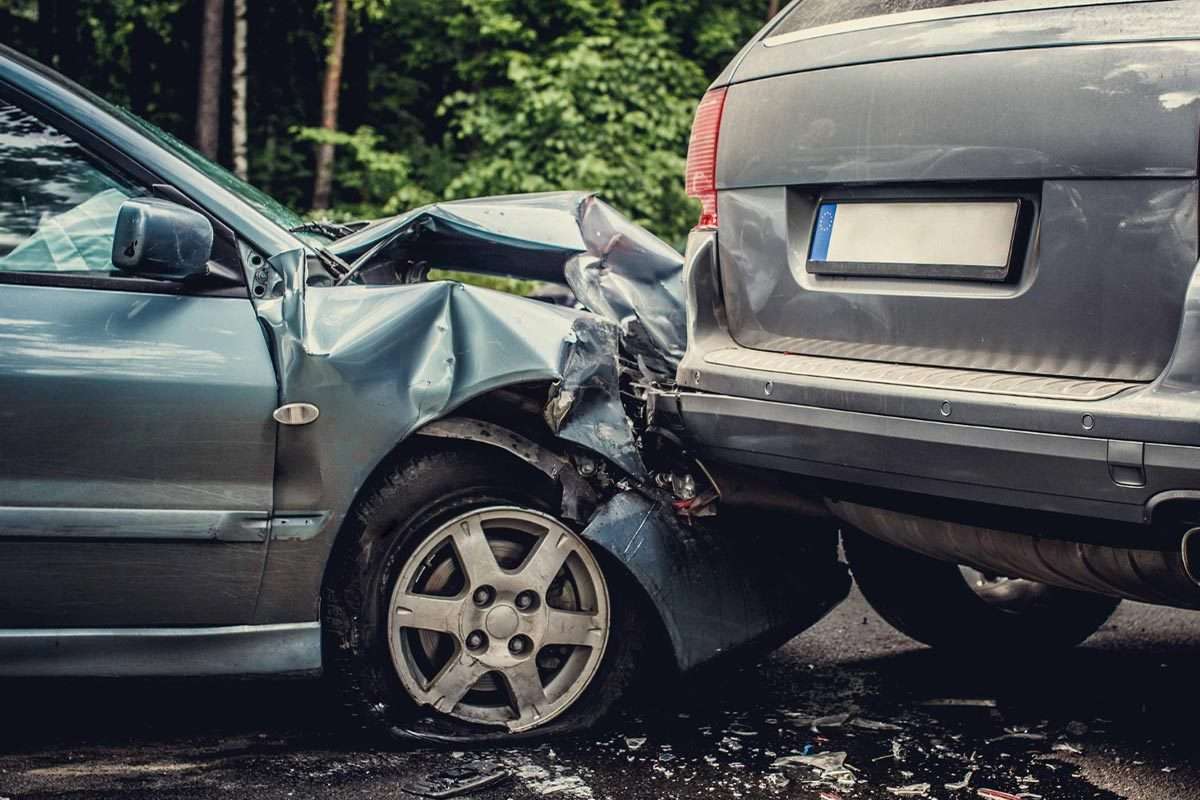
Aggressive Defense Against Hit and Run with DUI, Felony Hit and Run, Misdemeanor Hit and Run & All Related Charges in Riverside, Moreno Valley, Corona, Temecula, Murrieta, Hemet, Indio, Palm Springs & All of Riverside County
Facing hit and run and DUI charges in Riverside County, California? You are confronting one of the most serious and most aggressively prosecuted charge combinations in the California criminal justice system. A hit and run DUI is not simply two separate charges stacked together — it is a situation that law enforcement and prosecutors treat as a crisis-level public safety offense, pursuing every available charge, every enhancement, and every resource to secure a conviction and maximize punishment.
The consequences of a hit and run DUI conviction in Riverside County are severe and multi-dimensional. Depending on whether the incident involved property damage only or injury and death, you face everything from misdemeanor charges and license revocation to felony state prison sentences measured in years, mandatory restitution obligations, civil lawsuits from injured parties, potential vehicular manslaughter or murder charges, and a permanent record that reshapes every aspect of your life. The combination of leaving the scene and driving under the influence tells a story that prosecutors know resonates powerfully with juries — and one that requires skilled, technically sophisticated defense to dismantle.
What many people do not realize is that hit and run DUI cases are highly defensible. The prosecution must prove that you were the driver of the vehicle — a factual element that is far from automatic in many cases. They must prove that you knew a collision occurred. They must prove you were under the influence at the time of driving, not merely at the time of later testing. And they must navigate Fourth Amendment restrictions on how your vehicle and home were searched in the investigation. Any one of these elements, properly challenged, can result in dismissal, reduction, or acquittal.
At Tu Defensor Criminalista, Attorney Armando Josué Cespedes provides aggressive, technically sophisticated hit and run DUI defense for clients throughout Riverside County — including Riverside, Moreno Valley, Corona, Temecula, Murrieta, Hemet, Indio, Palm Springs, Perris, Banning, Beaumont, Lake Elsinore, Menifee, and every surrounding community. We fight every element of every charge to protect your freedom, your record, and your future.
Free Confidential Consultation: (888) 315-3326 | Available 24/7 | Hablamos Español
California’s hit and run statutes — Vehicle Code §§ 20001 and 20002 — impose specific legal duties on every driver involved in a traffic collision, regardless of fault. Failing to fulfill those duties is a criminal offense independent of any DUI charge.
VC § 20001 applies when a traffic collision results in injury or death to any person. Every driver involved in such a collision has a mandatory legal duty to:
Failing to fulfill any of these duties when injury or death has occurred is a felony under VC § 20001.
VC § 20001 Penalties:
When DUI is Combined with VC § 20001: The combination of a felony hit and run with DUI charges dramatically increases total sentencing exposure. Each charge carries independent penalties, and the sentences can run consecutively — meaning a defendant convicted of both felony hit and run and felony DUI causing injury can face compound prison terms far exceeding what either charge would produce alone.
VC § 20002 applies when a traffic collision results in damage to another vehicle or property — but no injury or death occurs. The legal duties are similar to VC § 20001: stop at the scene, provide contact and registration information, and leave a note in a visible location on the damaged vehicle if the owner cannot be located.
VC § 20002 Penalties:
The Misdemeanor-to-Felony Escalation Risk: Even when a collision initially appears to involve property damage only, subsequent investigation sometimes reveals that a person was injured — elevating the charge from misdemeanor VC § 20002 to felony VC § 20001. We monitor every case for this escalation risk and respond aggressively when the prosecution attempts to upgrade charges.
When a hit and run is combined with DUI, Riverside County prosecutors typically file the following charges simultaneously:
One of the most powerful and most damaging aspects of a hit and run DUI prosecution is the inference of consciousness of guilt that the prosecution draws from the act of leaving the scene. The argument is straightforward and resonates with juries: you left because you knew you were drunk and you knew you had hurt someone. This inference — if not effectively countered — makes conviction significantly more likely even when the underlying DUI evidence is weaker than it appears.
We address consciousness of guilt evidence head-on with alternative explanations: panic, confusion, fear of the scene itself, not realizing the full extent of what had happened, or leaving to get help — all of which are documented in California case law as responses that do not establish consciousness of guilt as a matter of law.
Hit and run DUI investigations in Riverside County move faster and involve more investigative resources than a standard DUI arrest. When you leave the scene, law enforcement initiates an active investigation to identify and locate you — using:
By the time an officer appears at your door, they often have substantial evidence already assembled. This is why contacting an attorney before speaking to any law enforcement officer is the most critical decision you can make.
When law enforcement contacts you following a hit and run — whether by phone, at your workplace, or at your home — you have an absolute constitutional right to remain silent and to have an attorney present before any questioning. Exercise this right completely. Do not attempt to explain, minimize, or justify what happened. Do not confirm you were driving. Do not consent to any search of your vehicle or residence. Contact our office immediately.
Statements made to law enforcement before an attorney is present are among the most damaging evidence in hit and run DUI cases — because they frequently involve admissions about driving, drinking, or the circumstances of the accident that the prosecution uses to eliminate defenses that would otherwise be available.
Riverside County is one of Southern California’s most heavily trafficked regions, with major freeway corridors connecting the Inland Empire to Los Angeles, San Diego, and the desert communities. According to the U.S. Census Bureau[1], Riverside County has a population of more than 2.4 million people — making it one of California’s most populous and fastest-growing counties.
According to the California Office of Traffic Safety (OTS)[2], Riverside County consistently ranks among California’s most active counties for traffic collisions, DUI enforcement, and hit and run incidents. The OTS funds dedicated traffic enforcement programs throughout the county targeting both DUI and collision-related offenses.
The National Highway Traffic Safety Administration (NHTSA)[3] reports that alcohol-impaired driving is a leading contributor to traffic fatalities nationally, driving intensive law enforcement focus on DUI detection and prosecution. California’s Office of Traffic Safety specifically tracks hit and run collisions as a distinct enforcement priority, reflecting the danger that leaving accident scenes poses to injured victims who may not receive timely medical assistance.
According to the California Department of Justice’s Open Justice data portal[4], hit and run offenses are prosecuted as a distinct and seriously treated category of vehicle code violation throughout California, with Riverside County consistently generating significant prosecution volume.
High-Risk Hit and Run DUI Corridors in Riverside County:
The Riverside County Sheriff’s Department[5] and municipal police departments throughout the county — including the Riverside, Corona, Temecula, Hemet, and Palm Springs Police Departments — actively investigate hit and run incidents and work cooperatively with the Riverside County District Attorney’s Office[6] to file criminal charges.
Hit and run DUI cases are fact-intensive and involve multiple elements that the prosecution must prove beyond a reasonable doubt. Any one of them, successfully challenged, can result in dismissal or acquittal.
The prosecution must prove beyond a reasonable doubt that you were the person driving the vehicle at the time of the collision. In hit and run cases where you left the scene before law enforcement arrived, this identification is frequently based on indirect evidence — witness descriptions, vehicle registration, surveillance footage, or later investigation. Any weakness in that identification creates the reasonable doubt necessary for acquittal.
Common identity challenges in Riverside County hit and run DUI cases:
We scrutinize all identification evidence, challenge the reliability of witness identifications, retain video analysis experts when surveillance footage is involved, and present all alternative driver evidence to the jury.
Result: Identity not proven beyond a reasonable doubt — not guilty.
VC § 20001 and VC § 20002 both require that the driver knew a collision occurred. A driver who genuinely did not realize that their vehicle had struck another vehicle or object — particularly in low-speed incidents, incidents in crowded parking lots, incidents at night, or incidents involving minor contact — cannot be convicted of hit and run.
Knowledge defense scenarios:
Evidence we use: accident reconstruction to demonstrate the impact force, witness testimony about the circumstances of the contact, physical evidence about the extent of damage and whether it would have been perceptible to the driver, and expert testimony on perception thresholds.
Result: No knowledge of collision proven — hit and run charges dismissed.
Many hit and run DUI prosecutions begin not with a stop of the vehicle at the scene but with law enforcement later locating and contacting the driver — sometimes at their home, sometimes through a traffic stop of the vehicle based on an investigation. The Fourth Amendment governs both of these encounters:
Result: Evidence obtained through unlawful entry or stop suppressed — case significantly weakened or dismissed.
This is one of the most powerful and most underutilized defenses in hit and run DUI cases — and it is uniquely applicable to these cases because of the time delay between the collision and the BAC test.
In hit and run DUI cases, there is almost always a substantial gap between the time of the collision — when you were driving — and the time the chemical test is administered. If you consumed alcohol after the collision and before the test, your BAC at the time of testing reflects that post-driving consumption — not your BAC at the time of driving.
The defense argument: I was not impaired at the time I was driving. After I arrived home — confused, shaken, or in a panic — I drank alcohol. When law enforcement tested me hours later, my BAC reflected that post-driving drinking, not my BAC while I was behind the wheel.
California courts have recognized this defense, and the prosecution carries the burden of disproving post-driving drinking beyond a reasonable doubt once the defense is raised with sufficient evidence.
Evidence we develop: testimony about what you consumed after the collision, purchase records for alcohol consumed afterward, witness testimony from anyone who saw you drink after arriving home, and toxicological analysis establishing that your BAC at the time of driving was consistent with or below the legal limit.
Result: Post-driving alcohol consumption established — BAC at time of driving not proven — DUI charge defeated.
Even without post-driving drinking, the rising blood alcohol defense applies whenever alcohol was consumed close to the time of driving. Alcohol absorption continues for 30 to 90 minutes after the last drink. If your BAC was still rising at the time of the collision, your BAC while driving may have been below 0.08% even though the later test showed 0.08% or higher.
The time gap inherent in hit and run investigations — which often results in chemical testing occurring hours after the collision — makes this defense especially valuable.
Result: BAC at time of driving below 0.08% — per se DUI charge defeated.
Standard breathalyzer and blood test challenges apply with equal force in hit and run DUI cases — and are actually stronger in these cases because of the extended time gap between driving and testing.
Breathalyzer challenges:
Blood test challenges:
Result: Chemical test evidence suppressed or discredited — DUI charge significantly weakened.
Felony hit and run under VC § 20001 requires proof that the collision caused injury. We challenge the injury element by:
Result: Injury element not proven — felony reduced to misdemeanor — prison time eliminated.
California Vehicle Code § 20001(c) provides a sentence reduction — not a complete defense, but a meaningful mitigation — when a driver voluntarily and immediately returns to the scene or immediately reports the accident to a peace officer. If our client reported the accident or returned to the scene promptly, we present this evidence aggressively at every stage — in plea negotiations, at sentencing, and in trial — to reduce the characterization of the conduct from callous abandonment to panic followed by responsible action.
Result: Voluntary return or reporting — significant sentence mitigation — probation rather than prison.
When the evidence makes full acquittal challenging, we negotiate aggressively for the best possible resolution:
Result: Charges reduced — felony conviction avoided — consequences dramatically reduced.
When conviction cannot be fully avoided, the quality of sentencing advocacy determines the real-world impact of the conviction. We prepare comprehensive sentencing presentations that include:
Result: Most lenient sentence available — probation rather than prison, restitution plan rather than financial devastation.
A hit and run DUI arrest in Riverside County triggers multiple, overlapping DMV consequences that can affect your ability to drive for years:
We request the DMV hearing immediately upon being retained — preserving your driving privileges during the pendency of the case and developing evidence useful in the criminal proceedings.
Hit and run DUI cases are prosecuted through the Riverside County Superior Court system. The courthouse that handles your case depends on where the incident occurred:
According to the Riverside County Superior Court[7], the court processes thousands of felony and misdemeanor criminal cases annually across its courthouse locations, with hit and run and DUI offenses among the most commonly and seriously prosecuted categories.
What to Expect in Your Hit and Run DUI Case:
Many hit and run investigations unfold over days or weeks. If law enforcement has contacted you or you know you are under investigation, contacting us before your arrest gives us the opportunity to intervene at the earliest possible stage — preserving evidence, advising you on what to say and not say, and positioning your defense before charges are even filed.
The identity question — whether you were actually the driver — is the most powerful defense in many hit and run cases. We investigate this question with thoroughness that most defendants never receive, obtaining alternative driver evidence, challenging witness identifications, and scrutinizing surveillance footage with expert analysis.
The post-driving alcohol consumption defense is underutilized in hit and run DUI cases — yet it is uniquely applicable because of the time delay between the collision and the chemical test. We identify and develop this defense in every case where the facts support it.
The difference between felony VC § 20001 and misdemeanor VC § 20002 is the difference between state prison and county jail — a profound distinction. We fight aggressively for this reduction in every case where injury evidence is contested or where the overall circumstances support a reduced charge.
We bring the same technical rigor to the DUI component of hit and run cases that we bring to standard DUI matters — breathalyzer challenges, blood test chain of custody analysis, rising BAC defense, and Fourth Amendment suppression motions. Defeating the DUI component eliminates the DUI-related consequences while the hit and run defense addresses the remainder.
We request the DMV hearing the same day we are retained — protecting your driving privileges during the case.
We practice regularly across all Riverside County Superior Court locations — from Riverside to Murrieta to Indio. Our experience at each courthouse informs our strategy in every case.
We provide complete legal representation in both English and Spanish, serving Riverside County’s large and diverse Spanish-speaking community with full access to the highest quality defense in these serious cases.
Hit and run DUI investigations and arrests happen at all hours. We are available 24 hours a day, 7 days a week to respond immediately — including before your first contact with law enforcement.
Attorney Armando Josué Cespedes holds a perfect 5.0 Avvo rating with 34 five-star client reviews and three consecutive Client’s Choice Awards (2023, 2024, and 2025).
Contact our office immediately before taking any action. Voluntary surrender can sometimes be negotiated in a way that is strategically advantageous — preserving the goodwill that proactive action demonstrates — but only after thorough legal analysis of your specific situation. Never surrender or make statements without first speaking with an attorney.
Lack of knowledge that a collision occurred is a complete defense to hit and run charges. We develop this defense through accident reconstruction evidence, physical damage analysis, witness testimony, and any other evidence demonstrating you were unaware of the contact.
Yes. Each charge has independent elements that must be proven separately. We may succeed in defeating the DUI component while the hit and run charge remains, or vice versa. Every partial victory matters in reducing total exposure.
Post-driving alcohol consumption is a recognized defense in California DUI cases. If you consumed alcohol after the collision — before the chemical test was administered — your BAC at the time of testing does not accurately reflect your BAC while driving. We develop this defense fully when the facts support it.
VC § 20002 (property damage only) is a misdemeanor carrying up to 6 months in county jail. VC § 20001 (injury or death) is a felony carrying 2 to 5 years in state prison. The presence or absence of injury to another person is the critical dividing line — and we challenge injury evidence aggressively in every case.
Yes. A felony hit and run conviction results in license revocation for a period that depends on the severity of the offense and your prior record. A DUI conviction produces an independent license suspension. We fight both consequences simultaneously — in the criminal case and at the DMV hearing.
Yes. A hit and run DUI that injures another person can result in civil liability for the victim’s medical expenses, lost wages, pain and suffering, and property damage — independent of the criminal proceeding. We advise clients on the civil dimension of their case throughout the defense process.
A license plate number alone does not establish that you were driving. Vehicle registration establishes who owns the vehicle — not who was driving it. We challenge all identity evidence, including plate-based identification, through expert analysis, alternative driver evidence, and rigorous cross-examination.
Attorney Armando Josué Cespedes is rated 5.0 on Avvo, with 34 five-star reviews from clients praising his dedication, professionalism, and results. Many note how his trial skills and attention to detail led to reduced charges or outright dismissals.



 English English
 Español de México English English Español de México
Thank you! We need your help. Would you share your experience on one of these sites?
If you have concerns you wish to address privately
