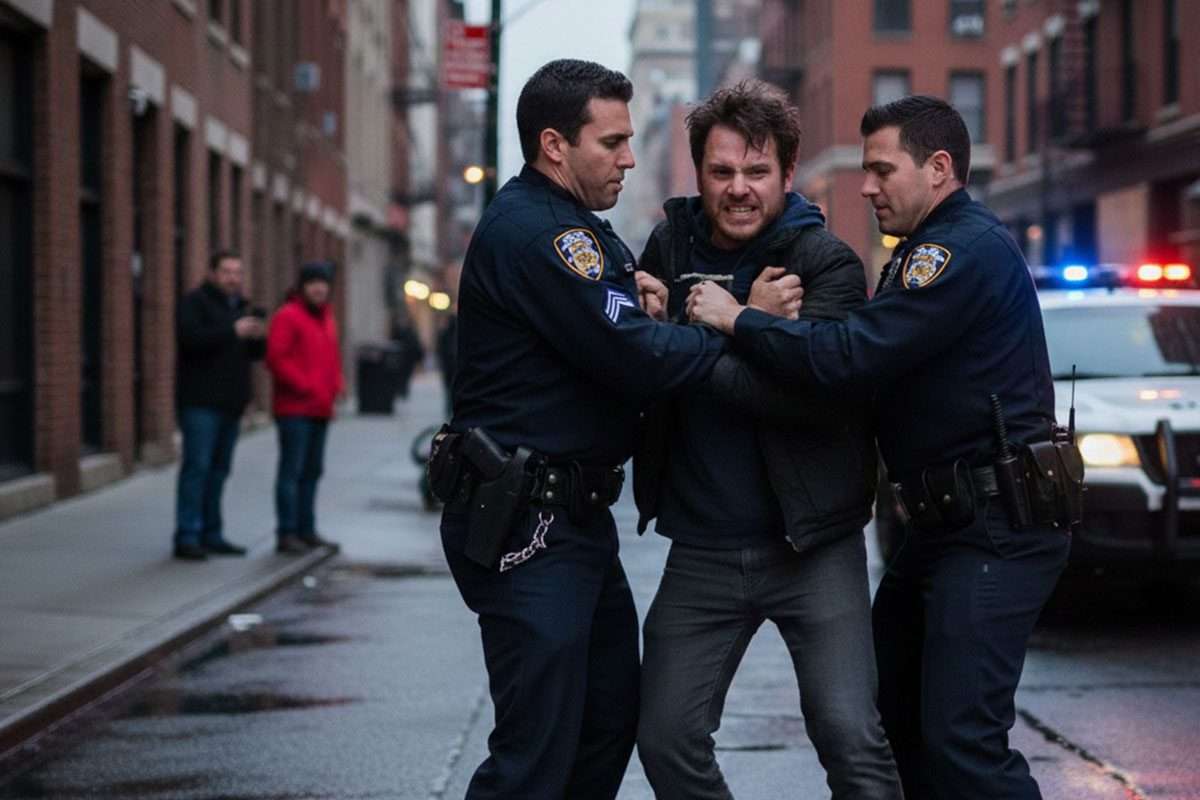
Aggressive Defense Against Resisting Arrest, Delaying or Obstructing a Peace Officer, Resisting an Executive Officer & All Related Charges in Riverside, Moreno Valley, Corona, Temecula, Murrieta, Hemet, Indio, Palm Springs & All of Riverside County
Charged with resisting arrest in Riverside County, California? What many people do not realize is that resisting arrest charges under California Penal Code § 148 are among the most commonly filed and most commonly contested criminal charges in the California justice system — and they are among the most frequently defensible. Resisting arrest accusations arise in an enormous range of circumstances: a confused reaction during a chaotic traffic stop, pulling away instinctively from an officer’s grasp, asking questions during a detention, moving slowly to comply with an officer’s commands, or simply being present at a scene where law enforcement was operating. None of these situations necessarily constitutes criminal resisting arrest — but all of them result in charges being filed every day in Riverside County courtrooms.
What makes resisting arrest charges particularly dangerous is how frequently they arise in combination with other charges — DUI stops where the defendant questions the arrest, domestic violence calls where someone resists being handcuffed, traffic stops that escalate into confrontations, protests or public gatherings where police make mass arrests, or use-of-force incidents where the officer files a resisting charge to justify their own conduct. The resisting arrest charge can transform what might have been a minor offense into a multi-count criminal case with significantly elevated consequences.
It is also critical to understand that California law recognizes an important limitation on resisting arrest charges: if the underlying arrest was unlawful — if the officer lacked probable cause or was not acting lawfully in the performance of their duties — a resisting arrest charge based on that unlawful arrest cannot legally stand. This constitutional defense is one of the most powerful available, and it is one that a skilled defense attorney can identify and develop from the very beginning of your case.
At Tu Defensor Criminalista, Attorney Armando Josué Cespedes provides aggressive, strategic resisting arrest defense for clients throughout Riverside County — including Riverside, Moreno Valley, Corona, Temecula, Murrieta, Hemet, Indio, Palm Springs, Perris, Banning, Beaumont, Lake Elsinore, Menifee, and every surrounding community. We fight to protect your record, your rights, and your future.
Free Confidential Consultation: (888) 315-3326 | Available 24/7 | Hablamos Español
California Penal Code § 148(a)(1) is the primary resisting arrest statute and one of the most broadly applied criminal statutes in California. It makes it a misdemeanor to willfully resist, delay, or obstruct any public officer, peace officer, or emergency medical technician in the discharge or attempt to discharge any duty of their office or employment.
The prosecution must prove all of the following elements beyond a reasonable doubt:
PC § 148(a)(1) Penalties:
PC § 148(b) makes it a felony to take or attempt to take a firearm from the person of a peace officer or firefighter while they are performing their duties. This is a far more serious charge than standard resisting arrest.
Penalties:
PC § 148(c) specifically addresses taking or attempting to take a firearm from an officer who is making or attempting to make an arrest. This is charged as a wobbler.
Penalties:
PC § 69 is a significantly more serious offense than the standard PC § 148(a)(1) charge. It makes it a crime to attempt, by means of any threat or violence, to deter or prevent an executive officer from performing any duty imposed by law, or to knowingly resist by the use of force or violence any executive officer in the performance of their duty.
The key distinction between PC § 69 and PC § 148:
PC § 69 requires the use of force or violence, or threats of force or violence. Simple delay, verbal obstruction, or passive non-compliance does not satisfy PC § 69. However, any physical struggle with an officer — grabbing, striking, pushing, or wrestling — can result in a PC § 69 charge.
PC § 69 is a wobbler offense:
PC § 148.9 makes it a misdemeanor to provide false identification — a false name or false identification document — to a peace officer during a lawful detention or arrest. This charge frequently accompanies resisting arrest allegations in Riverside County cases where a defendant gave false information to officers.
Penalties:
PC § 148.10 applies when resisting or evading a peace officer causes serious bodily injury or death. This is a significant escalation from the standard misdemeanor resisting charge:
One of the most significant dangers of a resisting arrest charge in Riverside County is how frequently it is filed in combination with other criminal charges — multiplying the total consequences and significantly complicating the defense.
We defend all related charges simultaneously — because the best defense of the resisting charge often requires simultaneously attacking the underlying charges that provided the context for the confrontation.
One of the most powerful and most important defenses to a resisting arrest charge in Riverside County is the constitutional principle that an individual cannot be convicted of resisting an unlawful arrest. If the underlying arrest lacked probable cause — if the officer was acting unlawfully rather than in lawful performance of their duties — then there is no “lawful duty” being performed, and PC § 148’s essential element fails.
The California Supreme Court’s position: California courts have consistently held that PC § 148 requires that the officer be acting lawfully. An arrest unsupported by probable cause is not a lawful performance of duty, and resistance to an unlawful arrest cannot constitute resisting arrest under California law.
What makes an arrest unlawful in Riverside County:
We investigate the circumstances of every arrest from the very beginning — obtaining body camera footage, dashcam video, witness accounts, police reports, and dispatch records — to determine whether the underlying arrest was lawful. When it was not, we move to dismiss the resisting charge on that basis.
Riverside County is California’s fourth-largest county by area with a population of more than 2.4 million people according to the U.S. Census Bureau[1]. The county’s large and diverse population, its major urban centers, and its active law enforcement presence across multiple agencies create conditions in which resisting arrest charges arise with significant frequency.
The San Bernardino County Sheriff’s Department[2], the Riverside County Sheriff’s Department[3], the Riverside Police Department[4], and municipal police departments throughout the county — including those in Corona, Temecula, Murrieta, Hemet, and Palm Springs — collectively generate thousands of arrests annually. According to the California Department of Justice’s Open Justice data portal[5], resisting and obstructing peace officers represents one of the most commonly charged offense categories in California year after year.
The Riverside County District Attorney’s Office[6] prosecutes PC § 148 and PC § 69 charges throughout the county’s multiple courthouse jurisdictions, treating them as legitimate criminal matters rather than minor add-on charges. Conviction on a resisting arrest charge — even as a misdemeanor — creates a permanent criminal record that affects employment, housing, professional licensing, and immigration status.
Common Scenarios Leading to Resisting Arrest Charges in Riverside County:
As discussed above, resistance to an unlawful arrest cannot constitute resisting arrest under California law. If the officer lacked probable cause or reasonable suspicion for the initial detention and arrest, the “lawful duty” element of PC § 148 fails — and the charge must be dismissed.
Evidence we gather to establish unlawful arrest:
Result: Underlying arrest unlawful — lawful duty element fails — PC § 148 charge dismissed.
PC § 148 requires willful resistance — a deliberate, intentional act of resisting, delaying, or obstructing. An involuntary or reflexive reaction to physical contact is not willful and does not satisfy the statute.
Common involuntary reaction scenarios:
Evidence we use: medical records, witness accounts of the incident, body camera footage showing the sequence of events, and expert testimony on involuntary reactions to physical contact.
Result: No willful resistance — essential element missing — not guilty.
California courts have repeatedly held that simply arguing with an officer, asking questions, verbally objecting to an arrest, or criticizing police conduct does not constitute resisting, delaying, or obstructing under PC § 148. The First Amendment protects the right to verbally challenge law enforcement conduct — including the right to question the basis for a stop or arrest.
If the only conduct supporting the resisting arrest charge is verbal — asking why you are being arrested, expressing disagreement with the officer’s characterization of events, or telling the officer they are wrong — the charge cannot stand.
Evidence we use: body camera footage, audio recordings, officer reports, and the exact transcript of all verbal exchanges to establish that the conduct was purely verbal and protected.
Result: Verbal conduct protected — no criminal resistance — charge dismissed.
When an officer uses excessive force during an arrest, the defendant has the right under California law to use reasonable force to protect themselves from that excessive force — and resistance in the context of self-defense against excessive force is a complete defense to a resisting arrest charge.
Result: Resistance in self-defense against excessive force — not guilty.
In chaotic situations — group arrests, protest scenarios, crowded nightclub incidents — officers sometimes misidentify which individual was resisting. When multiple people were present and the resisting conduct was attributed to the wrong person, mistaken identity provides a complete defense.
Evidence we gather: surveillance footage, body camera footage covering the full field of view, witness accounts identifying other individuals’ conduct, and documentary evidence placing the defendant in a different location or position during the alleged resistance.
Result: Misidentification — not the person who resisted — not guilty.
Beyond the unlawful arrest scenario, officers can fail the “lawful duties” requirement in other ways. An officer who is acting outside their jurisdiction, conducting a search that exceeds their lawful authority, or taking action that violates department policy in ways that make the conduct unlawful is not performing “lawful duties” for purposes of PC § 148.
Examples:
Result: Officer not performing lawful duties — essential element fails — charge dismissed.
Many resisting arrest cases rest entirely on the testimony of one or two arresting officers, without independent corroboration. We challenge officer credibility through:
Result: Officer not credible — reasonable doubt — not guilty.
For PC § 69 resisting an executive officer — a wobbler offense — we fight aggressively to have the charge filed or reduced as a misdemeanor rather than a felony. Factors we present:
Result: Felony reduced to misdemeanor — state prison avoided — felony record eliminated.
Even where the evidence creates challenges, we negotiate for reduction of resisting arrest charges to non-criminal infractions or lesser offenses that avoid a misdemeanor criminal conviction. Options include:
Result: Charge reduced or diverted — criminal record protected.
California’s misdemeanor diversion statute allows courts to divert qualifying misdemeanor offenses — including PC § 148(a)(1) resisting arrest — and dismiss charges after completion of court-ordered conditions such as community service, anger management, or counseling. No conviction is entered. The record stays clean.
We pursue diversion aggressively for first-time defendants facing resisting arrest charges — a completely clean record is always our primary goal.
Result: Diversion completed — charges dismissed — record stays clean.
Every Riverside County law enforcement agency has implemented body-worn camera programs for patrol officers. Body camera footage is typically the single most important piece of evidence in a resisting arrest case — and it cuts both ways.
When body camera footage helps the defense:
When body camera footage is missing or incomplete:
Law enforcement agencies are required to activate body cameras when responding to calls and during arrests. Failure to activate, gaps in footage, or footage that was not preserved may itself be evidence of a problem with the prosecution’s case. We demand all body camera footage immediately upon being retained — before it can be overwritten, lost, or destroyed — and hold the agency accountable for complete production.
We file immediate evidence preservation demands upon being retained in every resisting arrest case — targeting body camera footage, dashcam footage, patrol car audio, dispatch communications, and any other electronic evidence that may be subject to automatic deletion under the agency’s data retention policies.
Even a misdemeanor PC § 148(a)(1) conviction creates a permanent criminal record that appears on every standard background check. The stigma of a resisting arrest conviction signals a hostile or confrontational attitude toward law enforcement — a characterization that affects employment prospects across industries and positions.
According to the California Department of Industrial Relations[7], professional licensing boards across dozens of fields require disclosure of criminal convictions. A resisting arrest conviction can affect:
For Riverside County’s large non-citizen population, a resisting arrest conviction carries immigration consequences that must be evaluated before any plea decision. According to U.S. Citizenship and Immigration Services (USCIS)[8], crimes involving moral turpitude and certain other offense categories can trigger inadmissibility and deportability. While a simple misdemeanor PC § 148 conviction may not automatically constitute a deportable offense, the combination of resisting arrest with other charges frequently creates serious immigration consequences. We analyze the immigration implications of every potential outcome before recommending any resolution.
Landlords throughout Riverside County conduct criminal background checks on rental applicants. According to the U.S. Department of Housing and Urban Development[9], criminal history screening affects access to both private rental housing and federally subsidized housing programs.
For defendants with pending criminal cases — a DUI, a domestic violence matter, or any other open case — a resisting arrest conviction is used by prosecutors to argue for harsher treatment of the underlying offense. Conversely, a dismissal or reduction of the resisting charge strengthens your overall position across all pending matters.
Resisting arrest cases are prosecuted as misdemeanors (PC § 148) or wobblers (PC § 69) in the Riverside County Superior Court system. Courthouse locations throughout the county handle these cases:
According to the Riverside County Superior Court[10], the court system processes thousands of criminal cases annually across its multiple courthouse locations, with resisting and obstructing charges representing a consistently active category of prosecution throughout the county.
Body camera footage is the most important evidence in resisting arrest cases — and it is subject to automatic deletion under law enforcement agency data retention policies. We file evidence preservation demands the day we are retained, before critical footage can be lost.
The most powerful resisting arrest defense — challenging the lawfulness of the underlying arrest — requires constitutional law expertise and thorough investigation of the circumstances of the stop and arrest. We conduct this investigation from the moment we are retained, identifying unlawful arrest issues before the prosecution has time to shore up weaknesses in their case.
Challenging officer credibility through Pitchess motions — seeking personnel records of prior complaints for dishonesty, excessive force, and fabrication of evidence — is a specialized litigation tool that can fundamentally change the dynamics of a resisting arrest case. We file Pitchess motions in every appropriate case.
Resisting arrest charges almost never stand alone. We defend all related charges simultaneously — DUI, domestic violence, drug offenses, battery on a peace officer — with a unified strategy that seeks the best overall outcome across all charges.
We practice regularly at all Riverside County Superior Court locations — Riverside Hall of Justice, Southwest Justice Center in Murrieta, Banning Justice Center, Indio Court, and Hemet Court. Our local knowledge of prosecutors and judges at each specific courthouse informs our strategy in every case.
PC § 1001.95 misdemeanor diversion provides many first-time resisting arrest defendants in Riverside County a path to a completely clean record. We pursue diversion aggressively for every qualifying client.
For Riverside County’s large non-citizen population, we evaluate every potential resolution through the lens of immigration law. Non-citizen clients are never advised to accept a plea without a complete analysis of the immigration consequences.
We provide complete legal representation in both English and Spanish, serving Riverside County’s large and diverse Spanish-speaking community with full access to the highest quality criminal defense.
Resisting arrest charges arise at all hours — during late-night traffic stops, domestic calls, and after public events throughout Riverside County. We are available 24 hours a day, 7 days a week to respond immediately.
Attorney Armando Josué Cespedes holds a perfect 5.0 Avvo rating with 34 five-star client reviews and three consecutive Client’s Choice Awards (2023, 2024, and 2025).
No. California law is clear — PC § 148 requires the officer to be performing lawful duties. If the underlying arrest lacked probable cause or was otherwise unlawful, there are no lawful duties being performed, and the resisting arrest charge fails. This is the most powerful defense in these cases and we investigate it in every case we handle.
Generally no. Verbal objection to an arrest, asking questions, or expressing disagreement with an officer’s conduct is protected speech under the First Amendment and does not constitute resisting, delaying, or obstructing under PC § 148. Only willful physical resistance or conduct that actually delays or obstructs lawful duties can support the charge.
PC § 148(a)(1) is a misdemeanor covering resistance, delay, or obstruction of a peace officer’s duties — including passive non-compliance and verbal obstruction. PC § 69 is a wobbler that specifically requires the use of force, violence, or threats to resist an executive officer. PC § 69 carries felony-level exposure and is significantly more serious.
Not necessarily. PC § 148 requires willful resistance — a deliberate act. An instinctive or reflexive pulling away in response to unexpected physical contact may not satisfy the willfulness requirement. The specific circumstances of your reaction and the officer’s conduct are critical to evaluating this defense.
Yes. PC § 1001.95 misdemeanor diversion allows qualifying first-time defendants to have resisting arrest charges completely dismissed after completing conditions — leaving no conviction on the record. We pursue diversion aggressively for every qualifying client.
Missing body camera footage can itself be evidence of a problem with the prosecution’s case. We investigate why footage is missing, whether the officer was required to activate their camera, and whether the missing footage supports an inference that it would have been favorable to the defense. We pursue sanctions against the prosecution when evidence is improperly lost or not preserved.
It can. The immigration consequences depend on the specific charge, the sentence, and your immigration status. Non-citizens facing resisting arrest charges should never accept any plea without first understanding the full immigration consequences. We conduct this analysis for every non-citizen client.
This is a serious multi-count case. Battery on a peace officer under PC § 243(b) or (c) combined with PC § 69 creates felony exposure and significant potential consequences. Contact us immediately — the strategy for defending these combined charges requires immediate attention to evidence preservation and constitutional issues.
Attorney Armando Josué Cespedes is rated 5.0 on Avvo, with 34 five-star reviews from clients praising his dedication, professionalism, and results. Many note how his trial skills and attention to detail led to reduced charges or outright dismissals.



 English English
 Español de México English English Español de México
Thank you! We need your help. Would you share your experience on one of these sites?
If you have concerns you wish to address privately
