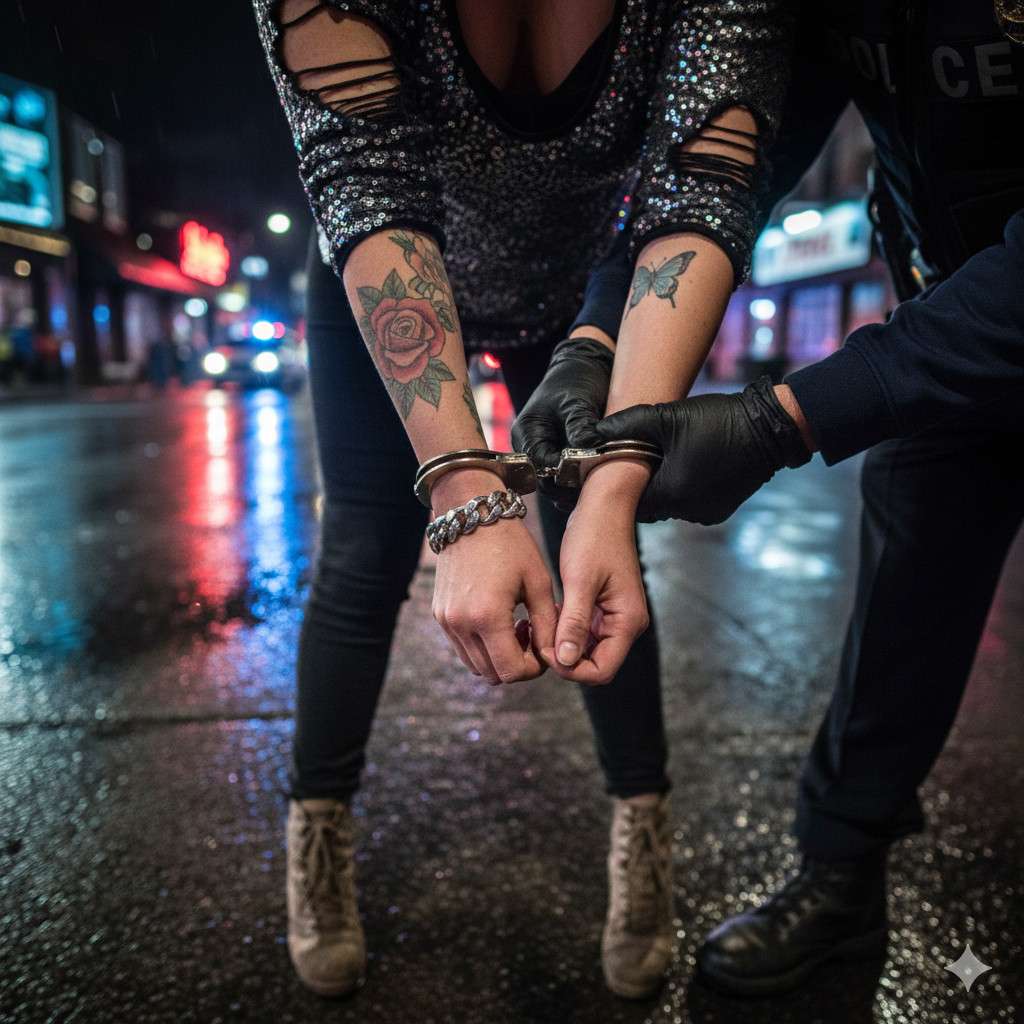
When you’re facing prostitution charges in Long Beach, California, you’re confronting criminal allegations that carry not only immediate legal penalties but also long-lasting consequences that can affect your employment, housing, immigration status, child custody, and personal reputation. Prostitution and solicitation arrests often involve undercover sting operations, misunderstandings, and situations where individuals are vulnerable to exploitation. Whether you were wrongly accused, entrapped by law enforcement, or find yourself charged in a situation involving human trafficking or coercion, you need an experienced criminal defense attorney who understands the complexities of these cases and will fight to protect your rights, your freedom, and your future.
At Tu Defensor Criminalista, we provide compassionate, confidential, and aggressive legal representation to individuals throughout Long Beach and Los Angeles County facing prostitution, solicitation, and related charges. Our experienced legal team understands the sensitive nature of these cases, the stigma attached to these charges, and the devastating impact a conviction can have on every aspect of your life. We defend clients against all prostitution-related charges while protecting your privacy, dignity, and constitutional rights. We also recognize that many individuals charged with prostitution-related offenses are victims themselves—victims of human trafficking, domestic violence, addiction, or economic desperation—and we work to connect clients with resources and advocate for treatment and diversion rather than incarceration when appropriate.
If you or a loved one has been arrested for prostitution, solicitation, pandering, pimping, or related charges in Long Beach or Los Angeles County, contact Tu Defensor Criminalista immediately by visiting our website at / to schedule a confidential consultation with an experienced criminal defense attorney who will listen without judgment, protect your rights, and fight for the best possible outcome in your case.
California law criminalizes various activities related to prostitution under several Penal Code sections. Understanding exactly what you’re charged with is essential to developing an effective defense strategy.
The most common prostitution-related charge is violation of California Penal Code Section 647(b), which prohibits two distinct but related offenses:
Engaging in prostitution: Agreeing to engage in an act of prostitution (exchanging sexual conduct for money or other compensation) and taking a substantial step toward completing that act.
Soliciting prostitution: Soliciting, agreeing to engage in, or engaging in any act of prostitution with the intent to receive or pay compensation.
To convict under Penal Code Section 647(b), the prosecution must prove that you solicited or agreed to engage in prostitution, you intended to engage in prostitution (meaning an exchange of a sexual act for compensation), and you took a substantial step toward completing the act (such as agreeing on price, meeting at a location, or exchanging money).
Prostitution under Section 647(b) is typically charged as a misdemeanor carrying up to six months in county jail, fines up to $1,000 (though often much higher with penalty assessments), probation with conditions including STD testing and counseling, and mandatory registration as a sex offender in some circumstances.
Pimping is a more serious offense defined under Penal Code Section 266h as knowingly deriving support or maintenance from the earnings of a person engaged in prostitution, or soliciting customers for prostitution. Pimping is a felony carrying three to six years in state prison, fines up to $10,000, and mandatory sex offender registration.
Pandering under Penal Code Section 266i involves procuring another person for prostitution, encouraging or inducing someone to become a prostitute, or using force or threats to cause someone to engage in prostitution. Pandering is a felony carrying three to six years in state prison, fines up to $10,000, and mandatory sex offender registration.
Individuals involved in prostitution activities may also be charged with lewd conduct in public under Penal Code Section 647(a), which prohibits engaging in or soliciting lewd or dissolute conduct in any public place or in any place open to the public. This misdemeanor carries up to six months in jail and fines.
Keeping or maintaining a house of prostitution is a misdemeanor under Penal Code Section 372, carrying up to six months in jail and fines.
In cases involving interstate commerce, the internet, or allegations of trafficking minors, federal charges may be filed under 18 U.S.C. Section 1591 (sex trafficking of children or by force, fraud, or coercion) carrying mandatory minimum sentences of 10-15 years to life in federal prison.
Understanding the local context of prostitution enforcement in Long Beach provides important perspective on how these cases are prosecuted and the resources available.
Long Beach is California’s seventh-largest city with a diverse population of approximately 466,742 residents according to the U.S. Census Bureau[1]. The city’s urban environment, port area, entertainment districts including downtown Long Beach and Pine Avenue, and major transportation corridors create environments where prostitution activity occurs and law enforcement conducts enforcement operations.
The Long Beach Police Department[2] conducts regular operations targeting prostitution, solicitation, and human trafficking. According to the department’s crime statistics[3], prostitution-related arrests are made throughout the city, with enforcement focusing on street prostitution, online solicitation, and human trafficking investigations.
Many individuals arrested for prostitution are actually victims of human trafficking, domestic violence, addiction, or economic desperation. According to the U.S. Department of Justice[4], human trafficking is a serious crime affecting thousands of victims nationwide, with sex trafficking representing a significant portion of trafficking cases.
California law recognizes this reality. Under Penal Code Section 236.1, human trafficking includes depriving or violating someone’s liberty to obtain forced labor or services, including commercial sex acts. The California Department of Justice[5] operates the California Human Trafficking Task Force and provides resources for victims.
Organizations including Polaris Project[6], which operates the National Human Trafficking Hotline, report that sex trafficking victims are often controlled through force, fraud, or coercion including physical violence, threats, debt bondage, confiscation of documents, and psychological manipulation.
Prostitution often intersects with other serious crimes including human trafficking and sexual exploitation, drug addiction and substance abuse (many individuals engage in survival sex to support addiction), domestic violence and intimate partner violence, and economic exploitation and poverty.
Research from the National Institute of Justice[7] shows that individuals engaged in prostitution face elevated risks of violence, sexual assault, robbery, and other victimization.
Prostitution cases originating in Long Beach are prosecuted by the Los Angeles County District Attorney’s Office[8] and heard in the Long Beach Courthouse (Governor George Deukmejian Courthouse, 275 Magnolia Avenue). The Los Angeles County District Attorney’s Office has shifted enforcement priorities in recent years, increasingly recognizing prostitution as linked to human trafficking and focusing resources on prosecuting traffickers and Johns (individuals who purchase sex) rather than sex workers themselves.
According to the Los Angeles Superior Court[9], thousands of prostitution-related cases are filed annually in Los Angeles County, though many are resolved through diversion programs, plea agreements to lesser charges, or dismissals.
Prostitution charges carry serious consequences that extend far beyond the immediate criminal penalties. Understanding what you’re facing underscores why experienced legal representation is essential.
While prostitution itself doesn’t require sex offender registration under Penal Code Section 290, related offenses including soliciting prostitution from a minor and pimping or pandering do require lifetime registration as a sex offender. Sex offender registration has devastating consequences including public disclosure of your address, restrictions on where you can live and work, community notification, and lifetime monitoring and compliance obligations.
For non-citizens, prostitution convictions can have severe immigration consequences. According to U.S. Citizenship and Immigration Services[10], prostitution-related offenses are grounds for inadmissibility and deportability under federal immigration law. Even lawful permanent residents can be deported based on prostitution convictions, particularly when involving commercialized vice or pandering.
Criminal convictions create barriers to employment. Many employers conduct background checks and refuse to hire individuals with criminal records. Prostitution convictions carry particular stigma that can make employment extremely difficult. Professional licensing boards including those overseeing healthcare, education, real estate, and numerous other professions may deny, suspend, or revoke licenses based on prostitution convictions.
Landlords frequently conduct background checks and may refuse to rent to individuals with criminal records. The U.S. Department of Housing and Urban Development[11] recognizes that criminal records create significant barriers to housing access.
Prostitution convictions can impact child custody and visitation in family court proceedings. Judges consider criminal history when evaluating the best interests of children and may restrict custody or visitation based on prostitution convictions.
Beyond legal consequences, prostitution charges carry intense social stigma that can damage relationships with family and friends, harm your reputation in the community, affect your children through bullying or discrimination, and cause profound emotional and psychological distress.
At Tu Defensor Criminalista, we develop comprehensive defense strategies tailored to the specific facts of your case. Common defenses to prostitution charges include:
Entrapment occurs when law enforcement officers induce someone to commit a crime they weren’t predisposed to commit. Many prostitution arrests result from undercover sting operations where officers pose as prostitutes or potential clients. If the officer’s conduct went beyond providing an opportunity to commit a crime and instead pressured, persuaded, or induced you to engage in prostitution when you weren’t predisposed to do so, you have an entrapment defense.
We challenge sting operations by examining what the undercover officer said and did, whether the officer initiated sexual discussion or you did, whether the officer offered money or you requested it, whether you hesitated or resisted before agreeing, and whether you had any prior history of prostitution arrests (showing predisposition).
To be convicted under Penal Code Section 647(b), there must be an actual agreement to exchange sexual conduct for compensation. If there was no such agreement—if the conversation was vague, joking, or never reached an actual agreement—you cannot be convicted.
We demonstrate lack of agreement by analyzing the exact words exchanged, showing conversations were ambiguous or not serious, proving no specific sexual act was agreed upon, demonstrating no price was established, and showing you never intended to follow through.
Even if there was an agreement, the prosecution must prove you took a substantial step toward completing the act. Simply talking or agreeing isn’t enough—there must be an overt act like exchanging money, going to a specific location, or undressing.
We challenge the substantial step element by showing that you were arrested before any substantial step occurred, that you never exchanged money or agreed on payment, that you never went to a location to complete the act, or that you changed your mind and withdrew before taking any substantial step.
The prosecution must prove you intended to engage in prostitution—meaning you intended to exchange sexual conduct for money or other compensation. If you had a different intent, you cannot be convicted.
We demonstrate lack of intent by showing you intended to go on a legitimate date, you discussed compensation for legal services (companionship, escort services that don’t involve sex), you were joking or not serious, or there was a misunderstanding about what was being offered or requested.
The prosecution must prove every element beyond a reasonable doubt. In many cases, the only evidence is the undercover officer’s testimony about what was said. If that evidence is insufficient, inconsistent, or contradicted by other evidence, you should be acquitted.
We challenge the evidence by cross-examining the undercover officer to expose inconsistencies, presenting audio or video recordings that contradict the officer’s testimony, demonstrating the officer’s testimony is not credible, and showing the prosecution hasn’t met its burden of proof.
Your Fourth Amendment rights protect you from illegal searches and seizures. If police violated your rights, evidence may be suppressed, potentially resulting in dismissal.
We challenge constitutional violations including illegal stops or detentions without reasonable suspicion, illegal searches of your person, vehicle, or phone, arrests without probable cause, and violations of Miranda rights during interrogation.
California law provides affirmative defenses for human trafficking victims. Under Penal Code Section 236.1, if you were coerced into prostitution by force, fear, fraud, duress, or coercion, you cannot be convicted of prostitution. Additionally, under Penal Code Section 1203.4, trafficking victims may be entitled to have prostitution convictions vacated.
We present trafficking defenses by documenting that you were controlled by a trafficker, showing you were subjected to force, threats, or coercion, demonstrating you were economically exploited, presenting evidence of physical or psychological abuse, and connecting you with victim services and support.
California recognizes that incarceration is often not the appropriate response to prostitution, particularly when individuals are driven to sex work by trafficking, addiction, poverty, or other circumstances. Various diversion programs and alternative resolutions may be available.
Many jurisdictions in California, including Los Angeles County, offer prostitution diversion programs under Penal Code Section 1001.81. These programs provide education about the harms of prostitution, STD/HIV prevention education, legal alternatives to prostitution, drug and alcohol treatment referrals, and counseling and support services.
If you successfully complete a diversion program, the charges are dismissed and you avoid a conviction on your record. Eligibility typically requires that you have no prior prostitution convictions, you weren’t charged with pimping or pandering, you enter a plea and admit guilt, and you complete the program within a specified time (typically six months to one year).
In some cases, particularly first-time offenders, prosecutors may offer pretrial diversion allowing you to complete counseling, community service, or other requirements in exchange for dismissal of charges without entering a plea or admitting guilt.
Courts may allow you to plead guilty but defer entry of judgment, placing you on probation. If you successfully complete probation and all requirements, your plea is withdrawn and the case is dismissed.
Even if diversion isn’t available, we often negotiate for pleas to lesser charges including disturbing the peace (Penal Code Section 415), trespassing (Penal Code Section 602), or loitering (municipal violations) that carry less serious consequences and less stigma.
When prostitution is connected to substance abuse or mental health issues, specialty courts including drug court or mental health court may provide treatment-focused alternatives to traditional prosecution.
Many individuals arrested for prostitution are actually victims of human trafficking who deserve protection and services rather than prosecution. At Tu Defensor Criminalista, we advocate for trafficking victims and connect them with resources.
Indicators that someone is a trafficking victim include having a controlling person who manages their activities and money, being unable to leave or quit prostitution, being subjected to threats, violence, or coercion, having their identity documents controlled by someone else, being moved frequently between locations, having a trafficker who controls their communication, and having been recruited through false promises or deception.
California and federal law provide protections for trafficking victims including the affirmative defense under California Penal Code Section 236.1, the right to have prostitution convictions vacated under Penal Code Section 1203.4(a)(3), eligibility for victim compensation through the California Victim Compensation Board[12], and eligibility for federal T-Visas allowing trafficking victims who are not U.S. citizens to remain in the United States.
We connect trafficking victims with critical services including emergency shelter and housing through organizations serving trafficking survivors, counseling and trauma therapy, medical and mental health services, legal immigration assistance for T-Visa applications, job training and employment assistance, and advocacy and case management.
Organizations serving trafficking victims in the Los Angeles area include the Coalition to Abolish Slavery and Trafficking (CAST)[13], which provides comprehensive services to trafficking survivors, and the National Human Trafficking Hotline at 1-888-373-7888, operated by Polaris Project[6].
With the rise of the internet, many prostitution cases now involve online activity including websites, apps, and social media platforms used to arrange meetings. These cases present unique challenges and defenses.
Following the shutdown of Backpage and passage of FOSTA-SESTA federal legislation, prostitution activity has shifted to various platforms including dating apps, social media, classified ad sites, and specialized websites.
Police conduct undercover operations online by posting fake advertisements posing as sex workers, responding to advertisements posing as clients, monitoring communications and arranging meetings, and making arrests when individuals show up at agreed locations.
Online cases present special defenses including lack of intent (showing you were seeking legitimate dating or companionship), entrapment (proving the officer’s advertisement or messages induced conduct you weren’t predisposed to commit), ambiguous communications that don’t establish clear agreement to exchange sex for money, and challenges to the officer’s credibility about what was actually communicated.
We challenge electronic evidence by examining whether screenshots and messages are complete and unaltered, whether the context of conversations shows innocent intent, whether communications were initiated by the undercover officer, and whether your identity can be proven (showing someone else used your phone or account).
For non-citizens, prostitution charges present serious immigration risks that must be carefully addressed.
Under federal immigration law, prostitution-related offenses are specifically listed as grounds for deportability and inadmissibility. According to U.S. Citizenship and Immigration Services[10], prostitution and commercialized vice are among the limited crimes that are deportable even as misdemeanors and even without a specific term of incarceration.
When representing non-citizen clients, we carefully analyze immigration consequences, negotiate for charges that don’t trigger deportability, seek deferred adjudication or diversion that avoids conviction, coordinate with immigration attorneys when necessary, and document any trafficking victimization that may provide immigration relief through T-Visas.
Under the U.S. Supreme Court[14] decision in Padilla v. Kentucky, criminal defense attorneys must advise non-citizen clients about immigration consequences before they accept plea agreements. We ensure you fully understand how any resolution will affect your immigration status.
Even after a prostitution conviction, you may be able to clear your record through expungement, which can help with employment, housing, and moving forward with your life.
If you were convicted of prostitution and successfully completed probation (or completed your sentence if not granted probation), you may petition for expungement under Penal Code Section 1203.4. If granted, your guilty plea or conviction is set aside and the case is dismissed. You can then legally state in most contexts that you weren’t convicted.
However, expunged convictions may still appear on background checks and must be disclosed for certain purposes including applications for government jobs, professional licenses, and positions working with children.
Human trafficking victims have a special right to have prostitution convictions vacated under Penal Code Section 1203.4(a)(3). If you were coerced into prostitution by human trafficking, we can petition to have the conviction vacated and dismissed entirely.
In some cases, arrest records can be sealed and destroyed, particularly when charges were dismissed, you were acquitted, or you completed diversion successfully. We petition for sealing of records to protect your privacy and reputation.
When you’re facing prostitution charges in Long Beach, you need an attorney who will treat you with dignity and respect, protect your privacy and confidentiality, understand the circumstances that led to your arrest, and fight aggressively for the best possible outcome.
We understand that individuals facing prostitution charges often find themselves in these situations due to circumstances including trafficking, economic desperation, addiction, domestic violence, or simply being in the wrong place at the wrong time. We treat every client with compassion, dignity, and respect, without judgment.
We recognize that many individuals charged with prostitution are victims of trafficking, coercion, or exploitation. We work to document trafficking and connect clients with victim services and support.
Whether you were wrongly accused, entrapped, or the evidence is insufficient, we challenge every aspect of the prosecution’s case through thorough investigation, effective cross-examination, persuasive advocacy, and strategic negotiation for dismissals, diversions, or reduced charges.
We understand the sensitive nature of these cases and work diligently to protect your privacy, keep proceedings as confidential as possible, and minimize public exposure.
We have extensive experience with prostitution diversion programs and alternative resolutions, helping clients avoid convictions and move forward with their lives.
We carefully analyze immigration consequences for non-citizen clients and work to achieve resolutions that protect immigration status.
We don’t just handle the legal case—we connect clients with counseling, treatment, support groups, and other resources that address underlying issues and support long-term success.
We practice regularly in the Long Beach Courthouse and throughout Los Angeles County. Our familiarity with local judges, prosecutors, and diversion programs enables us to develop effective strategies tailored to the local legal environment.
Ofrecemos servicios completamente bilingües en inglés y español. Entendemos las necesidades de la comunidad latina y estamos comprometidos a proporcionar representación legal de la más alta calidad en el idioma que usted prefiera.
Generally, no. Prostitution under Penal Code Section 647(b) does not require sex offender registration. However, related offenses including soliciting prostitution from a minor and pimping or pandering do require registration. This is one reason why fighting the charges and ensuring you’re not convicted of offenses that require registration is so important.
Yes, dismissals are possible through several avenues including successful completion of diversion programs, demonstrating insufficient evidence, proving constitutional violations, showing you were a victim of entrapment, or negotiating dismissals with prosecutors when weaknesses exist in the case.
Under California Penal Code Section 647(b), both are prohibited. Prostitution is offering or agreeing to engage in sexual conduct for compensation. Solicitation is offering or agreeing to pay for sexual conduct. Both the sex worker and the client can be charged and prosecuted.
You can still be convicted of prostitution or solicitation even if no sexual act occurred. The crime is complete once there’s an agreement to exchange sexual conduct for compensation and a substantial step toward completing the act (like exchanging money or going to a location). However, this also creates defense opportunities—we can argue there was no agreement or no substantial step.
Yes. If you were coerced into prostitution through force, threats, fraud, or other forms of trafficking, you have an affirmative defense under California law. We document the trafficking and advocate for dismissal of charges or connection to victim services rather than prosecution.
It depends. If you’re convicted, the conviction becomes part of your criminal record and will appear on background checks that employers conduct. However, if charges are dismissed, if you successfully complete diversion, or if you obtain an expungement, the impact can be minimized. We work to achieve resolutions that protect your employment.
No. Police need probable cause to arrest you for prostitution. Simply standing in an area known for prostitution is not sufficient. However, if you engage in conversations with potential clients or otherwise demonstrate intent to engage in prostitution, police may have probable cause. Many arrests are made following undercover operations where officers engage suspects in conversation to establish the elements of the crime.
Repeat convictions carry increasingly serious penalties. A first conviction under Penal Code Section 647(b) carries up to six months in jail but often results in probation and diversion. A second conviction requires a mandatory minimum of 45 days in jail. A third or subsequent conviction requires a mandatory minimum of 90 days in jail. This escalation makes it critically important to fight charges aggressively from the first arrest.
Very seriously. Prostitution is one of a limited number of crimes that trigger deportability for non-citizens regardless of whether it’s a misdemeanor or felony and regardless of the sentence imposed. Even lawful permanent residents (green card holders) who have lived in the United States for decades can be deported based on prostitution convictions. If you’re not a U.S. citizen, inform your attorney immediately so immigration consequences can be properly addressed.
If you’re facing prostitution charges in Long Beach or Los Angeles County, time is critical. Evidence must be preserved, witnesses must be identified, diversion programs have deadlines, and your defense must be built immediately.
Don’t try to handle these charges on your own. Don’t plead guilty without understanding your options and the full consequences. Don’t assume that because the charge seems minor it won’t have serious impacts on your life.
Contact Tu Defensor Criminalista immediately by visiting our website at / or calling our office to schedule a confidential consultation with an experienced criminal defense attorney.
A prostitution arrest doesn’t have to define your future. With experienced legal representation, many clients avoid convictions, complete diversion programs, get charges dismissed, or achieve resolutions that allow them to move forward with their lives.
If you’re a victim of trafficking, you deserve protection and support, not prosecution. If you were entrapped or wrongly accused, you deserve a vigorous defense. If circumstances led you to engage in survival sex, you deserve compassion and resources, not just punishment.
Visit our website at /and take the first step toward resolving your case and protecting your future today.
Don’t wait. Don’t risk your freedom, your immigration status, your employment, or your reputation. Contact Tu Defensor Criminalista now.
Throughout this page, we have referenced the following authoritative sources to provide accurate, reliable information about prostitution charges, human trafficking, and legal processes in Long Beach:
All statistics, facts, and legal information provided have been sourced from official government agencies, courts, non-profit organizations, and public resources. No private law firms have been cited as sources.
Disclaimer: This webpage provides general information about prostitution charges and defense strategies in Long Beach, California. It is not legal advice and does not create an attorney-client relationship. Every case is unique, and outcomes depend on specific facts and circumstances. For advice about your particular situation, contact Tu Defensor Criminalista for a confidential consultation at /.
Call (888) 315-3326 Now
Speak directly with Attorney Armando Josué Cespedes about your Long Beach robbery or theft arrest. Your consultation is completely free and confidential. We’re available 24 hours a day, 7 days a week.
Your rights matter. Your future matters. Your dignity matters.
Let Tu Defensor Criminalista fight for you. Contact us today at /
Attorney Armando Josué Cespedes is rated 5.0 on Avvo, with 34 five-star reviews from clients praising his dedication, professionalism, and results. Many note how his trial skills and attention to detail led to reduced charges or outright dismissals.



 English English
 Español de México English English Español de México
Thank you! We need your help. Would you share your experience on one of these sites?
If you have concerns you wish to address privately
