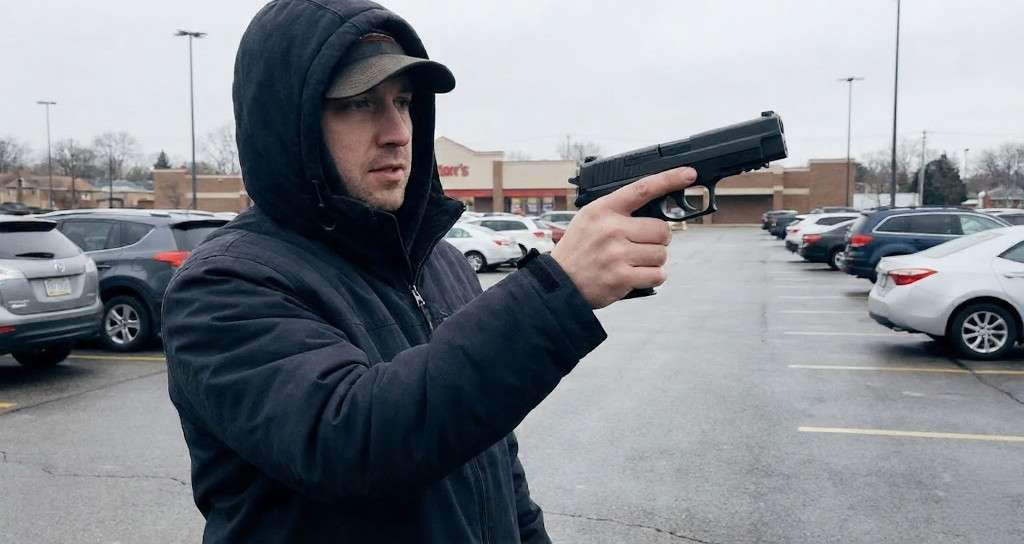
Being charged with brandishing a firearm in Palmdale is a serious matter that can result in jail time, substantial fines, loss of your gun rights, and a criminal record that follows you for life. California takes weapons charges extremely seriously, and brandishing allegations can arise from situations where you felt threatened and were simply trying to protect yourself or your family. Whether you displayed a firearm during a road rage incident, showed a weapon to defend yourself from an aggressive person, or are facing false accusations, you need an experienced brandishing defense attorney who understands California’s complex weapons laws and knows how to protect your rights.
At Tu Defensor Criminalista, we specialize in defending clients throughout Palmdale and the Antelope Valley against brandishing charges and all firearms-related offenses. Our firm has extensive experience handling these cases and understands that many brandishing accusations arise from legitimate self-defense situations, misunderstandings, or false allegations. We know that California law allows you to display a weapon in certain circumstances, and we fight aggressively to prove when your actions were legally justified. Our mission is to protect your constitutional rights, challenge the prosecution’s evidence, and achieve the best possible outcome for your case.
Free Confidential Consultation: (888) 315-3326 | Available 24/7 | Hablamos Español
California law defines brandishing through Penal Code Section 417[1], which makes it a crime to draw or exhibit a deadly weapon in a rude, angry, or threatening manner in the presence of another person. The law also prohibits drawing or exhibiting a firearm in the presence of a peace officer when the officer is engaged in their lawful duties and you know or reasonably should know the person is a peace officer.
According to the California Department of Justice[2], brandishing charges are common throughout the state, with thousands of arrests annually. In Los Angeles County, which includes Palmdale, prosecutors take these cases seriously and often seek harsh penalties, particularly when firearms are involved.
To secure a brandishing conviction, prosecutors must prove specific elements beyond a reasonable doubt. You must have drawn or exhibited a deadly weapon, you did so in the presence of another person, and you displayed the weapon in a rude, angry, or threatening manner. Importantly, you do not need to have pointed the weapon at someone or threatened to use it—simply displaying it in an aggressive or threatening manner can be sufficient for charges.
The term “deadly weapon” includes firearms, knives with blades longer than a certain length, clubs, and other objects capable of producing death or great bodily injury. According to California jury instructions[1], even common objects like baseball bats or tire irons can qualify as deadly weapons depending on how they are used.
A key element of brandishing is that the weapon must be displayed in a rude, angry, or threatening manner. This distinguishes illegal brandishing from legal firearm possession and carry. The California Courts[3] have interpreted this requirement to mean that you displayed the weapon in a way that would reasonably be perceived as aggressive or threatening by another person.
Context matters significantly in brandishing cases. Factors courts consider include the circumstances leading up to the display, your words or actions accompanying the display, whether you pointed the weapon at someone, the distance between you and the alleged victim, and whether the alleged victim felt threatened or feared for their safety.
One of the most important aspects of brandishing law is the distinction between illegal brandishing and legal self-defense. California law allows you to display a weapon when you reasonably believe you or someone else is in imminent danger of suffering bodily injury. According to data from the Bureau of Justice Statistics[4], many brandishing cases involve individuals who displayed firearms believing they needed to protect themselves.
The challenge is that what seems like necessary self-defense to you may be viewed differently by law enforcement, prosecutors, or witnesses. This makes having an experienced attorney essential to properly present self-defense claims and protect your rights.
California law recognizes several variations of brandishing offenses, each with different elements and potential penalties. Understanding the specific charge you face is crucial for developing an effective defense strategy.
The most common brandishing charge involves displaying any deadly weapon other than a firearm in a rude, angry, or threatening manner. This misdemeanor offense under Penal Code Section 417(a)(1)[1] carries penalties of at least 30 days and up to six months in county jail, or alternatively a fine of up to $1,000, or both jail and fine. Courts must impose a minimum 30-day jail sentence unless unusual circumstances exist.
According to the California Department of Corrections and Rehabilitation[5], simple brandishing convictions can have significant collateral consequences including difficulties with employment, housing, and professional licensing, even though the offense is a misdemeanor.
Brandishing a firearm is treated more seriously than brandishing other weapons. Under Penal Code Section 417(a)(2)[1], this offense is typically a misdemeanor carrying three months to one year in county jail, or alternatively a fine of at least $1,000, or both jail and fine. Unlike simple brandishing, firearm brandishing requires a minimum fine even if no jail time is imposed.
The Los Angeles County District Attorney’s Office[6], which prosecutes cases in Palmdale, often seeks maximum penalties for firearm brandishing due to the serious nature of gun crimes. First-time offenders may receive probation but repeat offenders or cases involving aggravating circumstances typically result in jail sentences.
Drawing or exhibiting a firearm in the presence of a peace officer engaged in lawful duties is charged under Penal Code Section 417(c)[1]. This offense is more serious and can be charged as either a misdemeanor or a felony, making it a “wobbler” offense. As a misdemeanor, it carries up to one year in county jail. As a felony, it carries 16 months, two years, or three years in county jail.
According to the Federal Bureau of Investigation[7], incidents involving displayed weapons near law enforcement officers are taken extremely seriously nationwide. In California, prosecutors typically charge these cases as felonies, particularly if the defendant has a criminal history or if aggravating circumstances exist.
Brandishing a firearm in the presence of a staff member or other person at a day care center where children are present is a serious offense under Penal Code Section 417(b)[1]. This wobbler offense carries three months to one year in county jail as a misdemeanor, or 16 months, two years, or three years in jail as a felony. Courts impose enhanced penalties because of the threat to children’s safety.
Road rage incidents involving firearms are specifically addressed under Penal Code Section 417.3[1]. Drawing or exhibiting a firearm in the presence of the driver or occupant of another motor vehicle on a public street or highway carries enhanced penalties. This wobbler offense results in three months to one year in county jail as a misdemeanor, or 16 months, two years, or three years as a felony.
According to the National Highway Traffic Safety Administration[8], road rage incidents have increased significantly in recent years, and California law enforcement has prioritized these cases. Palmdale, located near major highways including State Route 14 and the Antelope Valley Freeway, sees numerous road rage arrests annually.
Brandishing convictions carry serious penalties that extend far beyond criminal sentences. Understanding the full scope of potential consequences is essential for anyone facing these charges in Palmdale.
Misdemeanor brandishing convictions typically result in 30 days to one year in county jail, though first-time offenders may receive probation instead of jail time. Felony brandishing convictions carry 16 months to three years in county jail under California’s realignment program. Probation conditions often include completion of anger management programs, firearms prohibition orders, community service requirements, payment of fines and restitution, and regular reporting to probation officers.
According to the California Courts[3], judges consider numerous factors when sentencing including your criminal history, the circumstances of the offense, whether anyone was injured or feared for their safety, whether you accept responsibility, and any mitigating or aggravating circumstances.
Brandishing convictions carry substantial fines. Minimum fines range from $1,000 for firearm brandishing to lesser amounts for other weapons. Maximum fines can reach $10,000 for felony convictions. Additionally, you may be ordered to pay restitution to victims for counseling, medical expenses, lost wages, and other damages resulting from the offense.
One of the most significant consequences of brandishing convictions is the loss of gun rights. Under California law, any conviction for violating Penal Code Section 417[1] results in a ten-year prohibition on owning, purchasing, or possessing firearms. Felony convictions result in lifetime gun rights prohibitions under both California and federal law.
The California Department of Justice[2] maintains records of prohibited persons and will deny firearm purchase applications from individuals with brandishing convictions. For many Palmdale residents who hunt, collect firearms, or rely on weapons for personal protection, the loss of gun rights is devastating.
For non-citizens living in Palmdale, brandishing convictions can trigger severe immigration consequences. According to the United States Citizenship and Immigration Services[9], brandishing may be classified as a crime involving moral turpitude or a crime of violence under immigration law, potentially resulting in deportation proceedings, denial of naturalization applications, inability to adjust immigration status, and inadmissibility to the United States.
The Immigration and Customs Enforcement[10] agency has prioritized enforcement against non-citizens with violent crime convictions. Any non-citizen facing brandishing charges should immediately consult with an attorney experienced in both criminal defense and immigration law.
Brandishing convictions can destroy professional careers and employment opportunities. Many employers conduct background checks, and weapons convictions are viewed extremely seriously. Professional licenses that may be affected include law enforcement and security positions, healthcare licenses, teaching credentials, positions requiring security clearances, and careers working with vulnerable populations.
According to the Bureau of Labor Statistics[11], individuals with criminal records face significantly higher unemployment rates and lower earnings compared to those without records. Even if you maintain current employment, you may face termination if your employer learns of the conviction.
Brandishing arrests often result in emergency protective orders preventing you from contacting alleged victims. These orders can be extended and may prohibit you from returning to your home if you live with the alleged victim. Additionally, law enforcement typically confiscates any firearms you own when you’re arrested for brandishing. Recovering these firearms after your case concludes can be difficult or impossible depending on the outcome.
Experienced brandishing defense attorneys in Palmdale use various defense strategies depending on the specific facts of each case. Every case is unique and requires careful analysis of all circumstances surrounding the alleged offense.
Self-defense is the most common and often most effective defense to brandishing charges. California law allows you to display a weapon when you reasonably believe you or another person is in imminent danger of suffering bodily injury or being touched unlawfully. According to California jury instructions[1], you may use force that a reasonable person would believe necessary under the circumstances.
To successfully claim self-defense, you must show that you reasonably believed you were in imminent danger, displaying the weapon was necessary to defend against that danger, and you used no more force than was reasonably necessary. The threat need not be actual—if you reasonably believed you faced danger based on the circumstances, self-defense may apply even if it later turns out no actual danger existed.
The California Courts[3] have recognized self-defense in numerous contexts. An experienced attorney can present evidence supporting self-defense including witness testimony, surveillance footage, threatening messages or communications from the alleged victim, the alleged victim’s history of violence, and expert testimony on threat perception and reasonable responses.
Brandishing requires that you intentionally displayed the weapon in a rude, angry, or threatening manner. If the display was accidental, you cannot be convicted. Lack of intent defenses arise when you were simply adjusting the weapon without intending to display it, the weapon became visible unintentionally, someone else drew attention to the weapon, or you displayed the weapon for a lawful purpose without threatening anyone.
According to California law[1], prosecutors must prove intentional display beyond a reasonable doubt. If reasonable doubt exists regarding your intent, you should be acquitted.
Even if you intentionally displayed a weapon, you can only be convicted of brandishing if you did so in a rude, angry, or threatening manner. If the display was not threatening or aggressive, brandishing charges should not apply. This defense works when you were showing the weapon to someone for a lawful purpose, the weapon became visible during normal carrying, you were handling the weapon safely without threatening anyone, or the alleged victim misinterpreted innocent actions.
Context is critical in these cases. Your attorney can present evidence showing that your actions were not threatening, including the circumstances of the encounter, your words and demeanor, the distance between parties, and witness testimony about the non-threatening nature of your actions.
Unfortunately, false brandishing accusations occur frequently, particularly in domestic disputes, road rage incidents involving angry drivers, confrontations between neighbors, and situations where someone seeks revenge or advantage. The Bureau of Justice Statistics[4] has documented that false accusations occur in criminal cases across all offense types.
An experienced attorney will thoroughly investigate allegations to uncover evidence of false reporting including inconsistent statements by the accuser, lack of physical evidence, witness testimony contradicting the accuser’s account, motive for the accuser to fabricate the story, and history of false accusations by the alleged victim.
Many brandishing cases involve subsequent discoveries of firearms during police investigations. If law enforcement discovered weapons through illegal searches, that evidence must be suppressed. According to United States Courts[12] precedent, the Fourth Amendment protects against unreasonable searches and seizures.
Common constitutional violations include searches of vehicles without probable cause or consent, home searches without valid warrants, searches exceeding the scope of consent or warrants, and seizures during illegal detentions. An experienced attorney thoroughly reviews all aspects of police conduct to identify constitutional violations that could result in evidence suppression or case dismissal.
Prosecutors bear the burden of proving every element of brandishing beyond a reasonable doubt. In many cases, the evidence is simply insufficient to meet this high standard. Insufficient evidence defenses focus on lack of credible witnesses to the alleged brandishing, conflicting testimony about what occurred, no physical evidence supporting the allegations, and inability to prove required mental state elements.
According to the California Courts[3], defendants are presumed innocent, and prosecutors must overcome this presumption with proof beyond a reasonable doubt. An experienced attorney identifies weaknesses in the prosecution’s case and creates reasonable doubt through effective cross-examination and defense evidence.
Not all weapon displays constitute brandishing. California law recognizes that weapons may be lawfully displayed for educational purposes, at authorized gun shows and events, during firearms training, in theatrical or film productions, and for other legitimate purposes. If you were engaged in lawful activity when the alleged brandishing occurred, you have a complete defense.
Road rage incidents involving firearms represent a significant portion of brandishing arrests in Palmdale. According to the National Highway Traffic Safety Administration[8], road rage incidents have increased nationwide. Common scenarios include aggressive driving causing fear for safety, being followed by aggressive drivers, confrontations at traffic lights, and parking lot disputes.
As mentioned earlier, Penal Code Section 417.3[1] specifically addresses brandishing from motor vehicles with enhanced penalties. Self-defense claims are particularly strong in road rage cases where the other driver was the aggressor. Evidence of aggressive driving, threats, or attempts to run you off the road can establish that displaying your weapon was reasonable.
Many brandishing charges also arise in domestic violence contexts. According to the United States Department of Justice[13], domestic violence cases involving weapons are prosecuted aggressively. The Los Angeles County District Attorney’s Office[6] maintains specialized units that handle these cases and are often unwilling to dismiss charges even when alleged victims recant.
Domestic violence brandishing convictions trigger additional consequences including automatic restraining orders, loss of child custody, mandatory treatment programs, and federal firearms prohibitions. These cases often involve false or exaggerated accusations made during custody disputes or by partners seeking revenge. An experienced attorney investigates thoroughly to uncover evidence of false reporting and presents witnesses who can testify to your character.
Understanding what to expect if you’re charged with brandishing in Palmdale helps you protect your rights throughout the legal process.
Brandishing cases typically begin when someone reports that you displayed a weapon. The Los Angeles County Sheriff’s Department[14] responds, investigates, and typically arrests you if probable cause exists. During this phase, anything you say can be used against you. Exercise your right to remain silent and request an attorney immediately.
After arrest, you will be booked and bail will be set. The Los Angeles County Superior Court[15] maintains a bail schedule. According to the California Courts[3], you must be arraigned within 48 hours where formal charges are presented and you enter a plea. An experienced attorney can request bail reduction by demonstrating your community ties and minimal flight risk.
Your case then proceeds through discovery, pretrial motions, and plea negotiations. This phase can last several months. Your attorney uses this time to investigate thoroughly, obtain evidence, and negotiate with prosecutors. If your case cannot be resolved, it proceeds to trial where prosecutors must prove every element beyond a reasonable doubt.
Palmdale’s unique characteristics create specific considerations for brandishing cases that may not apply in other California jurisdictions.
According to United States Census Bureau[16] data, Palmdale has a diverse population exceeding 160,000 residents. The city has experienced significant growth and attracts residents from throughout California and other states. This diversity means local juries reflect varied perspectives on self-defense and firearms.
Brandishing cases are prosecuted in the Antelope Valley Courthouse, part of the Los Angeles County Superior Court[15] system. Familiarity with local judges, prosecutors, and court procedures is invaluable. The Los Angeles County Sheriff’s Department[14] provides law enforcement services to Palmdale. Understanding local department policies helps attorneys identify constitutional violations and challenge police conduct.
Not every brandishing case results in traditional convictions and penalties. Under California Penal Code Section 1001.95[1], judges have discretion to grant pretrial diversion for many misdemeanor offenses. Diversion allows defendants to complete specified programs in exchange for dismissal of charges. Programs may include anger management, firearms safety classes, counseling, and community service.
Many brandishing cases resolve through plea agreements to reduced charges. Common reductions include brandishing reduced to disturbing the peace under Penal Code Section 415[1], felony brandishing reduced to misdemeanor, and charges reduced to alternatives that preserve firearm ownership. An experienced attorney negotiates effectively to secure favorable agreements.
If you’ve been accused of brandishing, taking immediate steps to protect your rights is crucial to achieving the best possible outcome.
Under the Fifth Amendment, you have the right against self-incrimination. According to United States Courts[12] guidance, you should clearly invoke this right and decline to answer questions without an attorney present. Many people make damaging statements believing they can explain the situation, but anything you say can and will be used against you.
Preserve evidence that may support your defense including photographs of any injuries you sustained, contact information for witnesses, threatening messages or communications from the alleged victim, surveillance footage from the area, and a detailed written account of what occurred. This documentation can be invaluable for your attorney in building your defense.
After brandishing allegations, avoid all contact with the alleged victim even if no restraining order has been issued. Any contact can be used against you and may result in additional charges or violations. Allow your attorney to handle all communications regarding the case.
The most important step is contacting an experienced brandishing defense attorney immediately. According to the National Association of Criminal Defense Lawyers[17], early attorney involvement significantly improves outcomes through protecting constitutional rights, preventing damaging statements, initiating independent investigation, preserving evidence, and beginning defense strategy development.
At Tu Defensor Criminalista, we provide comprehensive legal representation for brandishing charges throughout Palmdale and the Antelope Valley. Our approach includes thorough investigation of self-defense claims, aggressive motion practice to suppress illegally obtained evidence, strategic negotiations with prosecutors, expert witness retention when beneficial, comprehensive trial preparation and representation, and guidance regarding gun rights and collateral consequences.
We understand that facing brandishing charges is frightening. Many of our clients were acting in self-defense or are victims of false accusations. We treat every client with respect while fighting aggressively to protect their rights and freedom. We maintain open communication, providing direct attorney access, regular case updates, clear explanations of options and consequences, and involvement in all important decisions.
Time is critical in brandishing cases. Evidence can be lost, witnesses’ memories fade, and legal deadlines may expire. Early attorney involvement can sometimes prevent charges from being filed or result in more favorable outcomes.
If you’ve been arrested or are under investigation for brandishing in Palmdale, contact Tu Defensor Criminalista immediately. We offer free initial consultations to evaluate your case and explain your options. Don’t delay—your freedom, your gun rights, and your future are at stake.
Yes, you can be charged with brandishing even if you never pointed the weapon at anyone. California law prohibits drawing or exhibiting a deadly weapon in a rude, angry, or threatening manner—it does not require that you point the weapon at someone or threaten to use it. Simply displaying the weapon in an aggressive or threatening way is sufficient for charges. For example, lifting your shirt to reveal a holstered firearm during an argument, removing a gun from your waistband and holding it at your side in a threatening manner, or displaying a weapon while making aggressive statements can all constitute brandishing even without pointing the weapon. The key is whether a reasonable person would perceive your display of the weapon as threatening or intimidating. However, this also means that if you displayed the weapon in a non-threatening manner, you should not be convicted of brandishing. An experienced attorney can present evidence showing that your actions were not threatening and did not meet the legal definition of brandishing.
Yes, California law allows you to display a weapon in self-defense when you reasonably believe you or another person is in imminent danger of suffering bodily injury. This is a complete defense to brandishing charges. To successfully claim self-defense, you must show that you reasonably believed you faced imminent danger, that displaying the weapon was necessary to defend against that danger, and that you used no more force than was reasonably necessary under the circumstances. The key word is “reasonable”—your belief in the need to display the weapon must be one that a reasonable person would have under the same circumstances. You don’t need to wait until you’re actually attacked before displaying a weapon for self-defense. If a reasonable person in your position would have believed they were about to be attacked or suffer bodily injury, displaying a weapon to deter the attack is legal. However, once the threat has ended, you must stop displaying the weapon. An experienced attorney can present evidence supporting your self-defense claim including witness testimony, surveillance footage, threatening communications, and expert testimony about reasonable responses to threats.
Yes, any conviction for violating Penal Code Section 417 (brandishing) results in a ten-year prohibition on owning, purchasing, or possessing firearms under California law. This prohibition applies to all brandishing convictions, whether misdemeanor or felony. If you are convicted of felony brandishing, you face a lifetime prohibition on gun rights under both California and federal law. After the ten-year period expires for misdemeanor convictions, you may regain California gun rights, but you must ensure all conditions are met. Additionally, some brandishing convictions involving domestic violence may trigger permanent federal firearms prohibitions under the Lautenberg Amendment even if the conviction is a misdemeanor. The loss of gun rights makes fighting brandishing charges absolutely critical, especially for individuals who hunt, collect firearms, or rely on weapons for personal protection or employment. An experienced attorney can work to secure dismissals, reductions to non-weapons offenses, or alternative dispositions that preserve your gun rights. Even after conviction, attorneys can help with gun rights restoration through reduction of charges, expungement, or other legal processes.
If you are in immediate danger, call 911 immediately. While you have the right to display a weapon in self-defense when you reasonably believe you face imminent danger of bodily injury, the safest course is to avoid confrontation when possible and let law enforcement handle threats. If confrontation is unavoidable and you reasonably fear for your safety, you may display a weapon to deter an attack, but you must stop once the threat ends. Do not pursue or continue to display the weapon after the immediate danger has passed. If you do display a weapon in self-defense, expect that law enforcement will investigate and possibly arrest you. When police arrive, assert your right to remain silent and request an attorney immediately—do not try to explain what happened without legal counsel present. Even if you acted in legitimate self-defense, anything you say can be misinterpreted or used against you. Document everything about the incident as soon as possible including details of the threat, witness information, and any evidence supporting your reasonable fear for safety. Contact an experienced criminal defense attorney immediately to protect your rights and build your self-defense case.
Yes, you can be charged with brandishing even if the other driver was the initial aggressor. However, if you displayed a weapon because you reasonably believed you were in imminent danger from the aggressive driver, you have a valid self-defense claim. Road rage incidents are common in Palmdale, especially on busy highways like State Route 14. If another driver is following you aggressively, attempting to run you off the road, making threatening gestures, or creating a dangerous situation, displaying a weapon to deter further aggression may be legally justified. The problem is that law enforcement often arrives after the incident has ended and may only hear one side of the story. The aggressive driver may claim you brandished for no reason, leading to your arrest despite the fact that you were defending yourself. An experienced attorney can investigate to obtain evidence supporting your self-defense claim including dashboard camera footage, witness statements from other motorists, traffic camera footage, and evidence of the other driver’s aggressive driving. Even if both drivers are arrested, your attorney can work to have charges dismissed or to demonstrate that you were acting in legitimate self-defense while the other driver was the aggressor.
Domestic brandishing accusations are serious and often lead to arrest even if the allegations are false or exaggerated. California has mandatory arrest policies for domestic violence situations, meaning officers must arrest someone when they have probable cause to believe domestic violence occurred. Even if your spouse later recants or asks that charges be dropped, prosecutors often proceed with the case anyway. Domestic brandishing convictions carry additional consequences beyond standard brandishing penalties including automatic restraining orders preventing you from returning home or contacting your spouse, loss of child custody or restricted visitation rights, mandatory completion of 52-week domestic violence treatment programs, and permanent federal firearms prohibitions under the Lautenberg Amendment. Many domestic brandishing accusations arise during custody disputes, contentious divorces, or when one partner seeks revenge or advantage. An experienced attorney will investigate thoroughly to uncover evidence of false or exaggerated accusations, examine the relationship history, document any motive for fabrication, and present witnesses who can testify to your character and the accuser’s credibility. It is absolutely essential to have an attorney experienced in both weapons charges and domestic violence cases to properly defend these allegations.
Yes, brandishing charges can often be reduced to lesser offenses through plea negotiations. Common reductions include brandishing reduced to disturbing the peace under Penal Code Section 415, which does not carry firearms prohibitions; felony brandishing reduced to misdemeanor brandishing, reducing potential jail time and avoiding felony conviction consequences; and brandishing reduced to other non-weapons offenses that preserve gun rights. Whether prosecutors will agree to reduced charges depends on factors including the strength of their case, your criminal history, whether anyone was injured or seriously threatened, the circumstances of the incident, and the quality of your legal representation. An experienced attorney can identify weaknesses in the prosecution’s case, present evidence supporting self-defense or other defenses, and negotiate effectively for reduced charges. Even when the evidence against you is strong, attorneys can sometimes negotiate favorable plea agreements by presenting mitigating circumstances, demonstrating your positive character and community ties, and showing that you have taken responsibility and steps to address underlying issues. The key is having an attorney begin negotiations early and build a compelling case for charge reduction.
California law establishes statutes of limitations for brandishing charges. For misdemeanor brandishing, prosecutors must file charges within one year of the offense. For felony brandishing, the statute of limitations is three years. However, these timelines can be tolled (paused) under certain circumstances such as when you are out of state or when the offense is not immediately discovered. Once charges are filed, they do not expire—the statute of limitations only limits how long prosecutors have to initiate charges. If you are under investigation but charges have not been filed, the statute is running. This makes early attorney involvement crucial, as your attorney may be able to present evidence during the investigation that prevents charges from ever being filed. Many brandishing investigations conclude within days or weeks of the incident, with charges filed soon after. However, in some cases, prosecutors delay filing while they gather additional evidence. If the statute of limitations has expired and prosecutors attempt to file charges, your attorney can move to dismiss the case. You should not simply wait for the statute to expire, however, as tolling rules can extend the deadline and ongoing investigations may lead to charges you did not anticipate.
Yes, many brandishing convictions can be expunged under California Penal Code Section 1203.4 after you complete probation or your sentence. Expungement releases you from most penalties and disabilities of conviction and allows you to state in most contexts that you were not convicted. To qualify for expungement, you must have completed all terms of probation or your sentence, paid all fines and restitution, not be currently charged with or serving a sentence for any offense, and not have violated probation (or obtain court approval despite violations). However, expungement has significant limitations for brandishing convictions. Most importantly, expungement does NOT restore gun rights—the ten-year firearm prohibition remains in effect even after expungement. Additionally, expunged convictions may still be used for immigration purposes, professional licensing decisions, and in sentencing for future offenses. Felony brandishing convictions typically must be reduced to misdemeanors under Penal Code Section 17(b) before expungement. An experienced attorney can guide you through the expungement process and help you understand what expungement can and cannot accomplish in your specific situation. The best approach is always to fight the charges initially to secure dismissals or reductions that avoid conviction altogether.
If you were showing a firearm to someone for a legitimate purpose without any threatening intent, and they misunderstood your actions as threatening, you have a valid defense to brandishing charges. Brandishing requires that you displayed the weapon in a rude, angry, or threatening manner. If your display was not threatening, you should not be convicted. Examples of non-threatening displays include showing a firearm to someone interested in firearms for discussion or educational purposes, displaying a weapon during a lawful sale or transfer, revealing a holstered weapon accidentally or during normal movement without aggressive intent, and handling a firearm safely without directing it at anyone or making threatening statements. The key is the context and manner of the display. Your attorney can present evidence showing that your display was not threatening including witness testimony about the circumstances, your words and demeanor, the lack of any argument or confrontation, and your explanation for why you were handling or showing the weapon. However, be aware that even innocent actions can be misinterpreted, especially by people unfamiliar with or uncomfortable around firearms. This is why it’s important to be extremely careful when handling weapons around others and to clearly communicate your non-threatening intent. If you are accused despite innocent intentions, an experienced attorney can present the full context to prosecutors, judges, and juries to demonstrate that your actions did not constitute criminal brandishing.
Remember:
Attorney Armando Josué Cespedes is rated 5.0 on Avvo, with 34 five-star reviews from clients praising his dedication, professionalism, and results. Many note how his trial skills and attention to detail led to reduced charges or outright dismissals.



 English English
 Español de México English English Español de México
Thank you! We need your help. Would you share your experience on one of these sites?
If you have concerns you wish to address privately
