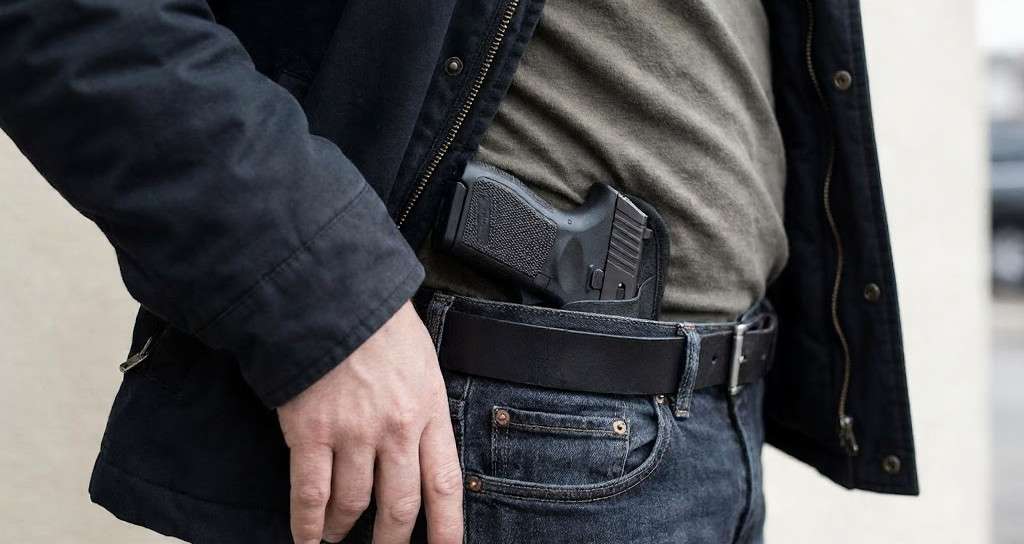
Facing concealed weapons charges in Palmdale can be overwhelming and frightening. California has some of the strictest gun laws in the nation, and violations involving concealed weapons carry serious consequences including jail time, substantial fines, permanent criminal records, and the loss of your right to own firearms. Whether you’ve been charged with carrying a concealed firearm without a permit, possessing an illegal weapon, or violating California’s complex gun regulations, you need an experienced concealed weapons attorney who understands both the law and how to build an effective defense strategy.
At Tu Defensor Criminalista, we specialize in defending individuals throughout Palmdale and the Antelope Valley against all types of weapons charges. Our firm has extensive experience navigating California’s complicated firearms laws and has successfully defended countless clients facing concealed weapons allegations. We understand that many people charged with weapons offenses are law-abiding citizens who made honest mistakes or were unaware of California’s strict regulations. Our mission is to protect your rights, preserve your freedom, and fight for the best possible outcome in your case.
Free Confidential Consultation: (888) 315-3326 | Available 24/7 | Hablamos Español
California’s concealed weapons laws are among the most complex and restrictive in the United States. According to the California Department of Justice[1], the state has implemented comprehensive regulations governing the possession, carrying, and use of firearms and other weapons. Understanding these laws is essential for anyone facing weapons charges in Palmdale.
The primary statute governing concealed weapons in California is Penal Code Section 25400[2]. This law makes it illegal to carry a concealed firearm on your person or in a vehicle unless you have a valid California CCW (Carry Concealed Weapon) permit. The law defines “concealed” as hidden from ordinary observation, meaning the firearm is not readily visible to others.
To secure a conviction under PC 25400, prosecutors must prove that you carried a firearm, the firearm was substantially concealed on your person or in your vehicle, you knew you were carrying the firearm, and you did not have a valid CCW permit. Each of these elements presents potential defense opportunities that an experienced concealed weapons attorney can exploit.
According to data from the Bureau of Justice Statistics[3], weapons charges have increased significantly in recent years as law enforcement agencies have intensified enforcement efforts. In Palmdale and throughout Los Angeles County, prosecutors take concealed weapons cases seriously and often seek harsh penalties.
California is a “may issue” state for CCW permits, meaning that county sheriffs have discretion in issuing permits. The Los Angeles County Sheriff’s Department[4], which serves Palmdale, historically issued very few CCW permits compared to other California counties. However, recent changes in California law and court decisions have affected CCW permit issuance.
The process of obtaining a CCW permit in Los Angeles County involves completing an application, demonstrating good moral character, showing good cause for issuance, completing a firearms training course, and passing a background check. According to the California Attorney General’s Office[1], applicants must meet strict requirements, and many applications are denied.
Many Palmdale residents charged with concealed weapons violations believed they were legally carrying firearms when they were not. Common misconceptions include believing that keeping a gun in your glove compartment is legal, thinking that transporting a firearm in your trunk without proper storage is acceptable, assuming that out-of-state permits are valid in California, and believing that having a gun at home gives you the right to carry it elsewhere.
Concealed weapons charges encompass a wide range of offenses under California law. Understanding the specific charge you’re facing is crucial for developing an effective defense strategy.
The most common concealed weapons charge in Palmdale involves carrying a concealed firearm without a valid CCW permit. This offense can be charged as either a misdemeanor or felony depending on the circumstances. Factors that influence charging decisions include your criminal history, whether the firearm was loaded, the location where you were arrested, and whether aggravating factors were present.
Misdemeanor concealed weapons charges can result in up to one year in county jail and fines up to $1,000. Felony charges carry much harsher penalties including 16 months, two years, or three years in county jail under California’s realignment program. According to California Department of Corrections and Rehabilitation[5] data, felony weapons convictions also result in the permanent loss of gun rights.
Under California Penal Code Section 25850[2], it is illegal to carry a loaded firearm in public or in a vehicle while in any public place or on any public street. This charge is separate from concealed carry violations and applies even if the firearm is openly carried. Palmdale residents are often shocked to learn that simply having a loaded gun in their vehicle, even if it’s visible, violates California law.
The penalties for carrying a loaded firearm mirror those for concealed carry violations, with potential misdemeanor or felony charges depending on circumstances. Enhanced penalties apply if you’re not the registered owner of the firearm, have prior convictions, are prohibited from possessing firearms, or were in a restricted area.
California law prohibits the possession of numerous types of weapons beyond just firearms. According to the California Department of Justice[1], illegal weapons in California include assault weapons, short-barreled rifles or shotguns, machine guns, silencers, certain knives including switchblades and ballistic knives, brass knuckles, nunchucks (though recently legalized in some contexts), and zip guns or improvised firearms.
Possession of illegal weapons typically results in felony charges with significant prison time. California’s assault weapons ban is particularly complex, and many firearms that are legal in other states are prohibited in California. Palmdale residents who move from other states or purchase firearms online without understanding California restrictions often face illegal weapons charges.
Under California Penal Code Section 29800[2], individuals with felony convictions are prohibited from owning, purchasing, or possessing firearms. This prohibition extends for life unless gun rights are restored through legal processes. The Bureau of Justice Statistics[3] reports that felon in possession charges are among the most commonly prosecuted weapons offenses nationwide.
In Palmdale, felon in possession cases often arise during traffic stops, domestic violence calls, or probation/parole searches. Prosecutors aggressively pursue these cases, which are always charged as felonies carrying 16 months to three years in county jail. Additional penalties apply if the defendant has multiple prior felonies or violent felony convictions.
California law strictly prohibits possessing firearms or other weapons on school grounds, near schools, or in school zones. According to California Penal Code Section 626.9[2], bringing a firearm onto school property can result in felony charges with two to five years in state prison. Even having a firearm in your vehicle while on or near school property can trigger these enhanced penalties.
Palmdale has numerous schools including elementary schools, middle schools, high schools, and Antelope Valley College. Many residents are unaware of the strict prohibited zones around these facilities. Gun Free School Zone violations occur when individuals forget they have firearms in their vehicles when picking up children or attending school events.
Beyond schools, California prohibits carrying weapons in numerous other locations including government buildings, airports, public transit facilities, parks and recreational areas (in some jurisdictions), and establishments that serve alcohol. According to the California Department of Parks and Recreation[6], firearms are prohibited in many state park facilities even with a valid CCW permit.
Violations of location-specific weapons prohibitions can result in misdemeanor or felony charges depending on the location and circumstances. Palmdale residents visiting Los Angeles or other areas should be aware that local ordinances may impose additional restrictions beyond state law.
The consequences of concealed weapons convictions extend far beyond criminal penalties. Understanding the full scope of potential consequences is essential for anyone facing these charges.
Concealed weapons charges in Palmdale can result in a range of criminal penalties depending on whether charges are filed as misdemeanors or felonies. Misdemeanor convictions typically involve up to one year in county jail, fines up to $1,000, summary probation for three to five years, and community service requirements. Felony convictions carry substantially harsher penalties including 16 months to three years in county jail, fines up to $10,000, formal felony probation, and potential state prison time for aggravated cases.
According to the California Courts[7], judges consider numerous factors when imposing sentences including the defendant’s criminal history, whether the weapon was loaded, the defendant’s intent in carrying the weapon, and whether any aggravating or mitigating circumstances exist. An experienced concealed weapons attorney can present mitigating evidence that may result in reduced sentences or alternative sentencing options.
Perhaps the most significant consequence of concealed weapons convictions is the loss of gun rights. Under California law, felony convictions result in a lifetime ban on firearm ownership. Even misdemeanor weapons convictions can result in a 10-year prohibition on possessing firearms. The California Department of Justice[1] maintains records of all weapons convictions and will deny firearm purchase applications from prohibited individuals.
For many Palmdale residents, particularly those who hunt, collect firearms, or wish to maintain weapons for home defense, the loss of gun rights is devastating. This consequence alone makes fighting concealed weapons charges absolutely critical. With effective legal representation, it may be possible to secure dismissals, reductions to non-weapons offenses, or alternative dispositions that preserve gun rights.
For non-citizens living in Palmdale, concealed weapons convictions can trigger severe immigration consequences. According to the United States Citizenship and Immigration Services[8], firearms offenses can be considered crimes involving moral turpitude or aggravated felonies under immigration law. Convictions can result in deportation proceedings, denial of naturalization applications, inability to adjust immigration status, and permanent inadmissibility to the United States.
The Immigration and Customs Enforcement[9] agency has prioritized enforcement against non-citizens with criminal convictions, particularly weapons offenses. Any non-citizen facing concealed weapons charges should immediately consult with an attorney experienced in both criminal defense and immigration law to understand the full consequences and develop strategies to minimize immigration impacts.
Weapons convictions can devastate professional careers and employment prospects. Many occupations require background checks, and weapons convictions are viewed particularly seriously by employers and licensing boards. Professional licenses that may be affected include law enforcement and security licenses, healthcare licenses, legal licenses, teaching credentials, and professional certifications.
According to the Bureau of Labor Statistics[10], many employers conduct background checks before hiring, and a weapons conviction can disqualify candidates from consideration. Even those who maintain current employment may face termination if their employer learns of a conviction. The long-term economic consequences of weapons convictions can be substantial.
Concealed weapons convictions can affect housing and financial opportunities. Landlords frequently conduct background checks and may refuse to rent to individuals with weapons convictions. Felony convictions can result in denial of student loans, exclusion from public housing, and disqualification from various government benefits. The Department of Housing and Urban Development[11] allows public housing authorities to deny admission or terminate tenancy based on criminal activity including weapons offenses.
Experienced concealed weapons attorneys in Palmdale use various defense strategies depending on the specific facts of each case. No two cases are identical, and effective defense requires careful analysis of all circumstances surrounding the arrest and charges.
The Fourth Amendment to the United States Constitution protects against unreasonable searches and seizures. Law enforcement officers must have legal justification to stop your vehicle, search your person, or search your vehicle. According to federal court precedent[12], any evidence obtained through illegal searches must be suppressed and cannot be used against you at trial.
Common Fourth Amendment violations in concealed weapons cases include traffic stops without reasonable suspicion, vehicle searches without probable cause or consent, searches exceeding the scope of a valid warrant, and searches conducted after illegal detentions. An experienced attorney will thoroughly review the circumstances of your stop and arrest to identify any constitutional violations that could result in dismissal of charges.
To convict you of concealed weapons charges, prosecutors must prove you knew you were carrying the weapon. Lack of knowledge can be a valid defense in cases where someone else placed the weapon in your vehicle, you borrowed a vehicle that contained a weapon, the weapon belonged to a passenger, or you were legitimately unaware of the weapon’s presence.
The California jury instructions[2] require that prosecutors prove knowledge beyond a reasonable doubt. If reasonable doubt exists regarding your knowledge of the weapon’s presence, you should be acquitted. Your attorney can present evidence supporting lack of knowledge including witness testimony, forensic evidence, and circumstantial evidence suggesting the weapon belonged to someone else.
If you possessed a valid CCW permit at the time of arrest, you have a complete defense to concealed weapons charges. Valid defenses related to permits and exemptions include possessing a valid California CCW permit, falling under law enforcement or military exemptions, transporting firearms in compliance with California law, and storing firearms properly in accordance with regulations.
California law allows several exemptions to concealed carry prohibitions. According to the California Department of Justice[1], these exemptions include licensed hunters while actively engaged in hunting, individuals transporting unloaded firearms directly between specified locations, peace officers and authorized law enforcement personnel, and military personnel under specific circumstances.
California law recognizes necessity and duress defenses in limited circumstances. If you temporarily possessed a concealed weapon to prevent imminent harm to yourself or others, this may provide a defense. Examples include taking a weapon from someone threatening suicide, removing a firearm from a dangerous situation involving children, or temporarily securing a weapon during a domestic dispute.
These defenses require showing that your possession was truly temporary, you intended to turn the weapon over to authorities, you were responding to an emergency situation, and your actions were reasonable under the circumstances. The California Courts[7] have recognized such defenses in appropriate cases.
In some cases, disputes arise regarding whether an item qualifies as a prohibited weapon under California law. This defense is particularly relevant for knife cases, antique or replica firearms, items with legitimate tools or collectible purposes, and weapons that may not meet statutory definitions.
California’s weapons laws contain specific definitions for various prohibited items. An experienced attorney can challenge the prosecution’s classification of seized items and argue that they do not meet statutory requirements for prohibited weapons.
Concealed weapons cases involve numerous procedural and technical requirements that must be strictly followed. Defense opportunities may arise from chain of custody issues with seized weapons, improper handling or testing of evidence, violations of your rights during interrogation, insufficient evidence to prove all required elements, and procedural errors in the charging process.
According to the California Rules of Court[7], prosecutors must prove every element of the charged offense beyond a reasonable doubt and must do so through properly obtained and maintained evidence. Technical deficiencies in the prosecution’s case can result in dismissals or acquittals.
Understanding what to expect if you’re arrested for concealed weapons charges in Palmdale can help you protect your rights and make informed decisions.
Most concealed weapons cases in Palmdale begin with traffic stops, probation or parole searches, consent searches during police encounters, or responses to calls for service. According to Los Angeles County Sheriff’s Department[4] data, traffic stops are the most common scenario leading to weapons discoveries.
During the initial encounter, law enforcement may discover weapons through plain view observations, searches incident to arrest for other offenses, vehicle inventories after impounds, or consent searches. The legality of the search is crucial and may provide grounds for suppressing evidence.
If law enforcement discovers a concealed weapon, you will typically be arrested and transported to a local station. The booking process involves photographing and fingerprinting, recording of personal information, property inventory, and background checks. According to the California Courts[7], you must be brought before a judge within 48 hours of arrest.
Bail for concealed weapons charges varies depending on the specific charges and your criminal history. The Los Angeles County Superior Court[7] maintains a bail schedule. Options include posting full bail, using a bail bondsman, or own recognizance release. An experienced attorney can advocate for reduced bail.
Your case will proceed through arraignment, preliminary hearings for felonies, pretrial conferences and motions, plea negotiations, and trial if necessary. Throughout this process, your attorney will investigate the case, review evidence, file motions, negotiate with prosecutors, and prepare for trial.
Palmdale’s unique characteristics create specific considerations for concealed weapons cases that may not apply in other California jurisdictions.
Palmdale is located in northern Los Angeles County within the Antelope Valley region. According to United States Census Bureau[13] data, Palmdale has a population exceeding 160,000 residents with diverse demographics. The city has experienced significant growth over recent decades, with many residents relocating from other states.
This demographic reality means many Palmdale residents come from states with less restrictive gun laws and may not fully understand California’s complex weapons regulations. First-time offenders who made honest mistakes about California law may receive more favorable treatment than those with criminal histories or who knowingly violated the law.
The Los Angeles County Sheriff’s Department[4] provides law enforcement services to Palmdale. Sheriff’s deputies patrol the city and surrounding unincorporated areas, enforcing California’s weapons laws. The California Highway Patrol also maintains a significant presence on highways serving Palmdale including State Route 14 and the Antelope Valley Freeway.
Law enforcement in Palmdale conducts regular traffic enforcement operations, DUI checkpoints where weapons are sometimes discovered, gang enforcement activities, and probation/parole compliance checks. Understanding local law enforcement practices helps attorneys anticipate prosecution strategies and develop effective defenses.
Concealed weapons cases in Palmdale are prosecuted in the Antelope Valley Courthouse, part of the Los Angeles County Superior Court[14] system. This courthouse serves the northern Los Angeles County region including Palmdale, Lancaster, and surrounding communities.
Familiarity with local court procedures, judges, and prosecutors is invaluable in defending concealed weapons charges. An attorney who regularly practices in the Antelope Valley Courthouse understands local tendencies and can leverage relationships and knowledge to benefit clients.
The Los Angeles County District Attorney’s Office[15] prosecutes concealed weapons cases in Palmdale. The DA’s office maintains policies regarding weapons prosecutions that influence charging decisions, plea negotiations, and sentencing recommendations.
Understanding prosecutorial priorities and policies helps defense attorneys negotiate effectively and identify cases where prosecutors may be willing to reduce charges or recommend alternative sentencing. An experienced local attorney knows which arguments resonate with Palmdale prosecutors and how to present cases in the most favorable light.
Not every concealed weapons case results in traditional criminal convictions and penalties. California law provides various alternative sentencing options that may be available depending on the circumstances of your case.
Under California Penal Code Section 1001.95[2], judges have discretion to grant pretrial diversion for most misdemeanor and some felony offenses. Pretrial diversion allows defendants to complete specified programs and conditions in exchange for dismissal of charges upon successful completion. Programs may include counseling, community service, firearms safety courses, and court check-ins.
Even if convicted, many defendants receive probation instead of jail time, particularly for misdemeanor charges or first offenses. According to the California Department of Corrections and Rehabilitation[5], probation allows defendants to avoid incarceration while demonstrating rehabilitation.
After successfully completing probation, many concealed weapons convictions can be expunged under California Penal Code Section 1203.4[2]. However, expungement does not restore gun rights for felony convictions. An experienced attorney can advise you on eligibility for expungement and guide you through the process.
If you’re under investigation or have been contacted by law enforcement regarding potential concealed weapons violations, taking immediate steps to protect your rights is crucial.
The Fifth Amendment to the United States Constitution protects your right against self-incrimination. You are not required to answer questions from law enforcement about potential crimes. According to Uni[12]t[12]ed States Courts[12] guidance, clearly invoking your right to remain silent and requesting an attorney immediately stops questioning.
Many people facing concealed weapons investigations make damaging statements to law enforcement believing they can talk their way out of trouble. Anything you say can be used against you, and seemingly innocent statements can provide evidence for prosecution. The safest course is to politely decline to answer questions and request an attorney.
Law enforcement may request consent to search your vehicle, home, or person. You have the right to refuse consent to searches. According to California law[2], refusing consent cannot be used as evidence of guilt and cannot provide probable cause for a search.
If you consent to a search, any evidence discovered can be used against you even if law enforcement lacked probable cause to search without your consent. Always politely but firmly refuse consent to searches and let law enforcement seek a warrant if they believe they have probable cause.
If you’re involved in a law enforcement encounter, document as much as possible including the date, time, and location of the encounter, names and badge numbers of officers involved, exactly what was said by all parties, the circumstances of any search, and names and contact information for any witnesses.
This documentation can be invaluable for your attorney in identifying constitutional violations or inconsistencies in law enforcement accounts. Many people rely on memory later but forget critical details. Documenting encounters immediately preserves information that may prove crucial to your defense.
The most important step you can take when facing concealed weapons charges or investigations is to contact an experienced attorney immediately. Early involvement of legal counsel provides numerous advantages including protecting your constitutional rights, preventing damaging statements, initiating independent investigation, preserving evidence, and beginning defense strategy development.
According to the National Association of Criminal Defense Lawyers[16], early attorney involvement significantly improves case outcomes. Don’t wait until you’re formally charged—contact an attorney as soon as you know you’re under investigation.
At Tu Defensor Criminalista, we provide comprehensive legal representation for concealed weapons charges throughout Palmdale and the Antelope Valley. Our approach to defending clients includes thorough case investigation and evidence review, aggressive motion practice to suppress illegally obtained evidence, strategic negotiations with prosecutors, expert witness retention when beneficial, comprehensive trial preparation and representation, and guidance regarding collateral consequences and long-term implications.
We understand that facing concealed weapons charges is stressful and frightening. Many of our clients are law-abiding citizens who made honest mistakes or were unaware of California’s complex gun laws. We treat every client with respect and dignity while fighting aggressively to protect their rights and freedom.
Our firm has successfully defended numerous clients facing concealed weapons charges in Palmdale. We have achieved case dismissals based on illegal searches, reduced felony charges to misdemeanors, negotiated alternative sentencing avoiding jail time, secured acquittals at trial, and protected clients’ gun rights and professional licenses.
While past results do not guarantee future outcomes, our experience and knowledge of concealed weapons law positions us to provide effective representation regardless of the specific circumstances of your case.
We believe in maintaining open communication with our clients throughout the legal process. You will have direct access to your attorney, receive regular updates on your case, understand all options and potential consequences, and participate in all important decisions. We explain legal concepts in plain language and ensure you understand the proceedings and strategies.
According to research from the American Bar Association[17], client satisfaction correlates strongly with attorney communication and responsiveness. We are committed to keeping you informed and involved at every stage of your case.
Time is critical in concealed weapons cases. Evidence can be lost, witnesses’ memories fade, and legal deadlines may expire. Additionally, early attorney involvement can sometimes prevent charges from being filed or result in more favorable charging decisions.
The California Penal Code[2] establishes statutes of limitations for most weapons offenses, typically one year for misdemeanors and three years for felonies. However, waiting until the last minute to seek legal representation significantly limits defense options and strategic opportunities.
If you’ve been arrested or are under investigation for concealed weapons charges in Palmdale, contact Tu Defensor Criminalista immediately. We offer free initial consultations to evaluate your case and explain your options. Don’t delay—your freedom and future are at stake.
Yes, you can be charged with concealed weapons violations for firearms in your trunk if they are not transported in compliance with California law. California law requires that firearms transported in vehicles be unloaded and stored in a locked container separate from ammunition. Simply placing a gun in your trunk does not automatically make transportation legal. The firearm must be unloaded, and many jurisdictions require additional security measures. Additionally, if you’re prohibited from possessing firearms due to felony convictions or other disqualifications, transporting any firearm anywhere in your vehicle violates California law. An experienced attorney can review the specific circumstances of your case to determine whether your firearm transportation was lawful.
California law prohibits both concealed carry and open carry of firearms in most circumstances without a valid CCW permit. Concealed carry means carrying a firearm hidden from ordinary observation, while open carry means carrying a firearm that is visible to others. Many people mistakenly believe that open carry is legal if concealed carry is not, but California law prohibits both. Carrying a loaded firearm in public is illegal regardless of whether it’s concealed or openly visible. Carrying an unloaded firearm openly is also prohibited in most circumstances. The few exceptions include licensed hunters while actively hunting, individuals transporting firearms in compliance with safety requirements, and law enforcement and authorized security personnel. Without a valid CCW permit, you generally cannot carry a firearm in public in California in any manner.
Concealed weapons convictions can result in job loss depending on your occupation and employer policies. Many employers conduct background checks and have policies prohibiting employment of individuals with certain criminal convictions. Occupations particularly affected include law enforcement and security, healthcare, education, positions requiring professional licenses, jobs requiring security clearances, and positions involving work with vulnerable populations. Even if your employer doesn’t automatically terminate you, they may do so if they learn of your conviction. Additionally, some professional licensing boards can suspend or revoke licenses based on criminal convictions including weapons offenses. The employment consequences make fighting concealed weapons charges absolutely critical. An experienced attorney can work to achieve outcomes that minimize or avoid convictions, protecting your career and livelihood.
Restoring gun rights after concealed weapons convictions is possible in some circumstances but depends on the type of conviction and other factors. Felony convictions result in lifetime gun rights prohibitions that can only be restored through specific legal processes including reduction of the felony to a misdemeanor under Penal Code Section 17(b), obtaining a California governor’s pardon, or obtaining a certificate of rehabilitation. Misdemeanor weapons convictions typically result in 10-year prohibitions, which expire automatically after the specified period. However, some misdemeanor convictions result in lifetime federal firearms prohibitions under the Lautenberg Amendment. Restoring gun rights is complex and requires legal assistance. The best approach is to fight the charges initially to avoid conviction, or negotiate for reduced charges to non-weapons offenses that don’t trigger gun rights prohibitions. An experienced attorney can advise you on the specific implications of charges you face and strategies for preserving your gun rights.
If police request to search your vehicle for weapons or any other reason, you should politely but firmly refuse consent unless they have a warrant. You have the constitutional right to refuse consent to searches, and law enforcement cannot search your vehicle without your consent unless they have probable cause, a valid warrant, or are conducting a search incident to lawful arrest. If you refuse consent, clearly state “I do not consent to any searches.” Do not physically interfere with officers, but make your refusal clear. If officers search anyway, do not resist but remember the details for your attorney. Anything you say during the encounter can be used against you, so limit your statements to refusing consent and requesting an attorney. Never lie to police, but you’re not required to answer questions about whether you have weapons or anything else. If officers find weapons during an illegal search, an experienced attorney may be able to suppress that evidence and get charges dismissed.
No, keeping a gun in your glove compartment without a valid CCW permit is illegal in California and will result in concealed weapons charges. Many people mistakenly believe that keeping firearms in glove compartments, consoles, or under seats is legal for personal protection, but California law prohibits carrying loaded or concealed firearms in vehicles without proper authorization. Even if the firearm is unloaded, carrying it in a manner where it’s readily accessible violates California law unless you have a CCW permit. The only legal way to transport firearms in vehicles without a permit is to ensure they are unloaded and stored in locked containers separate from ammunition. The firearm should be in the trunk or another locked compartment, not in the passenger area of the vehicle. For personal protection in your vehicle, you must obtain a CCW permit, which requires meeting strict requirements and is rarely issued in Los Angeles County.
Simply wanting to protect yourself is not a legal defense to concealed weapons charges in California. While self-defense may justify using force in certain circumstances, it does not provide a blanket authorization to violate California’s concealed weapons laws. To legally carry a concealed weapon for self-defense, you must obtain a valid CCW permit by demonstrating “good cause” to your county sheriff or police chief. Historically in Los Angeles County, general desires for self-protection have not been considered sufficient good cause for CCW issuance, though this may be changing based on recent court decisions. If you’re charged with concealed weapons violations, claiming you carried for self-defense will not result in dismissal of charges. However, in very limited circumstances involving immediate threats and temporary possession, necessity defenses may apply. An experienced attorney can evaluate whether any such defenses apply to your specific situation.
Out-of-state concealed carry permits are not valid in California. California does not recognize CCW permits from any other state, regardless of reciprocity agreements those states may have with each other. If you’re visiting or moving to California from another state and carry a concealed weapon based on your home state permit, you will be arrested and charged with violating California law. This is one of the most common scenarios leading to concealed weapons charges for out-of-state visitors. The fact that you have a valid permit elsewhere and were unaware of California’s restrictions may be considered a mitigating factor in sentencing but does not provide a legal defense to the charges. If you’re moving to California or visiting for extended periods, you must apply for a California CCW permit through your county of residence. If you’re transporting firearms to California, you must ensure they comply with California law and are transported in accordance with California’s safety requirements.
The timeline for resolving concealed weapons cases varies significantly depending on whether charges are misdemeanors or felonies, the complexity of legal issues, whether the case goes to trial, court scheduling and continuances, and negotiation processes. Simple misdemeanor cases may resolve in two to four months through plea agreements or dismissals. More complex cases or those proceeding to trial can take six months to over a year. Felony cases typically take longer than misdemeanors due to preliminary hearing requirements and greater complexity. Cases involving motions to suppress evidence or other legal challenges may take additional time to resolve. Your attorney can provide more specific timeline estimates based on your particular case and the court’s schedule. While faster resolution is often desirable, rushing to resolve cases without proper investigation and preparation can result in poor outcomes. An experienced attorney balances efficiency with thorough case preparation to achieve the best results.
Whether a weapon was loaded is a factor in concealed weapons cases but does not automatically result in charges being dropped. California law prohibits carrying concealed firearms regardless of whether they’re loaded. However, whether the firearm was loaded affects the severity of charges and potential penalties. Carrying an unloaded concealed firearm may result in misdemeanor charges, while carrying a loaded concealed firearm often results in felony charges or enhanced penalties. Additionally, some defenses and reduced charging options may be available for unloaded firearms that are not available for loaded weapons. Prosecutors may be more willing to negotiate reduced charges or alternative sentencing for unloaded firearms, particularly for first-time offenders. An experienced attorney can use the fact that your firearm was unloaded as a mitigating factor in negotiations and sentencing advocacy. However, carrying any concealed firearm without a permit violates California law and will not automatically result in dismissal simply because the weapon was unloaded.
Remember:
Attorney Armando Josué Cespedes is rated 5.0 on Avvo, with 34 five-star reviews from clients praising his dedication, professionalism, and results. Many note how his trial skills and attention to detail led to reduced charges or outright dismissals.



 English English
 Español de México English English Español de México
Thank you! We need your help. Would you share your experience on one of these sites?
If you have concerns you wish to address privately
