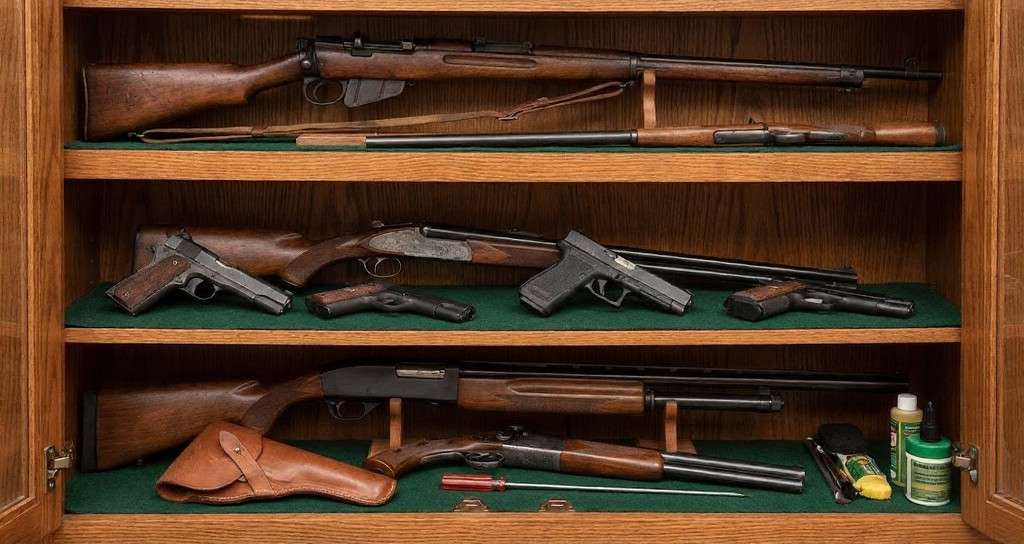
Being charged with felon in possession of a firearm in Palmdale is one of the most serious weapons offenses you can face in California. Under California Penal Code Section 29800[1], convicted felons are prohibited from owning, purchasing, receiving, or possessing firearms or ammunition. Violations of this law carry severe penalties, including lengthy prison sentences, substantial fines, and lifelong consequences that can affect every aspect of your future.
If you’ve been arrested or are under investigation for felon in possession of a firearm in Palmdale or anywhere in Los Angeles County, you need immediate legal representation from an experienced criminal defense attorney who understands both the technical complexities of California’s firearms laws and the constitutional protections available to defendants.
At Tu Defensor Criminalista, we provide aggressive, knowledgeable defense representation for individuals facing felon in possession charges throughout Palmdale, Lancaster, and the entire Antelope Valley region. Our firm is dedicated to protecting your rights, challenging unlawful searches and seizures, and fighting to achieve the best possible outcome in your case.
Free Confidential Consultation: (888) 315-3326 | Available 24/7 | Hablamos Español
California Penal Code Section 29800 makes it illegal for anyone who has been convicted of a felony to own, purchase, receive, or possess any firearm. This prohibition applies regardless of how much time has passed since your felony conviction and remains in effect for life unless your rights are specifically restored through legal proceedings.
The law is broad and encompasses various scenarios. You can be charged with violating Penal Code Section 29800 if you:
According to the California Department of Justice[2], felon in possession cases are among the most frequently prosecuted firearms offenses in the state. Law enforcement agencies throughout California, including the Los Angeles County Sheriff’s Department serving Palmdale, prioritize enforcement of these laws as part of their crime prevention strategies.
California law defines “firearm” broadly under Penal Code Section 16520[1]. For purposes of felon in possession charges, a firearm includes:
Importantly, the firearm doesn’t need to be loaded or even functional to support a conviction under Penal Code Section 29800. Even antique firearms, replica firearms that could be made functional, and firearms in a state of disrepair can form the basis of charges.
Not all criminal convictions result in loss of firearm rights, but the prohibition is quite broad. Under California law, you’re prohibited from possessing firearms if you’ve been convicted of:
Additionally, federal law under18 U.S.C. Section 922(g)[3] also prohibits certain individuals from possessing firearms, including convicted felons. This means you can potentially face both state and federal charges for the same conduct.
Felon in possession of a firearm is a serious felony offense in California with substantial penalties. Understanding what you’re facing is essential for making informed decisions about your defense.
If convicted of felon in possession of a firearm under Penal Code Section 29800, you face:
The specific sentence within the range depends on factors including your criminal history, the circumstances of the offense, any aggravating or mitigating factors, and whether you accept a plea agreement or are convicted at trial.
If your prior felony conviction was for certain specified offenses, the penalties increase significantly. Under Penal Code Section 29900[1], if you were previously convicted of specific violent felonies including murder, mayhem, rape, certain sex offenses involving children, or other serious violent crimes, you face enhanced penalties of:
California’s Three Strikes Law, codified in Penal Code Sections 667(b)-(i)[1], can have devastating consequences for felon in possession cases. According to data from the California Department of Corrections and Rehabilitation[4], thousands of California inmates are serving sentences under the Three Strikes Law.
If your prior felony conviction qualifies as a “strike” under California law, and you’re convicted of felon in possession of a firearm:
Even if your prior conviction doesn’t qualify as a strike, the felon in possession conviction itself can count as a strike for purposes of future prosecutions, significantly increasing the stakes for any subsequent offenses.
In addition to state charges, you may face federal prosecution under 18 U.S.C. Section 922(g). Federal authorities, including the Bureau of Alcohol, Tobacco, Firearms and Explosives (ATF), work with local law enforcement in Palmdale and throughout Los Angeles County to identify and prosecute felon in possession cases.
According to the United States Sentencing Commission[5], federal felon in possession cases carry substantial penalties:
Federal sentences typically require you to serve at least 85% of the imposed sentence, with limited opportunities for early release.
To convict you of felon in possession of a firearm under California Penal Code Section 29800, the prosecution must prove every element of the offense beyond a reasonable doubt:
Each of these elements provides potential avenues for defense. If the prosecution cannot prove even one element beyond a reasonable doubt, you should be acquitted.
Many felon in possession cases involve “constructive possession” rather than actual physical possession. Constructive possession means you had control over the location where the firearm was found, even if the weapon wasn’t physically on your person.
For example, if police find a gun in your home, your vehicle, or another location you control, you can be charged based on constructive possession. However, the prosecution must prove both:
Constructive possession cases are often more defensible than actual possession cases because the prosecution must establish knowledge and control, which can be difficult when multiple people have access to the location.
At Tu Defensor Criminalista, we employ numerous defense strategies depending on the specific circumstances of your case. Here are some of the most effective defenses to felon in possession charges:
The Fourth Amendment to the United States Constitution protects you from unreasonable searches and seizures. If law enforcement discovered the firearm through an illegal search, we can file a motion to suppress the evidence, potentially resulting in dismissal of all charges.
Common Fourth Amendment violations in felon in possession cases include:
If we successfully challenge the legality of the search, the court will exclude the firearm from evidence, and the prosecution’s case will likely collapse.
To convict you of felon in possession, the prosecution must prove you knew the firearm was present. If you genuinely didn’t know about the firearm, you have a valid defense.
This defense commonly arises when:
The prosecution cannot simply assume you knew about the firearm. They must present actual evidence establishing your knowledge.
If you didn’t actually possess the firearm and didn’t have control over the location where it was found, you cannot be convicted. This defense applies when:
In constructive possession cases, we challenge whether the prosecution can prove beyond a reasonable doubt that you, rather than someone else, had control over the firearm.
Sometimes we can challenge whether your prior conviction actually qualifies as a felony that prohibits firearm possession:
California recognizes a limited exception for temporary possession of a firearm for a lawful purpose. If you possessed the firearm only momentarily to:
This defense requires proof that your possession was truly temporary and for a legitimate purpose.
While inoperable firearms can still support a conviction under some circumstances, we may be able to argue that the item in question doesn’t meet the legal definition of a “firearm” if it’s so broken or incomplete that it cannot function as a weapon and cannot be readily repaired.
Beyond Fourth Amendment search and seizure issues, we examine whether your other constitutional rights were violated:
Any violation of your constitutional rights can form the basis for dismissal of charges or suppression of evidence.
Understanding how felon in possession cases typically develop in Palmdale can help you protect your rights if you’re being investigated or have been arrested.
Felon in possession cases in Palmdale generally come to light through several common scenarios:
If you encounter law enforcement in Palmdale, understanding your rights is crucial:
Never resist law enforcement, even if you believe your rights are being violated. Comply with lawful orders while asserting your rights verbally, and contact an attorney immediately.
Palmdale, located in the Antelope Valley region of northern Los Angeles County, has grown into one of California’s largest cities. According to the U.S. Census Bureau[8], Palmdale’s population exceeds 150,000 residents, making it a significant urban center in Los Angeles County.
The city’s growth has brought increased attention to public safety issues, including firearms violations. The City of Palmdale[9] works closely with the Los Angeles County Sheriff’s Department to address crime and maintain community safety.
Law enforcement in Palmdale takes weapons violations seriously, particularly felon in possession cases. The Palmdale Sheriff’s Station maintains specialized units focused on firearms enforcement, gang intervention, and violent crime suppression. These units actively investigate illegal weapons possession and work with state and federal agencies to prosecute serious firearms offenses.
Felon in possession cases arising in Palmdale are prosecuted by the Los Angeles County District Attorney’s Office and heard in the Antelope Valley Courthouse located in nearby Lancaster. This courthouse handles criminal cases from throughout the Antelope Valley, including Palmdale, Lancaster, and surrounding communities.
The Los Angeles County District Attorney’s Office maintains a reputation for aggressive prosecution of firearms offenses. Prosecutors assigned to the Antelope Valley Courthouse are experienced in handling weapons cases and have substantial resources at their disposal.
Understanding the local prosecution environment is essential for effective defense. An attorney familiar with the Antelope Valley Courthouse, local prosecutors, and judges can better navigate the system and advocate effectively on your behalf.
For non-citizens living in Palmdale and throughout California, a felon in possession conviction carries severe immigration consequences that can be even more devastating than the criminal penalties.
Under federal immigration law, specifically the Immigration and Nationality Act[10], firearms offenses are treated as serious crimes that can result in:
A felon in possession conviction is considered an “aggravated felony” for immigration purposes under certain circumstances. According to the U.S. Department of Homeland Security[11], aggravated felonies make non-citizens deportable from the United States, with very limited exceptions.
Even if your conviction doesn’t qualify as an aggravated felony, it may still be a “crime involving moral turpitude” or a firearms offense that makes you deportable.
If you’re deported or leave the United States after a felon in possession conviction, you’ll likely be deemed inadmissible, meaning you cannot legally return to the United States. This can permanently separate you from your family, career, and life in America.
A conviction can result in:
Immigration and Customs Enforcement (ICE) may place you in mandatory detention pending removal proceedings, with no possibility of bond in some cases.
At Tu Defensor Criminalista, we understand the unique challenges faced by immigrant communities in Palmdale and throughout California. When representing non-citizen clients, we:
If you’re not a U.S. citizen, it’s absolutely critical to inform your criminal defense attorney of your immigration status so they can protect both your criminal and immigration interests.
If you have a prior felony conviction that prohibits you from possessing firearms, you may wonder whether those rights can ever be restored. California law provides limited mechanisms for restoring gun rights, though the process is complex and not available in all cases.
California law allows certain “wobbler” offenses—crimes that can be charged as either felonies or misdemeanors—to be reduced from felonies to misdemeanors. If your prior conviction was for a wobbler offense and it’s reduced to a misdemeanor under Penal Code Section 17(b)[1], you may no longer be prohibited from possessing firearms under California law.
However, this option is only available if:
Even if your California felony is reduced to a misdemeanor, federal prohibitions may still apply.
California’s expungement law, Penal Code Section 1203.4[1], allows certain convicted individuals to withdraw their plea or set aside their conviction. While expungement provides significant benefits, including being able to state on most job applications that you haven’t been convicted of the crime, it does not restore California gun rights.
However, expungement may provide some relief from federal firearms prohibitions in limited circumstances.
A Certificate of Rehabilitation is a court order declaring that you have been rehabilitated. For certain felony convictions, obtaining a Certificate of Rehabilitation can restore California gun rights, though it’s not available for all offenses.
The process requires:
Certificates of Rehabilitation are not granted automatically and require compelling evidence of rehabilitation.
A pardon from the California Governor can restore gun rights, but pardons are rarely granted and require an extensive application process. The Governor’s Office reviews pardon applications carefully and grants them only in exceptional circumstances demonstrating extraordinary rehabilitation.
Restoring federal gun rights is a separate process from state restoration and is significantly more difficult. Federal law previously allowed for rights restoration through the Bureau of Alcohol, Tobacco, Firearms and Explosives, but Congress has not funded this program for many years, effectively eliminating this option for most people.
Given the difficulty of restoring gun rights after a felony conviction, the best strategy is to avoid a conviction in the first place. This underscores the importance of having experienced legal representation when facing felon in possession charges.
Understanding how law enforcement investigates these cases can help you protect your rights and understand the evidence that may be used against you.
California and federal law enforcement agencies maintain extensive databases of individuals prohibited from possessing firearms. The California Department of Justice Bureau of Firearms[12] maintains records of:
When law enforcement discovers a firearm during an investigation or arrest, they routinely check these databases to determine if the person is legally allowed to possess it.
If a firearm is recovered, law enforcement may:
This forensic evidence can be used to establish possession and tie you to the weapon.
Law enforcement may use surveillance techniques and confidential informants to investigate suspected felon in possession cases:
Modern investigations increasingly involve digital evidence:
According to the Bureau of Justice Statistics[13], digital evidence plays an increasingly important role in criminal investigations, including firearms cases.
Felon in possession charges often arise alongside other criminal offenses, which can complicate your case and increase the potential penalties.
If the prosecution alleges you possessed the firearm to benefit a criminal street gang, they may add a gang enhancement under Penal Code Section 186.22[1]. Gang enhancements can add years to your sentence and may make you ineligible for probation.
Felon in possession cases frequently involve simultaneous drug charges. If police find drugs and firearms together, prosecutors often charge both offenses, arguing the firearm was possessed in furtherance of drug trafficking.
If you’re on probation or parole when arrested for felon in possession, you face not only the new criminal charges but also potential revocation of your probation or parole, which can result in additional prison time for your original offense.
If the firearm was allegedly used to threaten or assault someone, you may face additional charges including:
California law also prohibits felons from possessing ammunition under Penal Code Section 30305[1]. You can be charged with both felon in possession of a firearm and felon in possession of ammunition, though the sentences typically run concurrently.
Effective defense of felon in possession charges often involves filing strategic pretrial motions that can result in dismissal of charges, suppression of evidence, or favorable positioning for trial or plea negotiations.
A motion to suppress evidence challenges the legality of the search or seizure that led to discovery of the firearm. If successful, the court excludes the firearm and related evidence from trial, often resulting in dismissal of all charges.
These motions require detailed legal argument supported by:
If police obtained a search warrant, we may file a motion to traverse (challenge) the warrant by arguing that:
A successful traverse motion can invalidate the warrant and suppress all evidence obtained through the illegal search.
A Pitchess motion seeks to discover law enforcement personnel records, including:
If we can show the officers involved in your case have a history of misconduct, it can strengthen suppression motions and undermine the prosecution’s case.
After the preliminary hearing in a felony case, we may file a motion to dismiss arguing that the prosecution failed to present sufficient evidence to hold you to answer for the charges.
We file motions to compel the prosecution to provide:
While we’re always prepared to take your case to trial, many cases resolve through plea negotiations. Understanding the negotiation process and potential outcomes can help you make informed decisions about your case.
Depending on the specific circumstances of your case, we may be able to negotiate for:
Several factors influence the prosecution’s willingness to negotiate and the outcomes we can achieve:
For non-citizens, we structure plea agreements to minimize immigration consequences whenever possible. This might involve:
When plea negotiations don’t result in an acceptable outcome, or when you have strong defenses, taking your case to trial may be the best option. Understanding the trial process can help reduce anxiety and allow you to participate effectively in your defense.
Felon in possession trials begin with jury selection (voir dire). We carefully question potential jurors to:
Opening statements provide an opportunity to tell your story to the jury. We use opening statements to:
Cross-examination is often the most critical part of trial. We cross-examine prosecution witnesses, including law enforcement officers, to:
Depending on your defense strategy, we may present:
In closing arguments, we synthesize all the evidence and argue why the prosecution has failed to prove its case beyond a reasonable doubt. Effective closing arguments:
After closing arguments and jury instructions, the jury deliberates. They must unanimously agree on a verdict of guilty or not guilty. If they cannot reach a unanimous verdict, the result is a hung jury and mistrial, after which the prosecution must decide whether to retry the case.
Beyond the immediate criminal penalties, a felon in possession conviction carries numerous collateral consequences that can affect virtually every aspect of your life.
According to the U.S. Equal Employment Opportunity Commission[14], having a criminal record can significantly impact employment opportunities. A felon in possession conviction may:
Many landlords conduct background checks and may refuse to rent to individuals with felony convictions, particularly firearms offenses. Public housing authorities may also deny housing based on criminal history.
A felony conviction results in:
Some educational institutions consider criminal history in admissions decisions, and certain felony convictions can affect eligibility for federal student aid.
Many professional licenses require background checks and may be denied or revoked based on felony convictions, affecting careers in:
A felon in possession conviction can be used against you in:
Beyond the legal consequences, convicted felons often face social stigma that affects personal relationships, community standing, and overall quality of life.
When you’re facing felon in possession charges in Palmdale, the attorney you choose can make the difference between conviction and acquittal, between years in prison and freedom. At Tu Defensor Criminalista, we offer:
We have successfully defended numerous felon in possession cases throughout Los Angeles County, including Palmdale and the Antelope Valley. Our experience with California’s complex firearms laws and the local court system gives our clients a significant advantage.
We invest the time and resources necessary to thoroughly investigate every aspect of your case, including:
We file aggressive pretrial motions challenging illegal searches, seeking suppression of evidence, and fighting to dismiss charges whenever possible. Our motion practice has resulted in numerous cases being dismissed before trial.
When plea negotiations serve your interests, we leverage our relationships with Los Angeles County prosecutors and our knowledge of the local court system to negotiate favorable outcomes.
When your case goes to trial, you need an attorney with courtroom experience and the skills to effectively challenge the prosecution. We provide compelling trial representation that gives you the best chance of acquittal.
We provide services in both English and Spanish, ensuring that language is never a barrier to quality legal representation. We understand the unique challenges faced by Spanish-speaking communities in Palmdale and throughout California.
For non-citizen clients, we understand the devastating immigration consequences of firearms convictions and structure defense strategies to minimize these impacts whenever possible.
We treat every client as an individual, not a case number. You’ll receive personalized attention and regular communication about your case’s progress.
Our familiarity with Palmdale, the local law enforcement environment, the Antelope Valley Courthouse, and the prosecutors who handle cases in this jurisdiction allows us to provide informed, strategic representation.
We believe in the Constitution and in every person’s right to a vigorous defense. We will protect your rights at every stage of the criminal process.
Do not consent without a warrant. Say, “I do not consent.” Provide ID only, remain silent, and request an attorney.
Yes, if prosecutors prove you knew about it and had control (“constructive possession”).
Not always. Sentences vary; first-time offenders or mitigating circumstances may get probation.
Circumstantial evidence—location, fingerprints, photos, texts, or behavior. Stay silent to protect yourself.
The gun ban is lifelong, but rehab can help with sentencing or plea deals.
Yes, both are possible; separate jurisdictions. Federal penalties can be harsher.
Actual: gun on your person. Constructive: control over location where gun is, even if not on you.
If legally reduced to a misdemeanor, you may possess guns under California law—but federal law may still apply.
Do not touch. Transfer legally to someone allowed to possess or contact authorities/attorney.
Aggressive, early investigation, motions to suppress, trial-ready, bilingual, and local expertise.
Arraignment: charges read, enter plea, bail set, attorney needed. Plead not guilty initially.
Remember:
Attorney Armando Josué Cespedes is rated 5.0 on Avvo, with 34 five-star reviews from clients praising his dedication, professionalism, and results. Many note how his trial skills and attention to detail led to reduced charges or outright dismissals.



 English English
 Español de México English English Español de México
Thank you! We need your help. Would you share your experience on one of these sites?
If you have concerns you wish to address privately
