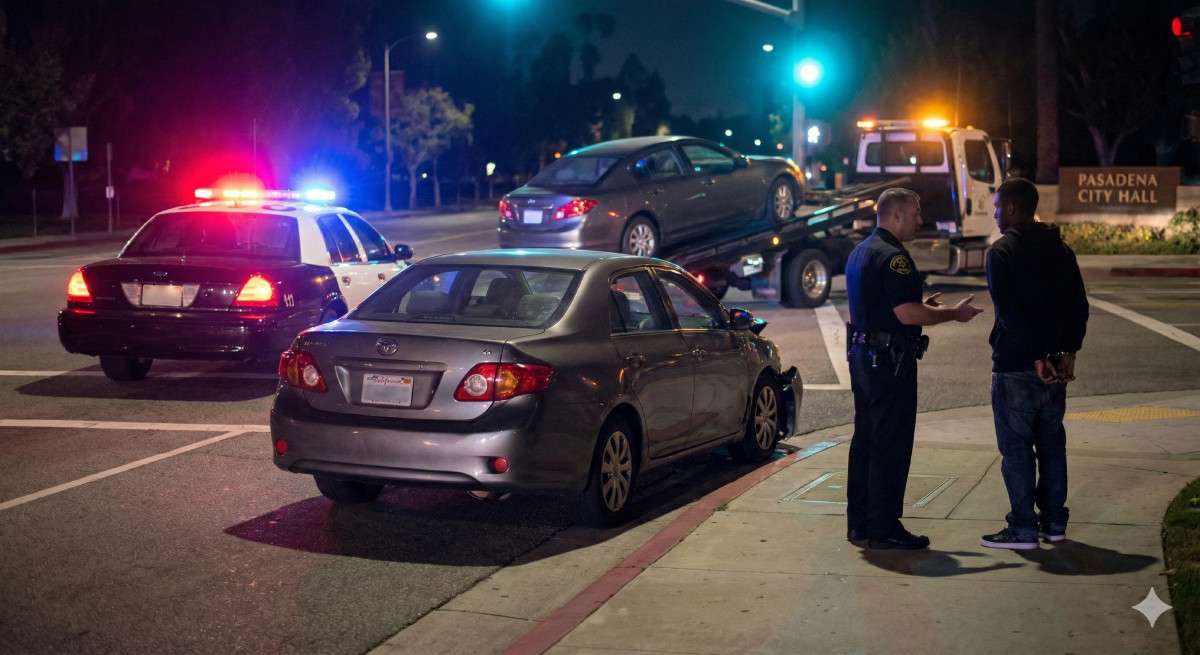
If you’ve been arrested for felony DUI in Pasadena, you’re facing the most severe drunk driving charges in California criminal law. A felony DUI conviction carries devastating consequences including state prison sentences, permanent criminal records, massive fines, victim restitution, and lifetime impacts on your employment, professional licenses, and civil rights. The stakes couldn’t be higher when prosecutors file felony charges under California Vehicle Code Section 23153.
Pasadena Police Department reported 225 DUI investigations in 2024, up from 194 in 2023[1], with 83 DUI-related collisions occurring in the city. When these incidents result in serious injuries or involve repeat offenders, felony charges become inevitable. As a city of approximately 137,195 residents[2] in the heart of Los Angeles County, Pasadena sees its fair share of serious DUI prosecutions at the Pasadena Superior Courthouse located at 300 East Walnut Street.
At Tu Defensor Criminalista, we provide aggressive, experienced felony DUI defense to clients throughout Pasadena, Altadena, Sierra Madre, San Marino, and surrounding Los Angeles County communities. Our legal team understands the unique challenges of defending felony DUI cases in Pasadena’s Northeast Judicial District, and we fight tirelessly to protect your rights, freedom, and future.
Free Confidential Consultation: (888) 315-3326 | Available 24/7 | Hablamos Español
California law provides three distinct situations where DUI charges escalate from misdemeanor to felony offenses. Understanding these scenarios is critical for anyone facing serious drunk driving allegations in Pasadena.
DUI Causing Injury (Vehicle Code 23153): The most common felony DUI charge occurs when you drive under the influence of alcohol or drugs and cause an accident resulting in injury to another person. According to the California DUI Management Information System[3], 21.4% of all DUI arrests in 2019 were associated with traffic crashes, and 8.3% involved crashes with injuries or fatalities. When someone sustains injuries in a DUI-related collision, prosecutors can file charges under Vehicle Code Section 23153, which applies when you:
The injury element is crucial. California law defines “bodily injury” broadly to include even relatively minor physical harm. A passenger in your vehicle, another driver, pedestrians, bicyclists, or anyone else who sustains physical injury can trigger felony charges. The prosecution must prove that your impaired driving and concurrent traffic violation caused the injuries—mere correlation isn’t sufficient.
Fourth DUI Offense Within 10 Years: California’s “priorable” DUI laws impose escalating penalties for repeat offenders. Your fourth DUI arrest within a 10-year period automatically qualifies for felony prosecution, even if no one was injured. The look-back period examines your prior DUI convictions, including:
Statewide data shows that among convicted DUI offenders arrested in 2019, 72.8% were first offenders and 27.2% were repeat offenders[4]. The percentage of repeat DUI offenders has decreased from 37% in 1989 to 26% in 2012, largely due to aggressive enforcement and harsh penalties that deter recidivism.
Prior Felony DUI Conviction: If you have any previous felony DUI conviction on your record, subsequent DUI arrests—even first-time misdemeanor-level offenses—can be charged as felonies. This applies regardless of when the prior felony occurred or whether injuries were involved in the new case.
To convict you of felony DUI causing injury under Vehicle Code 23153, Pasadena prosecutors must prove beyond a reasonable doubt:
The causation element creates powerful defense opportunities. Many accidents occur due to factors beyond the driver’s control—mechanical failures, adverse road conditions, actions of other drivers, pedestrian negligence, or environmental hazards. If we can demonstrate that something other than your driving caused or contributed to the accident, the prosecution’s case collapses.
The “illegal act” or “neglect of duty” requirement means prosecutors must identify a specific traffic violation you committed. Common allegations include:
Without proving a concurrent traffic violation, the prosecution cannot secure a felony DUI conviction even if you were impaired and someone was injured.
Vehicle Code 23153 is a “wobbler” offense, meaning prosecutors have discretion to charge it as either a misdemeanor or felony. The decision typically depends on:
The median BAC among convicted DUI offenders in California is 0.16%, which is double the legal limit[4]. Higher BAC levels suggest greater impairment and increase prosecutors’ willingness to pursue felony charges.
Even when initially charged as a felony, skilled defense attorneys can negotiate to have charges reduced to misdemeanors, especially when injuries are relatively minor or when legal defenses undermine the prosecution’s case.
Felony DUI convictions under Vehicle Code 23153 carry potential state prison sentences ranging from 16 months to 4 years. The court determines the specific term based on factors including:
Sentence Enhancements: California law imposes additional prison time for certain aggravating factors:
These enhancements are mandatory if charged and proven, meaning judges cannot strike them even in sympathetic circumstances.
Under California’s realignment laws, judges have discretion to sentence felony DUI defendants to county jail rather than state prison, particularly for first-time felony offenders or cases involving less severe injuries. County jail sentences can range from several months to one year.
Many felony DUI defendants receive formal probation (supervised probation) instead of or in addition to custody time. According to state data, probation was imposed in 95.9% of all convicted DUI cases[4], making it the most frequently imposed court penalty. Felony probation typically lasts three to five years and includes conditions such as:
While only 15.9% of DUI offenders received ignition interlock requirements[4] historically, California’s mandatory IID laws now require these devices for all DUI convictions.
Financial penalties for felony DUI convictions are substantial:
The total cost of a first-time DUI arrest in California ranges between $15,000 and $20,000[1], including attorney fees, fines, insurance increases, impound fees, and treatment programs.
Victim Restitution: Beyond fines and fees, you must pay full restitution to injured victims for all economic losses including:
Victim restitution orders can reach hundreds of thousands of dollars in serious injury cases and remain enforceable for many years after sentencing.
Felony DUI convictions trigger both criminal court and DMV license actions:
Standard felony DUI convictions under Vehicle Code 23153 do not constitute “strikes” under California’s Three Strikes Law. However, related charges can trigger strike allegations:
Beyond court-imposed penalties, felony DUI convictions create lasting consequences:
The Fourth Amendment protects against unreasonable searches and seizures, requiring police to have reasonable suspicion of criminal activity before stopping your vehicle. Common challenges to traffic stops include:
Blood alcohol testing is imperfect science subject to numerous sources of error:
Rising Blood Alcohol Defense: Alcohol takes 30 minutes to three hours to fully absorb into your bloodstream. Your BAC may have been below 0.08% while driving but rose above the legal limit by the time of testing. This defense is particularly effective when significant time elapsed between driving and testing.
Mouth Alcohol Contamination: Breathalyzers measure alcohol in your breath, not your blood. Residual mouth alcohol from recently consumed beverages, GERD (gastroesophageal reflux disease), dental work, or regurgitation can artificially inflate breath test results.
Improper Testing Procedures: California’s Title 17 regulations establish strict protocols for DUI testing. Violations include:
Medical Conditions: Certain medical conditions mimic intoxication or affect test results:
Felony DUI charges require proof that your impaired driving caused the victim’s injuries:
Alternative Causes of Collision: Many accidents result from factors beyond the defendant’s control:
Victim’s Contributory Negligence: If the injured party’s own negligence contributed to the accident, causation becomes questionable. Examples include jaywalking, running red lights, or failing to wear seatbelts.
Accident Reconstruction: Expert accident reconstruction can demonstrate that the collision would have occurred regardless of impairment, breaking the causal link prosecutors must prove.
Field sobriety tests (FSTs) are notoriously unreliable:
Standardized Field Sobriety Tests (SFSTs): The National Highway Traffic Safety Administration recognizes three validated tests:
Even under ideal conditions, these tests produce false positives. Factors affecting performance include:
Officer Training and Administration: Officers must be properly trained and must administer tests according to NHTSA protocols. Deviations from standardized procedures invalidate results.
Voluntary Participation: Field sobriety tests are voluntary in California. You cannot be punished for refusing, though officers may use refusal as evidence of consciousness of guilt.
California law recognizes necessity and duress as affirmative defenses when you drove while impaired to prevent a greater harm:
Necessity: You may argue necessity if you drove to prevent imminent harm, such as rushing someone to the hospital in a medical emergency when no other transportation was available.
Duress: If someone threatened you with immediate harm unless you drove, duress may apply.
These defenses require showing that:
Law enforcement must follow proper procedures when arresting DUI suspects:
Pasadena felony DUI cases are prosecuted at the Pasadena Superior Courthouse, which serves the Northeast Judicial District including Pasadena, Altadena, Arcadia, Monrovia, and Sierra Madre. The courthouse handles both misdemeanor and felony criminal matters, with felony cases heard on the second floor.
Los Angeles County District Attorney’s Office: Felony DUI prosecutions are handled exclusively by deputy district attorneys from the Pasadena branch office. These prosecutors are experienced, well-resourced, and pursue maximum penalties in serious injury cases.
Local Law Enforcement Agencies: Multiple agencies make DUI arrests in Pasadena:
Each agency has specialized DUI enforcement units and regularly conducts sobriety checkpoints and saturation patrols. According to the City of Pasadena[5], checkpoint operations frequently result in multiple arrests, with funding provided by the California Office of Traffic Safety.
Pasadena maintains aggressive DUI enforcement:
Increased DUI Investigations: The Pasade[1]n[1]a Police Department reported 225 DUI investigations in 2024, up from 194 in 2023[1], representing a 16% increase in DUI enforcement activity.
Drug-Impaired Driving Focus: Pasadena law enforcement emphasizes that “DUI doesn’t just mean booze,” reflecting increased enforcement of drugged driving. Statewide, drug-involved crash fatalities increased by 28.9% in 2020[4], and 42% of all drivers killed in California motor vehicle crashes who were tested had drugs in their systems[1].
Zero-Tolerance Enforcement: Following California’s legalization of recreational marijuana, Pasadena police adapted training and enforcement strategies to detect cannabis impairment. Marijuana was found in 7.4% of impaired drivers, slightly higher than alcohol at 7.3%.
Regular Checkpoints and Patrols: Pasadena conducts regular DUI checkpoints at undisclosed locations throughout the city, choosing sites based on collision statistics and DUI arrest frequency. These checkpoints combine license verification with impaired driving detection.
Court Location and Hours: Pasadena Superior Courthouse is located at 300 East Walnut Street, Pasadena, CA 91101. The courthouse is open Monday through Friday from 8:30 a.m. to 4:30 p.m.
Parking: Public parking is available in the structure at 240 Ramona Street, located southeast of the courthouse. Parking fees apply, and the structure has a 6’6″ ceiling clearance. Additional metered parking exists around the courthouse, but availability is limited.
Security: All visitors must pass through security screening before entering. Arrive early for court appearances to account for security delays and potential lines.
Criminal Clerks:
Department Assignments: Felony DUI cases are assigned to specific departments based on court calendars and judge availability. Your attorney will receive notice of your assigned department.
Effective felony DUI defense in Pasadena requires:
Immediate Investigation: Critical evidence deteriorates quickly:
Expert Witnesses: Complex felony DUI cases benefit from expert testimony:
Negotiation with Prosecutors: Building relationships with deputy district attorneys, understanding their priorities, and presenting compelling mitigation evidence can result in charge reductions, dismissals, or favorable plea agreements.
DMV Hearing Representation: You have only 10 days from arrest to request a DMV administrative hearing. These hearings provide opportunities to cross-examine arresting officers, preview prosecution evidence, and potentially save your license.
Pretrial Motions: Strategic motion practice can suppress evidence, dismiss charges, or force favorable plea offers:
Felony DUI cases involve critical deadlines that can determine case outcomes:
DMV Hearing Request (10 Days): California law gives you 10 days from your arrest date to request an administrative per se (APS) hearing to contest your license suspension. Missing this deadline results in automatic suspension without opportunity for review.
Arraignment: Your first court appearance, typically within 48 hours if in custody or several weeks if released on bail or your own recognizance. Arraignment involves:
Having an attorney at arraignment can result in reduced bail, favorable release conditions, and immediate investigation of your case.
Evidence Preservation: Critical evidence must be preserved quickly:
Preliminary Hearing: In felony cases, preliminary hearings occur within 10 court days if you’re in custody or 60 days if released. This critical hearing determines whether sufficient evidence exists to proceed to trial.
Early legal representation provides crucial advantages:
Felony convictions create permanent criminal records that:
Given these life-altering ramifications, investing in experienced felony DUI defense is essential.
At Tu Defensor Criminalista, we provide comprehensive, aggressive defense for Pasadena felony DUI clients:
Thorough Investigation: We conduct independent investigations including:
Expert Consultation: We work with leading experts in accident reconstruction, toxicology, and forensic science to challenge prosecution evidence and build compelling defenses.
Aggressive Litigation: We file strategic motions to suppress illegally obtained evidence, exclude unreliable testimony, and dismiss unsupported charges. Our trial experience gives us credibility with judges and prosecutors.
Personalized Attention: Felony DUI cases are life-changing events. We provide direct attorney-client communication, thorough case updates, and compassionate support throughout the legal process.
Bilingual Services: We provide full legal services in English and Spanish, ensuring clear communication and understanding for all clients.
Tu Defensor Criminalista has successfully defended hundreds of DUI clients throughout Los Angeles County, achieving:
Our Pasadena felony DUI defense practice serves clients throughout:
We handle cases at Pasadena Superior Courthouse and throughout Los Angeles County’s court system.
California DUI statistics provide important context for understanding Pasadena enforcement patterns:
DUI Arrest Rates: The DUI arrest rate per 100,000 licensed drivers decreased by 21.5% in 2020[4], following a 3.2% decrease in 2019. The substantial 2020 reduction was linked to COVID-19 pandemic shutdowns and reduced vehicle traffic.
From 2003 to 2010, DUI arrest rates remained stable at 800-900 arrests per 100,000 licensed drivers. Starting in 2011, rates began declining, dropping dramatically to 651 per 100,000 in 2012-2013. Experts attribute this decline to increased availability of ride-sharing services like Uber and Lyft. Research shows that after Uber began operating in California cities, DUI-related fatalities dropped between 3.6% and 5.6%[1].
Fatal DUI Collisions: Despite decreasing arrest rates, alcohol-related crash fatalities have increased. In 2020, alcohol-involved crash fatalities increased by 7.6%[4], and drug-involved crash fatalities increased by 28.9%. TheCalifornia Office of Traffic Safety reports that 1,479 people were killed in alcohol-involved crashes in 2022[1], accounting for one-third of all traffic deaths statewide.
Of total crash fatalities in 2020,31.8% were alcohol-involved[4], the same percentage as 2019. The percentage of drug-involved fatalities increased from 21.4% in 2019 to 25.8% in 2020.
DUI Offender Demographics: Statistical analysis reveals:
Conviction Rates: Among 2019 DUI arrest cases, 20.5% did not show any corresponding conviction on DMV records[4], indicating that approximately one in five DUI arrests do not result in convictions. This underscores the importance of aggressive legal defense.
Court Penalties: The most frequent court punishment for convicted DUI offenders arrested in 2019 was probation (95.9%)[4], while ignition interlock requirements were least frequently imposed (15.9%). DUI offenders were sentenced to jail in 74.1% of cases, with first offenders receiving jail sentences in 66.3% of cases compared to 95.2% of repeat offenders.
Aggressive DUI enforcement saves lives. Studies show that Californians saved 312 lives in 2024 by reporting impaired drivers to law enforcement[1]. Drunk-driving deaths are 100% preventable when impaired drivers are removed from roadways before causing harm.
However, enforcement must balance public safety with constitutional rights. Not every DUI arrest involves an actually impaired driver, and not every accident attributed to DUI was truly caused by impairment. Vigorous legal defense protects individuals while maintaining pressure on law enforcement to follow proper procedures and respect constitutional protections.
Yes. Vehicle Code 23153 DUI causing injury is a “wobbler” offense that prosecutors can charge as either a misdemeanor or felony. With effective legal representation, felony charges can be reduced to misdemeanors, particularly when:
– Injuries are relatively minor
– You have no prior criminal record
– Legal defenses undermine the prosecution’s case
– Mitigating circumstances exist
Even after felony charges are filed, skilled negotiation and motion practice can result in charge reductions before trial.
Not necessarily. While felony DUI carries potential state prison sentences up to four years, many defendants receive alternative sentences including:
– County jail time (several months to one year)
– Formal probation with jail time as a condition
– House arrest or electronic monitoring
– Community service and DUI education programs
First-time felony DUI defendants without aggravating factors often avoid state prison, especially with strong legal representation presenting mitigation evidence and advocating for alternative sentencing.
Felony DUI convictions result in driver’s license revocation (not just suspension) for one to five years depending on your prior DUI record. However, you may qualify for restricted licenses with ignition interlock devices after serving mandatory suspension periods. DMV administrative hearings provide opportunities to contest license suspensions entirely.
California comparative negligence principles mean that if the victim’s own negligence contributed to their injuries, causation becomes questionable. If we can demonstrate that the victim was jaywalking, not wearing a seatbelt, or otherwise negligent, prosecutors may be unable to prove that your impaired driving proximately caused the injuries. This can result in charge dismissals or reductions to misdemeanor DUI without injury.
You can legally refuse field sobriety tests and portable breathalyzers (PAS devices) without penalty. However, refusing chemical tests (breath or blood) at the police station after arrest triggers automatic one-year license suspensions and can be used as evidence of consciousness of guilt. The decision to refuse testing involves complex legal and strategic considerations that should be made in consultation with an attorney.
The Watson advisement, required for all DUI convictions, warns defendants that driving under the influence is extremely dangerous to human life, and that if they continue to drive while impaired and kill someone, they can be charged with murder. This advisement allows prosecutors to prove “implied malice” for second-degree murder charges if you cause a fatal DUI accident after a prior DUI conviction. Watson murder carries 15-years-to-life in state prison.
Felony DUI convictions can have severe immigration consequences including deportation, inadmissibility, and denial of naturalization for non-citizens. Even lawful permanent residents (green card holders) can be removed from the United States. If you are not a U.S. citizen, it is critical to work with a criminal defense attorney who understands immigration law and can structure defenses to minimize immigration consequences.
DMV administrative per se hearings are civil proceedings separate from criminal court. At these hearings, the DMV determines whether to suspend your license based on:
– Whether the officer had reasonable cause to believe you were driving under the influence
– Whether you were lawfully arrested
– Whether your BAC was 0.08% or higher at the time of driving
You have the right to an attorney, to cross-examine witnesses, and to present evidence. Winning DMV hearings can preserve your driving privileges even if you face criminal charges.
California now offers ignition interlock device (IID) restricted licenses that allow you to drive anywhere, anytime with an IID installed in your vehicle. Previously, restricted licenses were limited to driving to and from work, DUI programs, and medical appointments. The IID restricted license provides much greater mobility during suspension periods.
Felony DUI defense costs vary based on case complexity, but typically range from $7,500 to $25,000 or more for cases requiring trial. While this seems expensive, the cost of a felony conviction—prison time, permanent criminal record, job loss, and collateral consequences—far exceeds the cost of effective legal representation. Many attorneys offer payment plans, and the investment in your future is worthwhile.
If you or a loved one has been arrested for felony DUI in Pasadena, time is critical. Every day of delay can mean lost evidence, missed deadlines, and weakened defenses. Don’t face these serious charges alone.
Contact Information:
Available: 24 Hours a Day | 7 Days a Week
Languages: English & Spanish (Hablamos Español)
We proudly serve clients throughout Pasadena and surrounding Los Angeles County communities including:
We handle cases at Pasadena Superior Courthouse and throughout Los Angeles County’s court system.
In addition to misdemeanor DUI defense, we handle:
Don’t let a felony DUI arrest destroy your future. Call Tu Defensor Criminalista now for the experienced legal defense you deserve.
Attorney Armando Josué Cespedes is rated 5.0 on Avvo, with 34 five-star reviews from clients praising his dedication, professionalism, and results. Many note how his trial skills and attention to detail led to reduced charges or outright dismissals.



 English English
 Español de México English English Español de México
Thank you! We need your help. Would you share your experience on one of these sites?
If you have concerns you wish to address privately
