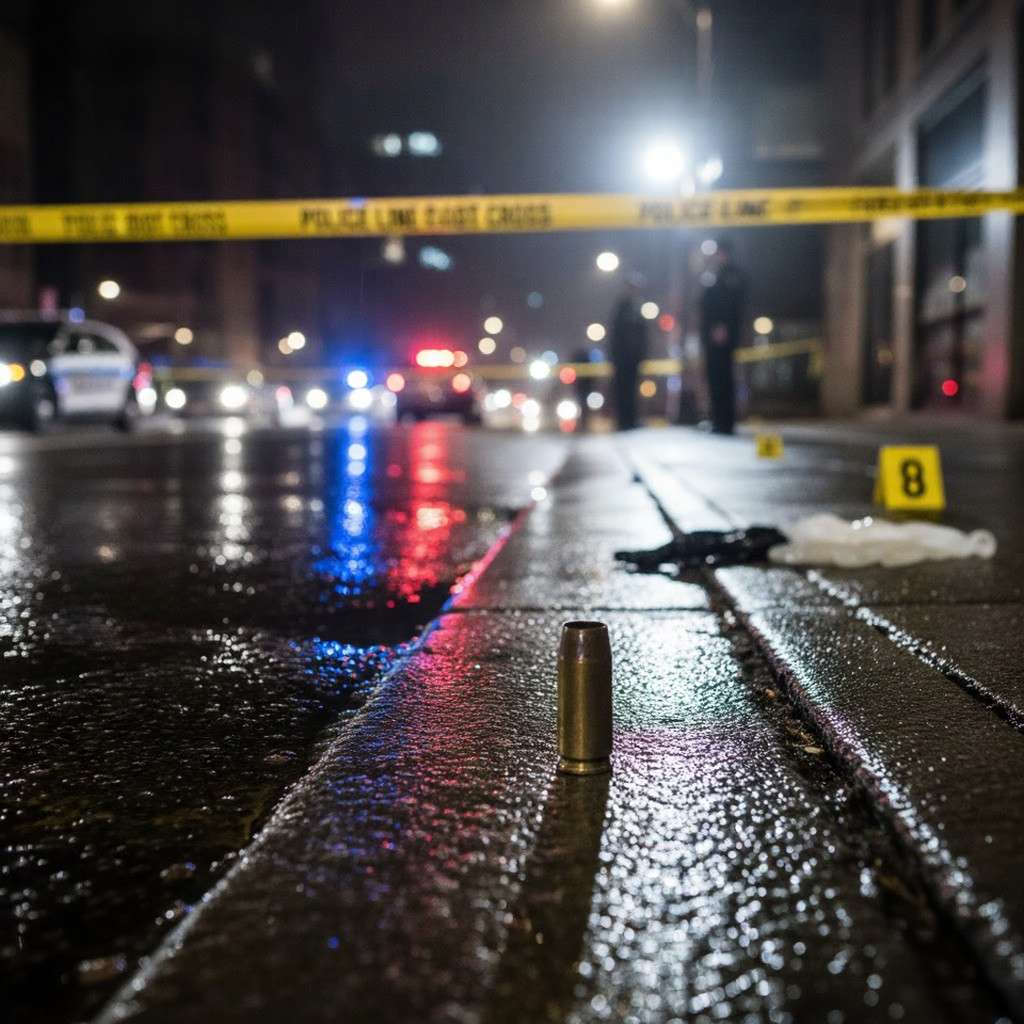
Facing gun crime charges in Pasadena can be devastating. Whether you’re accused of possessing an illegal firearm, carrying a concealed weapon, brandishing a weapon, illegally discharging a firearm, or other weapon-related offenses, you need experienced legal representation that understands firearm laws and knows how to defend your rights. At Tu Defensor Criminalista, we provide aggressive defense representation for individuals facing serious gun crime charges in Pasadena and throughout Los Angeles County.
Gun crime charges are among the most serious criminal offenses in California. Penalties include mandatory minimum prison sentences, lengthy state prison terms, strike allegations under California’s Three Strikes Law, permanent loss of firearm rights, immigration consequences, and devastating collateral effects on employment, housing, and personal relationships. Even a single conviction can alter your entire future.
The severity of gun crime prosecutions in California reflects the state’s commitment to aggressive enforcement of firearms regulations. However, aggressive prosecution doesn’t mean the prosecution has a solid case. Many gun crime charges rest on weak evidence, improper police procedures, violations of constitutional rights, or misinterpretations of complex firearms laws. We thoroughly investigate your case, challenge the prosecution’s evidence, and develop aggressive defenses protecting your rights.
Free Confidential Consultation: (888) 315-3326 | Available 24/7 | Hablamos Español
Our firm specializes in gun crimes defense with extensive experience defending clients in Pasadena and Los Angeles County courts. We understand California’s complex and constantly evolving firearm laws, know how local prosecutors approach weapons cases, and have developed strategic defenses specific to gun crime allegations. We’ve successfully defended hundreds of clients facing serious weapons charges, often resulting in reduced sentences, case dismissals, or acquittals.
We recognize that being accused of a gun crime doesn’t mean you committed one. Many gun crime charges arise from misunderstandings of the law, constitutional violations during arrest or search, or circumstances where you didn’t actually possess or control the weapon in question. We investigate thoroughly, challenge illegal police conduct, and present defenses that protect your rights.
California has some of the strictest firearms laws in the nation. California received an “A” rating from the Giffords Law Center for having the strongest gun laws in the United States[1]. These laws criminalize a wide range of firearm-related conduct, from simple possession of an unregistered firearm to serious felonies like armed robbery and assault with a deadly weapon.
Penal Code § 25400 – Carrying a Concealed Firearm
Penal Code § 25400 makes it illegal to carry a concealed firearm either on your person or in a vehicle without proper authorization. A firearm is concealed if it is hidden from view, whether in a purse, backpack, vehicle compartment, or under clothing.
Penalties for violating Penal Code § 25400 include:
Penal Code § 25850 – Carrying a Loaded Firearm
Carrying a loaded firearm in a public place is more serious than carrying concealed. Penal Code § 25850 requires the firearm be unloaded unless you have a valid concealed carry permit.
Penalties include:
Penal Code § 417 – Brandishing a Firearm
Brandishing a firearm involves displaying a firearm in a rude, angry, or threatening manner or drawing a weapon with the intent to harm. This includes waving, pointing, or drawing a firearm at another person.
Penalties for brandishing vary significantly:
Penal Code § 25400(b) – Carrying an Exposed Firearm
Carrying a firearm openly (not concealed but visible) violates Penal Code § 25400(b).
Penalties include:
Penal Code § 246 – Discharge of a Firearm
Discharging a firearm at another person, property, or vehicles is a serious felony. This charge applies whether you intended to hit anyone or simply fired a weapon recklessly.
Penalties for discharging a firearm include:
Penal Code § 25400(a)(1) – Possession of an Unregistered Firearm
Possessing an unregistered or unserialized firearm violates Penal Code § 25400(a)(1). This includes “ghost guns” or firearms manufactured at home without serial numbers.
Penalties include:
Penal Code § 25100 – Possession of Prohibited Weapons
California prohibits possession of certain weapons including brass knuckles, switchblades, blackjacks, ballistic knives, and other dangerous weapons.
Penalties for prohibited weapon possession include:
Felon in Possession of a Firearm (Penal Code § 25400)
If you have prior felony convictions, possessing any firearm violates Penal Code § 25400.
Penalties include:
A major focus of California firearms enforcement is prevention of “ghost guns” or unserialized firearms. In California, the number of unserialized ghost guns recovered as crime guns increased by 165% from 2020 to 2021[1]. These firearms—made at home from parts kits without serial numbers—have become increasingly common in criminal activity.
California passed comprehensive legislation in 2022 to regulate ghost gun manufacturing and sales. California requires that the sale and manufacture of firearm precursor parts are subject to the same laws and regulations as fully assembled firearms[1]. Possession and manufacturing of unregistered or unserialized firearms carries serious criminal penalties.
Pasadena benefits from community policing and neighborhood safety programs that maintain relatively lower crime rates compared to central Los Angeles areas. However, gun crimes remain a serious concern in the broader Los Angeles County region.
The Los Angeles County Sheriff’s Department seized almost 2,200 firearms through November 2024, strengthening community ties through neighborhood watch groups and community policing initiatives[2]. This enforcement focus reflects the persistent threat of illegal firearms in the region.
The LAPD seized 7,634 illegal firearms in 2024, including 790 ghost guns, demonstrating the impact of targeted enforcement on reducing firearm-related crimes[3]. This proactive approach targets removal of dangerous weapons from city streets.
California experiences significant gun crime despite having some of the nation’s strongest gun laws. Understanding these statistics contextualizes the aggressive prosecution environment in which you’ll be defending charges.
Gun violence costs California approximately $18 billion annually—just under $500 per Californian[1]. This enormous cost reflects the state’s commitment to aggressive enforcement and prosecution of firearms offenses.
Firearms were involved in 71.4% of homicides in California in 2022, with robberies involving guns standing at 28.8% and aggravated assaults with guns at 24.3%[4]. These statistics demonstrate the prevalence of firearms in serious violent crimes.
Research on firearms used in California crimes reveals patterns important to defense strategy. Over 380,000 crime guns were recovered by law enforcement in California between 2010-2021, with over 126,000 guns reported stolen during the same period[5]. Understanding where crime guns originate helps develop defenses in possession cases.
In 2021, just over half (50.4%) of firearms recovered by law enforcement in California and successfully traced to a final dealer of record were traced to dealers located in other states[6]. This trafficking pattern shows many California crime guns originate outside the state, entering illegally.
Gun homicides represent the most serious consequence of illegal firearm possession and use. In Los Angeles County, recorded gun-related homicides reached their highest level in 15 years in 2021, though the number has since declined[7]. This data reflects both the severity of gun violence and the effectiveness of targeted enforcement efforts.
Pasadena falls under the jurisdiction of the Los Angeles County Superior Court system. Gun crime charges in Pasadena are handled at the Pasadena Superior Court location, though cases may be transferred to other LA County courthouses depending on circumstances and case complexity.
Understanding local court procedures, specific judges’ tendencies, and prosecutor practices is essential for effective gun crime defense. We have extensive experience in Pasadena courts and maintain strong working relationships with local judges and prosecutors, giving us strategic advantages in negotiating favorable resolutions or preparing for trial. Our familiarity with the Pasadena court system allows us to navigate procedures efficiently and leverage local relationships.
Pasadena Superior Court regularly handles weapons cases, firearm possession charges, and violent crimes involving firearms. The court applies California’s strict firearms laws consistently, which means defendants face aggressive prosecution from experienced government attorneys. However, this consistent application also means we know how judges typically rule on various motions and what arguments are most persuasive.
Los Angeles County maintains specialized units focused on gun crimes and violent offenses. Prosecutors in these units receive specialized training on weapons cases and often pursue charges aggressively. They have substantial resources, forensic experts, ballistic specialists, and victim advocates available for their cases. These specialized prosecutors understand California firearms law thoroughly and develop sophisticated prosecution strategies.
However, specialized prosecution also means specialized defense is critical. We understand how these specialized prosecutors think, what evidence they prioritize, and what strategies are most effective against them. Our experience with these units informs our approach to your case, allowing us to anticipate their arguments and develop counter-strategies before they present evidence.
Gun crime investigations often involve complex physical evidence including firearms, ammunition, forensic analysis, witness testimony, and sometimes video surveillance. Police may conduct ballistic testing, fingerprint analysis, serial number tracing, gunshot residue testing, and other forensic procedures to link firearms to crimes.
Understanding how this evidence was collected, preserved, and analyzed is critical to developing defense strategies. We examine forensic reports, challenge testing procedures, explore contamination possibilities, and question whether physical evidence actually links you to charged offenses. We hire independent forensic experts to analyze evidence and provide contrary opinions when prosecution evidence is questionable.
Following arrest for gun crimes in Pasadena, you’ll have an initial appearance where the court determines bail and release conditions. Gun crime charges typically result in high bail amounts due to the serious nature of weapons offenses. The court may also impose protective orders, residence restrictions, travel limitations, and other conditions of release.
We aggressively argue for reasonable bail amounts and release conditions. We present evidence of your ties to the community, employment, family, and stability factors supporting release on own recognizance or with reasonable bail. We also negotiate for reasonable release conditions that don’t unnecessarily restrict your freedom while ensuring court appearance.
Immediately after arrest, evidence preservation becomes critical. We issue preservation letters to police and prosecutors demanding preservation of all evidence including firearms, ammunition, ballistic evidence, fingerprint evidence, surveillance footage, dispatch records, and officer body camera footage. We also demand preservation of materials that might be exculpatory—evidence that could support your defense.
We conduct vigorous discovery, requesting all evidence the prosecution has obtained. We review witness statements, expert reports, police reports, and any other materials that might support your defense or challenge the prosecution’s case. Thorough discovery allows us to identify weaknesses in the prosecution’s evidence and develop effective defense strategies.
Every gun crime case requires thorough investigation starting immediately after arrest. We obtain police reports, search and seizure documentation, forensic reports, witness statements, and all other evidence related to your case. We interview witnesses, examine crime scenes if possible, and collect evidence supporting your defense.
We also investigate the police investigation itself. We determine what investigation was conducted, what evidence was pursued or ignored, and what leads were not followed. Sometimes police focus exclusively on you and ignore evidence pointing to other suspects or exonerating you. We investigate those overlooked leads and present evidence police missed.
Critical investigative questions include: Did police legally search your vehicle or residence? Did police have proper warrant authorization? Was the firearm actually yours or were you merely present when it was found? Did you know the firearm was present? Were you actually the person carrying or possessing the weapon? Who reported the gun and why? What is that person’s credibility and motive?
We also investigate your background, looking for explanations for how you came to be near the firearm, what you were doing, and why the accusation is false or exaggerated. We interview character witnesses who can testify about your law-abiding nature and lack of involvement in criminal activity.
Many gun crime cases involve constitutional violations during arrest, search, or seizure. We examine whether police had proper legal authority for searches, whether searches exceeded warrant scope, whether warrants contained sufficient probable cause, and whether your rights were violated throughout your interaction with police.
Constitutional violations in gun cases include:
Illegal Traffic Stops: Police stopping your vehicle without reasonable suspicion of traffic violations or criminal activity violates the Fourth Amendment. Invalid stops result in suppression of all evidence discovered during the stop, often resulting in case dismissal. We challenge whether police had legitimate reasons to stop your vehicle and whether the stop violated your rights.
Illegal Searches: Police searching your vehicle, residence, or person without a warrant and without valid consent violate the Fourth Amendment. Evidence obtained through illegal searches must be suppressed and cannot be used against you at trial. We carefully examine whether police had proper warrant authorization, whether warrants were executed properly, and whether your consent was truly voluntary.
Police sometimes obtain consent to search through coercion, misleading statements, or misrepresentations about their authority. Even oral consent can be invalidated if it resulted from police coercion or deceptive practices. We carefully examine the circumstances surrounding any consent searches.
Inadequate Warrant Affidavits: Police obtaining search warrants based on insufficient probable cause or misleading statements in warrant applications violates your rights. Defective warrants result in suppression of evidence obtained thereunder. We obtain and analyze search warrant affidavits, identifying false or misleading statements that may have induced judges to issue warrants.
Violation of Miranda Rights: Police interrogating you without properly advising you of your rights and obtaining valid waiver violates the Fifth Amendment. Statements obtained in violation of Miranda are inadmissible. We carefully examine how police questioned you, whether you were truly in custody, and whether you validly waived your rights before any statements.
Not all cases involving firearms near you mean you possessed or controlled them. Gun possession requires proof of actual or constructive possession. Without proof of your knowledge and control, gun possession charges fail.
Actual possession means you physically held or directly controlled the firearm. Constructive possession means you didn’t physically control it but had knowledge of its presence, the ability to control it, and the intent to control it. The prosecution must prove one of these elements beyond a reasonable doubt to convict.
We challenge whether you actually possessed the firearm, whether you had knowledge it was present, and whether you had meaningful control over it. These defenses work particularly well in vehicle cases where firearms belonged to other vehicle occupants. If you were a passenger in a vehicle and someone else owned the firearm, you likely lacked knowledge or control justifying gun possession charges.
Similarly, if a firearm was discovered in your residence but belonged to a family member or guest, you may lack knowledge or control. We present evidence supporting your lack of knowledge or control through witness testimony, phone records, witness statements, and other corroborating evidence.
Fourth Amendment protections against illegal search and seizure are critical in gun crime defense. If police illegally obtained the firearm or other evidence, that evidence must be suppressed and cannot be used against you. Successful suppression motions often result in dismissal of charges because prosecutors lack sufficient evidence to proceed without the suppressed evidence.
We file motions to suppress unconstitutionally obtained evidence, challenging police procedures at every step. We demand suppression hearings where we present testimony and cross-examination challenging police accounts of how evidence was obtained. Judges often rule in favor of defendants when police testimony is contradicted or when procedures were clearly improper.
Gun crime cases often rely on ballistic evidence matching your firearm to bullets or casings from crime scenes. However, ballistic identification involves subjective analysis and can contain errors. We challenge ballistic evidence through multiple strategies:
We obtain independent ballistic analysis from qualified experts who review the prosecution’s ballistic evidence and examine whether conclusions are properly supported. Ballistic matching involves subjective determination of matching characteristics, and qualified experts can often reach different conclusions than police experts.
We question examiner qualifications and procedures, exploring whether examiners followed proper protocols, whether their conclusions were documented adequately, and whether they considered alternative explanations. We also explore equipment limitations and potential for error in ballistic analysis.
We present expert testimony challenging the prosecution’s conclusions, highlighting the subjective nature of ballistic identification and exploring alternative explanations for ballistic evidence. In some cases, defense experts can demonstrate that ballistic matching is insufficient to establish reliable firearm-to-crime links.
If you made statements about firearms to police, those statements may be inadmissible if police violated your Miranda rights. Even without formal arrest, if you were in custody and police interrogated you without properly advising you of rights and obtaining valid waiver, statements are inadmissible.
We carefully examine how police questioned you, whether you were truly in custody, and whether you validly waived your rights. Many statements obtained through police interrogation are suppressed and cannot be used at trial when proper Miranda procedures were not followed. Even if you were advised of rights, we examine whether your waiver was truly valid and voluntary or whether police coerced you into waiving rights and making statements.
Many crimes carry enhanced penalties when committed with firearms. These enhancements can dramatically increase sentences beyond the base offense penalties. Understanding and challenging these enhancements is critical to achieving favorable outcomes in your case.
California law has historically required mandatory 10-20-year sentence enhancements for firearm use in certain violent crimes including murder, rape, robbery, mayhem, and kidnapping. These enhancements were in addition to the base sentence for the underlying crime. For example, a robbery conviction might result in 3-6 years imprisonment, but adding a firearm enhancement could increase the sentence to 13-26 years or longer.
However, recent legislative changes have modified these requirements, creating new opportunities for negotiation and sentencing mitigation. Assembly Bill 1509 and Senate Bill 620 modified sentencing enhancements for firearm use, providing judges with increased discretion in sentencing. We stay current with these changes and leverage them to benefit your case, working to minimize or eliminate enhancements whenever possible.
Some gun crimes constitute “strikes” under California’s Three Strikes Law. A single strike conviction means any future felony convictions receive doubled sentences. Two strike convictions mean future felonies receive tripled sentences. Three strikes result in 25 years to life in prison.
Serious gun crimes that can constitute strikes include firearm discharge (Penal Code § 246), some brandishing convictions, and certain violent crimes involving firearms. Preventing strike allegations and strike convictions is critical to your future because one strike on your record severely impacts sentencing for any future convictions, even if those future convictions are not strikes themselves.
We work aggressively to challenge strike allegations through motions, negotiate reductions to non-strike offenses, and present mitigating factors to judges during sentencing. We explore whether strike allegations should be dismissed under recent sentencing reform legislation, whether strikes can be reduced to non-strikes, and whether mitigation evidence supports reducing or striking enhancements.
Many gun crimes carry mandatory minimum prison sentences that judges cannot reduce regardless of circumstances or mitigation evidence. These mandatory minimums create severe consequences even for first-time offenders with sympathetic circumstances.
Understanding minimum sentences and working to reduce charges to offenses with lower or no mandatory minimums is critical to your case. For example, if you face charges with a 16-month mandatory minimum, negotiating to reduce the charges to an offense with no mandatory minimum could result in substantial sentence reduction.
We negotiate with prosecutors throughout the case to reduce charges to offenses carrying lower or no mandatory minimums when appropriate. We present compelling mitigation evidence to judges showing why mandatory minimums should be applied in ways most favorable to you, exploring whether circumstances warrant lower sentences within statutory ranges.
Beyond challenging charges and enhancements, we present comprehensive mitigation evidence during sentencing hearings. This evidence can influence judges’ sentencing decisions within statutory ranges, potentially resulting in substantial sentence reductions.
Mitigation evidence includes your personal background (family circumstances, education, employment history), lack of prior criminal history, youth (if applicable), mental health issues, substance abuse issues (if addressing them), military service, community involvement, character references, and other evidence showing you’re not the dangerous criminal stereotype prosecutors present.
We also present evidence of rehabilitation, showing steps you’ve taken to address problems, improve yourself, and become a productive community member. We work with psychologists, counselors, and other experts who can testify about your character and rehabilitation potential. We present family members and character witnesses who can testify about your good nature and positive qualities.
We argue that lengthy sentences are not necessary to protect the public or achieve justice in your case, particularly when you lack prior serious criminal history and evidence shows you’ve made positive life changes. We emphasize that excessive sentences waste state resources and cause unnecessary human suffering without corresponding public safety benefits.
A gun crime conviction results in loss of Second Amendment rights. Even misdemeanor convictions can result in firearm prohibition for ten years or permanently. Felony gun crime convictions result in permanent federal and state firearm prohibition with very limited exceptions.
Following conviction, you cannot own, possess, manufacture, sell, transfer, or transport firearms or ammunition in California or under federal law. Violation of firearm prohibition is a separate felony offense carrying criminal penalties. This prohibition affects your ability to hunt, sport shoot, collect firearms, defend yourself with firearms, or exercise Second Amendment rights.
The loss of firearm rights is particularly significant for individuals who value firearms for hunting, sport shooting, self-defense, or cultural reasons. For many Californians, this permanent prohibition represents a substantial deprivation of constitutional rights extending far beyond criminal sentence.
Non-citizens facing gun crime charges face serious immigration consequences potentially including deportation and removal from the United States. Certain gun crimes constitute “crimes of violence,” “aggravated felonies,” or other deportable offenses under federal immigration law.
Conviction of crimes involving firearms can trigger immigration proceedings resulting in deportation, separation from family, and permanent bar from re-entry to the United States. Non-citizens should immediately consult with both criminal defense and immigration attorneys to coordinate defense strategies protecting both criminal and immigration interests.
Some plea agreements that seem favorable from a criminal perspective can have devastating immigration consequences. We work with immigration attorneys to ensure any proposed resolution doesn’t trigger deportation or other immigration consequences.
Gun crime convictions damage employment prospects significantly. Many employers cannot hire individuals with violent crime or weapons convictions. Government positions, law enforcement, security, healthcare, education, and other industries typically bar individuals with gun crime convictions.
Professional licenses (doctor, attorney, nurse, psychologist, etc.) can be suspended or revoked following weapons convictions. State licensing boards often view gun crimes as evidence of moral unfitness for professional responsibility. A single conviction can end professional careers developed over decades.
Beyond formal restrictions, employers conducting background checks often decline hiring candidates with gun crime convictions. Even temporary or contract positions may become unavailable due to conviction background.
Landlords often refuse housing to individuals with gun crime convictions. Many rental housing programs specifically exclude individuals with violence convictions or weapons offenses. Public housing authorities typically prohibit residency by individuals with gun crime convictions.
Additionally, conviction information becomes public record, affecting community standing and reputation. Neighbors, employers, educational institutions, and others can easily discover your conviction through internet searches and public records. This public availability of conviction information creates lasting reputation damage and social consequences.
Beyond legal consequences, gun crime convictions affect personal and professional relationships. Family relationships may be damaged. Educational opportunities (scholarships, admissions, professional schools) may be foreclosed. Community standing and reputation suffer.
Additionally, immigration status of family members may be affected if you’re deported, leaving family members without breadwinners and support systems. Children may experience trauma and disruption from parental conviction and potential incarceration.
Our gun crimes defense attorneys have extensive experience defending clients in Pasadena and Los Angeles County courts. We understand the local judicial system, know the specialized weapons prosecutors, and have successfully defended hundreds of clients facing serious gun crime charges. We provide aggressive representation while treating clients with dignity and respect.
We recognize that everyone deserves strong legal representation, especially when facing serious criminal charges involving firearms. Being accused of a gun crime doesn’t mean you’re guilty. We investigate thoroughly, challenge illegal police conduct, and present aggressive defenses protecting your constitutional rights.
Carrying a firearm in a vehicle in California is heavily regulated. The firearm must be unloaded, stored in a locked container, and locked in the trunk or a location not accessible from the passenger compartment (unless you have a valid concealed carry permit, which is rare in Pasadena). Even minor deviations from these requirements can result in criminal charges under Penal Code § 25850 or similar statutes.
We challenge whether these requirements were actually violated and develop defenses based on your specific circumstances. For example, if the firearm belonged to another vehicle occupant and you didn’t know about it, you may lack constructive possession. If the firearm was lawfully owned and stored but police found it through an illegal search, evidence should be suppressed.
It depends on the specific conviction. Some misdemeanors—particularly those involving violence, domestic violence, or drugs—can result in firearm prohibition under Penal Code § 25400. Any misdemeanor conviction involving violence against another person can trigger firearm prohibition lasting ten years or longer.
Additionally, any felony conviction results in permanent firearm prohibition. We review your prior conviction history and advise whether firearm rights restoration is possible. For some convictions, rights may be restored after the prohibition period expires, but for others, the prohibition is permanent.
A ghost gun is an unserialized firearm manufactured or assembled at home without using licensed dealers or going through background checks. These firearms typically are made from parts kits sold online or at retail stores. California comprehensively regulates the ghost gun industry, requiring that firearm precursor parts sales be subject to the same laws and regulations as fully assembled firearms[1].
Possession of unserialized firearms violates multiple California statutes and carries serious criminal penalties because law enforcement cannot trace these firearms to determine whether they were legally obtained. The number of unserialized ghost guns recovered as crime guns in California increased by 165% from 2020 to 2021[1], prompting aggressive enforcement and prosecution.
Police can search your vehicle if they have proper legal authority. This includes valid warrants, valid traffic stops with subsequent probable cause of criminal activity, consent searches, or legitimate exigency circumstances. However, searches must be limited to areas where firearms could realistically be located.
We challenge searches exceeding warrant scope, searches lacking proper legal authority, and searches based on pretextual traffic stops. If your vehicle was stopped without valid reason, that invalid stop invalidates any search conducted during the stop, and evidence must be suppressed.
Actual possession means you physically held or directly controlled the firearm. You knew where it was, could access it immediately, and had intent to control it. Constructive possession means you didn’t physically control it but had knowledge of its presence, the ability to control it, and the intent to control it.
The prosecution must prove one of these elements to convict you of gun possession charges beyond a reasonable doubt. We challenge whether you had the necessary knowledge and control. For example, if a gun was in your roommate’s locked drawer and you didn’t know about it, you lacked knowledge and thus lacked possession.
Most gun crime convictions result in permanent firearm prohibition. However, some misdemeanor convictions result in temporary prohibition (10 years or longer) with potential restoration after that period expires. Felony convictions typically result in permanent firearm prohibition with very limited exceptions rarely applied.
We work to minimize convictions and explore every option to protect your firearm rights. This includes negotiating reductions to non-firearm charges when possible, seeking probation instead of conviction when available, and presenting mitigation evidence to judges at sentencing.
Exercise your Fourth Amendment right to refuse consent. Say clearly: “I do not consent to a search of my vehicle, my person, or anything I own.” Without valid warrant or legal justification for the search, police cannot search without your consent.
If police search without consent or warrant, that search is likely illegal and evidence should be suppressed. Never physically resist police, as that creates separate criminal charges and safety risks. Clearly and respectfully state you don’t consent, then remain silent and contact an attorney immediately.
Firearm enhancements can add significant time to sentences. Prior law required 10-20-year enhancements for using firearms in certain violent crimes. These enhancements were in addition to the base sentence for the underlying offense. For example, a robbery might carry 3-6 years imprisonment, but a firearm enhancement could add 10-20 years.
Recent legislation has modified these requirements. Assembly Bill 1509 and Senate Bill 620 modified sentencing enhancements for firearm use, providing judges with increased discretion in sentencing. We stay current with sentencing law changes and work to minimize or eliminate enhancements whenever possible through negotiation or litigation.
You may not have possessed that firearm if you didn’t know about it and didn’t have control over it. Constructive possession requires knowledge and the ability and intent to control the firearm. If someone else placed a firearm in your vehicle without your knowledge, you likely lack the knowledge element necessary for possession.
However, the prosecution may argue you had constructive possession if you owned the vehicle (suggesting you controlled everything in it) even if you didn’t know about the specific firearm. We present evidence of your lack of knowledge—witness testimony, lack of access to the areas where the firearm was located, and other evidence showing you didn’t know about or control the firearm.
California requires registration of all firearms. If you legally own a firearm, you must register it with California’s Department of Justice. Possessing an unregistered firearm violates Penal Code § 25400(a)(1).
However, registration requirements are complex and sometimes people legally purchase firearms under prior law that don’t meet current registration requirements. We evaluate whether your firearm was legally obtained and whether registration status affects charges.
If you’ve been served with a Gun Crimes in Pasadena, time is running out. Don’t face this crisis alone. Contact Tu Defensor Criminalista immediately for a free, confidential consultation about your case.
Remember:
We proudly serve clients throughout Pasadena and surrounding Los Angeles County communities including:
We handle cases at Pasadena Superior Courthouse and throughout Los Angeles County’s court system.
Attorney Armando Josué Cespedes is rated 5.0 on Avvo, with 34 five-star reviews from clients praising his dedication, professionalism, and results. Many note how his trial skills and attention to detail led to reduced charges or outright dismissals.



 English English
 Español de México English English Español de México
Thank you! We need your help. Would you share your experience on one of these sites?
If you have concerns you wish to address privately
