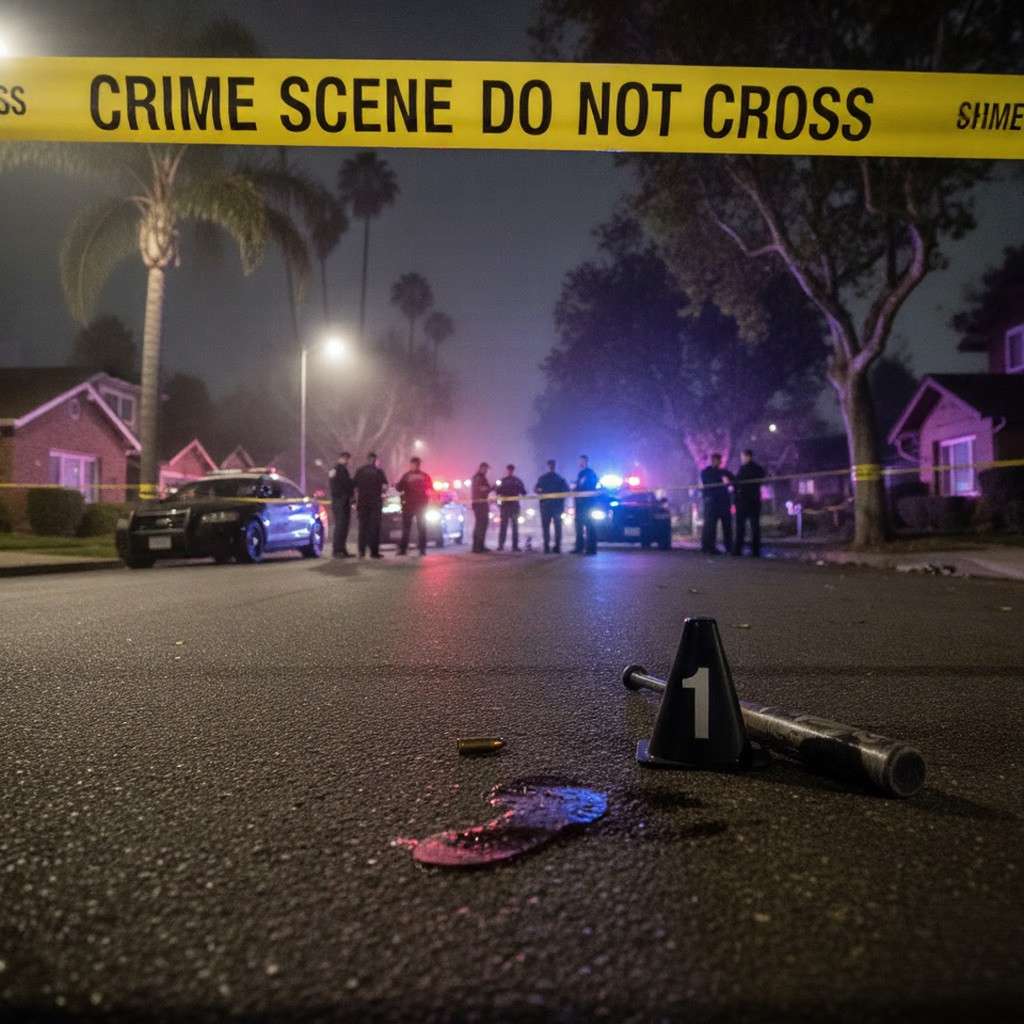
Charged with a violent crime in Pasadena? You’re facing the most serious category of criminal offenses in California—charges that carry devastating consequences including lengthy prison sentences, violent felony strikes under the Three Strikes Law, lifetime loss of gun rights, and permanent criminal records that destroy careers and relationships. With violent crime rates in Pasadena[1] showing residents have a 1 in 209 chance of experiencing violent crime including homicide, sexual assault, robbery, and assault, prosecutors pursue these cases with maximum aggression.
According to FBI crime data reported by City-Data.com[2], Pasadena’s 2024 crime index of 265 was higher than 85.4% of U.S. cities, and the city has experienced increasing violent crime over the past five years. This environment creates intense pressure on law enforcement and prosecutors to secure convictions—making experienced legal representation absolutely essential.
At Tu Defensor Criminalista, we provide aggressive, strategic defense for individuals facing violent crime charges throughout Pasadena and Los Angeles County. Our criminal defense team understands that violent crime allegations threaten everything you’ve worked for, and we fight relentlessly to protect your freedom, your rights, and your future.
Free Confidential Consultation: (888) 315-3326 | Available 24/7 | Hablamos Español
California law specifically defines violent crimes under Penal Code Section 667.5(c), establishing a strict legal category of offenses that carry enhanced penalties, mandatory minimum prison terms, and significant long-term consequences. Unlike general criminal offenses, violent crimes trigger special sentencing rules that dramatically impact how much time a defendant must serve, eligibility for early release, custody credits, parole opportunities, and future legal exposure. Understanding what legally qualifies as a violent crime is therefore essential for anyone facing criminal charges, as these designations profoundly influence both immediate punishment and lifelong consequences.
It is important to recognize that violent crimes are not simply offenses that involve physical harm or force. Instead, California law strictly limits the classification of violent felonies to a specific list of offenses explicitly enumerated in Penal Code Section 667.5(c). If a crime appears on this statutory list, it is automatically classified as a violent felony regardless of the factual circumstances. Conversely, if an offense does not appear on the list, it is not legally considered violent, even if force, threats, or injury occurred during its commission. This distinction plays a critical role in charging decisions, plea negotiations, and sentencing outcomes.
The violent felony list includes some of the most serious crimes under California law. These include murder, attempted murder, voluntary manslaughter, mayhem, rape and other forcible sex offenses, sodomy by force, oral copulation by force, lewd acts on a child under 14 committed by force, penetration with a foreign object by force, robbery, kidnapping, and carjacking. The statute also covers various forms of aggravated assault, including assault with a deadly weapon, assault with force likely to cause great bodily injury, assault with a firearm, and assault on peace officers or firefighters.
Additionally, crimes involving explosives—such as detonating a destructive device with intent to injure, causing bodily injury, or resulting in death or mayhem—are included, as well as arson causing great bodily injury. Finally, any felony offense enhanced by a finding of great bodily injury (GBI) also qualifies as a violent felony, significantly expanding the range of cases that can fall into this severe category.
This classification has far-reaching consequences. One of the most impactful effects is the requirement that individuals convicted of violent felonies must serve at least 85% of their prison sentence before becoming eligible for parole, as mandated by Penal Code Section 2933.1. In contrast, defendants convicted of non-violent felonies are generally eligible for parole after serving 50% of their sentence. This difference can translate into years or even decades of additional incarceration, making violent felony classification one of the most significant factors in California sentencing law.
Violent felony convictions also severely limit a defendant’s ability to earn good conduct credits, which normally reduce prison time for good behavior and participation in rehabilitative programs. Under violent felony sentencing rules, custody credits are capped at 15%, drastically reducing opportunities for early release. Additionally, these convictions carry enhanced parole supervision requirements, meaning individuals often face longer and stricter parole terms once released.
Perhaps most significantly, violent felony convictions count as strikes under California’s Three Strikes Law. A single violent felony constitutes a first strike, placing the defendant at extreme risk of enhanced sentencing for any future felony offense. A second strike results in mandatory doubling of the prison sentence, while a third strike can lead to a sentence of 25 years to life, even if the third offense is relatively minor. This creates lifelong legal exposure and makes violent felony convictions especially devastating.
Beyond incarceration, violent felony convictions carry severe collateral consequences, including restrictions on firearm ownership, limitations on employment opportunities, loss of professional licenses, immigration consequences for non-citizens, diminished housing prospects, and long-term social stigma. Many individuals find that a violent felony conviction permanently alters their ability to secure stable employment, professional advancement, and housing, even decades after their case has concluded.
Because of these extreme legal and personal consequences, how a charge is classified can be just as important as whether someone is convicted. In many cases, strategic legal defense can result in reduced charges, dismissal of violent enhancements, or reclassification of offenses that dramatically lessen sentencing exposure. Skilled defense representation plays a crucial role in protecting constitutional rights, challenging evidence, and negotiating outcomes that avoid violent felony designations whenever legally possible.
Understanding California’s violent crime laws is therefore critical for defendants, families, and anyone seeking clarity on criminal liability. These laws shape sentencing, determine prison eligibility, and define the long-term consequences that follow a criminal conviction, making early legal guidance absolutely essential in violent felony cases.
Pasadena’s position in Los Angeles County creates unique challenges regarding violent crime. Understanding local crime trends and statistics helps illustrate why these charges receive such aggressive prosecution.
NeighborhoodScout’s analysis of FBI reported crime data[3] reveals that Pasadena has one of the highest crime rates in America compared to communities of all sizes. Specifically, the violent crime rate is among the highest in the nation. According to their analysis, your chance of becoming a victim of violent crime in Pasadena, including murder, rape, robbery, and aggravated assault, is one in 189.
Recent crime statistics[1] show that year-over-year violent crime in Pasadena decreased by 9%, yet the city still maintains elevated violent crime rates compared to state and national averages. The violent crime rate is 1.34 times higher than the daily national average, reflecting ongoing challenges despite recent improvements.
According to FBI crime data[4], over the past five years from 2019 to 2024, the Pasadena Police Department recorded 4,582 violent crimes. The average violent crime rate stands at 88.5 per 100,000 residents. While this is 16.7% below the national average, the absolute number of violent crimes in a city of approximately 137,000 residents remains significant.
HomeSnacks crime reporting[5] indicates there were 634 violent crimes in Pasadena in the most recent reporting year, with a violent crime rate of 480.4 per 100,000 people—giving residents a 1 in 208.1 chance of being a victim of violent crime annually. This rate is 33.82% higher than the national rate and essentially matches the California violent crime rate.
The Pasadena Police Department[6] has transitioned to the California Incident Based Reporting System (CIBRS), providing more detailed tracking of violent crimes. This enhanced reporting demonstrates law enforcement’s commitment to addressing violent crime and their determination to secure convictions.
CrimeGrade [7]data[7] assigns Pasadena a D grade for safety, indicating that the rate of crime is higher than the average U.S. city. Pasadena ranks in the 19th percentile for safety, meaning it is safer than only 19% of cities but less safe than 81% of American cities.
Within Los Angeles County, recent comparative analysis[8] shows geographic disparities in safety. While cities like Glendale, Santa Clarita, and Palos Verdes Estates rank among the safest in LA County, Pasadena maintains relatively moderate crime rates compared to central Los Angeles but still experiences challenges with violent crime.
Murder represents the most serious violent crime charge under California law. California Penal Code Section 187 defines murder as the unlawful killing of a human being or fetus with malice aforethought. The consequences of a murder conviction are catastrophic, making expert legal defense absolutely essential.
First degree murder under California law includes all premeditated and deliberate killings, as well as felony murder where someone dies during commission of certain dangerous felonies such as robbery, burglary, rape, carjacking, or arson. First degree murder also includes murders accomplished by destructive device or explosive, knowing use of armor-piercing ammunition, poison, lying in wait, torture, or murder of certain protected victims such as peace officers, prosecutors, judges, or elected officials.
The penalties for first degree murder are severe. You face 25 years to life in state prison, life imprisonment without possibility of parole, or potentially the death penalty if special circumstances exist—though California currently has a moratorium on executions. First degree murder counts as a violent felony strike under the Three Strikes Law.
Second degree murder encompasses all other murders not classified as first degree. This includes murders without premeditation and murders committed with implied malice—meaning you engaged in conduct with conscious disregard for human life that proximately caused death. The classic example is DUI murder, also called Watson murder, where someone drives under the influence in a manner showing conscious disregard for human life and kills another person.
Second degree murder carries 15 years to life in state prison. Like first degree murder, it counts as a violent felony strike and requires service of 85% of the sentence before parole eligibility.
California’s felony murder rule allows murder charges when someone dies during commission of certain inherently dangerous felonies, even if you did not intend to kill anyone. Recent changes to California law have narrowed the felony murder rule somewhat, but it remains a potent prosecution tool. To be convicted of felony murder, you must have been a major participant in the underlying felony and acted with reckless indifference to human life.
Voluntary manslaughter under California Penal Code Section 192(a) is the unlawful killing of a human being without malice. It differs from murder in that it occurs upon sudden quarrel or heat of passion, or under circumstances of imperfect self-defense where you honestly but unreasonably believed you needed to use deadly force.
Voluntary manslaughter is a violent felony strike carrying three, six, or eleven years in state prison. While less serious than murder, it still has life-altering consequences.
Involuntary manslaughter involves unintentional killing during commission of an unlawful act not amounting to a felony, or during commission of a lawful act in an unlawful manner. Unlike murder and voluntary manslaughter, involuntary manslaughter is not classified as a violent felony.
Involuntary manslaughter carries two, three, or four years in county jail.
Vehicular manslaughter occurs when someone dies as a result of your unlawful driving. This includes gross vehicular manslaughter while intoxicated, vehicular manslaughter while intoxicated, and vehicular manslaughter without intoxication. Penalties range from probation with county jail time to 10 years in state prison depending on the specific charge and circumstances.
Robbery under California Penal Code Section 211 is defined as taking personal property from another person’s possession or immediate presence, against their will, accomplished by means of force or fear. Robbery is always a felony and always counts as a violent felony strike under the Three Strikes Law.
Prosecutors must prove beyond a reasonable doubt that you took property belonging to someone else, the property was taken from the person’s possession or immediate presence, the property was taken against that person’s will, you used force or fear to take the property or prevent resistance, and when you used force or fear you intended to deprive the owner of the property permanently or for an extended period.
The force or fear element distinguishes robbery from theft. Even minimal force can suffice—grabbing property and pushing someone away, threatening harm if they resist, or displaying a weapon all constitute force or fear. The victim must actually be afraid, or actual force must be used, for robbery to occur.
First degree robbery under Penal Code Section 212.5(a) includes robbery of drivers or passengers of vehicles for hire such as taxis or ride-shares, robbery of persons using or who have just used ATMs, and robbery occurring inside inhabited dwellings. First degree robbery carries three, four, or six years in state prison, or three, six, or nine years if the robbery was a home invasion committed by multiple perpetrators.
All other robberies are classified as second degree robbery, carrying two, three, or five years in state prison. This includes most street robberies, commercial robberies, and robberies in parking lots or public spaces.
Numerous enhancements can dramatically increase robbery sentences. Using a firearm adds 10 years under the 10-20-Life law. Discharging a firearm adds 20 years. Causing great bodily injury or death with a firearm adds 25 years to life. Causing great bodily injury without a firearm adds three years. Gang allegations add 15 years to life. Multiple victims result in multiple robbery counts with consecutive sentences.
These enhancements make robbery among the most harshly punished crimes in California even without homicide occurring.
California recognizes multiple assault and weapons offenses that qualify as violent crimes or carry serious penalties.
Assault with a deadly weapon under Penal Code Section 245(a)(1) occurs when you assault someone using a deadly weapon other than a firearm, or by means of force likely to produce great bodily injury. Deadly weapons include knives, clubs, bottles, vehicles used as weapons, and countless other objects capable of causing death or serious injury.
Assault with a deadly weapon is a wobbler offense that can be charged as a misdemeanor or felony. When charged as a felony, it carries two, three, or four years in state prison and counts as a violent felony strike.
Assault with a firearm under Penal Code Section 245(a)(2) is assault committed with a firearm and is always charged as a felony. It carries two, three, or four years in state prison, increased to four, six, or eight years if the victim was a peace officer or firefighter. If the firearm was an assault weapon, penalties increase to four, eight, or twelve years.
Brandishing a weapon under Penal Code Section 417 means drawing or exhibiting a deadly weapon or firearm in a rude, angry, or threatening manner in the presence of another person. Brandishing is typically a misdemeanor carrying 30 days to one year in county jail, but becomes a felony when brandished in the presence of a peace officer or when a firearm is brandished in certain locations.
Penal Code Section 246 criminalizes maliciously and willfully discharging a firearm at an inhabited dwelling or occupied vehicle. This offense carries three, five, or seven years in state prison and counts as a violent felony strike.
Under Penal Code Section 29800, convicted felons are prohibited from owning, purchasing, or possessing firearms. Violation carries 16 months, two years, or three years in county jail. While not classified as a violent crime, felon in possession charges often accompany violent crime allegations.
California law includes multiple sexual offenses in the violent crime category, including rape, sodomy by force, oral copulation by force, and sexual penetration by foreign object. These offenses carry severe penalties, lifetime sex offender registration requirements, and devastating collateral consequences.
Rape under Penal Code Section 261 is non-consensual sexual intercourse accomplished by force, violence, duress, menace, or fear of immediate bodily injury. Rape is a violent felony strike carrying three, six, or eight years in state prison. Aggravating circumstances such as victim age, use of drugs, or multiple victims increase penalties significantly.
Forcible sodomy, oral copulation, and sexual penetration with a foreign object carry similar penalties to rape when accomplished by force. All qualify as violent felony strikes and require lifetime sex offender registration.
Lewd or lascivious acts on a child under 14 by force constitute violent felonies carrying eight, ten, or twelve years in state prison. Even without force, lewd acts on children carry severe penalties and lifetime registration requirements.
Kidnapping under Penal Code Section 207 means moving another person a substantial distance without their consent using force or fear. Kidnapping is a violent felony strike carrying three, five, or eight years in state prison. Aggravated kidnapping during commission of carjacking or robbery, kidnapping for ransom, kidnapping causing bodily harm, or kidnapping of children under 14 carries life imprisonment with possibility of parole.
Carjacking under Penal Code Section 215 is taking a motor vehicle from another person’s possession against their will using force or fear. Carjacking is a violent felony strike carrying three, five, or nine years in state prison. Use of a firearm during carjacking adds the 10-20-Life enhancements.
Violent crime charges require sophisticated defense strategies tailored to the specific offense and circumstances. At Tu Defensor Criminalista, we employ comprehensive approaches to defending violent crime allegations.
California law allows use of reasonable force to protect yourself or others from imminent danger of death or great bodily injury. You have no duty to retreat if you are lawfully present. However, the force used must be reasonable and proportional to the threat faced. Deadly force is justified only when facing imminent threat of death or great bodily injury.
Successful self-defense claims require showing you reasonably believed you or another faced imminent danger, you reasonably believed immediate use of force was necessary, and you used only the force reasonably necessary to defend against that danger.
Many violent crimes require specific intent. If you did not possess the required mental state, you cannot be convicted. For murder, lack of malice aforethought may reduce charges to manslaughter. For assault, lack of intent to apply force defeats the charge. For robbery, lack of intent to permanently deprive the owner defeats the theft element.
Intoxication, mental health conditions, mistake of fact, and other circumstances can negate required intent.
The prosecution bears the burden of proving every element beyond a reasonable doubt. Attacking insufficient evidence includes challenging witness credibility, highlighting lack of physical evidence, exposing identification weaknesses, demonstrating gaps in the prosecution’s case, and presenting alternative explanations consistent with innocence.
False accusations of violent crimes occur in domestic disputes, custody battles, revenge scenarios, and cases of mistaken identity. Investigating the accuser’s background, motive, and credibility often reveals false accusations. Text messages, emails, social media, and witness statements can expose false accusers.
Violent crimes often occur in chaotic circumstances with poor observation conditions. Cross-racial identifications, brief observation periods, high stress, and suggestive identification procedures all increase misidentification risk. Alibi evidence, surveillance video, cell phone data, and expert testimony on eyewitness reliability support mistaken identity defenses.
If police violated your constitutional rights, evidence obtained must be suppressed. Common violations include illegal searches and seizures, Miranda violations, coerced confessions, unlawful arrest, and suggestive identification procedures. Suppression of key evidence often forces dismissal of charges.
While California abolished the diminished capacity defense for most purposes, evidence of mental disease, mental defect, or intoxication can negate specific intent required for certain violent crimes. The insanity defense, while rarely successful, remains available when you could not understand the nature of your act or distinguish right from wrong due to mental disease or defect.
For homicide cases, heat of passion can reduce murder to voluntary manslaughter. Heat of passion requires showing adequate provocation, you acted while under the influence of strong passion, there was insufficient time for a reasonable person to cool off, and you actually did not cool off. Common provocations include discovering a spouse in an act of adultery or being subjected to substantial physical abuse.
Imperfect self-defense reduces murder to voluntary manslaughter when you actually but unreasonably believed you needed to use deadly force in self-defense. Unlike perfect self-defense which results in acquittal, imperfect self-defense reduces murder to manslaughter because your belief was unreasonable.
The penalties for violent crime convictions extend far beyond prison sentences, creating lifetime consequences that affect every aspect of your life.
Violent crime sentences are severe. Murder carries 15 years to life or 25 years to life. Attempted murder carries 15 years to life. Robbery carries two to nine years depending on degree and enhancements. Carjacking carries three to nine years. Kidnapping carries three to eight years or life. Assault with deadly weapon carries two to four years. Rape carries three to eight years.
These sentences must be served at 85% before parole eligibility, meaning you serve far longer than defendants convicted of non-violent offenses.
All violent felonies count as strikes under California’s Three Strikes Law. A first strike remains on your record permanently. A second strike conviction doubles your sentence for any new felony. A third strike results in a mandatory sentence of 25 years to life regardless of the third offense’s severity.
The Three Strikes Law makes avoiding even a first violent felony conviction absolutely critical.
All violent felony convictions result in lifetime prohibition on owning, purchasing, or possessing firearms under federal and California law. This prohibition is permanent and cannot be lifted. Even ammunition possession becomes illegal.
Violent sex offenses require lifetime registration as a sex offender under California’s Sex Offender Registration Act. Registration is public, requires regular updates, restricts where you can live and work, and creates severe social stigma.
For non-citizens, violent felony convictions are aggravated felonies under immigration law, triggering mandatory deportation, permanent inadmissibility to the United States, and ineligibility for most immigration relief. Even a single violent felony conviction can result in permanent banishment from the United States.
Violent crime convictions create permanent criminal records that destroy employment prospects. Most employers refuse to hire individuals with violent crime convictions. Professional licenses are denied or revoked. Advancement opportunities vanish. Many careers become permanently closed.
Landlords deny rental applications. Public housing becomes unavailable. Colleges deny admission. Financial aid is lost. Family relationships suffer. Romantic relationships fail when you must disclose violent crime convictions. The social stigma of a violent crime conviction follows you for life.
Understanding prosecutorial priorities helps explain the challenges you face and why experienced representation is essential.
Violent crimes receive the highest prosecution priority because they involve harm or threatened harm to victims. Prosecutors view violent crime cases as opportunities to remove dangerous individuals from the community and demonstrate toughness on crime to voters and the media. The involvement of identifiable, cooperative victims makes prosecution easier and creates political pressure to secure convictions.
California’s political climate demands aggressive prosecution of violent crimes even as other offenses are being reduced or decriminalized. Violent crimes remain the one area where prosecutors face no political risk seeking maximum sentences. This creates an environment where plea offers are harsh and trial verdicts potentially devastating.
The Three Strikes Law makes violent crime convictions particularly valuable to prosecutors as tools for removing repeat offenders through massively enhanced sentences. Even if you have no prior record, prosecutors know that your first strike will follow you forever and can be used to multiply sentences for any future offense.
Enhanced sentencing for violent crimes, including the 10-20-Life firearm enhancements, great bodily injury enhancements, and gang enhancements, allows prosecutors to threaten decades or life imprisonment even when the underlying violent crime might carry a relatively moderate base sentence. These enhancements give prosecutors enormous leverage in plea negotiations.
Violent crime charges require the highest level of criminal defense expertise. The consequences are too severe to face without skilled representation.
Our attorneys regularly appear in Pasadena courts and know the judges, prosecutors, and procedures intimately. We understand which judges are harsh on violent crimes and which may be more receptive to mitigation. We know which prosecutors are reasonable and which are uncompromising. This local knowledge informs our strategy at every stage.
California violent crime law is extraordinarily complex, involving intricate statutes, evolving case law, and technical defenses. Our attorneys stay current on legal developments and understand how to apply them to your case. We know which defenses work and which fall flat. We understand the elements prosecutors must prove and how to challenge insufficient proof.
Violent crime defense requires exhaustive investigation. We interview witnesses before memories fade, obtain surveillance video before it’s erased, hire expert witnesses to challenge prosecution evidence, reconstruct crime scenes, consult with forensics experts, and investigate alleged victims and witnesses for credibility issues.
This comprehensive investigation frequently uncovers evidence police missed and reveals weaknesses in the prosecution’s case.
Many violent crime cases resolve through negotiated plea agreements. Our reputation for thorough preparation and trial readiness gives us credibility with prosecutors. We can often negotiate reduced charges, dismissed enhancements, or alternative dispositions that less experienced attorneys cannot achieve.
We present mitigating evidence effectively, highlight prosecution weaknesses, and leverage trial risks to secure the best possible agreements.
If your case goes to trial, you need attorneys with proven trial skills in violent crime cases. We prepare meticulously, cross-examine aggressively, present evidence persuasively, and argue with conviction. Our trial experience with violent crime cases gives you the best chance of acquittal.
Pasadena is a vibrant city of approximately 137,195 residents located in Los Angeles County, situated 11 miles northeast of downtown Los Angeles. As the primary cultural center of the San Gabriel Valley, Pasadena is renowned for the Tournament of Roses Parade, the California Institute of Technology, and numerous museums, theaters, and historic landmarks.
The city’s diverse population reflects the multicultural character of Southern California. According to U.S. Census data, Pasadena’s racial composition includes 35.2% White, 34.1% Hispanic, 17.4% Asian, and 7.39% Black or African American residents. The median household income is $103,778, with a median age of 40.1 years.
Pasadena covers approximately 23 square miles and includes distinctive neighborhoods such as Old Pasadena, the Playhouse District, Linda Vista, and areas near the Arroyo Seco. The city’s Mediterranean climate, world-class educational institutions, cultural amenities, and proximity to Los Angeles make it a desirable community.
Despite its many positive attributes, Pasadena faces ongoing challenges with violent crime as documented by local law enforcement statistics. Understanding these challenges and the aggressive prosecution approach they generate is essential for anyone facing violent crime charges in this community.
California law specifically defines violent crimes in Penal Code Section 667.5(c). Only offenses listed in this statute qualify as violent felonies. These include murder, voluntary manslaughter, mayhem, rape, robbery, kidnapping, carjacking, assault with deadly weapon, and any felony with great bodily injury enhancement. If an offense is on the list, it is violent. If not, it is not legally violent even if force was used.
Violent felony convictions require you to serve at least 85% of your sentence before becoming eligible for parole, compared to 50% for non-violent felonies. This means significantly longer actual custody time. For example, a 10-year sentence for a violent felony requires serving 8.5 years minimum, while a 10-year sentence for a non-violent felony requires only 5 years minimum.
Sometimes. An experienced attorney may negotiate reduced charges that eliminate violent crime classifications. For example, assault with deadly weapon might be reduced to simple assault, or robbery might be reduced to grand theft. These reductions dramatically affect sentencing and eliminate strike consequences.
California’s Three Strikes Law requires enhanced sentences for defendants with prior serious or violent felony convictions. All violent felonies count as strikes. A second strike doubles your sentence. A third strike results in 25 years to life regardless of the third offense. Even a single violent felony strike remains on your record permanently and can be used to enhance sentences for any future felony.
No. Exercise your Fifth Amendment right to remain silent and request an attorney immediately. Anything you say will be used against you. Police are trained to obtain incriminating statements. Do not try to explain or provide your side of the story without an attorney present. Once you invoke your rights, police must stop questioning.
Self-defense is a complete defense to violent crime charges if you can show you reasonably believed you or another faced imminent danger of death or great bodily injury, you reasonably believed immediate use of force was necessary, and you used only reasonable force. California has no duty to retreat if you are lawfully present. An experienced attorney can investigate and present self-defense claims effectively.
Yes. All violent felony convictions result in lifetime prohibition on owning, purchasing, or possessing firearms under federal and California law. This prohibition is permanent and applies even if you receive probation instead of prison. Ammunition possession also becomes illegal.
California allows expungement of many convictions under Penal Code Section 1203.4, but expungement does not restore gun rights or eliminate immigration consequences for violent crimes. Additionally, expunged violent felonies still count as strikes for Three Strikes purposes. While expungement provides some benefits for employment, it does not erase serious consequences of violent crime convictions.
If you’ve been served with a Violent Crimr in Pasadena, time is running out. Don’t face this crisis alone. Contact Tu Defensor Criminalista immediately for a free, confidential consultation about your case.
Remember:
We proudly serve clients throughout Pasadena and surrounding Los Angeles County communities including:
We handle cases at Pasadena Superior Courthouse and throughout Los Angeles County’s court system.
Attorney Armando Josué Cespedes is rated 5.0 on Avvo, with 34 five-star reviews from clients praising his dedication, professionalism, and results. Many note how his trial skills and attention to detail led to reduced charges or outright dismissals.



 English English
 Español de México English English Español de México
Thank you! We need your help. Would you share your experience on one of these sites?
If you have concerns you wish to address privately
