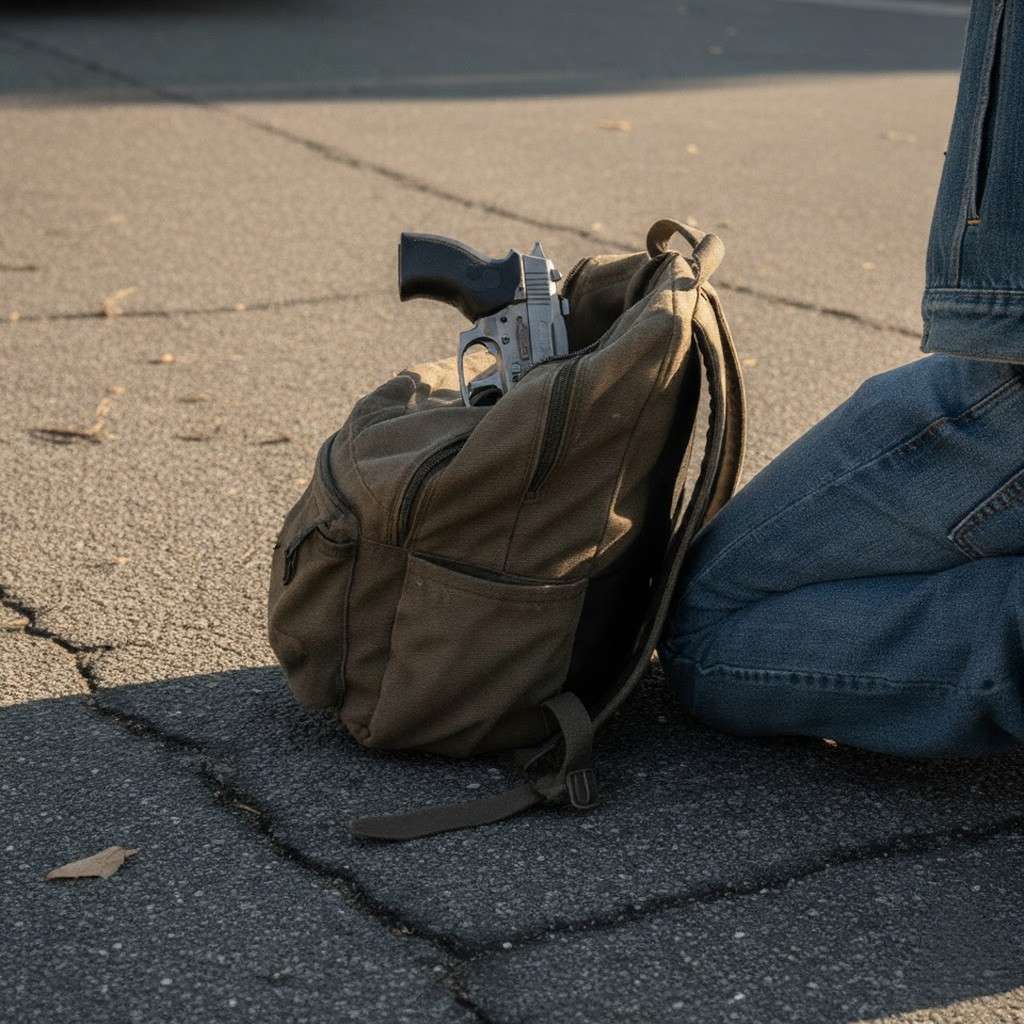
Being charged as a felon in possession of a firearm in Pasadena is one of the most serious weapons offenses you can face in California. These charges carry mandatory prison sentences, severe federal consequences, and life-altering collateral impacts that extend far beyond incarceration. Whether you unknowingly violated complex firearm laws, were unaware of restrictions on your gun rights, or are facing false accusations, you need an experienced criminal defense attorney who understands both California and federal firearms laws.
At Tu Defensor Criminalista, we provide aggressive, strategic defense for clients facing felon in possession charges throughout Pasadena and Los Angeles County. We understand that these cases are rarely straightforward—they involve intricate legal questions about prior convictions, firearm ownership rights, constructive possession, and constitutional protections. Our experienced legal team knows how to challenge the prosecution’s evidence, identify weaknesses in their case, and fight for the best possible outcome.
The stakes couldn’t be higher. A conviction for felon in possession of a firearm can result in years in state prison, additional federal charges, permanent loss of your Second Amendment rights, and devastating consequences for your employment, housing, and family. Don’t face these serious charges without experienced legal representation.
Free Confidential Consultation: (888) 315-3326 | Available 24/7 | Hablamos Español
California’s felon in possession statute is codified in Penal Code Section 29800[1], which prohibits individuals convicted of felonies from owning, purchasing, receiving, or possessing firearms or ammunition. This law reflects California’s strict approach to gun control and aims to prevent individuals with serious criminal histories from accessing weapons.
However, the law is far more complex than it appears on the surface. Not all felony convictions trigger firearm prohibitions, the duration of prohibitions varies, and numerous exceptions and restoration processes exist. Understanding these nuances is critical to mounting an effective defense.
Under California law, several categories of individuals cannot legally possess firearms:
To convict you of being a felon in possession of a firearm in Pasadena, prosecutors must prove several elements beyond a reasonable doubt:
Understanding these elements is crucial because each represents a potential point of defense. If the prosecution cannot prove even one element beyond a reasonable doubt, you cannot be convicted.
California law recognizes different types of possession, and understanding these distinctions is essential:
The prosecution often relies on constructive possession theories in these cases, arguing that firearms found in your home, car, or workplace were under your control. We aggressively challenge these theories by demonstrating that others had access to the location, the firearm belonged to someone else, you lacked knowledge of the firearm’s presence, or you had no ability to control the firearm.
Being a felon in possession of a firearm can violate both California and federal law. Federal law, specifically 18 U.S.C. § 922(g)[3], prohibits felons from possessing firearms and carries even harsher penalties than California law.
You can be charged in either state or federal court, or both. Federal prosecutors at the U.S. Attorney’s Office for the Central District of California often take cases involving felons with violent criminal histories, cases involving multiple firearms or illegal weapons, cases with federal nexus (firearms crossed state lines), or cases part of larger federal investigations.
Federal convictions carry mandatory minimum sentences and federal sentencing guidelines that often result in longer prison terms than comparable state cases. If you’re facing federal charges, you need an attorney experienced in federal court who understands federal procedures, evidence rules, and sentencing.
The penalties for felon in possession convictions are severe and life-altering. Understanding what you face helps you make informed decisions about your defense.
Under California Penal Code Section 29800, felon in possession is a “wobbler” offense that can be charged as either a felony or misdemeanor, though it’s almost always charged as a felony given the defendant’s criminal history.
Felony conviction penalties:
Federal felon in possession charges under 18 U.S.C. § 922(g) carry even harsher consequences:
Beyond direct criminal penalties, a felon in possession conviction carries devastating collateral consequences:
Felon in possession charges arise from diverse circumstances throughout Pasadena:
Many felon in possession cases begin with traffic stops on Pasadena’s streets and freeways. The Pasadena Police Department stops a vehicle for a traffic violation, observes something suspicious or receives consent to search, discovers a firearm in the vehicle, and learns through a records check that you have a prior felony conviction.
These cases raise important Fourth Amendment questions about the legality of the initial stop, whether probable cause existed for the search, if consent to search was truly voluntary, and whether the firearm was in plain view or discovered through illegal search.
If you’re on probation or parole for a prior offense, you’re subject to warrantless searches of your person, vehicle, and residence. Probation or parole officers conducting routine compliance checks sometimes discover firearms, leading to new charges.
While probation and parole searches don’t require warrants, they must still comply with certain legal standards. We examine whether the search exceeded the scope of your search conditions, whether you actually possessed or controlled the discovered firearms, and whether the firearms belonged to other household members.
Law enforcement may execute search warrants at residences in Pasadena neighborhoods—from Old Pasadena to residential areas near the Arroyo Seco—while investigating drug offenses, gang activity, or other crimes. When firearms are discovered during these searches and the resident has a prior felony conviction, new charges result.
We scrutinize the legal basis for the search warrant, whether probable cause existed, if the warrant was properly executed, and whether you actually possessed the discovered firearms.
When police respond to domestic disturbance calls and discover firearms in the home, they check whether residents are legally allowed to possess weapons. If you have a prior felony conviction, you may be arrested even if the firearm belongs to someone else in the household.
These cases often involve questions of constructive possession and whether you knowingly exercised control over firearms that technically belonged to your spouse, partner, or family member.
Some individuals legally purchased firearms before being convicted of a felony, then failed to dispose of them after the conviction. You may not have realized you were required to relinquish the weapons, thought you had sufficient time to sell or transfer them, or believed an exception applied to your situation.
While ignorance of the law generally isn’t a defense, these circumstances can be powerful mitigating factors in sentencing and may support arguments for reduced charges or alternative dispositions.
Prosecutors often charge felon in possession based on constructive possession theories—arguing that firearms found in your home, vehicle, or other location were under your control even if you weren’t physically holding them. These cases are particularly defensible when other people had equal or greater access to the location, the firearms belonged to someone else, you lacked knowledge of the firearms’ presence, or evidence shows you took steps to avoid possessing firearms.
Unfortunately, false accusations occur. Someone may falsely claim you possessed a firearm to gain advantage in custody disputes, criminal cases, or personal conflicts. We thoroughly investigate these allegations and present evidence of the accuser’s motivations and your actual innocence.
At Tu Defensor Criminalista, we thoroughly investigate every aspect of your case to identify the strongest possible defenses:
The prosecution must prove you were previously convicted of a qualifying felony. We examine your prior conviction to determine if it was later reduced to a misdemeanor under Proposition 47 or other provisions, was properly expunged or dismissed, occurred in juvenile court and doesn’t qualify as a predicate felony, or was from another jurisdiction and doesn’t qualify as a felony under California law.
California’s Proposition 47, passed by voters in 2014, reclassified many nonviolent felonies as misdemeanors. If your prior conviction qualifies for reduction under Proposition 47 and you successfully petitioned for reduction, you’re no longer considered a felon for purposes of firearm prohibitions.
We challenge whether you actually possessed the firearm by demonstrating that the firearm belonged to someone else, you lacked knowledge of its presence, you had no access or control over the location where it was found, or other people had equal or superior access to the firearm.
In constructive possession cases, the prosecution must prove you knowingly exercised control over the firearm. If multiple people had access to a location where firearms were found, this creates reasonable doubt about who possessed them.
To be convicted, you must have known you possessed the firearm. If you genuinely didn’t know a firearm was in your vehicle, home, or other location, you cannot be convicted. This often arises when passengers leave firearms in your vehicle without your knowledge, someone else stores firearms in shared spaces without informing you, or firearms are hidden in places you don’t access.
California law recognizes a limited exception for temporary possession of firearms for lawful purposes. If you momentarily possessed a firearm to immediately deliver it to law enforcement, to prevent imminent harm, or for another lawful purpose and the possession was truly temporary and brief, this may provide a defense.
For example, if you found a firearm and were taking it to the police when arrested, or if you took a firearm away from someone threatening to use it, these circumstances support a lawful purpose defense.
Your constitutional rights protect you throughout the investigation and arrest. We identify and challenge violations including illegal searches without warrants, probable cause, or valid consent, illegal traffic stops without reasonable suspicion, violations of Miranda rights during custodial interrogation, coerced confessions through improper interrogation techniques, and illegal seizures of evidence.
If law enforcement violated your Fourth Amendment rights against unreasonable searches and seizures, we file motions to suppress evidence. If the firearm evidence is suppressed, the prosecution often cannot proceed with the case.
In some cases, individuals had their firearm rights restored through California’s relief from firearms prohibitions process or through federal mechanisms, yet are still charged with felon in possession. We present evidence of rights restoration to show you were legally entitled to possess firearms.
California law defines “firearm” specifically, and not all weapons qualify. Antique firearms, inoperable firearms that cannot be readily made operable, replica firearms, and certain other items may not meet the legal definition. We examine whether the item you allegedly possessed qualifies as a firearm under California law.
The prosecution bears the burden of proving every element beyond a reasonable doubt. We scrutinize the evidence for weaknesses and create reasonable doubt through lack of fingerprints or DNA connecting you to the firearm, absence of witnesses to your possession, contradictory evidence about ownership, and gaps in the chain of custody for physical evidence.
Understanding what to expect in the criminal justice process helps you make informed decisions:
These cases typically begin with discovery of a firearm during a traffic stop, search warrant execution, probation search, or other law enforcement contact. Officers verify your identity, conduct a criminal history check revealing your prior felony conviction, and arrest you for felon in possession.
You’ll be transported to the Pasadena Police Department or Los Angeles County jail for booking, which includes photographing, fingerprinting, background checks, and detention pending arraignment.
Critical advice: Exercise your right to remain silent. Do not answer questions about your prior conviction, how long you’ve had the firearm, where you got it, or anything else. Politely state, “I’m invoking my right to remain silent and would like to speak with an attorney,” then stop talking.
Felon in possession charges typically involve substantial bail amounts due to the serious nature of the offense and defendants’ criminal histories. According to Los Angeles County’s bail schedule, bail for felon in possession ranges from $35,000 to $100,000 or more depending on circumstances.
We can assist with bail hearings to argue for reduced bail or release on your own recognizance by presenting evidence of your community ties, employment stability, family responsibilities, minimal flight risk, and mitigation regarding the circumstances of the alleged offense.
Your first court appearance is the arraignment, held at the Pasadena Courthouse in the Criminal Courts Building. At arraignment, the judge informs you of the charges, advises you of your constitutional rights, asks you to enter a plea, and addresses bail.
Most defendants plead “not guilty” at arraignment, preserving all options and defenses. Having an attorney at arraignment provides significant advantages including immediate negotiation with prosecutors, early identification of defenses and weaknesses in the prosecution’s case, and proper handling of bail issues.
After arraignment, your case enters pretrial proceedings typically lasting several months. During this phase:
As a felony case, you’re entitled to a preliminary hearing where a judge determines whether sufficient evidence exists to proceed to trial. The preliminary hearing provides opportunities to cross-examine prosecution witnesses under oath, challenge the sufficiency of evidence, lock witnesses into testimony that may benefit your defense later, and sometimes convince prosecutors to reduce or dismiss charges.
If no acceptable resolution is reached through negotiation, we proceed to jury trial. At trial, the prosecution must prove every element beyond a reasonable doubt. We present your defense through cross-examination of prosecution witnesses exposing weaknesses and inconsistencies, presentation of defense witnesses and evidence, potentially expert testimony on forensics, firearms, or other technical issues, and compelling opening statements and closing arguments creating reasonable doubt.
If convicted through plea or trial, the judge imposes sentence. We advocate for the most lenient sentence possible by presenting mitigating factors including minimal criminal history since the prior conviction, evidence of rehabilitation and positive contributions to the community, circumstances explaining the possession, acceptance of responsibility, and letters of support from family, employers, and community members.
We argue for alternatives to maximum sentences including probation rather than prison (though difficult in felon in possession cases), county jail rather than state prison under realignment, work furlough or alternative custody, and sentencing to the lower term of the available range.
Pasadena, with a population of approximately 138,000 according to the U.S. Census Bureau[6], is a diverse city with significant socioeconomic variation across neighborhoods. The city includes affluent areas near the foothills, historic neighborhoods in Old Pasadena and the Bungalow Heaven district, and working-class communities in northwest Pasadena.
This demographic diversity means felon in possession cases arise across different contexts—from individuals living in areas with higher crime rates who possessed firearms for protection, to cases involving traffic stops in commercial districts, to domestic situations in residential neighborhoods.
California has some of the nation’s strictest gun control laws, and Los Angeles County prosecutors enforce these laws aggressively. The California Department of Justice[2] maintains comprehensive firearms databases and works closely with local law enforcement to identify and prosecute prohibited persons in possession of weapons.
Felon in possession charges affect different groups uniquely:
If your prior felony conviction occurred many years ago and you’ve lived a law-abiding life since, this doesn’t eliminate the firearm prohibition but creates powerful mitigation for sentencing. We emphasize your rehabilitation, positive contributions to the community, stable employment and family life, and the substantial time since your prior conviction.
We also explore whether you qualify for expungement of the prior conviction or reduction under Proposition 47 or Proposition 64 (for marijuana convictions), which could eliminate the predicate felony supporting the current charge.
For non-citizens, felon in possession convictions carry catastrophic immigration consequences. Firearms offenses constitute aggravated felonies under immigration law, triggering mandatory deportation with virtually no relief available, permanent inadmissibility to the United States, and separation from family members.
We work with immigration attorneys to evaluate all immigration implications and structure defenses and plea negotiations to protect immigration status when possible. Sometimes this means going to trial even when a plea agreement seems attractive, if conviction would trigger deportation.
Some people genuinely don’t understand that felony convictions permanently prohibit firearm possession. Perhaps you completed your sentence years ago and assumed your rights were restored, were never specifically informed of the firearm prohibition, or believed exceptions existed for hunting firearms or antique weapons.
While ignorance of the law isn’t a complete defense, these circumstances create powerful mitigation and may support arguments for alternative dispositions, particularly if this is a first violation of firearm laws since your original conviction.
Not all prior convictions result in permanent firearm prohibitions. Felonies reduced to misdemeanors, expunged convictions, certain juvenile adjudications, and out-of-state convictions that wouldn’t qualify as felonies in California may not serve as predicate offenses.
We thoroughly analyze your prior conviction to determine if it actually triggers firearm prohibitions under current California law.
When both state and federal prosecutors have jurisdiction, we navigate complex negotiations involving both offices. Sometimes we can convince federal prosecutors not to file charges if the state case is resolved favorably, or negotiate agreements ensuring you won’t face duplicative prosecution.
While California law generally imposes lifetime firearm prohibitions on convicted felons, limited mechanisms exist for restoring rights:
California’s Certificate of Rehabilitation process, governed by Penal Code Sections 4852.01-4852.21, allows individuals who have demonstrated rehabilitation to petition for a certificate that serves as an application for a governor’s pardon. A pardon can restore firearm rights.
This process requires residing in California for at least five years, demonstrating rehabilitation and good conduct, completing all terms of your sentence and probation, and not having any pending criminal charges. The process is lengthy and there’s no guarantee of success, but it represents one path to restoration of rights.
If your prior felony conviction qualifies for reduction to a misdemeanor under Proposition 47 (for certain theft and drug offenses) or Proposition 64 (for marijuana offenses), successful reduction eliminates the predicate felony and restores your firearm rights.
We help clients petition for reduction when applicable, which can be life-changing for those who unknowingly violated firearm laws after qualifying convictions.
While expungement under Penal Code Section 1203.4 doesn’t restore firearm rights for purposes of criminal law, it can provide relief from certain collateral consequences and may affect how courts view your rehabilitation in future proceedings.
Felon in possession cases involve complex legal issues requiring specialized knowledge:
Successfully defending these cases requires deep understanding of California Penal Code provisions regarding prohibited persons, federal firearms laws under 18 U.S.C. § 922(g), case law interpreting possession and knowledge requirements, and interactions between state and federal law.
We have extensive experience at the Pasadena Courthouse and understand how local judges approach felon in possession cases, how Los Angeles County prosecutors assigned to Pasadena evaluate these cases, local court procedures and expectations, and relationships with court personnel that facilitate productive negotiations.
These cases often involve forensic evidence including ballistics testing, fingerprint analysis, DNA evidence, and firearms tracing. We work with experts to challenge questionable forensic evidence and identify weaknesses in the prosecution’s technical case.
Understanding when cases might attract federal attention and how to minimize federal prosecution risk requires experience with both state and federal systems. We provide strategic guidance on federal exposure and work to resolve cases in state court when possible, avoiding harsher federal penalties.
If you’re arrested for being a felon in possession of a firearm in Pasadena, take these critical steps:
Do not answer questions about your prior conviction, the firearm, how you obtained it, how long you’ve had it, or anything else. Politely state, “I’m invoking my right to remain silent and would like to speak with an attorney.” Then stop talking.
People facing these charges often make their cases worse by trying to explain, offering excuses, or providing information they think will help. Everything you say will be used against you.
Clearly state, “I want to speak with an attorney.” Once you invoke this right, law enforcement must stop questioning you.
Unless officers have a warrant, politely decline to consent to searches. Say, “I do not consent to any searches.” If officers claim they have a warrant, ask to see it but do not physically interfere with the search.
Do not resist arrest, argue with officers, or become confrontational. Physical resistance only makes your situation worse and can result in additional charges including resisting arrest or assault on an officer.
As soon as possible, write down everything you remember about the arrest, including exactly where the firearm was found, who else had access to that location, what officers said and did, whether you were read your rights, and any potential witnesses to relevant events.
Give these notes only to your attorney—they’re protected by attorney-client privilege only when provided to counsel.
The sooner you contact us, the better we can protect your rights, preserve evidence, and build your defense. We’re available to take your call and begin working on your case immediately.
Don’t discuss your case with anyone except your attorney—not cellmates, friends, family members, or anyone else. Don’t post about it on social media. These communications are not privileged and can be used against you in court.
When facing serious felon in possession charges in Pasadena, choosing the right attorney can mean the difference between freedom and years in prison. Here’s what sets us apart:
We have successfully defended numerous clients against felon in possession and other weapons charges, achieving dismissals, acquittals, reduced charges, and favorable plea agreements. We understand the complexities of California and federal firearms laws.
We don’t just review the prosecution’s evidence—we conduct comprehensive investigations, consult with forensic experts when needed, challenge questionable scientific evidence, and identify every possible defense and weakness in the prosecution’s case.
We file aggressive pretrial motions to suppress evidence obtained through illegal searches, dismiss charges based on legal deficiencies, exclude improper evidence, and compel favorable discovery from the prosecution.
We handle cases in both California state court and federal court, understanding the differences in procedures, evidence rules, sentencing, and strategic considerations between the two systems.
Every case is unique. We craft defense strategies tailored to your specific circumstances, considering the facts of your case, your prior criminal history, your personal situation and goals, potential immigration consequences, and the strongest available defenses.
We have achieved successful outcomes including complete dismissals when defenses are strong, reductions from felony to misdemeanor where possible, acquittals at trial, sentencing alternatives avoiding prison time, and protection of immigration status when applicable.
We keep you informed throughout the process with regular case updates, clear explanations of complex legal concepts, prompt responses to your questions and concerns, and honest assessments of your options and likely outcomes.
California law generally imposes lifetime firearm prohibitions on convicted felons. However, you may be able to restore rights through a governor’s pardon, reduction of the prior conviction to a misdemeanor under Proposition 47 or 64, or federal relief in limited circumstances. These processes are complex and not guaranteed.
You can still be charged with constructive possession if you had knowledge of the firearm and the ability to control it. However, this creates defenses we can assert, particularly if other household members had equal or greater access and the firearm was clearly theirs.
Lack of knowledge about the law generally isn’t a defense, though it can be powerful mitigation in sentencing. In rare cases involving very old convictions, expunged records, or complex legal questions about whether the prior conviction qualifies, lack of knowledge might be relevant.
Possibly. We challenge whether you actually possessed the gun, whether you knew it was there, whether the search that discovered it was legal, and whether others had access to your vehicle. Many vehicle cases are defensible.
Not necessarily, though prison is likely for felony convictions. Depending on the circumstances, your criminal history, and other factors, you might receive county jail rather than state prison, probation in some cases (though unusual), or alternative sentencing. An experienced attorney significantly improves your chances of avoiding prison.
If your prior felony was legally reduced to a misdemeanor or expunged, this may eliminate the predicate offense supporting the current charge. We thoroughly investigate your prior conviction’s current legal status.
Yes. Federal prosecutors can charge felon in possession under 18 U.S.C. § 922(g), which carries up to 10 years in federal prison and harsher sentencing guidelines. Federal charges are more likely if you have a violent criminal history, multiple firearms were involved, or other federal interests exist.
Non-citizens facing felon in possession charges must immediately consult with both a criminal defense attorney and an immigration attorney. These convictions constitute aggravated felonies under immigration law and virtually always result in deportation. Every decision must consider immigration consequences.
If you’ve been served with a Felon in Possession of a Firearms in Pasadena, time is running out. Don’t face this crisis alone. Contact Tu Defensor Criminalista immediately for a free, confidential consultation about your case.
Remember:
We proudly serve clients throughout Pasadena and surrounding Los Angeles County communities including:
We handle cases at Pasadena Superior Courthouse and throughout Los Angeles County’s court system.
Attorney Armando Josué Cespedes is rated 5.0 on Avvo, with 34 five-star reviews from clients praising his dedication, professionalism, and results. Many note how his trial skills and attention to detail led to reduced charges or outright dismissals.



 English English
 Español de México English English Español de México
Thank you! We need your help. Would you share your experience on one of these sites?
If you have concerns you wish to address privately
