Experienced Drawing or Exhibiting a Firearm, Threatening with a Weapon & Brandishing Defense in Downey, Pico Rivera, Paramount, Lynwood & All Los Angeles County
Being charged with brandishing a firearm in Downey, California is a serious matter that can permanently alter your life. Whether you displayed a weapon to defend yourself, inadvertently exposed a firearm during a heated argument, or are facing false accusations, a brandishing conviction carries severe penalties including jail time, substantial fines, loss of your gun rights, and a permanent criminal record that will follow you for the rest of your life.
At Tu Defensor Criminalista, we provide aggressive, strategic defense representation for clients facing brandishing charges and all related weapons offenses in Downey and throughout Los Angeles County. Our firm understands that people charged with brandishing often acted out of fear, were defending themselves or others, or are victims of misunderstandings or false accusations. We’re here to ensure your side of the story is heard and your rights are protected.
Free Confidential Consultation: (888) 315-3326 | Available 24/7 | Hablamos Español
Understanding Brandishing Laws in Downey, California
Downey, a vibrant southeastern Los Angeles County city with approximately 111,000 residents according to U.S. Census Bureau [1]data, operates under California’s strict weapons laws that criminalize a wide range of conduct involving firearms and other weapons. Located in a densely populated urban area adjacent to South Gate, Norwalk, Bellflower, Pico Rivera, and other communities, Downey experiences its share of weapons-related incidents that lead to criminal prosecutions.
Brandishing charges arise frequently in this diverse community during road rage incidents on busy corridors like Lakewood Boulevard, Firestone Boulevard, and Imperial Highway, where traffic congestion and driver frustration can escalate into confrontations. Neighborhood disputes between residents over parking, noise, property boundaries, or other quality-of-life issues sometimes result in brandishing allegations when one party displays a weapon during a heated argument. Domestic altercations between intimate partners, family members, or household members commonly lead to brandishing charges, particularly when arguments turn physical or threatening. Self-defense situations where individuals draw or display weapons to protect themselves from perceived threats also frequently result in brandishing arrests, even when the person believes they acted lawfully.
Additionally, brandishing charges emerge from bar fights and nightlife incidents, business disputes, gang-related confrontations, incidents at schools or public events, situations involving security guards or private citizens attempting to detain suspected criminals, and misunderstandings where gestures or movements are interpreted as weapon displays even when no threatening intent existed.
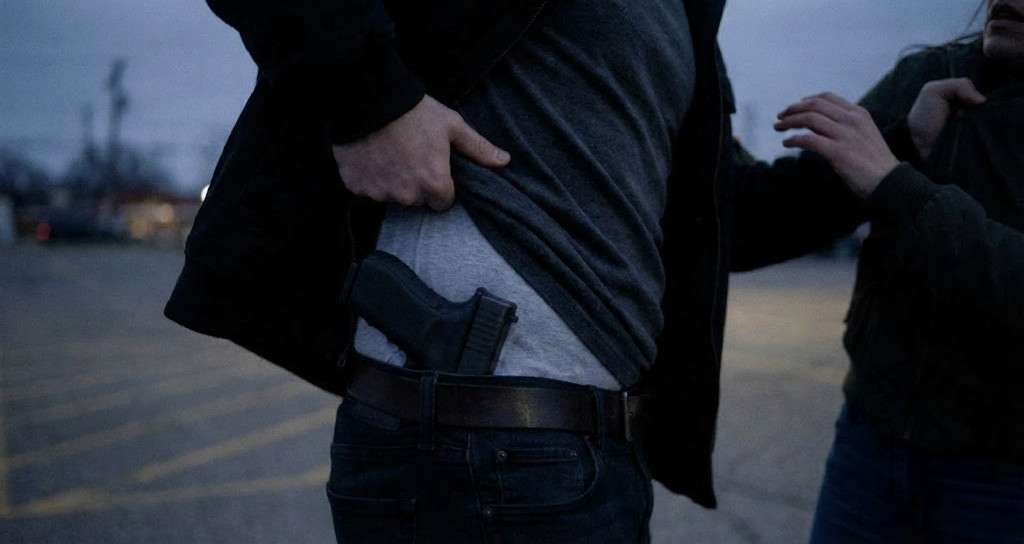
California Penal Code Section 417 defines the crime of brandishing a weapon and establishes the legal framework for these prosecutions throughout Los Angeles County. The statute prohibits drawing or exhibiting any deadly weapon in a rude, angry, or threatening manner in the presence of another person, or using a firearm in any fight or quarrel, except in self-defense. This law applies not only to firearms but also to knives, clubs, and any object capable of being used as a weapon in a manner likely to produce death or great bodily injury.
The statute creates different levels of offenses with varying penalties depending on the type of weapon involved, where the brandishing occurred, who was present, and the specific circumstances of the incident. Brandishing can be charged as either a misdemeanor or a felony depending on aggravating factors such as displaying the weapon on school grounds, in the presence of a peace officer, or while violating other laws.
Understanding exactly what the law prohibits—including what constitutes “drawing or exhibiting” a weapon, what makes a display “rude, angry, or threatening,” when self-defense justifies displaying a weapon, and what prosecutors must prove beyond a reasonable doubt to secure a conviction—is essential to mounting an effective defense and protecting your rights, freedom, and future.
What Constitutes Brandishing Under California Law
Under Penal Code Section 417, brandishing occurs when you:
Draw or exhibit a deadly weapon (firearm or other weapon)
In the presence of another person
In a rude, angry, or threatening manner
OR use the weapon in a fight or quarrel (except in self-defense)
The law applies to various weapons beyond firearms, including knives, clubs, and other deadly or dangerous weapons. However, firearm brandishing carries the most serious consequences.
Critical Element: Manner of Display: The prosecution must prove you displayed the weapon in a “rude, angry, or threatening manner.” Simply possessing a visible firearm, or displaying it in a non-threatening way, does not constitute brandishing. This element creates significant defense opportunities.
Exception for Self-Defense: California law explicitly recognizes that using weapons in legitimate self-defense is not brandishing. If you reasonably believed you or others faced imminent danger and displayed your weapon defensively without exceeding necessary force, you have a complete defense.
Types of Brandishing Charges in Downey
Brandishing charges vary in severity based on the weapon type, location, and circumstances:
Brandishing a Firearm (Penal Code 417(a)(2)): Drawing or exhibiting a firearm in a rude, angry, or threatening manner is typically charged as a misdemeanor punishable by at least 30 days and up to one year in county jail, and/or a fine up to $1,000.
Brandishing a Deadly Weapon Other Than a Firearm (Penal Code 417(a)(1)): Brandishing knives, clubs, or other deadly weapons (excluding firearms) is a misdemeanor punishable by up to one year in county jail and/or fines up to $1,000, without a mandatory minimum jail sentence.
Brandishing in the Presence of a Peace Officer (Penal Code 417(c)): Brandishing a firearm in front of a police officer is charged as either a misdemeanor (up to one year in jail) or a felony (16 months, 2 years, or 3 years in state prison). This applies even if you didn’t know the person was a peace officer.
Brandishing a Firearm at a Day Care Center (Penal Code 417(b)): Brandishing a firearm on the grounds of a day care center while children are present is a felony punishable by 3 months to 3 years in state prison.
Brandishing a Firearm in a Motor Vehicle (Penal Code 417.3): Drawing or exhibiting a firearm while in a motor vehicle, in the presence of another person operating or occupying a motor vehicle, in a threatening manner, can be charged as either a misdemeanor or felony. Felony convictions carry 16 months, 2 years, or 3 years in state prison.
The California Department of Justice[2] maintains statistics on weapons-related arrests throughout the state, with thousands of brandishing arrests occurring annually in Los Angeles County alone.
Elements Prosecutors Must Prove Beyond Reasonable Doubt
To convict you of brandishing, prosecutors bear the burden of proving every element beyond a reasonable doubt:
You drew or exhibited a deadly weapon or firearm: Prosecutors must show you actually displayed the weapon, not just possessed it concealed on your person.
In the presence of another person: Someone else must have been present who could observe the weapon display.
In a rude, angry, or threatening manner: This subjective element requires proof of how you displayed the weapon, creating significant defense opportunities. Merely showing someone you’re armed is insufficient.
You were not acting in self-defense or defense of another person: If self-defense applies, the prosecution must disprove it beyond reasonable doubt.
Intent and knowledge: You must have known the object was a deadly weapon and intentionally displayed it.
Failure to prove any single element should result in acquittal. Experienced defense attorneys identify weaknesses in the prosecution’s evidence and create reasonable doubt.
The Serious Consequences of Brandishing Convictions
Brandishing convictions carry severe penalties that extend far beyond any jail sentence. Understanding what you’re facing illustrates why experienced legal representation is essential.
Criminal Penalties and Sentencing
Jail and Prison Sentences: Misdemeanor brandishing convictions can result in up to one year in county jail, with a mandatory minimum of 30 days for firearm brandishing. Felony convictions can result in 16 months to 3 years in state prison. According to the California Department of Corrections and Rehabilitation[3], thousands of inmates serve time annually for weapons-related offenses.
Probation Conditions: Even when jail is avoided, probation conditions can be highly restrictive, including warrantless search clauses, mandatory anger management or counseling, community service, restitution, weapons prohibitions, and restrictions on associating with certain people or visiting certain places.
Substantial Fines: Brandishing convictions can result in fines up to $1,000, plus court assessments and fees that can increase the total financial burden to several thousand dollars.
Mandatory Minimum Sentences: Firearm brandishing carries a mandatory minimum 30-day jail sentence that judges cannot eliminate, even for first-time offenders with compelling mitigating circumstances.
Loss of Gun Rights
Perhaps most significant for law-abiding gun owners, brandishing convictions result in loss of firearm rights:
Ten-Year Prohibition: California Penal Code Section 29805 prohibits anyone convicted of brandishing a firearm under Section 417(a)(2) from owning, purchasing, receiving, or possessing firearms for 10 years from the conviction date.
Lifetime Federal Prohibition for Felonies: Felony brandishing convictions trigger lifetime federal firearm prohibitions under 18 U.S.C. Section 922(g), which applies nationwide regardless of state law.
Confiscation of Firearms: Following conviction, law enforcement will confiscate any firearms you own, and you’ll be required to sell or transfer them to eligible parties within specified timeframes.
For hunters, sport shooters, collectors, and those who value Second Amendment rights, losing the ability to possess firearms for a decade or lifetime is devastating.
Immigration Consequences for Non-Citizens
Downey’s population is approximately 71% Hispanic or Latino according to U.S. [1]Census [1]Bureau[1] data, and many residents are non-citizens who face severe immigration consequences from brandishing convictions:
Deportation Risk: Brandishing can be classified as a crime involving moral turpitude or an aggravated felony under immigration law, potentially triggering mandatory deportation regardless of how long you’ve lived in the United States or your family ties.
Inadmissibility: Convictions can make you inadmissible to the United States, preventing re-entry if you leave the country for any reason.
Bars to Citizenship: Criminal convictions, particularly weapons offenses, can prevent naturalization and destroy your path to U.S. citizenship.
Impact on Visa Status: Convictions can result in visa revocations, denials of visa renewals, and elimination of legal immigration pathways.
According to U.S. Immigration and Customs Enforcement[4] data, thousands of individuals face deportation annually for criminal convictions, with weapons offenses among the most serious triggers for removal proceedings.
Professional and Employment Consequences
Criminal Record: Brandishing convictions create permanent criminal records visible to employers, landlords, licensing boards, and others conducting background checks.
Job Loss: Many employers terminate employees upon arrest or conviction for weapons offenses, particularly in healthcare, education, government, security, and positions involving vulnerable populations.
Professional Licensing: Doctors, nurses, teachers, real estate agents, contractors, attorneys, and other licensed professionals risk license suspension or revocation following weapons convictions.
Future Employment: Weapons convictions on background checks make finding new employment extremely difficult, as many employers automatically disqualify applicants with violence-related offenses.
Security Clearances: Any security clearance for government or defense contractor work will likely be revoked following a brandishing conviction.
Personal and Family Impact
Child Custody and Visitation: Family courts consider criminal convictions, particularly weapons offenses, when making custody and visitation determinations. Brandishing convictions can result in reduced parenting time or supervised visitation.
Housing Difficulties: Landlords frequently deny rental applications from individuals with criminal records. Public housing authorities may deny or terminate housing assistance.
Educational Barriers: College admissions, financial aid eligibility, and certain educational programs can be affected by criminal convictions.
Social Stigma: Being labeled as someone convicted of threatening others with a weapon carries significant social stigma affecting personal relationships and community standing.
Financial Hardship: Beyond fines and attorney fees, convictions result in lost wages during incarceration, reduced earning potential, and increased costs for insurance and other necessities.
Common Defenses to Brandishing Charges in Downey
Every brandishing case is unique, requiring thorough investigation and strategic analysis. At Tu Defensor Criminalista, we identify all available defenses and develop comprehensive strategies tailored to your specific circumstances.
Self-Defense and Defense of Others
Self-defense is the most common and often most powerful defense to brandishing charges:
Reasonable Fear of Imminent Harm: California law allows you to use reasonable force, including displaying weapons, when you reasonably believe you or others face imminent danger of being killed, suffering great bodily injury, or being the victim of a forcible and atrocious crime.
No Duty to Retreat: California law does not require you to retreat before using defensive force. You can stand your ground when threatened.
Reasonable Belief Standard: The law doesn’t require that danger actually existed – only that you reasonably believed it existed based on circumstances as they appeared to you at the time.
Proportional Response: The defensive force must be proportional to the threat. Displaying a weapon without firing it is often a proportional response to serious threats without deadly force.
We present evidence establishing your reasonable fear, including:
Threatening statements or actions by the alleged victim
Size and strength disparities between you and the alleged victim
Prior incidents or threats from the alleged victim
Witness testimony supporting your account
Physical evidence from the scene
Expert testimony on threat assessment and reasonable responses
Lack of Threatening Manner
Prosecutors must prove you displayed the weapon in a “rude, angry, or threatening manner.” We challenge this element by showing:
Accidental Display: The weapon was exposed accidentally, such as when reaching for something else, adjusting clothing, or moving in ways that revealed a concealed weapon.
Non-Threatening Display: You showed the weapon calmly and without threatening gestures, statements, or demeanor. Simply letting someone know you’re armed is not brandishing if done without threatening manner.
Lawful Purpose: You displayed the weapon for a legitimate purpose such as showing it to someone interested in purchasing it, demonstrating proper handling, or complying with a police officer’s request.
Context Negates Threatening Manner: The overall context demonstrates your display was not threatening, such as moving the weapon to a safer location, preparing for lawful shooting activities, or responding to someone asking to see the weapon.
Lack of Intent
Brandishing requires intentional display. We defend based on lack of intent by showing:
Unintentional Exposure: The weapon became visible through inadvertent movements, wardrobe malfunctions, or circumstances beyond your control.
No Awareness of Display: You didn’t realize the weapon was visible to others.
Accidental Touch or Grasp: You accidentally touched or grasped the weapon without intending to display it.
False Accusations and Mistaken Identity
Unfortunately, false accusations occur frequently in brandishing cases:
Fabricated Claims: Alleged victims sometimes falsely claim brandishing to gain advantage in disputes, child custody battles, restraining order proceedings, or civil litigation.
Exaggerated Accounts: Heated arguments may lead individuals to exaggerate or mischaracterize what actually occurred.
Mistaken Identity: In chaotic situations, witnesses may misidentify who displayed a weapon, particularly when multiple people are present.
We investigate and expose false accusations through:
Interviewing witnesses to find inconsistencies
Obtaining surveillance video contradicting false claims
Examining cell phone records and social media showing motive to fabricate
Demonstrating bias or ulterior motives
Presenting alibi evidence
Highlighting absence of corroborating evidence
Fourth Amendment Violations
Many brandishing cases involve weapons discovered during police encounters. Constitutional violations can result in evidence suppression:
Illegal Detention: Police must have reasonable suspicion to detain you. Detentions based on vague descriptions, hunches, or insufficient information violate the Fourth Amendment.
Illegal Search: Police generally cannot search you or your property without consent, probable cause, or other legal justification. Weapons discovered during illegal searches can be suppressed.
Miranda Violations: Statements obtained during custodial interrogation without Miranda warnings can be suppressed.
When evidence is suppressed, prosecutors often cannot proceed, resulting in dismissal.
Constitutional Right to Bear Arms
California and federal law protect the right to bear arms for lawful purposes:
Second Amendment Protection: Simply possessing or even openly carrying firearms in certain contexts is constitutionally protected and cannot form the basis for brandishing charges absent the threatening manner element.
Lawful Possession: If you lawfully possessed the weapon and displayed it without threatening manner, constitutional protections support dismissal.
Insufficient Evidence
Prosecutors bear the burden of proving every element beyond reasonable doubt. We challenge insufficient evidence by:
Lack of Witnesses: If no independent witnesses observed the alleged brandishing, cases often devolve into credibility contests.
Missing Physical Evidence: Absence of photographs, video, or other physical evidence corroborating claims undermines prosecution cases.
Reasonable Doubt Arguments: We highlight every gap, inconsistency, and uncertainty in the prosecution’s evidence to create reasonable doubt.
No Deadly Weapon
Prosecutors must prove the item displayed qualifies as a deadly weapon:
Replica or Toy Weapons: If the item was a replica, airsoft gun, BB gun, or toy that cannot actually cause serious injury, it may not qualify as a deadly weapon under California law.
Non-Weapon Objects: Objects not inherently deadly require proof they were used in a manner likely to produce death or great bodily injury.
Procedural and Technical Defenses
Statute of Limitations: Misdemeanor prosecutions must generally be filed within one year of the offense. We ensure prosecutions are timely.
Insufficient Probable Cause for Arrest: Arrests without probable cause violate constitutional rights and can result in case dismissal.
Discovery Violations: Prosecutors must disclose evidence to the defense. Serious violations can result in sanctions including dismissal.
The Defense Process: Protecting Your Rights After a Brandishing Arrest
Understanding what happens after arrest helps reduce anxiety and enables informed decision-making. At Tu Defensor Criminalista, we guide clients through each stage.
Immediate Steps After Arrest
Exercise Your Right to Remain Silent: Do not discuss your case with police, jail staff, or other inmates. Anything you say can be used against you, and you cannot talk your way out of arrest.
Request an Attorney Immediately: Clearly state, “I want to speak with my attorney.” Police must cease questioning once you invoke this right.
Do Not Consent to Searches: Politely but firmly refuse consent to searches of your person, vehicle, or property.
Document Everything: As soon as possible, write down everything you remember about the incident, including who was present, what was said, what happened, and potential witnesses.
Preserve Evidence: Preserve text messages, emails, social media posts, photos, videos, or other evidence relevant to your defense.
Contact Tu Defensor Criminalista: The sooner you contact us, the sooner we can begin protecting your rights and building your defense.
Initial Consultation and Case Evaluation
Your defense begins with a comprehensive, confidential consultation where we:
Review all arrest documents, police reports, and available evidence
Discuss the incident in detail to understand exactly what happened
Explain the charges, potential penalties, and legal options
Identify possible defenses based on the circumstances
Answer your questions and address your concerns
Discuss our approach and fee structure
Begin developing your defense strategy
This consultation is protected by attorney-client privilege, allowing you to speak freely.
Obtaining Discovery: We obtain all police reports, witness statements, body camera footage, surveillance video, photographs, forensic reports, and other prosecution evidence.
Independent Investigation: We conduct our own investigation including:
Interviewing witnesses to obtain favorable statements
Visiting the scene to understand the physical layout and sight lines
Obtaining surveillance footage from nearby businesses or residences
Examining your firearm (if seized) to understand its characteristics
Researching the alleged victim’s background for credibility issues
Collecting character references and evidence of your reputation
Expert Consultation: We engage experts when beneficial, including:
Use-of-force experts to testify about reasonable defensive responses
Firearms experts to analyze weapon characteristics
Forensic video analysts to enhance and interpret surveillance footage
Mental health professionals for threat assessment testimony
Pre-Trial Proceedings
Arraignment: Your first court appearance where charges are formally read and you enter a plea (typically not guilty to preserve options).
Bail Review: We advocate for release on your own recognizance or minimal bail by presenting evidence of community ties and lack of flight risk.
Pre-Trial Motions: We file motions designed to strengthen your position:
Motions to suppress illegally obtained evidence
Motions to dismiss based on insufficient evidence
Pitchess motions seeking police personnel records showing misconduct
Motions in limine to exclude prejudicial evidence
Preliminary Hearing (Felony Cases): At preliminary hearings, we cross-examine prosecution witnesses and challenge evidence to demonstrate insufficient probable cause for trial.
Plea Negotiations
Most cases resolve through negotiation. We leverage our investigation and legal research to negotiate favorable outcomes:
Charge Reduction: Negotiating felony charges down to misdemeanors, or brandishing charges down to lesser offenses like disturbing the peace.
Dismissal: In cases with strong defenses, we negotiate complete dismissal.
Alternative Sentencing: Pursuing probation, community service, or counseling instead of jail time.
Diversion Programs: For eligible first-time offenders, we pursue diversion programs resulting in dismissal upon successful completion.
Throughout negotiations, you remain in control. We provide honest assessments of offers and trial prospects, but you make final decisions.
Trial Preparation and Litigation
When cases proceed to trial, thorough preparation is essential:
Jury Selection: We carefully select jurors through voir dire questioning, identifying and removing biased individuals who cannot fairly evaluate self-defense claims.
Opening Statements: We present compelling narratives that frame the evidence favorably and establish your reasonable fear and defensive actions.
Cross-Examination: We challenge prosecution witnesses, exposing biases, inconsistencies, ulterior motives, and credibility problems.
Defense Case: We present witnesses, expert testimony, and documentary evidence supporting your version of events and establishing reasonable doubt or complete defenses.
Closing Arguments: We synthesize the evidence, highlight prosecution failures of proof, and argue for acquittal based on self-defense or reasonable doubt.
California requires unanimous jury verdicts. Creating reasonable doubt in even one juror’s mind can result in acquittal or hung jury.
Sentencing Advocacy
If conviction occurs, we advocate for minimal sentences:
Mitigation Evidence: We present evidence of your character, background, family responsibilities, employment, community ties, and lack of criminal history.
Sentencing Memoranda: We prepare detailed written arguments for lenient sentencing.
Alternative Programs: We identify and argue for alternative sentencing options like house arrest, work furlough, or community service.
Explanation of Circumstances: We ensure the court understands the context of your actions and any mitigating factors.
Motions for New Trial: Seeking new trials based on newly discovered evidence or legal errors.
Expungement: After successful probation completion, we pursue dismissal and sealing of your conviction under Penal Code Section 1203.4, which can eliminate many collateral consequences.
Early Probation Termination: We petition for early probation termination to restore rights sooner.
Certificate of Rehabilitation: For more serious convictions, we pursue certificates of rehabilitation to restore rights and demonstrate rehabilitation.
Why Downey Brandishing Cases Require Local Expertise
Downey’s unique characteristics within Los Angeles County create specific challenges and opportunities requiring local knowledge and experience.
Local Law Enforcement Practices
Downey Police Department: Most brandishing arrests in Downey are made by the Downey Police Department, which employs approximately 160 sworn officers according to city data. Understanding how Downey PD investigates brandishing complaints, documents cases, and uses body cameras is essential to identifying defense opportunities.
Multi-Jurisdictional Incidents: Incidents occurring near city boundaries may involve the Los Angeles County Sheriff’s Department or neighboring city police departments. Jurisdictional issues can create defense opportunities.
Prosecutorial Approach: The Los Angeles County District Attorney’s Office prosecutes brandishing cases aggressively, particularly when firearms are involved. Prosecutors have access to extensive resources and take these cases seriously.
Court System Navigation
Downey Courthouse: Located at 7500 East Imperial Highway, Downey, CA 90242, the Downey Courthouse handles many local brandishing cases. Familiarity with this courthouse’s procedures and judicial officers provides strategic advantages.
Los Angeles County Superior Court: As one of the largest court systems in the nation, Los Angeles County Superior Court processes hundreds of thousands of criminal cases annually according to California Courts[5] data. Navigating this complex system requires experience and local knowledge.
Judicial Tendencies: Different judges have different approaches to brandishing cases, self-defense claims, and sentencing. Experienced local attorneys understand these tendencies and tailor strategies accordingly.
Community Context and Jury Pools
Understanding Downey’s community helps with jury selection and case presentation:
Demographics: With a predominantly Latino population and strong working-class and middle-class family values, Downey juries often understand self-defense instincts and the desire to protect family.
Gun Ownership Attitudes: While California is known for strict gun control, many Downey residents value Second Amendment rights and understand lawful gun ownership. Jury selection must identify these individuals.
Self-Defense Understanding: Presenting self-defense claims effectively requires understanding community values regarding personal safety, home protection, and defensive actions.
Why Choose Tu Defensor Criminalista for Your Brandishing Defense
Selecting the right criminal defense attorney is one of your most important decisions when facing brandishing charges.
Focused Experience in Weapons Defense
We have concentrated experience defending brandishing and weapons charges, which means we understand:
The specific elements prosecutors must prove
Effective self-defense arguments
How to challenge the “rude, angry, or threatening manner” element
Firearms law and Second Amendment protections
How to present complex self-defense cases to juries
Proven Track Record in Los Angeles County
We’ve successfully defended numerous clients against brandishing charges in Downey and throughout Los Angeles County, achieving:
Complete dismissals based on self-defense
Reductions from felonies to misdemeanors
Acquittals at trial
Probation without jail time
Successful expungements restoring rights
Aggressive, Strategic Defense Approach
We fight for you at every stage:
Challenging Every Element: We force prosecutors to prove each element beyond reasonable doubt.
Proactive Investigation: We don’t wait for discovery – we immediately investigate to find evidence supporting your defense.
Creative Legal Arguments: We research and advance innovative legal theories when traditional defenses are limited.
Trial Readiness: Prosecutors know we prepare every case for trial, strengthening our negotiating leverage.
Personalized Attention
Unlike large firms where you’re a case number:
You receive direct attorney access and communication
We thoroughly explain proceedings, options, and strategy
You’re involved in all strategic decisions
We respect your goals, concerns, and values
We provide cultural and linguistic competency
Bilingual Legal Services
We proudly serve Downey’s substantial Spanish-speaking community with fluent Spanish-language legal services, eliminating language barriers during this stressful time. Understanding legal proceedings in your native language provides comfort and ensures informed decision-making.
Local Knowledge and Relationships
Our extensive Los Angeles County experience provides strategic advantages:
Familiarity with Downey Courthouse and judicial officers
Established relationships with prosecutors facilitating productive negotiations
Knowledge of local law enforcement practices and investigation methods
Understanding of community values and jury tendencies
Comprehensive Support
We understand brandishing charges affect your entire life, so we provide connections to:
Immigration attorneys for non-citizens facing deportation consequences
Family law attorneys for custody issues arising from arrests
Mental health professionals for evaluations and counseling
Employment counseling for job-related consequences
Frequently Asked Questions – Brandishing a Firearm
What is the difference between brandishing and assault with a deadly weapon?
Brandishing involves displaying a weapon in a threatening manner, while assault with a deadly weapon requires an actual attempt to commit violent injury. Assault is a more serious charge with harsher penalties. Prosecutors sometimes overcharge assault when brandishing is the appropriate charge.
Can I be convicted of brandishing even if I never touched the gun?
Yes. “Drawing or exhibiting” includes verbally indicating you have a weapon, making gestures suggesting you’re reaching for a weapon, or displaying a weapon in your waistband or vehicle. However, the prosecution must still prove the threatening manner element.
Is it brandishing to show someone I have a gun to prevent a confrontation?
It depends on the manner of display and circumstances. If you reasonably feared imminent harm and displayed the weapon defensively without threatening manner, you have a self-defense claim. However, if you displayed it in a rude, angry, or threatening manner beyond what was necessary, it could constitute brandishing.
What if the other person was the aggressor?
If the other person initiated the confrontation, made threats, or acted aggressively, this supports your self-defense claim. We gather evidence showing the other person’s aggressive conduct and your reasonable fear, which can result in dismissal or acquittal.
Can brandishing charges be reduced to lesser offenses?
Yes. Experienced attorneys often negotiate reductions to disturbing the peace (Penal Code 415), unlawful exhibition (Penal Code 417), or other lesser charges that avoid mandatory jail time and gun right losses.
Will I lose my gun rights if convicted?
Yes. Firearm brandishing convictions result in a 10-year prohibition on gun ownership under California law. Felony convictions result in lifetime federal prohibitions. This is why fighting these charges is so important for gun owners.
What if the gun wasn’t loaded?
Whether the gun was loaded is generally irrelevant to brandishing charges. Displaying an unloaded gun in a threatening manner still violates Penal Code Section 417.
Can I be charged with brandishing for showing my legally owned gun?
Yes. Brandishing charges can apply to legally owned firearms if they’re displayed in a rude, angry, or threatening manner. Legal ownership is not a defense to brandishing, though it may be relevant to sentencing.
What should I do if someone falsely accuses me of brandishing?
Contact an experienced criminal defense attorney immediately. Do not contact the accuser or discuss the case with anyone. We’ll investigate to expose false accusations and protect your rights.
How does self-defense apply to brandishing charges?
Self-defense is a complete defense when you reasonably believed you or others faced imminent danger and displayed the weapon defensively. California law allows reasonable defensive force without requiring you to retreat first.
What if I was in my own home?
Being in your home strengthens self-defense claims under California’s castle doctrine, which recognizes enhanced rights to defend your dwelling. However, you must still show reasonable fear and proportional response.
Can police search my home without a warrant after a brandishing complaint?
Generally, police need a warrant to search your home unless you consent or exigent circumstances exist. Never consent to searches and immediately contact an attorney if police search your home.
What happens if I brandished during a road rage incident?
Road rage brandishing is common in Los Angeles County. These cases often involve competing versions of events, making witness credibility critical. We investigate to find independent witnesses and surveillance footage supporting your account.
How long does a brandishing case typically take?
Case duration varies based on complexity and whether it proceeds to trial. Simple misdemeanors may resolve in a few months, while contested felonies can take a year or longer. According to California Courts[5] data, case timelines vary significantly across Los Angeles County.
Should I accept a plea deal or go to trial?
This depends on the evidence, defenses available, and your priorities. We thoroughly analyze your case, explain the strengths and weaknesses, and help you make informed decisions. Some cases should be fought at trial while others benefit from negotiated resolutions.
Contact Tu Defensor Criminalista for Downey Brandishing a Firearm Defense
Attorney Armando Josué Cespedes is rated 5.0 on Avvo, with 34 five-star reviews from clients praising his dedication, professionalism, and results. Many note how his trial skills and attention to detail led to reduced charges or outright dismissals.
I was arrested for a DUI just recently, since Spanish is my first language, it was important to find a great attorney who was bilingual. Getting your first DUI can...
Armando cespedes went above and beyond for my case. I was very close to getting my license revoked as I am under the age of 21 and received my second...
I was referred to Mr. Cespedes by a family friend who was very pleased with his legal services. Unfortunately, I got a DUI a few months ago and I was...
Armando gets results with your best interest in mind. I was wrongfully being accused of making primal threats. Even though I was innocent, I was aware that the accusations are...
Extremely professional I recently had a brief phone consultation with Mr. Cespedes regarding a longtime friend of mine. Although he was unable to assist him with his legal needs, I...



 English
 Español de México
