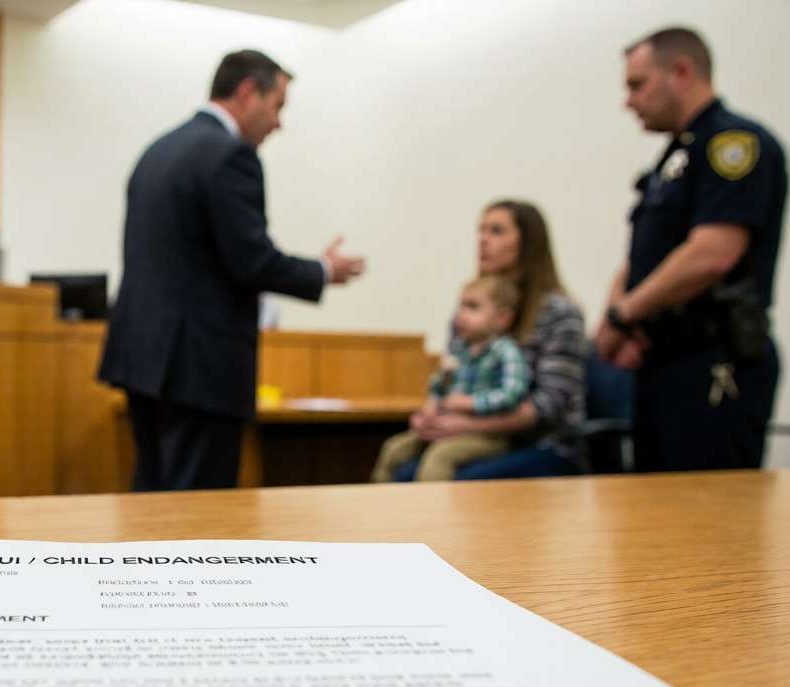
Being arrested for driving under the influence with a child in your vehicle is one of the most serious and frightening legal situations you can face in Downey, California. Not only are you confronting standard DUI penalties, but you are also facing enhanced punishment under California Vehicle Code Section 23572 and potentially separate criminal charges for child endangerment under Penal Code Section 273a. The consequences extend far beyond criminal penalties – your parental rights, custody arrangements, professional licenses, and reputation within the community are all at stake. At Tu Defensor Criminalista, we understand the gravity of these charges and provide aggressive, compassionate legal representation to protect your future and your family.
Downey is a thriving community in southeastern Los Angeles County with a population of approximately 109,368 residents[1], where 46.3% of households include children under the age of 18[2]. As a city with strong family values and a predominantly Hispanic population of 75.3%[3], Downey residents take child safety extremely seriously. When prosecutors charge you with DUI with child endangerment, they are not only accusing you of breaking the law – they are questioning your fitness as a parent and caregiver. This is why you need an experienced Downey DUI with child endangerment attorney who understands both the legal complexities and the emotional stakes of these cases.
Free Confidential Consultation: (888) 315-3326 | Available 24/7 | Hablamos Español
California law treats driving under the influence with a minor passenger as an aggravated offense that warrants enhanced penalties and sometimes separate criminal charges. There are two primary legal frameworks that apply to these cases: Vehicle Code Section 23572[4] (penalty enhancement) and Penal Code Section 273a[5] (criminal child endangerment charges).
California Vehicle Code Section 23572 provides for mandatory additional jail time when you are convicted of DUI and there was a minor under the age of 14 in your vehicle at the time of the offense. This is not a separate criminal charge – rather, it is a penalty enhancement that adds mandatory consecutive jail time to whatever sentence you receive for the underlying DUI conviction.
The key elements that prosecutors must prove beyond a reasonable doubt for the VC 23572 enhancement are straightforward: you were convicted of driving under the influence under Vehicle Code Section 23152, and a minor under 14 years of age was a passenger in the vehicle at the time of the offense. Notably, the enhancement applies regardless of your blood alcohol concentration level, whether your driving was particularly dangerous, whether the child was injured, or whether you intended to harm the child. The mere presence of a child under 14 in the vehicle while you are driving under the influence triggers this mandatory enhancement.
The additional jail time imposed under VC 23572 depends on whether you have prior DUI convictions within the previous ten years. For a first DUI offense, the enhancement adds a mandatory 48 continuous hours in county jail. For a second DUI offense, it adds a mandatory 10 days in county jail. For a third DUI offense, the enhancement adds a mandatory 30 days in county jail. For a fourth or subsequent DUI conviction that is charged as a misdemeanor, the enhancement adds a mandatory 90 days in county jail. Importantly, this jail time is mandatory and consecutive – meaning it must be served in addition to any jail time imposed for the underlying DUI conviction, and it cannot be stayed or suspended by the court even if you are granted probation.
It is critical to understand that the VC 23572 enhancement only applies to misdemeanor DUI convictions. If your fourth or subsequent DUI is charged as a felony, the enhancement does not apply. Additionally, the enhancement only applies if you are actually convicted of DUI under VC 23152. If your skilled defense attorney can negotiate a reduction to a lesser charge such as wet reckless under Vehicle Code Section 23103.5 or exhibition of speed under Vehicle Code Section 23109(c), the mandatory jail enhancement under VC 23572 will not apply.
In addition to or instead of the VC 23572 enhancement, prosecutors may file separate criminal charges for child endangerment under California Penal Code Section 273a. Unlike the VC 23572 enhancement which only applies when the child is under 14, PC 273a charges can be filed when any minor under the age of 18 was in the vehicle.
Penal Code 273a makes it a crime to willfully place a child under 18 in a situation where the child’s person or health is endangered, or to inflict unjustifiable physical pain or mental suffering on a child. The child does not need to suffer actual physical harm – prosecutors only need to prove that you placed the child in a dangerous situation or subjected the child to an unreasonable risk of harm.
PC 273a is a “wobbler” offense, meaning prosecutors have discretion to charge it as either a misdemeanor or a felony depending on the circumstances of your case and your criminal history. The critical distinction between misdemeanor and felony child endangerment lies in the level of danger the child faced.
Under PC 273a(b), if you placed a child in a situation that was dangerous but not likely to produce great bodily harm or death, the offense is charged as a misdemeanor. Misdemeanor child endangerment carries a maximum sentence of one year in county jail, court fines, mandatory parenting classes, and a criminal protective order protecting the child from further harm. If you are granted probation, the minimum probation period is 48 months (four years), and you must successfully complete at least one year of a court-approved child abuser’s treatment counseling program.
Under PC 273a(a), if you placed a child in circumstances or conditions likely to produce great bodily harm or death, prosecutors may charge the offense as a felony. Felony child endangerment carries a sentence of two, four, or six years in state prison. If the child suffered great bodily injury, an additional three to six years can be added consecutively. If the child died as a result of the endangerment, an additional four years can be added. A felony conviction for child endangerment resulting in great bodily injury counts as a “strike” under California’s Three Strikes law, which can dramatically increase penalties for any subsequent felony conviction.
Prosecutors typically charge felony child endangerment when the circumstances of the DUI were particularly egregious – for example, if your blood alcohol concentration was extremely high (such as 0.15% or higher), if you were driving recklessly or at excessive speeds, if you caused an accident, or if the child was injured. For a first-time DUI with a moderate BAC level and no accident or injury, prosecutors are more likely to pursue the VC 23572 enhancement rather than separate child endangerment charges.
An important legal protection exists to prevent double punishment: California law prohibits you from being punished under both VC 23572 and PC 273a for the same conduct. If you are convicted of child endangerment under PC 273a arising from a DUI incident, the court cannot also impose the VC 23572 enhancement. However, you can be charged with both offenses, and prosecutors often file both charges to preserve their options during plea negotiations.
The penalties for DUI with child endangerment extend far beyond the criminal justice system and can impact virtually every aspect of your life. Understanding the full scope of potential consequences is essential to appreciating why aggressive legal defense is so critical.
In addition to the mandatory jail enhancement under VC 23572 or the penalties for PC 273a charges, you face all of the standard DUI penalties including substantial fines and penalty assessments (typically $1,800 to $3,000 or more for a first offense), completion of a state-licensed DUI education program (3 to 30 months depending on your BAC and prior offenses), driver’s license suspension by the court and the DMV, mandatory installation of an ignition interlock device in any vehicle you own or operate, summary (informal) probation typically lasting three to five years with strict conditions including no driving with any measurable alcohol in your system, and potential community service or labor requirements.
If charged with PC 273a, you face additional requirements including mandatory completion of at least one year of a child abuser’s treatment counseling program approved by the probation department with quarterly progress reports, a minimum probation period of 48 months, and a criminal protective order that may restrict your contact with your own children. The financial cost alone can easily exceed $15,000 to $25,000 when factoring in fines, increased insurance premiums (which typically increase by 50% to 300% after a DUI conviction), DUI program fees, ignition interlock costs, attorney fees, and lost wages from jail time and court appearances.
Perhaps the most devastating consequence of a DUI with child endangerment conviction is the impact on your parental rights and custody arrangements. In Downey, where approximately 40.1% of households include children under 18[6], protecting your relationship with your children is paramount.
A conviction under PC 273a automatically triggers involvement from Child Protective Services (CPS). CPS may investigate your fitness as a parent and could recommend removing your children from your home, even if the child who was in the vehicle during the DUI was not your own child. You may be required to complete reunification services – a lengthy and intrusive process involving supervised visitation, parenting classes, substance abuse counseling, and regular monitoring – before regaining custody of your children. This process can take months or even years.
If you are involved in a family law case such as divorce, legal separation, or custody dispute, a DUI with child endangerment conviction will be used against you by the other parent and their attorney. The family court judge will consider the conviction as strong evidence that you cannot safely care for your children, and may award sole custody to the other parent, restrict your parenting time to supervised visitation only, or impose other limitations on your parental rights. Even years after completing your sentence and probation, the conviction remains on your record and can be raised in future custody modification proceedings.
For non-custodial parents in Downey paying child support, a DUI with child endangerment conviction can lead to increased child support obligations and loss of any preferential custody arrangements you may have negotiated.
With Downey’s employment rate of 94.2%[7] and median household income of $87,400[6], maintaining steady employment is critical to family financial stability. A DUI with child endangerment conviction can jeopardize your livelihood. If you hold a professional license – such as those required for teachers, nurses, doctors, lawyers, social workers, real estate agents, contractors, or childcare providers – you must typically report the conviction to your licensing board, which may impose discipline ranging from probation to permanent license revocation. Even without a professional license, the conviction can affect employment through background checks, particularly in fields like education, childcare, healthcare, and social services. For commercial drivers holding a CDL, a DUI conviction results in disqualification from holding a CDL for one year for a first offense and lifetime disqualification for a second offense, effectively ending your career as a commercial driver.
For Downey’s substantial immigrant population – with approximately 31.9% of residents born outside the United States[6] – immigration consequences are a critical concern. While a misdemeanor DUI alone is not typically grounds for deportation, child endangerment convictions carry significant immigration risks.
A conviction under PC 273a may be considered a crime involving moral turpitude, which can render you inadmissible to the United States, deportable if you are not a U.S. citizen, and ineligible for many forms of immigration relief. Even if you are a lawful permanent resident (green card holder), a child endangerment conviction can lead to removal proceedings. The conviction will also negatively impact applications for naturalization, as good moral character is a requirement for citizenship and child endangerment convictions call your moral character into serious question.
If you are in the United States on a temporary visa, a child endangerment conviction can result in visa revocation and prevent you from obtaining visa renewals or adjusting your status in the future. Some criminal convictions are considered “aggravated felonies” under immigration law, which carry mandatory deportation with no possibility of relief.
Because immigration law is extremely complex and the interaction between criminal convictions and immigration status depends on many factors, it is essential that your criminal defense attorney work closely with an experienced immigration attorney to craft a defense strategy that minimizes or eliminates immigration consequences.
Beyond the legal consequences, a DUI with child endangerment charge carries substantial social stigma. In a close-knit community like Downey, where family values are paramount, being accused of endangering a child can damage your reputation, strain relationships with family and friends, and affect your standing in religious and community organizations. Parents of your children’s friends may not allow playdates or sleepovers. Neighbors and community members may view you with suspicion. The psychological and emotional toll of facing these charges – including stress, anxiety, depression, and feelings of shame or guilt – can be overwhelming.
Understanding how these charges typically arise can help you appreciate the defenses that may be available in your case. DUI with child endangerment arrests in Downey occur in various circumstances, and not all of them involve malicious intent or reckless behavior.
Many people charged with DUI with child endangerment had no idea they were impaired. This is particularly common with prescription medication DUIs. A parent taking legally prescribed pain medication, anxiety medication, sleep aids, or other drugs may not realize that these medications impair their ability to drive safely. Even if taken exactly as prescribed, many medications cause drowsiness, dizziness, blurred vision, or slowed reaction times. When a parent picks up their child from school or daycare while unknowingly impaired by prescribed medication, they can face DUI with child endangerment charges.
Similarly, some people genuinely believe they are below the legal limit of 0.08% BAC when they decide to drive with their child in the vehicle. They may have had only one or two drinks over several hours, or may have stopped drinking well before driving, not realizing that alcohol was still being absorbed into their bloodstream or that their BAC was higher than subjectively expected.
Some DUI with child endangerment arrests occur when a parent faces a medical emergency involving their child. Imagine a scenario where your young child suffers a serious injury or medical crisis at home, and in your panic to get them to the emergency room, you drive despite having consumed alcohol earlier. While this does not provide a legal defense to DUI, it is a mitigating factor that an experienced attorney can use to negotiate more favorable treatment from prosecutors.
In Downey’s suburban environment with a mean travel time to work of 30.9 minutes[8], parents frequently share transportation duties with neighbors and friends. You may be arrested for DUI with child endangerment when transporting someone else’s child as part of a carpool arrangement, picking up a friend’s child from an activity, or giving a neighborhood child a ride home. These situations can be particularly complex from a legal standpoint.
Many DUI with child endangerment arrests in Downey occur at sobriety checkpoints set up on major thoroughfares like Lakewood Boulevard, Firestone Boulevard, and Imperial Highway. Parents returning home from family gatherings, restaurants, or evening events with their children may be stopped at these checkpoints and subjected to DUI investigation. Even parents who feel completely sober may be arrested based on field sobriety test performance (which is notoriously unreliable) or chemical test results that are barely over the legal limit.
Unfortunately, some DUI with child endangerment cases arise from false or exaggerated reports made during contentious divorce or custody disputes. An angry ex-spouse may call 911 and falsely report that you are driving drunk with the children, leading to a traffic stop and arrest even if you are completely sober. While these false accusations eventually come to light, the arrest and charges can cause tremendous stress and expense in the meantime.
Every DUI with child endangerment case is unique, and an experienced defense attorney will thoroughly investigate your case to identify all available defenses. The following defense strategies have proven effective in challenging these serious charges.
Because both VC 23572 and PC 273a charges depend on a DUI conviction or a finding that you were actually driving under the influence, successfully defending against the DUI charge eliminates or substantially weakens the child endangerment charges. If your attorney can get the DUI charges dismissed or reduced to a non-DUI offense, the VC 23572 enhancement cannot be imposed, and PC 273a charges become much more difficult to prove.
Common DUI defenses include challenging the legality of the traffic stop (if the officer lacked reasonable suspicion to stop your vehicle, all evidence obtained as a result of that illegal stop must be suppressed), challenging field sobriety test results (these tests are subjective, unreliable, and can be affected by numerous factors unrelated to intoxication including medical conditions, injuries, nervousness, uneven surfaces, poor lighting, and improper administration by the officer), challenging chemical test results (breath and blood tests are subject to numerous sources of error including machine malfunction or improper maintenance, failure to observe the required 15-minute observation period before administering a breath test, presence of mouth alcohol from dental work or medical conditions, rising blood alcohol defense showing that your BAC was below 0.08% while driving but rose to illegal levels by the time you were tested, contamination or mishandling of blood samples, and failure to follow Title 17 regulations governing collection and analysis of blood samples), lack of probable cause for the arrest, medical conditions that mimic intoxication, and violations of your constitutional rights.
For PC 273a(a) felony child endangerment charges, prosecutors must prove that the circumstances were likely to produce great bodily harm or death to the child. An experienced attorney can argue that while you may have made a poor decision to drive after drinking, the specific circumstances did not create a likelihood of great bodily harm. Factors supporting this defense include a relatively low BAC (close to 0.08%), safe and careful driving with no traffic violations, no accident or near-accidents, traveling a short distance on low-traffic residential streets, the child was properly restrained in an appropriate car seat or seatbelt, and good weather and road conditions. By demonstrating that the risk of harm was minimal, your attorney may convince prosecutors to reduce felony charges to misdemeanor charges or to dismiss child endangerment charges entirely in favor of the VC 23572 enhancement.
The VC 23572 enhancement only applies if the child was under 14 years old at the time of the offense. If the child was actually 14 or older, the enhancement cannot be imposed. Your attorney will obtain birth records and other documentation to verify the child’s age. If the prosecution cannot prove beyond a reasonable doubt that the child was under 14, the enhancement must be dismissed.
In rare circumstances, a necessity defense may be available if you drove under the influence to avoid a greater harm. For example, if you needed to flee from an imminent threat of violence or to seek emergency medical care for the child, and there was no other reasonable alternative available, the court may consider this a valid defense or at least a substantial mitigating factor. The necessity defense requires showing that you faced an immediate and serious threat, you had no reasonable legal alternative to driving, the danger from driving impaired was less than the danger you were fleeing, and you did not create the emergency situation through your own wrongdoing.
Both PC 273a and VC 23572 require that your conduct was willful – meaning you deliberately or intentionally drove while under the influence with the child in the vehicle. If your attorney can demonstrate that you were genuinely unaware of your impairment (such as unexpected interaction between medications, unforeseeable reaction to prescription drugs, or unknowing consumption of alcohol), this may provide a defense or at least mitigate the severity of the charges.
If law enforcement violated your constitutional rights during the investigation or arrest – such as conducting an illegal traffic stop, searching your vehicle without probable cause or a warrant, questioning you after you invoked your right to remain silent, or failing to read you your Miranda rights before custodial interrogation – your attorney can file motions to suppress evidence obtained as a result of those violations. If the motion is granted, critical evidence may be excluded from trial, potentially leading to dismissal of charges or a not guilty verdict.
In some cases, particularly those arising from domestic disputes, the allegations are simply false. Your attorney will investigate the source of the allegations, interview witnesses, review 911 recordings, examine police body camera footage, and gather evidence demonstrating that the accusations are fabricated or mistaken. If the officer did not personally observe you driving, and there is no independent evidence corroborating that you were the driver, your attorney may be able to raise reasonable doubt about whether you were driving at all.
If you have been arrested for DUI with child endangerment in Downey, time is of the essence. The decisions you make in the hours and days following your arrest can dramatically affect the outcome of your case.
After a DUI arrest, you have only 10 calendar days from the date of arrest to request a DMV administrative hearing to contest the automatic suspension of your driver’s license. This deadline is absolute and cannot be extended. If you do not request a hearing within 10 days, your license will be automatically suspended 30 days after your arrest, and you will lose the opportunity to challenge the suspension. An experienced DUI attorney can request the hearing on your behalf, represent you at the hearing, cross-examine the arresting officer, challenge the evidence, and fight to save your driving privilege.
If you are charged with child endangerment under PC 273a, Child Protective Services may contact you for an investigation. Anything you say to CPS can and will be used against you in both your criminal case and any family law proceedings. It is critical that you have an attorney present before speaking with CPS investigators. Your attorney can protect your rights while demonstrating your cooperation and commitment to your children’s wellbeing.
Critical evidence can be lost or destroyed if not preserved promptly. Surveillance video from businesses or residences along your route may be overwritten after a few days or weeks. Witnesses’ memories fade over time. Police body camera and dashboard camera footage may be erased if not specifically requested. Your attorney must act quickly to identify, locate, and preserve all evidence that may help your defense.
In some cases, an experienced attorney can intervene before charges are formally filed, presenting mitigating evidence to prosecutors and arguing for reduced charges or diversion programs. Once charges are filed and you are arraigned, negotiation becomes more difficult. Early intervention provides the best opportunity to achieve a favorable resolution.
Facing DUI with child endangerment charges is terrifying, and you need an attorney who not only understands the law but also understands what you are going through emotionally and the stakes involved for you and your family. At Tu Defensor Criminalista, we provide the aggressive, experienced representation you need along with the compassion and support you deserve during this difficult time.
DUI with child endangerment cases are among the most complex and serious charges in California criminal law, involving multiple statutes, overlapping penalties, and interaction between criminal law, family law, and administrative law. Our attorneys have extensive experience handling these multifaceted cases throughout Los Angeles County, including in the Downey Branch Court located at 7500 E. Imperial Highway. We understand the legal nuances, the local prosecutors’ approaches, and the strategies that are most effective in achieving favorable outcomes.
With 57.8% of Downey households speaking Spanish[7], effective communication with your attorney is essential. Our bilingual attorneys and staff provide full legal services in Spanish, ensuring that you fully understand your rights, options, and the legal process. We also provide culturally sensitive representation that respects your values and family structure.
We handle every aspect of your case including the DMV administrative hearing to protect your driving privilege, the criminal court proceedings including arraignment, pretrial conferences, motion hearings, and trial if necessary, negotiation with prosecutors to seek dismissal, reduction of charges, or alternative sentencing, coordination with family law attorneys if you are involved in custody proceedings, consultation with immigration attorneys if you are not a U.S. citizen, and expert witness retention when needed including forensic toxicologists, accident reconstruction specialists, and medical experts.
We recognize that your relationship with your children is your highest priority. Throughout your case, we work to minimize the impact on your parental rights by communicating with Child Protective Services to demonstrate your commitment to your children’s safety and wellbeing, presenting evidence of your good character and parenting history, negotiating protective orders and custody arrangements that allow you to maintain contact with your children, and fighting to prevent the entry of findings that could be used against you in family court.
When you are facing charges that threaten your freedom and your family, you need an attorney who is accessible and responsive. We provide personalized attention to every client, return phone calls and emails promptly, keep you informed throughout the process, and are available for weekend and evening appointments when necessary to accommodate your work schedule and family obligations.
If you are pulled over by law enforcement while you have a child in your vehicle, how you handle the situation can significantly impact your case. Remain calm and polite, pull over safely in a well-lit area, keep your hands visible on the steering wheel, and provide your license, registration, and insurance when requested. You have the right to remain silent beyond providing basic identifying information – politely decline to answer questions about where you have been, whether you have been drinking, or how much you have had to drink by stating that you prefer not to answer questions without an attorney present. You have the right to refuse field sobriety tests as these are voluntary with no legal penalty for refusal. However, if you are arrested, California’s implied consent law requires you to submit to chemical testing, and refusing carries enhanced penalties including a one-year license suspension. Do not make any statements about your guilt or try to explain away the situation. If you are arrested, ask to speak with an attorney immediately and do not answer any further questions until your attorney is present.
If you are arrested for DUI with child endangerment, Child Protective Services may contact you for an investigation. You have the right to have an attorney present during any interviews with CPS. While you want to cooperate and demonstrate that you are a responsible parent, anything you say to CPS can be used against you in both criminal and family court proceedings. Before speaking with CPS, consult with your attorney to prepare for the interview and ensure that your rights are protected. Be honest but concise, acknowledge your mistake, express genuine remorse, and demonstrate that you are taking the situation seriously by voluntarily enrolling in counseling or alcohol education programs even before the court requires it.
Even after successfully resolving your criminal case, you face the challenge of rebuilding trust with your family, your children, and your community. This requires genuine commitment to change including seeking treatment if you have a problem with alcohol or substance abuse, attending all required counseling and education programs, considering voluntary support groups such as Alcoholics Anonymous, and demonstrating through consistent actions over time that the DUI incident was an isolated mistake. Be patient with yourself and others, continue to be an involved and loving parent, follow all court orders and probation conditions, maintain stable employment and housing, and surround yourself with positive influences. By demonstrating genuine change and commitment to responsibility, you can move forward from this difficult chapter and build a better future for yourself and your family.
Vehicle Code Section 23572 is not a separate criminal charge – it is a penalty enhancement that adds mandatory jail time to a DUI conviction when there was a child under 14 in the vehicle. Penal Code Section 273a is a separate criminal charge for child endangerment that can be filed when there was any minor under 18 in the vehicle. PC 273a can be charged as either a misdemeanor or a felony depending on whether the circumstances were likely to produce great bodily harm or death. You cannot be punished under both VC 23572 and PC 273a for the same conduct, although you can be charged with both offenses.
Yes. The law applies regardless of whether the child is your own child, a relative, a friend’s child, or any other minor under the applicable age. If you are driving under the influence with any child in the vehicle, you can be charged with DUI with child endangerment. This commonly occurs when parents are driving carpool, babysitting a neighbor’s child, or transporting nieces, nephews, or other relatives.
While proper use of car seats and seatbelts demonstrates some level of responsibility and can be presented as a mitigating factor, it does not provide a defense to DUI with child endangerment charges. The law is focused on the fact that you chose to drive while impaired with a child in the vehicle, creating a risk of harm. However, your attorney can use evidence of proper child restraints to argue that the circumstances did not create a likelihood of great bodily harm, which may convince prosecutors to reduce felony charges to misdemeanor charges or to decline to file child endangerment charges altogether.
Not necessarily, but a conviction for child endangerment significantly increases that risk. If you are convicted of PC 273a, Child Protective Services will likely become involved and may recommend removal of your children from your custody pending completion of reunification services. In family court custody proceedings, the conviction will be considered strong evidence against you, and the judge may restrict your custody or parenting time. Whether you actually lose custody depends on many factors including your prior history as a parent, whether you have prior CPS involvement, whether the child in the DUI incident was your own child, whether the child was injured, your criminal history, and whether you successfully complete all court-ordered programs and counseling. An experienced attorney can help minimize the impact on your custody rights.
Yes. A conviction for child endangerment raises questions about your judgment and fitness as a parent generally, not just with respect to the specific child who was in the vehicle. CPS may investigate whether your other children are at risk and may recommend removal of all children from your home if they determine that you pose a danger. This is particularly likely if you have a history of substance abuse, prior CPS involvement, or other risk factors. Your attorney can work with you to demonstrate to CPS that your children are safe in your care and that the DUI incident was an isolated mistake.
Even if your blood alcohol concentration was just barely over 0.08% – for example, 0.09% or 0.10% – you can still be convicted of DUI and face the child endangerment enhancement or charges. However, a BAC close to the legal limit is a mitigating factor that your attorney can use in negotiations with prosecutors. A low BAC suggests less impairment and lower risk of harm to the child, which may convince prosecutors to offer a more favorable plea bargain or to reduce felony charges to misdemeanor charges. Your attorney can also challenge the accuracy of the chemical test results, as breath and blood tests have a margin of error that can result in falsely elevated BAC readings.
Yes, it is possible, though more difficult than in a standard DUI case. A wet reckless (Vehicle Code Section 23103.5) is a reduced charge of reckless driving involving alcohol. If you are convicted of wet reckless rather than DUI, the VC 23572 enhancement does not apply because you were not convicted of a DUI offense under VC 23152. However, prosecutors are generally reluctant to offer wet reckless plea bargains when a child was in the vehicle because of the enhanced culpability involved. Whether a wet reckless is possible in your case depends on the strength of the prosecution’s evidence, your BAC level, your criminal history, whether the child was injured, and the negotiating skills of your attorney.
Your first court appearance is the arraignment, typically held at the Downey Branch Court of the Los Angeles Superior Court. At the arraignment, you will be formally advised of the charges against you (both the DUI charges and the child endangerment enhancement or separate charges), your constitutional rights will be explained, and you will be asked to enter a plea of guilty, not guilty, or no contest. You should almost always plead not guilty at the arraignment to preserve all of your rights and options. After entering a not guilty plea, the court will set future court dates for pretrial conferences and motions and will address bail or release conditions. If you have an attorney, your attorney can appear on your behalf in most misdemeanor cases, so you do not need to miss work or other obligations.
The timeline varies depending on the complexity of the case, the court’s calendar, whether motions are filed, and whether the case goes to trial. A typical misdemeanor DUI case can take anywhere from three to nine months to resolve, while felony cases often take longer – sometimes over a year. Cases involving child endangerment charges tend to take longer than standard DUI cases because of the additional charges, the involvement of CPS, and the need to coordinate with family court proceedings if custody issues are involved. Your attorney can provide a more specific timeline based on the circumstances of your case and the practices of the Downey court.
If you are convicted of child endangerment under PC 273a, you may be required to register with the California Department of Justice Child Abuse Central Index (CACI). CACI registration is not the same as sex offender registration, but it can have serious consequences. CACI registration makes you ineligible to work in many positions involving children including teaching, childcare, coaching, and social work. It can also affect your ability to adopt children in the future. Whether CACI registration is required depends on the specific facts of your case and the terms of your sentence. Your attorney can argue against CACI registration or work to have your name removed from the index after you successfully complete probation.
While you have the constitutional right to represent yourself, doing so in a DUI with child endangerment case is extremely unwise. These cases involve complex legal issues, serious criminal penalties, mandatory sentencing enhancements, interaction between multiple areas of law including criminal law, family law, and administrative law, involvement of Child Protective Services, and potentially life-altering consequences including loss of custody of your children, prison time, and permanent criminal record. Prosecutors are experienced attorneys who handle these cases every day, and representing yourself puts you at a severe disadvantage. The cost of hiring an experienced attorney is a worthwhile investment that may save you from far more expensive consequences including years in prison, loss of custody of your children, and destruction of your career and reputation.
Remember:
Attorney Armando Josué Cespedes is rated 5.0 on Avvo, with 34 five-star reviews from clients praising his dedication, professionalism, and results. Many note how his trial skills and attention to detail led to reduced charges or outright dismissals.



 English English
 Español de México English English Español de México
Thank you! We need your help. Would you share your experience on one of these sites?
If you have concerns you wish to address privately
