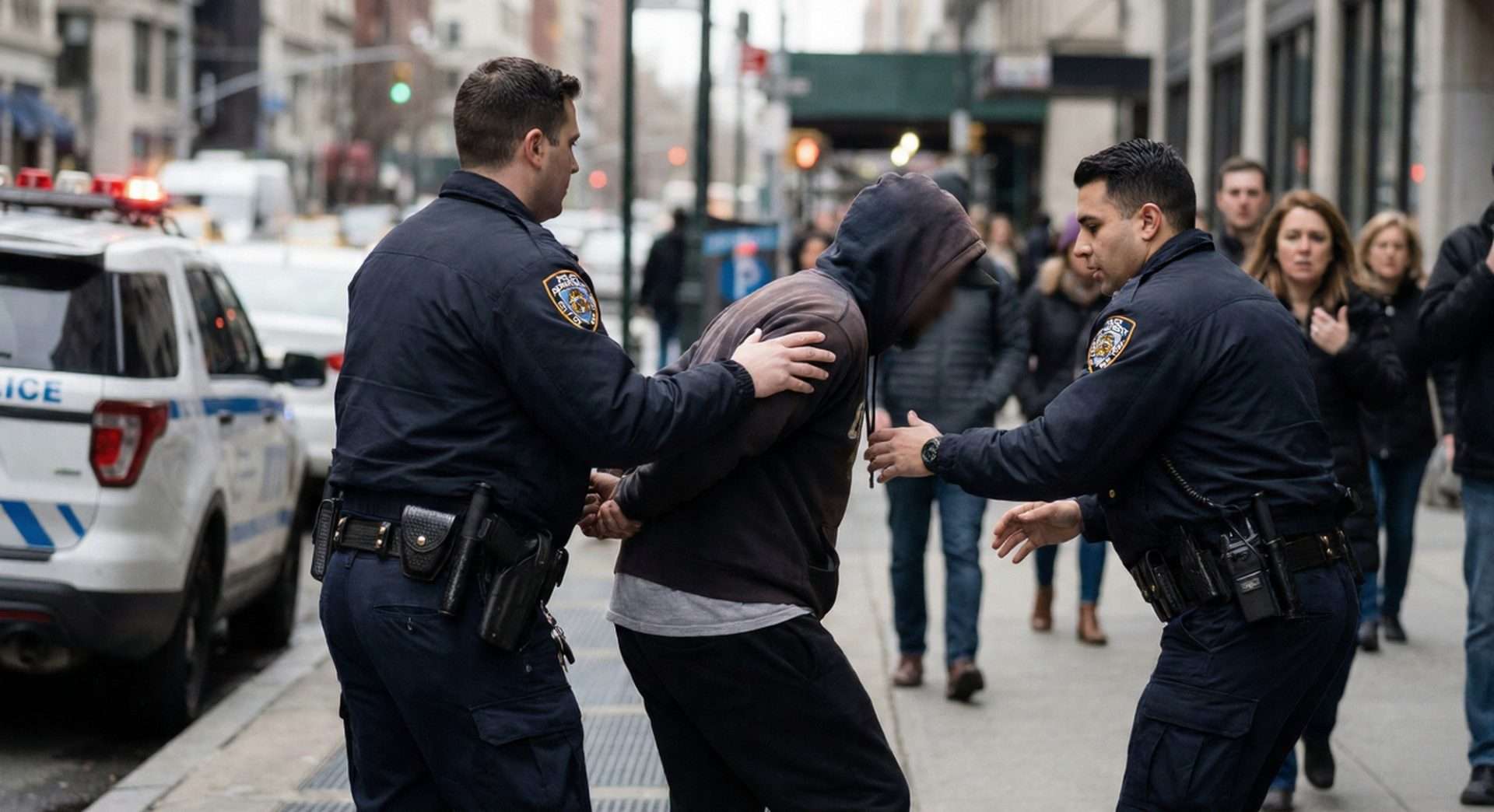
Arrested for resisting arrest in Downey? You’re facing serious criminal charges under California Penal Code Section 148(a)(1)[1] that can result in up to one year in county jail, substantial fines up to $1,000, and a permanent criminal record that will follow you for years. At Tu Defensor Criminalista, we provide aggressive, experienced defense representation for clients throughout Downey and Los Angeles County who are facing resisting arrest charges.
When you’re charged with resisting, delaying, or obstructing a peace officer in Downey, you need an attorney who understands both the letter of California law and the local court procedures at the Downey Courthouse. Our criminal defense team has successfully defended hundreds of clients against PC 148 violations[2] and related charges, protecting their freedom, their future, and their constitutional rights.
The reality in Downey is that resisting arrest charges are increasingly common. According to recent crime statistics, Downey experiences approximately 9.31 daily crime occurrences[3], and law enforcement encounters throughout Los Angeles County frequently result in resisting arrest allegations. In a city of over 110,000 residents served by the Downey Police Department[4], these charges arise in various contexts—from routine traffic stops near Downey Landing to domestic disturbance calls in residential neighborhoods, from DUI arrests along Lakewood Boulevard to protests and public demonstrations.
Free Confidential Consultation: (888) 315-3326 | Available 24/7 | Hablamos Español
California Penal Code 148(a)(1) makes it a misdemeanor crime to willfully resist, delay, or obstruct any public officer, peace officer, or emergency medical technician in the discharge of their official duties. This law applies to all law enforcement interactions throughout Downey, whether you’re stopped by Downey Police Department officers, Los Angeles County Sheriff’s deputies, or California Highway Patrol officers operating within city limits.
The statute itself is deceptively broad. According to the California Penal Code[1], a person commits this offense when they willfully resist, delay, or obstruct any peace officer or EMT engaged in performing their lawful duties. This means prosecutors don’t need to prove you were violent or physically aggressive—merely that your actions somehow interfered with an officer’s work.
Many Downey residents are shocked to learn how broadly California interprets resisting arrest. The offense encompasses far more than the stereotypical image of struggling against handcuffs or fleeing from police. Under PC 148, prosecutors can charge you for:
To convict you of resisting arrest in Downey, prosecutors must prove four specific elements beyond a reasonable doubt, following California Criminal Jury Instruction CALCRIM 2656[6]:
Downey’s unique characteristics create numerous situations where resisting arrest charges arise. Understanding the local context helps explain why these charges are so prevalent and why experienced local defense representation is essential.
According to recent crime data, Downey has a crime rate of approximately 33 per thousand residents[7], which is higher than the national average. While violent crime rates stand at approximately 4.656 per 1,000 residents[8], the city experiences significant property crime, with rates of approximately 29 per thousand population for offenses including burglary, larceny, and motor vehicle theft.
The Downey Police Department[4] maintains an active patrol presence throughout the city, responding to thousands of calls annually. With 144 police officers serving a population exceeding 110,000 residents, Downey has approximately 1.3 officers per 1,000 residents—significantly below both the California and national averages. This staffing ratio means officers are often under significant pressure, working long shifts and handling multiple calls, which can contribute to tense interactions and quick decisions that result in resisting arrest allegations.
A conviction for violating Penal Code 148(a)(1) in Downey carries serious consequences that extend far beyond the immediate legal penalties. Understanding what you’re facing is essential for making informed decisions about your defense strategy.
As a misdemeanor offense, resisting arrest under PC 148 is punishable by up to one year in Los Angeles County Jail and fines up to $1,000, plus mandatory penalty assessments. Many first-time offenders receive misdemeanor probation rather than jail time.
Misdemeanor probation typically lasts one to three years and includes mandatory community service, anger management counseling when appropriate, and requirements to obey all laws. However, jail sentences are common when underlying situations involved DUI, domestic violence, or when officers claim injuries.
Under Penal Code 148(c)[1], attempting to remove a firearm from a peace officer can result in felony charges punishable by up to three years in state prison.
A resisting arrest conviction creates far-reaching consequences beyond criminal penalties:
Successfully defending against PC 148 charges requires thorough investigation and strategic legal analysis. At Tu Defensor Criminalista, we’ve developed proven defense strategies resulting in dismissals, acquittals, and reduced charges.
This is the most powerful defense to resisting arrest charges. Under California law, you cannot be convicted if the officer wasn’t performing lawful duties.
The “willfully” element requires proof of purposeful action, not accidental or reflexive behavior.
Understanding the legal process helps you prepare for each stage and make informed decisions.
After arrest by Downey Police, you’re transported to the station for booking—photographing, fingerprinting, and warrant checks. For misdemeanor PC 148 charges, many people are released within hours. However, if you have outstanding warrants or the charge arose with more serious offenses, you may be held longer.
Your first court appearance occurs at the Downey Courthouse[12], located at 7500 East Imperial Highway. At arraignment, you’re advised of charges and enter a plea. Having an attorney at arraignment provides advantages including arguing for reduced bail and beginning immediate negotiations with prosecutors.
After arraignment, experienced attorneys file motions to suppress illegally obtained evidence, conduct independent investigations, interview witnesses, and obtain surveillance footage from businesses near the arrest location. Throughout Downey, numerous security cameras capture police encounters—prompt investigation to preserve this evidence is essential.
Most cases resolve through negotiation. Depending on evidence strength, we negotiate for dismissals when defenses are strong, reduction to infractions that don’t create criminal records, diversion programs resulting in eventual dismissal, or probation without jail time.
When negotiations fail, we’re prepared for trial. Misdemeanor trials in Downey are heard by judges or juries. We challenge prosecution evidence through cross-examination, present video evidence and witnesses, and provide expert testimony on police procedures when appropriate.
Defending against resisting arrest charges requires specific knowledge and experience.
The Downey Courthouse has unique characteristics. We know the prosecutors who handle cases regularly, their negotiation styles and priorities. We understand judges’ evidentiary rulings and sentencing patterns. This familiarity provides strategic advantages that general practitioners lack.
Police reports are one-sided narratives written to support charges. Effective defense requires canvassing for witnesses officers didn’t interview, obtaining security camera footage, subpoenaing body camera footage, and consulting medical professionals about conditions affecting your ability to comply.
Many cases involve constitutional violations that non-specialists miss. Understanding Fourth Amendment search and seizure law, Fifth Amendment Miranda protections, and First Amendment recording protections requires specific expertise. We identify violations and file appropriate motions.
Prosecutors know which attorneys have courtroom experience. Our trial track record gives us credibility that translates into better negotiation results because prosecutors know we’re willing and able to try cases.
Resisting arrest under PC 148 is one of several California offenses involving resistance to authority. Understanding these distinctions helps clarify what you’re facing and what defenses apply.
Penal Code Section 69[13] is more serious than PC 148, prohibiting resisting executive officers through force or violence. While PC 148 applies to any resistance, PC 69 specifically requires use or threat of force or violence. PC 69 is a “wobbler,” meaning prosecutors can charge it as either a misdemeanor or felony. As a felony, it carries 16 months, two years, or three years in county jail.
Penal Code 243(b)[14] prohibits battery against peace officers—willfully touching an officer in a harmful or offensive manner while they’re performing duties. This requires physical contact, distinguishing it from mere resistance under PC 148. The offense is a misdemeanor punishable by up to one year in county jail and fines up to $2,000.
Penal Code 243(c)(2)[14] applies when battery on an officer causes injury requiring medical treatment. This is also a misdemeanor but carries higher fines up to $10,000.
California Vehicle Code 2800.1[15] makes it a misdemeanor to willfully flee from pursuing officers in a vehicle. Punishment includes up to one year in county jail.
Vehicle Code 2800.2[16] elevates fleeing to a felony when done with willful or wanton disregard for others’ safety. Punishment is 16 months, two years, or three years in state prison.
Penal Code 148.9[5] specifically criminalizes providing false identity or personal identifying information to officers during detention or arrest. This misdemeanor carries up to six months in county jail and $1,000 in fines.
Understanding your rights during police encounters helps prevent situations from escalating to resisting arrest charges while protecting your constitutional freedoms.
The Fifth Amendment[17] protects against self-incrimination. You have an absolute right to remain silent during police encounters, though you must verbally invoke this right. Simply state, “I am invoking my Fifth Amendment right to remain silent,” and then stop talking.
However, this right has limits during traffic stops. Police can require you to provide your name, driver’s license, vehicle registration, and insurance information. Refusing this basic identifying information can result in obstruction charges. But beyond these basic identifiers, you’re not required to answer questions about where you’re going or what’s in your vehicle.
The Fourth Amendment[18] protects against unreasonable searches and seizures. Police cannot search your person, vehicle, or home without your consent, a warrant, or valid exception. You have the right to refuse consent to searches. When officers ask, “Can I search your car?” you should clearly state, “I do not consent to any searches.”
Refusing consent doesn’t give officers grounds to search anyway. They need independent legal justification—probable cause, plain view of contraband, or other recognized exceptions.
California law specifically protects your right to photograph and record police in public spaces. Penal Code 148(g)[1], enacted in 2016, clarifies that recording police officers in public places does not constitute obstruction and does not create reasonable suspicion or probable cause for arrest.
When recording police in Downey, maintain a reasonable distance that doesn’t physically interfere with police activities (generally 10-15 feet), you cannot be required to stop recording or delete recordings without a warrant, and officers who order you to stop recording are violating your rights.
Not every police encounter is a seizure under the Fourth Amendment. Consensual encounters, where officers approach and ask questions but don’t restrain you, don’t implicate constitutional protections. You’re free to decline conversation and walk away from consensual encounters.
When officers detain you—using physical force, displaying weapons, blocking your path, or giving the impression you’re not free to leave—they must have reasonable suspicion that you’re involved in criminal activity. If detained, ask clearly, “Am I free to leave?” If officers say yes, you may leave. If they say no, they’re required to articulate their reasonable suspicion if challenged.
Resisting arrest charges often arise in connection with other criminal allegations. Tu Defensor Criminalista provides comprehensive criminal defense representation for all related charges including:
Whatever charges you’re facing in Downey, we have the experience and commitment to defend you effectively.
Under California Penal Code 148(a)(1), resisting arrest is defined as willfully resisting, delaying, or obstructing any peace officer, public officer, or emergency medical technician while they’re performing or attempting to perform their official duties. The offense is broader than just physically fighting police—it includes any willful conduct that hinders an officer’s ability to do their job, from providing false information to fleeing the scene to verbally disrupting an investigation. To convict you, prosecutors must prove four elements beyond reasonable doubt: you willfully resisted, delayed, or obstructed an officer; the officer was engaged in performing their lawful duties; you knew or should have known the person was an officer performing duties; and your conduct was willful, meaning done on purpose.
No. California law is clear that you cannot be convicted of resisting arrest if the officer was not engaged in lawful duties at the time. If the arrest itself was unlawful—because officers lacked probable cause, conducted an illegal search, used excessive force, or acted on personal motives rather than legitimate law enforcement purposes—you cannot be guilty of resisting that unlawful arrest. The California Supreme Court has held that citizens have a right to resist unlawful arrests using reasonable, non-deadly force. However, determining whether an arrest was lawful involves complex legal analysis of probable cause standards, Fourth Amendment search and seizure law, and California arrest procedures. This is why having an experienced criminal defense attorney evaluate the circumstances of your arrest is essential—most people don’t recognize when their constitutional rights have been violated.
Resisting arrest under PC 148(a)(1) is a misdemeanor punishable by up to one year in Los Angeles County Jail, a fine of up to $1,000 (plus penalty assessments that can triple the actual amount owed), and misdemeanor probation lasting one to three years with conditions including community service, counseling programs, and restrictions on your freedom. However, not everyone convicted receives jail time. First-time offenders with minimal criminal history who didn’t use violence often receive probation without jail. Factors affecting sentencing include whether the case involved violence or injury to officers, your prior criminal history, whether the resistance occurred in connection with more serious charges like DUI or domestic violence, whether you have a history of failing to appear in court, and the specific judge assigned to your case. Additionally, attempted removal of an officer’s firearm elevates the offense to a felony under PC 148(c), punishable by up to three years in state prison. Beyond criminal penalties, conviction creates collateral consequences including employment difficulties, professional license suspensions, immigration consequences for non-citizens, and impact on child custody proceedings.
The safest approach during any arrest is to remain calm, comply physically with officers’ commands, clearly invoke your right to remain silent by stating “I am invoking my Fifth Amendment right to remain silent,” and politely refuse to answer questions beyond providing your name and identification. Do not physically resist, pull away, or struggle against handcuffs, run or attempt to flee even if you believe the arrest is unjust, argue with officers or verbally challenge their authority at the scene, or consent to searches of your person, vehicle, or home. Remember that you can challenge the legality of the arrest later in court with your attorney—the street is not the place to litigate constitutional issues. Even if you’re innocent and the arrest is completely unjustified, physical resistance only adds charges and gives officers justification to use force against you. Your attorney can file motions to suppress evidence, challenge probable cause, and potentially have charges dismissed based on illegal police conduct—but these remedies only work if you don’t give officers additional legitimate grounds to charge you with resistance.
Yes, absolutely. California Penal Code 148(g) specifically protects your right to photograph or make audio or video recordings of police officers while they’re in public places or while you’re in a place you have a right to be. The statute explicitly states that recording police does not, by itself, constitute obstruction under PC 148, nor does it create reasonable suspicion to detain you or probable cause to arrest you. This law, enacted in 2016, codified First Amendment protections established by federal courts. To safely exercise this right, maintain a reasonable distance that doesn’t physically interfere with police activities (typically 10-15 feet unless you’re the person being arrested), continue recording even if officers order you to stop, and politely refuse any demands to delete your recordings. Officers who threaten arrest, seize your phone without a warrant, or order you to delete recordings are violating your constitutional rights. However, you cannot physically obstruct officers, enter restricted areas, or interfere with their activities under the guise of recording. If officers become aggressive about your recording, state clearly “I have a First Amendment right to record police in public” and continue recording from a safe distance.
Excessive force by police is unlawful, and you have the right to defend yourself against it. Under California law, you cannot be convicted of resisting arrest if the officer’s conduct was unlawful, including when they used force that was unreasonable under the circumstances. However, this defense requires careful legal analysis because courts evaluate force based on what was “objectively reasonable” from the officer’s perspective at the time, considering the totality of circumstances. Factors include the severity of the crime at issue, whether you posed an immediate threat to officers or others, and whether you were actively resisting or attempting to flee. Documenting excessive force is critical—seek medical attention immediately and have injuries photographed, obtain names and contact information for any witnesses, request copies of police body camera and dashboard camera footage through your attorney, and file a complaint with the Downey Police Department Internal Affairs division. The fact that officers charged you with resisting arrest may actually indicate they used excessive force—officers frequently add resistance charges to justify their own use of force and preemptively defend against future excessive force complaints. An experienced attorney can identify patterns suggesting the resistance charge was a “cover-your-ass” addition to justify questionable police conduct.
Potentially yes, though PC 148 is not automatically classified as a deportable offense under federal immigration law. The conviction is not considered an “aggravated felony” or automatically a “crime involving moral turpitude” (CIMT)—the two main categories of deportable offenses. However, any criminal conviction can negatively impact immigration proceedings, applications for naturalization, visa renewals, or green card applications. Immigration officials have broad discretion to consider criminal history when determining admissibility and deportability, and convictions involving resistance to law enforcement authority are viewed unfavorably. Additionally, if your PC 148 case arose during an arrest for other offenses—particularly drug crimes, domestic violence, or theft offenses that are deportable—the combination of charges creates serious immigration consequences. If you’re not a U.S. citizen and are facing resisting arrest charges, you must consult with both a criminal defense attorney and an immigration attorney immediately. Your criminal attorney should negotiate dispositions that minimize immigration consequences, and certain plea bargains may trigger automatic deportation while others won’t. Never accept a plea deal without understanding its immigration implications.
Yes, resisting arrest is frequently charged alongside numerous other offenses because it typically arises during the course of another police interaction. Common combinations include DUI plus resisting arrest when you pull away during field sobriety tests or refuse to exit your vehicle, domestic violence plus resisting arrest when you interfere with officers arresting your partner or family member, assault or battery on a peace officer (PC 243) when physical contact occurs during resistance, providing false identification (PC 148.9) when you give fake names or IDs during the arrest process, evading arrest (VC 2800.1 or 2800.2) if you fled in a vehicle before the arrest, and public intoxication (PC 647(f)) or disorderly conduct charges arising from the underlying incident. Prosecutors may also charge Penal Code 69—resisting an executive officer with force or violence—which is more serious than PC 148 and can be charged as a felony. The decision to file multiple charges gives prosecutors leverage during plea negotiations—they may offer to dismiss some charges in exchange for guilty pleas to others. However, this also means you’re facing more serious cumulative penalties if convicted of everything. An experienced attorney can challenge overcharging, negotiate package deals that resolve all charges favorably, and prevent prosecutors from stacking charges to pressure unjust plea bargains.
Misdemeanor cases in Downey typically take three to six months to resolve, though complex cases involving motions, extensive discovery, or trial preparation can take longer. The timeline includes arraignment (your first court appearance, usually within days or weeks of arrest), pre-trial conferences (typically three to five court dates where your attorney negotiates with prosecutors and files motions), motions hearings (if your attorney files motions to suppress evidence or dismiss charges, these require separate hearings), settlement conferences (mandatory meetings to attempt resolution before trial), and trial (if the case doesn’t resolve, misdemeanor trials typically last one to three days). California’s speedy trial rights require that misdemeanor trials commence within 30 days of arraignment for in-custody defendants or within 45 days for out-of-custody defendants, but defendants routinely waive these deadlines to allow more time for investigation and negotiation. Resolving cases strategically rather than quickly often produces better results—thorough investigation, comprehensive motion practice, and patient negotiation typically achieve dismissals or reduced charges that rushed dispositions don’t.
Resisting arrest under Penal Code 148 and evading police under Vehicle Code 2800.1 or 2800.2 are separate offenses with different elements and penalties. Resisting arrest (PC 148) encompasses any willful conduct that resists, delays, or obstructs officers performing their duties—including physical resistance, verbal obstruction, fleeing on foot, or providing false information. It’s a misdemeanor punishable by up to one year in county jail. Evading arrest (VC 2800.1) specifically involves fleeing from pursuing police in a motor vehicle. It requires that officers were in a distinctively marked vehicle displaying at least one lighted red lamp visible from the front, the officer was wearing a distinctive uniform, and you willfully fled with intent to evade. It’s also a misdemeanor punishable by up to one year in county jail. Felony evading (VC 2800.2) applies when you flee in a vehicle with willful or wanton disregard for the safety of persons or property—meaning high speeds, running red lights, wrong-way driving, or other dangerous conduct. This is a felony punishable by 16 months to three years in state prison. You can be charged with both offenses arising from the same incident—the evading charge for the vehicle pursuit and the resisting arrest charge for whatever you did after the vehicle stopped. Throughout Downey, police pursuits sometimes occur on major thoroughfares, and these cases carry serious penalties including mandatory vehicle impoundment, license suspension, and substantial fines in addition to criminal penalties.
Yes, many resisting arrest cases result in dismissals or reduced charges when properly defended. Common resolutions include complete dismissal when strong legal defenses exist (unlawful arrest, excessive force, false accusations), constitutional violations (illegal search, lack of probable cause, Miranda violations), or insufficient evidence to prove all elements beyond reasonable doubt. Reduction to infractions like disturbing the peace (PC 415), which carries only a fine and doesn’t create a criminal record, is possible when some culpability exists but criminal conviction is unjust. Deferred entry of judgment or pretrial diversion programs, where you complete counseling or community service in exchange for eventual dismissal, are available in some jurisdictions for first-time offenders. Reduction to “time served” on cases where you were held in custody after arrest, allowing immediate case closure without additional penalties. Achieving these favorable outcomes requires aggressive advocacy, thorough investigation, and strategic use of motions to suppress and dismiss. The strength of your defense depends on the specific facts of your case, the quality of evidence supporting the charges, the presence of video or witness testimony, prior criminal history and credibility issues, and the skill and experience of your defense attorney. Early intervention by an experienced attorney significantly improves the likelihood of dismissal or favorable resolution.
Remember:
Attorney Armando Josué Cespedes is rated 5.0 on Avvo, with 34 five-star reviews from clients praising his dedication, professionalism, and results. Many note how his trial skills and attention to detail led to reduced charges or outright dismissals.



 English English
 Español de México English English Español de México
Thank you! We need your help. Would you share your experience on one of these sites?
If you have concerns you wish to address privately
