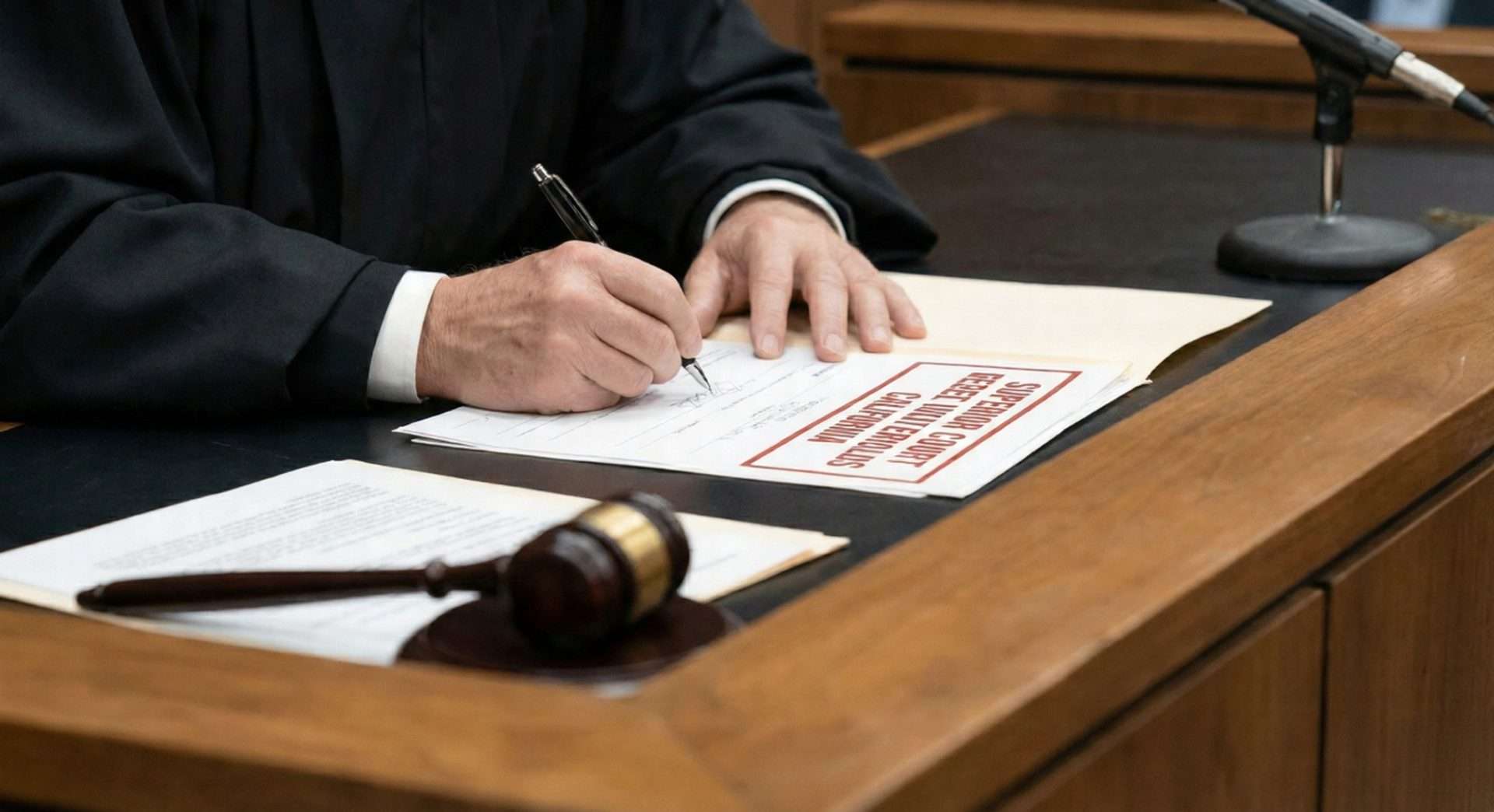
Facing a temporary restraining order (TRO) in Downey can be one of the most stressful and frightening legal situations you’ll ever encounter. Whether you’re seeking protection from harassment, threats, or abuse, or you’ve been accused and need to defend against a restraining order being filed against you, the consequences of these proceedings can profoundly impact your life, your family relationships, your employment, your housing situation, your gun rights, and your freedom. Restraining orders are serious court orders that, if violated, can result in immediate arrest and criminal charges. Understanding California’s restraining order laws and having experienced legal representation can make the difference between protection and vulnerability, or between false accusations ruining your life and successfully defending your rights.
At Tu Defensor Criminalista, we provide comprehensive, compassionate legal representation for individuals involved in temporary restraining order cases throughout Downey and the surrounding Los Angeles County communities. Whether you need to obtain a restraining order for your safety or defend against allegations that could devastate your reputation and restrict your freedom, our firm is dedicated to protecting your rights, presenting your case effectively, and achieving the best possible outcome in these emotionally charged proceedings.
Free Confidential Consultation: (888) 315-3326 | Available 24/7 | Hablamos Español
Temporary restraining orders in California are court orders designed to protect individuals from harassment, abuse, threats, stalking, or violence. These orders are governed by various sections of California law depending on the type of restraining order and the relationship between the parties.
California law recognizes several types of restraining orders:
The restraining order process in California involves two main stages:
Stage 1: Temporary Restraining Order (TRO)
Stage 2: Permanent Restraining Order Hearing
California restraining orders can include various provisions:
Downey, located in southeastern Los Angeles County, is a diverse city with a population exceeding 110,000 residents according to the U.S. Census Bureau[2]. The city’s residential neighborhoods, apartment complexes, and dense urban environment create situations where restraining order cases commonly arise from domestic disputes, neighbor conflicts, roommate disagreements, and relationship problems.
Residents of Downey file restraining order petitions at the Los Angeles County Superior Court. The primary courthouse handling Downey cases is the Governor George Deukmejian Courthouse (Downey Courthouse) located at 7500 E. Imperial Highway, Downey, CA 90242.
According to data from the California Courts[3], California courts process hundreds of thousands of restraining order requests annually. Los Angeles County, as the most populous county in California, handles a substantial portion of these cases.
The Downey Police Department responds to domestic violence calls, restraining order violations, and situations that may lead to restraining order filings. According to the Downey [4]Police Department[4], officers receive specialized training in domestic violence response and restraining order enforcement.
When someone violates a restraining order in Downey, law enforcement can make immediate arrests even for violations that wouldn’t otherwise be crimes (such as sending a text message or approaching someone in public). Restraining order violations are prosecuted under California Penal Code Section 273.6[1] and can result in up to one year in jail and $1,000 in fines for a first offense, with enhanced penalties for subsequent violations or violations involving violence.
Downey and Los Angeles County offer various resources for individuals dealing with domestic violence and harassment:
The California Partnership to End Domestic Violence[5] provides statewide resources and support for victims of domestic abuse.
If you’re experiencing harassment, abuse, threats, or violence, obtaining a restraining order may be necessary to protect yourself and your family.
Consider seeking a restraining order if you’re experiencing:
According to the National Coalition Against Domestic Violence[6], one in four women and one in nine men experience severe intimate partner physical violence, intimate partner contacts sexual violence, or intimate partner stalking in their lifetime. Restraining orders serve as important legal tools for protection.
A valid restraining order provides several protections:
To maximize your chances of obtaining a restraining order, thorough preparation is essential:
At Tu Defensor Criminalista, we assist petitioners in preparing comprehensive, compelling restraining order petitions that present strong cases for protection.
If someone has filed a restraining order against you, you’re facing serious allegations that can have devastating consequences even if they’re false, exaggerated, or based on misunderstandings.
Unfortunately, restraining orders are sometimes misused for improper purposes:
Having a restraining order issued against you creates serious consequences:
At Tu Defensor Criminalista, we employ various defense strategies depending on the circumstances of your case:
Effective defense against a restraining order requires thorough preparation:
At Tu Defensor Criminalista, we work closely with clients to develop comprehensive defenses that protect their rights and achieve favorable outcomes.
The restraining order hearing is a critical proceeding where both sides present evidence and testimony, and the judge decides whether to issue a permanent restraining order.
Restraining order hearings follow rules of evidence and procedure, though they’re somewhat more relaxed than criminal trials:
While parties can represent themselves in restraining order hearings, having an attorney provides significant advantages:
After the hearing, the judge can:
Violating a restraining order is a serious crime in California that can result in immediate arrest and prosecution.
Common restraining order violations include:
Under California Penal Code Section 273.6[1], violating a restraining order is a misdemeanor punishable by:
For violations involving violence or injury, or for second or subsequent violations, penalties increase to possible felony charges with state prison sentences.
If you’re charged with violating a restraining order, defenses may include:
The best defense against violation charges is strict compliance with all restraining order terms:
Both protected persons and restrained persons can seek to modify or terminate restraining orders under certain circumstances.
To modify or terminate a restraining order:
California law presumes that restraining orders should remain in place for their full duration, so the party seeking modification or termination bears the burden of proving that change is warranted.
For non-citizens living in Downey and throughout California, restraining orders—particularly domestic violence restraining orders—can have serious immigration consequences.
According to U.S. Citizenship and Immigration Services[7], certain criminal convictions and court orders can affect immigration status. While civil restraining orders themselves don’t directly trigger deportation, they can impact immigration proceedings in several ways:
When representing non-citizens, we:
The intersection of restraining orders and immigration law is complex, requiring attorneys who understand both areas.
Restraining orders significantly impact child custody and visitation arrangements in California.
When a domestic violence restraining order is issued, the court can include temporary custody and visitation orders as part of the restraining order. These orders remain in effect until modified by family court or until the restraining order expires.
Under California Family Code Section 3044[1], there is a rebuttable presumption that a parent who has perpetrated domestic violence within the previous five years should not have sole or joint custody of children. This presumption significantly affects custody determinations in divorce or separation proceedings.
The parent subject to the restraining order must prove by a preponderance of evidence that awarding custody to them is in the children’s best interests.
Even when custody is denied, courts generally allow some form of visitation unless the restrained parent poses a danger to the children. Visitation may be:
For petitioners seeking restraining orders, addressing children’s safety and custody is critical:
California law provides special protections for elder adults (65 and older) and dependent adults (18-64 with physical or mental limitations) through elder abuse restraining orders.
According to the California Department of Social Services[8], elder and dependent adult abuse includes:
Elder or dependent adult abuse restraining orders can be requested by:
Elder abuse cases often involve:
Whether you’re seeking protection through a restraining order or defending against allegations, you need an attorney who understands the legal complexities, knows the local court system, and will advocate effectively for your interests.
We have extensive experience with all types of restraining orders in Los Angeles County, including domestic violence restraining orders, civil harassment restraining orders, and elder abuse restraining orders. Our experience gives clients significant advantages in these emotionally charged proceedings.
We understand that restraining order cases involve difficult personal circumstances. Whether you’re a victim seeking protection or someone falsely accused, we provide compassionate, non-judgmental representation while fighting vigorously for your rights and interests.
We prepare meticulously for restraining order hearings by gathering and organizing all relevant evidence, identifying and preparing witnesses, developing compelling legal arguments, anticipating the other side’s case, and presenting your case effectively.
Restraining order hearings require effective presentation of evidence and persuasive advocacy. We provide skilled courtroom representation including direct examination of witnesses, cross-examination of opposing parties and witnesses, introduction of documentary and physical evidence, legal arguments on evidentiary and procedural issues, and persuasive closing arguments.
We provide services in both English and Spanish, ensuring clear communication with all clients and eliminating language barriers that can hinder effective representation.
Our familiarity with the Downey Courthouse, Los Angeles County judges, court procedures, and local resources allows us to provide informed, strategic representation tailored to the local legal environment.
Restraining order cases often intersect with other legal matters including divorce and separation, child custody and visitation, criminal charges, immigration issues, and firearms rights. We understand these connections and help clients navigate multiple legal proceedings simultaneously.
We take time to understand your goals and concerns, developing strategies aligned with your objectives whether that’s obtaining maximum protection, defending your reputation and rights, or resolving the matter with minimal disruption to your life.
If you’re involved in a restraining order matter in Downey, taking prompt action is critical.
A temporary restraining order (TRO) in California typically lasts until the court hearing, which must be scheduled within 21-25 days from when the TRO is issued. At the hearing, both parties present evidence and the judge decides whether to issue a permanent restraining order (typically lasting 3-5 years) or deny the petition. The TRO remains fully enforceable during this period — violating even a temporary order can result in arrest and criminal charges. At Tu Defensor Criminalista, we help clients prepare effectively for restraining order hearings to achieve the best possible outcome.
Violating a restraining order is a serious criminal offense under California Penal Code Section 273.6. Law enforcement can arrest you immediately, even for conduct that wouldn’t otherwise be illegal such as sending a text message. For a first-time violation, you face a misdemeanor punishable by up to one year in county jail and fines up to $1,000. For second or subsequent violations involving violence or threats, charges can be enhanced to a felony with state prison time. Even if the protected person contacts you or invites the contact, you can still be charged with violation — the responsibility is entirely on you to maintain no contact.
Getting a restraining order removed for reconciliation is possible but courts are often reluctant, particularly in domestic violence cases. Both parties must file a request with the court to terminate or modify the order, and a hearing will be held. The judge will consider why the order was issued, whether circumstances have changed, whether there have been violations, and whether the protected person is acting freely without coercion. Even if both parties agree, the judge can refuse if safety concerns exist. Some judges will modify orders rather than remove them completely. At Tu Defensor Criminalista, we help clients navigate the process of modifying or terminating restraining orders while addressing the court’s safety concerns.
Strong evidence includes detailed written declarations describing specific incidents with dates, times, and locations; text messages, emails, or voicemails containing threats or harassment; photos of injuries or property damage; medical records; police reports; and witness statements. Being specific is critical — courts want concrete examples rather than general statements. Recent incidents are particularly important as courts need to see a current need for protection. Different restraining orders have different requirements: domestic violence orders require abuse under Family Code Section 6203, while civil harassment orders require harassment under Code of Civil Procedure Section 527.6. Your testimony alone can be sufficient if it’s detailed and credible.
Yes, restraining orders appear on background checks and become part of the public record in California. They can affect employment, particularly in healthcare, education, childcare, and security fields. Landlords may deny rental applications based on restraining orders. Professional licensing boards consider them during license applications and renewals. Domestic violence restraining orders prohibit gun ownership and appear in firearm purchase background checks. For immigration purposes, U.S. Citizenship and Immigration Services can access restraining order records. The order remains searchable even after it expires, and you generally cannot seal or expunge it the way you can with some criminal convictions.
You have the legal right to represent yourself, but it’s challenging and risky given the serious consequences. Without legal training, you may not know what evidence is admissible, how to properly cross-examine the petitioner, what legal arguments to make, or how to present your defense persuasively. The consequences of losing are severe — restrictions on movement and contact, impact on child custody, loss of firearm rights, public record affecting employment and housing, and potential immigration consequences. An attorney can objectively assess your case, gather evidence, cross-examine the petitioner, make proper legal objections, and advocate persuasively on your behalf. At Tu Defensor Criminalista, we’ve successfully defended many clients facing restraining orders, achieving outcomes that protected their rights and minimized negative consequences.
If you were never in an intimate relationship with the person harassing you, seek a civil harassment restraining order under California Code of Civil Procedure Section 527.6. Harassment is defined as unlawful violence, credible threats of violence, or a willful course of conduct that seriously alarms or harasses you and serves no legitimate purpose. To obtain the order, file a petition at the Downey Courthouse describing specific incidents with dates and circumstances. Document all incidents thoroughly, save all communications, take photos or videos when safe, and report incidents to police. Examples of qualifying conduct include a neighbor repeatedly making threats, a coworker stalking you, someone repeatedly appearing where you are, or online harassment through social media.
Domestic violence restraining orders require you to surrender all firearms and ammunition within 24 hours of being served, with a receipt filed with the court within 48 hours. Both California Penal Code Section 29825 and federal law under 18 U.S.C. Section 922(g)(8) prohibit firearm possession for persons subject to qualifying restraining orders. The prohibition remains for the entire duration of the order, typically three to five years. Possessing firearms while subject to a restraining order is a crime punishable by imprisonment. When the order expires, gun rights are generally restored. If you need firearms for employment such as law enforcement or security work, inform the judge at the hearing as courts can sometimes make exceptions with specific conditions.
Yes, absolutely. Immigration status is completely irrelevant to obtaining a restraining order in California. Courts do not ask about immigration status when you file and do not report status to federal authorities. All types of restraining orders are available regardless of immigration status. Additionally, if you’re a victim of domestic violence or other qualifying crimes, you may be eligible for immigration relief such as a U visa or a VAWA self-petition. Many undocumented individuals fear seeking court help, but this fear can leave them vulnerable to continued abuse. At Tu Defensor Criminalista, we provide bilingual English and Spanish services and help clients from all backgrounds, including undocumented individuals, obtain protection while being mindful of their immigration situation.
We provide comprehensive representation for all aspects of restraining order cases throughout Downey and Los Angeles County. For petitioners, we help prepare strong petitions, gather and organize evidence, identify witnesses, draft detailed declarations, and represent you at hearings through testimony presentation, witness examination, and legal arguments. For respondents, we conduct thorough investigation of allegations, gather defense evidence, identify weaknesses in the petitioner’s case, cross-examine petitioners to expose false or exaggerated claims, and argue persuasively for denial or minimal restrictions. We also handle related issues including child custody matters, immigration consequences, firearms surrender and return, and order modifications. We offer bilingual English and Spanish services and leverage our local knowledge of Downey Courthouse and Los Angeles County courts for strategic representation.
Remember:
Attorney Armando Josué Cespedes is rated 5.0 on Avvo, with 34 five-star reviews from clients praising his dedication, professionalism, and results. Many note how his trial skills and attention to detail led to reduced charges or outright dismissals.



 English English
 Español de México English English Español de México
Thank you! We need your help. Would you share your experience on one of these sites?
If you have concerns you wish to address privately
