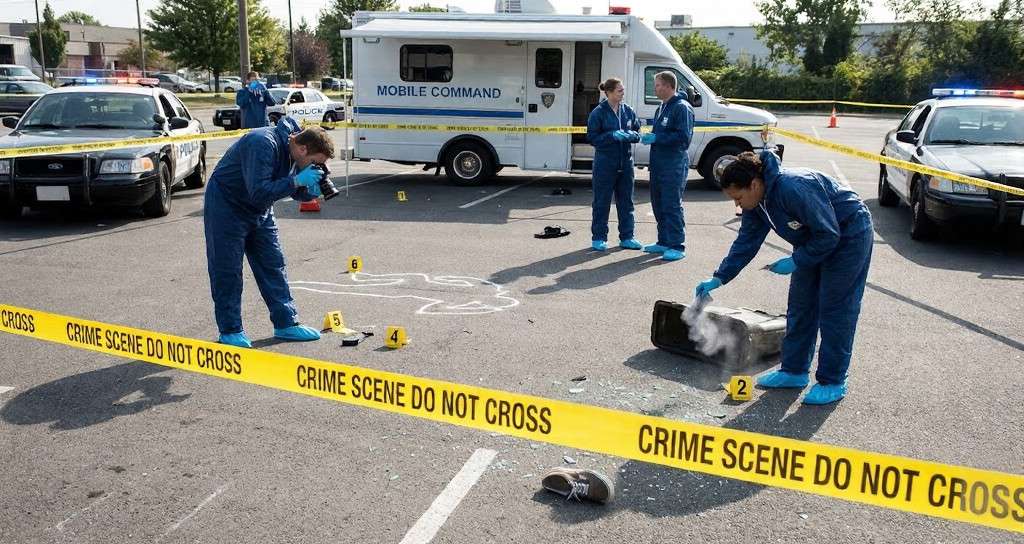
When you’re facing violent crime charges in Downey, California, the stakes couldn’t be higher. A conviction can result in decades behind bars, permanent criminal records, and life-altering consequences that extend far beyond the courtroom. Whether you’re dealing with assault charges, domestic violence allegations, or more serious accusations, you need an experienced criminal defense attorney who understands both California law and the unique dynamics of the Los Angeles County court system.
At Tu Defensor Criminalista, we provide aggressive, strategic defense representation for clients throughout Downey and the surrounding communities. Our firm focuses exclusively on criminal defense, giving us the specialized knowledge and courtroom experience necessary to challenge even the most serious violent crime charges.
Free Confidential Consultation: (888) 315-3326 | Available 24/7 | Hablamos Español
California law categorizes violent crimes as offenses involving the use of force or the threat of force against another person. These charges are prosecuted aggressively in Los Angeles County, where district attorneys often pursue maximum penalties and allocate significant resources to securing convictions. The California Department of Justice reports thousands of violent crime arrests annually across the state, with Los Angeles County accounting for a significant portion of these cases due to its large population and urban density.
Violent crime charges carry some of the harshest penalties in the California Penal Code. Beyond immediate incarceration—which can range from months in county jail to life in state prison depending on the offense—a conviction can trigger California’s Three Strikes Law, potentially doubling or even tripling sentences for future offenses. Strike offenses remain on your record permanently and create cascading consequences that extend far beyond your prison sentence.
The collateral consequences of violent crime convictions are severe and long-lasting. A conviction creates permanent barriers to employment, as most employers conduct criminal background checks and view violent offenses as disqualifying for positions requiring trust, responsibility, or interaction with the public. Housing opportunities become limited, as landlords routinely reject applicants with violent crime convictions. Professional licensing boards in fields such as healthcare, education, law, real estate, and skilled trades often deny licenses to applicants with violent crime histories or revoke existing licenses upon conviction.
Additionally, violent crime convictions can affect immigration status for non-citizens, potentially leading to deportation or inadmissibility. Gun rights are permanently revoked under both California and federal law. Custody and visitation rights in family court proceedings may be restricted or denied. Educational opportunities, including financial aid eligibility and admission to certain programs, can be jeopardized.
Understanding what you’re up against—both the immediate criminal penalties and the long-term collateral consequences—is the first step toward mounting an effective defense and protecting your future.
Our legal team defends clients against the full spectrum of violent crime allegations, including:
Assault and Battery Offenses
Assault charges in California don’t require actual physical contact. Under California Penal Code Section 240, assault is defined as an unlawful attempt, coupled with present ability, to commit a violent injury on another person. Battery, covered under Penal Code Section 242, involves any willful and unlawful use of force or violence upon another person. In Downey, these charges frequently arise from bar altercations, domestic disputes, and street confrontations.
Simple assault is typically charged as a misdemeanor, carrying up to six months in county jail and fines up to $1,000. However, aggravating factors can elevate the charge to aggravated assault under Penal Code Section 245, a felony that carries two to four years in state prison. When assault involves a deadly weapon or force likely to produce great bodily injury, prosecutors pursue enhanced penalties that can dramatically increase potential prison time.
Domestic violence cases present unique challenges in Downey’s legal landscape. California Penal Code Section 273.5 criminalizes corporal injury to a spouse or cohabitant, while Penal Code Section 243(e)(1) addresses domestic battery. According to the California Attorney General’s Office[1], domestic violence arrests remain prevalent throughout Los Angeles County, with law enforcement agencies required to make arrests when probable cause exists.
These cases often involve conflicting accounts, he-said-she-said scenarios, and alleged victims who later wish to recant their statements. Prosecutors in Los Angeles County pursue domestic violence charges even when the alleged victim doesn’t want to press charges, making experienced legal representation essential for protecting your rights and freedom.
Robbery
Robbery charges under California Penal Code Section 211 involve taking personal property from someone’s immediate presence through force or fear. Unlike theft, robbery is always a felony in California because of the violent or threatening nature of the offense. First-degree robbery, which includes robberies of inhabited dwellings, taxi drivers, and ATM users, carries three to nine years in state prison. Second-degree robbery brings two to five years in prison.
In Downey and throughout Los Angeles County, robbery charges frequently stem from misidentification, false accusations, or situations where defendants assert they had a legitimate claim to the property. Our defense strategies often focus on challenging the prosecution’s evidence, questioning witness identifications, and presenting alternative explanations for the alleged incident.
Homicide charges represent the most serious allegations in California’s criminal justice system. Murder charges under Penal Code Section 187 carry 25 years to life for first-degree murder and 15 years to life for second-degree murder. Voluntary manslaughter, defined under Penal Code Section 192(a), involves killings committed in the heat of passion or based on unreasonable self-defense beliefs, carrying four to eleven years in prison.
These cases demand meticulous investigation, expert witness testimony, and sophisticated legal arguments. Our firm works with forensic specialists, medical experts, and investigators to challenge the prosecution’s theory of the case and explore all potential defenses, including self-defense, defense of others, accident, or lack of intent.
Gang-Related Violent Crimes
California’s gang enhancement laws add significant prison time to violent crime convictions. Under Penal Code Section 186.22, committing a felony for the benefit of a criminal street gang can add two to fifteen years to a sentence, depending on the underlying offense. In Downey, where gang activity has historically been present in certain neighborhoods, prosecutors frequently pursue gang enhancements even in cases with questionable gang connections.
We challenge gang allegations by scrutinizing the evidence used to establish gang membership, questioning the validity of gang expert testimony, and demonstrating that alleged gang connections are overstated or fabricated. Successfully defeating a gang enhancement can reduce your potential sentence by years or even decades.
Many violent crime prosecutions in Downey involve weapons charges that compound the legal jeopardy defendants face. Carrying a concealed firearm, possession of prohibited weapons, and using a firearm during the commission of a felony all carry serious penalties. California’s 10-20-Life law imposes mandatory minimum sentences for gun use during violent crimes: ten years for gun use, twenty years for firing a gun, and twenty-five years to life for causing great bodily injury or death with a firearm.
These enhancements are consecutive to the underlying offense, meaning they add years to your sentence rather than running concurrently. Challenging weapons allegations and gun enhancements requires detailed knowledge of California’s complex firearms laws and the ability to identify Fourth Amendment violations that might lead to evidence suppression.
Violent crime cases differ fundamentally from other criminal matters. The evidence often includes crime scene forensics, medical reports, surveillance footage, and witness testimony that requires specialized knowledge to effectively challenge. Prosecutors assign their most experienced deputy district attorneys to these cases and devote substantial resources to securing convictions.
The Los Angeles County District Attorney’s Office[2] employs hundreds of prosecutors who handle thousands of violent crime cases annually. They have relationships with law enforcement, access to investigative resources, and political pressure to maintain high conviction rates. Without equally skilled defense representation, defendants face overwhelming odds.
Physical evidence plays a crucial role in violent crime prosecutions. DNA analysis, fingerprints, ballistics reports, and forensic pathology can all become pivotal issues at trial. Our legal team works with independent forensic experts who can identify flaws in the prosecution’s scientific evidence, challenge chain of custody procedures, and present alternative interpretations of forensic findings.
Digital evidence has become increasingly important in modern prosecutions. Cell phone records, social media posts, surveillance camera footage, and GPS data can all be used to establish timelines, locations, and intent. We scrutinize this evidence for authenticity, challenge improper collection methods, and use technology to demonstrate inconsistencies in the prosecution’s timeline.
Witness testimony presents both challenges and opportunities. Eyewitness identifications are notoriously unreliable, as demonstrated by decades of psychological research. We challenge witness credibility through cross-examination, highlight inconsistencies in statements, and present expert testimony on the limitations of human memory and perception.
Your constitutional rights provide powerful defenses against violent crime charges. The Fourth Amendment protects against unreasonable searches and seizures, meaning evidence obtained through illegal searches must be suppressed. If police violated your rights when collecting evidence, that evidence cannot be used against you, potentially destroying the prosecution’s case.
The Fifth Amendment protects your right against self-incrimination. Statements made during custodial interrogation without proper Miranda warnings must be excluded. We carefully review interrogation videos and police reports to identify violations of your Miranda rights and file motions to suppress illegally obtained statements.
The Sixth Amendment guarantees your right to confront witnesses against you. This means prosecutors must produce witnesses for cross-examination, creating opportunities to expose weaknesses in their testimony and raise reasonable doubt in jurors’ minds.
Understanding what to expect as your case progresses through the Los Angeles County court system helps reduce anxiety and enables you to make informed decisions about your defense strategy.
Violent crime arrests in Downey typically involve Downey Police Department officers, though the Los Angeles County Sheriff’s Department and California Highway Patrol may also make arrests depending on where the alleged offense occurred. Following arrest, you’ll be transported to the Downey Police Department for booking, where officers will photograph you, take fingerprints, and conduct a criminal history check.
For serious violent crimes, bail is often set at high amounts or denied entirely. The Los Angeles County Superior Court[3] maintains a bail schedule that establishes presumptive bail amounts based on charges, but judges have discretion to deviate from the schedule based on public safety concerns and flight risk.
Your first court appearance, called an arraignment, typically occurs within 48 hours of arrest if you’re in custody. At the Downey Courthouse, located within the Southeast District of Los Angeles County Superior Court, you’ll be formally advised of the charges against you and asked to enter a plea. This is also when the court addresses bail.
Having an attorney at your arraignment is crucial. We can argue for reduced bail, challenge the sufficiency of the complaint, and begin negotiations with prosecutors. Never discuss your case with anyone except your attorney, as anything you say can be used against you.
For felony violent crime charges, you’re entitled to a preliminary hearing within ten court days if you’re in custody, or sixty days if you’re out on bail. At this hearing, prosecutors must present sufficient evidence to convince a judge that there’s probable cause to believe you committed the charged offenses.
The preliminary hearing provides valuable opportunities to assess the prosecution’s case, cross-examine key witnesses under oath, and lock them into testimony that can be used later at trial. Many violent crime cases are reduced or dismissed following preliminary hearings when judges find insufficient evidence to support the charges.
The pretrial phase involves extensive motion practice and plea negotiations. We file motions to suppress evidence, dismiss charges, challenge gang enhancements, and exclude inadmissible testimony. These motions can significantly weaken the prosecution’s case and create leverage for favorable plea agreements.
Plea negotiations in violent crime cases require careful consideration of the risks and benefits. While prosecutors may offer reduced charges or lighter sentences in exchange for guilty pleas, accepting a deal means giving up your right to trial and living with a criminal conviction. We thoroughly analyze the strength of the prosecution’s case, identify weaknesses that could lead to acquittal, and advise you on whether going to trial or accepting a plea serves your best interests.
If your case proceeds to trial, you’ll face either a jury of twelve Los Angeles County residents or a bench trial before a judge. Violent crime trials are complex undertakings that can last days or weeks, involving opening statements, witness examination, expert testimony, and closing arguments.
Our trial experience includes hundreds of violent crime cases throughout Los Angeles County. We know how to select favorable jurors, present compelling opening statements, conduct devastating cross-examinations, and deliver closing arguments that create reasonable doubt. We prepare every case as if it will go to trial, ensuring we’re ready to fight for your freedom in court.
If convicted, sentencing in violent crime cases involves complex calculations under California’s Determinate Sentencing Law. Judges consider the base term for your offense, any enhancements (such as prior convictions, weapon use, or great bodily injury), and aggravating or mitigating factors that might justify upper or lower terms.
We present comprehensive sentencing mitigation packages that highlight your positive qualities, family ties, employment history, and potential for rehabilitation. Character letters, evidence of community involvement, and expert testimony can persuade judges to impose lighter sentences than prosecutors request.
Every violent crime case presents unique facts that require customized defense strategies. Our approach begins with thorough investigation and case analysis, identifying every potential defense and weakness in the prosecution’s case.
California law recognizes the right to use reasonable force to defend yourself or others from imminent harm. Under California’s self-defense laws, you can use force reasonably necessary to prevent bodily injury to yourself or another person. You don’t have a duty to retreat before using force, and you can stand your ground if you reasonably believe you’re in danger.
Successful self-defense claims require evidence that you reasonably believed you or someone else faced imminent danger of suffering bodily injury, you reasonably believed immediate use of force was necessary to defend against that danger, and you used no more force than reasonably necessary. We reconstruct the incident through witness interviews, surveillance footage, and expert testimony to demonstrate your actions were justified.
Many violent crimes require specific criminal intent. Murder charges require malice aforethought, while robbery requires intent to permanently deprive someone of property. If the prosecution cannot prove you acted with the required mental state, you cannot be convicted of the charged offense.
We challenge intent through evidence showing the incident was accidental, that you lacked knowledge of critical facts, or that you didn’t act with the purpose required for conviction. In some cases, lack of intent may result in complete acquittal or conviction of lesser offenses with significantly reduced penalties.
Misidentifications occur with alarming frequency in violent crime cases. Witnesses viewing traumatic events often make mistakes about physical characteristics, clothing, and other identifying features. Cross-racial identifications are particularly unreliable, as psychological research demonstrates.
We challenge identifications through expert testimony on memory and perception, alibi evidence showing you were elsewhere when the crime occurred, and inconsistencies between witness descriptions and your actual appearance. When appropriate, we file motions to exclude unduly suggestive identification procedures that violate due process.
Some violent crime allegations are entirely fabricated. Domestic violence accusations may arise from custody disputes or relationship conflicts. Assault allegations might stem from arguments where the alleged victim was the actual aggressor and seeks to avoid prosecution. Financial motivations, revenge, and mental health issues can all lead to false reports.
We investigate accusers’ backgrounds, identify motives to lie, and expose contradictions in their accounts. Phone records, social media posts, and witness testimony can demonstrate that allegations are fabricated or exaggerated.
Evidence obtained through illegal searches, coerced confessions, or other constitutional violations must be suppressed. If police lacked probable cause for your arrest, conducted a search without a warrant or valid exception, or interrogated you without proper Miranda warnings, the resulting evidence cannot be used against you.
We file comprehensive suppression motions citing applicable case law and constitutional provisions. Successfully suppressing key evidence often results in case dismissal or dramatically improved plea offers.
A violent crime conviction creates lifelong consequences that extend far beyond incarceration. Understanding these collateral consequences underscores the importance of fighting charges aggressively.
Violent crime convictions appear on criminal background checks conducted by employers, landlords, professional licensing boards, and educational institutions. Many employers refuse to hire individuals with violent crime convictions, particularly for positions involving vulnerable populations, security clearances, or fiduciary responsibilities.
Housing providers routinely deny rental applications from individuals with violent crime histories, making it difficult to secure safe, affordable housing after release. Professional licenses for fields like healthcare, education, law, and finance may be denied or revoked based on violent crime convictions.
For non-citizens, violent crime convictions can trigger deportation, bars to naturalization, and inadmissibility for re-entry to the United States. Many violent crimes qualify as aggravated felonies under federal immigration law, making deportation virtually certain and eliminating most forms of relief.
We work with immigration attorneys to identify immigration-safe dispositions that avoid deportation consequences. Even when conviction is unavoidable, certain plea agreements can preserve your ability to remain in the United States or pursue immigration relief.
California law prohibits convicted felons from owning or possessing firearms. Certain misdemeanor violent crime convictions also trigger ten-year firearm prohibitions. For clients whose professions require firearm possession or who value their Second Amendment rights, preserving gun rights becomes a critical consideration in plea negotiations.
California’s Three Strikes Law imposes mandatory minimum sentences on defendants with prior serious or violent felony convictions. A second strike doubles your sentence for the current offense, while a third strike brings twenty-five years to life in prison. Many violent crimes qualify as strike offenses, making it essential to avoid strike convictions whenever possible.
We negotiate aggressively to reduce strike offenses to non-strike crimes or to have strike allegations dismissed. When prior strikes exist, we file Romero motions asking judges to dismiss prior strikes in the interests of justice.
When you’re facing violent crime charges in Downey, your choice of attorney may be the most important decision you make. Our firm brings specialized knowledge, extensive trial experience, and unwavering commitment to every case we handle.
Unlike general practice firms that handle divorces, personal injury, and business law alongside criminal cases, we focus exclusively on criminal defense. This specialization means we stay current on the latest developments in criminal law, maintain relationships with prosecutors and judges, and possess the courtroom skills that come from trying cases regularly.
Our attorneys attend continuing legal education programs focused on criminal defense, participate in professional organizations like the California Public Defenders Association, and study emerging defense strategies and appellate decisions that could benefit our clients.
We’ve successfully defended clients against murder charges, armed robbery allegations, gang-related violence, and every type of violent crime prosecuted in Los Angeles County. Our case results include dismissed charges, not guilty verdicts, reduced charges, and favorable plea agreements that preserve our clients’ freedom and futures.
While every case is unique and past results don’t guarantee future outcomes, our experience handling complex violent crime cases provides the foundation for effective representation.
We don’t rely on police reports and prosecution evidence to defend our clients. Our investigative approach includes interviewing witnesses, visiting crime scenes, obtaining surveillance footage, consulting forensic experts, and developing evidence that supports your defense.
We retain experts in forensics, psychology, use of force, gang culture, and other relevant fields to challenge prosecution evidence and present alternative explanations for alleged events. This investment in case preparation often makes the difference between conviction and acquittal.
You’re not a case number at our firm. We limit our caseload to ensure every client receives the personalized attention their case deserves. You’ll have direct access to your attorney, receive regular updates on case developments, and participate in all major decisions affecting your defense strategy.
We explain legal concepts in plain language, answer your questions thoroughly, and ensure you understand the proceedings and options available to you. Criminal charges create enormous stress for defendants and their families, and we’re committed to making the process as manageable as possible.
We provide legal services in both English and Spanish, ensuring language barriers don’t prevent effective communication. Legal proceedings involve complex terminology and procedures, and understanding every aspect of your case in your preferred language is essential for making informed decisions.
Our bilingual staff can communicate with family members, translate documents, and ensure Spanish-speaking clients receive the same quality representation as English speakers.
Downey is a city of approximately 110,000 residents located in southeastern Los Angeles County. The city’s proximity to major highways, including Interstate 5, Interstate 105, and Interstate 710, makes it a transportation hub with unique law enforcement challenges.
The Downey Police Department serves the city with approximately 140 sworn officers who patrol neighborhoods, respond to emergency calls, and investigate criminal activity. According to the Federal Bureau of Investigation’s Uniform Crime Reporting Program[4], violent crime rates fluctuate annually based on various social and economic factors.
Downey’s diverse population includes significant Latino, Asian, and multi-ethnic communities. This diversity enriches the city but can also create cultural misunderstandings that escalate into criminal allegations. Language barriers, cultural differences in conflict resolution, and varying relationships with law enforcement all influence how violent crime cases develop and proceed through the court system.
Violent crime cases from Downey are prosecuted in the Los Angeles County Superior Court system. The Southeast District courthouse handles many cases originating in Downey and surrounding communities. The courthouse’s location and procedures significantly impact case strategy, as familiarity with local judges, prosecutors, and court staff provides advantages during negotiations and trial.
Los Angeles County operates the nation’s largest court system, with dozens of courthouses handling hundreds of thousands of criminal cases annually. Understanding how to navigate this massive system, knowing which judges are assigned to which courtrooms, and maintaining professional relationships with courthouse personnel all contribute to effective representation.
Downey offers various community resources that can support defendants during criminal proceedings and help demonstrate rehabilitation efforts to courts. The city’s parks and recreation programs, employment services, counseling centers, and faith-based organizations provide opportunities to show positive community ties and commitment to rehabilitation.
For domestic violence cases, anger management programs, substance abuse treatment, and family counseling can demonstrate your commitment to addressing underlying issues. Courts view participation in these programs favorably, particularly during sentencing.
If you’ve been arrested or are under investigation for a violent crime in Downey, every moment counts. The actions you take immediately following allegations can significantly impact your case outcome.
First, exercise your constitutional rights. Do not speak to police without an attorney present, regardless of what officers promise or threaten. Do not consent to searches of your home, vehicle, or electronic devices. Anything you say can and will be used against you, and cooperating with police rarely results in better treatment by prosecutors.
Second, contact an experienced criminal defense attorney immediately. Early intervention allows your attorney to preserve evidence, interview witnesses while memories are fresh, and potentially prevent charges from being filed. If charges have already been filed, immediate legal representation ensures your rights are protected at every stage of the proceedings.
Third, document everything related to your case. Write down your recollection of events while details are fresh, identify potential witnesses, and preserve any physical evidence or electronic records that might support your defense. Do not discuss your case on social media or with anyone other than your attorney.
Fourth, comply with all court orders and bail conditions. Missing court appearances or violating protective orders creates additional legal problems and can result in your bail being revoked. If you’re struggling to comply with court requirements, inform your attorney so they can seek modifications.
Finally, be patient and trust the legal process. Violent crime cases often take months or years to resolve as your attorney files motions, conducts discovery, and prepares for trial. While uncertainty is stressful, rushing to accept unfavorable plea agreements simply to resolve the case quickly can result in consequences you’ll regret for life.
No. Exercise your right to remain silent and request an attorney immediately. Police are trained interrogators who use sophisticated techniques to elicit incriminating statements. Nothing you say will convince them not to arrest you, and your statements will be used against you in court. Politely decline to answer questions and ask for your lawyer.
Prosecutors can proceed with domestic violence charges even when the alleged victim doesn’t cooperate. California law allows prosecutors to use hearsay statements, 911 calls, and photographs as evidence without the victim’s testimony. However, cases are more difficult to prove without victim cooperation, creating opportunities for dismissal or favorable plea agreements.
Assault is an attempt to commit a violent injury on someone, while battery is the actual use of force or violence. You can be convicted of assault even if you never made physical contact with the alleged victim, as long as you had the present ability to commit injury and took a direct step toward doing so.
If you have prior serious or violent felony convictions, the Three Strikes Law significantly increases your sentence. A second strike doubles your sentence, while a third strike brings an automatic sentence of twenty-five years to life. Many violent crimes qualify as strike offenses, making it crucial to avoid strike convictions.
Self-defense claims are more complicated when you were the initial aggressor, but they’re not automatically barred. If you attempted to stop fighting and communicated that intent, or if the other person escalated the confrontation beyond what you initiated, you may still have valid self-defense claims. Each case depends on specific facts.
Gang enhancements add two to fifteen years to your sentence if prosecutors prove you committed a felony for the benefit of a criminal street gang. These enhancements are extremely serious and are often based on questionable evidence like clothing, tattoos, or associations. Challenging gang allegations is critical to avoiding decades of additional prison time.
Many violent crimes are felonies that carry state prison sentences. However, some violent crimes can be charged as misdemeanors or reduced to misdemeanors, potentially resulting in county jail time or probation instead of prison. Your criminal history, the specific facts of your case, and the quality of your legal representation all influence sentencing outcomes.
Violent crime convictions remain on your criminal record permanently unless expunged or sealed. Felony convictions typically cannot be expunged in California, though some can be reduced to misdemeanors and then expunged. Recent changes to California law allow some felony convictions to be sealed after completing your sentence, but violent felonies often don’t qualify.
Contact an experienced criminal defense attorney immediately, even before charges are filed. Do not contact the accuser or attempt to resolve the matter yourself, as this can be used against you. Document everything related to the allegations, preserve evidence that supports your innocence, and identify witnesses who can corroborate your account.
California law allows prosecutors to transfer certain serious violent crime cases from juvenile court to adult court for defendants who were fourteen or older when they committed the offense. However, recent reforms have limited direct filing and made it more difficult to try juveniles as adults. Juvenile cases require specialized defense strategies focused on rehabilitation rather than punishment.
Forensic evidence like DNA, fingerprints, ballistics, and blood spatter analysis often plays a crucial role in violent crime prosecutions. However, forensic science isn’t infallible, and expert witnesses can disagree about evidence interpretation. We retain independent experts to review prosecution forensic evidence and identify flaws or alternative explanations.
Legal fees for violent crime defense vary based on case complexity, charges faced, and whether the case goes to trial. We offer consultations to discuss your case and provide transparent fee information. Given the severity of violent crime charges and their life-altering consequences, investing in experienced legal representation is essential.
Violating bail conditions can result in your bail being revoked and additional criminal charges. Common violations include failing to appear in court, contacting protected parties, or committing new offenses. If you’re struggling to comply with bail conditions, contact your attorney immediately to address the situation before a violation is filed.
Some violent crimes are eligible for probation, though courts are generally reluctant to grant probation in serious cases. Factors like your criminal history, the severity of injuries, weapon use, and victim vulnerability all influence probation eligibility. Your attorney can present mitigation evidence and argue for probation when appropriate.
Remember:
Attorney Armando Josué Cespedes is rated 5.0 on Avvo, with 34 five-star reviews from clients praising his dedication, professionalism, and results. Many note how his trial skills and attention to detail led to reduced charges or outright dismissals.



 English English
 Español de México English English Español de México
Thank you! We need your help. Would you share your experience on one of these sites?
If you have concerns you wish to address privately
