Expert Defense Against Prohibited Weapons, Illegal Possession & Weapon Enhancement Charges in Downey, South Gate, Norwalk, Bellflower & All Los Angeles County
Facing weapon crimes charges in Downey, California can feel overwhelming and terrifying. The stakes are incredibly high – your freedom, your future, your family, and your constitutional rights all hang in the balance. Whether you’re dealing with accusations involving illegal possession of weapons, brandishing charges, assault with a deadly weapon, or violations of California’s increasingly complex weapons laws, you need an experienced criminal defense attorney who knows how to fight for your rights in Los Angeles County courts.
At Tu Defensor Criminalista, we provide aggressive, strategic defense representation for clients facing all types of weapon-related criminal charges in Downey and throughout Los Angeles County. Our firm understands that being charged with a weapons offense doesn’t make you a criminal – it makes you someone who needs experienced legal representation to protect your rights and your future.
Free Confidential Consultation: (888) 315-3326 | Available 24/7 | Hablamos Español
Understanding Weapon Crimes in Downey, California
Downey, a vibrant city of approximately 111,000 residents located in southeastern Los Angeles County according to U.S. Census Bureau data, operates under some of the strictest weapons laws in the United States. Situated just minutes from downtown Los Angeles and neighboring communities like South Gate, Norwalk, Bellflower, and Pico Rivera, Downey residents are subject to California’s comprehensive and often confusing weapons regulations that create criminal liability for conduct that would be entirely legal in most other states.
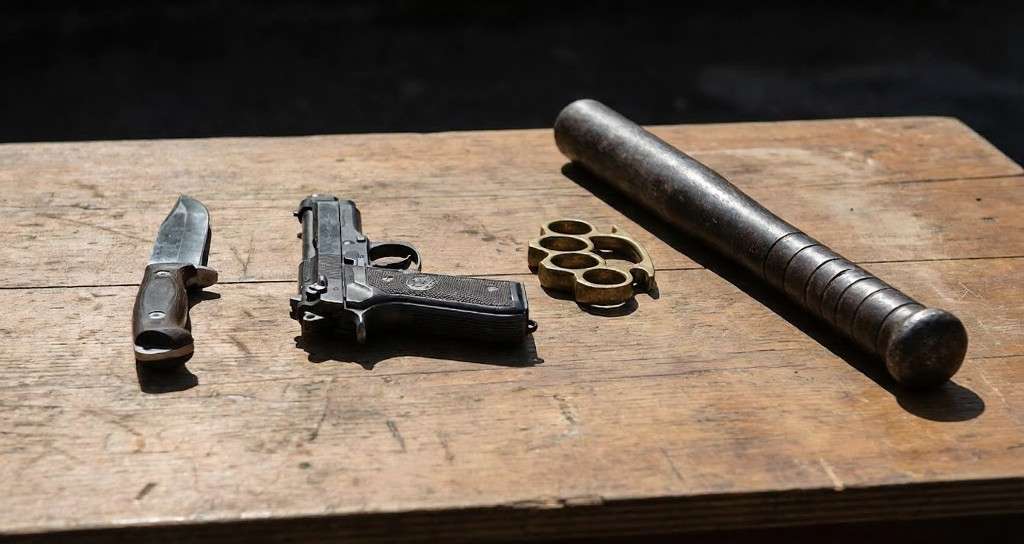
California’s weapons statutes extend far beyond firearms to include knives with certain blade lengths or characteristics, brass knuckles, blackjacks, billy clubs, sandbags, saps, slungshots, tasers and stun guns (in certain contexts), certain martial arts weapons including nunchucks and shuriken, ballistic knives, lipstick case knives, cane swords, belt buckle knives, undetectable knives, writing pen knives, air gauge knives, metal knuckles, leaded canes, zip guns, wallet guns, explosive substances, grenades, ammunition designed to penetrate metal or armor, and numerous other items that can be classified as deadly, dangerous, or prohibited weapons under various Penal Code sections.
The complexity and breadth of California weapons laws mean that ordinary citizens—people with no criminal intent whatsoever—can find themselves facing serious criminal charges for possessing items they didn’t realize were illegal, carrying weapons in locations where possession is prohibited, or engaging in conduct they didn’t understand violated the law. This is particularly true for collectors, hobbyists, martial artists, and individuals who possess items for self-defense without understanding California’s restrictive regulations.
Law-abiding residents moving from other states are particularly vulnerable to weapons charges, as California’s weapons restrictions far exceed those of most other jurisdictions. Items legally purchased and possessed in Nevada, Arizona, Texas, or other states may constitute serious criminal violations the moment they cross into California. What would be considered a constitutional right to bear arms in many states can result in felony prosecution in California.
Furthermore, California’s weapons laws are constantly evolving through new legislation, making it difficult even for knowledgeable individuals to stay current on what is legal and what is prohibited. Regulations regarding assault weapons, magazine capacity, ammunition purchases, concealed carry permits, and transportation of firearms have all undergone significant changes in recent years, creating confusion and increasing the likelihood of inadvertent violations.
Weapon crimes encompass a broad spectrum of offenses under the California Penal Code, ranging from simple misdemeanors punishable by county jail time to serious violent felonies carrying decades in state prison. Charges can include illegal possession of prohibited weapons, carrying concealed firearms without a permit, carrying loaded firearms in public, possession of firearms by prohibited persons (felons, domestic violence offenders, individuals subject to restraining orders), possession of assault weapons, manufacturing or selling illegal weapons, bringing weapons onto school grounds or government buildings, brandishing weapons, discharging firearms in public, and using weapons during the commission of other crimes, which can add significant sentencing enhancements.
Understanding the specific charges you face—including the exact Penal Code sections violated, whether charges are misdemeanors or felonies, what penalties you’re facing, what defenses may be available, and what collateral consequences a conviction would trigger—is essential to mounting an effective defense and protecting your future, your freedom, and your rights.
Types of Weapon Crimes We Defend in Downey
Illegal Possession of Firearms: California Penal Code Section 29800 prohibits certain categories of people from owning or possessing firearms, including individuals with felony convictions, those with domestic violence convictions, people subject to restraining orders, and individuals with specific mental health determinations. These charges can result in felony prosecution with serious consequences.
Carrying a Concealed Weapon: Under Penal Code Section 25400, carrying a concealed firearm on your person or in a vehicle without a valid California CCW permit constitutes a crime. In Los Angeles County, CCW permits are notoriously difficult to obtain, making these charges common during traffic stops and pedestrian encounters with law enforcement.
Carrying a Loaded Firearm in Public: Penal Code Section 25850 criminalizes carrying loaded firearms in public places or in vehicles while in public areas. This charge frequently arises during traffic stops in Downey when officers discover loaded weapons in vehicles.
Brandishing a Weapon: Penal Code Section 417 makes it illegal to draw or exhibit a deadly weapon in a rude, angry, or threatening manner, or to use a weapon in a fight or quarrel. Even if you possessed the weapon legally, how you displayed it can result in criminal charges.
Assault with a Deadly Weapon: Under Penal Code Section 245(a)(1), assault with a deadly weapon is a serious felony. This charge can involve firearms, knives, clubs, vehicles, or any object capable of producing great bodily injury or death. The consequences include lengthy prison sentences and permanent criminal records.
Possession of Prohibited Weapons: California law prohibits various weapons beyond firearms, including switchblades over 2 inches, metal knuckles, nunchakus, shurikens (throwing stars), cane swords, zip guns, and numerous other items defined in Penal Code Sections 16590 and related statutes.
Possession of a Dirk or Dagger: Penal Code Section 21310 criminalizes the concealed carry of dirks and daggers, which California defines broadly to include many fixed-blade knives and even some folding knives depending on how they’re carried.
Weapons at School or Government Buildings: Enhanced penalties apply to possession of weapons in school zones, government buildings, airports, and other sensitive locations under various Penal Code sections.
Felon in Possession of Ammunition: Beyond prohibiting firearm possession, California Penal Code Section 30305 makes it illegal for convicted felons and other prohibited persons to possess ammunition, even without possessing an actual firearm.
Manufacturing or Selling Illegal Weapons: Involvement in the manufacture, sale, or distribution of prohibited weapons can result in serious felony charges under California law.
Possession of Assault Weapons: California maintains strict assault weapons bans under Penal Code Sections 30600-30750, and possession of unregistered assault weapons can result in felony prosecution.
Weapons Enhancements: Beyond standalone weapons charges, California law provides for sentence enhancements when weapons are used in the commission of other crimes, dramatically increasing potential punishment under Penal Code Sections 12022, 12022.5, and 12022.53.
Weapons Trafficking: Engaging in the illegal sale, transfer, or transportation of weapons, particularly across state or international borders, can result in both state and federal charges with mandatory minimum sentences.
Discharge of a Firearm: Penal Code Section 246 criminalizes shooting at inhabited dwellings or occupied vehicles, while Section 246.3 addresses grossly negligent discharge of firearms. Both offenses carry serious penalties.
Possession of Destructive Devices: California law strictly regulates explosive devices, grenades, bombs, and similar destructive devices under Penal Code Section 18710 and related statutes.
The Severe Consequences of Weapon Crime Convictions in California
Weapon crime convictions carry life-altering consequences that extend far beyond any jail or prison sentence. California prosecutors and judges take weapons offenses extremely seriously, and the penalties reflect this severity. Understanding what you’re facing helps illustrate why experienced legal representation is absolutely essential.
Criminal Penalties
State Prison Sentences: Felony weapon convictions can result in sentences ranging from 16 months to several years in California state prison. Violent weapons offenses like assault with a deadly weapon can result in sentences of two, three, or four years, or even longer depending on circumstances and enhancements. The California Department of Corrections and Rehabilitation[1] houses thousands of inmates serving time for weapons-related offenses.
County Jail Time: Misdemeanor weapon crimes and some felonies sentenced under California’s realignment legislation can result in county jail sentences up to one year, though many cases involve shorter periods.
Substantial Fines: Financial penalties for weapons crimes can reach $10,000 or more for felonies, creating significant economic hardship beyond incarceration costs.
Probation with Strict Conditions: Even when incarceration is avoided or minimized, probation conditions can be highly restrictive, including warrantless search conditions, mandatory counseling, community service, employment requirements, and prohibitions on associating with certain people or visiting certain locations.
Mandatory Minimum Sentences: Some weapons offenses carry mandatory minimum sentences that judges cannot reduce, regardless of mitigating circumstances.
Sentencing Enhancements That Dramatically Increase Punishment
California’s sentencing enhancement statutes can add years or even decades to base sentences in weapons cases:
Personal Use of a Firearm: Under Penal Code Section 12022.5, personally using a firearm during certain felonies adds 3, 4, or 10 years to the base sentence depending on the underlying offense.
10-20-Life Law: Penal Code Section 12022.53 imposes severe enhancements for firearm use during serious felonies: 10 years for use, 20 years for discharge, and 25 years to life for causing great bodily injury or death.
Gang Enhancements: When weapons offenses are committed for the benefit of criminal street gangs, Penal Code Section 186.22 enhancements can add 2 to 10 years or more to sentences.
Prior Serious Felony Convictions: California’s Three Strikes Law means weapon crime convictions can count as strikes, and defendants with prior strikes face doubled sentences or even 25 years to life for third strikes.
Great Bodily Injury Enhancements: Penal Code Section 12022.7 adds 3 to 6 years for inflicting great bodily injury during felonies, commonly alleged in weapons assault cases.
Permanent Loss of Rights
Firearm Rights: Weapon crime convictions typically result in loss of the right to own, possess, or purchase firearms under California and federal law. This prohibition can be temporary for some misdemeanors but is often lifetime for felonies.
Voting Rights: Felony convictions result in loss of voting rights while incarcerated and on parole in California, though rights are restored upon completion of parole.
Professional Licensing: Many professional licenses in fields like healthcare, real estate, security, education, and others can be revoked or denied based on weapons convictions.
Jury Service: Convicted felons cannot serve on juries in California.
Immigration Consequences for Non-Citizens
For non-citizens, weapons convictions can be catastrophic:
Deportation: Many weapons offenses qualify as aggravated felonies or crimes involving moral turpitude under immigration law, making deportation mandatory regardless of how long you’ve lived in the United States or your family ties.
Inadmissibility: Weapons convictions can make you inadmissible to the United States, preventing re-entry if you leave the country.
Bars to Naturalization: Criminal convictions, particularly weapons offenses, can prevent you from becoming a U.S. citizen.
According to U.S. Immigration and Customs Enforcement[2] data, thousands of individuals face deportation annually for criminal convictions, with weapons offenses among the most serious triggers.
Collateral Consequences That Affect Every Aspect of Life
Employment Difficulties: Criminal background checks reveal weapons convictions to potential employers, making it difficult to find work. Many industries automatically disqualify applicants with weapons offenses.
Housing Challenges: Landlords frequently deny rental applications from individuals with criminal records. Public housing authorities may deny or terminate housing assistance based on weapons convictions.
Educational Barriers: College admissions and financial aid can be affected by criminal convictions. Some educational programs explicitly exclude individuals with weapons offenses.
Child Custody and Visitation: Family courts consider criminal convictions, particularly weapons offenses, when making custody and visitation determinations. A weapons conviction can limit your time with your children.
Social Stigma: The label of being convicted for a weapons crime carries significant social stigma that affects personal relationships, community standing, and self-esteem.
Financial Consequences: Beyond fines and attorney fees, convictions result in lost wages during incarceration, reduced earning potential due to employment difficulties, and increased insurance costs.
Why Downey Weapon Crime Cases Require Specialized Local Defense
Downey’s unique position in Los Angeles County creates specific challenges and opportunities in weapons crime defense. The city’s demographics, its law enforcement agencies, and the local court system all require specialized knowledge and experience.
Local Law Enforcement and Prosecution
Downey Police Department: Most weapons arrests in Downey are made by the Downey Police Department, which maintains patrol, traffic, and investigative divisions. The department employs approximately 160 sworn officers serving the community, according to city data. Understanding how Downey PD conducts investigations, processes evidence, and documents cases is essential to identifying defense opportunities.
Multi-Agency Collaboration: Downey police work closely with the Los Angeles County Sheriff’s Department, California Highway Patrol for freeway incidents, and federal agencies like the Bureau of Alcohol, Tobacco, Firearms and Explosives (ATF) when cases involve weapons trafficking or federal violations.
Prosecutorial Approach: The Los Angeles County District Attorney’s Office prosecutes weapons crimes aggressively, often filing charges to the maximum extent permitted by law. The DA’s office has specialized units handling weapons offenses and access to extensive investigative resources.
Court System Navigation
Downey Courthouse: Located at 7500 East Imperial Highway, Downey, CA 90242, the Downey Courthouse handles many weapons cases arising in the area. The facility is part of the Los Angeles County Superior Court system, one of the largest unified court systems in the nation.
Los Angeles County Superior Court: According to California Courts[3] annual reports, Los Angeles County Superior Court processes hundreds of thousands of criminal cases annually across numerous courthouse locations. Navigating this massive system requires familiarity with local rules, procedures, and judicial officers.
Judicial Officers: Different judges have different approaches to weapons cases. Experienced local defense attorneys understand judicial tendencies and can tailor arguments and strategies accordingly.
Community and Cultural Context
Downey’s population is diverse, with approximately 71% of residents identifying as Hispanic or Latino according to U.S. Census Bureau[4] data. The city maintains strong working-class and middle-class family values, and effective defense often requires understanding community perspectives on weapons, self-defense, and public safety.
Cultural Competency: Defense attorneys serving Downey must be culturally competent and, ideally, bilingual to effectively represent the community. At Tu Defensor Criminalista, we proudly serve Spanish-speaking clients in their native language.
Common Defenses to Weapon Crimes Charges
Every weapons case is unique, requiring careful analysis of the facts, evidence, and applicable law. At Tu Defensor Criminalista, we thoroughly investigate every case to identify all available defenses and develop comprehensive strategies tailored to your specific situation.
Many weapons cases begin with police encounters during traffic stops, pedestrian stops, or searches of homes or vehicles. The Fourth Amendment to the United States Constitution protects against unreasonable searches and seizures, and California law provides additional protections.
Illegal Traffic Stops: Police must have reasonable suspicion of criminal activity or traffic violations to justify vehicle stops. Stops based on hunches, racial profiling, or pretextual reasons violate constitutional rights.
Unlawful Searches: Even during lawful stops, police cannot search without consent, probable cause, or other legal justification. Many weapons discoveries result from unconstitutional searches that can be challenged through suppression motions.
Lack of Probable Cause for Arrest: Arrests must be supported by probable cause. Arrests based on insufficient evidence or illegal detentions violate constitutional rights.
Illegal Searches of Residences: Home searches require warrants based on probable cause, with limited exceptions for exigent circumstances, consent, or plain view. We scrutinize warrant applications and execution for constitutional defects.
Unlawful Detention and Pat-Downs: Police must have reasonable suspicion that you’re armed and dangerous to conduct pat-down searches. Weapons discovered during illegal detentions or frisks can be suppressed.
When constitutional violations occur, we file motions to suppress evidence. If the weapon was discovered through illegal means, successful suppression often results in case dismissal since prosecutors cannot proceed without the primary evidence.
Lack of Knowledge or Possession
Prosecutors bear the burden of proving you knowingly possessed the weapon. Several defenses challenge this element:
Constructive Possession Challenges: When weapons are found in shared spaces like vehicles or residences, prosecutors must prove you had knowledge of the weapon’s presence and dominion and control over it. We challenge weak circumstantial evidence attempting to link you to weapons found in areas accessible to multiple people.
Lack of Knowledge: You cannot be convicted if you genuinely didn’t know the weapon was present. This defense applies when weapons are hidden in borrowed vehicles, placed in your bag or home by others, or otherwise introduced to your vicinity without your awareness.
Temporary Possession for Safety: California law recognizes limited exceptions for temporary possession when immediately necessary to prevent harm or when turning weapons over to authorities.
Illegal Search and Seizure – Miranda Rights Violations
Miranda Violations: When police conduct custodial interrogations without providing Miranda warnings, resulting statements can be suppressed.
Coerced Confessions: Statements obtained through coercion, threats, or promises cannot be used against you.
Continuation of Interrogation After Invoking Rights: Once you invoke your right to remain silent or request an attorney, police must cease questioning.
Self-Defense and Defense of Others
California law permits the use of reasonable force, including weapons, to defend yourself or others from imminent harm:
Reasonable Fear of Harm: When you reasonably believed you or others faced imminent danger of being killed or suffering great bodily injury, defensive use of weapons may be justified.
Proportionality: The force used must be proportional to the threat faced. We present evidence demonstrating the reasonableness of your actions under the circumstances.
Castle Doctrine: California law provides enhanced protections for defensive actions taken within your home.
Imperfect Self-Defense: Even when self-defense requirements aren’t fully met, imperfect self-defense can reduce charges from murder to manslaughter or from assault with a deadly weapon to simple assault.
Necessity Defense
In rare circumstances, otherwise illegal weapons possession or use may be justified by necessity:
Emergency Circumstances: When immediate threats required weapons possession and legal alternatives were unavailable, necessity may provide a defense.
Prevention of Greater Harm: The necessity defense requires showing that the illegal conduct prevented imminent and greater harm.
Mistaken Identity and Alibi
Witness misidentification contributes to wrongful accusations in weapons cases:
Eyewitness Reliability: We challenge eyewitness identifications using expert testimony on factors affecting perception and memory, particularly in stressful or chaotic situations.
Alibi Evidence: Documentation proving you were elsewhere when the alleged offense occurred can result in case dismissal.
Physical Evidence Inconsistencies: Forensic evidence like fingerprints, DNA, or gunshot residue may contradict witness identifications or circumstantial evidence.
Challenging the Weapon Classification
Some defenses challenge whether the item in question legally qualifies as a prohibited weapon:
Knife Length Disputes: Many knife offenses turn on blade length. Precise measurements and expert testimony can challenge prosecution claims.
Weapon Definition Arguments: California’s weapons statutes sometimes use vague language. Legal arguments can challenge whether items fall within statutory definitions.
Antique or Collector’s Items: Some weapons qualify for exemptions as antiques or collectibles under California law.
Lack of Criminal Intent
Many weapons offenses require specific criminal intent:
Brandishing Defenses: Brandishing charges require proof you displayed the weapon in a rude, angry, or threatening manner. Accidental display or defensive display without threatening manner may not constitute brandishing.
Assault with Deadly Weapon Defenses: Assault requires present ability and intent to commit violent injury. Lack of intent or ability can defeat charges.
Challenging Forensic Evidence
Modern prosecutions often rely on scientific evidence that can be challenged:
Fingerprint Evidence: Partial prints or contaminated evidence may not reliably identify you as the person who handled the weapon.
DNA Evidence: Touch DNA can transfer innocently, and contamination during evidence collection or processing can produce misleading results.
Gunshot Residue: GSR can result from environmental contamination rather than actual firearm discharge.
Ballistics Evidence: Expert review may reveal flaws in firearms examination or bullet trajectory analysis.
Police Misconduct and Credibility Challenges
When police engage in misconduct, credibility challenges can undermine prosecution cases:
Pitchess Motions: We file motions to discover police personnel records revealing prior misconduct, dishonesty, or bias.
Inconsistent Reports: Discrepancies between police reports, testimony, and body camera footage can expose credibility problems.
Planted Evidence: Though rare, evidence planting does occur, and we investigate suspicious circumstances suggesting misconduct.
Procedural Defenses
Technical legal defenses can result in dismissals:
Statute of Limitations: Prosecutions must be filed within specified timeframes.
Speedy Trial Violations: Defendants have constitutional rights to speedy trials, and violations can result in dismissal.
Discovery Violations: Prosecutors must disclose evidence to the defense. Serious discovery violations can result in sanctions including dismissal.
The Defense Process: What Happens After a Weapon Crime Arrest
Understanding the criminal justice process reduces anxiety and enables informed decision-making. At Tu Defensor Criminalista, we guide clients through each stage of their cases.
Arrest and Booking
After arrest for a weapons offense, you’ll be transported to the Downey Police Department for booking, which involves:
Photograph and fingerprinting
Recording of biographical information
Confiscation of personal property
Placement in holding cells pending arraignment or bail
CRITICAL: Exercise your right to remain silent. Do not discuss your case with police, jail staff, or other inmates. Request an attorney immediately.
Bail and Release
Depending on charges and criminal history, you may be released on your own recognizance, required to post bail, or held without bail:
Bail Schedules: Los Angeles County maintains bail schedules setting presumptive bail amounts for various offenses.
Bail Hearings: We can argue for reduced bail or release on your own recognizance by presenting evidence of community ties, employment, and lack of flight risk.
Bail Bondsmen: When cash bail is unaffordable, bail bonds companies can post bail for a non-refundable fee (typically 10% of bail amount).
Arraignment
Your first court appearance is the arraignment, where:
Charges are formally read
You enter a plea (not guilty, guilty, or no contest)
Bail is reviewed
Future court dates are set
We typically enter not guilty pleas at arraignment to preserve all defense options while we investigate and negotiate.
Investigation and Discovery
Thorough investigation is critical to effective defense:
Obtaining Discovery: We obtain all police reports, witness statements, forensic reports, photographs, videos, and other evidence from the prosecution.
Independent Investigation: We conduct our own investigation, including interviewing witnesses, visiting crime scenes, and examining physical evidence.
Expert Consultation: We engage forensic experts, weapons specialists, use-of-force experts, and other professionals to analyze evidence and provide testimony.
Subpoenas for Evidence: We subpoena surveillance footage, cell phone records, and other evidence supporting your defense.
Pre-Trial Motions
Before trial, we file motions designed to strengthen your position:
Motions to Suppress Evidence: Challenging illegally obtained evidence under Fourth, Fifth, and Sixth Amendment grounds.
Pitchess Motions: Seeking police personnel records revealing misconduct or bias.
Motions to Dismiss: Arguing for dismissal based on insufficient evidence, constitutional violations, or procedural defects.
Motions in Limine: Excluding prejudicial evidence from trial.
Motions for Disclosure: Compelling prosecution to disclose additional evidence.
Plea Negotiations
Most criminal cases resolve through negotiation rather than trial. We leverage our investigation and legal research to negotiate favorable outcomes:
Charge Reduction: Negotiating felony charges down to misdemeanors, or serious charges down to lesser offenses.
Sentence Bargaining: Negotiating for probation instead of jail, shorter jail sentences, or alternative sentencing like house arrest or work furlough.
Dismissal of Charges: In cases with strong defenses or weak prosecution evidence, we negotiate complete dismissals.
Diversion Programs: For eligible defendants, we pursue diversion programs that can result in charges being dismissed upon successful completion.
Throughout negotiations, you maintain control. We provide honest assessments of plea offers and trial prospects, but you make final decisions.
Trial
When cases proceed to trial, we provide aggressive representation:
Jury Selection: We carefully select jurors through voir dire questioning, using challenges to remove biased individuals.
Opening Statements: We present compelling narratives that frame evidence favorably and create reasonable doubt.
Cross-Examination: We challenge prosecution witnesses, exposing inconsistencies, biases, and credibility problems.
Defense Case: We present alibi witnesses, expert testimony, and documentary evidence supporting your defense.
Closing Arguments: We synthesize evidence, highlight prosecution’s failure of proof, and argue for acquittal.
California requires unanimous jury verdicts in criminal cases. Creating reasonable doubt in a single juror’s mind can result in acquittal or hung jury.
Sentencing
If conviction occurs, we advocate for minimal sentencing through:
Mitigation Evidence: Presenting evidence of your character, background, circumstances, and rehabilitation.
Sentencing Memoranda: Preparing detailed written arguments for lenient sentencing.
Alternative Sentencing: Arguing for probation, house arrest, work furlough, or treatment programs instead of incarceration.
Post-Conviction Relief
Our representation can extend beyond conviction:
Appeals: Challenging legal errors, constitutional violations, or ineffective assistance of counsel.
Habeas Corpus Petitions: Raising issues not apparent from trial records.
Motions for New Trial: Seeking new trials based on newly discovered evidence or legal errors.
Expungement: Pursuing dismissal and sealing of convictions after successful probation completion.
Why Choose Tu Defensor Criminalista for Downey Weapon Crime Defense
Selecting the right criminal defense attorney is one of your most important decisions when facing weapons charges. Your choice directly impacts your case outcome and your future.
Concentrated Experience in Weapons Crimes
We have focused experience defending weapons charges, which means we understand:
Specific elements prosecutors must prove for each weapons offense
Effective defenses unique to weapons cases
California’s complex weapons laws and regulations
Forensic evidence issues in weapons cases
Federal weapons laws that may intersect with state charges
Proven Track Record in Los Angeles County
We’ve successfully defended numerous clients against weapons charges in Downey and throughout Los Angeles County, achieving:
Case dismissals based on constitutional violations
Reductions from felonies to misdemeanors
Acquittals at trial
Probationary sentences avoiding incarceration
Successful expungements of prior convictions
Aggressive, Strategic Defense
We don’t just process cases – we fight for you:
Challenging Every Element: We force prosecutors to prove each element beyond reasonable doubt.
Proactive Investigation: We conduct independent investigations rather than relying solely on prosecution disclosures.
Creative Legal Arguments: We research and advance innovative legal theories when traditional defenses are unavailable.
Trial Readiness: Prosecutors know we prepare every case for trial, strengthening our negotiating leverage.
Personalized Attention and Communication
You’re not a case number to us:
Direct attorney access and communication
Thorough explanations of proceedings and options
Your involvement in all strategic decisions
Respect for your goals and concerns
Cultural and linguistic competency
Bilingual Legal Services
We proudly serve Downey’s Spanish-speaking community with fluent Spanish-language legal services, eliminating language barriers during this stressful time.
Local Knowledge and Relationships
Our extensive Los Angeles County experience provides advantages:
Familiarity with judicial officers’ tendencies
Established relationships facilitating productive negotiations
Knowledge of local court procedures and practices
Understanding of local law enforcement agencies
Comprehensive Support Services
We understand weapons charges affect your entire life, so we provide referrals to:
Mental health professionals for evaluations and therapy
Immigration attorneys for non-citizens facing deportation
Family law attorneys for custody issues
Employment counseling
Substance abuse treatment programs when relevant
Frequently Asked Questions – Weapon Crimes
What should I do immediately after being arrested for a weapons offense?
Remain silent and request an attorney immediately. Do not answer questions, explain the situation, or try to convince police of your innocence. Anything you say can and will be used against you. Contact an experienced criminal defense attorney as soon as possible to protect your rights.
Can I be charged with a weapons crime even if the weapon was legal?
Yes. Many weapons crimes involve legal weapons used, carried, or displayed illegally. For example, brandishing a legally owned firearm, carrying a legal knife concealed, or using any weapon to commit assault can all result in criminal charges even when the weapon itself is legal to own.
What’s the difference between a dirk, dagger, and regular knife under California law?
California law defines dirks and daggers as knives or instruments that can be readily used as stabbing weapons and are worn or carried concealed. Many ordinary knives can qualify depending on how they’re carried. The definition is broad and often disputed, making legal representation essential.
Can weapon charges be reduced or dismissed?
Yes. Depending on the evidence, circumstances, and your criminal history, experienced attorneys can often negotiate charge reductions or dismissals. Success depends on identifying strong defenses, constitutional violations, or weaknesses in the prosecution’s case.
Will I go to prison if convicted?
Not necessarily. Sentences vary dramatically based on the specific offense, circumstances, criminal history, and aggravating or mitigating factors. Some cases result in probation while others mandate prison. An experienced attorney can advocate for minimal sentences and alternative dispositions.
Can police search my car without a warrant during a traffic stop?
Generally, police need probable cause to search your vehicle during a traffic stop. They cannot search based solely on the traffic violation. However, if they observe contraband in plain view, smell marijuana, or have other articulable probable cause, they may search. You have the right to refuse consent to searches.
What if someone else put the weapon in my car or home?
Lack of knowledge is a valid defense. Prosecutors must prove you knew the weapon was present. We can challenge circumstantial evidence and present evidence showing you didn’t know about the weapon.
How do gang enhancements affect weapons cases?
Gang enhancements under Penal Code Section 186.22 can add 2 to 10 years or more to sentences. Prosecutors must prove the crime was committed for the benefit of, at the direction of, or in association with a criminal street gang. These allegations can be challenged through evidence disputing gang membership or gang-related motivation.
Can I get my weapon rights back after a conviction?
Possibility depends on the conviction type and circumstances. Some misdemeanors allow restoration after specified periods. Some felonies can be reduced to misdemeanors and expunged. Other convictions result in lifetime bans. Federal law also prohibits firearms possession for certain convictions. Consult an attorney about restoration options specific to your situation.
What happens if I’m not a U.S. citizen?
Weapons convictions can trigger deportation, inadmissibility, and bars to naturalization. Many weapons offenses qualify as aggravated felonies or crimes involving moral turpitude under immigration law. It’s critical to hire an attorney who understands immigration consequences and can work to minimize or eliminate these impacts.
How long do weapons cases typically take to resolve?
Case duration varies significantly based on complexity, court congestion, and whether cases go to trial. Simple misdemeanors might resolve in a few months, while complex felonies can take a year or longer. According to California Courts[3] data, Los Angeles County processes thousands of criminal cases monthly with varying timelines.
Should I accept the first plea offer from the prosecutor?
Not without consulting an experienced attorney who can evaluate whether the offer is favorable given the evidence and circumstances. Initial offers are often not the prosecution’s best offer. Thorough investigation and aggressive advocacy can result in much better outcomes.
What if I was acting in self-defense?
Self-defense is a complete defense to many weapons charges when you reasonably believed you or others faced imminent danger and used reasonable force to defend against that danger. We present evidence supporting your reasonable fear and the proportionality of your response.
Can I represent myself in a weapons case?
While you have the constitutional right to represent yourself, it’s extremely unwise. Weapons charges carry serious consequences, and the criminal justice system is complex. Prosecutors and judges have extensive experience and training. Self-representation typically results in worse outcomes than hiring experienced counsel.
How much does it cost to hire a weapons crime defense attorney?
Costs vary based on case complexity, charge severity, and whether cases proceed to trial. We offer consultations to discuss your specific case and provide transparent fee information. Many attorneys offer payment plans. The cost of conviction – including incarceration, lost employment, permanent records, and lost rights – typically far exceeds attorney fees.
Contact Tu Defensor Criminalista for Downey Weapon Crimes Defense
Attorney Armando Josué Cespedes is rated 5.0 on Avvo, with 34 five-star reviews from clients praising his dedication, professionalism, and results. Many note how his trial skills and attention to detail led to reduced charges or outright dismissals.
I was arrested for a DUI just recently, since Spanish is my first language, it was important to find a great attorney who was bilingual. Getting your first DUI can...
Armando cespedes went above and beyond for my case. I was very close to getting my license revoked as I am under the age of 21 and received my second...
I was referred to Mr. Cespedes by a family friend who was very pleased with his legal services. Unfortunately, I got a DUI a few months ago and I was...
Armando gets results with your best interest in mind. I was wrongfully being accused of making primal threats. Even though I was innocent, I was aware that the accusations are...
Extremely professional I recently had a brief phone consultation with Mr. Cespedes regarding a longtime friend of mine. Although he was unable to assist him with his legal needs, I...



 English
 Español de México
